
Progress of metal hydrides, amides and imides for ammonia synthesis and decomposition
-
GRAPHICAL ABSTRACT
 DownLoad:
Full size image
DownLoad:
Full size image
-
PUBLIC SUMMARY
-
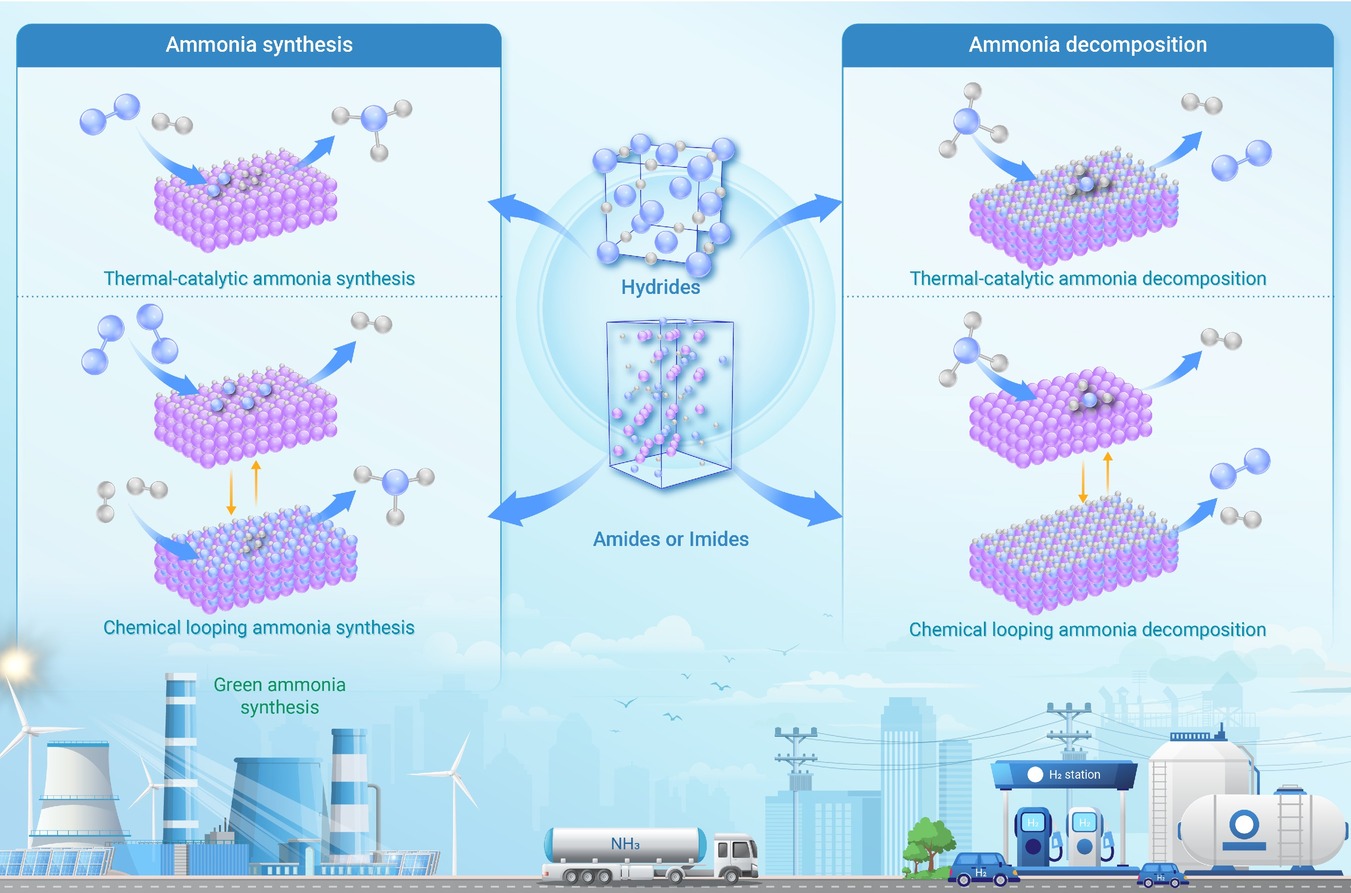
The versatile chemical interconversions of alkali/alkaline metal hydrides, amides, and imides exhibit with N2, H2, or NH3 are presented.
The recent progress in utilizing hydrides, amides or imides for catalytic and chemical looping processes in ammonia synthesis and decomposition are reviewed.
The unique roles of hydrides, amides, and imides in activating and transforming N2 and NH3, their distinct reaction mechanisms are discussed.
The current challenges and future prospects are analyzed.
-
-
ABSTRACT
Ammonia, as a key feedstock for nitrogen fertilizers, also plays a crucial role as an energy and hydrogen carrier in the storage and conversion of renewable energy. The synthesis and decomposition of ammonia are central to realizing its full potential in these applications. Recent studies have highlighted the versatile chemical interconversions of alkali/alkaline metal hydrides, amides, and imides exhibit with N2, H2, or NH3. Building on these findings, a series of highly efficient catalysts and novel processes for ammonia synthesis and ammonia decomposition have been developed. This review comprehensively summarizes recent progress in utilizing these compounds as functional materials for catalytic and chemical looping processes in ammonia synthesis and decomposition. Special attention is given to the unique roles of hydrides, amides, and imides in activating and transforming N2 and NH3, their distinct reaction mechanisms, and discuss the current challenges and future prospects of these materials in ammonia synthesis and decomposition process. -

-
REFERENCES
[1] Erisman J.W., Sutton M.A., Galloway J., et al. (2008). How a century of ammonia synthesis changed the world. Nat. Geosci. 1:636−639. DOI:10.1038/ngeo325 [2] Lu Z., Jiang B., Chen Z., et al. (2024). Advancements in thermocatalytic ammonia decomposition for hydrogen production. Innov. Energy 1:100056. DOI:10.59717/j.xinn-energy.2024.100056 [3] El-Kadi J., Kinhal K.V., Liedtke L., et al. (2024). The potential of green ammonia in the de-fossilization of the steel, glass and cement industries. Philos. T. R. Soc. A 382:20230270. DOI:10.1098/rsta.2023.0270 [4] Wang Q., Guan Y., Guo J., et al. (2022). Hydrides mediate nitrogen fixation. Cell Rep. Phys. Sci. 3. DOI:10.1016/j.xcrp.2022.100779 [5] Chang F., Gao W., Guo J., et al. (2021). Emerging Materials and Methods toward Ammonia-Based Energy Storage and Conversion. Adv. Mater. 33:e2005721. DOI:10.1002/adma.202005721 [6] Yu S., Xiang T., Alharbi N.S., et al. (2023). Recent development of catalytic strategies for sustainable ammonia production. Chin. J. Chem. Eng. DOI:10.1016/j.cjche.2023.03.028 [7] Ravi M. and Makepeace J.W. (2022). Facilitating green ammonia manufacture under milder conditions: what do heterogeneous catalyst formulations have to offer? Chem. Sci. DOI:10.1039/d1sc04734e [8] Züttel A., Remhof A., Borgschulte A., et al. (2010). Hydrogen: the future energy carrier. Philos. T. R. Soc. A 368:3329−3342. DOI:10.1098/rsta.2010.0113 [9] Jiang L. and Fu X. (2021). An Ammonia–Hydrogen Energy Roadmap for Carbon Neutrality: Opportunity and Challenges in China. Engineering 7:1688−1691. DOI:10.1016/j.eng.2021.11.004 [10] Ye L., Nayak-Luke R., Bañares-Alcántara R., et al. (2017). Reaction: “Green” Ammonia Production. Chem 3:712−714. DOI:10.1016/j.chempr.2017.10.016 [11] Lamb K.E., Dolan M.D. and Kennedy D.F. (2019). Ammonia for hydrogen storage; A review of catalytic ammonia decomposition and hydrogen separation and purification. Int. J. Hydrogen Energy 44:3580−3593. DOI:10.1016/j.ijhydene.2018.12.024 [12] Klerke A., Christensen C.H., Nørskov J.K., et al. (2008). Ammonia for hydrogen storage: challenges and opportunities. J. Mater. Chem. 18:2304. DOI:10.1039/b720020j [13] Afif A., Radenahmad N., Cheok Q., et al. (2016). Ammonia-fed fuel cells: a comprehensive review. Renew. Sust. Energy Rev. 60:822−835. DOI:10.1016/j.rser.2016.01.120 [14] Ogura Y., Sato K., Miyahara S.-i., et al. (2018). Efficient ammonia synthesis over a Ru/La0.5Ce0.5O1.75catalyst pre-reduced at high temperature. Chem. Sci. 9:2230-2237. DOI:10.1039/c7sc05343f [15] Smith C., Hill A.K. and Torrente-Murciano L. (2020). Current and future role of Haber–Bosch ammonia in a carbon-free energy landscape. Energy Environ. Sci. 13:331−344. DOI:10.1039/c9ee02873k [16] Liu H.Z. (2014). Ammonia synthesis catalyst 100 years: Practice, enlightenment and challenge. Cn. J. Catal. 35:1619−1640. DOI:10.1016/S1872-2067(14)60118-2 [17] Li S., Zhou Y., Li K., et al. (2022). Electrosynthesis of ammonia with high selectivity and high rates via engineering of the solid-electrolyte interphase. Joule 6:2083−2101. DOI:10.1016/j.joule.2022.07.009 [18] Du H.L., Chatti M., Hodgetts R.Y., et al. (2022). Electroreduction of nitrogen with almost 100% current-to-ammonia efficiency. Nature 609:722−727. DOI:10.1038/s41586-022-05108-y [19] Fu X., Pedersen J.B., Zhou Y., et al. (2023). Continuous-flow electrosynthesis of ammonia by nitrogen reduction and hydrogen oxidation. Science 379:707−712. DOI:10.1126/science.adf4403 [20] Suryanto B.H.R., Matuszek K., Choi J., et al. (2021). Nitrogen reduction to ammonia at high efficiency and rates based on a phosphonium proton shuttle. Science 372:1187−1191. DOI:10.1126/science.abg2371 [21] Li K., Andersen S.Z., Statt M.J., et al. (2021). Enhancement of lithium-mediated ammonia synthesis by addition of oxygen. Science 374:1593−1597. DOI:10.1126/science.abl4300 [22] Lazouski N., Chung M.J., Williams K., et al. (2020). Non-aqueous gas diffusion electrodes for rapid ammonia synthesis from nitrogen and water-splitting-derived hydrogen. Nat. Catal. 3:463−469. DOI:10.1038/s41929-020-0455-8 [23] Andersen S.Z., Statt M.J., Bukas V.J., et al. (2020). Increasing stability, efficiency, and fundamental understanding of lithium-mediated electrochemical nitrogen reduction. Energy Environ. Sci. 13:4291−4300. DOI:10.1039/d0ee02246b [24] Hu T., Cheng X., Luo J., et al. (2024). Fe-Based Materials for Photocatalytic Nitrogen Reduction to Ammonia: Unique Advantages, Challenges, and Perspectives. ACS Catal. 14:14539−14563. DOI:10.1021/acscatal.4c03431 [25] Zhao Z., Tan R., Kong Y., et al. (2023). Defect Pyrochlore‐Type Mott–Schottky Photocatalysts for Enhanced Ammonia Synthesis at Low Pressure. Angew. Chem. Int. Ed. 62. DOI:10.1002/anie.202303629 [26] Wei Y., Jiang W., Liu Y., et al. (2022). Recent advances in photocatalytic nitrogen fixation and beyond. Nanoscale 14:2990−2997. DOI:10.1039/d2nr00198e [27] Zheng J., Lu L., Lebedev K., et al. (2021). Fe on molecular-layer MoS2 as inorganic Fe-S2-Mo motifs for light-driven nitrogen fixation to ammonia at elevated temperatures. Chem Catal. DOI:10.1016/j.checat.2021.03.002. [28] Wang L., Xia Y. and Yu J. (2021). Hydrogen-bond activation of N2 molecules and photocatalytic nitrogen fixation. Chem 7:1983−1985. DOI:10.1016/j.chempr.2021.07.009 [29] Shi R., Zhao Y., Waterhouse G.I.N., et al. (2019). Defect Engineering in Photocatalytic Nitrogen Fixation. ACS Catal. 9:9739−9750. DOI:10.1021/acscatal.9b03246 [30] Zhou D., Zhou R., Zhou R., et al. (2021). Sustainable ammonia production by non-thermal plasmas: Status, mechanisms, and opportunities. Chem. Eng. J. 421. DOI:10.1016/j.cej.2021.129544 [31] Winter L.R. and Chen J.G. (2021). N2 Fixation by Plasma-Activated Processes. Joule 5:300−315. DOI:10.1016/j.joule.2020.11.009 [32] Rouwenhorst K.H.R., Engelmann Y., van 't Veer K., et al. (2020). Plasma-driven catalysis: green ammonia synthesis with intermittent electricity. Green Chem. 22:6258−6287. DOI:10.1039/d0gc02058c [33] Wang Y., Craven M., Yu X., et al. (2019). Plasma-Enhanced Catalytic Synthesis of Ammonia over a Ni/Al2O3 Catalyst at Near-Room Temperature: Insights into the Importance of the Catalyst Surface on the Reaction Mechanism. ACS Catal. 9:10780−10793. DOI:10.1021/acscatal.9b02538 [34] Mehta P., Barboun P., Herrera F.A., et al. (2018). Overcoming ammonia synthesis scaling relations with plasma-enabled catalysis. Nat. Catal. 1:269−275. DOI:10.1038/s41929-018-0045-1 [35] Lan R., Irvine J.T.S. and Tao S. (2012). Ammonia and related chemicals as potential indirect hydrogen storage materials. Int. J. Hydrogen Energy 37:1482−1494. DOI:10.1016/j.ijhydene.2011.10.004 [36] Yin S.F., Xu B.Q., Zhou X.P., et al. (2004). A mini-review on ammonia decomposition catalysts for on-site generation of hydrogen for fuel cell applications. Appl. Catal. a-Gen. 277:1−9. DOI:10.1016/j.apcata.2004.09.020 [37] Schüth F., Palkovits R., Schlögl R., et al. (2012). Ammonia as a possible element in an energy infrastructure: catalysts for ammonia decomposition. Energy Environ. Sci. 5:6278−6289. DOI:10.1039/c2ee02865d [38] Wan Z., Tao Y., Shao J., et al. (2021). Ammonia as an effective hydrogen carrier and a clean fuel for solid oxide fuel cells. Energy Convers. Manage. 228. DOI:10.1016/j.enconman.2020.113729 [39] Le T.A., Do Q.C., Kim Y., et al. (2021). A review on the recent developments of ruthenium and nickel catalysts for COx-free H2 generation by ammonia decomposition. Kor. J. Chem. Eng. 38:1087−1103. DOI:10.1007/s11814-021-0767-7 [40] Kitano M., Inoue Y., Yamazaki Y., et al. (2012). Ammonia synthesis using a stable electride as an electron donor and reversible hydrogen store. Nat. Chem. 4:934−940. DOI:10.1038/nchem.1476 [41] Kitano M., Inoue Y., Ishikawa H., et al. (2016). Essential role of hydride ion in ruthenium-based ammonia synthesis catalysts. Chem. Sci. 7:4036−4043. DOI:10.1039/c6sc00767h [42] Abe H., Niwa Y., Kitano M., et al. (2017). Anchoring Bond between Ru and N Atoms of Ru/Ca2NH Catalyst: Crucial for the High Ammonia Synthesis Activity. J. Phys. Chem. C 121:20900−20904. DOI:10.1021/acs.jpcc.7b07268 [43] Gong Y., Wu J., Kitano M., et al. (2018). Ternary intermetallic LaCoSi as a catalyst for N2 activation. Nat. Catal. 1:178−185. DOI:10.1038/s41929-017-0022-0 [44] Li J., Wu J., Wang H., et al. (2019). Acid-durable electride with layered ruthenium for ammonia synthesis: boosting the activity via selective etching. Chem. Sci. 10:5712−5718. DOI:10.1039/c9sc01539f [45] Ye T.N., Park S.W., Lu Y., et al. (2020). Vacancy-enabled N2 activation for ammonia synthesis on an Ni-loaded catalyst. Nature 583:391−395. DOI:10.1038/s41586-020-2464-9 [46] Ye T.-N., Lu Y., Kobayashi Y., et al. (2020). Efficient Ammonia Synthesis over Phase-Separated Nickel-Based Intermetallic Catalysts. J. Phys. Chem. C 124:28589−28595. DOI:10.1021/acs.jpcc.0c09590 [47] Ye T.N., Park S.W., Lu Y., et al. (2021). Dissociative and Associative Concerted Mechanism for Ammonia Synthesis over Co-Based Catalyst. J. Am. Chem. Soc. 143:12857−12866. DOI:10.1021/jacs.1c06657 [48] Zhang K., Cao A., Wandall L.H., et al. (2024). Spin-mediated promotion of Co catalysts for ammonia synthesis. Science 383:1357−1363. DOI:10.1126/science.adn0558 [49] Yiliguma, Park S.-W., Li J., et al. (2021). C2 Vacancy-Mediated N2 Activation over Ni-Loaded Rare-Earth Dicarbides for Ammonia Synthesis. ACS Catal. 11:7595−7603. DOI:10.1021/acscatal.1c01646 [50] Li Z., Lu Y., Li J., et al. (2023). Multiple reaction pathway on alkaline earth imide supported catalysts for efficient ammonia synthesis. Nat. Commun. 14. DOI:10.1038/s41467-023-42050-7. [51] Zuraiqi K., Jin Y., Parker C.J., et al. (2024). Unveiling metal mobility in a liquid Cu–Ga catalyst for ammonia synthesis. Nat. Catal. 7:1044−1052. DOI:10.1038/s41929-024-01219-z [52] Zhang Y., Peng X., Tian H.R., et al. (2024). Fullerene on non-iron cluster-matrix co-catalysts promotes collaborative H2 and N2 activation for ammonia synthesis. Nat. Chem. DOI:10.1038/s41557-024-01626-6 [53] Wang P., Chang F., Gao W., et al. (2017). Breaking scaling relations to achieve low-temperature ammonia synthesis through LiH-mediated nitrogen transfer and hydrogenation. Nat. Chem. 9:64−70. DOI:10.1038/nchem.2595 [54] Chang F., Guan Y., Chang X., et al. (2018). Alkali and alkaline earth hydrides-driven N2 activation and transformation over Mn nitride catalyst. J. Am. Chem. Soc. 140:14799−14806. DOI:10.1021/jacs.8b08334 [55] Kobayashi Y., Tang Y., Kageyama T., et al. (2017). Titanium-Based Hydrides as Heterogeneous Catalysts for Ammonia Synthesis. J. Am. Chem. Soc. 139:18240−18246. DOI:10.1021/jacs.7b08891 [56] Wang Q., Pan J., Guo J., et al. (2021). Ternary ruthenium complex hydrides for ammonia synthesis via the associative mechanism. Nat. Catal. 4:959−967. DOI:10.1038/s41929-021-00698-8 [57] Yamashita H., Broux T., Kobayashi Y., et al. (2018). Chemical Pressure-Induced Anion Order–Disorder Transition in LnHO Enabled by Hydride Size Flexibility. J. Am. Chem. Soc. 140:11170−11173. DOI:10.1021/jacs.8b06187 [58] Zhang X., Liu L., Wu A., et al. (2022). Synergizing Surface Hydride Species and Ru Clusters on Sm2O3 for Efficient Ammonia Synthesis. ACS Catal. 12:2178−2190. DOI:10.1021/acscatal.1c05985 [59] Mao C., Wang J., Zou Y., et al. (2020). Hydrogen Spillover to Oxygen Vacancy of TiO2–xHy/Fe: Breaking the Scaling Relationship of Ammonia Synthesis. J. Am. Chem. Soc. 142:17403−17412. DOI:10.1021/jacs.0c06118 [60] Guan Y., Zhang W., Wang Q., et al. (2021). Barium chromium nitride-hydride for ammonia synthesis. Chem. Catal. 1:1042−1054. DOI:10.1016/j.checat.2021.08.006 [61] Kitano M., Kujirai J., Ogasawara K., et al. (2019). Low-Temperature Synthesis of Perovskite Oxynitride-Hydrides as Ammonia Synthesis Catalysts. J. Am. Chem. Soc. 141:20344−20353. DOI:10.1021/jacs.9b10726 [62] Gao W., Guo J., Wang P., et al. (2018). Production of ammonia via a chemical looping process based on metal imides as nitrogen carriers. Nat. Energy 3:1067−1075. DOI:10.1038/s41560-018-0268-z [63] Feng S., Gao W.B., Wang Q.R., et al. (2021). A multi-functional composite nitrogen carrier for ammonia production via a chemical looping route. J. Mater. Chem. A 9:1039−1047. DOI:10.1039/d0ta10519h [64] Deng Q.F., Zhang H., Hou X.X., et al. (2012). High-surface-area Ce0.8Zr0.2O2 solid solutions supported Ni catalysts for ammonia decomposition to hydrogen. Int. J. Hydrogen Energy 37:15901-15907. DOI:10.1016/j.ijhydene.2012.08.069 [65] Huang C., Yu Y., Tang X., et al. (2020). Hydrogen generation by ammonia decomposition over Co/CeO2 catalyst: Influence of support morphologies. Appl. Surf. Sci. 532:147335. DOI:10.1016/j.apsusc.2020.147335 [66] Nagaoka K., Eboshi T., Abe N., et al. (2014). Influence of basic dopants on the activity of Ru/Pr6O11 for hydrogen production by ammonia decomposition. Int. J. Hydrogen Energy 39:20731−20735. DOI:10.1016/j.ijhydene.2014.07.142 [67] Okura K., Okanishi T., Muroyama H., et al. (2015). Promotion effect of rare-earth elements on the catalytic decomposition of ammonia over Ni/Al2O3 catalyst. Appl. Catal. a-Gen. 505:77−85. DOI:10.1016/j.apcata.2015.07.020 [68] Lu A.H., Nitz J.J., Comotti M., et al. (2010). Spatially and Size Selective Synthesis of Fe-Based Nanoparticles on Ordered Mesoporous Supports as Highly Active and Stable Catalysts for Ammonia Decomposition. J. Am. Chem. Soc. 132:14152−14162. DOI:10.1021/ja105308e [69] Gu Y.Q., Fu X.P., Du P.P., et al. (2015). X-ray Diffraction Study of Co-Al Nanocomposites as Catalysts for Ammonia Decomposition. J. Phys. Chem. C 119:17102−17110. DOI:10.1021/acs.jpcc.5b02932 [70] Duan X., Qian G., Zhou X., et al. (2012). MCM-41 supported Co-Mo bimetallic catalysts for enhanced hydrogen production by ammonia decomposition. Chem. Eng. J. 207:103−108. DOI:10.1016/j.cej.2012.05.100 [71] Zhang J., Müller J.O., Zheng W.Q., et al. (2008). Individual Fe-Co alloy nanoparticles on carbon nanotubes: Structural and catalytic properties. Nano Lett. 8:2738−2743. DOI:10.1021/nl8011984 [72] Simonsen S.B., Chakraborty D., Chorkendorff I., et al. (2012). Alloyed Ni-Fe nanoparticles as catalysts for NH3 decomposition. Appl. Catal. a-Gen. 447:22−31. DOI:10.1016/j.apcata.2012.08.045 [73] Zheng W., Cotter T.P., Kaghazchi P., et al. (2013). Experimental and theoretical investigation of molybdenum carbide and nitride as catalysts for ammonia decomposition. J. Am. Chem. Soc. 135:3458−3464. DOI:10.1021/ja309734u [74] Choi J.G. (1999). Ammonia decomposition over vanadium carbide catalysts. J. Catal. 182:104−116. DOI:10.1006/jcat.1998.2346 [75] Tagliazucca V., Schlichte K., Schüth F., et al. (2013). Molybdenum-based catalysts for the decomposition of ammonia: In situ X-ray diffraction studies, microstructure, and catalytic properties. J. Catal. 305:277−289. DOI:10.1016/j.jcat.2013.05.011 [76] Guo J., Wang P., Wu G., et al. (2015). Lithium imide synergy with 3d transition-metal nitrides leading to unprecedented catalytic activities for ammonia decomposition. Angew. Chem. Int. Ed. 54:2950−2954. DOI:10.1002/anie.201410773 [77] David W.I., Makepeace J.W., Callear S.K., et al. (2014). Hydrogen production from ammonia using sodium amide. J. Am. Chem. Soc. 136:13082−13085. DOI:10.1021/ja5042836 [78] Ogasawara K., Nakao T., Kishida K., et al. (2021). Ammonia Decomposition over CaNH-Supported Ni Catalysts via an NH2–-Vacancy-Mediated Mars–van Krevelen Mechanism. ACS Catal. 11:11005−11015. DOI:10.1021/acscatal.1c01934 [79] Chen C., Wu K., Ren H., et al. (2021). Ru-Based Catalysts for Ammonia Decomposition: A Mini-Review. Energy Fuels 35:11693−11706. DOI:10.1021/acs.energyfuels.1c01261 [80] Afonso R.V., Gouveia J.D. and Gomes J.R.B. (2021). Catalytic reactions for H2 production on multimetallic surfaces: a review. J. Phys. Energy 3. DOI:10.1088/2515-7655/ac0d9f [81] Hirscher M., Yartys V.A., Baricco M., et al. (2020). Materials for hydrogen-based energy storage - past, recent progress and future outlook. J. Alloys Compd. 827. DOI:10.1016/j.jallcom.2019.153548 [82] Mukherjee S., Devaguptapu S.V., Sviripa A., et al. (2018). Low-temperature ammonia decomposition catalysts for hydrogen generation. Appl. Catal. B-Environ. 226:162−181. DOI:10.1016/j.apcatb.2017.12.039 [83] García-Bordejé E., Armenise S. and Roldán L. (2014). Toward Practical Application Of H2 Generation From Ammonia Decomposition Guided by Rational Catalyst Design. Catal. Rev. 56:220−237. DOI:10.1080/01614940.2014.903637 [84] Hosono H. and Kitano M. (2021). Advances in Materials and Applications of Inorganic Electrides. Chem. Rev. 121:3121−3185. DOI:10.1021/acs.chemrev.0c01071 [85] Hosono H. (2024). Field-assisted green ammonia synthesis. Sci. Bull. 69:7−8. DOI:10.1016/j.scib.2023.10.001 [86] Guo J. and Chen P. (2021). Interplay of Alkali, Transition Metals, Nitrogen, and Hydrogen in Ammonia Synthesis and Decomposition Reactions. Acc. Chem. Res. DOI:10.1021/acs.accounts.1c00076. [87] Gao W., Guo J. and Chen P. (2019). Hydrides, Amides and Imides Mediated Ammonia Synthesis and Decomposition. Chin. J. Chem. 37:442−451. DOI:10.1002/cjoc.201800586 [88] Chen P., Xiong Z.T., Luo J.Z., et al. (2002). Interaction of hydrogen with metal nitrides and imides. Nature 420:302−304. DOI:10.1038/nature01210 [89] Gregory D.H. (2008). Lithium nitrides, imides and amides as lightweight, reversible hydrogen stores. J. Mater. Chem. 18. DOI: 10.10b801021h [90] Lan Z., Jiang W., Bai J., et al. (2012). The first-principles investigation on the electronic structure and mechanism of LiH+NH3→LiNH2+H2 reaction. Int. J. Hydrogen Energy 37:18937−18943. DOI:10.1016/j.ijhydene.2012.09.167 [91] Howie R.T., Narygina O., Guillaume C.L., et al. (2012). High-pressure synthesis of lithium hydride. Phy. Rev. B 86. DOI:10.1103/PhysRevB.86.064108. [92] Zou R., Li J.L., Cui J.R., et al. (2023). Catalyst-free synthesis of lithium hydride at room temperature. Chem. Commun. 59:2660−2663. DOI:10.1039/d2cc06849d [93] Zhang W., Cao H. and Chen P. (2023). Hydride ion conductor: A key material for innovative energy storage and conversion. Innov. Mater. 1:100006. DOI:10.59717/j.xinn-mater.2023.100006 [94] Leng H.Y., Ichikawa T., Hino S., et al. (2008). Investigation of reaction between LiNH2 and H2. J. Alloys Compd. 463:462−465. DOI:10.1016/j.jallcom.2007.09.035 [95] Miceli G. and Bernasconi M. (2011). First-Principles Study of the Hydrogenation Process of Li2NH. J. Phys. Chem. C 115:13496−13501. DOI:10.1021/jp2025818 [96] Titherley A.W. (1894). XLV. —Sodium, potassium, and lithium amides. J. Chem. Soc. 65:504−522. DOI:10.1039/CT8946500504 [97] Grochala W. and Edwards P.P. (2004). Thermal decomposition of the non-interstitial hydrides for the storage and production of hydrogen. Chem. Rev. 104:1283−1315. DOI:10.1021/cr030691s [98] Hu Y.H. and Ruckenstein E. (2006). Ultrafast Reaction between Li3N and LiNH2 To Prepare the Effective Hydrogen Storage Material Li2NH. Ind. Eng. Chem. Res. 45:4993−4998. DOI:10.1021/ie060380i [99] Leng H.Y., Ichikawa T., Hino S., et al. (2006). Synthesis and decomposition reactions of metal amides in metal–N–H hydrogen storage system. J. Power Sources 156:166−170. DOI:10.1016/j.jpowsour.2005.03.228 [100] Tapia-Ruiz N., Sorbie N., Vaché N., et al. (2013). Rapid Microwave Synthesis, Characterization and Reactivity of Lithium Nitride Hydride, Li4NH. Materials 6:5410−5426. DOI:10.3390/ma6115410 [101] Smil V. (1999). Detonator of the population explosion. Nature 400:415−415. DOI:10.1038/22672 [102] Wang Q., Guo J. and Chen P. (2019). Recent progress towards mild-condition ammonia synthesis. J. Energy Chem. 36:25−36. DOI:10.1016/j.jechem.2019.01.027 [103] Abild-Pedersen F., Greeley J., Studt F., et al. (2007). Scaling properties of adsorption energies for hydrogen-containing molecules on transition-metal surfaces. Phys. Rev. Lett. 99:016105. DOI:10.1103/PhysRevLett.99.016105 [104] Vojvodic A., Medford A.J., Studt F., et al. (2014). Exploring the limits: A low-pressure, low-temperature Haber-Bosch process. Chem. Phys. Lett. 598:108−112. DOI:10.1016/j.cplett.2014.03.003 [105] Vojvodic A., and Norskov J.K. (2015). New design paradigm for heterogeneous catalysts. Nat.l Sci. Rev. 2:140−143. DOI:10.1093/nsr/nwv023 [106] Medford A.J., Vojvodic A., Hummelshøj J.S., et al. (2015). From the Sabatier principle to a predictive theory of transition-metal heterogeneous catalysis. J. Catal. 328:36−42. DOI:10.1016/j.jcat.2014.12.033 [107] Aika K., Takano T., and Murata S. (1992). Preparation and Characterization of Chlorine-Free Ruthenium Catalysts and the Promoter Effect in Ammonia-Synthesis .3. A Magnesia-Supported Ruthenium Catalyst. J. Catal. 136:126-140. DOI:10.1016/0021-9517(92)90112-U [108] Nowrin F.H., Warzywoda J. and Malmali M. (2024). Unraveling the deactivation mechanism of Co-LiH composite catalyst for ammonia synthesis at milder conditions. Appl. Catal. a-Gen. 677. DOI:10.1016/j.apcata.2024.119677 [109] Chang F., Tezsevin I., de Rijk J.W., et al. (2022). Potassium hydride-intercalated graphite as an efficient heterogeneous catalyst for ammonia synthesis. Nat. Catal. 5:222−230. DOI:10.1038/s41929-022-00754-x [110] Aika K.i., Hori H. and Ozaki A. (1972). Activation of nitrogen by alkali metal promoted transition metal I. Ammonia synthesis over ruthenium promoted by alkali metal. J. Catal. 27:424−431. DOI:10.1016/0021-9517(72)90179-0 [111] Gao W., Wang P., Guo J., et al. (2017). Barium Hydride-Mediated Nitrogen Transfer and Hydrogenation for Ammonia Synthesis: A Case Study of Cobalt. ACS Catal. 7:3654−3661. DOI:10.1021/acscatal.7b00284 [112] Wang P., Xie H., Guo J., et al. (2017). The Formation of Surface Lithium-Iron Ternary Hydride and its Function on Catalytic Ammonia Synthesis at Low Temperatures. Angew. Chem. Int. Ed. 56:8716−8720. DOI:10.1002/anie.201703695 [113] Wang Q.R., Guo J.P. and Chen P. (2021). The impact of alkali and alkaline earth metals on green ammonia synthesis. Chem. 7:3203−3220. DOI:10.1016/j.chempr.2021.08.021 [114] Hattori M., Iijima S., Nakao T., et al. (2020). Solid solution for catalytic ammonia synthesis from nitrogen and hydrogen gases at 50 degrees C. Nat. Commun. 11:2001. DOI:10.1038/s41467-020-15868-8 [115] Pan J., Wang Q., Guo J., et al. (2022). Balanced nitrogen and hydrogen chemisorption by [RuH6] catalytic center favors low-temperature NH3 synthesis. Cell Rep. Phys. Sci. 3:100970. DOI:10.1016/j.xcrp.2022.100970 [116] Wang Q., Wen H., Guan Y., et al. (2023). Ruthenium Complex Hydride Catalyst as a Platform for Ammonia Synthesis: The Effect of Alkali or Alkaline Earth Elements. ACS Catal. 13:9882−9890. DOI:10.1021/acscatal.3c02068 [117] Liu C., Wang Q., Guo J., et al. (2022). Formation of a Complex Active Center by Ba2RuH6 for Nondissociative Dinitrogen Activation and Ammonia Formation. ACS Catal.:4194-4202. DOI:10.1021/acscatal.2c00180 [118] Yan H., Gao W., Wang Q., et al. (2023). The formation of a lithium-iridium complex hydride toward ammonia synthesis. Faraday Discuss. 243:55−64. DOI:10.1039/d2fd00142j [119] Cao Y., Kirsanova M.A., Ochi M., et al. (2022). Topochemical Synthesis of Ca3CrN3H Involving a Rotational Structural Transformation for Catalytic Ammonia Synthesis. Angew. Chem. Int. Ed. 61. DOI:10.1002/anie.202209187 [120] Fukui K., Iimura S., Iskandarov A., et al. (2022). Room-Temperature Fast H– Conduction in Oxygen-Substituted Lanthanum Hydride. J. Am. Chem. Soc. 144:1523−1527. DOI:10.1021/jacs.1c11353 [121] Tang Y., Kobayashi Y., Masuda N., et al. (2018). Metal‐Dependent Support Effects of Oxyhydride‐Supported Ru, Fe, Co Catalysts for Ammonia Synthesis. Adv. Energy Mater. 8. DOI:10.1002/aenm.201801772 [122] Jiang Y., Takashima R., Nakao T., et al. (2023). Boosted Activity of Cobalt Catalysts for Ammonia Synthesis with BaAl2O4–xHy Electrides. J. Am. Chem. Soc. 145:10669−10680. DOI:10.1021/jacs.3c01074 [123] Zhang Z., Miyashita K., Wu T., et al. (2025). Anion vacancies activate N2 to ammonia on Ba–Si orthosilicate oxynitride-hydride. Nat. Chem. DOI:10.1038/s41557-025-01737-8 [124] Avenier P., Taoufik M., Lesage A., et al. (2007). Dinitrogen dissociation on an isolated surface tantalum atom. Science 317:1056−1060. DOI:10.1126/science.1143078 [125] Azofra L.M., Morlanés N., Poater A., et al. (2018). Single‐Site Molybdenum on Solid Support Materials for Catalytic Hydrogenation of N2‐into‐NH3. Angew. Chem. Int. Ed. 57:15812−15816. DOI:10.1002/anie.201810409 [126] Doyle W.T., Ingram D.J.E. and Smith M.J.A. (1959). Detection of Colloidal Centers in Lithium Hydride by Electron Resonance. Phys. Rev. Lett. 2:497−499. DOI:10.1103/PhysRevLett.2.497 [127] Cornelius S., Colombi G., Nafezarefi F., et al. (2019). Oxyhydride Nature of Rare-Earth-Based Photochromic Thin Films. J. Phys. Chem. Lett. 10:1342−1348. DOI:10.1021/acs.jpclett.9b00088 [128] Cheng Z., Guan Y., Wen H., et al. (2024). Light-Driven De/Rehydrogenation of a LiH Surface under Ambient Conditions. J. Phys. Chem. Lett. 15:6662−6667. DOI:10.1021/acs.jpclett.4c00874 [129] Guan Y., Wen H., Cui K., et al. (2024). Light-driven ammonia synthesis under mild conditions using lithium hydride. Nat. Chem. DOI:10.1038/s41557-023-01395-8. [130] Feng S., Gao W., Cao H., et al. (2020). Advances in the Chemical Looping Ammonia Synthesis. Acta Chim. Sinica 78:916. DOI:10.6023/a20060207 [131] Zhang X., Pei C., Zhao Z.J., et al. (2024). Towards green and efficient chemical looping ammonia synthesis: design principles and advanced redox catalysts. Energy Environ. Sci. 17:2381−2405. DOI:10.1039/d4ee00037d [132] Gálvez M.E., Halmann M. and Steinfeld A. (2007). Ammonia Production via a Two-Step Al2O3/AlN Thermochemical Cycle. 1. Thermodynamic, Environmental, and Economic Analyses. Ind. Eng. Chem. Res. 46:2042-2046. DOI:10.1021/ie061550u. [133] Michalsky R. and Pfromm P.H. (2011). Chromium as reactant for solar thermochemical synthesis of ammonia from steam, nitrogen, and biomass at atmospheric pressure. Solar Energy 85:2642−2654. DOI:10.1016/j.solener.2011.08.005 [134] Michalsky R. and Pfromm P.H. (2012). Thermodynamics of metal reactants for ammonia synthesis from steam, nitrogen and biomass at atmospheric pressure. AlChE J. 58:3203−3213. DOI:10.1002/aic.13717 [135] Michalsky R. and Steinfeld A. (2017). Computational screening of perovskite redox materials for solar thermochemical ammonia synthesis from N2 and H2O. Catal. Today 286:124−130. DOI:10.1016/j.cattod.2016.09.023 [136] Michalsky R., Avram A.M., Peterson B.A., et al. (2015). Chemical looping of metal nitride catalysts: low-pressure ammonia synthesis for energy storage. Chem. Sci. 6:3965−3974. DOI:10.1039/c5sc00789e [137] Michalsky R. and Pfromm P.H. (2012). An Ionicity Rationale to Design Solid phase Metal Nitride Reactants for Solar Ammonia Production. J. Phys. Chem. C 116:23243−23251. DOI:10.1021/jp307382r [138] Fu E., Gong F., Wang S., et al. (2023). Chemical Looping Technology in Mild‐Condition Ammonia Production: A Comprehensive Review and Analysis. Small. DOI:10.1002/smll.202305095. [139] Michalsky R., Pfromm P.H. and Steinfeld A. (2015). Rational design of metal nitride redox materials for solar-driven ammonia synthesis. Interface Focus 5:20140084. DOI:10.1098/rsfs.2014.0084 [140] Heidlage M.G., Kezar E.A., Snow K.C., et al. (2017). Thermochemical Synthesis of Ammonia and Syngas from Natural Gas at Atmospheric Pressure. Ind. Eng. Chem. Res. 56:14014−14024. DOI:10.1021/acs.iecr.7b03173 [141] Wu Y., Jiang G.D., Zhang H.B., et al. (2017). Fe2O3, a cost effective and environmentally friendly catalyst for the generation of NH3 - a future fuel - using a new Al2O3-looping based technology. Chem. Commun. 53:10664−10667. DOI:10.1039/c7cc04742h [142] Laassiri S., Zeinalipour-Yazdi C.D., Catlow C.R.A., et al. (2018). The potential of manganese nitride based materials as nitrogen transfer reagents for nitrogen chemical looping. Appl. Catal. B-Environ. 223:60−66. DOI:10.1016/j.apcatb.2017.04.073 [143] Shan N., Chikan V., Pfromm P., et al. (2018). Fe and Ni Dopants Facilitating Ammonia Synthesis on Mn4N and Mechanistic Insights from First-Principles Methods. J. Phys. Chem. C 122:6109−6116. DOI:10.1021/acs.jpcc.7b12569 [144] Wang B., Guo H., Yin X., et al. (2020). N-Sorption Capability of Al2O3-Supported Mn-/Fe-Based Nitrogen Carriers during Chemical Looping Ammonia Synthesis Technology. Energy Fuels 34:10247−10255. DOI:10.1021/acs.energyfuels.0c01000 [145] Goto Y., Daisley A. and Hargreaves J.S.J. (2021). Towards anti-perovskite nitrides as potential nitrogen storage materials for chemical looping ammonia production: Reduction of Co3ZnN, Ni3ZnN, Co3InN and Ni3InN under hydrogen. Catal. Today 364:196−201. DOI:10.1016/j.cattod.2020.03.022 [146] Wang S., Gong F., Zhou Q., et al. (2023). Transition metal enhanced chromium nitride as composite nitrogen carrier for sustainable chemical looping ammonia synthesis. Appl. Catal. B-Environ. 339. DOI:10.1016/j.apcatb.2023.123134 [147] Wang B., Yin X., Wang P., et al. (2023). Chemical looping ammonia synthesis at atmospheric pressure benefiting from synergistic effect of Mn- and Fe-based nitrogen carriers. Int. J. Hydrogen Energy 48:2705−2717. DOI:10.1016/j.ijhydene.2022.10.132 [148] Moon J., Cheng Y., Daemen L., et al. (2021). On the Structural Transformation of Ni/BaH2 During a N2-H2 Chemical Looping Process for Ammonia Synthesis: A Joint In Situ Inelastic Neutron Scattering and First-Principles Simulation Study. Top. Catal. DOI:10.1007/s11244-021-01445-w [149] Yan H., Gao W., Wang Q., et al. (2021). Lithium Palladium Hydride Promotes Chemical Looping Ammonia Synthesis Mediated by Lithium Imide and Hydride. J. Phys. Chem. C 125:6716−6722. DOI:10.1021/acs.jpcc.1c01230 [150] Makepeace J.W., Brittain J.M., Manghnani A.S., et al. (2021). Compositional flexibility in Li-N-H materials: implications for ammonia catalysis and hydrogen storage. Phys. Chem. Chem. Phys. 23:15091−15100. DOI:10.1039/d1cp02440j [151] Ravi M. and Makepeace J.W. (2022). Lithium-nitrogen-hydrogen systems for ammonia synthesis: exploring a more efficient pathway using lithium nitride-hydride. Chem. Commun. 58:6076−6079. DOI:10.1039/d2cc01345b [152] Tagawa K., Gi H., Shinzato K., et al. (2022). Improvement of Kinetics of Ammonia Synthesis at Ambient Pressure by the Chemical Looping Process of Lithium Hydride. J. Phys. Chem. C 126:2403−2409. DOI:10.1021/acs.jpcc.1c09902 [153] Tang Z., Meng X., Shi Y., et al. (2021). Lithium-based Loop for Ambient-Pressure Ammonia Synthesis in a Liquid Alloy-Salt Catalytic System. Chem. Sus. Chem. 14:4697−4707. DOI:10.1002/cssc.202101571 [154] Wang R., Gao W., Feng S., et al. (2023). Zn Promotes Chemical Looping Ammonia Synthesis Mediated by LiH−Li2NH Couple. Chem. Sus. Chem.:e202300813-e202300813. DOI:10.1002/cssc.202300813 [155] Guan Y., Liu C., Wang Q., et al. (2022). Transition‐Metal‐Free Barium Hydride Mediates Dinitrogen Fixation and Ammonia Synthesis. Angew. Chem. Int. Ed. 61. DOI:10.1002/anie.202205805 [156] Wang R., Feng S., Wang Y., et al. (2024). Progress and prospects in the chemical looping ammonia synthesis. Clean Coal Tech. 30:13−28. DOI:10.13226/j.issn.1006-6772 [157] McEnaney J.M., Singh A.R., Schwalbe J.A., et al. (2017). Ammonia synthesis from N2 and H2O using a lithium cycling electrification strategy at atmospheric pressure. Energy Environ. Sci. 10:1621−1630. DOI:10.1039/c7ee01126a [158] Swearer D.F., Knowles N.R., Everitt H.O., et al. (2019). Light-Driven Chemical Looping for Ammonia Synthesis. ACS Energy Lett. 4:1505−1512. DOI:10.1021/acsenergylett.9b00860 [159] Feng S., Gao W., Guo J., et al. (2023). Electrodriven Chemical Looping Ammonia Synthesis Mediated by Lithium Imide. ACS Energy Lett. 8:1567−1574. DOI:10.1021/acsenergylett.2c02730 [160] Wu H., Yang L., Wen J.Q., et al. (2023). Plasma-Driven Nitrogen Fixation on Sodium Hydride. Adv. Energy Mater. 13. DOI:10.1002/aenm.202300722. [161] Cui K., Guan Y., Cai Y., et al. (2025). Perovskite LiBaH3 for photo-assisted dinitrogen fixation. Sci. Cn. Chem. DOI:10.1007/s11426-024-2471-9. [162] Wu H., Ma K., Wen J., et al. (2024). Nitrogen fixation by alkali and alkaline earth metal hydrides assisted by plasma. Chem. Commun. 60:10760−10763. DOI:10.1039/d4cc03866e [163] Shah S.S., Nasser G.A., Basha S.I., et al. (2024). Unlocking the potential of solid carbon: synergistic production with hydrogen from oil and gas resources for innovative applications and a sustainable future. Adv. Compos. Hybrid Ma. 7. DOI:10.1007/s42114-024-01015-0 [164] Lucentini I., Garcia X., Vendrell X., et al. (2021). Review of the Decomposition of Ammonia to Generate Hydrogen. Ind. Eng. Chem. Res. 60:18560−18611. DOI:10.1021/acs.iecr.1c00843 [165] Verschoor J.C., de Jongh P.E. and Ngene P. (2024). Recent advances in thermocatalytic ammonia synthesis and decomposition. Curr. Opin. Green Sust. Chem. 50. DOI:10.1016/j.cogsc.2024.100965 [166] Turaeva N., Fushimi R. and Yablonsky G. (2020). Kinetic Expression for Optimal Catalyst Electronic Configuration: The Case of Ammonia Decomposition. J. Phys. Chem. C 124:26310−26319. DOI:10.1021/acs.jpcc.0c08432 [167] Chen P. and Zhu M. (2008). Recent progress in hydrogen storage. Mater. Today 11:36−43. DOI:10.1016/s1369-7021(08)70251-7 [168] Titherley A.W. (1894). XLV. —Sodium, potassium, and lithium amides. J. Chem. Soc. 65:504−522. DOI:10.1039/CT8946500504 [169] Chen P., Xiong Z.T., Luo J.Z., et al. (2003). Interaction between lithium amide and lithium hydride. J. Phys. Chem. B 107:10967−10970. DOI:10.1021/jp034149j [170] Guo J., Chang F., Wang P., et al. (2015). Highly Active MnN–Li2NH Composite Catalyst for Producing COx-Free Hydrogen. ACS Catal. 5:2708−2713. DOI:10.1021/acscatal.5b00278 [171] Yang M., Raucci U. and Parrinello M. (2023). Reactant-induced dynamics of lithium imide surfaces during the ammonia decomposition process. Nat. Catal. DOI:10.1038/s41929-023-01006-2 [172] Mambretti F., Raucci U., Yang M., et al. (2024). How Does Structural Disorder Impact Heterogeneous Catalysts. The Case of Ammonia Decomposition on Non-stoichiometric Lithium Imide. ACS Catal. 14:1252−1256. DOI:10.1021/acscatal.3c05376 [173] Yu P., Guo J., Liu L., et al. (2016). Effects of Alkaline Earth Metal Amides on Ru in Catalytic Ammonia Decomposition. J. Phys. Chem. C 120:2822−2828. DOI:10.1021/acs.jpcc.5b11768 [174] Yu P., Guo J., Liu L., et al. (2016). Ammonia Decomposition with Manganese Nitride-Calcium Imide Composites as Efficient Catalysts. Chem. Sus. Chem. 9:364−369. DOI:10.1002/cssc.201501498 [175] Chang F., Guo J.P., Wu G.T., et al. (2017). Influence of alkali metal amides on the catalytic activity of manganese nitride for ammonia decomposition. Catal. Today 286:141−146. DOI:10.1016/j.cattod.2016.09.010 [176] Chang F., Wu H., Pluijm R.V., et al. (2019). Effect of Pore Confinement of NaNH2 and KNH2 on Hydrogen Generation from Ammonia. J. Phys. Chem. C Nanomater. Inter. 123:21487−21496. DOI:10.1021/acs.jpcc.9b03878 [177] Guo J., Chen Z., Wu A., et al. (2015). Electronic promoter or reacting species? The role of LiNH2 on Ru in catalyzing NH3 decomposition. Chem. Commun. 51:15161-15164. DOI:10.1039/c5cc04645a [178] Kishida K., Kitano M., Inoue Y., et al. (2018). Large Oblate Hemispheroidal Ruthenium Particles Supported on Calcium Amide as Efficient Catalysts for Ammonia Decomposition. Chem. Eur. J. 24:7976−7984. DOI:10.1002/chem.201800467 [179] Feng S., Gao W., Wang R., et al. (2024). Chemical Looping Ammonia Decomposition Mediated by Alkali Metal and Amide Pairs for H2 Production and Thermal Energy Storage. Adv. Energy Mater. 14. DOI:10.1002/aenm.202401252 [180] Schlogl R. (2003). Catalytic synthesis of ammonia-a "never-ending story". Angew. Chem. Int. Ed. 42:2004−2008. DOI:10.1002/anie.200301553 [181] Boudart M. (1994). Ammonia synthesis: the bellwether reaction in heterogeneous catalysis. Top. Catal. 1:405−414. DOI:10.1007/Bf01492292 [182] Guo J. and Chen P. (2024). Photodriven nitrogen fixation by lithium hydride. Nat. Chem. 16:310−311. DOI:10.1038/s41557-024-01444-w [183] Akter R., Shah S.S., Ehsan M.A., et al. (2023). Transition‐metal‐based Catalysts for Electrochemical Synthesis of Ammonia by Nitrogen Reduction Reaction: Advancing the Green Ammonia Economy. Chem. Asian J. 19. DOI:10.1002/asia.202300797 [184] Xue M., Wang Q., Lin B.L., et al. (2019). Assessment of Ammonia as an Energy Carrier from the Perspective of Carbon and Nitrogen Footprints. ACS Sustain. Chem. Eng. DOI:10.1021/acssuschemeng.9b02169 [185] Islam M.M., Abu Nayem S.M., Shah S.S., et al. (2024). Electrochemical Selective Nitrate Reduction: Pathways to Nitrogen and Ammonia Production. Chem. Rec. 25. DOI:10.1002/tcr.202400206 -
ABOUT THIS ARTICLE
Cite this article:
Feng S., Gao W., Guo J., et al. (2025). Progress of metal hydrides, amides and imides for ammonia synthesis and decomposition. The Innovation Energy 2:100122. https://doi.org/10.59717/j.xinn-energy.2025.100122
Welcome!
To request copyright permission to republish or share portions of our works, please visit Copyright Clearance Center's (CCC) Marketplace website at marketplace.copyright.com.
Article Metrics
Relative Articles
Cited by
Export File
Citation
Feng S., Gao W., Guo J., et al. (2025). Progress of metal hydrides, amides and imides for ammonia synthesis and decomposition. The Innovation Energy 2:100122. https://doi.org/10.59717/j.xinn-energy.2025.100122

Format
Content
-
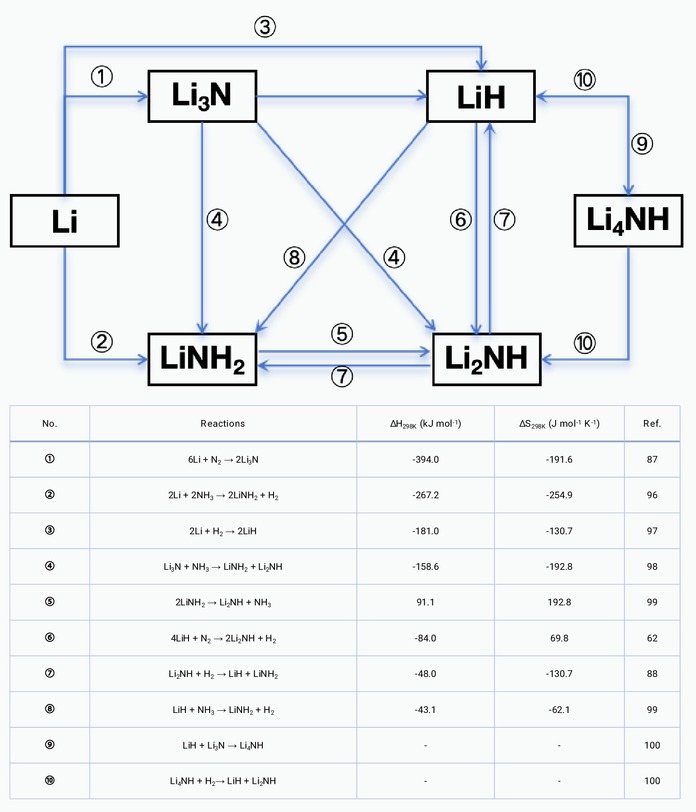
Figure 1.
Interconversion between metallic lithium and its hydride, nitride, amide, imide, and nitride-hydride.
-
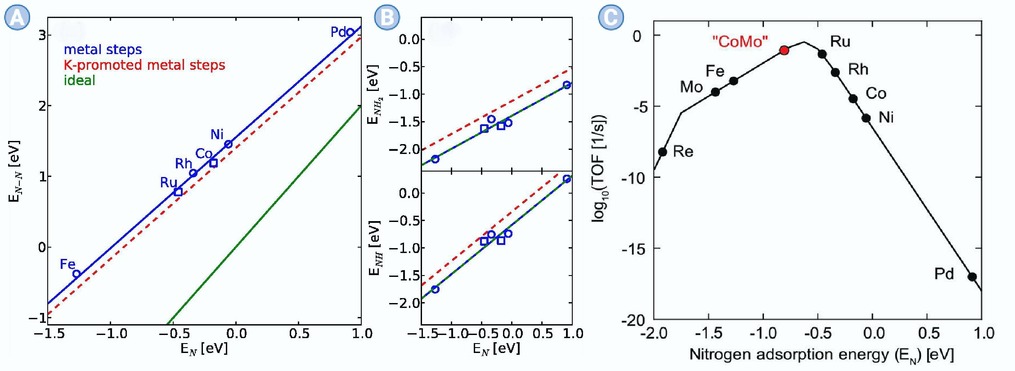
Figure 2.
Scaling relations and volcano plot on transition metal catalysts in ammonia synthesis reaction
-
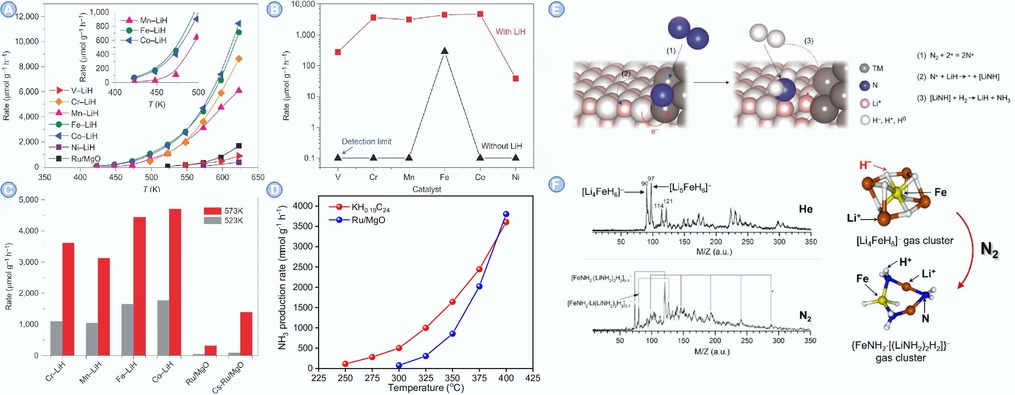
Figure 3.
(A) The ammonia production performance comparison of 3d TM(N) with LiH as a function of temperature. (B) The ammonia production performance of 3d TM(N) (from V to Ni) with or without LiH at 300°C. (C) The ammonia production performances of Cr-, Mn-, Fe- and Co-LiH composites, Ru/MgO and Cs-Ru/MgO catalysts at 250 and 300°C.53 (D) The ammonia production performance comparison of KH0.19C24 and Ru/MgO as a function of temperature.109 (E) Proposed reaction mechanism of ammonia synthesis on 3d TM(N)-LiH composite catalysts.53 (F) Mass spectrum of the species produced by pulsed laser vaporization of Fe-LiH in the presence of a helium and N2 carrier gas.112
-
Figure 4.
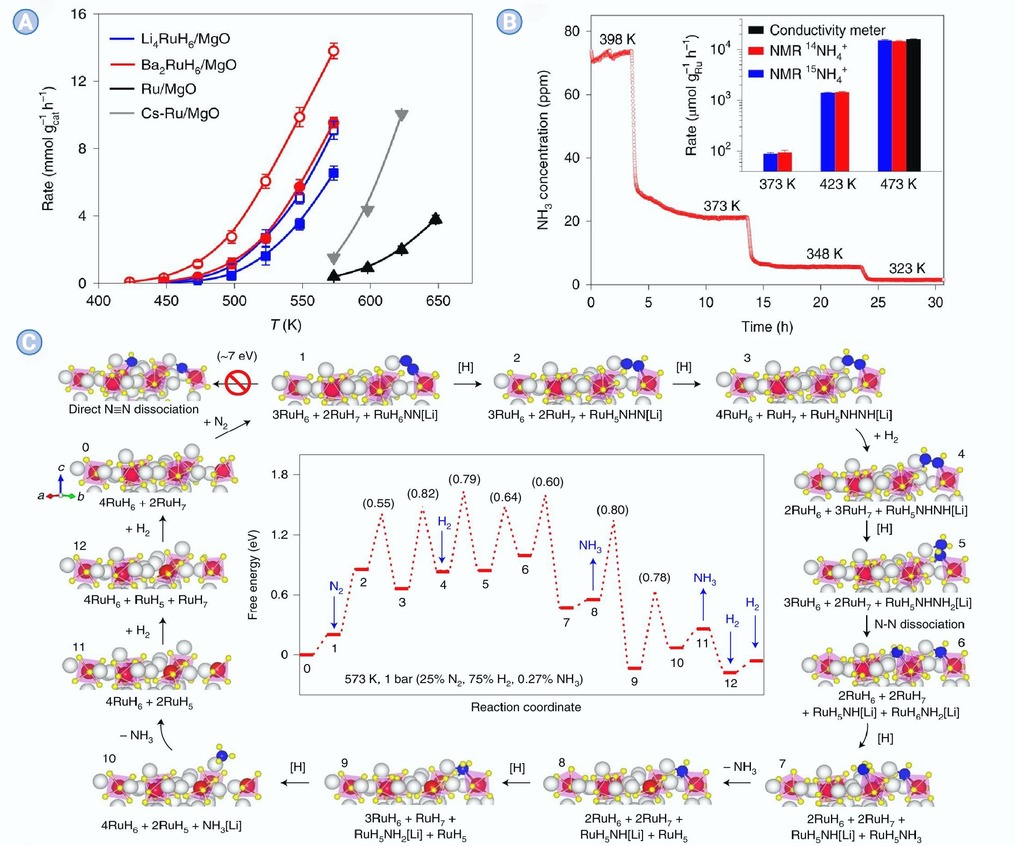
(A) Ammonia synthesis rates of various Ru catalysts as a function of temperature. (B) Effluent NH3 concentration over the Ba2RuH6/MgO catalyst at different temperatures. (C) Calculated free-energy pathway for the associative mechanism of ammonia synthesis over Ru complex hydride catalysts. Color code: Li: white, Ru: red, H:yellow, N: blue.56
-
Figure 5.
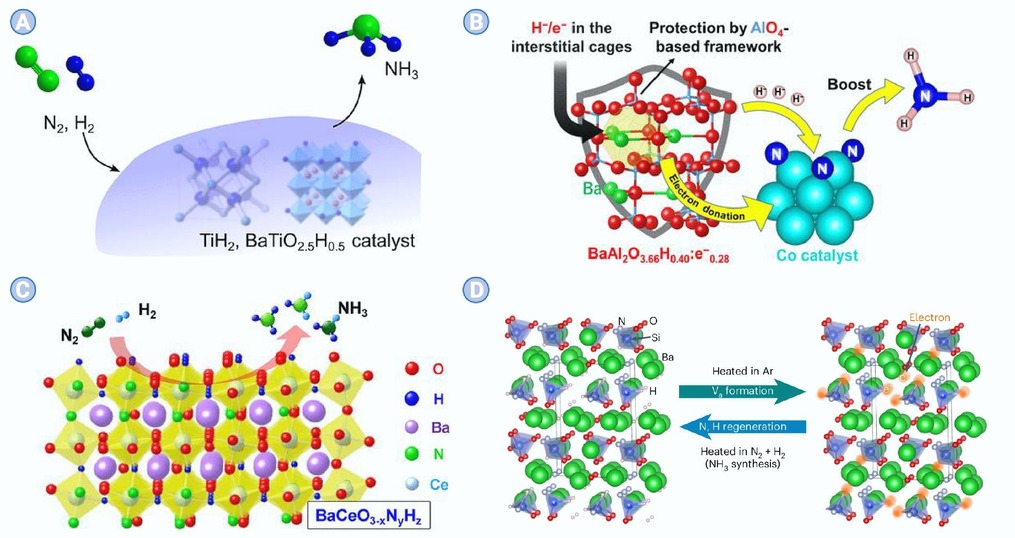
Schematics for catalytic ammonia synthesis over
-
Figure 6.
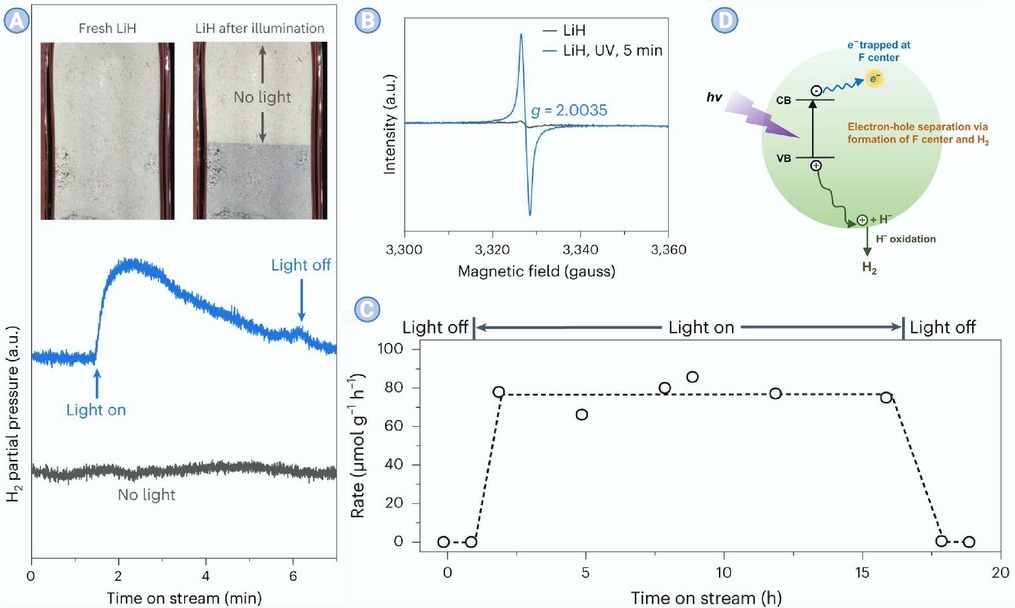
(A) Mass spectrometry (MS) profiles of LiH under a flow of Ar with or without UV illumination at room temperature. The insets are the digital photos of LiH with or without UV illumination. (B) EPR spectra of LiH with or without illumination. (C) The photocatalytic ammonia synthesis rate of LiH under UV illumination. (D) Schematics for charge carrier separation processes during the photolysis of LiH.129
-
Figure 7.
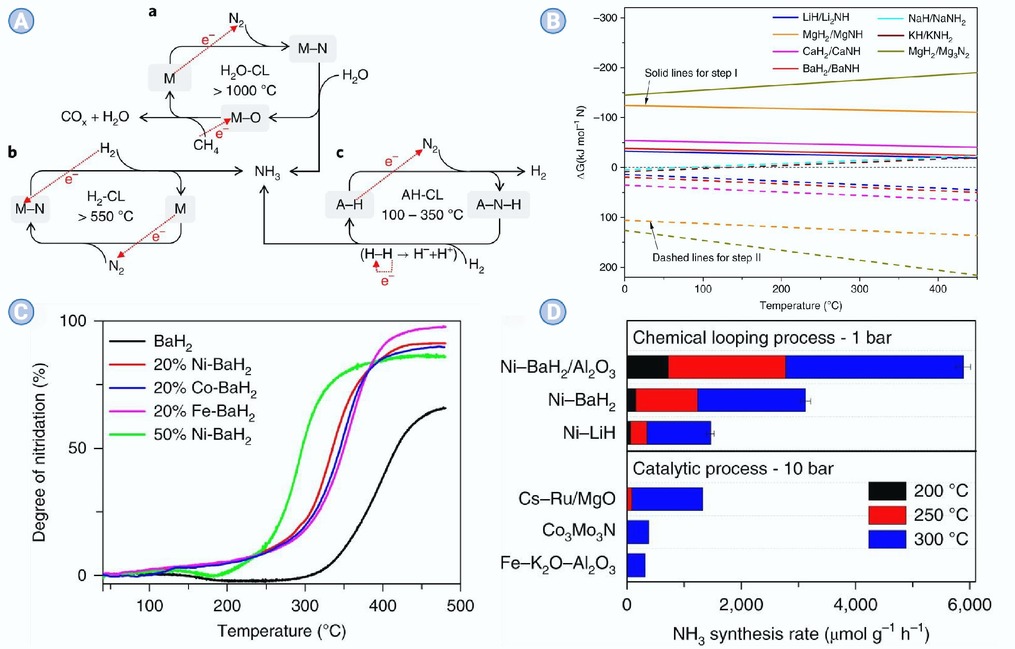
(A) Three different types (a: H2O-CL, b: H2-CL, c: AH-CL) of CLAS. M, and A denote metal and alkali/alkaline earth metal, respectively. (B) Thermodynamic analyses of steps I and II in AH-CL. (C) Different TM catalyzed nitridation of BaH2. (D) Comparison of NH3 production rates of Ni-catalyzed AH-CL (1bar) with some efficient catalysts in the conventional thermocatalytic process (10 bar).62
-
Figure 8.
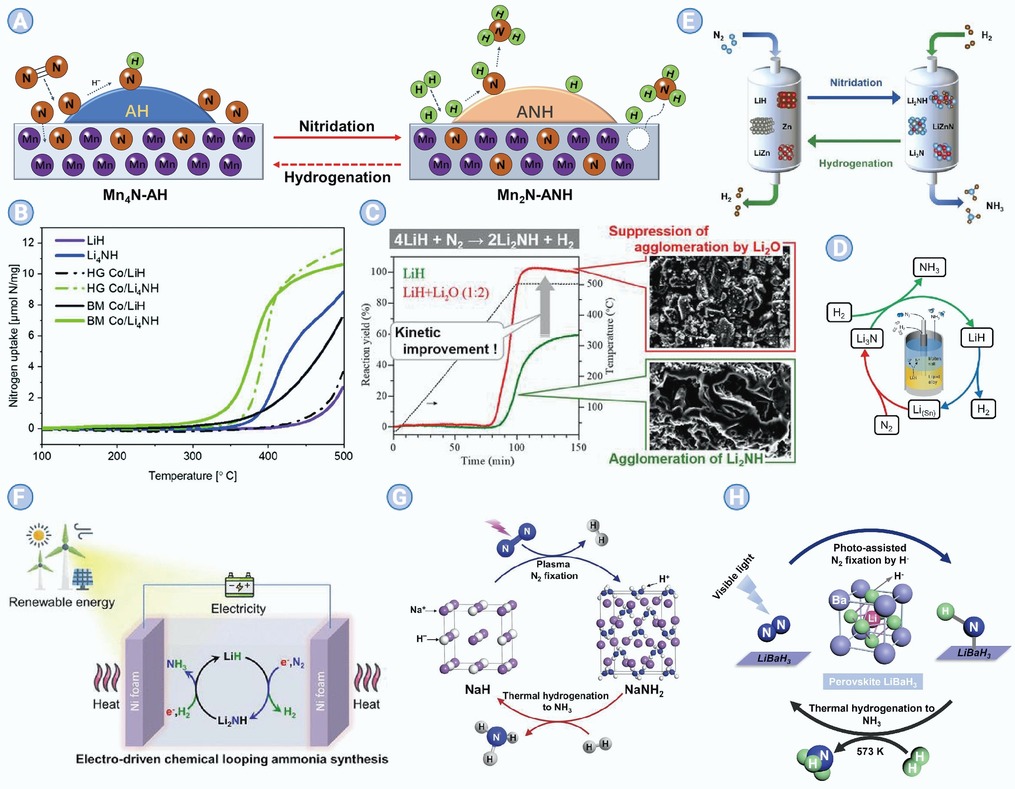
(A) Schematic diagram of CLAS mediated by MnNx-BaNH composite N carrier.63 (B) N2-TPR of plain and cobalt-composited LiH and Li4NH151. (C) Reaction yield obtained by the TG-MS experiments for LiH with or without Li2O.152 (D) The combination of liquid Li-Sn alloy and molten eutectic LiCl-KCl salt for CLAS.153 (E) Schematic diagram of CLAS mediated by Zn-LiH-Li2NH.154 (F) Conceptual cycle for Electro-driven CLAS process mediated by LiH/Li2NH.159 (G) Conceptual cycle for Plasma-driven CLAS mediated by NaH/NaNH2.160 (H) Conceptual cycle for Photo-driven CLAS process mediated by LiBaH3.161
-
Figure 9.
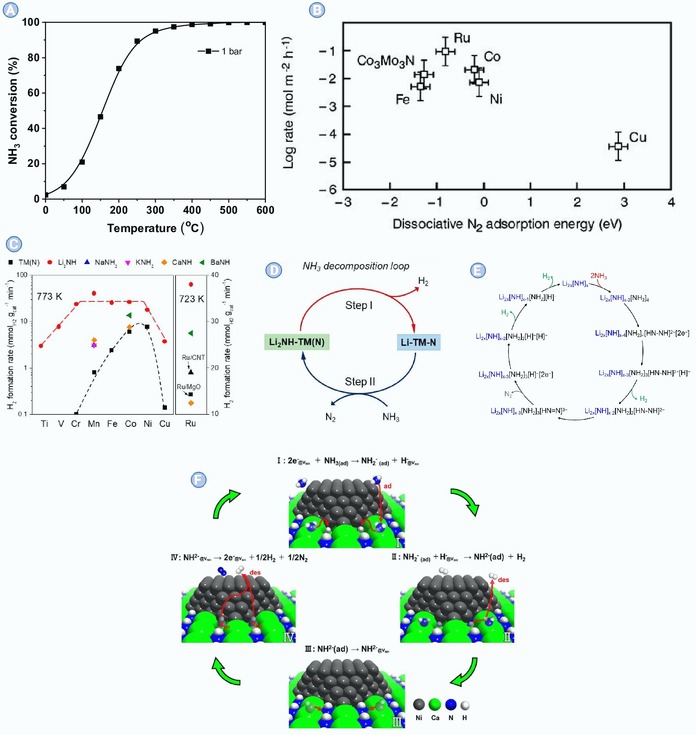
(A) Equilibrium conversion of NH3 at different temperatures and 1 atm. (B) Experimental rate of ammonia decomposition over various catalysts as a function of the reaction energy of dissociative N2 adsorption.166 (C) The effect of alkali/alkaline earth metal amides/imides of the ammonia decomposition rates with selected transition metals.86 (D) Schematic diagram of ammonia decomposition mechanism over TM-Li2NH composite catalysts.86 (E) Simplified scheme outlining the catalytic ammonia decomposition mechanism of Li2NH.171 (F) Schematic diagram of ammonia decomposition over Ni/CaNH.78
-
Figure 10.
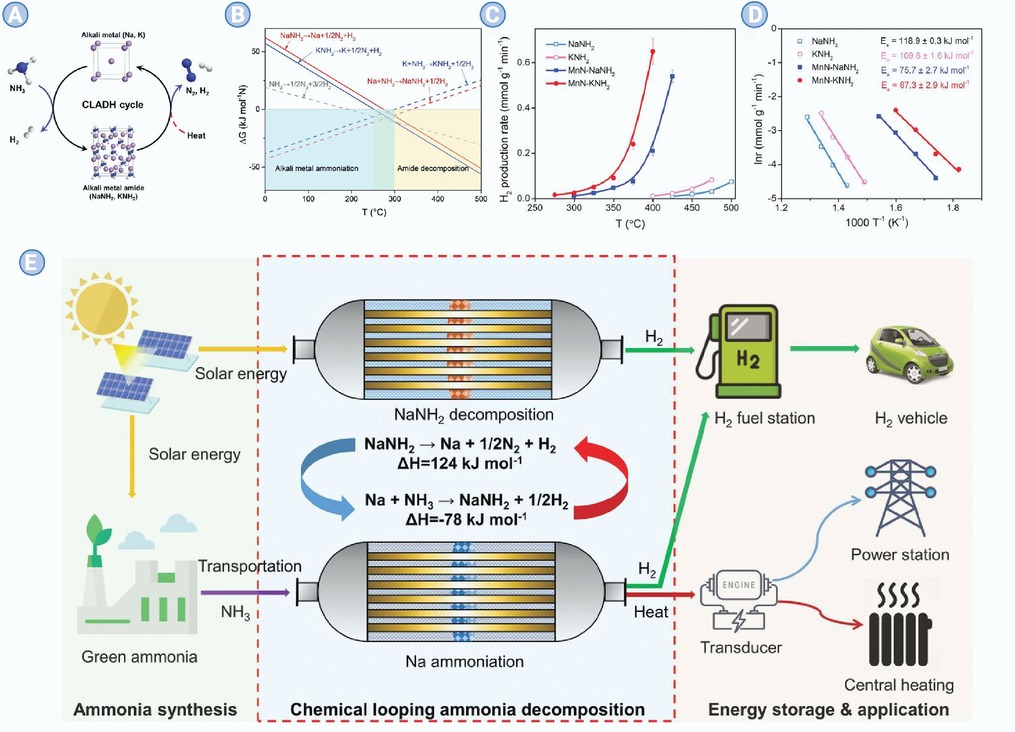
(A) Schematic diagram of CLADH mediated by alkali metals and corresponding alkali metal amides pairs. (B) Thermodynamic analyses of equation 7 and equation 8 of CLADH. The solid lines represent the temperature dependences of Gibbs free energy (ΔG) for the decomposition of NaNH2 and KNH2. The dashed lines represent the temperature dependences of ΔG for Na and K ammoniation.179 (C) Temperature-dependent hydrogen production rates of CLADH. (D) The Arrhenius plots of temperature-dependent hydrogen production rate over NaNH2 and KNH2 with or without MnN. (E) Application scenario of the CLADH process for hydrogen production and solar energy storage.179
