
Engineering-oriented review of photovoltaic cooling technologies: From performance metrics to strategy selection
-
GRAPHICAL ABSTRACT
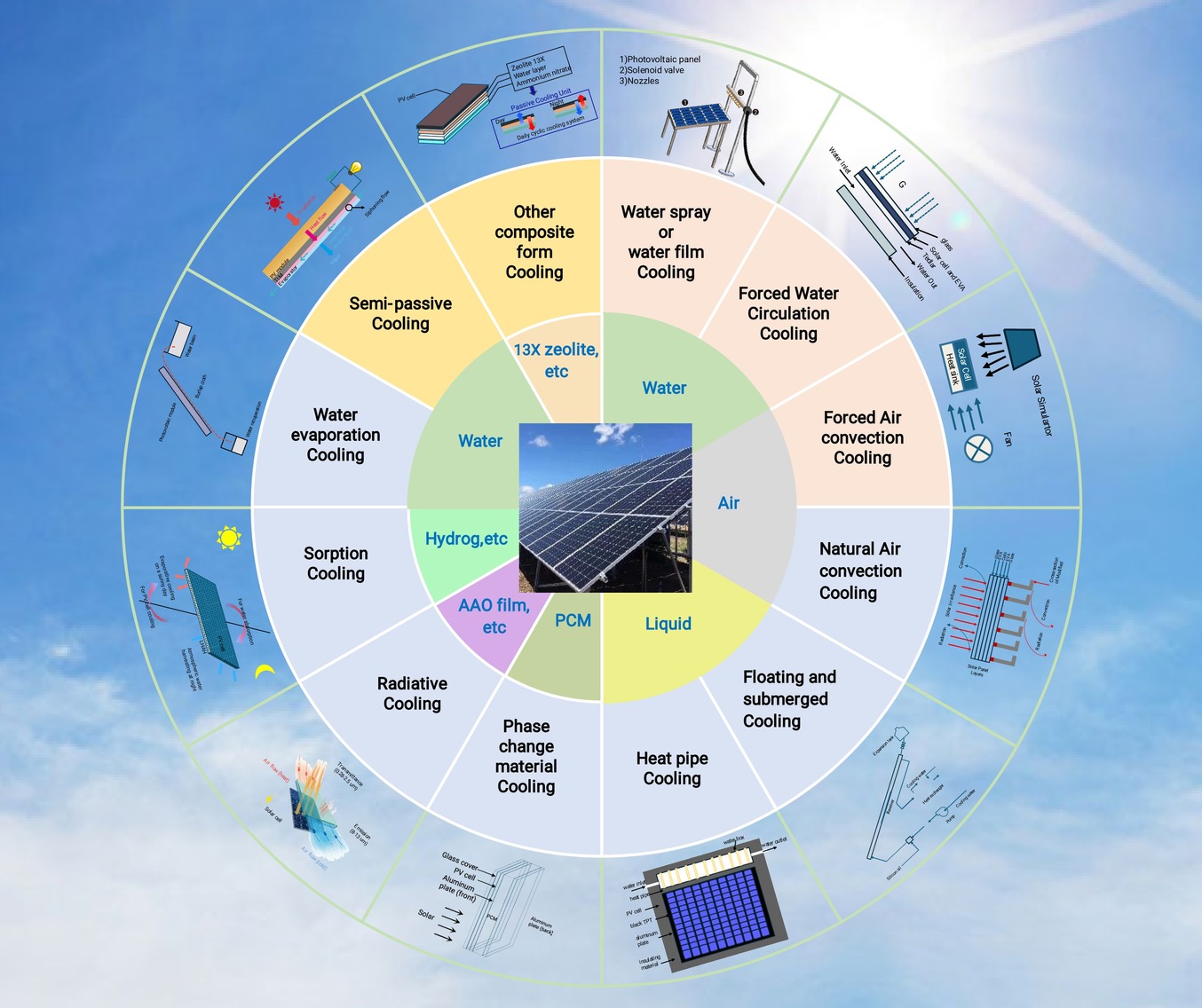
 DownLoad:
Full size image
DownLoad:
Full size image
-
PUBLIC SUMMARY
-
This review synthesizes PV cooling technologies from an engineering and deployment perspective.
Cooling methods are categorized into active, passive, environment-driven, and hybrid approaches.
Strategies are compared using unified metrics: cooling effect, energy gain, resource use, and reliability.
A decision framework links cooling choices to climate, installation constraints, and system goals.
PV cooling is framed as a multi-objective design problem for scalable and sustainable applications.
-
-
ABSTRACT
The operating temperature of photovoltaic (PV) modules strongly affects electrical efficiency, reliability, and lifetime, yet existing thermal management solutions remain fragmented and difficult to translate into practical deployment. This review presents an engineering-oriented synthesis of PV cooling technologies, shifting the focus from isolated temperature reduction to system-level performance, deployability, and sustainability. Cooling strategies are systematically categorized into active, passive, environment-driven, and hybrid approaches, and evaluated using unified metrics including temperature reduction (typically ~3–50 °C), net energy gain (up to ~25% under favorable conditions), parasitic energy consumption, resource footprint, reliability, and technology readiness level (TRL 2–8).Based on this systematic categorization and evaluation, a decision-oriented cooling strategy selection framework is proposed to bridge the gap between laboratory-scale demonstrations and real-world deployment by linking climate conditions, installation constraints, and system objectives with scenario-matched cooling solutions. By explicitly addressing the fragmented nature of existing studies, this work reframes PV cooling as a multi-objective engineering design problem rather than a single-metric optimization task. The proposed framework provides actionable guidance for selecting and integrating cooling strategies across diverse PV applications and highlights future directions toward scalable, reliable, and resource-efficient photovoltaic thermal management. -

-
REFERENCES
[1] Liu J., Zhou Y., Zhou Z., et al. (2024). Passive photovoltaic cooling: Advances toward low-temperature operation. Adv. Energy Mater. 14:2302662. DOI:10.1002/aenm.202302662 [2] Zhou N., Price L., Dai Y.D., et al. (2019). A roadmap for China to peak carbon dioxide emissions and achieve a 20% share of non-fossil fuels in primary energy by 2030. Appl. Energy 239:793−819. DOI:10.1016/j.apenergy.2019.01.154 [3] Huang B., Zhou Z., Li Z., et al. (2025). Research progress on the impact of wind-sand flow on desert photovoltaic modules and their power generation efficiency. Acta Aerodyn. Sin. 43:64−79. DOI:10.7638/kqdlxxb-2024.0219 [4] Green M.A., Dunlop E.D., Yoshita M., et al. (2025). Solar cell efficiency tables (Version 65). Prog. Photovolt. 33:3−15. DOI:10.1002/pip.3867 [5] Wikoff H.M., Reese S.B. and Reese M.O. (2022). Embodied energy and carbon from the manufacture of cadmium telluride and silicon photovoltaics. Joule 6:1710−1725. DOI:10.1016/j.joule.2022.06.006 [6] Li Y., Fu J., Mao X.Y., et al. (2021). Enhanced bulk photovoltaic effect in two-dimensional ferroelectric CuInP2S6. Nat. Commun. 12:5896. DOI:10.1038/s41467-021-26200-3 [7] Dallaev R., Pisarenko T., Papez N., et al. (2023). Overview of the current state of flexible solar panels and photovoltaic materials. Materials 16:5839. DOI:10.3390/ma16175839 [8] Zhang Z.X., Chen M., Zhong T., et al. (2023). Carbon mitigation potential afforded by rooftop photovoltaic in China. Nat. Commun. 14:2347. DOI:10.1038/s41467-023-38079-3 [9] Sadrtinov K.D. and Kiseleva S.V. (2026). Prospects for the development of renewable energy in China until 2050 in the context of the climate agenda: An assessment of investment costs and their feasibility. Clean. Energy Syst. :100241. DOI:10.1016/j.cles.2026.100241 [10] Lu F., Wang H., Guo Y., et al. (2019). Research on the performance of solar photovoltaic system based on buried pipe assisted cooling. Acta Energiae Solaris Sin. 40:1626−1631. DOI:10.19912/j.0254-0096.2019.06.019 [11] Naiara Y., Jon A., Werther C., et al. (2021). Photovoltaic modules encapsulated in composite material modified with ultraviolet additives. Sol. Energy Mater. Sol. Cells 230:111250. DOI:10.1016/j.solmat.2021.111250 [12] He S., Miao J., Zhao B., et al. (2023). Numerical simulation of flow and heat transfer in natural ventilation cooling system of solar panels. Proc. CSEE 43:3811−3822. DOI:10.13334/j.0258-8013.pcsee.213093 [13] Cai Y., Yang Y., Huang X., et al. (2024). Research progress of photovoltaic-phase change coupling system and its building application. Build. Sci. 40:116−127. DOI:10.13614/j.cnki.11-1962/tu.2024.04.13 [14] Shilpa K., Aniruddha P., Ankit B., et al. (2022). Thermal management of solar panels for overall efficiency enhancement using different cooling techniques. Int. J. Environ. Res. 16. DOI:10.1007/s41742-022-00431-8 [15] Ramkiran B., Sundarabalan C. and K.S. (2021). Sustainable passive cooling strategy for PV module: A comparative analysis. Case Stud. Therm. Eng. :101317. DOI:10.1016/j.csite.2021.101317 [16] Zhiming X., Qinglu K., Hongwei Q., et al. (2023). Cooling characteristics of solar photovoltaic panels based on phase change materials. Case Stud. Therm. Eng. 41:102667. DOI:10.1016/j.csite.2022.102667 [17] E.S.S., Bianca V., Naseem A., et al. (2022). Increased panel height enhances cooling for photovoltaic solar farms. Appl. Energy 325:119819. DOI:10.1016/j.apenergy.2022.119819 [18] Salman A., Senji L., Zhenpeng L., et al. (2022). Enhanced radiative cooling of solar cells by integration with heat pipe. Appl. Energy 308:118363. DOI:10.1016/j.apenergy.2021.118363 [19] Tian Y., Yan J., Peng Y., et al. (2022). Jet impact cooling characteristics of solar dense photovoltaic modules under high energy flow density. Acta Energiae Solaris Sin. 043. [20] Meiwei W., Shiyang T., Huan X., et al. (2021). Cooling performance optimization of air-cooled battery thermal management system. Appl. Therm. Eng. 195:117242. DOI:10.1016/j.applthermaleng.2021.117242 [21] Chen H., Shao Y., Yang H., et al. (2024). Numerical study of heat pipe heat exchanger based on concentrating solar photovoltaic cell system. Renew. Energy Resour. 42:167−173. [22] Mechanical S.o., Manufacturing Engineering – UNSW S., Australia, Mechanical S.o., et al. (2018). Microchannel cooling of concentrator photovoltaics: A review. Renew. Sustain. Energy Rev. 90:1041−1059. DOI:10.1016/j.rser.2018.04.010 [23] Mahmoudi S.E., Issa C., Aaron G., et al. (2021). Review of intelligent control systems for natural ventilation as passive cooling strategy for UK buildings and similar climatic conditions. Energies 14:4388. DOI:10.3390/en14154388 [24] Royne A., Dey C.J. and Mills D.R. (2004). Cooling of photovoltaic cells under concentrated illumination: A critical review. Sol. Energy Mater. Sol. Cells 86:451−483. DOI:10.1016/j.solmat.2004.09.003 [25] Chandrasekar M., Rajkumar S. and Valavan D. (2015). A review on the thermal regulation techniques for non integrated flat PV modules mounted on building top. Energy Build. 86:692−697. DOI:10.1016/j.enbuild.2014.10.071 [26] Siecker J., Kusakana K. and Numbi B.P. (2017). A review of solar photovoltaic systems cooling technologies. Renew. Sustain. Energy Rev. 79:192−203. DOI:10.1016/j.rser.2017.05.053 [27] Arash M., Mousa F., Mofid G.-B., et al. (2022). A review of passive cooling of photovoltaic devices. Clean. Eng. Technol. 11:100579. DOI:10.1016/j.clet.2022.100579 [28] Kumar T.M., Venktesh M., Rahul D., et al. (2023). Effects of active cooling techniques to improve the overall efficiency of photovoltaic module: An updated review. E3S Web Conf. 387:01012. DOI:10.1051/e3sconf/202338701012 [29] Li H., Zhao J., Li M., et al. (2019). Performance analysis of passive cooling for photovoltaic modules and estimation of energy-saving potential. Sol. Energy 181:70−82. DOI:10.1016/j.solener.2019.01.014 [30] Sato D. and Yamada N. (2019). Review of photovoltaic module cooling methods and performance evaluation of the radiative cooling method. Renew. Sustain. Energy Rev. 104:151−166. DOI:10.1016/j.rser.2018.12.051 [31] Luo X., Zhang Y., Liu L., et al. (2025). A self-powered Ag/β-Ga2O3 photodetector with broadband response from 200 to 980 nm based on the photovoltaic and pyro-phototronic effects. J. Mater. Sci. Technol. 206:125−134. DOI:10.1016/j.jmst.2024.04.010 [32] Dong Y. (2021). Crystalline silicon solar cell conductive paste with the preparation and properties of organic carrier research. (Taiyuan University of Science and Technology). [33] Kemppainen E., Aschbrenner S., Bao F., et al. (2020). Effect of the ambient conditions on the operation of a large-area integrated photovoltaic-electrolyser. Sustain. Energy Fuels 4:4831−4847. DOI:10.1039/D0SE00921K [34] Kurniawati I. and Sung Y. (2024). A review of heat dissipation and absorption technologies for enhancing performance in photovoltaic–thermal systems. Energies 17:1721. DOI:10.3390/en17071721 [35] K.M.T. and Adil H.A. (2022). Optimization the performance of photovoltaic panels using aluminum-oxide nanofluid as cooling fluid at different concentrations and one-pass flow system. Results Eng. 15:100541. DOI:10.1016/j.rineng.2022.100541 [36] Karavioti A., Duros V. and Stathatos E. (2024). Transparent luminescent down-conversion coating for improved performance and enhanced stability of carbon-based perovskite solar cells. Opt. Mater. 154:115757. DOI:10.1016/j.optmat.2024.115757 [37] Chen Y.T., Xia W.X., Zhou Y., et al. (2025). Efficient photothermal conversion and Z-scheme charge transfer in narrow-gap semiconductor heterojunction for photothermal-assisted photocatalysis. J. Environ. Chem. Eng. 13:115147. DOI:10.1016/j.jece.2024.115147 [38] Yakubu S., Samikannu R., Gawusu S., et al. (2025). A holistic review of the effects of dust buildup on solar photovoltaic panel efficiency. Sol. Compass 13:100101. DOI:10.1016/j.solcom.2024.100101 [39] Liu Z., Gong Y., Wang Z., et al. (2024). Revealing the intrinsic mechanisms of hot and cold spots within a locally shaded photovoltaic module based on micro-electrical characteristics. Energies 17:4462. DOI:10.3390/en17174462 [40] Ai Z., Ma T., Zhang Y., et al. (2024). Unveiling energy conversion mechanisms and regulation strategies in perovskite solar cells. Small 20:e2404012. DOI:10.1002/smll.202404012 [41] Wei J., Chen H., Liu J., et al. (2025). Radiative cooling technologies toward enhanced energy efficiency of solar cells: Materials, systems, and perspectives. Nano Energy 136:110680. DOI:10.1016/j.nanoen.2025.110680 [42] Ngoc T.N., Sanseverino E.R., Quang N.N., et al. (2019). A hierarchical architecture for increasing efficiency of large photovoltaic plants under non-homogeneous solar irradiation. Sol. Energy 188:1306−1319. DOI:10.1016/j.solener.2019.07.033 [43] Baqiya M.A., Purwandari E., Asih R., et al. (2025). A brief review and prospect of amorphous carbon and reduced graphene oxides derived from biomass as a low cost and new photovoltaic cell. Appl. Surf. Sci. 700:163203. DOI:10.1016/j.apsusc.2025.163203 [44] Yang L.-H., Liang J.-D., Hsu C.-Y., et al. (2019). Enhanced efficiency of photovoltaic panels by integrating a spray cooling system with shallow geothermal energy heat exchanger. Renew. Energy 134:970−981. DOI:10.1016/j.renene.2018.11.089 [45] Wu Z., Hu Y., Wen J.X., et al. (2020). A review for solar panel fire accident prevention in large-scale PV applications. IEEE Access 8:132466−132480. DOI:10.1109/ACCESS.2020.3010212 [46] Hao S., Wang H., Ma X., et al. (2024). Hot spot fault detection of photovoltaic modules based on high-order spatial interaction network. Acta Energiae Solaris Sin. 45:358−366. DOI:10.19912/j.0254-0096.tynxb.2023-0574 [47] Houchmand L.J., Martí M.M. and Domingo S.G. (2024). Influence of PV panels on convective heat flux in different roofs in the Mediterranean: Effects on the urban heat island. Build. Environ. 266:112097. DOI:10.1016/j.buildenv.2024.112097 [48] Skoplaki E. and Palyvos J. A. (2009). On the temperature dependence of photovoltaic module electrical performance: A review of efficiency/power correlations. Solar Energy 83:614-624. DOI:10.1016/j.solener.2008.10.008 [49] Alktranee M. and Péter B. (2023). Energy and exergy analysis for photovoltaic modules cooled by evaporative cooling techniques. Energy Reports 9:122−132. DOI:10.1016/j.egyr.2022.11.177 [50] Ding D., Ding W., Jiao J., et al. (2024). Effects of volume fraction of short-cut quartz fibers on mechanical and thermal properties of SiO2f/SiO2 composites. J. Aust. Ceram. Soc. 60:689−699. DOI:10.1007/s41779-024-01034-6 [51] Kumar P.S., Omprakash S.P., Varun G., et al. (2022). A detailed review on the performance of photovoltaic/thermal system using various cooling methods. Sustain. Energy Technol. Assess. 51:101844. DOI:10.1016/j.seta.2021.101844 [52] Soliman A.M.A., Hassan H. and Ookawara S. (2019). An experimental study of the performance of the solar cell with heat sink cooling system. Energy Procedia 162:127−135. DOI:10.1016/j.egypro.2019.04.014 [53] Sajjad U., Amer M., Ali H.M., et al. (2019). Cost effective cooling of photovoltaic modules to improve efficiency. Case Stud. Therm. Eng. 14:100420. DOI:10.1016/j.csite.2019.100420 [54] Solanki S.C., Dubey S. and Tiwari A. (2009). Indoor simulation and testing of photovoltaic thermal (PV/T) air collectors. Appl. Energy 86:2421−2428. DOI:10.1016/j.apenergy.2009.03.013 [55] Ahmed H., Abdelgalil E. and M.E.-B.H. (2023). Experimental and numerical investigation for PV cooling by forced convection. Alex. Eng. J. 64:427−440. DOI:10.1016/j.aej.2022.09.006 [56] Dirawi H., Wang Q., Hu M., et al. (2024). A hydronic closed-loop photovoltaic cooling system designed for hot and arid regions: Performance evaluation and degradation rate/lifetime analysis. Appl. Energy 373:123999. DOI:10.1016/j.apenergy.2024.123999 [57] Xie L., Li H., Zhang Y., et al. (2023). Topology optimization and numerical analysis of cold plates for concentrating photovoltaic thermal management. Case Stud. Therm. Eng. 52:103713. DOI:10.1016/j.csite.2023.103713 [58] Bahaidarah H., Subhan A., Gandhidasan P., et al. (2013). Performance evaluation of a PV (photovoltaic) module by back surface water cooling for hot climatic conditions. Energy 59:445−453. DOI:10.1016/j.energy.2013.07.050 [59] Saada S.A., Nebbali R., Kecili I., et al. (2025). Operating temperature and electrical efficiency of a photovoltaic panel cooled by laminar water film flowing on its front face: Experimental and numerical approach. Mater. Today Sustain. 30:101093. DOI:10.1016/j.mtsust.2025.101093 [60] Hadipour A., Rajabi Zargarabadi M. and Rashidi S. (2021). An efficient pulsed-spray water cooling system for photovoltaic panels: Experimental study and cost analysis. Renew. Energy 164:867−875. DOI:10.1016/j.renene.2020.09.021 [61] Nižetić S., Čoko D., Yadav A., et al. (2016). Water spray cooling technique applied on a photovoltaic panel: The performance response. Energy Convers. Manage. 108:287−296. DOI:10.1016/j.enconman.2015.10.079 [62] Krauter S. (2004). Increased electrical yield via water flow over the front of photovoltaic panels. Sol. Energy Mater. Sol. Cells 82:131−137. DOI:10.1016/j.solmat.2004.01.011 [63] Liyao X., Hongmin L., Yan Z., et al. (2023). Topology optimization and numerical analysis of cold plates for concentrating photovoltaic thermal management. Case Stu. Ther. Eng. 52. DOI:10.1016/j.Csite.2023.103713 [64] Ismail M., Ali A.M. and Pereira S.-C.C. (2025). Vortex generators in heat sinks: Design, optimisation, applications and future trends. Results Eng. 25:104216. DOI:10.1016/j.rineng.2025.104216 [65] Zhou Z., Tkachenko S., Bahl P., et al. (2022). Passive PV module cooling under free convection through vortex generators. Renew. Energy 190:319−329. DOI:10.1016/j.renene.2022.03.133 [66] Hernandez-Perez J.G., Carrillo J.G., Bassam A., et al. (2021). Thermal performance of a discontinuous finned heatsink profile for PV passive cooling. Appl. Therm. Eng. 184:116238. DOI:10.1016/j.applthermaleng.2020.116238 [67] Hernandez-Perez J.G., Carrillo J.G., Bassam A., et al. (2020). A new passive PV heatsink design to reduce efficiency losses: A computational and experimental evaluation. Renew. Energy 147:1209−1220. DOI:10.1016/j.renene.2019.09.088 [68] Zou Z., Yan W., Gong H., et al. (2019). Quantifying the performance advantage of the novel passive air cooling system for PV array and system structure optimization. Appl. Therm. Eng. 149:899−908. DOI:10.1016/j.applthermaleng.2018.12.085 [69] Al-Amri F., Saeed F. and Mujeebu M.A. (2022). Novel dual-function racking structure for passive cooling of solar PV panels – thermal performance analysis. Renew. Energy 198:100−113. DOI:10.1016/j.renene.2022.08.047 [70] Adhikari R.C., Wood D.H. and Pahlevani M. (2020). Optimizing rectangular fins for natural convection cooling using CFD. Therm. Sci. Eng. Prog. 17:100484. DOI:10.1016/j.tsep.2020.100484 [71] Zheng Y., Miao J., Yu H., et al. (2023). Thermal analysis of air-cooled channels of different sizes in naturally ventilated photovoltaic wall panels. Buildings 13:23002. DOI:10.3390/buildings13123002 [72] Yuan F., Yin Z., Zhao N., et al. (2025). Experimental and numerical analysis of phase change material-based photovoltaic/thermal system with dual-parallel cooling channels. Sol. Energy Mater. Sol. Cells 286:113563. DOI:10.1016/j.solmat.2025.113563 [73] Wu S. (2019). Research progress of photovoltaic thermal management system based on phase change materials. Refrig. 38:51−56. DOI:10.3969/j.ISSN.1005-9180.2019.03.011 [74] Naqvi S.N.R., Haider M.Z., Jin X., et al. (2025). Investigation of thermal and mechanical performance of composite PCM mortar incorporated with graphene nanoplatelets. Constr. Build. Mater. DOI:10.1016/j.conbuildmat.2025.140576 [75] Khan Z., Jamil F., Nasir M.A., et al. (2025). Experimental analysis of a double pass solar air collector using phase change materials integrated with nanoparticle. J. Therm. Anal. Calorim. 150:5303−5318. DOI:10.1007/s10973-025-14007-z [76] Park J., Kim T. and Leigh S.-B. (2014). Application of a phase-change material to improve the electrical performance of vertical-building-added photovoltaics considering the annual weather conditions. Sol. Energy 105:561−574. DOI:10.1016/j.solener.2014.04.020 [77] Tan Jian Wei N., Jian Nan W. and Guiping C. (2017). Experimental study of efficiency of solar panel by phase change material cooling. IOP Conf. Ser.: Mater. Sci. Eng. 217:012011. DOI:10.1088/1757-899X/217/1/012011 [78] Biwole P.H., Eclache P. and Kuznik F. (2013). Phase-change materials to improve solar panel's performance. Energy Build. 62:59−67. DOI:10.1016/j.enbuild.2013.02.059 [79] Hasan A., McCormack S.J., Huang M.J., et al. (2015). Increased photovoltaic performance through temperature regulation by phase change materials: Materials comparison in different climates. Sol. Energy 115:264−276. DOI:10.1016/j.solener.2015.02.003 [80] Singh P., Mudgal V., Khanna S., et al. (2020). Experimental investigation of solar photovoltaic panel integrated with phase change material and multiple conductivity-enhancing-containers. Energy 205:118047. DOI:10.1016/j.energy.2020.118047 [81] Wang F., Li Z., Liu M., et al. (2023). Heat-dissipation performance of photovoltaic panels with a phase-change-material fin structure. J. Clean. Prod. 423:138756. DOI:10.1016/j.jclepro.2023.138756 [82] Chilbule P.V., Dhole L.P., Chavhan G.R., et al. (2025). Optimization of heat pipe used for thermal management of photovoltaic panel. Trans. Indian Natl. Acad. Eng. 10:171−181. DOI:10.1007/s41403-024-00513-3 [83] Wu S.-Y., Zhang Q.-L., Xiao L., et al. (2011). A heat pipe photovoltaic/thermal (PV/T) hybrid system and its performance evaluation. Energy Build. 43:3558−3567. DOI:10.1016/j.enbuild.2011.09.017 [84] Gang P., Huide F., Jie J., et al. (2012). Annual analysis of heat pipe PV/T systems for domestic hot water and electricity production. Energy Convers. Manage. 56:8−21. DOI:10.1016/j.enconman.2011.11.011 [85] Hou L., Quan Z., Zhao Y., et al. (2016). An experimental and simulative study on a novel photovoltaic-thermal collector with micro heat pipe array (MHPA-PV/T). Energy Build. 124:60−69. DOI:10.1016/j.enbuild.2016.03.056 [86] Jirapongphatai S., Asanakham A., Deethayat T., et al. (2023). Electrical and thermal performance analysis of photovoltaic module having evaporating surface for cooling. Energy Rep. 9:4734−4748. DOI:10.1016/j.egyr.2023.03.117 [87] Chandrasekar M. and Senthilkumar T. (2015). Experimental demonstration of enhanced solar energy utilization in flat PV (photovoltaic) modules cooled by heat spreaders in conjunction with cotton wick structures. Energy 90:1401−1410. DOI:10.1016/j.energy.2015.06.074 [88] Lucas M., Aguilar F.J., Ruiz J., et al. (2017). Photovoltaic evaporative chimney as a new alternative to enhance solar cooling. Renew. Energy 111:26−37. DOI:10.1016/j.renene.2017.03.087 [89] Malvika A., Arunachala U.C. and Varun K. (2022). Sustainable passive cooling strategy for photovoltaic module using burlap fabric-gravity assisted flow: A comparative energy, exergy, economic, and enviroeconomic analysis. Appl. Energy 326:120036. DOI:10.1016/j.apenergy.2022.120036 [90] Dida M., Boughali S., Bechki D., et al. (2021). Experimental investigation of a passive cooling system for photovoltaic modules efficiency improvement in hot and arid regions. Energy Convers. Manage. 243:114328. DOI:10.1016/j.enconman.2021.114328 [91] Li F., Lin H., Sui Z., et al. (2026). Multi-scale Optimization on Interfacial Evaporative Cooling for Photovoltaic Performance Enhancement. Adv. Sci.:e75120. DOI:10.1002/advs.75120 [92] Su Y., Gu R., Li Y., et al. (2026). Seawater Interfacial Evaporation in Composite Gel Enables Photovoltaic Cooling, Simultaneous Seawater Desalination, and Enhanced Uranium Extraction. Adv. Funct. Mater. 36:2420651. DOI:10.1002/adfm.202420651 [93] Huang M., Zhou H., Tang G.H., et al. (2024). The potential of radiative cooling enhanced photovoltaic systems in China. Adv. Appl. Energy 15:100184. DOI:10.1016/j.adapen.2024.100184 [94] Li L., Chen H., Xie Z., et al. (2019). Ultra-broadband metamaterial absorber for infrared transparency window of the atmosphere. Phys. Lett. A 383:126025. DOI:10.1016/j.physleta.2019.126025 [95] Li L., Wang B., Wu X., et al. (2025). Performance analysis of temperature-dependent near-field thermophotovoltaics with passive radiative cooling approach. Renew. Energy 248:123102. DOI:10.1016/j.renene.2025.123102 [96] Xie Y., Lai Q., Guo P., et al. (2020). Investigating the infrared spectral radiative properties of self-ordered anodic aluminum oxide for passive radiative heat dissipation. Infrared Phys. Technol. 109:103438. DOI:10.1016/j.infrared.2020.103438 [97] Gong Q., Chen J., Zhang Y., et al. (2025). Spectrally engineered coatings for steering the solar photons. Adv. Mater. 37:e2502542. DOI:10.1002/adma.202502542 [98] Jia S., Huang M., Jiang X., et al. (2025). Tandem daytime radiative cooling and solar power generation. Cell Rep. Phys. Sci. 6:102343. DOI:10.1016/j.xcrp.2024.102343 [99] Zhao B., Hu M., Ao X., et al. (2018). Performance analysis of enhanced radiative cooling of solar cells based on a commercial silicon photovoltaic module. Sol. Energy 176:248−255. DOI:10.1016/j.solener.2018.10.043 [100] Zhao B., Lu K., Hu M., et al. (2022). Radiative cooling of solar cells with micro-grating photonic cooler. Renew. Energy 191:662−668. DOI:10.1016/j.renene.2022.04.063 [101] Tang H., Zhou Z., Jiao S., et al. (2022). Radiative cooling of solar cells with scalable and high-performance nanoporous anodic aluminum oxide. Sol. Energy Mater. Sol. Cells 235:111498. DOI:10.1016/j.solmat.2021.111498 [102] Li Z., Ma T., Ji F., et al. (2023). A hygroscopic composite backplate enabling passive cooling of photovoltaic panels. ACS Energy Lett. DOI:10.1021/acsenergylett.3c00196. [103] Pu S., Fu J., Liao Y., et al. (2020). Promoting energy efficiency via a self-adaptive evaporative cooling hydrogel. Adv. Mater. 32:e1907307. DOI:10.1002/adma.201907307 [104] Li H., Ma J., Yan W., et al. (2024). Lithium-based water-absorbent hydrogel with a high solar cell cooling flux. Renew. Energy 235:121277. DOI:10.1016/j.renene.2024.121277 [105] Li F., Sui Z., Lin H., et al. (2026). Nature-Inspired Sustainable Cooling for Photovoltaics with Enhanced Temperature-Salinity Dynamics. Adv. Funct. Mater. 36:e12696. DOI:10.1002/adfm.202512696 [106] Fang H., Dang S., Kumar P., et al. (2025). Streamlined fabrication of an inexpensive hygroscopic composite for low maintenance evaporative cooling of solar panels. Mater. Sci. Eng. R Rep. 165:101016. DOI:10.1016/j.mser.2025.101016 [107] Sun Y., Wang Y., Zhu L., et al. (2014). Direct liquid-immersion cooling of concentrator silicon solar cells in a linear concentrating photovoltaic receiver. Energy 65:264−271. DOI:10.1016/j.energy.2013.11.063 [108] Zhu L., Boehm R.F., Wang Y., et al. (2011). Water immersion cooling of PV cells in a high concentration system. Sol. Energy Mater. Sol. Cells 95:538−545. DOI:10.1016/j.solmat.2010.08.037 [109] Elminshawy N.A.S., Osama A., Naeim N., et al. (2022). Thermal regulation of partially floating photovoltaics for enhanced electricity production. Sustain. Energy Technol. Assess. 53:102582. DOI:10.1016/j.seta.2022.102582 [110] Dörenkämper M., Wahed A., Kumar A., et al. (2021). The cooling effect of floating PV in two different climate zones. Sol. Energy 214:239−247. DOI:10.1016/j.solener.2020.11.029 [111] Li F., Sui Y., Lin H., et al. (2025). Self-adaptive interfacial evaporation for high-efficiency photovoltaic panel cooling. Device 3:100569. DOI:10.1016/j.device.2024.100569 [112] Kim S., Park J.H., Lee J.W., et al. (2023). Self-recovering passive cooling utilizing endothermic reaction driven by water sorption. Nat. Commun. 14:2374. DOI:10.1038/s41467-023-38081-9 [113] Ahmadi Moghaddam H., Tkachenko S., Yeoh G.H., et al. (2023). A newly designed BIPV system with enhanced passive cooling and ventilation. Build. Simul. 16:2093−2107. DOI:10.1007/s12273-023-1051-z [114] Lv S., Wu Y., Gu H., et al. (2024). Enhancing solar efficiency through simultaneous solar harvesting and radiative cooling. Appl. Therm. Eng. 241:122320. DOI:10.1016/j.applthermaleng.2023.122320 -
ABOUT THIS ARTICLE
Cite this article:
Jin Q., Yan M., Zhai C., et al. (2026). Engineering-oriented review of photovoltaic cooling technologies: From performance metrics to strategy selection. The Innovation Energy 3:100158. https://doi.org/10.59717/j.xinn-energy.2026.100158
Welcome!
To request copyright permission to republish or share portions of our works, please visit Copyright Clearance Center's (CCC) Marketplace website at marketplace.copyright.com.
Export File
Citation
Jin Q., Yan M., Zhai C., et al. (2026). Engineering-oriented review of photovoltaic cooling technologies: From performance metrics to strategy selection. The Innovation Energy 3:100158. https://doi.org/10.59717/j.xinn-energy.2026.100158

Format
Content
-
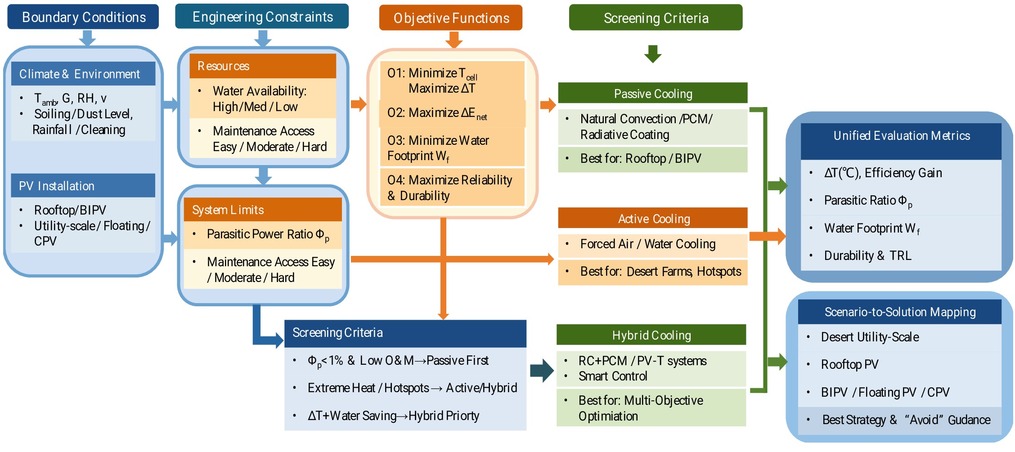
Figure 1.
PV Cooling Strategy Selection Framework: Decision-oriented architecture selection under multi-factor constraints
-
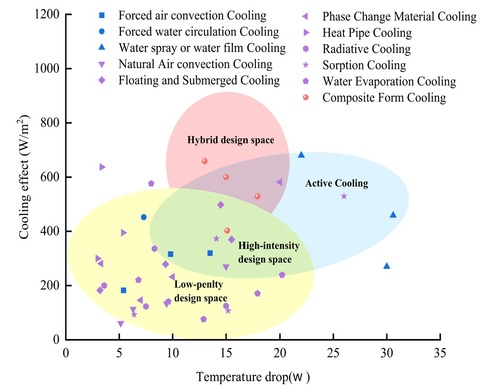
Figure 2.
Distribution of representative photovoltaic (PV) cooling strategies in terms of achievable temperature reduction and effective cooling intensity
-
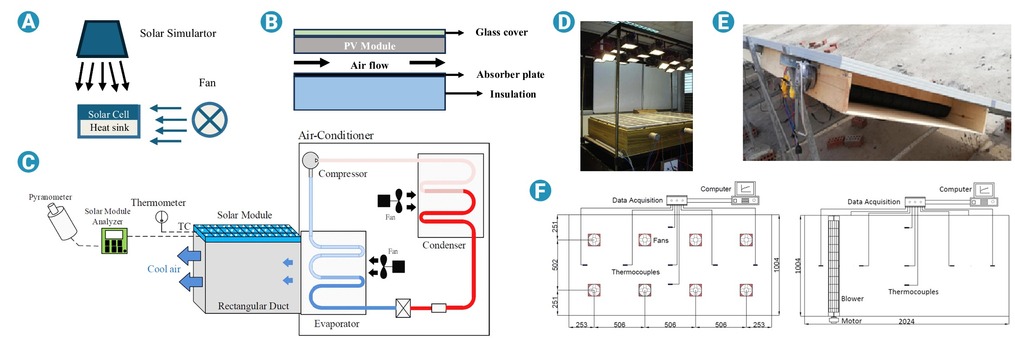
Figure 3.
Forced air cooling configurations and system-level design trade-offs
-
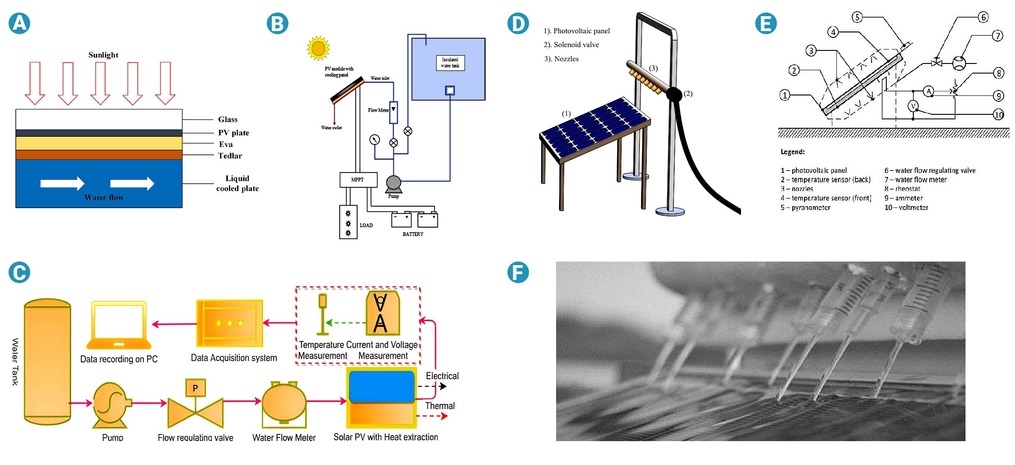
Figure 4.
Representative configurations and engineering implementations of liquid circulation cooling and spray/water film cooling strategies for PV modules
-
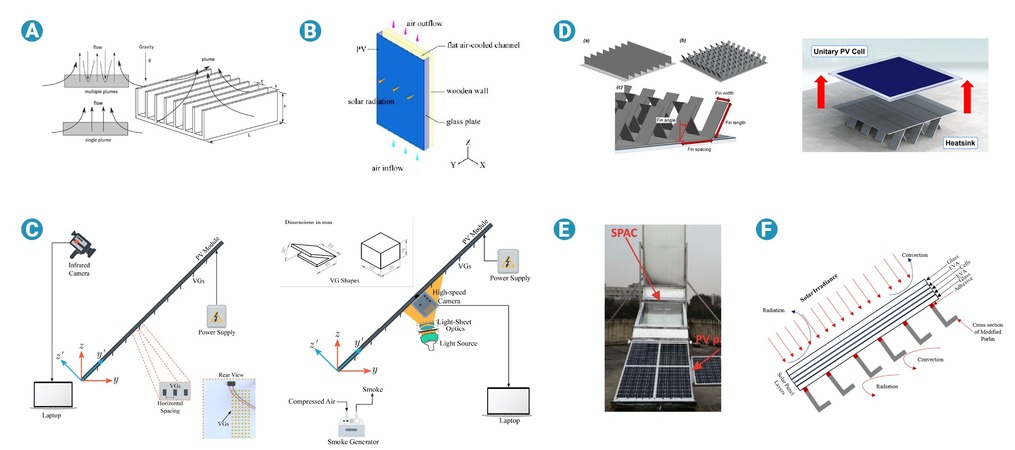
Figure 5.
Natural convection–enhanced passive cooling: structural design strategies
-
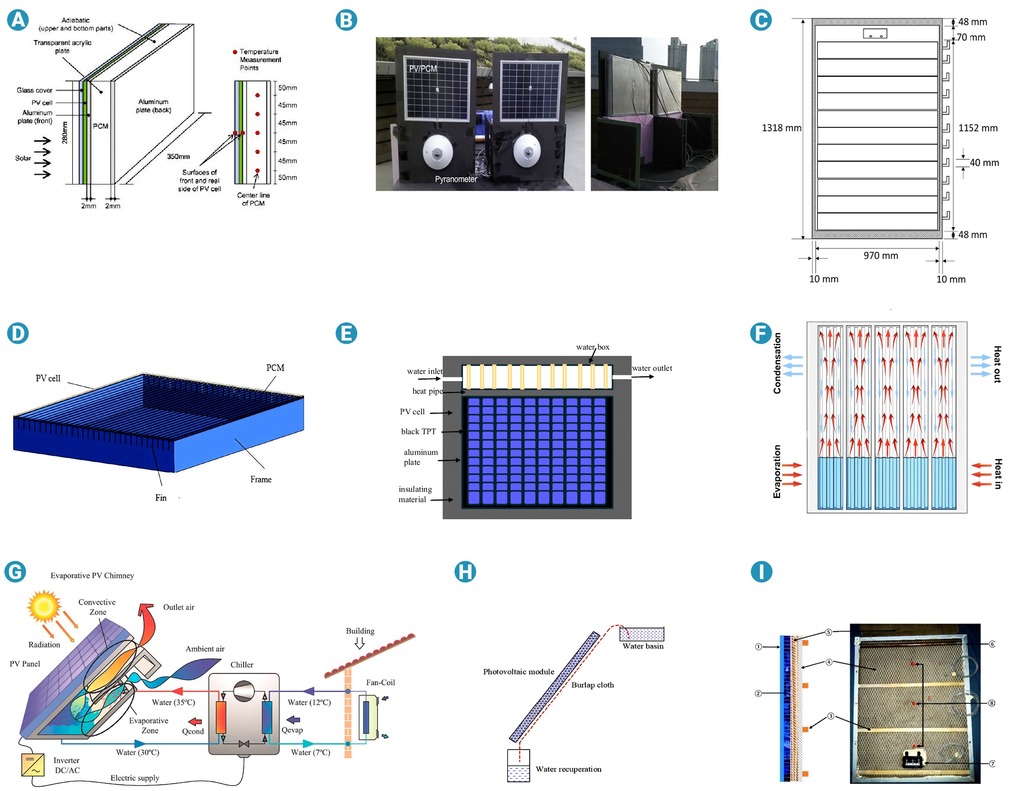
Figure 6.
Phase-change-based passive cooling strategies for PV modules
-
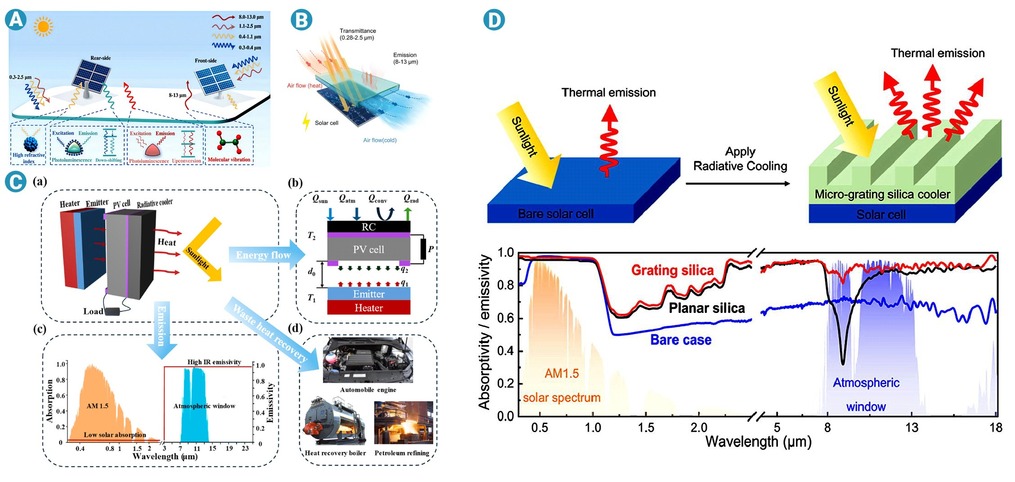
Figure 7.
Environment-driven radiative cooling strategies for PV modules
-
Figure 8.
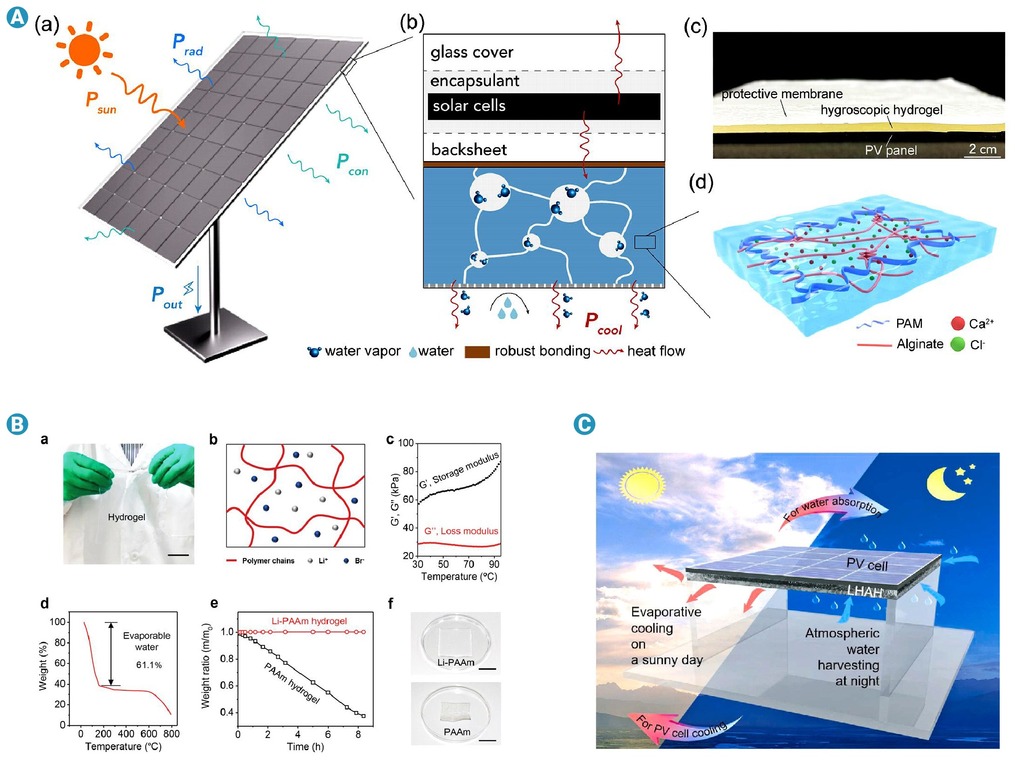
Sorption-based passive cooling strategies for PV modules
-
Figure 9.
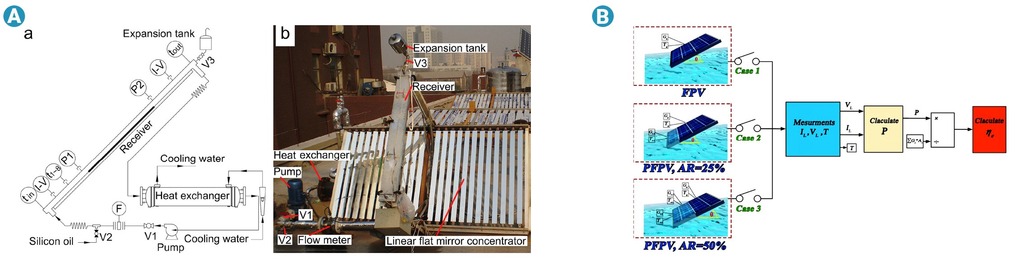
Floating and submerged passive cooling strategies for PV modules (A) Schematic diagram of an immersion cooling system.107 (B) Schematic diagram of a partial immersion cooling system.109
-
Figure 10.
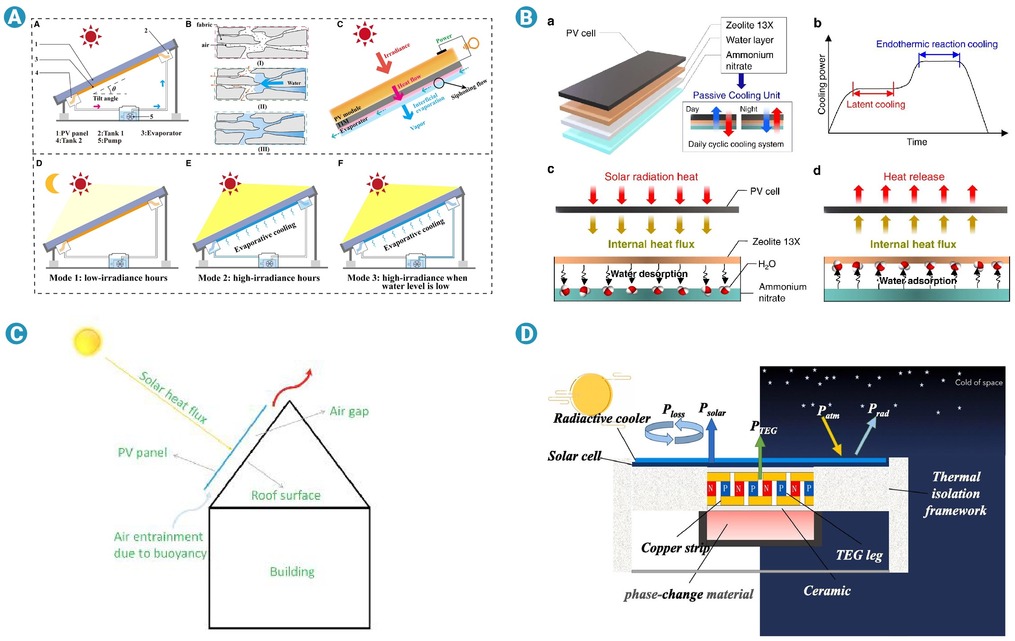
Representative hybrid cooling strategies for PV modules
