
Molecular and cellular basis of life cycle transition provides new insights into ecological adaptation in jellyfish
-
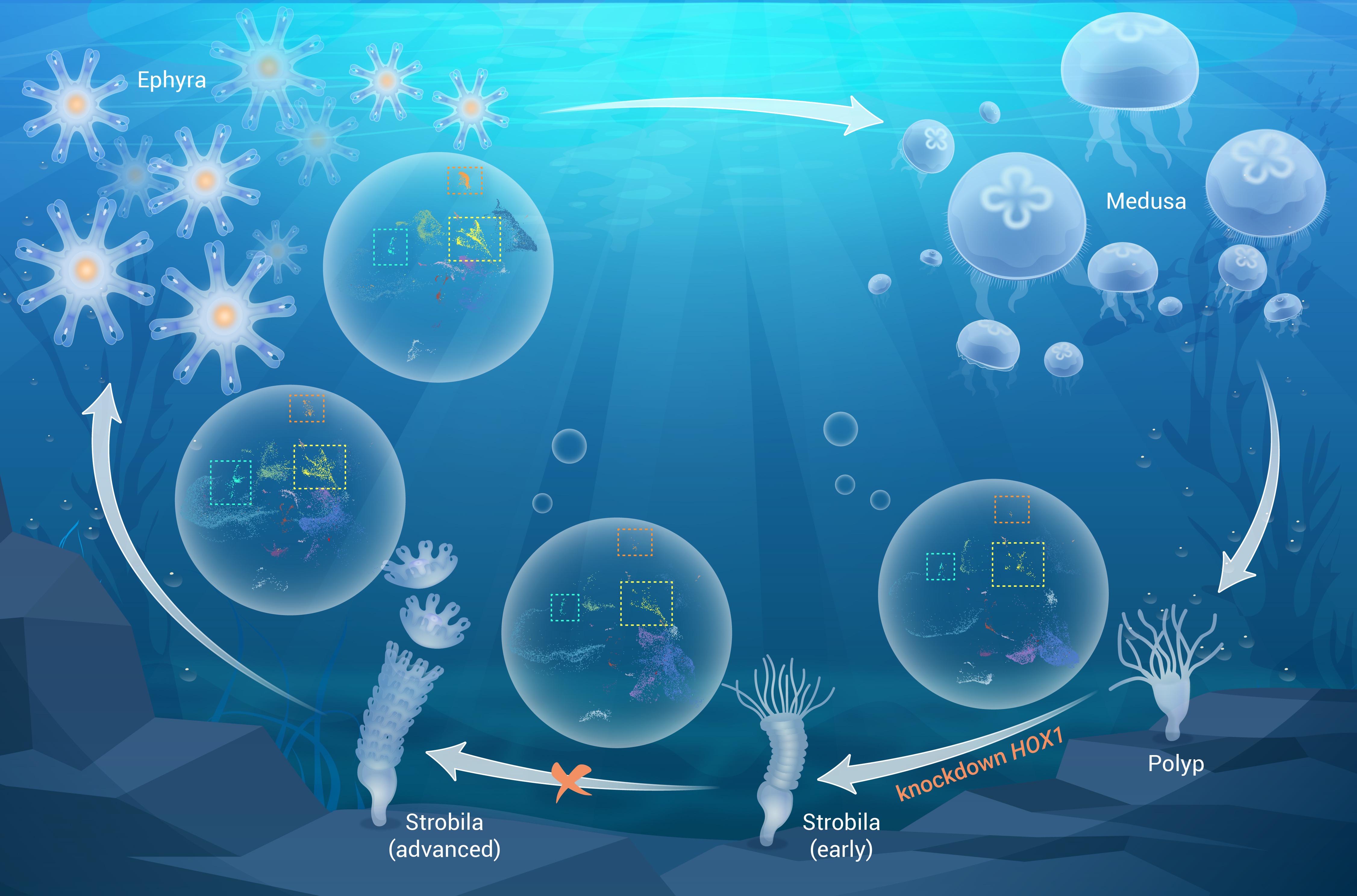
GRAPHICAL ABSTRACT
 DownLoad:
Full size image
DownLoad:
Full size image
-
PUBLIC SUMMARY
-
We present a single-cell atlas for the jellyfish Aurelia coerulea during the polyp-to-medusa transition.
We characterise variations in neural and muscle cells and gene expression patterns during strobilation.
HOX1 plays a pivotal role in regulating the formation of striated muscle cells in A. coerulea.
This study provides valuable insights into the cell biology and ecological adaptation of jellyfish.
-
-
ABSTRACT
Jellyfish are renowned for their complex life cycles and important ecological and evolutionary position. The unique transition from the sessile polyp to motile medusa stages is a key process determining a switch in jellyfish behaviour and regulating the formation of jellyfish blooms. Here, we presented a comprehensive cell atlas spanning four successive life cycle stages during the polyp-to-medusa transition in the scyphozoan jellyfish Aurelia coerulea. Moreover, we characterised the variation in cell composition and gene expression patterns during the phase transition, especially in the neuromuscular system. We found several previously unreported cell types that potentially underpin the complex swimming behaviour of jellyfish. Furthermore, we discovered the pivotal role of HOX1 in modulating the genesis of striated muscles in A. coerulea. Collectively, this study provides valuable insights into the cellular and molecular mechanisms underlying the complex life cycle transition and helps to advance our understanding of ecological adaptation in jellyfish. -

-
REFERENCES
[1] Bonett, R.M., and Blair, A.L. (2017). Evidence for complex life cycle constraints on salamander body form diversification. Proc Natl Acad Sci USA 114(37): 9936−9941. DOI: 10.1073/pnas.1703877114. [2] Bonett, R.M., Ledbetter, N.M., Hess, A.J., et al. (2022). Repeated ecological and life cycle transitions make salamanders an ideal model for evolution and development. Developmental Dynamics 251(6): 957−972. DOI: 10.1002/dvdy.373. [3] Leclere, L., Horin, C., Chevalier, S., et al. (2019). The genome of the jellyfish Clytia hemisphaerica and the evolution of the cnidarian life-cycle. Nature Ecology & Evolution 3(5): 801−810. DOI: 10.1038/s41559-019-0833-2. [4] Sanders, S.M., and Cartwright, P. (2015). Interspecific differential expression analysis of RNA-seq data yields insight into life cycle variation in hydractiniid hydrozoans. Genome Biology and Evolution 7(8): 2417−2431. DOI: 10.1093/gbe/evv153. [5] Daly, M., Brugler, M.R., Cartwright, P., et al. (2007). The phylum Cnidaria: a review of phylogenetic patterns and diversity 300 years after Linnaeus. Zootaxa 1668(1668): 127−182. DOI: 10.5281/zenodo.180149. [6] Ceh, J., Gonzalez, J., Pacheco, A.S., et al. (2015). The elusive life cycle of scyphozoan jellyfish - metagenesis revisited. Scientific Reports 5: 12037. DOI: 10.1038/srep12037. [7] Lucas, C.H., Graham, W.M., and Widmer, C. (2012). Jellyfish life histories: Role of polyps in forming and maintaining scyphomedusa populations. Advances in Marine Biology 63: 133−196. DOI: 10.1016/B978-0-12-394282-1.00003-X. [8] Helm, R.R. (2018). Evolution and development of scyphozoan jellyfish. Biological Reviews of the Cambridge Philosophical Society 93(2): 1228−1250. DOI: 10.1111/brv.12393. [9] Dong, Z.J., Liu, D.Y., and Keesing, J.K. (2010). Jellyfish blooms in China: Dominant species, causes and consequences. Marine Pollution Bulletin 60(7): 954−963. DOI: 10.1016/j.marpolbul.2010.04.022. [10] Garm, A., Poussart, Y., Parkefelt, L., et al. (2007). The ring nerve of the box jellyfish Tripedalia cystophora. Cell and Tissue Research 329(1): 147−157. DOI: 10.1007/s00441-007-0393-7. [11] Leclere, L., and Rottinger, E. (2017). Diversity of Cnidarian muscles: Function, anatomy, development and regeneration. Frontiers in Cell and Developmental Biology 4: 157. DOI: 10.3389/fcell.2016.00157. [12] Horridge, G.A. (1956). The nerves and muscles of medusae: V. double innervation in scyphozoa. Journal of Experimental Biology 33(2): 366−383. DOI: 10.1242/jeb.33.2.366. [13] Pallasdies, F., Goedeke, S., Braun, W., et al. (2019). From single neurons to behavior in the jellyfish Aurelia aurita. eLife 8: e50084. DOI: 10.7554/eLife.50084. [14] Weissbourd, B., Momose, T., Nair, A., et al. (2021). A genetically tractable jellyfish model for systems and evolutionary neuroscience. Cell 184(24): 5854−5868.e20. DOI: 10.1016/j.cell.2021.10.021. [15] Bosch, T.C.G., Klimovich, A., Domazet-Loso, T., et al. (2017). Back to the basics: cnidarians start to fire. Trends in Neurosciences 40(2): 92−105. DOI: 10.1016/j.tins.2016.11.005. [16] Tsujita, N., Kuwahara, H., Koyama, H., et al. (2017). Molecular characterization of aspartylglucosaminidase, a lysosomal hydrolase upregulated during strobilation in the moon jellyfish, Aurelia aurita. Bioscience, Biotechnology, and Biochemistry 81(5): 938−950. DOI: 10.1080/09168451.2017.1285686. [17] Xing, Y., Liu, Q., Zhang, M. et al. (2020). Effects of temperature and salinity on the asexual reproduction of Aurelia coerulea polyps. Journal of Oceanology and Limnology 38: 133−142. DOI: 10.1007/s00343-019-8337-0. [18] Custance, D.R. (1964). Light as an inhibitor of strobilation in Aurelia aurita. Nature 204: 1219−1220. DOI: 10.1038/2041219a0. [19] Kuniyoshi, H., Okumura, I., Kuroda, R., et al. (2012). Indomethacin induction of metamorphosis from the asexual stage to sexual stage in the moon jellyfish, Aurelia aurita. Bioscience, Biotechnology, and Biochemistry 76(7): 1397−1400. DOI: 10.1271/bbb.120076. [20] Fuchs, B., Wang, W., Graspeuntner, S., et al. (2014). Regulation of polyp-to-jellyfish transition in Aurelia aurita. Current Biology 24(3): 263−273. DOI: 10.1016/j.cub.2013.12.003. [21] Wen, L., Li, G., Huang, T., et al. (2022). Single-cell technologies: From research to application. The Innovation 3(6): 100342. DOI: 10.1016/j.xinn.2022.100342. [22] Song, Q.Q., Ruiz, J., Xing, F., et al. (2023). Single-cell sequencing reveals the landscape of the human brain metastatic microenvironment. Communications Biology 6(1): 760. DOI: 10.1038/s42003-023-05124-2. [23] Gold, D.A., Katsuki, T., Li, Y., et al. (2019). The genome of the jellyfish Aurelia and the evolution of animal complexity. Nature Ecology & Evolution 3(1): 96−104. DOI: 10.1038/s41559-018-0719-8. [24] Wei, J.K., Liu, P.H., Liu, F.Y, et al. (2023). EDomics: A comprehensive and comparative multi-omics database for animal evo-devo. Nucleic Acids Research 51(D1): D913−D923. DOI: 10.1093/nar/gkac944. [25] Tarashansky, A.J., Musser, J.M., Khariton, M., et al. (2021). Mapping single-cell atlases throughout Metazoa unravels cell type evolution. eLife 10: e66747. DOI: 10.7554/eLife.66747. [26] Hänzelmann, S., Castelo, R., and Guinney, J. (2013). GSVA: Gene set variation analysis for microarray and RNA-seq data. BMC Bioinformatics 14: 7. DOI: 10.1186/1471-2105-14-7. [27] Chari, T., Weissbourd, B., Gehring, J., et al. (2021). Whole-animal multiplexed single-cell RNA-seq reveals transcriptional shifts across Clytia medusa cell types. Science Advances 7(48): eabh1683. DOI: 10.1126/sciadv.abh1683. [28] Siebert, S., Farrell, J.A., Cazet, J.F., et al. (2019). Stem cell differentiation trajectories in hydra resolved at single-cell resolution. Science 365(6451): eaav9314. DOI: 10.1126/science.aav9314. [29] Katsuki, T., and Greenspan, R.J. (2013). Jellyfish nervous systems. Current Biology 23(14): R592−R594. DOI: 10.1016/j.cub.2013.03.057. [30] Braccioli, L., Vervoort, S.J., Puma, G., et al. (2018). SOX4 inhibits oligodendrocyte differentiation of embryonic neural stem cells in vitro by inducing Hes5 expression. Stem Cell Research 33: 110−119. DOI: 10.1016/j.scr.2018.10.005. [31] Caffe, A.R., Soderpalm, A., and van Veen, T. (1993). Photoreceptor-specific protein expression of mouse retina in organ culture and retardation of rd degeneration in vitro by a combination of basic fibroblast and nerve growth factors. Current Eye Research 12(8): 719−726. DOI: 10.3109/02713689308995767. [32] Bailey, M.E., Albrecht, B.E., Johnson, K.J., et al. (1999). Genetic linkage and radiation hybrid mapping of the three human GABA(C) receptor rho subunit genes: GABRR1, GABRR2 and GABRR3. Biochimica et Biophysica Acta 1447(2-3): 307−312. DOI: 10.1016/s0167-4781(99)00167-0. [33] Takei, Y. (2001). Does the natriuretic peptide system exist throughout the animal and plant kingdom. Comparative Biochemistry and Physiology. Part B, Biochemistry & Molecular Biology 129(2-3): 559−573. DOI: 10.1016/s1096-4959(01)00366-9. [34] Bustos, F., Segarra-Fas, A., Nardocci, G., et al. (2020). Functional diversification of SRSF protein kinase to control ubiquitin-dependent neurodevelopmental signaling. Developmental Cell 55(5): 629−647.e7. DOI: 10.1016/j.devcel.2020.09.025. [35] Tan, T.Y., Gordon, C.T., Miller, K.A., et al. (2015). YPEL1 overexpression in early avian craniofacial mesenchyme causes mandibular dysmorphogenesis by up-regulating apoptosis. Developmental Dynamics 244(8): 1022−1030. DOI: 10.1002/dvdy.24299. [36] Aubrey, K.R., Rossi, F.M., Ruivo, R., et al. (2007). The transporters GlyT2 and VIAAT cooperate to determine the vesicular glycinergic phenotype. Journal of Neuroscience 27(23): 6273−6281. DOI: 10.1523/JNEUROSCI.1024-07.2007. [37] Zhao, Q.H., Fan, L., Wang, J.F., et al. (2020). Relationship between pain behavior and changes in KCNA2 expression in the dorsal root ganglia of rats with osteoarthritis. Pain Research and Management 2020: 4636838. DOI: 10.1155/2020/4636838. [38] Amraei, R., Moreira, J.D., and Wainford, R.D. (2022). Central Gαi2 protein mediated neuro-hormonal control of blood pressure and salt sensitivity. Frontiers in Endocrinology 13: 895466. DOI: 10.3389/fendo.2022.895466. [39] Chrystal, P.W., Lambacher, N.J., Doucette, L.P., et al. (2022). The inner junction protein CFAP20 functions in motile and non-motile cilia and is critical for vision. Nature Communications 13(1): 6595. DOI: 10.1038/s41467-022-33820-w. [40] Seipel, K., and Schmid, V. (2005). Evolution of striated muscle: Jellyfish and the origin of triploblasty. Developmental Biology 282(1): 14−26. DOI: 10.1016/j.ydbio.2005.03.032. [41] Steinmetz, P.R.H., Kraus, J.E.M., Larroux, C., et al. (2012). Independent evolution of striated muscles in cnidarians and bilaterians. Nature 487(7406): 231−234. DOI: 10.1038/nature11180. [42] Doi, R., Endo, M., Yamakoshi, K., et al. (2014). Critical role of Frizzled1 in age-related alterations of Wnt/b-catenin signal in myogenic cells during differentiation. Genes to Cells 19(4): 287−296. DOI: 10.1111/gtc.12132. [43] Levy, S., Elek, A., Grau-Bove, X., et al. (2021). A stony coral cell atlas illuminates the molecular and cellular basis of coral symbiosis, calcification, and immunity. Cell 184(11): 2973−2987.e18. DOI: 10.1016/j.cell.2021.04.005. [44] Matveev, I.V., Shaposhnikova, T.G., and Podgornaya, O.I. (2007). A novel Aurelia aurita protein mesoglein contains DSL and ZP domains. Gene 399(1): 20−25. DOI: 10.1016/j.gene.2007.04.034. [45] Hoover, A.P., Xu, N.W., Gemmell, B.J., et al. (2021). Neuromechanical wave resonance in jellyfish swimming. Proc Natl Acad Sci USA 118(11): e2020025118. DOI: 10.1073/pnas.2020025118. [46] Sarvestani, I.K., Kozlov, A., Harischandra, N., et al. (2013). A computational model of visually guided locomotion in lamprey. Biological Cybernetics 107(5): 497−512. DOI: 10.1007/s00422-012-0524-4. [47] Bozzo, M., Costa, S., Obino, V., et al. (2021). Functional conservation and genetic divergence of chordate glycinergic neurotransmission: Insights from amphioxus glycine transporters. Cells 10(12): 3392. DOI: 10.3390/cells10123392. [48] Nishino, A., Okamura, Y., Piscopo, S., et al (2010). A glycine receptor is involved in the organization of swimming movements in an invertebrate chordate. BMC Neuroscience 11 :6. DOI: 10.1186/1471-2202-11-6. [49] Green, C.S., and Soffe, S.R. (1998). Roles of ascending inhibition during two rhythmic motor patterns in Xenopus tadpoles. Journal of Neurophysiology 79(5): 2316−2328. DOI: 10.1152/jn.1998.79.5.2316. [50] Satou, C., Sugioka, T., Uemura, Y., et al. (2020). Functional diversity of glycinergic commissural inhibitory neurons in larval zebrafish. Cell Reports 30(9): 3036−3050. DOI: 10.1016/j.celrep.2020.02.015. [51] Tibashailwa, N., Stephano, F., Shadrack, D.M., et al. (2023). Neuroprotective potential of cinnamoyl derivatives against Parkinson's disease indicators in Drosophila melanogaster and in silico models. Neurotoxicology 94: 147−157. DOI: 10.1016/j.neuro.2022.11.010. [52] Kucerova, L., Broz, V., Fleischmannova, J., et al. (2012). Characterization of the Drosophila adenosine receptor: The effect of adenosine analogs on camp signaling in Drosophila cells and their utility for in vivo experiments. Journal of Neurochemistry 121(3): 383−395. DOI: 10.1111/j.1471-4159.2012.07701.x. [53] Spangenberg, D.B. (1991). Rhopalium development in Aurelia aurita ephyrae. Hydrobiologia 216: 45−49. DOI: 10.1007/BF00026442. [54] Nakanishi, N., Hartenstein, V., and Jacobs, D.K. (2009). Development of the rhopalial nervous system in Aurelia sp.1 (Cnidaria, Scyphozoa). Development Genes and Evolution 219 (6):301–317. DOI: 10.1007/s00427-009-0291-y. [55] Watanabe, H., Fujisawa, T., and Holstein, T.W. (2009). Cnidarians and the evolutionary origin of the nervous system. Development, Growth, and Differentiation 51(3): 167−183. DOI: 10.1111/j.1440-169X.2009.01103.x. [56] Sebé-Pedrós, A., Saudemont, B., Chomsky, E., et al. (2018). Cnidarian cell type diversity and regulation revealed by whole-organism single-cell RNA-seq. Cell 173(6): 1520−1534.e20. DOI: 10.1016/j.cell.2018.05.019. [57] Tanaka, H., Ishimaru, S., Nagatsuka, Y., et al. (2018). Smooth muscle-like Ca2+-regulation of actin-myosin interaction in adult jellyfish striated muscle. Scientific Reports 8(1): 7776. DOI: 10.1038/s41598-018-24817-x. [58] Hooper, S.L., Hobbs, K.H., and Thuma, J.B. (2008). Invertebrate muscles: Thin and thick filament structure; molecular basis of contraction and its regulation, catch and asynchronous muscle. Progress in Neurobiology 86(2): 72−127. DOI: 10.1016/j.pneurobio.2008.06.004. [59] Costello, J.H., and Colin, S.P. (1994). Morphology, fluid motion and predation by the scyphomedusa Aurelia aurita. Marine Biology 121: 327−334. DOI: 10.1007/BF00346741. [60] Khalturin, K., Shinzato, C., Khalturina, M., et al. (2019). Medusozoan genomes inform the evolution of the jellyfish body plan. Nature Ecology & Evolution 3(5): 811−822. DOI: 10.1038/s41559-019-0853-y. [61] Gauchat, D., Mazet, F., Berney, C., et al. (2000). Evolution of Antp-class genes and differential expression of Hydra Hox/paraHox genes in anterior patterning. Proc Natl Acad Sci USA 97(9): 4493−4498. DOI: 10.1073/pnas.97.9.4493. [62] Stauber, M., Jackle, H., and Schmidt-Ott, U. (1999). The anterior determinant bicoid of Drosophila is a derived Hox class 3 gene. Proc Natl Acad Sci USA 96(7): 3786−3789. DOI: 10.1073/pnas.96.7.3786. -
ABOUT THIS ARTICLE
Cite this article:
Li Y., Peng S., Liu Y., et al., (2024). Molecular and cellular basis of life cycle transition provides new insights into ecological adaptation in jellyfish. The Innovation Geoscience 2(2): 100063. https://doi.org/10.59717/j.xinn-geo.2024.100063
Welcome!
To request copyright permission to republish or share portions of our works, please visit Copyright Clearance Center's (CCC) Marketplace website at marketplace.copyright.com.

Article Metrics
Relative Articles
Cited by
Export File
Citation
Li Y., Peng S., Liu Y., et al., (2024). Molecular and cellular basis of life cycle transition provides new insights into ecological adaptation in jellyfish. The Innovation Geoscience 2(2): 100063. https://doi.org/10.59717/j.xinn-geo.2024.100063

Format
Content
-
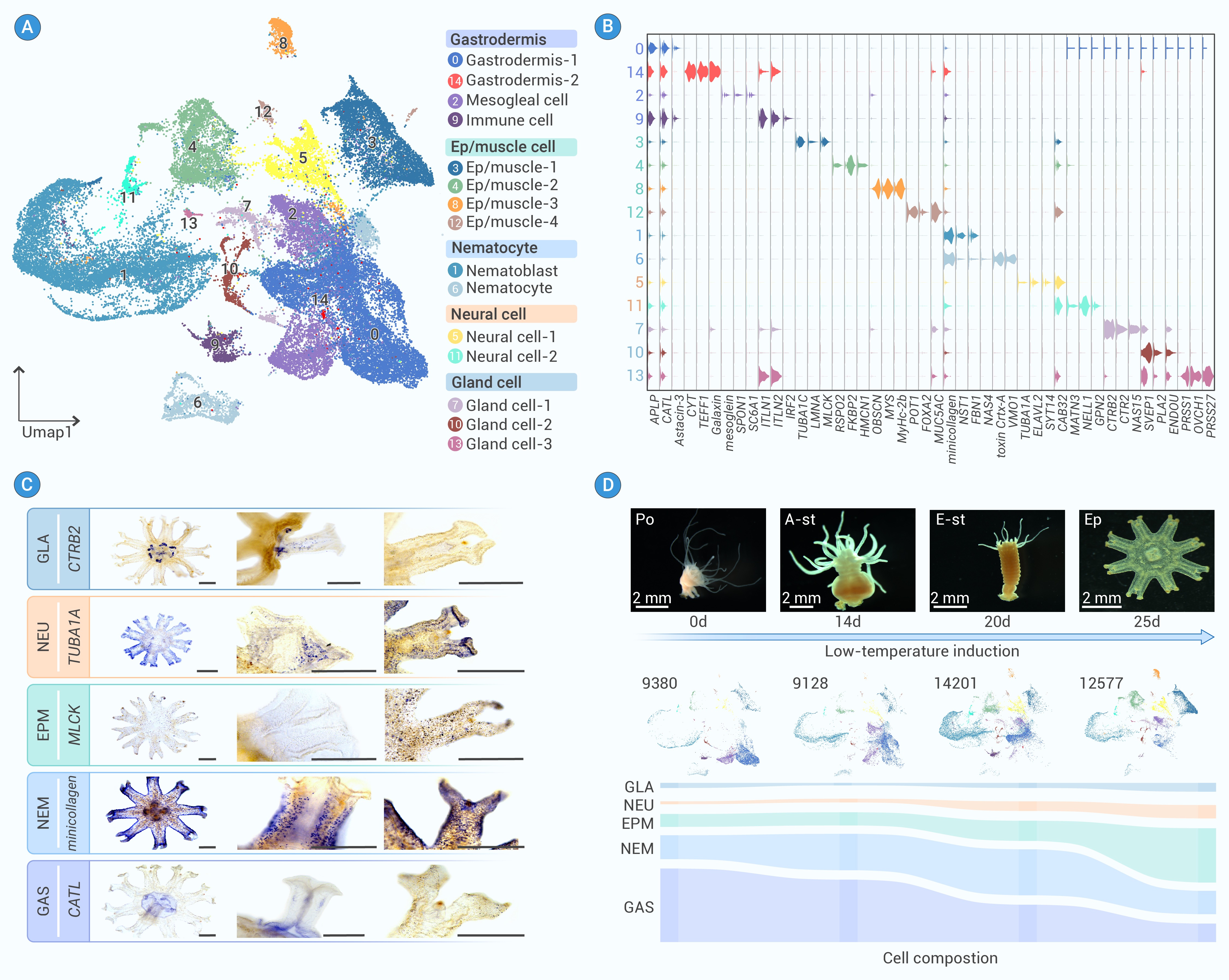
Figure 1.
Information on Aurelia coerulea
-
Figure 2.
Cell atlas of Aurelia coerulea during strobilation
-
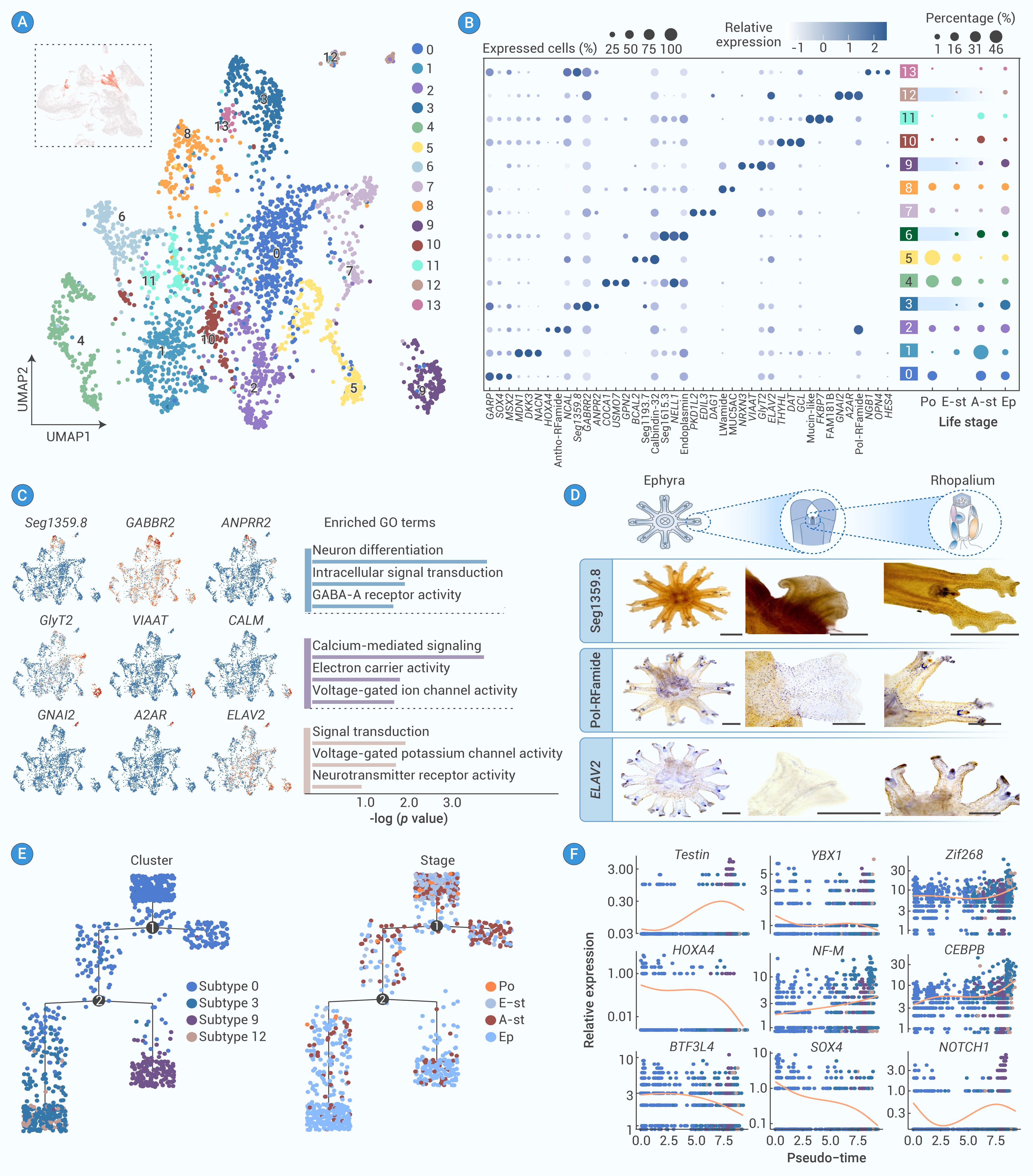
Figure 3.
Transcriptional dynamics of neural cells during strobilation
-
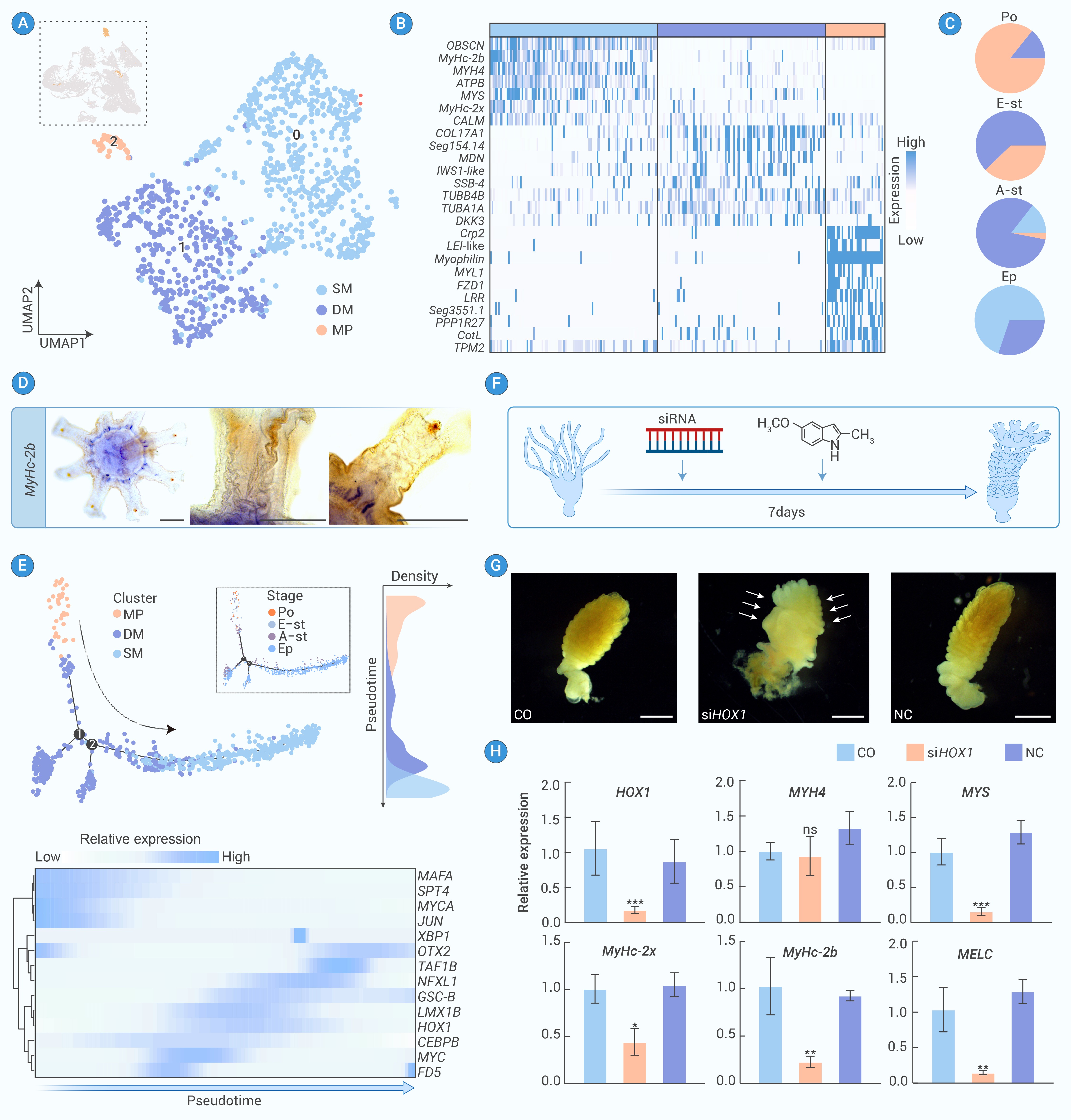
Figure 4.
Regulation of striated muscle formation by HOX1 during strobilation
