
No positive effects of biodiversity on ecological resilience of lake ecosystems
-
GRAPHICAL ABSTRACT

 DownLoad:
Full size image
DownLoad:
Full size image
-
PUBLIC SUMMARY
-
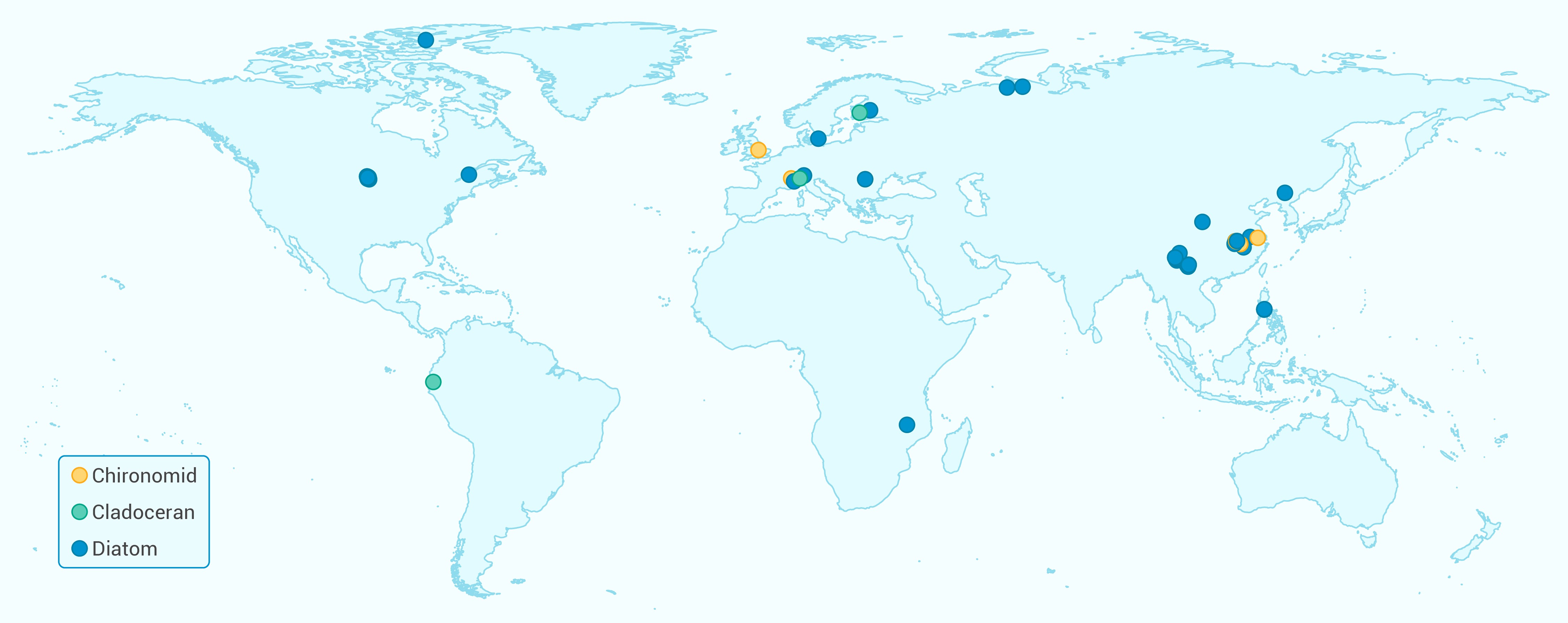
We present global subfossil records of diatoms, chironomids, and cladocerans from 53 lake sediment cores.
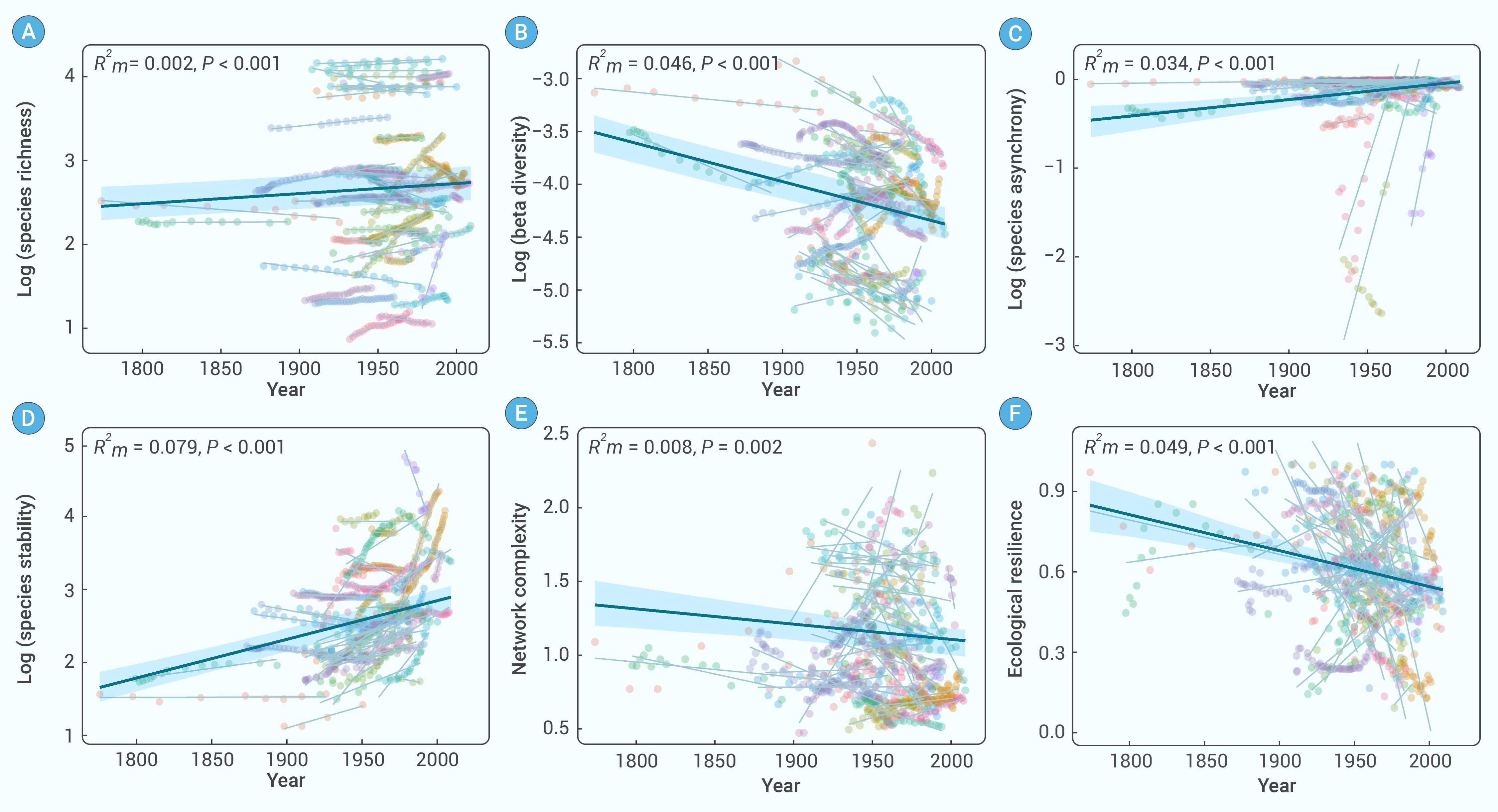
Species richness has an increasing trend over time while ecological resilience decreased before regime shifts.
Species richness and temporal beta diversity have no positive effects on ecological resilience.
-
-
ABSTRACT
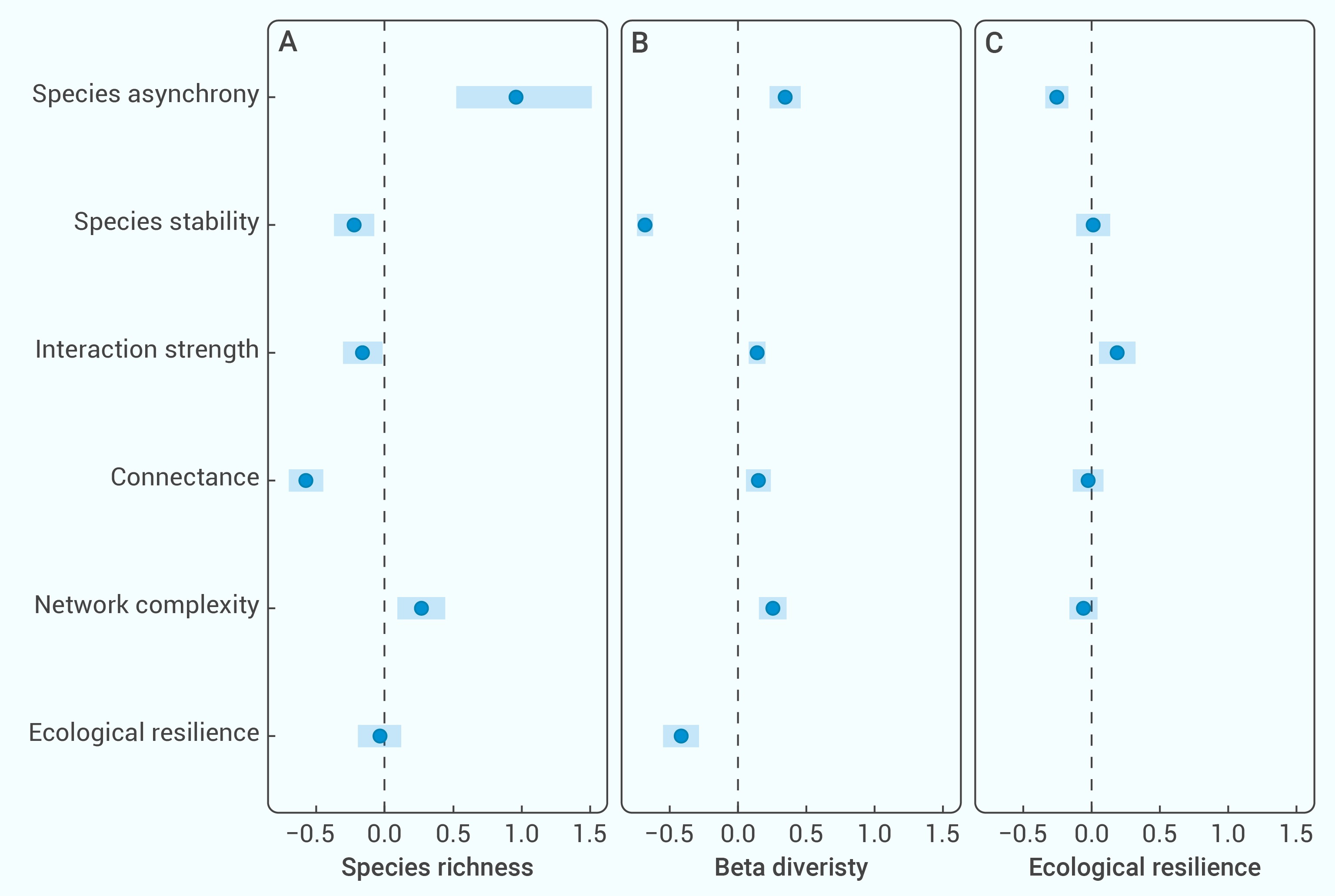
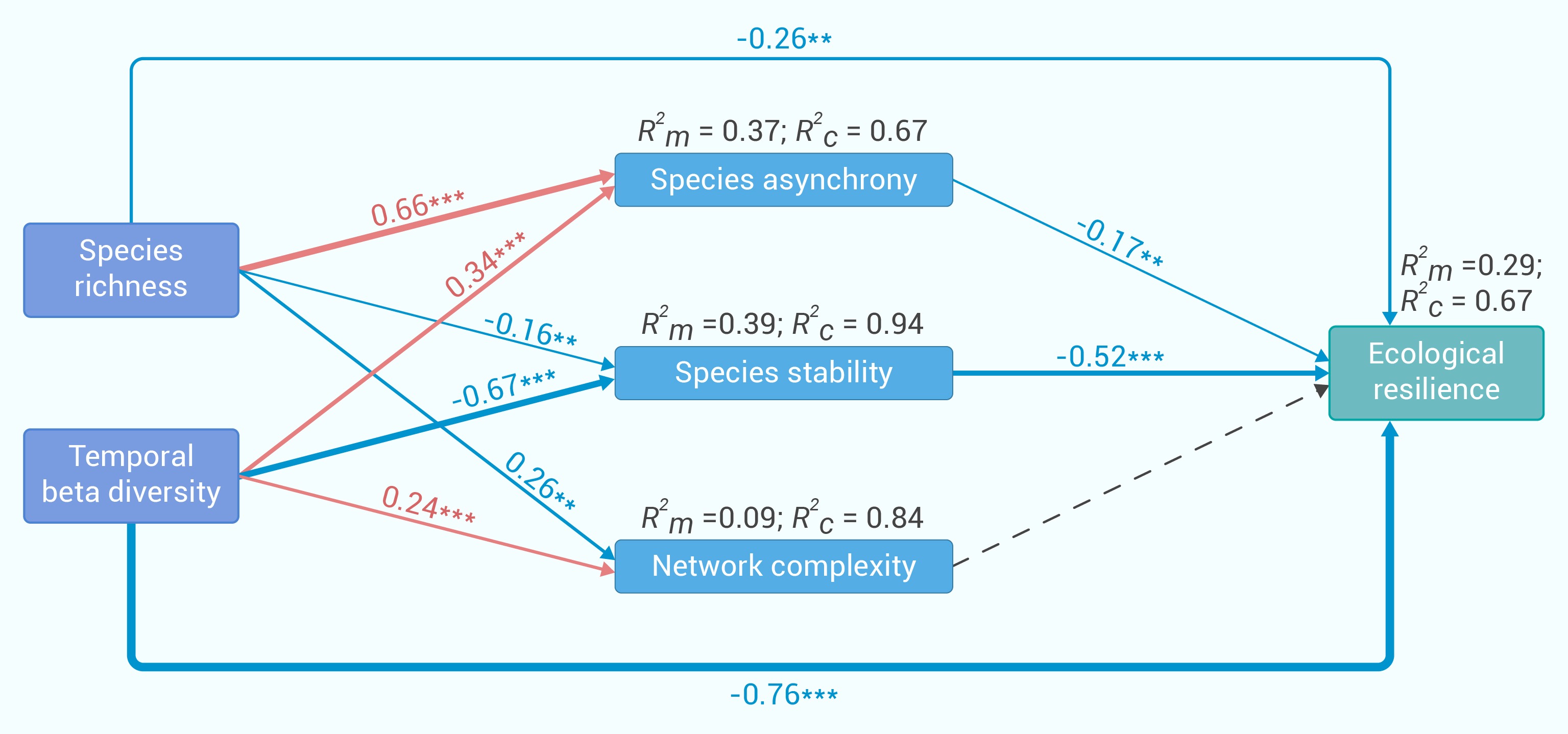
Ecological resilience is critical for ecosystems to persist in the face of perturbations without shifting to a different state. Global biodiversity loss in multiple ecosystems is considered to be associated with decreasing ecological resilience and increasing the risk of ecosystem collapse. However, how temporal changes in biodiversity affect ecological resilience in natural ecosystems remains poorly elucidated. By analyzing subfossil records of diatoms, chironomids, and cladocerans from 53 lake sediment cores across the globe, we found that species richness showed an increasing trend with time, while beta diversity and ecological resilience presented a decreasing temporal trend when ecosystems are approaching the abrupt shift. Asynchronous fluctuations among species and temporal stability at species level are suggested to be the mechanisms that contribute to the maintenance of temporal community stability. We found species richness and beta diversity have positive effects on species asynchrony but negative effects on species stability. However, we found that species asynchrony and species stability had negative relationships with ecological resilience, with species richness and beta diversity overall having no positive effects on ecological resilience. We highlighted that biodiversity effects on ecological resilience are not only the role of species richness, but also the species assemblage and network complexity of species-species interactions. Our study indicates that increased species diversity and community heterogeneity may be not beneficial for the ecosystem to recover from disturbances at a lake ecosystem scale, which has great implications for the assessment of ecological resilience and predicting ecosystem collapse in future global environmental change scenarios. -

-
REFERENCES
[1] Barnosky, A.D., Hadly, E.A., Bascompte, J., et al. (2012). Approaching a state shift in Earth’s biosphere. Nature 486(7401): 52−58. DOI: 10.1038/nature11018. [2] Steffen, W., Richardson, K., Rockstrom, J., et al. (2015). Planetary boundaries: Guiding human development on a changing planet. Science 347(6223): 1259855. DOI: 10.1126/science.1259855. [3] Donohue, I., Hillebrand, H., Montoya, J.M., et al. (2016). Navigating the complexity of ecological stability. Ecol Lett 19(9): 1172−1185. DOI: 10.1111/ele.12648. [4] Holling, C.S. (1973). Resilience and Stability of Ecological Systems. Annu Rev Ecol Evol Syst 4(4): 1−23. DOI: 10.1146/annurev.es.04.110173.000245. [5] Angeler, D.G., and Allen, C.R. (2016). Quantifying resilience. J Appl Ecol 53(3): 617−624. DOI: 10.1111/1365-2664.12649. [6] Folke, C. (2006). Resilience: The emergence of a perspective for social-ecological systems analyses. Global Environmental Change-Human and Policy Dimensions 16(3): 253−267. DOI: 10.1016/j.gloenvcha.2006.04.002. [7] Dai, L., Vorselen, D., Korolev, K.S., et al. (2012). Generic indicators for loss of resilience before a tipping point leading to population collapse. Science 336(6085): 1175−1177. DOI: 10.1126/science.1219805. [8] Hooper, D.U., Adair, E.C., Cardinale, B.J., et al. (2012). A global synthesis reveals biodiversity loss as a major driver of ecosystem change. Nature 486(7401): 105−108. DOI: 10.1038/nature11118. [9] Williams-Subiza, E.A., and Epele, L.B. (2021). Drivers of biodiversity loss in freshwater environments: A bibliometric analysis of the recent literature. Aquatic Conservation-Marine and Freshwater Ecosystems 31(9): 2469−2480. DOI: 10.1002/aqc.3627. [10] Chen, J., Liu, J., Han, S., et al. (2023). Nontraditional biomanipulation: A powerful ecotechnology to combat cyanobacterial blooms in eutrophic freshwaters. The Innovation Life 1(3): 100038. DOI: 10.59717/j.xinn-life.2023.100038. [11] Duan, H., Xiao, Q., and Qi, T. (2023). Measuring lake carbon dioxide from space: Opportunities and challenges. The Innovation Geoscience 1(2): 100025 DOI: 10.59717/j.xinn-geo.2023.100025. [12] Ren, H., and Antonelli, A. (2023). National botanical gardens at the forefront of global plant conservation. The Innovation 4 (5): 100478. DOI: 10.1016/j.xinn.2023.100478. [13] Wang, H., Wang, P., Xu, C., et al. (2022). Can the “10-year fishing ban” rescue biodiversity of the Yangtze River? The Innovation 3 (3): 100235 DOI: 10.1016/j.xinn.2022.100235. [14] MacDougall, A.S., McCann, K.S., Gellner, G., et al. (2013). Diversity loss with persistent human disturbance increases vulnerability to ecosystem collapse. Nature 494(7435): 86−89. DOI: 10.1038/nature11869. [15] Oliver, T.H., Isaac, N.J., August, T.A., et al. (2015). Declining resilience of ecosystem functions under biodiversity loss. Nat Commun 6(1): 1−8. DOI: 10.1038/ncomms10122. [16] May, R.M. (1973). Stability and complexity in model ecosystems. Princeton University Press. [17] McCann, K.S. (2000). The diversity–stability debate. Nature 405(6783): 228−233. DOI: 10.1038/35012234. [18] Ives, A.R., and Carpenter, S.R. (2007). Stability and diversity of ecosystems. Science 317(5834): 58−62. DOI: 10.1126/science.1133258. [19] Pennekamp, F., Pontarp, M., Tabi, A., et al. (2018). Biodiversity increases and decreases ecosystem stability. Nature 563(7729): 109−112. DOI: 10.1038/s41586-018-0627-8. [20] Isbell, F., Craven, D., Connolly, J., et al. (2015). Biodiversity increases the resistance of ecosystem productivity to climate extremes. Nature 526(7574): 574−577. DOI: 10.1038/nature15374. [21] Baert, J.M., De Laender, F., Sabbe, K., et al. (2016). Biodiversity increases functional and compositional resistance, but decreases resilience in phytoplankton communities. Ecology 97(12): 3433−3440. DOI: 10.1002/ecy.1601. [22] Wang, S., Loreau, M., de Mazancourt, C., et al. (2021). Biotic homogenization destabilizes ecosystem functioning by decreasing spatial asynchrony. Ecology 102(6): e03332. DOI: 10.1002/ecy.3332. [23] Wang, S., Lamy, T., Hallett, L.M., et al. (2019). Stability and synchrony across ecological hierarchies in heterogeneous metacommunities: Linking theory to data. Ecography 42(6): 1200−1211. DOI: 10.1111/ecog.04290. [24] Mellin, C., Bradshaw, C., Fordham, D., et al. (2014). Strong but opposing β-diversity–stability relationships in coral reef fish communities. Proc R Soc B 281(1777): 20131993. DOI: 10.1098/rspb.2013.1993. [25] Schnabel, F., Liu, X., Kunz, M., et al. (2021). Species richness stabilizes productivity via asynchrony and drought-tolerance diversity in a large-scale tree biodiversity experiment. Science Advances 7 (51): eabk1643. DOI: 10.1126/sciadv.abk1643. [26] Wagg, C., Roscher, C., Weigelt, A., et al. (2022). Biodiversity-stability relationships strengthen over time in a long-term grassland experiment. Nat Commun 13(1): 7752−7752. DOI: 10.1038/s41467-022-35189-2. [27] Xu, Q., Yang, X., Yan, Y., et al. (2021). Consistently positive effect of species diversity on ecosystem, but not population, temporal stability. Ecol Lett 24(10): 2256−2266. DOI: 10.1111/ele.13777. [28] Loreau, M., and de Mazancourt, C. (2008). Species synchrony and its drivers: Neutral and nonneutral community dynamics in fluctuating environments. Am Nat 172(2): E48−E66. DOI: 10.1086/589746. [29] Craven, D., Eisenhauer, N., Pearse, W.D., et al. (2018). Multiple facets of biodiversity drive the diversity–stability relationship. Nature Ecology & Evolution 2(10): 1579−1587. DOI: 10.1038/s41559-018-0647-7. [30] Wang, S., and Loreau, M. (2014). Ecosystem stability in space: α, β and γ variability. Ecol Lett 17(8): 891−901. DOI: 10.1111/ele.12292. [31] Hautier, Y., Zhang, P., Loreau, M., et al. (2020). General destabilizing effects of eutrophication on grassland productivity at multiple spatial scales. Nat Commun 11 (1): 5375. DOI: 10.1038/s41467-020-19252-4. [32] Zhang, Y., Feng, J., Loreau, M., et al. (2019). Nitrogen addition does not reduce the role of spatial asynchrony in stabilising grassland communities. Ecol Lett 22(4): 563−571. DOI: 10.1111/ele.13212. [33] Valencia, E., de Bello, F., Galland, T., et al. (2020). Synchrony matters more than species richness in plant community stability at a global scale. Proc Natl Acad Sci USA 117(39): 24345−24351. DOI: 10.1073/pnas.1920405117. [34] Landi, P., Minoarivelo, H.O., Brannstrom, A., et al. (2018). Complexity and stability of ecological networks: a review of the theory. Popul Ecol 60(4): 319−345. DOI: 10.1007/s10144-018-0628-3. [35] May, R.M. (1972). Will a large complex system be stable. Nature 238(5364): 413−414. DOI: 10.1038/238413a0. [36] Nie, S., Zheng, J., Luo, M., et al. (2023). Will a large complex system be productive. Ecol Lett 26(8): 1325−1335. DOI: 10.1111/ele.14242. [37] Pimm, S.L. (1984). The complexity and stability of ecosystems. Nature 307(5949): 321−326. DOI: 10.1038/307321a0. [38] Delmas, E., Besson, M., Brice, M.-H., et al. (2019). Analysing ecological networks of species interactions. Biological Reviews 94(1): 16−36. DOI: 10.1111/brv.12433. [39] Loreau, M., and de Mazancourt, C. (2013). Biodiversity and ecosystem stability: A synthesis of underlying mechanisms. Ecol Lett 16: 106−115. DOI: 10.1111/ele.12073. [40] Ratzke, C., Barrere, J., and Gore, J. (2020). Strength of species interactions determines biodiversity and stability in microbial communities. Nature Ecology & Evolution 4(3): 376−383. DOI: 10.1038/s41559-020-1099-4. [41] Willis, K.J., Bailey, R.M., Bhagwat, S.A., et al. (2010). Biodiversity baselines, thresholds and resilience: Testing predictions and assumptions using palaeoecological data. Trends Ecol Evol 25(10): 583−591. DOI: 10.1016/j.tree.2010.07.006. [42] Su, H., Wang, R., Feng, Y., et al. (2021). Long-term empirical evidence, early warning signals and multiple drivers of regime shifts in a lake ecosystem. J Ecol 109(9): 3182−3194. DOI: 10.1111/1365-2745.13544. [43] Huang, S., Zhang, K., Lin, Q., et al. (2022). Abrupt ecological shifts of lakes during the Anthropocene. Earth-Science Reviews 227 : 103981. DOI: 10.1016/j.earscirev.2022.103981. [44] Rioja, J.S. (2015). Analysis of Quaternary science data. R package version (0.9-5), The Comprehensive R Archive Network. https://CRAN.R-project.org/package=rioja. [45] Wang, R., Dearing, J.A., Langdon, P.G., et al. (2012). Flickering gives early warning signals of a critical transition to a eutrophic lake state. Nature 492(7429): 419−422. DOI: 10.1038/nature11655. [46] Scheffer, M., Bascompte, J., Brock, W.A., et al. (2009). Early-warning signals for critical transitions. Nature 461(7260): 53−59. DOI: 10.1038/nature08227. [47] Dakos, V., Scheffer, M., van Nes, E.H., et al. (2008). Slowing down as an early warning signal for abrupt climate change. Proc Natl Acad Sci USA 105(38): 14308−14312. DOI: 10.1073/pnas.0802430105. [48] Drake, J.M., and Griffen, B.D. (2010). Early warning signals of extinction in deteriorating environments. Nature 467(7314): 456−459. DOI: 10.1038/nature09389. [49] Anderson, M.J., Crist, T.O., Chase, J.M., et al. (2011). Navigating the multiple meanings of β diversity: A roadmap for the practicing ecologist. Ecol Lett 14(1): 19−28. DOI: 10.1111/j.1461-0248.2010.01552.x. [50] Ma, Z., Liu, H., Mi, Z., et al. (2017). Climate warming reduces the temporal stability of plant community biomass production. Nat Commun 8 :15378. DOI: 10.1038/ncomms15378. [51] Zhang, Y., Loreau, M., Lu, X., et al. (2016). Nitrogen enrichment weakens ecosystem stability through decreased species asynchrony and population stability in a temperate grassland. Global Change Biol 22(4): 1445−1455. DOI: 10.1111/gcb.13140. [52] Lefcheck, J.S. (2016). piecewiseSEM: Piecewise structural equation modelling in r for ecology, evolution, and systematics. Methods Ecol Evol 7(5): 573−579. DOI: 10.1111/2041-210X.12512. [53] Folke, C., Carpenter, S., Walker, B., et al. (2004). Regime Shifts, Resilience, and Biodiversity in Ecosystem Management. Annu Rev Ecol Evol Syst 35(1): 557−581. DOI: 10.1146/annurev.ecolsys.35.021103.105711. [54] Sax, D.F., and Gaines, S.D. (2003). Species diversity: from global decreases to local increases. Trends Ecol Evol 18(11): 561−566. DOI: 10.1016/s0169-5347(03)00224-6. [55] Vellend, M., Baeten, L., Myers-Smith, I.H., et al. (2013). Global meta-analysis reveals no net change in local-scale plant biodiversity over time. Proc Natl Acad Sci USA 110(48): 19456−19459. DOI: 10.1073/pnas.1312779110. [56] Dornelas, M., Gotelli, N.J., McGill, B., et al. (2014). Assemblage time series reveal biodiversity change but not systematic loss. Science 344(6181): 296−299. DOI: 10.1126/science.1248484. [57] Cook, S.C., Housley, L., Back, J.A., et al. (2018). Freshwater eutrophication drives sharp reductions in temporal beta diversity. Ecology 99(1): 47−56. DOI: 10.1002/ecy.2069. [58] Magurran, A.E., Dornelas, M., Moyes, F., et al. (2019). Temporal β diversity-A macroecological perspective. Glob Ecol Biogeogr 28(12): 1949−1960. DOI: 10.1111/geb.13026. [59] Williams, J.W., Ordonez, A., and Svenning, J.-C. (2021). A unifying framework for studying and managing climate-driven rates of ecological change. Nature Ecology & Evolution 5(1): 17−26. DOI: 10.1038/s41559-020-01344-5. [60] Kefi, S., Saade, C., Berlow, E.L., et al. (2022). Scaling up our understanding of tipping points. Philosophical Transactions of the Royal Society B-Biological Sciences 377 (1857): 20210386. DOI: 10.1098/rstb.2021.0386. [61] Liang, M., Baiser, B., Hallett, L.M., et al. (2022). Consistent stabilizing effects of plant diversity across spatial scales and climatic gradients. Nature Ecology & Evolution 6: 1669−1675. DOI: 10.1038/s41559-022-01868-y. [62] Radchuk, V., De Laender, F., Cabral, J.S., et al. (2019). The dimensionality of stability depends on disturbance type. Ecol Lett 22(4): 674−684. DOI: 10.1111/ele.13226. [63] Feng, Y., Su, H., Tang, Z., et al. (2021). Reduced resilience of terrestrial ecosystems locally is not reflected on a global scale. Communications Earth & Environment 2(1): 88. DOI: 10.1038/s43247-021-00163-1. [64] Li, D., Wu, S., Liu, L., et al. (2018). Vulnerability of the global terrestrial ecosystems to climate change. Global Change Biol 24(9): 4095−4106. DOI: 10.1111/gcb.14327. [65] Smith, T., Traxl, D., and Boers, N. (2022). Empirical evidence for recent global shifts in vegetation resilience. Nature Climate Change 12(5): 477−484. DOI: 10.1038/s41558-022-01352-2. [66] Boulton, C.A., Lenton, T.M., and Boers, N. (2022). Pronounced loss of Amazon rainforest resilience since the early 2000s. Nature Climate Change 12(3): 271−278. DOI: 10.1038/s41558-022-01287-8. [67] Gsell, A.S., Scharfenberger, U., Ozkundakci, D., et al. (2016). Evaluating early-warning indicators of critical transitions in natural aquatic ecosystems. Proc. Natl Acad Sci USA 113(50): E8089−E8095. DOI: 10.1073/pnas.1608242113. [68] Burthe, S.J., Henrys, P.A., Mackay, E.B., et al. (2016). Do early warning indicators consistently predict nonlinear change in long-term ecological data. J Appl Ecol 53(3): 666−676. DOI: 10.1111/1365-2664.12519. [69] O'Brien, D.A., Deb, S., Gal, G., et al. (2023). Early warning signals have limited applicability to empirical lake data. Nat Commun 14(1): 7942−7942. DOI: 10.1038/s41467-023-43744-8. [70] Beisner, B.E., Haydon, D.T., and Cuddington, K. (2003). Alternative stable states in ecology. Front Ecol Environ 1(7): 376−382. DOI: 10.2307/3868190. [71] Yuan, M.M., Guo, X., Wu, L., et al. (2021). Climate warming enhances microbial network complexity and stability. Nature Climate Change 11(4): 343−348. DOI: 10.1038/s41558-021-00989-9. [72] Luo, Y.-H., Cadotte, M.W., Liu, J., et al. (2022). Multitrophic diversity and biotic associations influence subalpine forest ecosystem multifunctionality. Ecology 103 (9): e3745. DOI: 10.1002/ecy.3745. [73] Freilich, M.A., Wieters, E., Broitman, B.R., et al. (2018). Species co-occurrence networks: Can they reveal trophic and non-trophic interactions in ecological communities. Ecology 99(3): 690−699. DOI: 10.1002/ecy.2142. -
ABOUT THIS ARTICLE
Cite this article:
Su H., Li Y., Zhong M., et al., (2024). No positive effects of biodiversity on ecological resilience of lake ecosystems. The Innovation Geoscience 2(2): 100064. https://doi.org/10.59717/j.xinn-geo.2024.100064
Welcome!
To request copyright permission to republish or share portions of our works, please visit Copyright Clearance Center's (CCC) Marketplace website at marketplace.copyright.com.

Article Metrics
Relative Articles
Cited by
Export File
Citation
Su H., Li Y., Zhong M., et al., (2024). No positive effects of biodiversity on ecological resilience of lake ecosystems. The Innovation Geoscience 2(2): 100064. https://doi.org/10.59717/j.xinn-geo.2024.100064

Format
Content
-
Figure 1.
Conceptual overview of the hypothesized processes and relationships when ecosystems approach critical transition
-
Figure 2.
Map of the lakes with global subfossil records included in this study
-
Figure 3.
Temporal changes in (A) species richness, (B) beta diversity, (C) species asynchrony, (D) species stability, (E) network complexity, and (F) ecological resilience before lake regime shifts.
-
Figure 4.
Standardized regression slopes of the linear mixed model of (A) species richness, (B) beta diversity, and (C) ecological resilience with multiple community properties before ecosystem regime shifts
-
Figure 5.
Piecewise structural equation model showing the direct and indirect effects of species richness and temporal beta diversity on ecological resilience in the 53 datasets
