
Microbial mediation of cryptic methane cycle in semiclosed marine water column
-
GRAPHICAL ABSTRACT

 DownLoad:
Full size image
DownLoad:
Full size image
-
PUBLIC SUMMARY
-
Yongle blue hole exhibits remarkable microbial diversity and novel metabolic pathways.
The identification of microbial cleavage of MPn and DMSP as key drivers of methane production.
A new group is probably attributable to ~77% drop of methane concentration in anoxic water.
-
-
ABSTRACT
The continuous expansion of oxygen minimum zones (OMZs) has promoted methane emissions, and the origin and fate of methane in semi enclosed OMZs are poorly understood. In this study, we sampled 21 water layers across a 300-m depth of the Yongle blue hole (YBH) located in the South China Sea for metagenomics and metatranscriptomics work, coupled with data from global anoxic/suboxic water columns. The 16S rDNA reads in the metagenomes indicate high percentages of unclassified prokaryotes (on average 38%) and high microbiome novelty scores in anoxic layers of YBH, which are significantly higher than other semiclosed oxygen minimum zones. Analyses of 318 draft genomes and functional genes indicate that the methane source of YBH probably resulted from microbial cleavage of methylphosphonate (MPn) and dimethylsulfoniopropionate (DMSP). Methane oxidation that prevents methane emission from YBH was probably conducted by a new group of aerobic methanotrophic Planctomycetota, Bacteroidota, and Verrucomicrobiota in suboxic and anoxic environments of YBH, in addition to Methylococcales in oxic layers. The Bacteroidota solely contribute to ~77% of methane decline from the peak at 180 m depth. Our research casts light on the cryptic methane cycle mediated by the novel microbiome that controls the release of greenhouse gases from marine geographic depressions exemplified by YBH, offering valuable insights into mitigating climate change effects in marine environments. -

-
REFERENCES
[1] Naqvi, S.W.A., Bange, H.W., Farías, L., et al. (2010). Marine hypoxia/anoxia as a source of CH4 and N2O. Biogeosciences 7: 2159−2190. DOI: 10.5194/bg-7-2159-2010. [2] Gonzalez, B.C., Iliffe, T.M., Macalady, J.L., et al. (2011). Microbial hotspots in anchialine blue holes: initial discoveries from the Bahamas. Hydrobiologia 677: 149−156. DOI: 10.1007/s10750-011-0932-9. [3] Patin, N.V., Dietrich, Z.A., Stancil, A., et al. (2021). Gulf of Mexico blue hole harbors high levels of novel microbial lineages. ISME J. 15: 2206−2232. DOI: 10.1038/s41396-021-00917-x. [4] Martin J B, G.J., Spellman P (2012). Tidal pumping of water between Bahamian blue holes, aquifers, and the ocea. J. Hydrol. 416 :28-38. DOI: 10.1016/j.jhydrol.2011.11.033. [5] Affum, A.O., Osae, S.D., Nyarko, B.J.B., et al. (2015). Total coliforms, arsenic and cadmium exposure through drinking water in the Western Region of Ghana: application of multivariate statistical technique to groundwater quality. Environ. Monit. Assess. 187: 1. DOI: 10.1007/s10661-014-4167-x. [6] Schmitt, D., Gischler, E., Birgel, D., et al. (2020). Great Blue Hole (Lighthouse Reef, Belize): A continuous, annually-resolved record of Common Era sea surface temperature, Atlantic Multidecadal Oscillation and cyclone-controlled run-off. Quat. Sci. Rev. 247: 106570. DOI: 10.1016/j.quascirev.2020.106570. [7] Iwanowicz, D.D., Jonas, R.B., Schill, W.B., et al. (2021). Novel microbiome dominated by Arcobacter during anoxic excurrent flow from an ocean blue hole in Andros Island, The Bahamas. PLoS One 16: e0256305. DOI: 10.1371/journal.pone.0256305. [8] Yao, P., Wang, X.C., Bianchi, T.S., et al. (2020). Carbon cycling in the world's deepest blue hole. J. Geophys. Res. Biogeosci. 125 . DOI: 10.1029/2019jg005307. [9] He, P.Q., Xie, L.P., Zhang, X.L., et al. (2020). Microbial diversity and metabolic potential in the stratified Sansha Yongle Blue Hole in the South China Sea. Sci. Rep. 10: 5949. DOI: 10.1038/s41598-020-62411-2. [10] Zhang, H., Wei, T., Li, Q., et al. (2023). Metagenomic 16S rDNA reads of in situ preserved samples revealed microbial communities in the Yongle blue hole. PeerJ. 11: e16257. DOI: 10.7717/peerj.16257. [11] He, P., Xie, L., Zhang, X., et al. (2020). Microbial diversity and metabolic potential in the stratified Sansha Yongle Blue Hole in the South China Sea. Sci. Rep. 10: 1−17. DOI: 10.1038/s41598-020-62411-2. [12] Sun, K., Yu, M., Zhu, X.-Y., et al. (2023). Microbial communities related to the sulfur cycle in the Sansha Yongle Blue Hole. Microbiol. Spectr. 11: 1−19. DOI: 10.1128/spectrum.01149-23. [13] Chen, X., Liu, J., Zhu, X.-Y., et al. (2023). Phylogenetically and metabolically diverse autotrophs in the world’s deepest blue hole. ISME Commun. 3: 117. DOI: 10.1038/s43705-023-00327-4. [14] Tsola, S.L., Zhu, Y.Z., Ghurnee, O., et al. (2021). Diversity of dimethylsulfide-degrading methanogens and sulfate-reducing bacteria in anoxic sediments along the Medway Estuary, UK. Environ. Microbiol. 23: 4434−4449. DOI: 10.1111/1462-2920.15637. [15] Mao, S.H., Zhang, H.H., Zhuang, G.C., et al. (2022). Aerobic oxidation of methane significantly reduces global diffusive methane emissions from shallow marine waters. Nat. Commun. 13: 7309. DOI: 10.1038/s41467-022-35082-y. [16] Zhai, X., Li, J.L., Zhang, H.H., et al. (2019). Spatial distribution and biogeochemical cycling of dimethylated sulfur compounds and methane in the East China Sea during spring. J. Geophys. Res. Oceans 124: 1074−1090. DOI: 10.1029/2018jc014488. [17] Liu, Y., He, H., Fu, L., et al. (2019). Environmental DNA sequencing reveals a highly complex eukaryote community in sansha yongle blue hole, xisha, south China Sea. Microorganisms 7: 624. DOI: 10.3390/microorganisms7120624. [18] Reisch, C.R., Moran, M.A., and Whitman, W.B. (2011). Bacterial catabolism of dimethylsulfoniopropionate (DMSP). Front. Microbiol. 2: 172. DOI: 10.3389/fmicb.2011.00172. [19] Padilla, C.C., Bristow, L.A., Sarode, N., et al. (2016). NC10 bacteria in marine oxygen minimum zones. ISME J. 10: 2067−2071. DOI: 10.1038/ismej.2015.262. [20] Thamdrup, B., Steinsdóttir, H.G.R., Bertagnolli, A., et al. (2019). Anaerobic methane oxidation is an important sink for methane in the ocean's largest oxygen minimum zone. Limnol. Oceanogr. 64: 2569−2585. DOI: 10.1002/lno.11235. [21] Wang, Y., Gao, Z.M., Li, J., et al. (2019). Hadal water sampling by microbial filtration and fixation (ISMIFF) apparatus. Deep Sea Res. I Oceanogr Res. Pap. 144: 132−137. DOI: 10.1016/j.dsr.2019.01.009. [22] Zhang, H., Wei, T., Li, Q., et al. (2023). Metagenomic 16S rDNA reads of in situ preserved samples revealed microbial communities in the Yongle blue hole. PeerJ 11: e16257. DOI: 10.7717/peerj.16257. [23] Laramee, R.S. (2008). Comparing and evaluating computer graphics and visualization software. Softw. Pract. Exp. 38: 735−760. DOI: 10.1002/spe.850. [24] Wang, Y., Gao, Z.M., Li, J., et al. (2019). Hadal water sampling by microbial filtration and fixation (ISMIFF) apparatus. Deep Sea Res. I Oceanogr Res. Pap. 144: 132−137. DOI: 10.1016/j.dsr.2019.01.009. [25] Breitburg, D., Levin, L.A., Oschlies, A., et al. (2018). Declining oxygen in the global ocean and coastal waters. Science 359: eaam7240. DOI: 10.1126/science.aam7240. [26] Quast, C., Pruesse, E., Yilmaz, P., et al. (2013). The SILVA ribosomal RNA gene database project: improved data processing and web-based tools. Nucleic Acids Res. 41: D590−596. DOI: 10.1093/nar/gks1219. [27] Su, X.Q., Jing, G.C., McDonald, D., et al. (2018). Identifying and predicting novelty in microbiome studies. mBio. 9 . DOI: 10.1128/mBio.02099-18. [28] Parks, D.H., Chuvochina, M., Rinke, C., et al. (2022). GTDB: an ongoing census of bacterial and archaeal diversity through a phylogenetically consistent, rank normalized and complete genome-based taxonomy. Nucleic. Acids Res. 50: D785−D794. DOI: 10.1093/nar/gkab776. [29] Seidel, H.M., Freeman, S., Seto, H., et al. (1988). Phosphonate biosynthesis: isolation of the enzyme responsible for the formation of a carbon–phosphorus bond. Nature 335: 457−458. DOI: 10.1038/335457a0. [30] Yao, M.Y., Henny, C., and Maresca, J.A. (2016). Freshwater bacteria release methane as a by-product of phosphorus acquisition. Appl. Environ. Microbiol. 82: 6994−7003. DOI: 10.1128/Aem.02399-16. [31] Damm, E., Kiene, R.P., Schwarz, J., et al. (2008). Methane cycling in Arctic shelf water and its relationship with phytoplankton biomass and DMSP. Mar. Chem. 109: 45−59. DOI: 10.1016/j.marchem.2007.12.003. [32] Hopkins, F.E., Archer, S.D., Bell, T.G., et al. (2023). The biogeochemistry of marine dimethylsulfide. Nat. Rev. Earth Environ. 4: 361−376. DOI: 10.1038/s43017-023-00428-7. [33] Tallant, T.C., Paul, L., and Krzycki, J.A. (2001). The MtsA Subunit of the Methylthiol:Coenzyme M Methyltransferase of Methanosarcina barkeri Catalyses Both Half-reactions of Corrinoid-dependent Dimethylsulfide: Coenzyme M Methyl Transfer*. J. Biol. Chem. 276: 4485−4493. DOI: 10.1074/jbc.M007514200. [34] Tebbe, D.A., Gruender, C., Dlugosch, L., et al. (2023). Microbial drivers of DMSO reduction and DMS-dependent methanogenesis in saltmarsh sediments. ISME J. 17: 2340−2351. DOI: 10.1038/s41396-023-01539-1. [35] Biderre-Petit, C., Taib, N., Gardon, H., et al. (2019). New insights into the pelagic microorganisms involved in the methane cycle in the meromictic Lake Pavin through metagenomics. FEMS Microbiol. Ecol. 95 . DOI: 10.1093/femsec/fiy183. [36] Le Fourn, C., Brasseur, G., Brochier‐Armanet, C., et al. (2011). An oxygen reduction chain in the hyperthermophilic anaerobe Thermotoga maritima highlights horizontal gene transfer between Thermococcales and Thermotogales. Environ. Microbiol. 13: 2132−2145. DOI: 10.1111/j.1462-2920.2011.02439.x. [37] Tully, B.J., Graham, E.D., and Heidelberg, J.F. (2018). The reconstruction of 2,631 draft metagenome-assembled genomes from the global oceans. Sci. Data 5: 170203. DOI: 10.1038/sdata.2017.203. [38] Dong, X., Zhang, C., Peng, Y., et al. (2022). Phylogenetically and catabolically diverse diazotrophs reside in deep-sea cold seep sediments. Nat. Comm. 13: 4885. DOI: 10.1038/s41467-022-32503-w. [39] Bothe, H., Schmitz, O., Yates, M.G., et al. (2010). Nitrogen fixation and hydrogen metabolism in cyanobacteria. Microbiol. Mol. Biol. Rev. 74: 529−551. DOI: 10.1128/Mmbr.00033-10. [40] Delmont, T.O., Quince, C., Shaiber, A., et al. (2018). Nitrogen-fixing populations of Planctomycetes and Proteobacteria are abundant in surface ocean metagenomes. Nat. Microbiol. 3: 804−813. DOI: 0.1038/s41564-018-0176-9. DOI: 10.1038/s41564-018-0176-9. [41] Li, Q., Liu, X.M., Zhang, H.W., et al. (2019). Evolution and functional analysis of orf1 within nif gene cluster from Paenibacillus graminis RSA19. Int. J. Mol. Sci. 20 . DOI: 10.3390/ijms20051145. [42] Kraft, B., Jehmlich, N., Larsen, M., et al. (2022). Oxygen and nitrogen production by an ammonia-oxidizing archaeon. Science 375: 97−100. DOI: 10.1126/science.abe6733. [43] Arrigo, K.R. (2004). Marine microorganisms and global nutrient cycles. Nature 437: 349−355. DOI: 10.1038/nature04159. [44] Brune, A., Frenzel, P., and Cypionka, H. (2000). Life at the oxic–anoxic interface: microbial activities and adaptations. FEMS Microbiol. Rev. 24: 691−710. DOI: 10.1016/s0168-6445(00)00054-1. [45] Yao, P., Chen, L., Fu, L., et al. (2018). Controls on vertical nutrient distributions in the Sansha Yongle Blue Hole, South China Sea. Chin. Sci. Bull. 63: 2393−2402. DOI: 10.1360/n972018-00155. [46] Li, W., Dore, J.E., Steigmeyer, A.J., et al. (2020). Methane production in the oxygenated water column of a perennially ice‐covered Antarctic lake. Limnol. Oceanogr. 65: 143−156. DOI: 10.1002/lno.11257. [47] Samylina, O., Rusanov, I., Tarnovetskii, I.Y., et al. (2021). On the possibility of aerobic methane production by pelagic microbial communities of the Laptev Sea. Microbiology 90: 145−157. DOI: 10.1134/S0026261721020119. [48] Huang, Y., Sun, C., Lü, L., et al. (2023). Characteristics of vertical distributions of methane and dimethylsulphoniopropionate in the southern Yap Trench. J. Oceanol. Limnol. 41: 2101−2116. DOI: 10.1007/s00343-022-2063-8. [49] Lenhart, K., Klintzsch, T., Langer, G., et al. (2016). Evidence for methane production by the marine algae. Biogeosciences 13: 3163−3174. DOI: 10.5194/bg-13-3163-2016. [50] Johnson, W.M., Longnecker, K., Kido Soule, M.C., et al. (2019). Metabolite composition of sinking particles differs from surface suspended particles across a latitudinal transect in the South Atlantic. Limnol. Oceanogr. 65: 111−127. DOI: 10.1002/lno.11255. [51] Landa, M., Burns, A.S., Durham, B.P., et al. (2019). Sulfur metabolites that facilitate oceanic phytoplankton–bacteria carbon flux. ISME J. 13: 2536−2550. DOI: 10.1038/s41396-019-0455-3. [52] Teng, Z.-J., Qin, Q.-L., Zhang, W., et al. (2021). Biogeographic traits of dimethyl sulfide and dimethylsulfoniopropionate cycling in polar oceans. Microbiome 9: 1−17. DOI: 10.1186/s40168-021-01153-3. [53] Omori, Y., Tanimoto, H., Inomata, S., et al. (2015). Enhancement of dimethylsulfide production by anoxic stress in natural seawater. Geophys. Res. Lett. 42: 4047−4053. DOI: 10.1002/2015gl063546. [54] Li, W.-L., Wu, Y.-Z., Zhou, G.-w., et al. (2020). Metabolic diversification of anaerobic methanotrophic archaea in a deep-sea cold seep. Marine Life Science & Technology 2: 431−441. DOI: 10.1007/s42995-020-00057-9. [55] Dalcin Martins, P., de Jong, A., Lenstra, W.K., et al. (2021). Enrichment of novel Verrucomicrobia, Bacteroidetes, and Krumholzibacteria in an oxygen‐limited methane‐ and iron‐fed bioreactor inoculated with Bothnian Sea sediments. MicrobiologyOpen 10: e1175. DOI: 10.1002/mbo3.1175. [56] Zhu, B.L., Wang, J.Q., Bradford, L.M., et al. (2019). Nitric oxide dismutase (nod) genes as a functional marker for the diversity and phylogeny of methane-driven oxygenic denitrifiers. Front. Microbiol. 10: 1577. DOI: 10.3389/fmicb.2019.01577. [57] Xie, L.P., Wang, B.D., Pu, X.M., et al. (2019). Hydrochemical properties and chemocline of the Sansha Yongle Blue Hole in the South China Sea. Sci. Total Environ. 649: 1281−1292. DOI: 10.1016/j.scitotenv.2018.08.333. [58] Zhao, Y.N., Schlundt, C., Booge, D., et al. (2021). A decade of dimethyl sulfide (DMS), dimethylsulfoniopropionate (DMSP) and dimethyl sulfoxide (DMSO) measurements in the southwestern Baltic Sea. Biogeosciences 18: 2161−2179. DOI: 10.5194/bg-18-2161-2021. -
ABOUT THIS ARTICLE
Cite this article:
Zhang H., Wei T., Zhang J., et al., (2024). Microbial mediation of cryptic methane cycle in semiclosed marine water column. The Innovation Geoscience 2(3): 100082. https://doi.org/10.59717/j.xinn-geo.2024.100082
Welcome!
To request copyright permission to republish or share portions of our works, please visit Copyright Clearance Center's (CCC) Marketplace website at marketplace.copyright.com.
Supplementary Information
-
download_supplementary
table(S1-S13)
Article Metrics
Relative Articles
Cited by
Export File
Citation
Zhang H., Wei T., Zhang J., et al., (2024). Microbial mediation of cryptic methane cycle in semiclosed marine water column. The Innovation Geoscience 2(3): 100082. https://doi.org/10.59717/j.xinn-geo.2024.100082

Format
Content



-
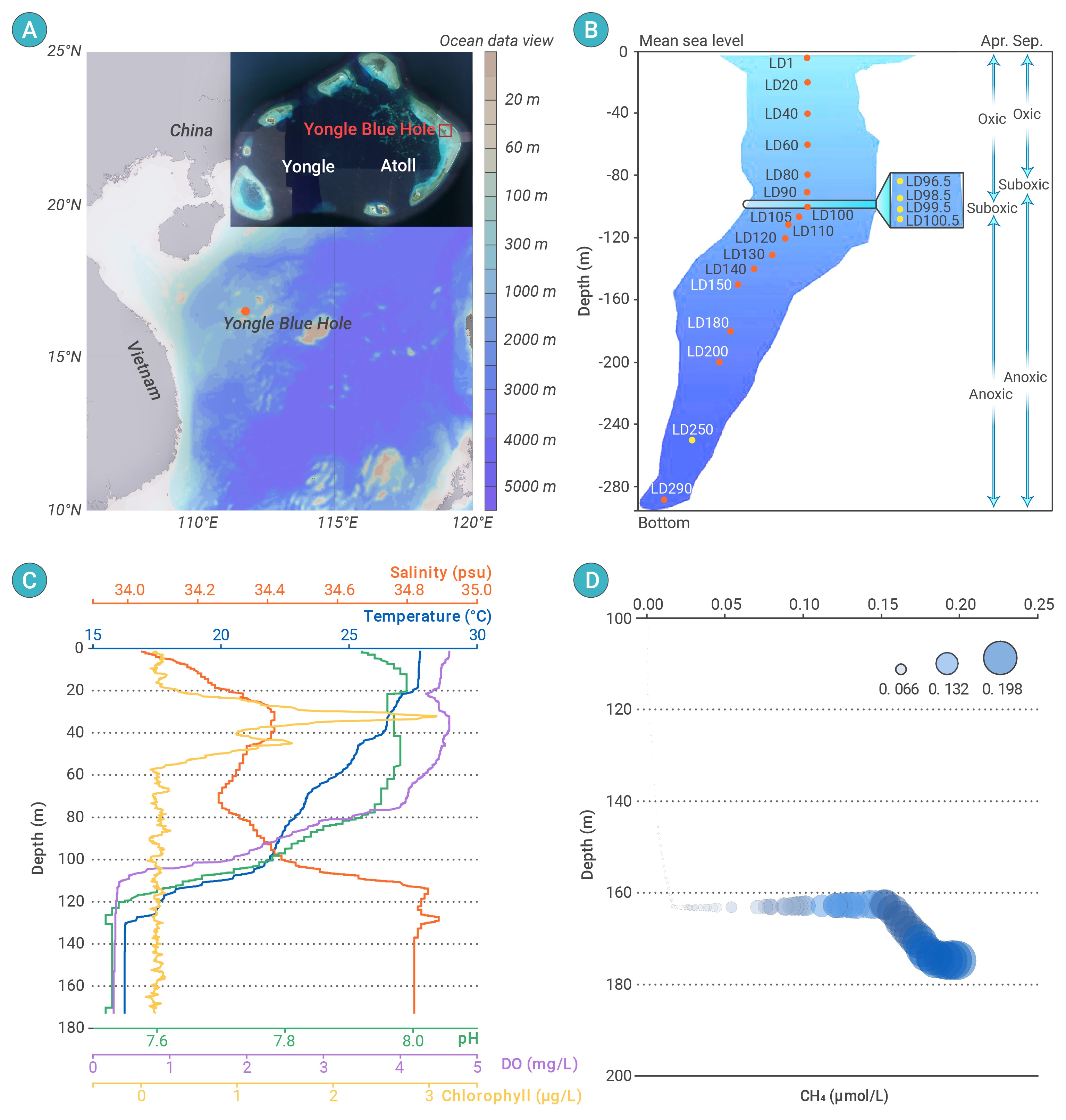
Figure 1.
Sampling sites and environmental parameters in the YBH.
-
Figure 2.
Overview of microbiome novelty in YBH water column
-
Figure 3.
Phylogeny, taxonomy, distribution, and transcriptional level of reconstructed MAGs.
-
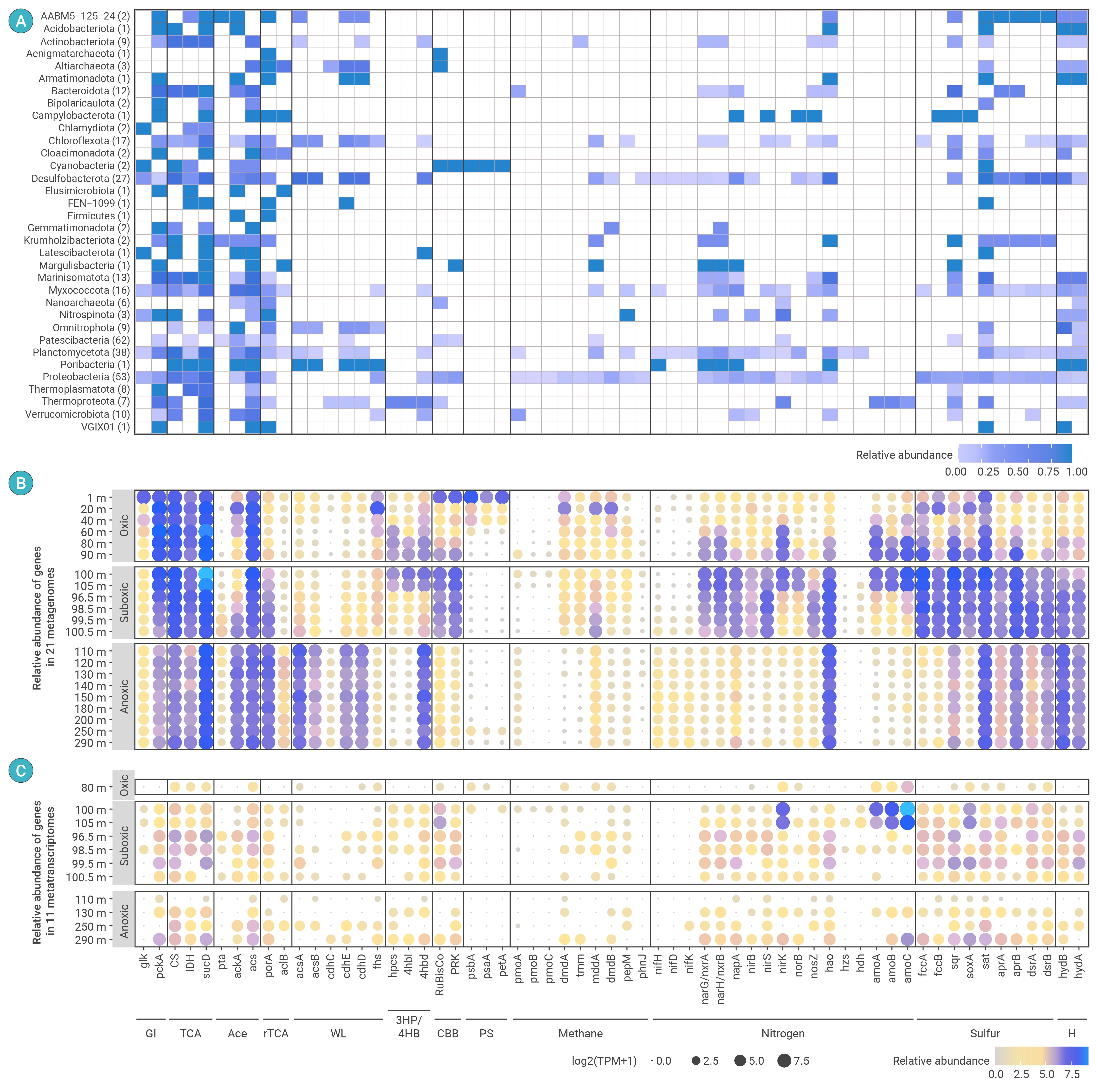
Figure 4.
Relative abundance of functional genes in MAGs, metagenomes, and metatranscriptomes
-
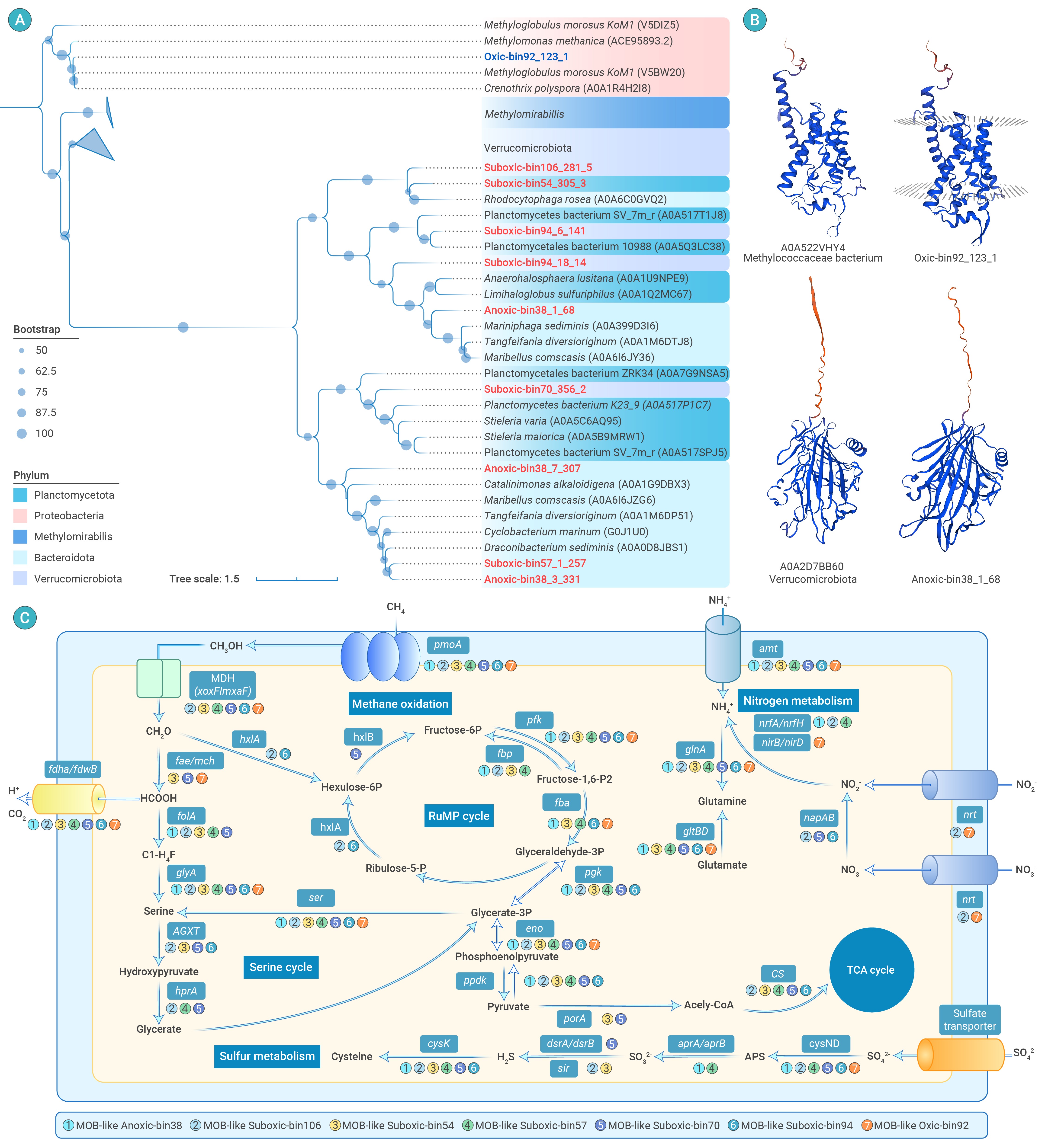
Figure 5.
Identification of potential methane microbial consumers in YBH
-
Figure 6.
Schematic representation of potential carbon, nitrogen, and sulfur cycles in YBH water column
