
Larger increase in future global terrestrial water availability than projected by CMIP6 models
-
GRAPHICAL ABSTRACT
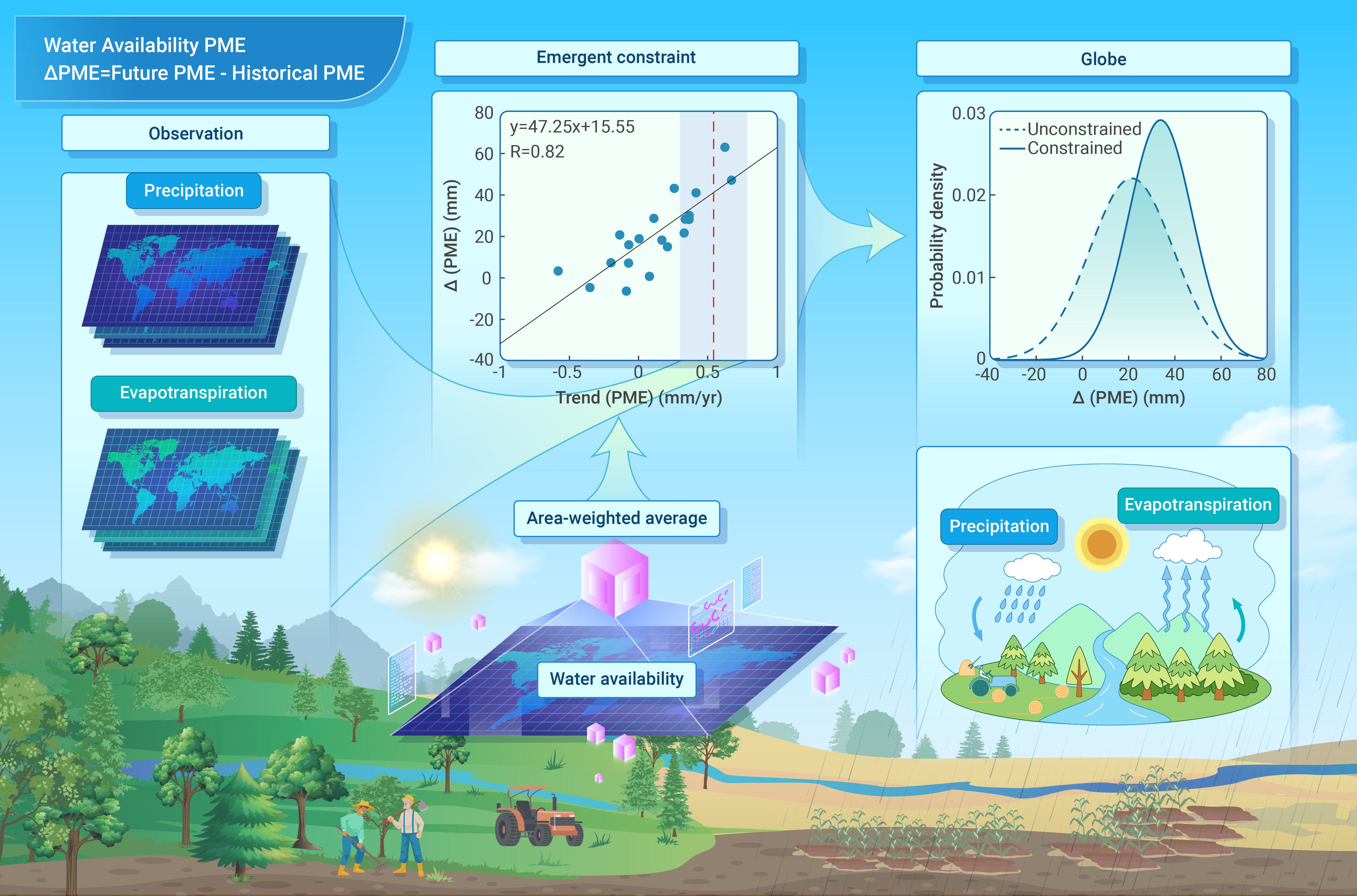
 DownLoad:
Full size image
DownLoad:
Full size image
-
PUBLIC SUMMARY
-
Most models have underestimated the increase in water availability (PME) from 1982 to 2011.
Under SSP5-8.5, the emergent-constrained water availability shows a significant increase of 13% ± 5%.
Implementing the emergent constraint reduces the uncertainty range in projections of water availability.
Accurate model representation of precipitation is crucial for producing reliable projections of PME.
-
-
ABSTRACT
Climate change and increasing water use associated with socio-economic growth have exacerbated the water crisis in most of the world. However, terrestrial water availability (precipitation minus evapotranspiration, PME) is inadequately represented within Earth System Models, directly affecting the reliability and consistency of future projections. To address this issue, we employ twenty Coupled Model Intercomparison Project Phase 6 (CMIP6) models and multiple observational PME datasets to produce more robust future projections. Most models underestimate the increase in PME over 1982–2011, while over 80% of the models project a continued rise in future PME. We thus constrain future changes in global mean PME (ΔPME) under medium and high greenhouse gas emission scenarios (SSP2-4.5 and SSP5-8.5) using the hierarchical emergent constraint (HEC) approach. The constrained PME shows a significant increase by 33.81 ± 13.72mm, or 13% ± 5%, during the period2070 –2099 relative to 1982–2011 under SSP5-8.5. Implementation of the HEC method reduces the uncertainty range by 24% and shows the ΔPME of the raw CMIP6 was underestimated by 37%. The PME change trends are most evident in low-latitude regions, with constrained PME increasing by 75.69 ± 24.35 mm, or 28% ± 9%, in the Northern Hemisphere’s low latitudes and by 34.56 ± 38.91mm, or 8% ± 10% in the Southern Hemisphere’s low latitudes by2070 –2099 under SSP5-8.5. Our findings highlight the importance of accurate model representation of precipitation to produce reliable projections of global terrestrial water availability. The observationally-constrained ΔPME is valuable for sustainable management of water resources. -

-
REFERENCES
[1] Hegerl G.C., Black E., Allan R.P., et al. (2015). Challenges in quantifying changes in the global water cycle. Bull. Am. Meteorol. Soc. 96: 1097−1115. DOI: 10.1175/BAMS-D-13-00212.1. [2] Padrón R.S., Gudmundsson L., Decharme B., et al. (2020). Observed changes in dry-season water availability attributed to human-induced climate change. Nat. Geosci. 13: 477−481. DOI: 10.1038/s41561-020-0594-1. [3] Vörösmarty C.J., McIntyre P.B., Gessner M.O., et al. (2010). Global threats to human water security and river biodiversity. Nature. 467: 555−561. DOI: 10.1038/nature09440. [4] Oki T. and Kanae S. (2006). Global Hydrological Cycles and World Water Resources. Science. 313: 1068−1072. DOI: 10.1126/science.1128845. [5] Chung M.G., Frank K.A., Pokhrel Y., et al. (2021). Natural infrastructure in sustaining global urban freshwater ecosystem services. Nat. Sustain. 4: 1068−1075. DOI: 10.1038/s41893-021-00786-4. [6] Dai A. (2013). Increasing drought under global warming in observations and models. Nat. Clim. Change. 3: 52−58. DOI: 10.1038/nclimate1633. [7] Trenberth K.E., Dai A., van der Schrier G., et al. (2014). Global warming and changes in drought. Nat. Clim. Change. 4: 17−22. DOI: 10.1038/nclimate2067. [8] Tellman B., Sullivan J.A., Kuhn C., et al. (2021). Satellite imaging reveals increased proportion of population exposed to floods. Nature. 596: 80−86. DOI: 10.1038/s41586-021-03695-w. [9] Avand M., Moradi H.R., and Ramazanzadeh Lasboyee M. (2021). Spatial prediction of future flood risk: An approach to the effects of climate change. Geosciences. 11: 25. DOI: 10.3390/geosciences11010025. [10] Velicogna I., Sutterley T.C., and van den Broeke M.R. (2014). Regional acceleration in ice mass loss from Greenland and Antarctica using GRACE time-variable gravity data. Geophys. Res. Lett. 41: 8130−8137. DOI: 10.1002/2014GL061052. [11] Greve P., Orlowsky B., Mueller B., et al. (2014). Global assessment of trends in wetting and drying over land. Nat. Geosci. 7: 716−721. DOI: 10.1038/ngeo2247. [12] Sheffield J., Wood E.F., and Roderick M.L. (2012). Little change in global drought over the past 60 years. Nature. 491: 435−438. DOI: 10.1038/nature11575. [13] Pekel J.-F., Cottam A., Gorelick N., et al. (2016). High-resolution mapping of global surface water and its long-term changes. Nature. 540: 418−422. DOI: 10.1038/nature20584. [14] Zhang Y., Li C., Chiew F.H.S., et al. (2023). Southern Hemisphere dominates recent decline in global water availability. Science. 382: 579−584. DOI: 10.1126/science.adh0716. [15] Eyring V., Bony S., Meehl G.A., et al. (2016). Overview of the Coupled Model Intercomparison Project Phase 6 (CMIP6) experimental design and organization. Geosci. Model Dev. 9: 1937−1958. DOI: 10.5194/gmd-9-1937-2016. [16] Taylor R.G., Scanlon B., Döll P., et al. (2013). Ground water and climate change. Nat. Clim. Change. 3: 322−329. DOI: 10.1038/nclimate1744. [17] Seager R., Ting M., Li C., et al. (2013). Projections of declining surface-water availability for the southwestern United States. Nat. Clim. Change. 3: 482−486. DOI: 10.1038/nclimate1787. [18] Milly P.C.D., Dunne K.A., and Vecchia A.V. (2005). Global pattern of trends in streamflow and water availability in a changing climate. Nature. 438: 347−350. DOI: 10.1038/nature04312. [19] Zeng Z., Piao S., Li L.Z.X., et al. (2017). Climate mitigation from vegetation biophysical feedbacks during the past three decades. Nat. Clim. Change. 7: 432−436. DOI: 10.1038/nclimate3299. [20] Hall A., Cox P., Huntingford C., et al. (2019). Progressing emergent constraints on future climate change. Nat. Clim. Change. 9: 269−278. DOI: 10.1038/s41558-019-0436-6. [21] Eyring V., Cox P.M., Flato G.M., et al. (2019). Taking climate model evaluation to the next level. Nat. Clim. Change. 9: 102−110. DOI: 10.1038/s41558-018-0355-y. [22] Kwiatkowski L., Bopp L., Aumont O., et al. (2017). Emergent constraints on projections of declining primary production in the tropical oceans. Nat. Clim. Change. 7: 355−358. DOI: 10.1038/nclimate3265. [23] Li G., Xie S.-P., He C., et al. (2017). Western Pacific emergent constraint lowers projected increase in Indian summer monsoon rainfall. Nat. Clim. Change. 7: 708−712. DOI: 10.1038/nclimate3387. [24] Lian X., Piao S., Huntingford C., et al. (2018). Partitioning global land evapotranspiration using CMIP5 models constrained by observations. Nat. Clim. Change. 8: 640−646. DOI: 10.1038/s41558-018-0207-9. [25] Myers T.A., Scott R.C., Zelinka M.D., et al. (2021). Observational constraints on low cloud feedback reduce uncertainty of climate sensitivity. Nat. Clim. Change. 11: 501−507. DOI: 10.1038/s41558-021-01039-0. [26] Thackeray C.W., Hall A., Norris J., et al. (2022). Constraining the increased frequency of global precipitation extremes under warming. Nat. Clim. Change. 12: 441−448. DOI: 10.1038/s41558-022-01329-1. [27] Harris I., Osborn T.J., Jones P., et al. (2020). Version 4 of the CRU TS monthly high-resolution gridded multivariate climate dataset. Sci. Data. 7: 109. DOI: 10.1038/s41597-020-0453-3. [28] Schneider U., Becker A., Finger P., et al. (2014). GPCC’s new land surface precipitation climatology based on quality-controlled in situ data and its role in quantifying the global water cycle. Theor. Appl. Climatol. 115: 15−40. DOI: 10.1007/s00704-013-0860-x. [29] Chen M., Xie P., Janowiak J.E., et al. (2002). Global land precipitation: A 50-yr monthly analysis based on gauge observations. J. Hydrometeorology. 3: 249−266. DOI: 2.0.CO;2">10.1175/1525-7541(2002)003<0249:GLPAYM>2.0.CO;2. [30] Zhang Y., Peña-Arancibia J.L., McVicar T.R., et al. (2016). Multi-decadal trends in global terrestrial evapotranspiration and its components. Sci. Rep. 6: 19124. DOI: 10.1038/srep19124. [31] Martens B., Miralles D.G., Lievens H., et al. (2017). GLEAM v3: satellite-based land evaporation and root-zone soil moisture. Geosci. Model Dev. 10: 1903−1925. DOI: 10.5194/gmd-10-1903-2017. [32] Yao Y., Liang S., Li X., et al. (2014). Bayesian multimodel estimation of global terrestrial latent heat flux from eddy covariance, meteorological, and satellite observations. J. Geophys. Res.-Atmos. 119: 4521−4545. DOI: 10.1002/2013JD020864. [33] Abatzoglou J.T., Dobrowski S.Z., Parks S.A., et al. (2018). TerraClimate, a high-resolution global dataset of monthly climate and climatic water balance from 1958–2015. Sci. Data. 5: 170191. DOI: 10.1038/sdata.2017.191. [34] Rodell M., Houser P.R., Jambor U., et al. (2004). The global land data assimilation system. Bull. Am. Meteorol. Soc. 85: 381−394. DOI: 10.1175/BAMS-85-3-381. [35] Li B., Rodell M., Sheffield J., et al. (2019). Long-term, non-anthropogenic groundwater storage changes simulated by three global-scale hydrological models. Sci. Rep. 9: 10746. DOI: 10.1038/s41598-019-47219-z. [36] Jung M., Reichstein M., Margolis H.A., et al. (2011). Global patterns of land-atmosphere fluxes of carbon dioxide, latent heat, and sensible heat derived from eddy covariance, satellite, and meteorological observations. J. Geophys. Res-Biogeo. 116: G00J07. DOI: 10.1029/2010JG001566. [37] Collins N., Theurich G., DeLuca C., et al. (2005). Design and implementation of components in the Earth System Modeling framework. Int. J. High Perform. Comput. Appl. 19: 341−350. DOI: 10.1177/1094342005056120. [38] Muñoz-Sabater J., Dutra E., Agustí-Panareda A., et al. (2021). ERA5-Land: A state-of-the-art global reanalysis dataset for land applications. Earth Syst. Sci. Data. 13: 4349−4383. DOI: 10.5194/essd-13-4349-2021. [39] Sun Q., Miao C., Duan Q., et al. (2018). A review of global precipitation data sets: Data sources, estimation, and intercomparisons. Rev. Geophys. 56: 79−107. DOI: 10.1002/2017RG000574. [40] Wu Y., Miao C., Slater L., et al. (2024). Hydrological projections under CMIP5 and CMIP6: Sources and magnitudes of uncertainty. Bull. Am. Meteorol. Soc. 105: E2374−E2389. DOI: 10.1175/BAMS-D-23-0104.1. [41] Zhang Y., Zheng H., Zhang X., et al. (2023). Future global streamflow declines are probably more severe than previously estimated. Nat. Water. 1: 261−271. DOI: 10.1038/s44221-023-00030-7. [42] Han J., Miao C., Gou J., et al. (2023). A new daily gridded precipitation dataset for the Chinese mainland based on gauge observations. Earth Syst. Sci. Data. 15: 3147−3161. DOI: 10.5194/essd-15-3147-2023. [43] Cesana G.V. and Del Genio A.D. (2021). Observational constraint on cloud feedbacks suggests moderate climate sensitivity. Nat. Clim. Change. 11: 213−218. DOI: 10.1038/s41558-020-00970-y. [44] Berg P., Moseley C., and Haerter J.O. (2013). Strong increase in convective precipitation in response to higher temperatures. Nat. Geosci. 6: 181−185. DOI: 10.1038/ngeo1731. [45] Wang H., Sun F., and Liu W. (2018). The dependence of daily and hourly precipitation extremes on temperature and atmospheric humidity over China. J. Clim. 31: 8931−8944. DOI: 10.1175/JCLI-D-18-0050.1. [46] Bárdossy A. and Pegram G. (2013). Interpolation of precipitation under topographic influence at different time scales. Water Resour. Res. 49: 4545−4565. DOI: 10.1002/wrcr.20307. [47] O’Gorman P.A. (2012). Sensitivity of tropical precipitation extremes to climate change. Nat. Geosci. 5: 697−700. DOI: 10.1038/ngeo1568. [48] Varghese S.J., Surendran S., Rajendran K., et al. (2020). Future projections of Indian Summer Monsoon under multiple RCPs using a high resolution global climate model multiforcing ensemble simulations. Clim. Dyn. 54: 1315−1328. DOI: 10.1007/s00382-019-05059-7. [49] Bador M., Donat M.G., Geoffroy O., et al. (2018). Assessing the robustness of future extreme precipitation intensification in the CMIP5 ensemble. Am. Meteorol. Soc. 31: 6505−6525. DOI: 10.1175/JCLI-D-17-0683.1. -
ABOUT THIS ARTICLE
Cite this article:
Wu Y., Miao C., Slater L., et al., (2024). Larger increase in future global terrestrial water availability than projected by CMIP6 models. The Innovation Geoscience 2(4): 100097. https://doi.org/10.59717/j.xinn-geo.2024.100097
Welcome!
To request copyright permission to republish or share portions of our works, please visit Copyright Clearance Center's (CCC) Marketplace website at marketplace.copyright.com.
Article Metrics
Relative Articles
Cited by
Export File
Citation
Wu Y., Miao C., Slater L., et al., (2024). Larger increase in future global terrestrial water availability than projected by CMIP6 models. The Innovation Geoscience 2(4): 100097. https://doi.org/10.59717/j.xinn-geo.2024.100097

Format
Content
-
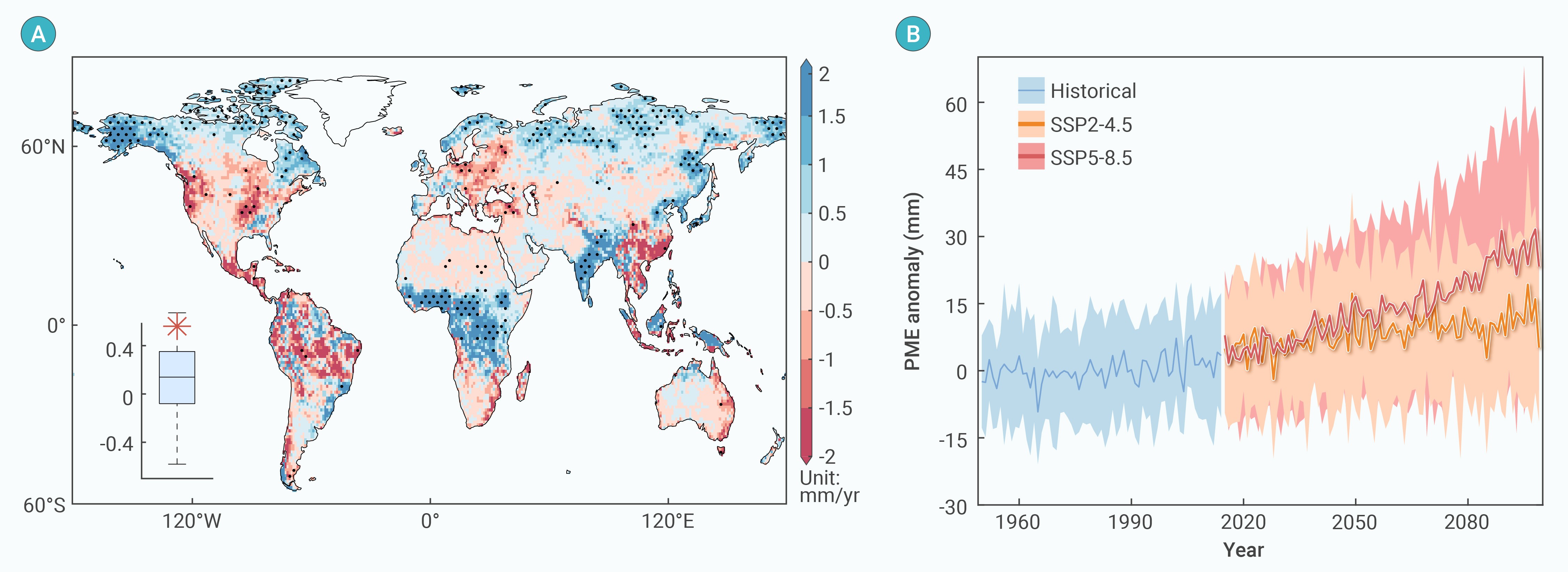
Figure 1.
Historical and future trends in global PME in CMIP6
-
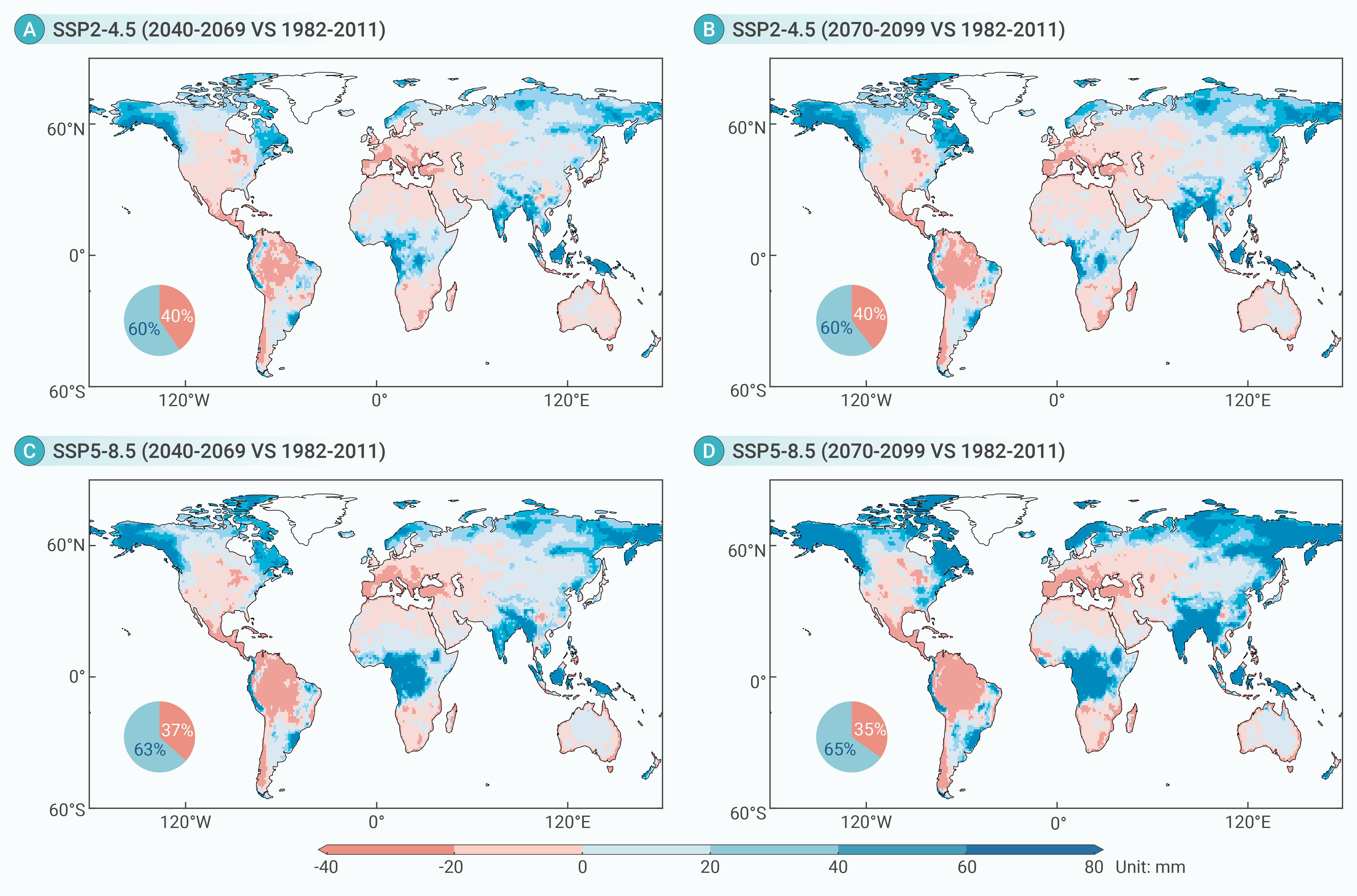
Figure 2.
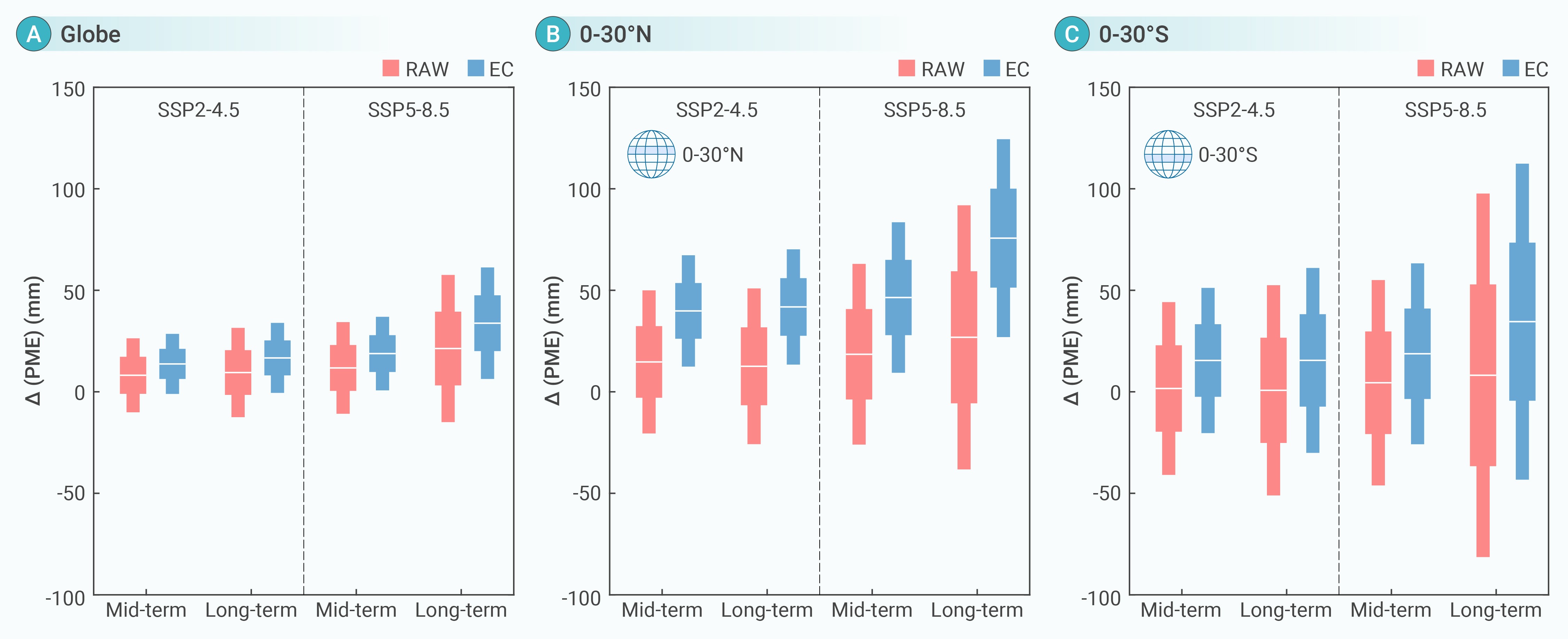
Raw CMIP6 multi-model median projections of ΔPME over the global land surface, except Antarctica and Greenland, relative to 1982–2011 (Unit: mm)
-
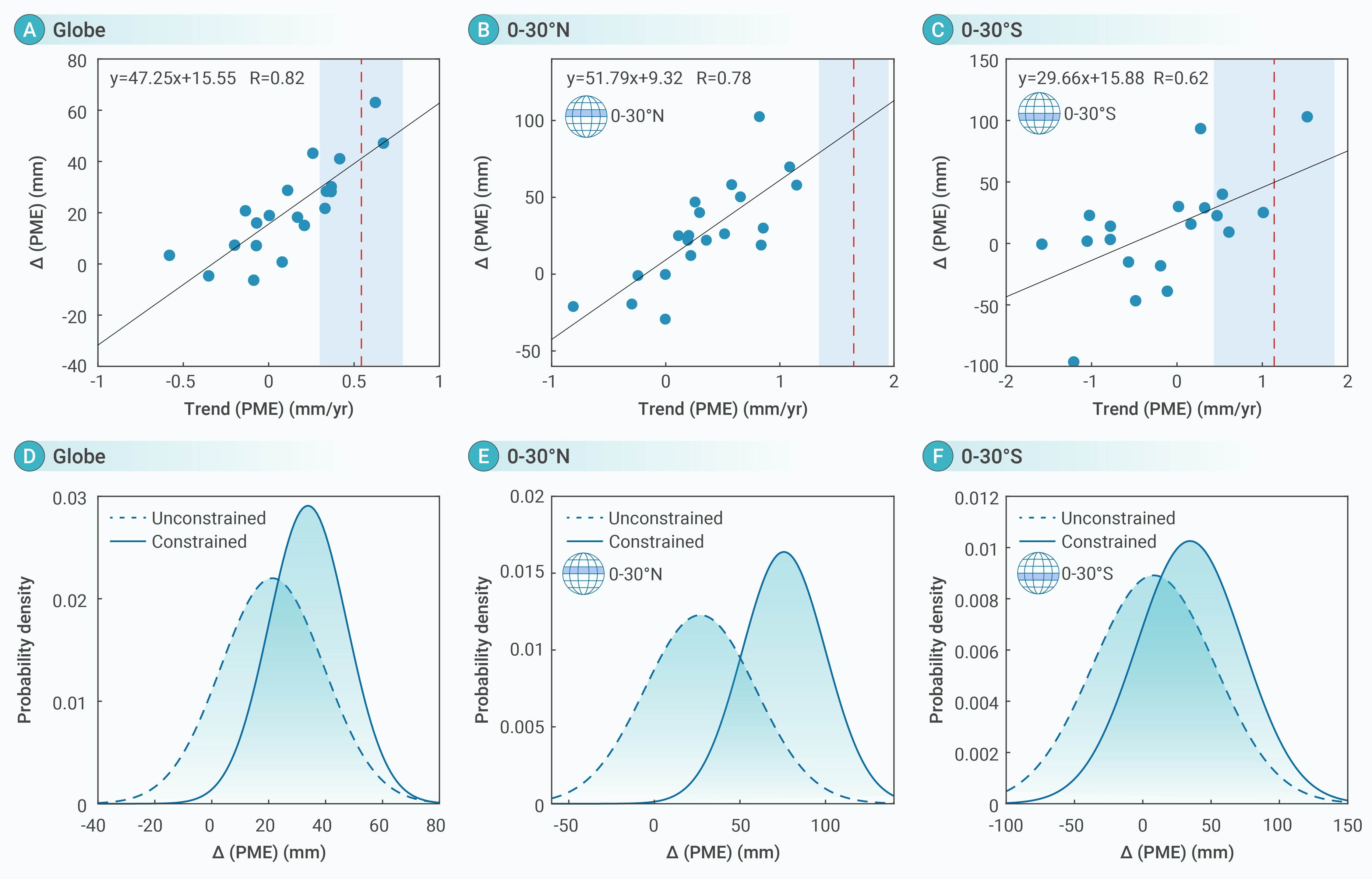
Figure 3.
Emergent constraints on future projections of ΔPME
-
Figure 4.
Future ΔPME relative to 1982–2011 before and after application of the emergent constraints (EC)
-
Figure 5.
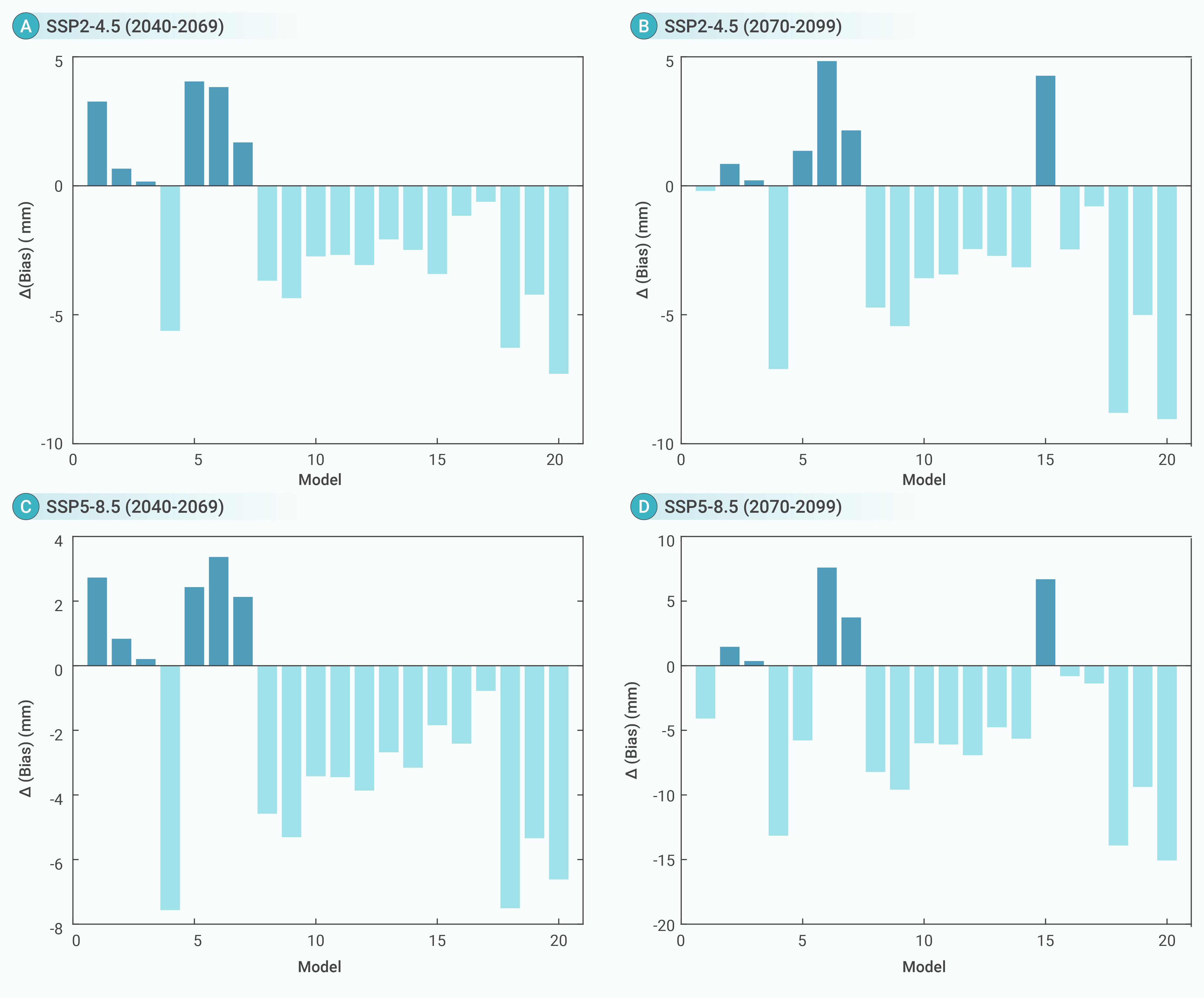
Model-based cross-validation of hierarchical emergent constraint on ΔPME
-
Figure 6.
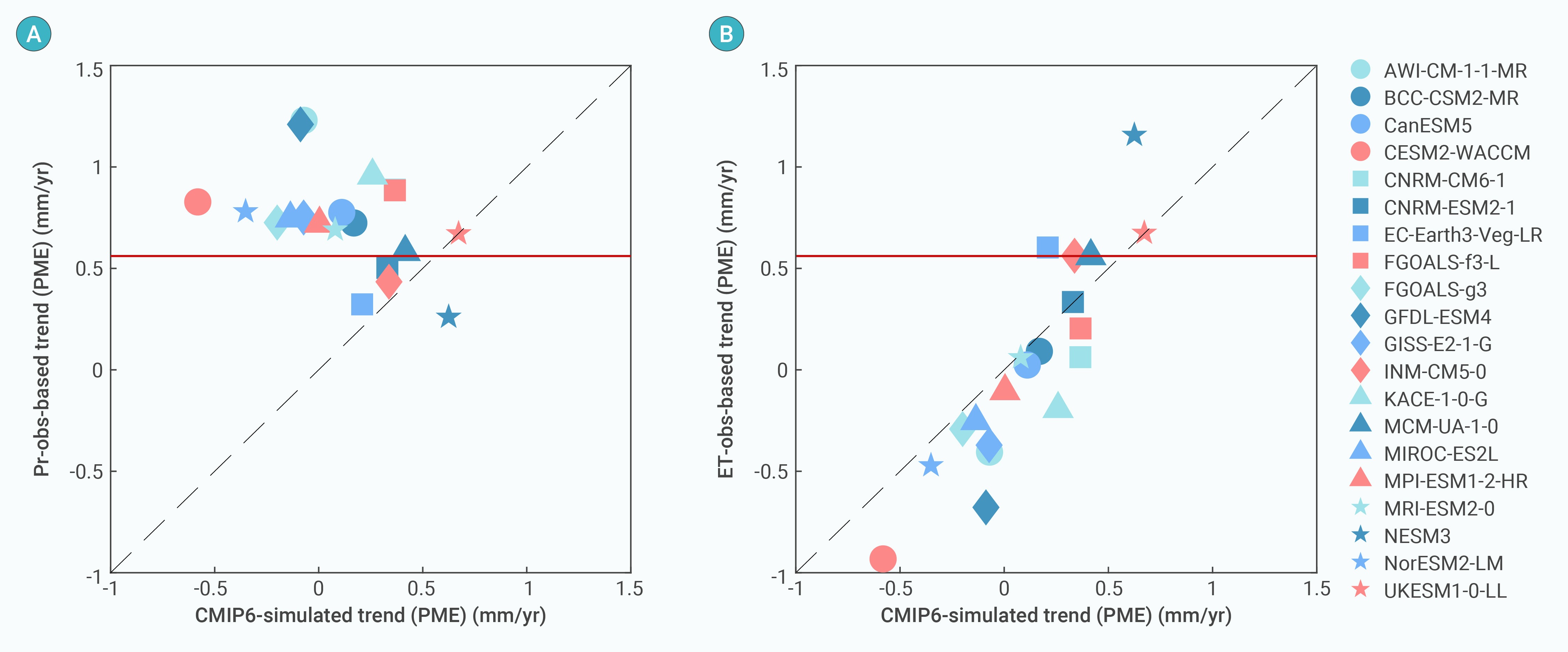
CMIP6-modelled PME trend versus CMIP6-modelled PME trend with (A) precipitation or (B) evapotranspiration replaced by observations or climate reanalysis.
-
Figure 7.
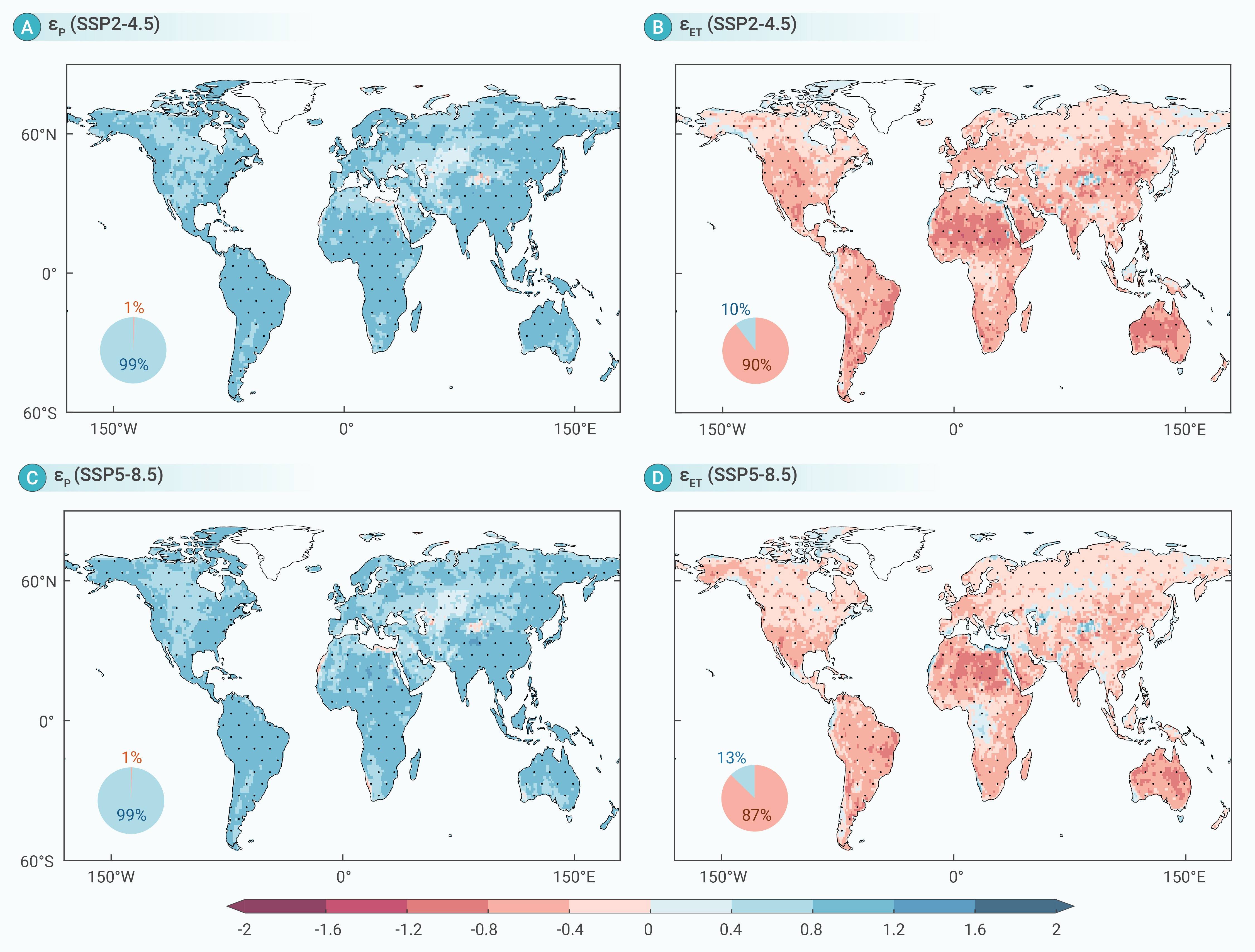
Sensitivity coefficients of
$ {\mathit{U}}_{\mathit{P}\mathit{M}\mathit{E}} $ $ {\mathit{U}}_{\mathit{P}} $ $ {\epsilon }_{\mathit{P}} $ $ {\mathit{U}}_{\mathit{E}\mathit{T}} $ $ {\epsilon }_{\mathit{E}\mathit{T}} $ 2099
