
Asymmetric responses of litter decomposition to altered precipitation: Double evidence from field experiments and global synthesis
-
GRAPHICAL ABSTRACT

 DownLoad:
Full size image
DownLoad:
Full size image
-
PUBLIC SUMMARY
-
Increasing precipitation (WET) speeds up litter decomposition, while decreasing precipitation (DRY) slows it down.
In arid regions litter decomposition is more sensitive to WET, while in humid regions it’s more sensitive to DRY.
A double asymmetric model best explains the litter decomposition-altered precipitation relationships.
Meta-analyses confirm that this asymmetrical effect between humid and arid regions is true globally.
-
-
ABSTRACT
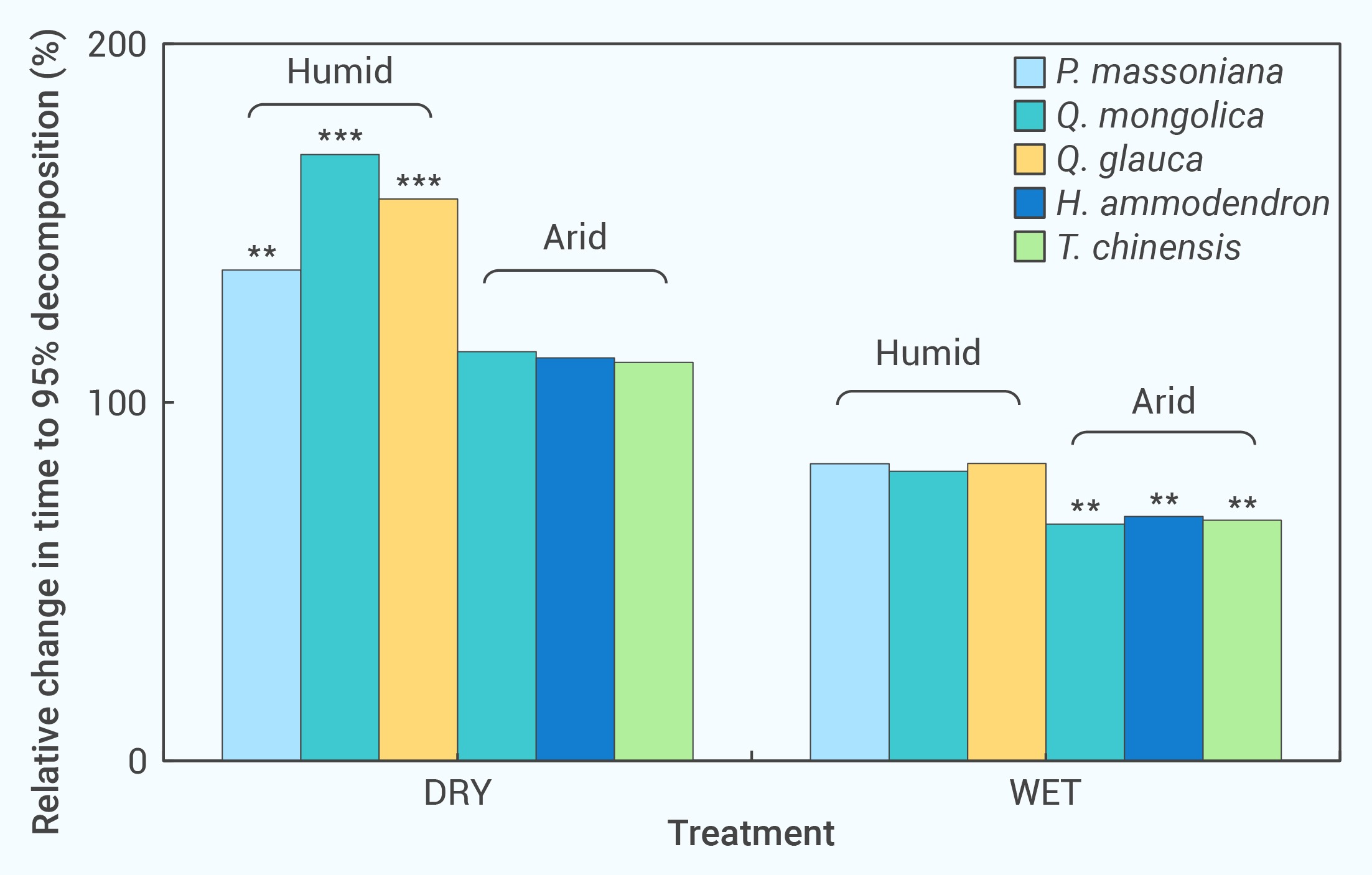
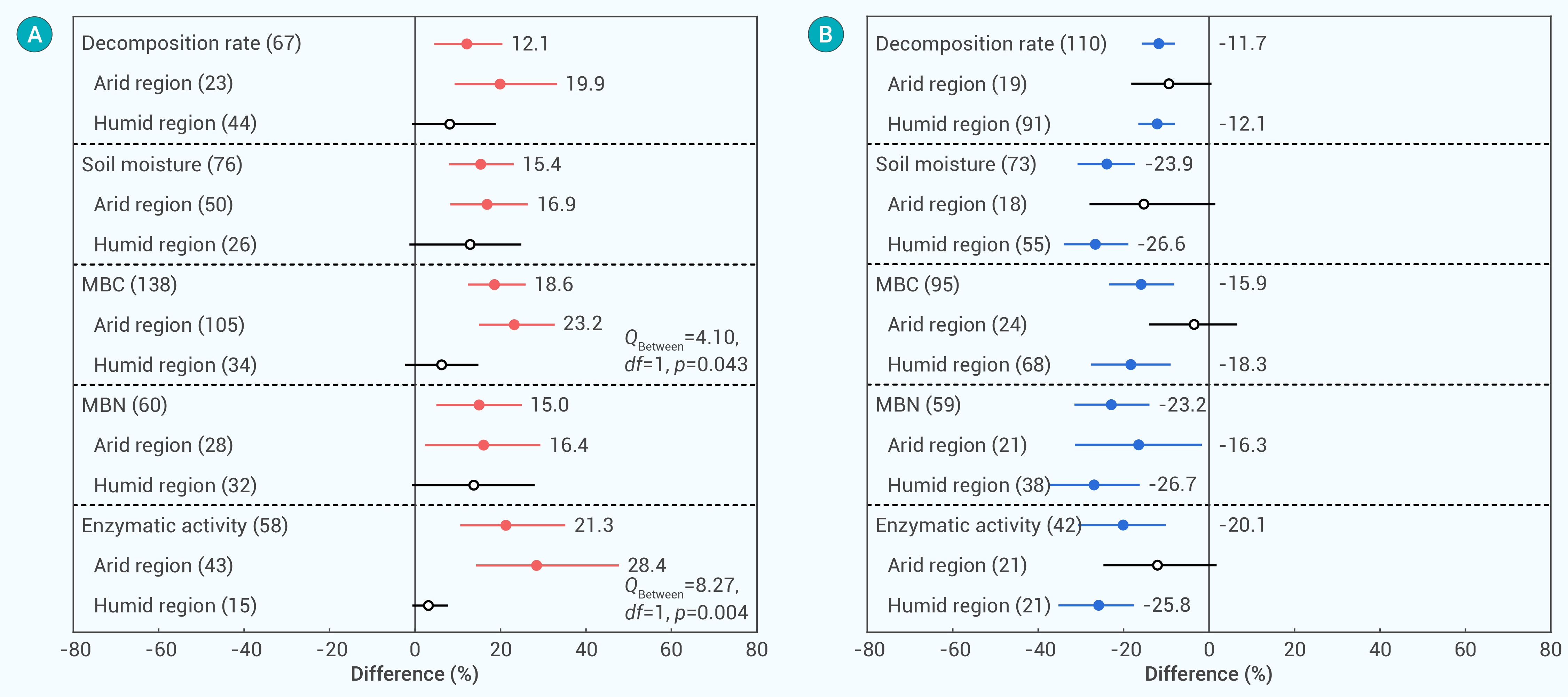
Altered precipitation regimes as a result of global climate change have significant implications for ecosystem processes, such as the decomposition of litter, a vital process in carbon (C) and nutrient cycling in terrestrial ecosystems. However, the effects of altered precipitation regimes on litter decomposition across humid and arid biomes remain unresolved. To address this knowledge gap, we conducted a comparative analysis using data from a geographically replicated precipitation‒manipulation field experiment that studied litter decomposition and a global meta-analysis of 778 paired observations from 207 peer-reviewed articles. Our findings indicated that the litter decomposition constant (k) was 7.7–31.3% greater under increased precipitation and 10.0–41.0% lower under decreased precipitation than under the control treatments. Litter decomposition, soil moisture, microbial biomass, and enzymatic activity had stronger responses to increased precipitation in the arid region and to decreased precipitation in the humid region, which was consistent with the double asymmetric model. A global meta-analysis also confirmed the asymmetrical effects of altered precipitation regimes on litter decomposition between humid and arid regions. Our results highlight the potential asymmetry in the effects of altered precipitation regimes on C and nutrient cycling between humid and arid terrestrial ecosystems. -

-
REFERENCES
[1] Beier C., Beierkuhnlein C., Wohlgemuth T., et al. (2012). Precipitation manipulation experiments-challenges and recommendations for the future. Ecol. Lett. 15:899−911. DOI:10.1111/j.1461-0248.2012.01793.x [2] Seneviratne S.I., Lüthi, D., Litschi, M., et al. (2006). Land-atmosphere coupling and climate change in Europe. Nature 443:205−209. DOI:10.1038/nature05095 [3] Ara Begum R., Lempert R., Ali E., et al. (2022). Point of departure and key concepts. Pörtner H.O., Roberts D.C., Tignor M., et al. (eds). Climate change 2022: Impacts, adaptation and vulnerability. Contribution of working group II to the sixth assessment report of the intergovernmental panel on climate change (Cambridge University Press), pp:121-196. DOI: 10.1017/9781009325844.003. [4] Frei C., Schöll R., Fukutome S., et al. (2006). Future change of precipitation extremes in Europe: Intercomparison of scenarios from regional climate models. J. Geophys. Res. Atmos. 111:D06105. DOI:10.1029/2005JD005965 [5] Easterling D.R., Kunkel K.E., Arnold J.R., et al. (2017). Precipitation change in the United States. Wuebbles D.J., Fahey D.W., Hibbard K.A., et al. (eds). Climate science special report: Fourth national climate assessment (U.S. Global Change Research Program), pp:207-230. DOI:10.7930/J0H993CC. [6] Lensing J.R. and Wise D.H. (2007). Impact of changes in rainfall amounts predicted by climate-change models on decomposition in a deciduous forest. Appl. Soil Ecol. 35:523−534. DOI:10.1016/j.apsoil.2006.09.015 [7] Sillmann J., Kharin V.V., Zwiers F.W., et al. (2013). Climate extremes indices in the CMIP5 multimodel ensemble: Part 2. Future climate projections. J. Geophys. Res. Atmos. 118:2473−2493. DOI:10.1002/jgrd.50188 [8] Seneviratne S.I., Corti T., Davin E.L., et al. (2010). Investigating soil moisture-climate interactions in a changing climate: A review. Earth Sci. Rev. 99:125−161. DOI:10.1016/j.earscirev.2010.02.004 [9] Berg B. and McClaugherty C. (2014). Decomposition as a process: Some main features. Berg B. and McClaugherty C. (eds). Plant litter: Decomposition, humus formation, carbon sequestration, 3rd Edition (Springer), pp:11-34. DOI: 10.1007/978-3-642-38821-7_2. [10] Suseela V. and Tharayil N. (2018). Decoupling the direct and indirect effects of climate on plant litter decomposition: Accounting for stress-induced modifications in plant chemistry. Glob. Chang. Biol. 24:1428−1451. DOI:10.1111/gcb.13923 [11] Allison S.D. Lu Y., Weihe C., et al. (2013). Microbial abundance and composition influence litter decomposition response to environmental change. Ecology 94:714−725. DOI:10.2307/23436274 [12] Campos X., Germino M.J. and de Graaff M.A. (2017). Enhanced precipitation promotes decomposition and soil C stabilization in semiarid ecosystems, but seasonal timing of wetting matters. Plant Soil 416:427−436. DOI:10.1007/s11104-017-3221-1 [13] Schuur E.A. (2001). The effect of water on decomposition dynamics in mesic to wet Hawaiian montane forests. Ecosystems 4:259−273. DOI:10.1007/s10021-001-0008-1 [14] Li Y., Ning Z., Cui D., et al. (2016). Litter decomposition in a semiarid dune grassland: Neutral effect of water supply and inhibitory effect of nitrogen addition. PLoS One 11:e0162663. DOI:10.1371/journal.pone.0162663 [15] Haugwitz M.S., Michelsen A. and Priemé A. (2016). The legacy of climate change effects: Previous drought increases short-term litter decomposition rates in a temperate mixed grass-and shrubland. Plant Soil 408:183−193. DOI:10.1007/s11104-016-2913-2 [16] Zhou S., Huang C., Xiang Y., et al. (2018). Effects of reduced precipitation on litter decomposition in an evergreen broad-leaved forest in western China. For. Ecol. Manag. 430:219−227. DOI:10.1016/j.foreco.2018.08.022 [17] Nepstad D.C., Moutinho P., Dias-Filho M.B., et al. (2002). The effects of partial throughfall exclusion on canopy processes, aboveground production, and biogeochemistry of an Amazon forest. J. Geophys. Res. Atmos. 107:8085. DOI:10.1029/2001JD000360 [18] Kundel D., Bodenhausen N., Jørgensen H.B., et al. (2020). Effects of simulated drought on biological soil quality, microbial diversity and yields under long-term conventional and organic agriculture. FEMS Microbiol. Ecol. 96:fiaa205. DOI:10.1093/femsec/fiaa205 [19] Kayler Z.E., de Boeck H.J., Fatichi S., et al. (2015). Experiments to confront the environmental extremes of climate change. Front. Ecol. Environ. 13:219−225. DOI:10.1890/140174 [20] Bonan G.B., Hartman M.D., Parton W.J., et al. (2013). Evaluating litter decomposition in earth system models with long-term litterbag experiments: an example using the Community Land Model version 4 (CLM4). Glob. Chang. Biol. 19:957−974. DOI:10.1111/gcb.12031 [21] Knapp A.K., Ciais P. and Smith M.D. (2017). Reconciling inconsistencies in precipitation-productivity relationships: implications for climate change. New Phytol. 214:41−47. DOI:10.1111/nph.14381 [22] Thomas D. (2011). Dryland system variability. Thomas D. (ed). Arid zone geomorphology: Process, form and change in drylands, 3rd Edition (Wiley-Blackwell), pp:53-60. DOI:10.1002/9780470710777. [23] Liu L., Wang X., Lajeunesse M.J., et al. (2016). A cross-biome synthesis of soil respiration and its determinants under simulated precipitation changes. Glob. Chang. Biol. 22:1394−1405. DOI:10.1111/gcb.13156 [24] Zhou Z., Wang C. and Luo Y. (2018). Response of soil microbial communities to altered precipitation: A global synthesis. Glob. Ecol. Biogeogr. 27:1121−1136. DOI:10.1111/geb.12761 [25] Wu Q., Yue K., Ma Y., et al. (2022). Contrasting effects of altered precipitation regimes on soil nitrogen cycling at the global scale. Glob. Chang. Biol. 28:6679−6695. DOI:10.1111/gcb.16392 [26] Chen H. (2013). Projected change in extreme rainfall events in China by the end of the 21st century using CMIP5 models. Sci. Bull. 58:1462−1472. DOI:10.1007/s11434-012-5612-2 [27] McGrath R.E. and Meyer G.J. (2006). When effect sizes disagree: The case of r and d. Psychol . Methods 11:386. DOI:10.1037/1082-989X.11.4.386 [28] Nielsen U.N. and Ball B.A. (2015). Impacts of altered precipitation regimes on soil communities and biogeochemistry in arid and semi-arid ecosystems. Glob. Chang. Biol. 21:1407−1421. DOI:10.1111/gcb.12789 [29] Christiansen C.T., Haugwitz M.S., Priemé, A., et al. (2017). Enhanced summer warming reduces fungal decomposer diversity and litter mass loss more strongly in dry than in wet tundra. Glob. Chang. Biol. 23:406−420. DOI:10.1111/gcb.13362 [30] Wang B., Chen Y., Li Y., et al. (2021). Differential effects of altered precipitation regimes on soil carbon cycles in arid versus humid terrestrial ecosystems. Glob. Chang. Biol. 27:6348−6362. DOI:10.1111/gcb.15875 [31] Brockett B.F., Prescott C.E. and Grayston S.J. (2012). Soil moisture is the major factor influencing microbial community structure and enzyme activities across seven biogeoclimatic zones in western Canada. Soil Biol. Biochem. 44:9−20. DOI:10.1016/j.soilbio.2011.09.003 [32] Ren H., Xu Z., Isbell F., et al. (2017). Exacerbated nitrogen limitation ends transient stimulation of grassland productivity by increased precipitation. Ecol Monogr. 87:457−469. DOI:10.1002/ecm.1262 [33] Sierra C.A., Malghani S. and Loescher H.W. (2017). Interactions among temperature, moisture, and oxygen concentrations in controlling decomposition rates in a boreal forest soil. Biogeosciences 14:703−710. DOI:10.5194/bg-14-703-2017 [34] Manzoni S., Schaeffer S.M., Katul G., et al. (2014). A theoretical analysis of microbial eco-physiological and diffusion limitations to carbon cycling in drying soils. Soil Biol. Biochem. 73:69−83. DOI:10.1016/j.soilbio.2014.02.008 [35] Sihi D., Davidson E.A., Chen M., et al. (2018). Merging a mechanistic enzymatic model of soil heterotrophic respiration into an ecosystem model in two AmeriFlux sites of northeastern USA. Agric. For. Meteorol. 252:155−166. DOI:10.1016/j.agrformet.2018.01.026 [36] Zhou Z.H. and Wang C.K. (2015). Reviews and syntheses: Soil resources and climate jointly drive variations in microbial biomass carbon and nitrogen in China’s forest ecosystems. Biogeosciences 12:6751−6760. DOI:10.5194/bg-12-6751-2015 [37] Dunkerley D.L. (2021). Light and low-intensity rainfalls: A review of their classification, occurrence, and importance in landsurface, ecological and environmental processes. Earth Sci. Rev. 214:103529. DOI:10.1016/j.earscirev.2021.103529 [38] Zhou X., Chen C., Wang Y., et al. (2013). Warming and increased precipitation have differential effects on soil extracellular enzyme activities in a temperate grassland. Sci. Total Environ. 444:552−558. DOI:10.1016/j.scitotenv.2012.12.023 [39] Henry H.A.L. (2012). Soil extracellular enzyme dynamics in a changing climate. Soil Biol. Biochem. 47:53−59. DOI:10.1016/j.soilbio.2011.12.026 [40] Zuccarini P., Sardans J., Asensio L., et al. (2023). Altered activities of extracellular soil enzymes by the interacting global environmental changes. Glob. Chang. Biol. 29:2067−2091. DOI:10.1111/gcb.16604 [41] Crawford M.C., Grace P.R. and Oades J.M. (2000). Allocation of carbon to shoots, roots, soil and rhizosphere respiration by barrel medic (Medicago truncatula) before and after defoliation. Plant Soil 227:67−75. DOI:10.1023/A:1026599229920 [42] Ren C., Zhao F., Shi Z., et al. (2017). Differential responses of soil microbial biomass and carbon-degrading enzyme activities to altered precipitation. Soil Biol. Biochem. 115:1−10. DOI:10.1016/j.soilbio.2017.08.002 [43] Manzoni S., Schimel J.P. and Porporato A. (2012). Responses of soil microbial communities to water stress: results from a meta-analysis. Ecology 93:930−938. DOI:10.2307/23213741 [44] Yuste J.C., Penuelas,J., Estiarte M., et al. (2011). Drought-resistant fungi control soil organic matter decomposition and its response to temperature. Glob. Chang. Biol. 17:1475−1486. DOI:10.1111/j.1365-2486.2010.02300.x [45] McGuire K. L. and Treseder K.K. (2010). Microbial communities and their relevance for ecosystem models: decomposition as a case study. Soil Biol. Biochem. 42:529−535. DOI:10.1016/j.soilbio.2009.11.016 [46] Khalili B., Ogunseitan O.A., Goulden M.L., et al. (2016). Interactive effects of precipitation manipulation and nitrogen addition on soil properties in California grassland and shrubland. Appl. Soil Ecol. 107:144−153. DOI:10.1016/j.apsoil.2016.05.018 [47] Zeglin L.H., Bottomley P.J., Jumpponen A., et al. (2013). Altered precipitation regime affects the function and composition of soil microbial communities on multiple time scales. Ecology 94:2334−2345. DOI:10.1890/12-2018.1 [48] Frouz J. (2018). Effects of soil macro-and mesofauna on litter decomposition and soil organic matter stabilization. Geoderma 332:161−172. DOI:10.1016/j.geoderma.2017.08.039 [49] Aupic-Samain A., Baldy V., Delcourt N., et al. (2021). Water availability rather than temperature control soil fauna community structure and prey-predator interactions. Funct. Ecol. 35:1550−1559. DOI:10.1111/1365-2435.13745 [50] Guo X., Endler A., Poll C., et al. (2021). Independent effects of warming and altered precipitation pattern on nematode community structure in an arable field. Agric. Ecosyst. Environ. 316:107467. DOI:10.1016/j.agee.2021.107467 [51] Peng Y., Peñuelas J., Vesterdal L., et al. (2022). Responses of soil fauna communities to the individual and combined effects of multiple global change factors. Ecol. Lett. 25:1961−1973. DOI:10.1111/ele.14068 [52] Tsiafouli M.A., Kallimanis A.S., Katana E., et al. (2005). Responses of soil microarthropods to experimental short-term manipulations of soil moisture. Appl. Soil Ecol. 29:17−26. DOI:10.1016/j.apsoil.2004.10.002 [53] Sylvain Z.A., Wall D.H., Cherwin K.L., et al. (2014). Soil animal responses to moisture availability are largely scale, not ecosystem dependent: Insight from a cross-site study. Glob. Chang. Biol. 20:2631−2643. DOI:10.1111/gcb.12522 [54] Meehan M.L., Barreto C., Turnbull M.S., et al. (2020). Response of soil fauna to simulated global change factors depends on ambient climate conditions. Pedobiologia 83:150672. DOI:10.1016/j.pedobi.2020.150672 -
ABOUT THIS ARTICLE
Cite this article:
Wu Q., Peñuelas J., Yue K., et al. (2025). Asymmetric responses of litter decomposition to altered precipitation: Double evidence from field experiments and global synthesis. The Innovation Geoscience 3:100117. https://doi.org/10.59717/j.xinn-geo.2024.100117
Welcome!
To request copyright permission to republish or share portions of our works, please visit Copyright Clearance Center's (CCC) Marketplace website at marketplace.copyright.com.
Article Metrics
Relative Articles
Cited by
Export File
Citation
Wu Q., Peñuelas J., Yue K., et al. (2025). Asymmetric responses of litter decomposition to altered precipitation: Double evidence from field experiments and global synthesis. The Innovation Geoscience 3:100117. https://doi.org/10.59717/j.xinn-geo.2024.100117

Format
Content
-
Figure 1.
Time to 95% decomposition in WET and DRY relative to CK (mean, n = 3)
-
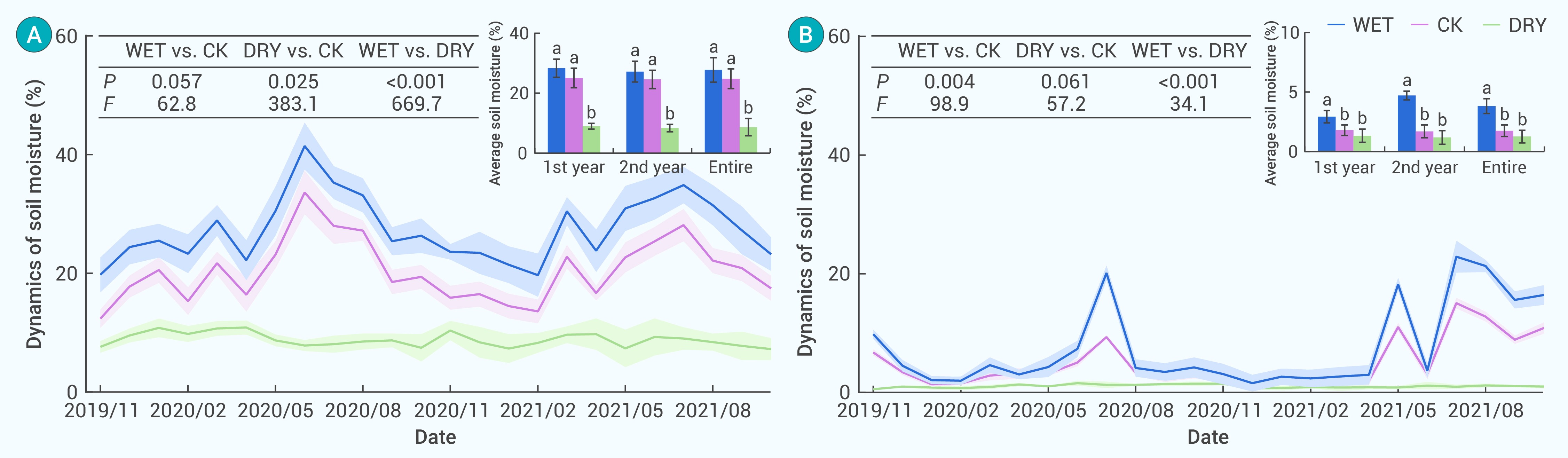
Figure 2.
Dynamics and average moisture content of the surface soil (0-5 cm) in the treatments in A, the humid region and B, the arid region (mean or mean ± SD, n = 3)
-
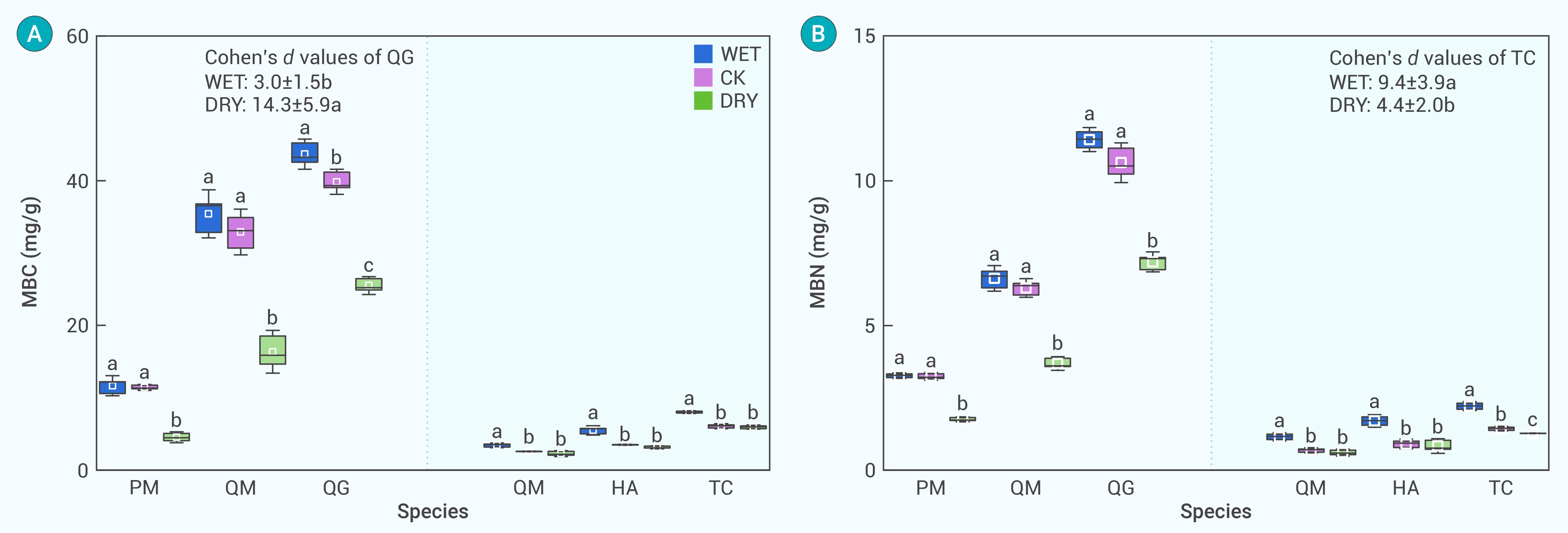
Figure 3.
Litter microbial biomass carbon (MBC, A) and nitrogen (MBN, B) concentrations in the treatments after two years of decomposition (mean ± 1.5 SD, n = 3)
-
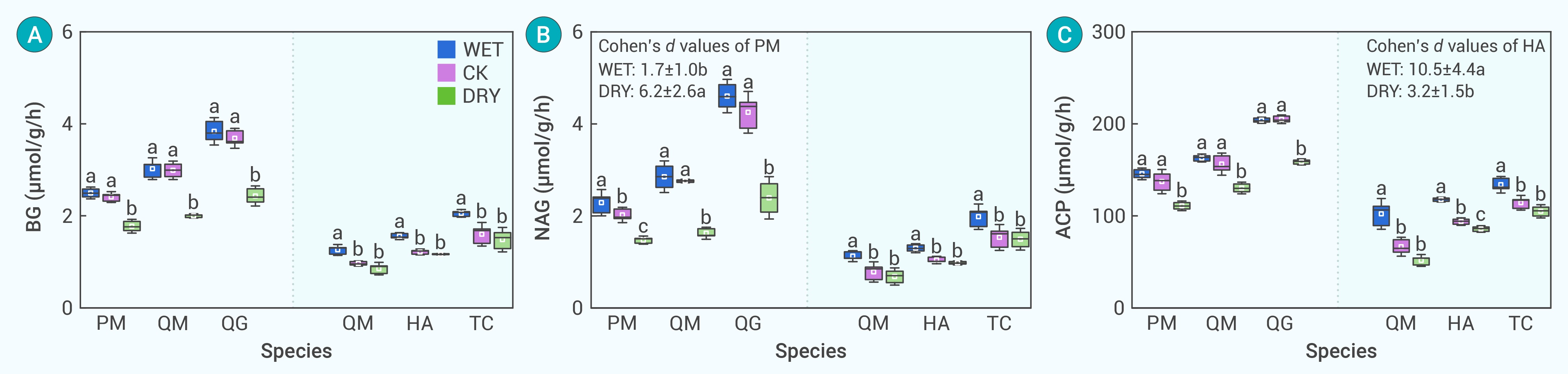
Figure 4.
Litter enzymatic activity (β-glucosidase, A; β-N-acetyl-glucosaminnidase, B and acid phosphatase, C) in the treatments after two years of decomposition (mean ± 1.5 SD, n = 3)
-
Figure 5.
Responses of the rate of litter decomposition, soil moisture content, microbial biomass and enzymatic activity to the effect of increased (A) and decreased (B) precipitation as a percentage relative to the control from the meta-analysis
