
-
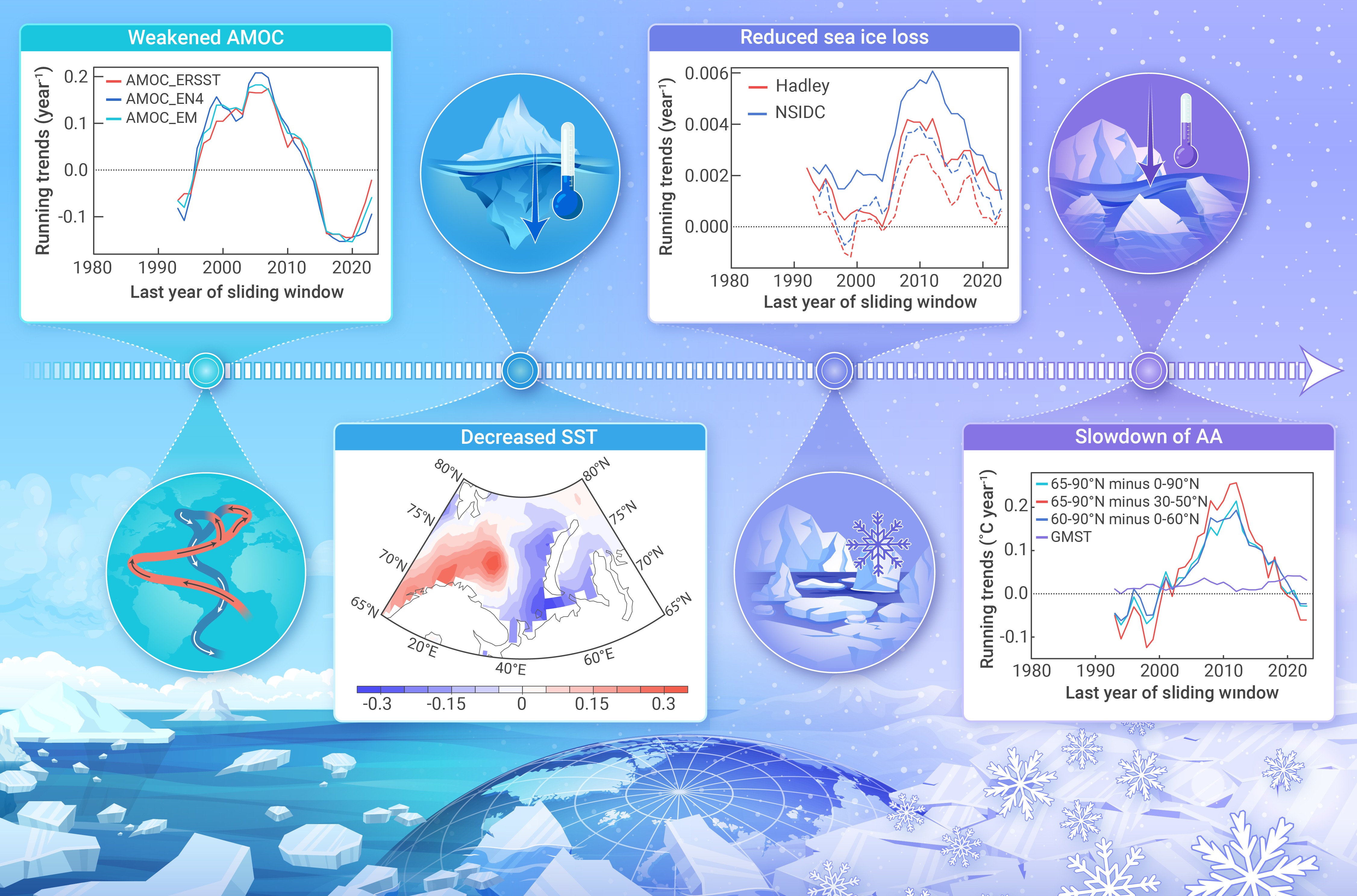
GRAPHICAL ABSTRACT
 DownLoad:
Full size image
DownLoad:
Full size image
-
PUBLIC SUMMARY
-
The rate of wintertime Arctic amplification shows a slowdown in recent decades.
The rate of wintertime Arctic sea ice loss exhibits a deceleration in recent decades.
The attenuation of the Atlantic Meridional Overturning Circulation decelerates winter Arctic sea ice loss.
The Barents and Kara Seas play an important role in the slowed rate of wintertime Arctic amplification.
-
-
ABSTRACT
A significant climate phenomenon “Arctic amplification” emerged during the late twentieth century, wherein the Arctic warming is faster than the rest of the world. However, recent episodes of the decreased rate of Arctic sea ice loss may bring prominent alterations to this uneven warming trend. Here, we re-evaluate the warming pattern, revealing an obvious slowdown of winter Arctic amplification since 2012, which probably contributes to the recent reversal in the winter surface wind speed in boreal midlatitudes. This slowdown may be attributed to the clearly slowed Arctic sea ice loss, especially in the Barents and Kara Seas, which is modulated by the weakened Atlantic Meridional Overturning Circulation. Our findings emphasize the urgent need for a more intensive analysis of the recent Arctic warming trend and its consequences for the broader Earth system. -

-
REFERENCES
[1] Masson-Delmotte V., Zhai P., Pirani A., et al. (2021). Climate change 2021: The physical science basis. Contribution of working group I to the sixth assessment report of the intergovernmental panel on climate change (Cambridge Univ Press). 2:2391. https://lib2.icimod.org/record/35286 [2] Hansen J., Sato M., Ruedy R., et al. (2005). Efficacy of climate forcings. J. Geophys. Res. 110:D18104. DOI:10.1029/2005JD005776 [3] Screen J. A. and Simmonds I. (2010). The central role of diminishing sea ice in recent Arctic temperature amplification. Nature 464:1334−1337. DOI:10.1038/nature09051 [4] Rantanen M., Karpechko A. Y., Lipponen A., et al. (2022). The Arctic has warmed nearly four times faster than the globe since 1979. Commun. Earth Environ. 3:168. DOI:10.1038/s43247-022-00498-3 [5] Liang Y.-C., Polvani L. M. and Mitevski I. (2022). Arctic amplification, and its seasonal migration, over a wide range of abrupt CO2 forcing. npj Clim. Atmos. Sci. 5:14. DOI:10.1038/s41612-022-00228-8 [6] Cohen J., Zhang X., Francis J., et al. (2020). Divergent consensuses on Arctic amplification influence on midlatitude severe winter weather. Nat. Clim. Chang. 10:20−29. DOI:10.1038/s41558-019-0662-y [7] Holland M. M. and Bitz C. M. (2003). Polar amplification of climate change in coupled models. Clim. Dyn. 21:221−232. DOI:10.1007/s00382-003-0332-6 [8] Park H.-S., Kim S.-J., Stewart A. L., et al. (2019). Mid-holocene Northern Hemisphere warming driven by Arctic amplification. Sci. Adv. 5:eaax8203. DOI:10.1126/sciadv.aax8203 [9] Dai A., Luo D., Song M., et al. (2019). Arctic amplification is caused by sea-ice loss under increasing CO2. Nat. Commun. 10:121. DOI:10.1038/s41467-018-07954-9 [10] Tedesco M., Mote T., Fettweis X., et al. (2016). Arctic cut-off high drives the poleward shift of a new Greenland melting record. Nat. Commun. 7:11723. DOI:10.1038/ncomms11723 [11] Köhler P., Knorr G. and Bard E. (2014). Permafrost thawing as a possible source of abrupt carbon release at the onset of the Bølling/Allerød. Nat. Commun. 5:5520. DOI:10.1038/ncomms6520 [12] Deng J. and Dai A. (2022). Sea ice–air interactions amplify multidecadal variability in the North Atlantic and Arctic region. Nat. Commun. 13:2100. DOI:10.1038/s41467-022-29810-7 [13] Luo D., Chen X., Overland J., et al. (2019). Weakened potential vorticity barrier linked to recent winter Arctic sea ice loss and midlatitude cold extremes. J. Clim. 32:4235−4261. DOI:10.1175/JCLI-D-18-0449.1 [14] Francis J. A. and Vavrus S. J. (2012). Evidence linking Arctic amplification to extreme weather in mid‐latitudes. Geophys. Res. Lett. 39:L06801. DOI:10.1029/2012GL051000 [15] Coumou D., Di Capua G., Vavrus S., et al. (2018). The influence of Arctic amplification on mid-latitude summer circulation. Nat. Commun. 9:2959. DOI:10.1038/s41467-018-05256-8 [16] Liu J., Wu D., Xu X., et al. (2021). Projection of extreme precipitation induced by Arctic amplification over the Northern Hemisphere. Environ. Res. Lett. 16:074012. DOI:10.1088/1748-9326/ac0acc [17] Zou Y., Rasch P. J., Wang H., et al. (2021). Increasing large wildfires over the western United States linked to diminishing sea ice in the Arctic. Nat. Commun. 12:6048. DOI:10.1038/s41467-021-26232-9 [18] Chen S., Wu R., Chen W., et al. (2020). Influence of winter Arctic sea ice concentration change on the El Niño–Southern Oscillation in the following winter. Clim. Dyn. 54:741−757. DOI:10.1007/s00382-019-05027-1 [19] Chen S., Chen W., Yu B., et al. (2023). Impact of the winter Arctic sea ice anomaly on the following summer tropical cyclone genesis frequency over the western North Pacific. Clim. Dyn. 61:3971−3988. DOI:10.1007/s00382-023-06789-5 [20] Zhu J. and Wu Z. (2024). Indian summer monsoon’s role in shaping variability in Arctic sea ice. npj Clim. Atmos. Sci. 7:264. DOI:10.1038/s41612-024-00819-7 [21] Kumar A., Perlwitz J., Eischeid J., et al. (2010). Contribution of sea ice loss to Arctic amplification. Geophys. Res. Lett. 37:e8034. DOI:10.1029/2010GL045022 [22] Cao Y., Liang S., Chen X., et al. (2017). Enhanced wintertime greenhouse effect reinforcing Arctic amplification and initial sea-ice melting. Sci. Rep. 7:8462. DOI:10.1038/s41598-017-08545-2 [23] Wunderling N., Willeit M., Donges J. F., et al. (2020). Global warming due to loss of large ice masses and Arctic summer sea ice. Nat. Commun. 11:5177. DOI:10.1038/s41467-020-18934-3 [24] Docquier D., Vannitsem S., Ragone F., et al. (2022). Causal links between Arctic sea ice and its potential drivers based on the rate of information transfer. Geophys. Res. Lett. 49:e2021GL095892. DOI:10.1029/2021GL095892 [25] Hersbach H., Bell B., Berrisford P., et al. (2020). The ERA5 global reanalysis. Q.J.R. Meteorol. Soc. 146:1999−2049. DOI:10.1002/qj.3803 [26] Kalnay E., Kanamitsu M., Kistler R., et al. (1996). The NCEP/NCAR 40-Year Reanalysis Project. Bull. Am. Meteorol. Soc. 77:437−471. DOI:2.0.CO:2">10.1175/1520-0477(1996)077<0437:TNYRP>2.0.CO:2 [27] Kanamitsu M., Ebisuzaki W., Woollen J., et al. (2002). NCEP-DOE AMIP-II reanalysis (R-2). Bull. Am. Math. Soc. 83:1631−1644. DOI:10.1175/BAMS-83-11-1631 [28] Kobayashi S., Ota Y., Harada Y., et al. (2015). The JRA-55 reanalysis: General specifications and basic characteristics. J. Meteorol. Soc. Jpn. Ser. II 93:5−48. DOI:10.2151/jmsj.2015-001 [29] Rohde R. A. and Hausfather Z. (2020). The Berkeley earth land/ocean temperature record. Earth Syst. Sci. Data 12:3469−3479. DOI:10.5194/essd-12-3469-2020 [30] Rayner N., Parker D. E., Horton E., et al. (2003). Global analyses of sea surface temperature, sea ice, and night marine air temperature since the late nineteenth century. J. Geophys. Res. 108:4407. DOI:10.1029/2002JD002670 [31] Tschudi M. A., Meier W. N. and Stewart J. S. (2020). An enhancement to sea ice motion and age products at the National Snow and Ice Data Center (NSIDC). The Cryosphere. 14:1519−1536. DOI:10.5194/tc-14-1519-2020 [32] Good S. A., Martin M. J. and Rayner N. A. (2013). EN4: Quality controlled ocean temperature and salinity profiles and monthly objective analyses with uncertainty estimates. J. Geophys. Res. Oceans 118:6704−6716. DOI:10.1002/2013JC009067 [33] Huang B., Thorne P. W., Banzon V. F., et al. (2017). Extended reconstructed Sea surface temperature, Version 5 (ERSSTv5): Upgrades, validations, and intercomparisons. J. Clim. 30:8179−8205. DOI:10.1175/JCLI-D-16-0836.1 [34] Hirahara S., Ishii M. and Fukuda Y. (2014). Centennial-scale sea surface temperature analysis and its uncertainty. J. Clim. 27:57−75. DOI:10.1175/JCLI-D-12-00837.1 [35] Smith A., Lott N. and Vose R. (2011). The integrated surface database: Recent developments and partnerships. Bull. Am. Meteorol. Soc. 92:704−708. DOI:10.1175/2011BAMS3015.1 [36] Blackport R. and Screen J. A. (2020). Weakened evidence for mid-latitude impacts of Arctic warming. Nat. Clim. Chang. 10:1065−1066. DOI:10.1038/s41558-020-00954-y [37] Blackport R. and Screen J. A. (2020). Insignificant effect of Arctic amplification on the amplitude of midlatitude atmospheric waves. Sci. Adv. 6:eaay2880. DOI:10.1126/sciadv.aay2880 [38] Cohen J., Screen J. A., Furtado J. C., et al. (2014). Recent Arctic amplification and extreme mid-latitude weather. Nat. Geosci. 7:627−637. DOI:10.1038/ngeo2234 [39] Davy R. and Griewank P. (2023). Arctic amplification has already peaked. Environ. Res. Lett. 18:084003. DOI:10.1088/1748-9326/ace273 [40] Medhaug I., Stolpe M. B., Fischer E. M., et al. (2017). Reconciling controversies about the ‘global warming hiatus’. Nature. 545:41−47. DOI:10.1038/nature22315 [41] Chen X. Tung K.-K. (2018) Global surface warming enhanced by weak Atlantic overturning circulation. Nature. 559:387–391. DOI: 10.1038/s41586-018-0320-y. [42] Caesar L., Rahmstorf S., Robinson A., et al. (2018). Observed fingerprint of a weakening Atlantic Ocean overturning circulation. Nature 556:191−196. DOI:10.1038/s41586-018-0006-5 [43] Zeng Z., Ziegler A. D., Searchinger T., et al. (2019). A reversal in global terrestrial stilling and its implications for wind energy production. Nat. Clim. Chang. 9:979−985. DOI:10.1038/s41558-019-0622-6 [44] Shen C., Yuan H., Li Z., et al. (2023). March Near-Surface Wind Speed Hiatus Over China Since 2011. Geophys. Res. Lett. 50:e2023GL104230. DOI:10.1029/2023GL104230 [45] Li X., Wu Z. and Li Y. (2019). A link of China warming hiatus with the winter sea ice loss in Barents-Kara Seas. Clim. Dyn. 53:2625−2642. DOI:10.1007/s00382-019-04645-z [46] Krishnan A. and Bhaskaran P. K. (2020). Skill assessment of global climate model wind speed from CMIP5 and CMIP6 and evaluation of projections for the Bay of Bengal. Clim. Dyn. 55:2667−2687. DOI:10.1007/s00382-020-05406-z [47] Fang M., Li X., Chen H. W., et al. (2022). Arctic amplification modulated by Atlantic Multidecadal Oscillation and greenhouse forcing on multidecadal to century scales. Nat. Commun. 13:1865. DOI:10.1038/s41467-022-29523-x [48] Mann H. B. (1945). Nonparametric tests against trend. Econometrica. 13:245−259. DOI:10.2307/1907187 [49] Kendall M. G. (1975) Rank correlation methods. Oxford University Press. [50] Kug J.-S., Jeong J.-H., Jang Y.-S., et al. (2015). Two distinct influences of Arctic warming on cold winters over North America and East Asia. Nat. Geosci. 8:759−762. DOI:10.1038/ngeo2517 [51] Mori M., Kosaka Y., Watanabe M., et al. (2019). A reconciled estimate of the influence of Arctic sea-ice loss on recent Eurasian cooling. Nat. Clim. Chang. 9:123−129. DOI:10.1038/s41558-018-0379-3 [52] Wendisch M., Brückner M., Crewell S., et al. (2023). Atmospheric and surface processes, and feedback mechanisms determining Arctic amplification: A review of first results and prospects of the (AC)3 project. Bull. Am. Meteorol. Soc. 104:E208−E242. DOI:10.1175/BAMS-D-21-0218.1 [53] Smedsrud L. H., Esau I., Ingvaldsen R. B., et al. (2013). The role of the Barents Sea in the Arctic climate system. Rev. Geophys. 51:415−449. DOI:10.1002/rog.20017 [54] Kumar A., Yadav J. and Mohan R. (2021). Spatio-temporal change and variability of Barents-Kara sea ice, in the Arctic: Ocean and atmospheric implications. Sci. Total. Environ. 753:142046. DOI:10.1016/j.scitotenv.2020.142046 [55] Årthun M. and Eldevik T. (2016). On anomalous ocean heat transport toward the Arctic and associated climate predictability. J. Clim. 29:689−704. DOI:10.1175/JCLI-D-15-0448.1 [56] Asbjørnsen H., Johnson H. L. and Årthun M. (2021). Variable Nordic Seas Inflow Linked to Shifts in North Atlantic Circulation. J. Clim. 34:7057−7071. DOI:10.1175/JCLI-D-20-0917.1 [57] Ouyang Z., Qi D., Chen L., et al. (2020). Sea-ice loss amplifies summertime decadal CO2 increase in the western Arctic Ocean. Nat. Clim. Change. 10:678−684. DOI:10.1038/s41558-020-0784-2 [58] Boisvert L., Parker C. and Valkonen E. (2023). A Warmer and Wetter Arctic: Insights From a 20‐Years AIRS Record. J. Geophys. Res.-Atmos. 128:e2023JD038793. DOI:10.1029/2023JD038793 [59] Thorpe R., Gregory J. M., Johns T., et al. (2001). Mechanisms determining the Atlantic thermohaline circulation response to greenhouse gas forcing in a non-flux-adjusted coupled climate model. J. Clim. 14:3102−3116. DOI:2.0.CO;2">10.1175/1520-0442(2001)014<3102:MDTATC>2.0.CO;2 [60] Zhang R. (2010). Latitudinal dependence of Atlantic meridional overturning circulation (AMOC) variations. Geophys. Res. Lett. 37:L16703. DOI:10.1029/2010GL044474 [61] Liu W., Fedorov A. and Sévellec F. (2019). The mechanisms of the Atlantic meridional overturning circulation slowdown induced by Arctic sea ice decline. J. Clim. 32:977−996. DOI:10.1175/JCLI-D-18-0231.1 [62] Liu W., Fedorov A. and Sévellec F. (2019). Interaction between Arctic sea ice and the Atlantic meridional overturning circulation in a warming climate. Clim. Dyn. 58:1811−1827. DOI:10.1007/s00382-021-05993-5 [63] Lee Y.-C., Liu W., Fedorov A. V., et al. (2024). Impacts of Atlantic meridional overturning circulation weakening on Arctic amplification. Proc. Natl Acad. Sci. USA. 121:e2402322121. DOI:10.1073/pnas.2402322121 [64] Tokinaga H., Xie S.-P. and Mukougawa H. (2017). Early 20th-century Arctic warming intensified by Pacific and Atlantic multidecadal variability. Proc. Natl Acad. Sci. USA. 114:6227−6232. DOI:10.1073/pnas.1615880114 [65] Screen J. A. and Francis J. A. (2016). Contribution of sea-ice loss to Arctic amplification is regulated by Pacific Ocean decadal variability. Nat. Clim. Chang. 6:856−860. DOI:10.1038/nclimate3011 [66] Fang M., Li X., Chen H. W., et al. (2022). Arctic amplification modulated by Atlantic Multidecadal Oscillation and greenhouse forcing on multidecadal to century scales. Nat. Commun. 13:1865. DOI:10.1038/s41467-022-29523-x [67] Luo B., Luo D., Dai A., et al. (2022). Decadal variability of winter warm Arctic‐cold Eurasia dipole patterns modulated by Pacific decadal oscillation and Atlantic multidecadal oscillation. Earths. Future. 10:e2021EF002351. DOI:10.1029/2021EF002351 -
ABOUT THIS ARTICLE
Cite this article:
Luo N., Li J., Xiao C., et al. (2025). Slowdown of wintertime Arctic amplification since 2012. The Innovation Geoscience 3:100130. https://doi.org/10.59717/j.xinn-geo.2024.100130
Welcome!
To request copyright permission to republish or share portions of our works, please visit Copyright Clearance Center's (CCC) Marketplace website at marketplace.copyright.com.
Article Metrics
Relative Articles
Cited by
Export File
Citation
Luo N., Li J., Xiao C., et al. (2025). Slowdown of wintertime Arctic amplification since 2012. The Innovation Geoscience 3:100130. https://doi.org/10.59717/j.xinn-geo.2024.100130

Format
Content
-
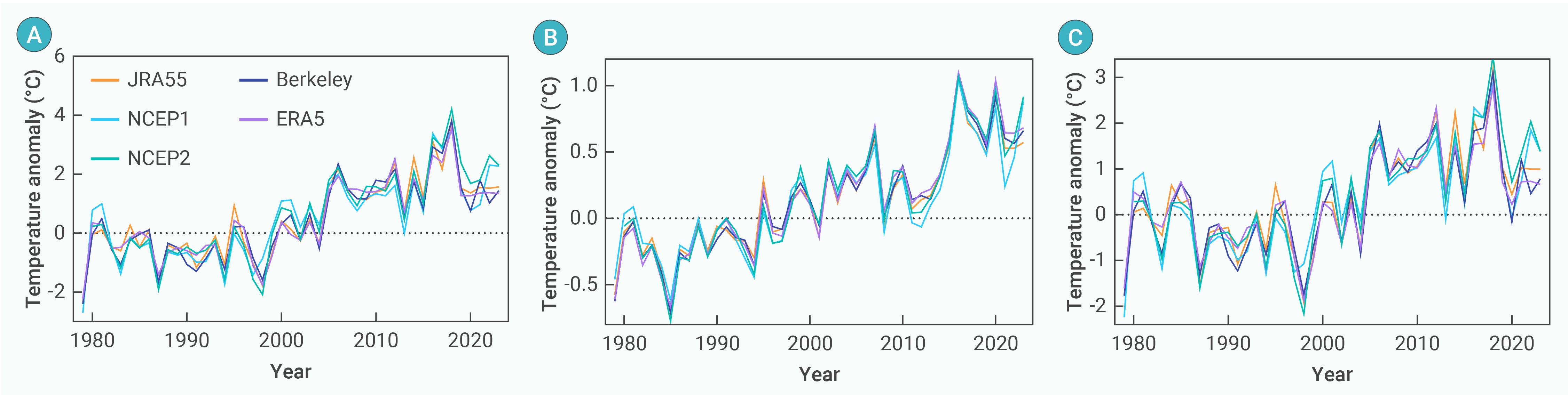
Figure 1.
Temporal evolution of winter surface temperature anomalies
-
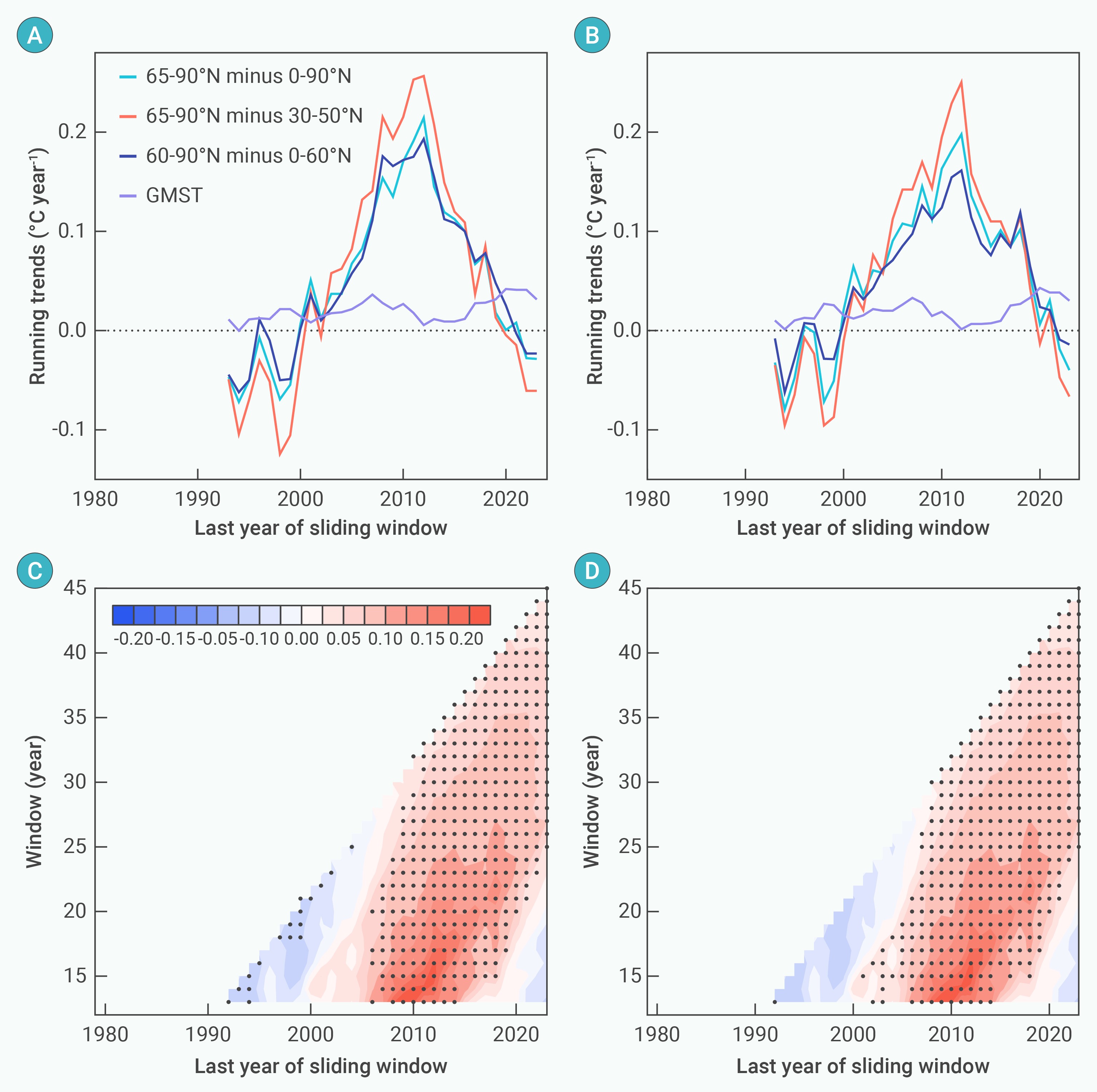
Figure 2.
The trends of Arctic amplification and global mean surface temperature during winter
-
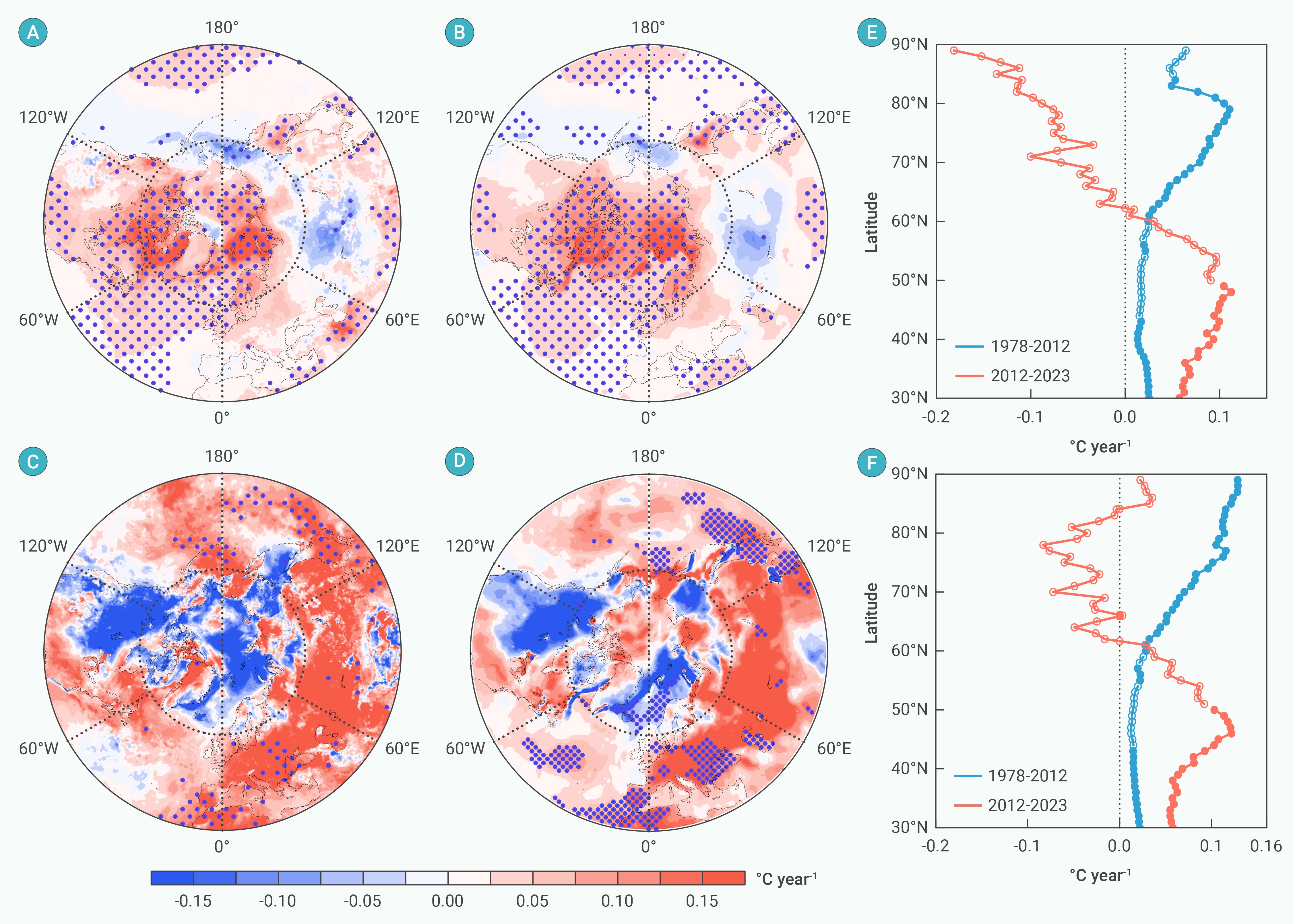
Figure 3.
Surface temperature trend pattern and zonally averaged surface temperature trend during winter
-
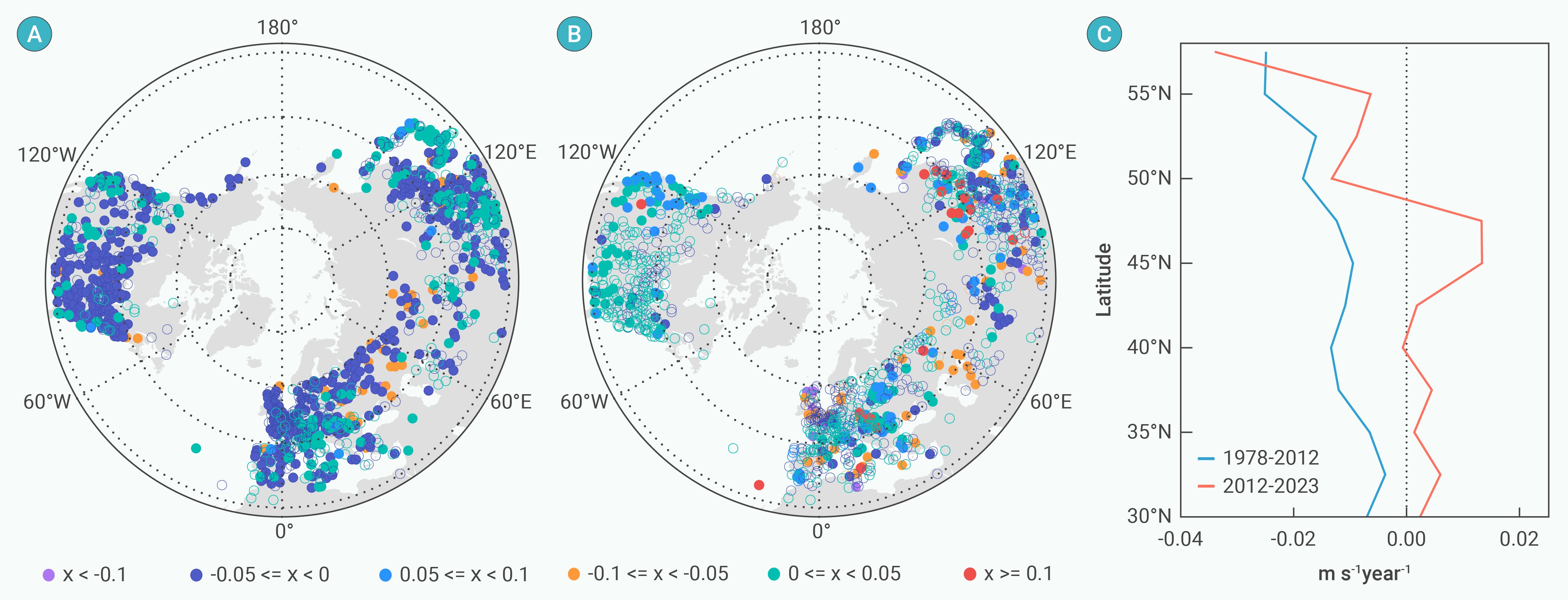
Figure 4.
Observed surface wind speed trend pattern and zonally averaged surface wind speed trends during winter
-
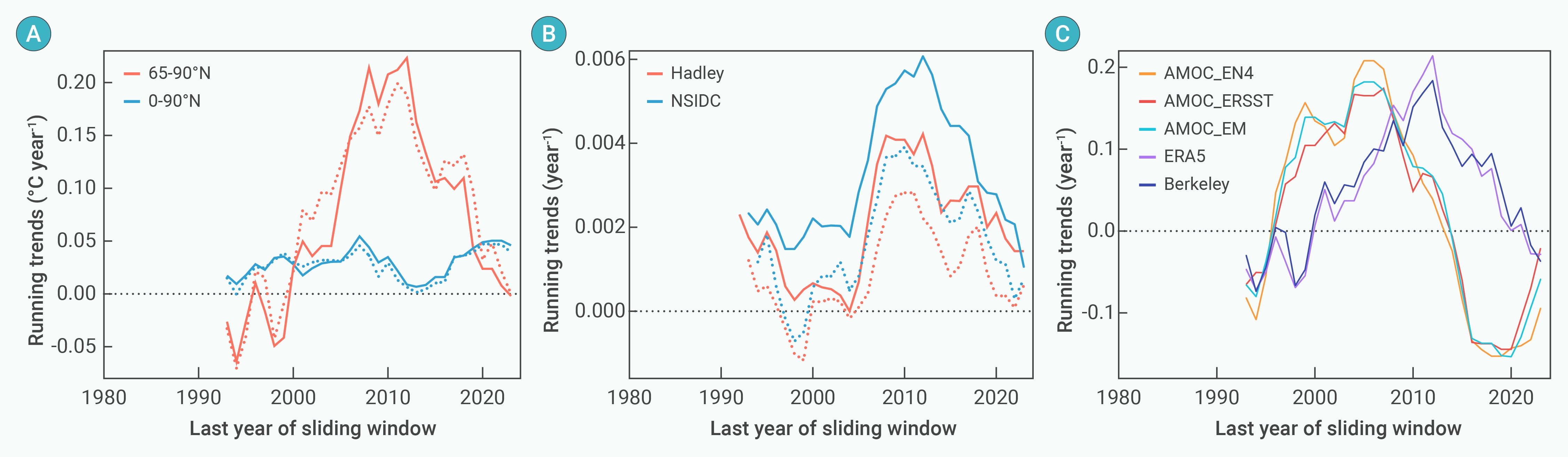
Figure 5.
The trends of surface temperature, Arctic sea ice loss, AMOC strength and Arctic amplification during winter
-
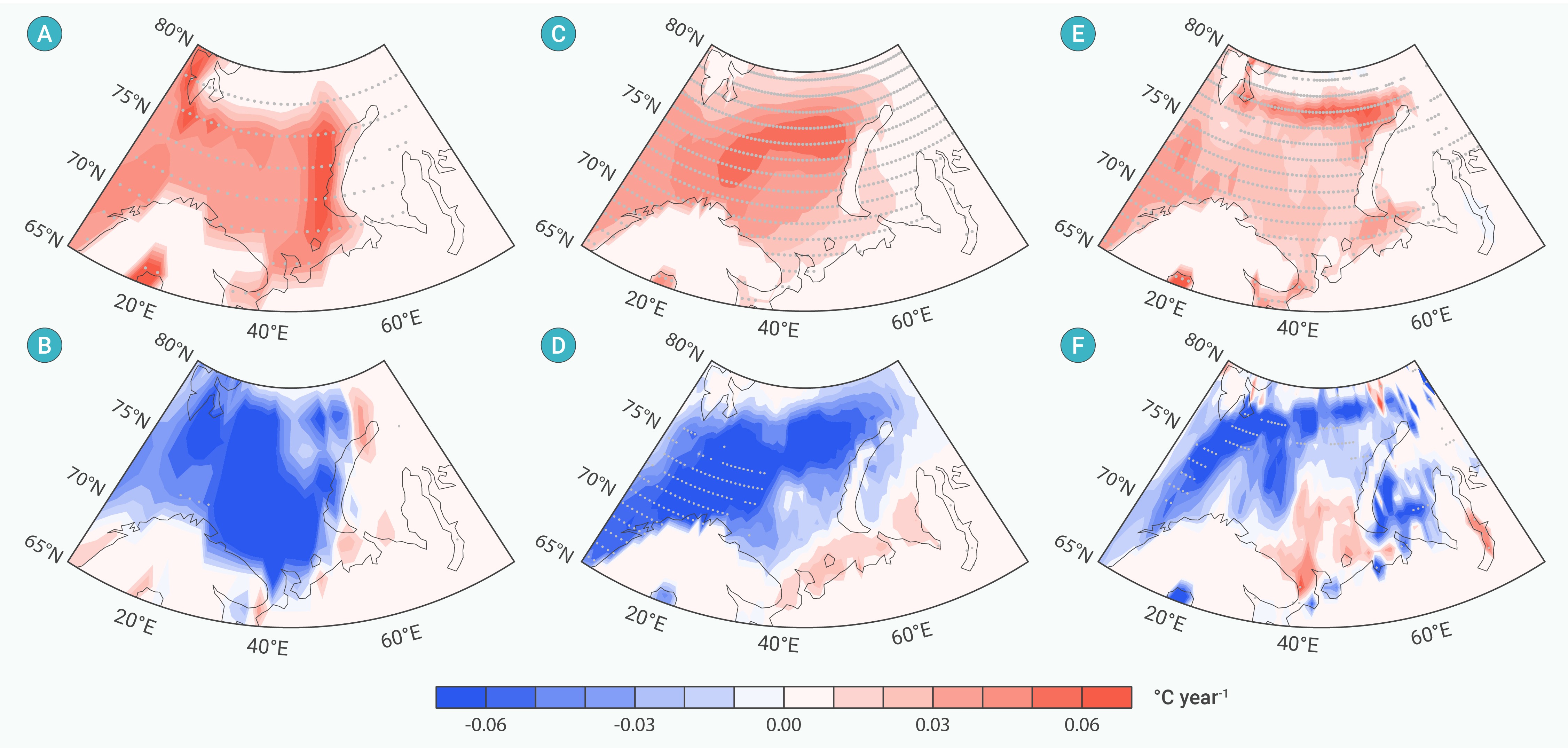
Figure 6.
Spatial distributions of winter sea surface temperature trend
-
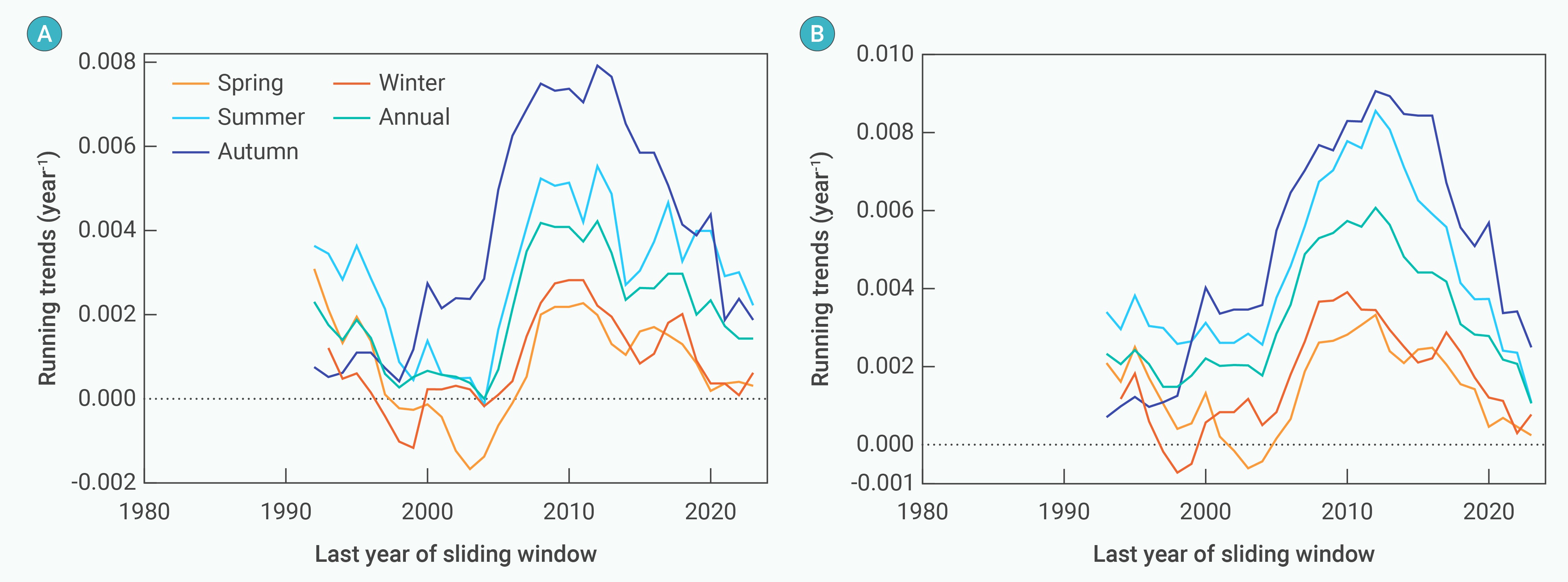
Figure 7.
Seasonal and annual mean Arctic sea ice loss rates
