
Glacier meltwater modulation of lake warming trends in China
-
GRAPHICAL ABSTRACT

 DownLoad:
Full size image
DownLoad:
Full size image
-
PUBLIC SUMMARY
-
We studied 2,260 lakes in China to assess how glacier meltwater modulates lake warming.
Glacier meltwater suppressed over 86% of surface warming in glaciated lakes.
Lakes in glaciated regions warmed less, especially during spring and summer melt seasons.
Longwave radiation and air temperature drive glacier melt, controlling warming in glacial lakes.
-
-
ABSTRACT
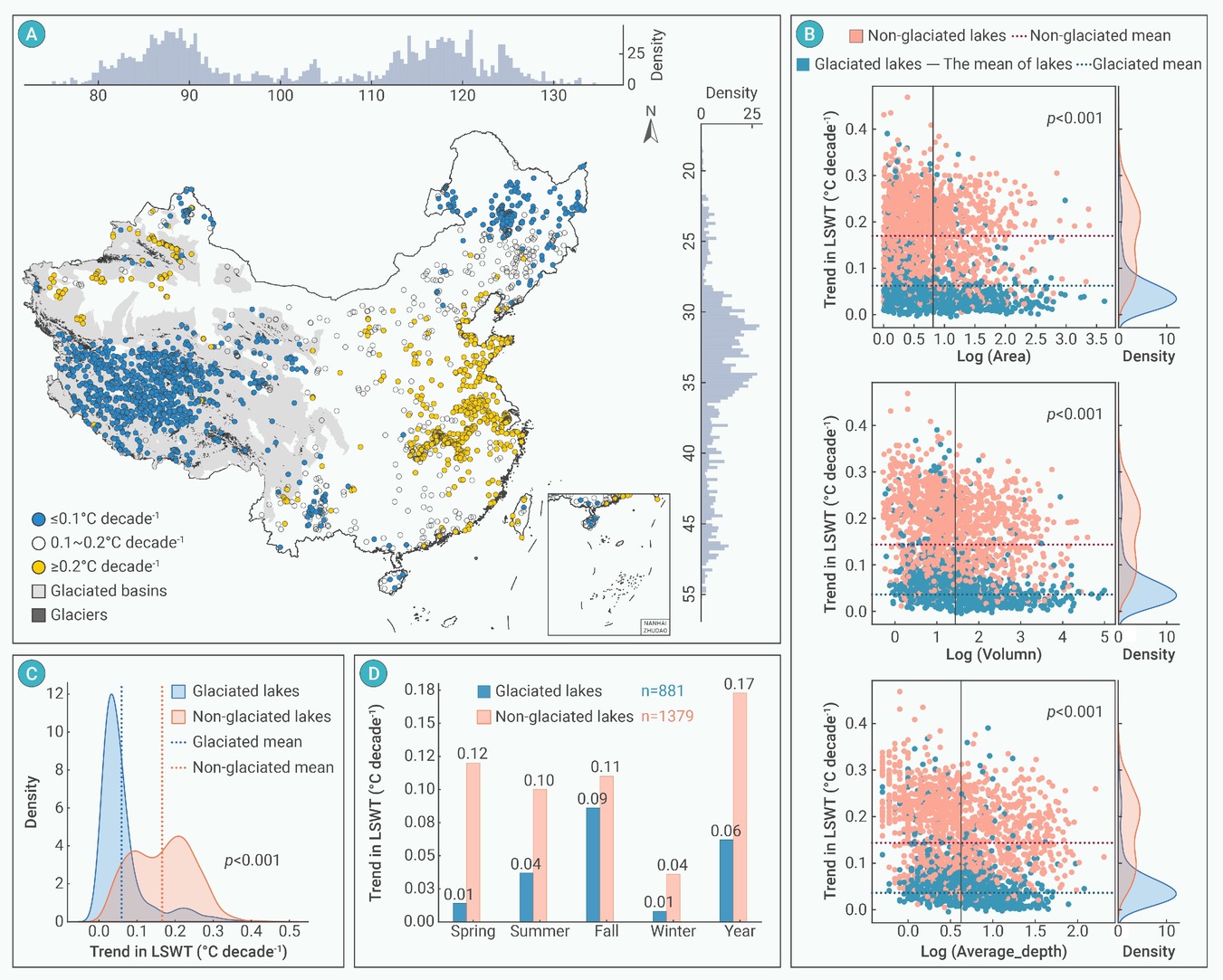
Global warming has led to a rapid rise in lake surface water temperature (LSWT) over the past few decades. However, in some regions, enhanced glacier meltwater due to climate change may mitigate these trends. In this study, we investigated 2,260 lakes across China to understand the impact of glacier meltwater on LSWT from 1985 to 2022. We found that glaciated regions have a significantly lower average warming rate (0.06±0.004°C decade-1) compared to lakes in non-glaciated regions (0.17±0.004°C decade-1) (p<0.05). This difference is more pronounced during the glacier melting season (spring and summer). Importance assessment suggested that increased longwave radiation and air temperature accelerate glacier melting, controlling warming rate in glaciated lakes (66.9%). Moreover, we find that glacier meltwater significantly impacts LSWT trends (-0.1°C decade-1) suppressing over 86% of the warming rates in lakes located in glaciated regions. These findings provide important references to accurately evaluate the warming trend of LSWT in China, as well as more broadly, providing valuable insights for climate change impact studies and water resource management.-
Keywords:
- glacier meltwater /
- surface water warming /
- lakes /
- cooling impact /
- importance assessment.
-

-
REFERENCES
[1] IPCC. (2022). Climate Change 2022: Impacts, Adaptation and Vulnerability. Contribution of Working Group II to the Sixth Assessment Report of the Intergovernmental Panel on Climate Change. H.O. Pörtner, D.C. Roberts, M. Tignor, E.S. Poloczanska, K. Mintenbeck, A. Alegría, M. Craig, S. Langsdorf, S. Löschke, V. Möller, A. Okem, B. Rama (eds). Cambridge University Press, 3056 pp. DOI:10.1017/9781009325844. [2] Adrian R., O’Reilly C.M., Zagarese H., et al. (2009). Lakes as sentinels of climate change. Limnol. Oceanogr. 54:2283−2297. DOI:10.4319/lo.2009.54.6_part_2.2283 [3] Williamson C.E., Saros J.E., Vincent W.F., et al. (2009). Lakes and reservoirs as sentinels, integrators, and regulators of climate change. Limnol. Oceanogr. 54:2273−2282. DOI:10.4319/lo.2009.54.6_part_2.2273 [4] Woolway R.I., Sharma S., Magee M.R., et al. (2020). Global lake responses to climate change. Nat. Rev. Earth Environ. 1:388−403. DOI:10.1038/s43017-020-0067-5 [5] Magnuson J.J., Crowder L.B., Medvick P.A. (1979). Temperature as an ecological resource. Am. Zool. 19:331−343. DOI:10.1093/icb/19.1.331 [6] Coats R., Spaulding S.A., Clancy K., et al. (2006). The warming of Lake Tahoe. Clim. Change 76:121−148. DOI:10.1007/s10584-005-9006-1 [7] Sahoo G.B., Schladow S.G., Reuter J.E., et al. (2016). Climate change impacts on lake thermal dynamics and ecosystem vulnerabilities. Limnol. Oceanogr. 61:496−507. DOI:10.1002/lno.10228 [8] O'Reilly C.M., Sharma S., Gray D.K., et al. (2015). Rapid and highly variable warming of lake surface waters around the globe. Geophys. Res. Lett. 42:10773−10781. DOI:10.1002/2015GL066235 [9] Luo Y., Chen R., Yang K., et al. (2024). Response of changes in lake area to drought and land use change. Sci. Total Environ. 947:174638. DOI:10.1016/j.scitotenv.2024.174638 [10] Schneider P., Hook S.J. (2010). Space observations of inland water bodies show rapid surface warming since 1985. Geophys. Res. Lett. 37:L22405. DOI:10.1029/2010GL045059 [11] Wang W., Zhang G., Yao T., et al. (2024). The impact of extreme heat on lake warming in China. Nat. Commun. 15:70. DOI:10.1038/s41467-023-44404-7 [12] Woolway R.I., Zhang G., Huang L., et al. (2024). Multivariate extremes in lakes. Nat. Commun. 15:4559. DOI:10.1038/s41467-024-49012-7 [13] Bingjie Zhao*, Christopher Horvat and Huilin Gao. (2025). An optimal path threshold method for rigorously identifying extreme climate events. Environmental Research Letters, 20:024048. DOI:10.1088/1748-9326/adae24 [14] Piccolroaz, S., Woolway, R.I. & Merchant, C.J. (2020). Global reconstruction of twentieth century lake surface water temperature reveals different warming trends depending on the climatic zone. Climatic Change, 160:427−442. DOI:10.1007/s10584-020-02663-z [15] Pi X., Li Z., Zhong Y., et al. (2022). Mapping global lake dynamics reveals the emerging roles of small lakes. Nat. Commun. 13:5777. DOI:10.1038/s41467-022-33239-3 [16] Austin J.A., Colman S.M. (2007). Lake Superior summer water temperatures are increasing more rapidly than regional air temperatures: positive ice-albedo feedback. Geophys. Res. Lett. 34:L06604. DOI:10.1029/2006GL029021 [17] Tong Y., Woolway R.I., MacCallum S., et al. (2023). Global lakes are warming slower than surface air temperature due to accelerated evaporation. Nat. Water 1:929−940. DOI:10.1038/s44221-023-00148-8 [18] Schmid M., Maberly S.C., Keller W., et al. (2014). Lake surface temperatures in a changing climate: a global sensitivity analysis. Clim. Change 124:301−315. DOI:10.1007/s10584-014-1087-2 [19] Schmid M., Köster O. (2016). Excess warming of a Central European Lake driven by solar brightening. Water Resour. Res. 52:8103−8116. DOI:10.1002/2016WR018651 [20] Woolway R.I., Merchant C.J. (2019). Worldwide alteration of lake mixing regimes in response to climate change. Nat. Geosci. 12:271−276. DOI:10.1038/s41561-019-0322-x [21] Kraemer B.M., Hook S.J., Confalonieri R., et al. (2015). Morphometry and average temperature affect lake stratification responses to climate change. Geophys. Res. Lett. 42:4981−4988. DOI:10.1002/2015GL064097 [22] Wang W., Li J., Zhu L., et al. (2023). A record-breaking extreme heat event caused unprecedented warming of lakes in China. Sci. Bull. 68:578−582. DOI:10.1016/j.scib.2023.03.001 [23] Zhou J., Fan X., Wang Y., et al. (2023). Controls of thermal response of temperate lakes to atmospheric warming. Nat. Commun. 14:6503. DOI:10.1038/s41467-023-42262-x [24] Wan W., Wang J., Yao T., et al. (2018). Lake surface water temperature change over the Tibetan Plateau from 2001 to 2015: a sensitive indicator of the warming climate. Geophys. Res. Lett. 45:11177−11186. DOI:10.1029/2018GL078601 [25] Zhang G., Yang K., Sun W., et al. (2014). Estimating surface temperature changes of lakes in the Tibetan Plateau using MODIS LST data. J. Geophys. Res. Atmos. 119:8552−8567. DOI:10.1002/2014JD021615 [26] Williamson R.J., Brown L.E., Brown K., et al. (2019). Meltwater temperature in streams draining Alpine glaciers. Sci. Total Environ. 658:777−786. DOI:10.1016/j.scitotenv.2018.12.215 [27] Khamis K., Brown L.E., Sadler J.P., et al. (2014). The use of invertebrates as indicators of environmental change in alpine rivers and lakes. Sci. Total Environ. 493:1242−1254. DOI:10.1016/j.scitotenv.2014.02.126 [28] Liu S., Guo W., Xu J. (2013). The second glacier inventory dataset of China (version 1.0) (2006–2011). Natl. Tibetan Plateau Data Cent. DOI: 10.3972/glacier.001. 2013.db. [29] Ma R., Yang Z., Zhao L., et al. (2011). China's lakes at present: number, area and spatial distribution. Sci. China Earth Sci. 54:283−289. DOI:10.1007/s11430-010-4052-6 [30] Long H., Hou Y. (2025). Spatial asymmetry of lake level changes across the Tibetan Plateau over the past multi-timescales. Innov. Geosci. 3:100120. DOI:10.59717/j.xinn-geo.2024.100120 [31] Zhang M., Zhou Y., Wang C., et al. (2022). Glacial lake area changes in High Mountain Asia during 1990–2020 using satellite remote sensing. Res. 2022:9821275. DOI:10.34133/2022/9821275 [32] Wan W., Yang K., Yao T., et al. (2016). A lake data set for the Tibetan Plateau from the 1960s, 2005, and 2014. Sci. Data. 3:160039. DOI:10.1038/sdata.2016.39 [33] Anonymous. (2015). Assessment of past, present and future environmental changes on the Tibetan Plateau. Chin. Sci. Bull. 60:3025−3035. DOI:10.1360/N972014-01370 [34] Immerzeel W.W., Lutz A.F., Andrade M., et al. (2019). Importance and vulnerability of the world's water towers. Nature. 577:364−369. DOI:10.1038/s41586-019-1822-y [35] Chen W., Liu X., Huang L., et al. (2023). Glacier surface heatwaves over the Tibetan Plateau. Geophys. Res. Lett. 50:e2022GL101115. DOI:10.1029/2022GL101115 [36] Zhang G., Yao T., Piao S., et al. (2020). Response of Tibetan Plateau lakes to climate change: trends, patterns, and mechanisms. Earth-Sci. Rev. 208:103269. DOI:10.1016/j.earscirev.2020.103269 [37] Ma R., Yang Z., Yao T., et al. (2010). A half-century of changes in China's lakes: global warming or human influence. Geophys. Res. Lett. 37:L24106. DOI:10.1029/2010GL045514 [38] Zhu, L., Ju, J., Qiao, B. et al. (2025). Physical and biogeochemical responses of Tibetan Plateau lakes to climate change. Nat Rev Earth Environ. 6:284−298. DOI:10.1038/s43017-025-00650-5 [39] Xu F., Yu G., Huang L., et al. (2024). Widespread societal and ecological impacts from projected Tibetan Plateau Lake expansion. Nat. Geosci. 17:516−523. DOI:10.1038/s41561-024-01446-w [40] Huang L., Wang W., Chen X., et al. (2023). Attribution of lake surface water temperature change in large lakes across China over past four decades. J. Geophys. Res. Atmos. 128:e2022JD038465. DOI:10.1029/2022JD038465 [41] Wang X., Zhao B., Tong K., et al. (2023). Climate change drives rapid warming and increasing heatwaves of lakes. Sci. Bull. 68:1574−1584. DOI:10.1016/j.scib.2023.06.028 [42] Tong K., Yao T., Xu B., et al. (2016). Quantifying the contribution of glacier-melt water in the expansion of the largest lake in Tibet. J. Geophys. Res. Atmos. 121:11158−11173. DOI:10.1002/2016JD025424 [43] Zhang G., Liu S., Yang K., et al. (2021). Comprehensive estimation of lake volume changes on the Tibetan Plateau during 1976–2019 and basin-wide glacier contribution. Sci. Total Environ. 772:145463. DOI:10.1016/j.scitotenv.2021.145463 [44] Duan A., Wu G. (2006). Change of cloud amount and the climate warming on the Tibetan Plateau. Geophys. Res. Lett. 33:L17704. DOI:10.1029/2006GL027946 [45] Wei Y., Duan Q., Li J., et al. (2021). Trends and variability of atmospheric downward longwave radiation over China from 1958 to 2015. Earth Space Sci. 8:e2020EA001370. DOI:10.1029/2020EA001370 [46] Zhang J., Ren G., Duan A. (2022). The warming of the Tibetan Plateau in response to transient and stabilized 2.0°C/1.5°C global warming targets. Adv. Atmos. Sci. 39: 1198–1206. DOI: 10.1007/s00376-022-1299-8. [47] Qi W., Yao T., Xu B., et al. (2022). Divergent and changing importance of glaciers and snow as natural water reservoirs in the eastern and southern Tibetan Plateau. J. Geophys. Res. Atmos. 127:e2021JD035888. DOI:10.1029/2021JD035888 [48] Moore R.D. (2006). Stream temperature patterns in British Columbia, Canada, based on routine spot measurements. Can. Water Resour. J. 31:41−56. DOI:10.4296/cwrj3101041 [49] Du X., Zhao W., Wang J., et al. (2022). Investigating the impacts of glacier melt on stream temperature in a cold-region watershed. J. Hydrol. 605:127303. DOI:10.1016/j.jhydrol.2021.127303 [50] Salerno F., Pellicciotti F., Pisoni E., et al. (2023). Local cooling and drying induced by Himalayan glaciers under global warming. Nat. Geosci. 16:1120−1127. DOI:10.1038/s41561-023-01331-y [51] Huss M., Bauder A., Funk M., et al. (2009). Strong Alpine glacier melt in the 1940s due to enhanced solar radiation. Geophys. Res. Lett. 36:L23501. DOI:10.1029/2009GL040789 [52] Li S.J., Siegert M.J., Smith L.C., et al. (2022). Subglacial lakes and their changing role in a warming climate. Nat. Rev. Earth Environ. 3:106−124. DOI:10.1038/s43017-021-00246-9 [53] Luo Y., Zhu W., Wang H., et al. (2023). Urban surface thermal runoff generation mechanism and scenario simulation. Water Resour. Res. 59:e2022WR033881. DOI:10.1029/2022WR033881 [54] Luo Y., Wang Q., Yang K., et al. (2025). The formation process, mechanism, and attribution of urban impervious surface thermal runoff. Water Resour. Res. 61:e2024WR037696. DOI:0.1029/2024WR037696 [55] Yang K., Yu Z., and Luo Y. (2020). Analysis on driving factors of lake surface water temperature for major lakes in Yunnan-Guizhou Plateau. Water Res. 184:116018. DOI:10.1016/j.watres.2020.116018 [56] Tang L., Ma R., Li J., et al. (2022). Spatial impact of urban expansion on lake surface water temperature based on the perspective of watershed scale. Front. Environ. Sci. 10:991502. DOI:10.3389/fenvs.2022.991502 -
ABOUT THIS ARTICLE
Cite this article:
Chen L., Luo Y., Yang K., et al. (2025). Glacier meltwater modulation of lake warming trends in China. The Innovation Geoscience 3:100147. https://doi.org/10.59717/j.xinn-geo.2025.100147
Welcome!
To request copyright permission to republish or share portions of our works, please visit Copyright Clearance Center's (CCC) Marketplace website at marketplace.copyright.com.
Article Metrics
Relative Articles
Cited by
Export File
Citation
Chen L., Luo Y., Yang K., et al. (2025). Glacier meltwater modulation of lake warming trends in China. The Innovation Geoscience 3:100147. https://doi.org/10.59717/j.xinn-geo.2025.100147

Format
Content

-
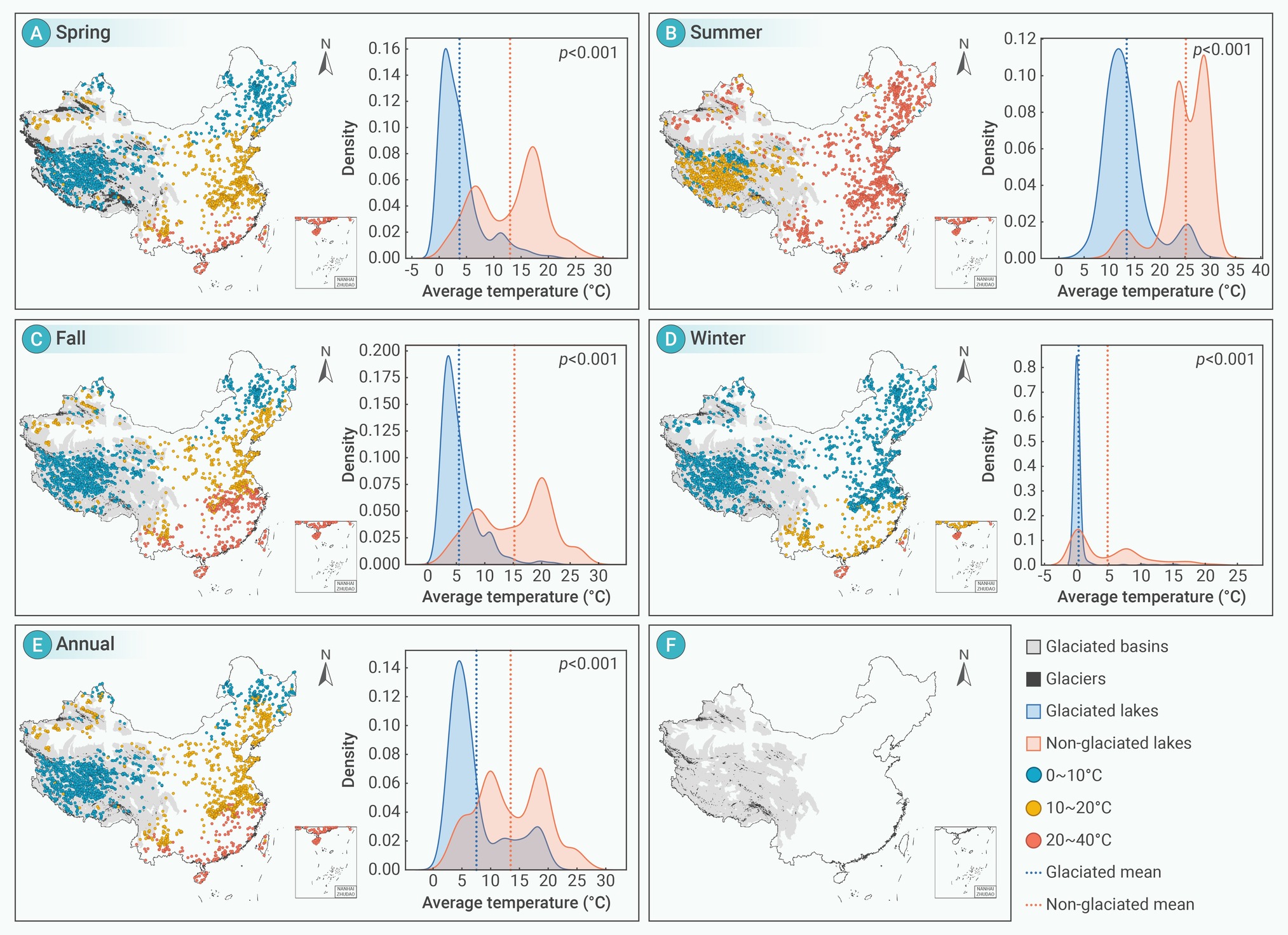
Figure 1.
Spatial and density distribution of the average LSWT (i.e., across the study period):
-
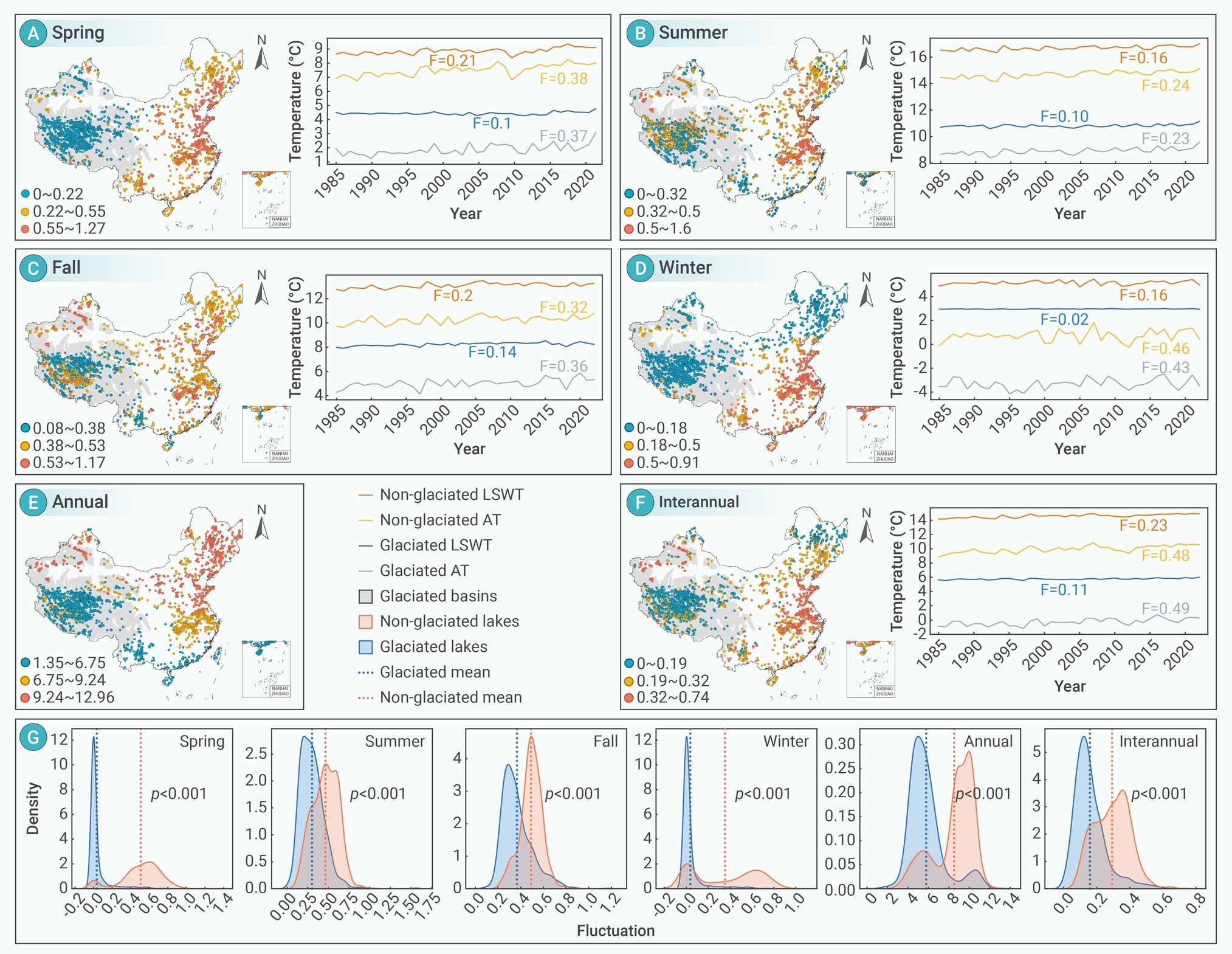
Figure 2.
Fluctuations in lake surface water temperature and air temperature:
-
Figure 3.
Warming rates of LSWT in China:
-
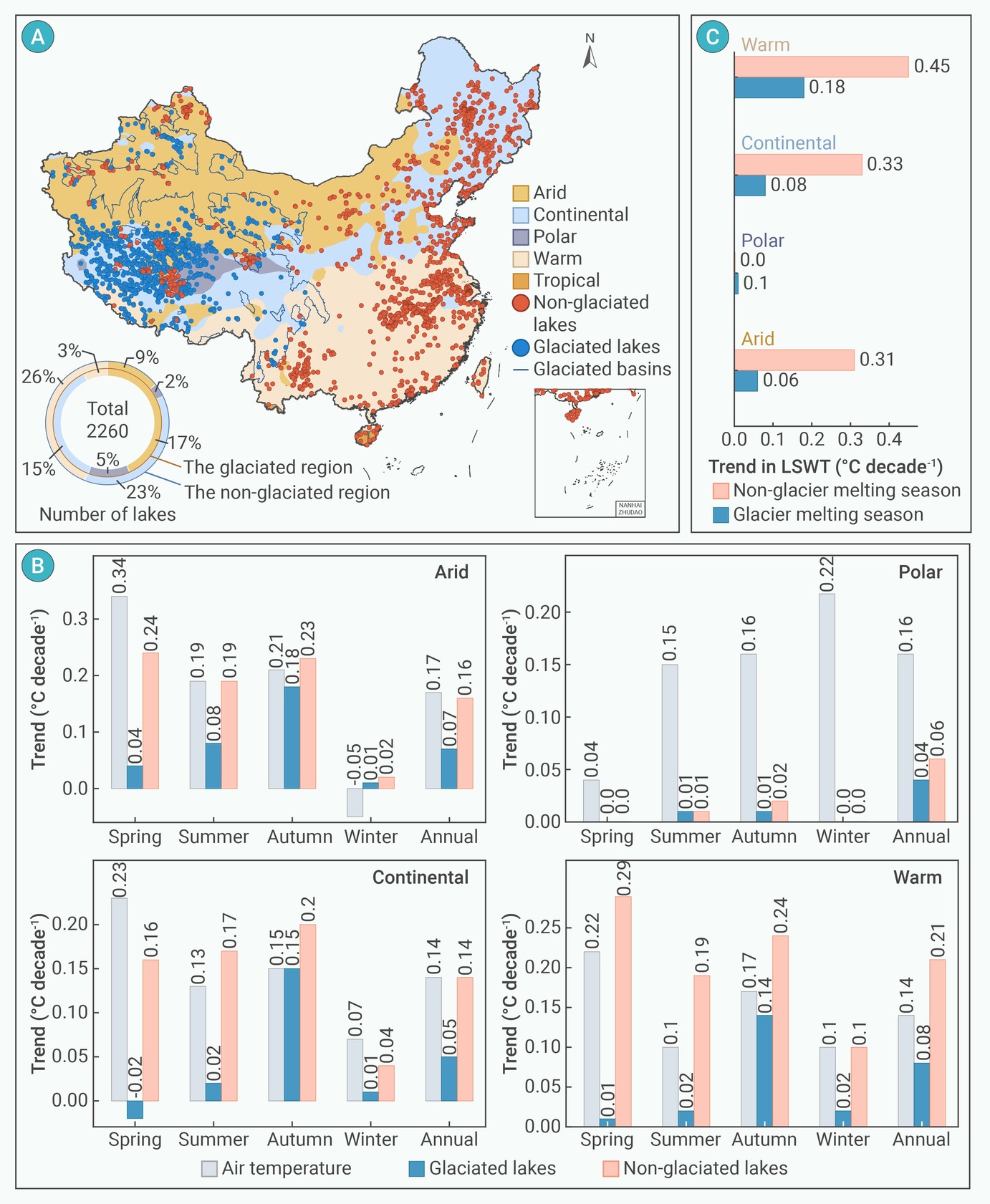
Figure 4.
Differences in the warming rate of lake surface water temperature in different Köppen Climate Zone:
-
Figure 5.
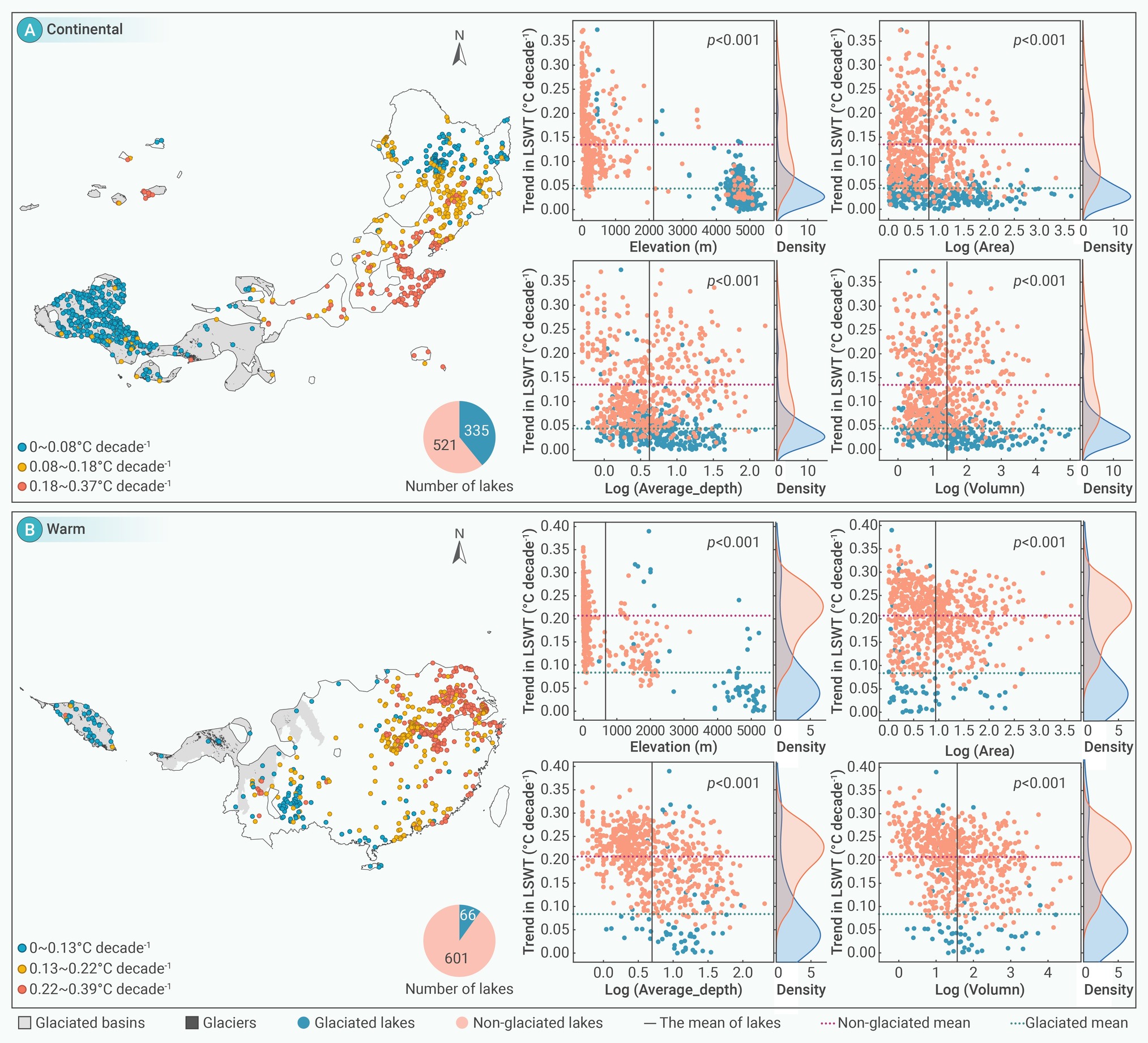
The relationship between lake attributes and warming rates in different climate zones:
-
Figure 6.
The relationship between lake attributes and warming rates in different climate zones:
-
Figure 7.
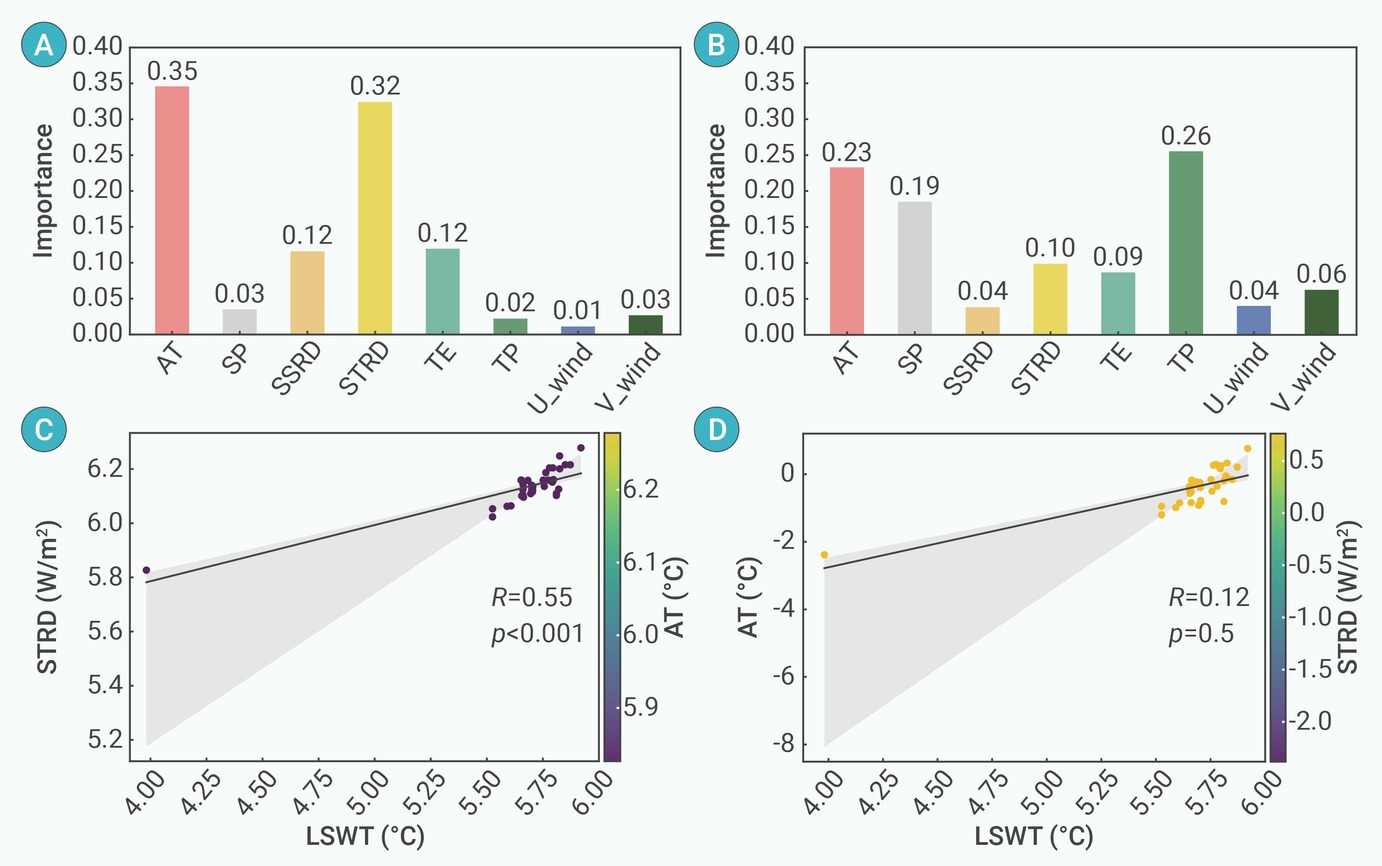
Importance assessment: random forest analysis results:
