
Plant modulation on daytime ground surface temperature: An overlooked mechanism in climate warming regulation
-
GRAPHICAL ABSTRACT
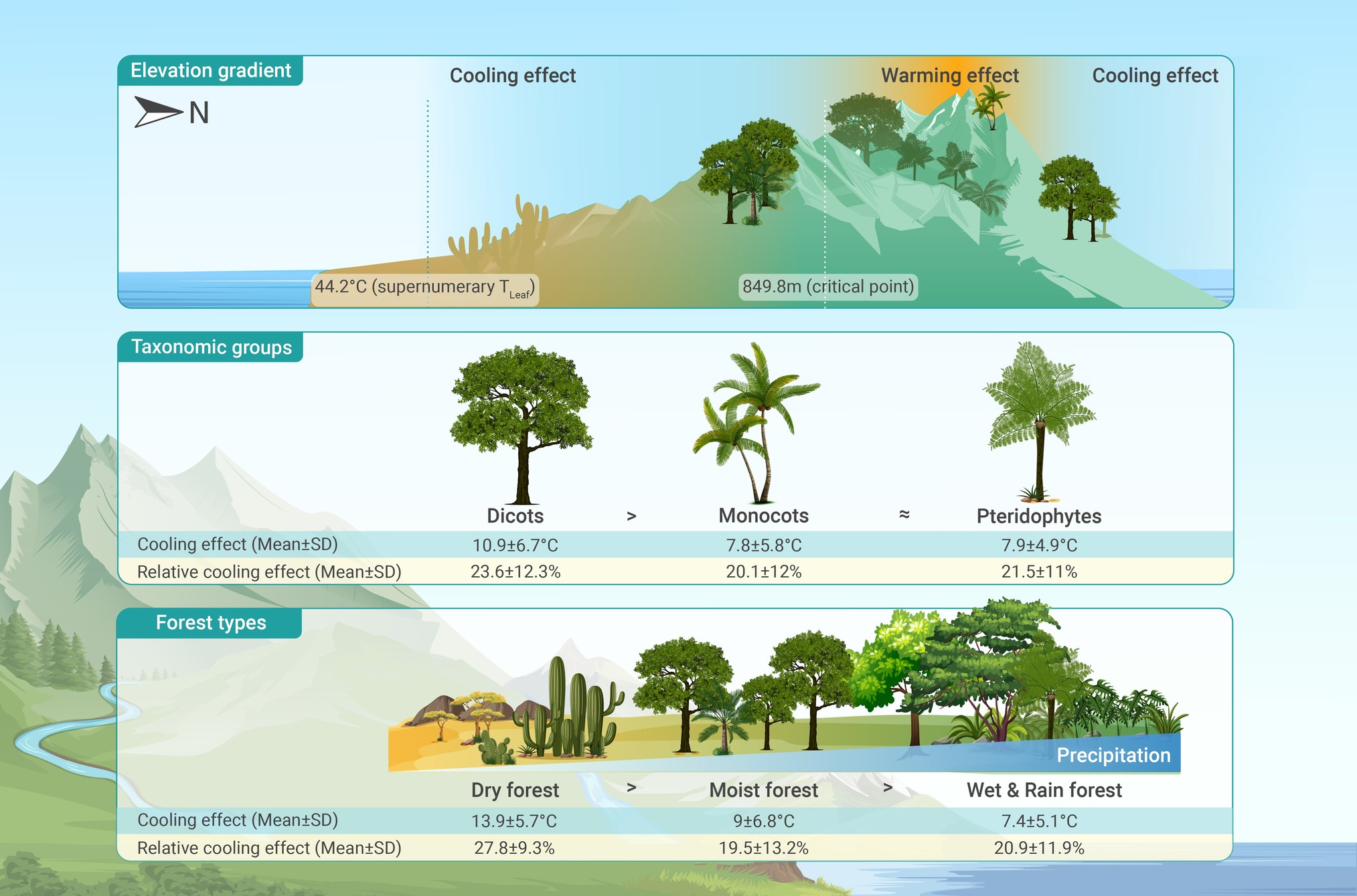
 DownLoad:
Full size image
DownLoad:
Full size image
-
PUBLIC SUMMARY
-
Plants influence global warming by altering surface infrared radiation.
The cooling effect of tropical forests depends on elevation, species composition, and forest types.
Sustainable strategies, such as tropical reforestation, can help mitigate climate change.
-
-
ABSTRACT
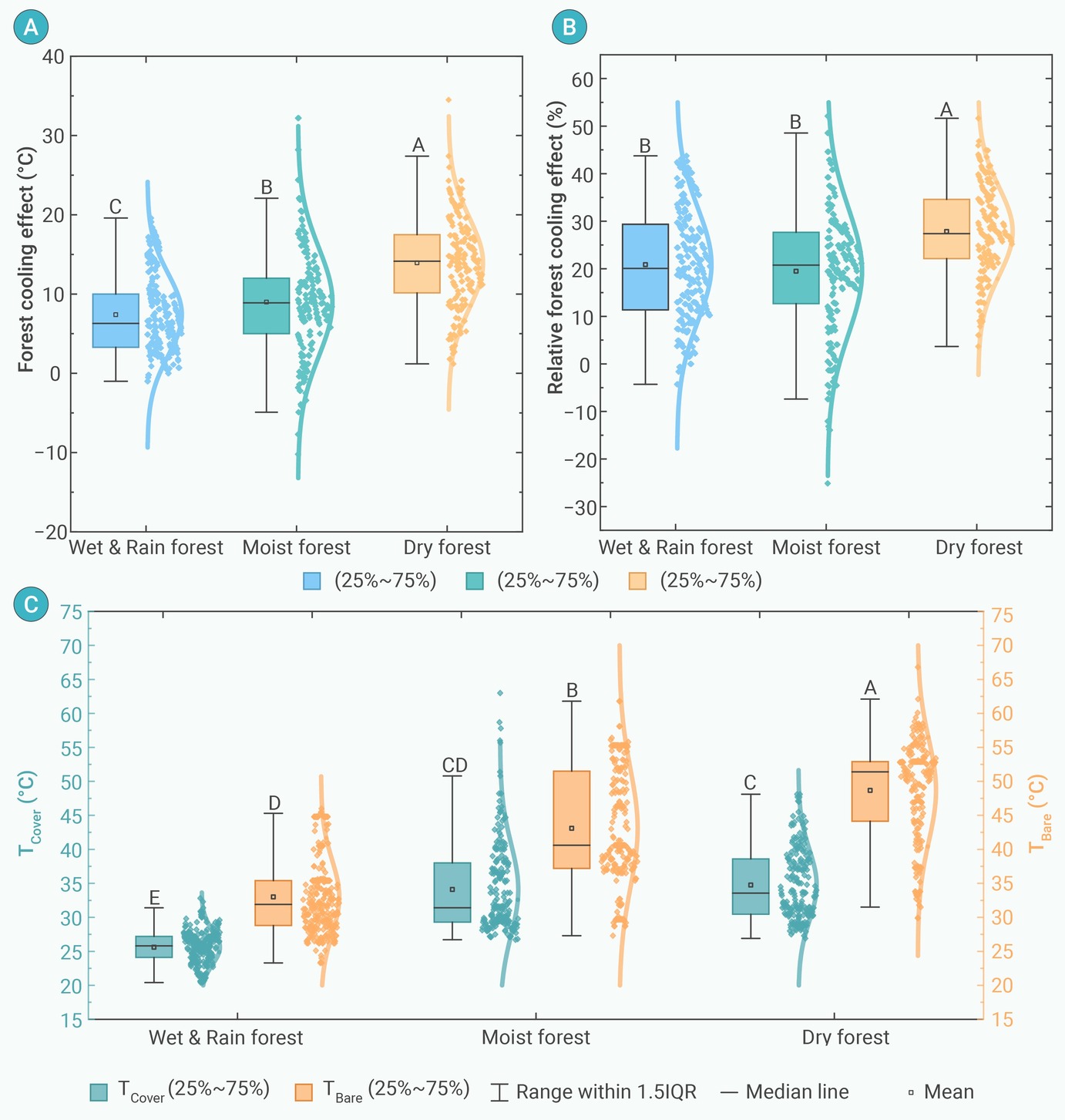
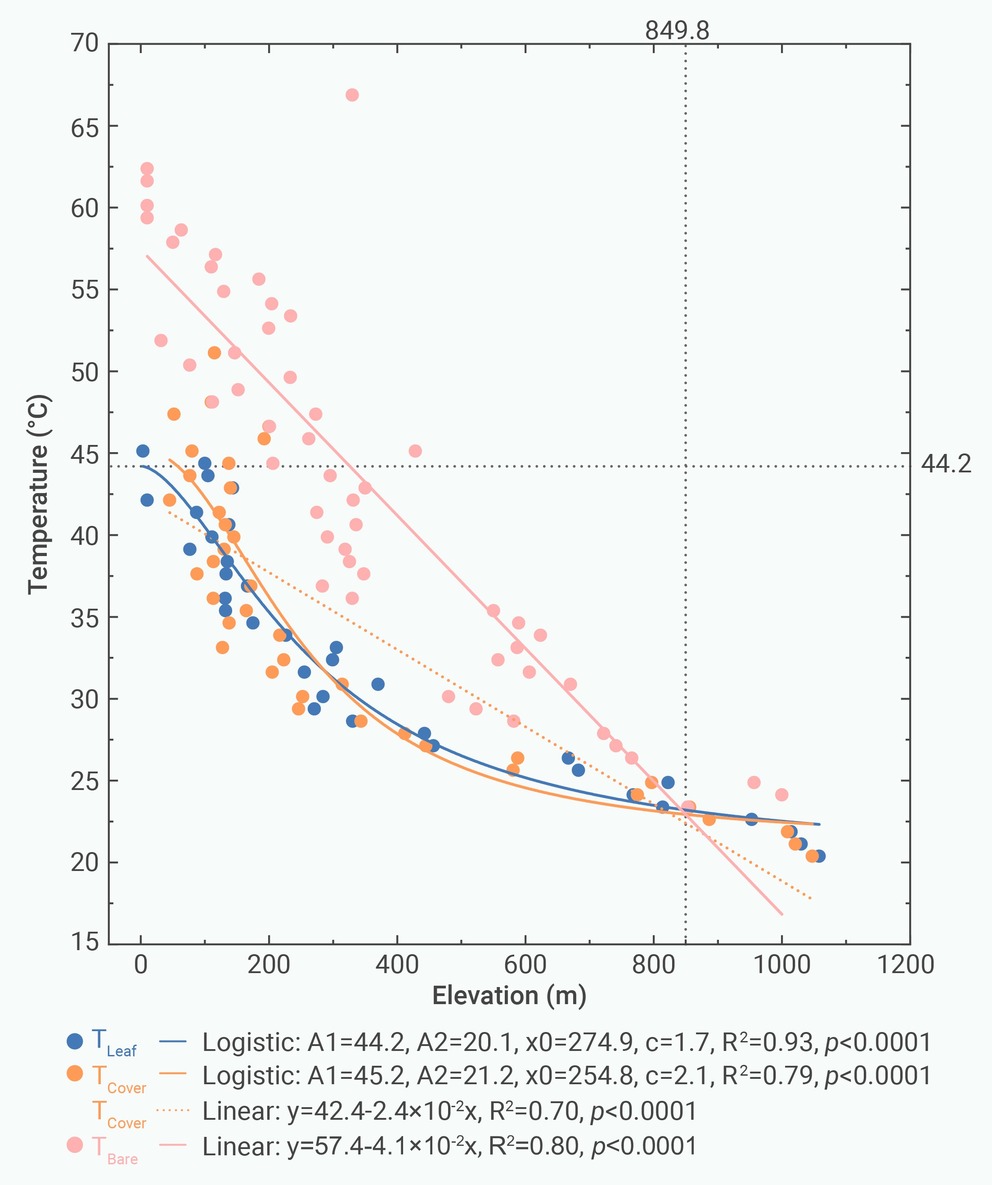
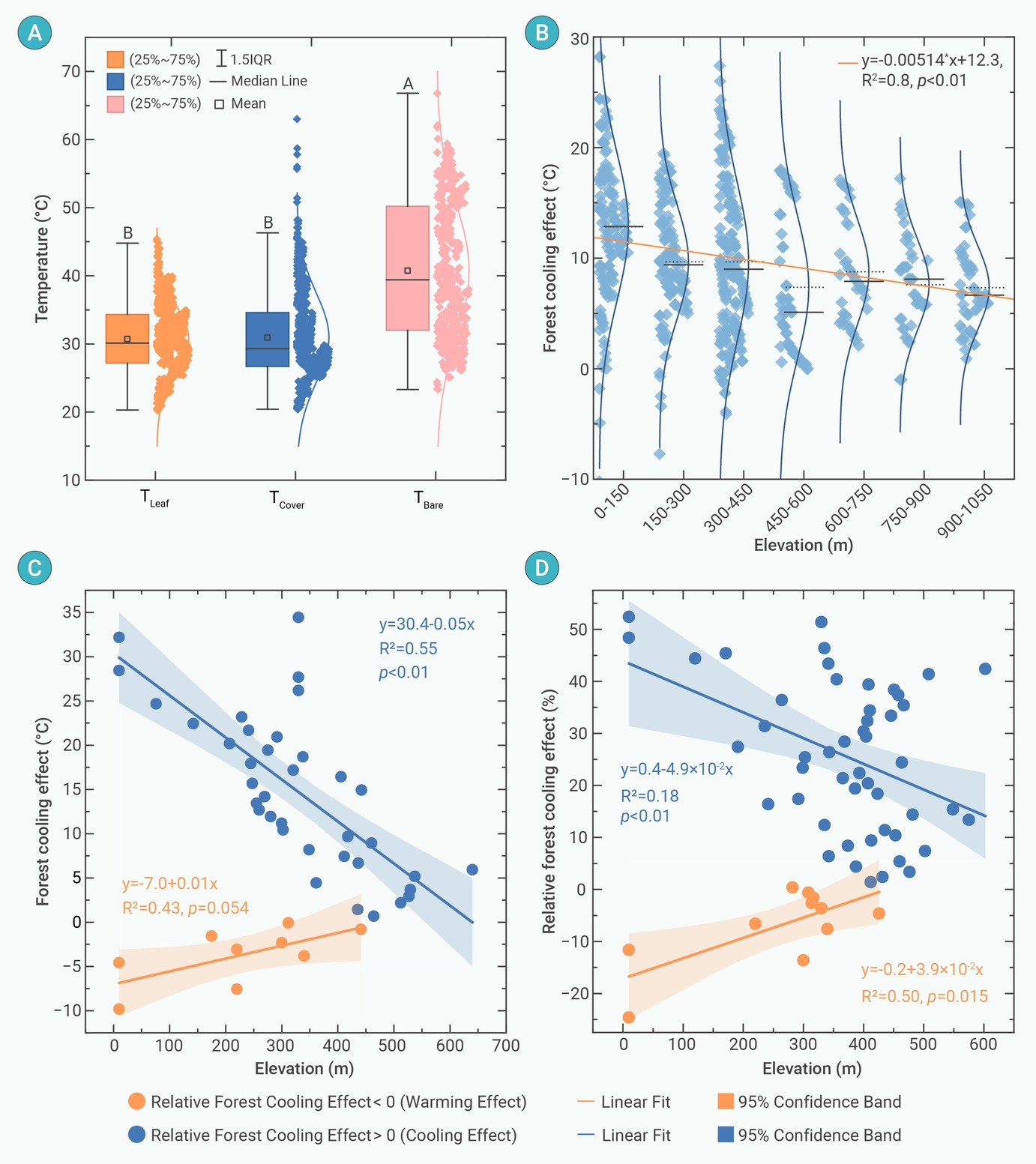
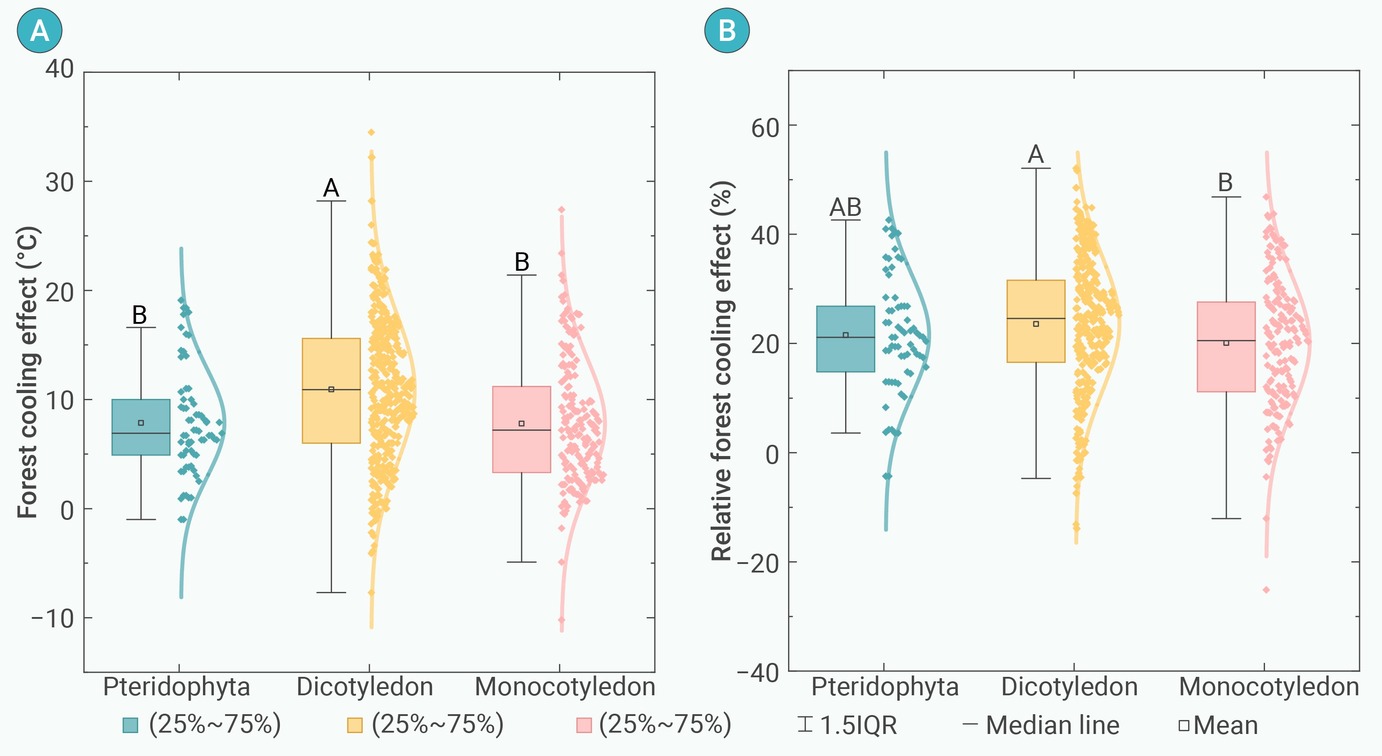
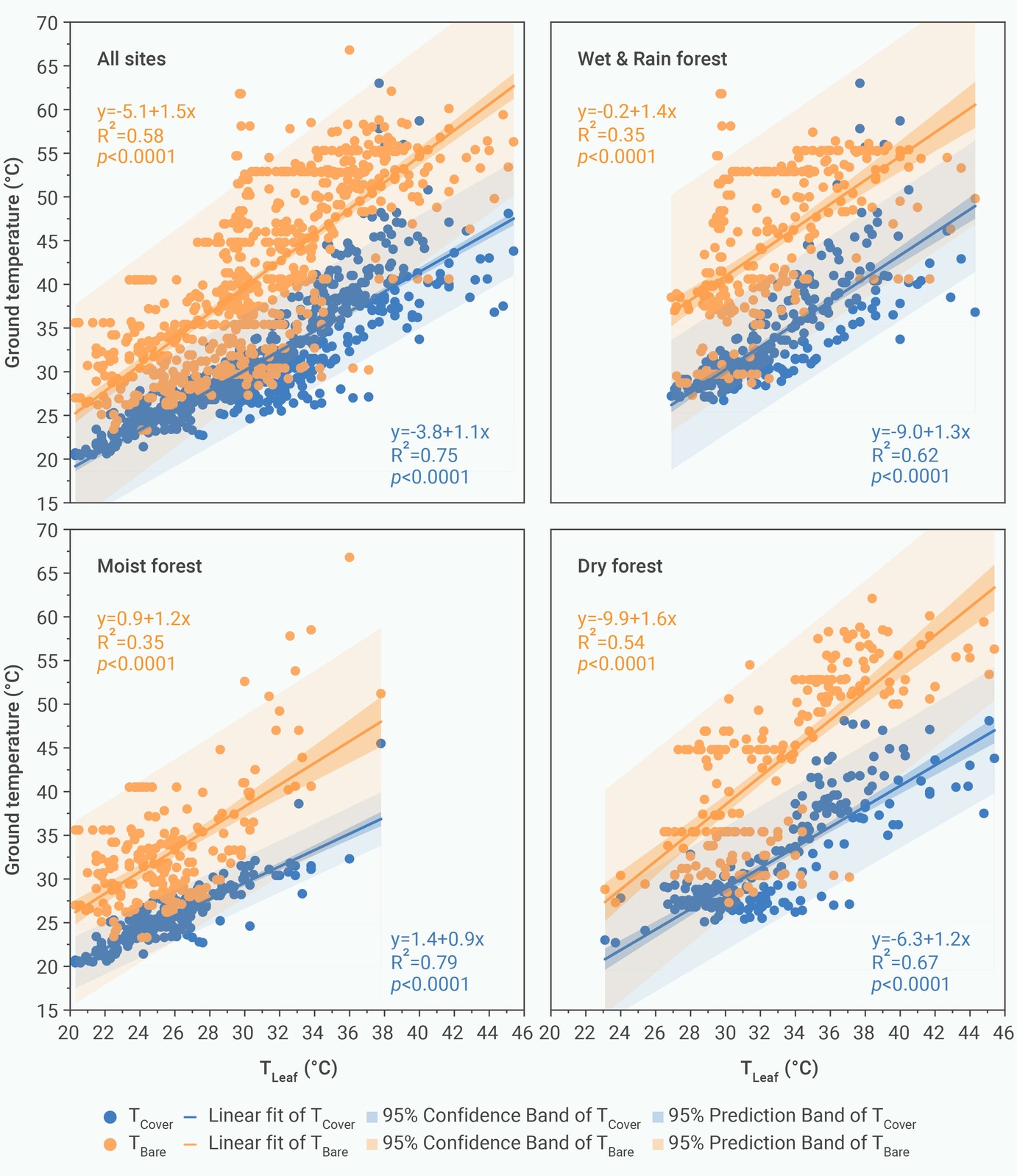
Despite the widely recognized greenhouse effect caused by greenhouse gases, atmospheric temperature is also directly driven by ground surface temperature. Tropical forests cover 7% of terrestrial land and likely play a noticeable and disproportionate role in regulating the temperature of the ground surface that emits infrared radiation available for the subsequent greenhouse effect. Here, we evaluated the role of plant leaves in modulating daytime ground surface temperature across tropical dry-rain forests in Puerto Rico. We found that leaf midday temperature decreased with altitude following a logistic function. In contrast, bare ground surface temperature linearly reduced with altitude. Canopy cooling effect ranged from 34.5°C to -10.2°C, with the strongest cooling observed in low-altitude forests and diminishing at higher elevations. Further, dicotyledons exhibited a stronger cooling effect on ground surface temperature than pteridophytes and monocotyledons. Dry forests showed the greatest cooling effect at high temperatures, whereas wet-rain forests exhibited the most effective cooling when temperatures were below 10°C. These findings highlight the critical yet often overlooked role of tropical forests in regulating daytime surface temperatures and call for greater attention to the biophysical impacts of deforestation on climate change beyond the carbon-centric discourse. -

-
REFERENCES
[1] IPCC. (2023). Climate Change 2023: Synthesis Report. Core Writing Team, H. Lee and J. Romero (eds.). IPCC, pp:1-34. DOI: 10.59327/IPCC/AR6-9789291691647.001. [2] Kweku D. W., Bismark O., Maxwell A., et al. (2018). Greenhouse effect: greenhouse gases and their impact on global warming. J. Sci. Res. Rep. 17:1−9. DOI:10.9734/JSRR/2017/39630 [3] Lüthi D., Le Floch M., Bereiter B., et al. (2008). High-resolution carbon dioxide concentration record 650,000–800,000 years before present. Nature 453:379−382. DOI:10.1038/nature06949 [4] Neftel A., Oeschger H., Schwander J., et al. (1982). Ice core sample measurements give atmospheric CO2 content during the past 40,000 yr. Nature 295:220−223. DOI:10.1038/295220a0 [5] IPCC. (2007). Climate Change 2023: Synthesis Report. Core Writing Team, H. Lee and J. Romero (eds.). IPCC, pp: 1-104. [6] Humlum O., Stordahl K. and Solheim J.-E. (2013). The phase relation between atmospheric carbon dioxide and global temperature. Glob. Planet. Change 100:51−69. DOI:10.1016/j.gloplacha.2012.08.008 [7] Matthews H. D., Gillett N. P., Stott P. A. and Zickfeld K. (2009). The proportionality of global warming to cumulative carbon emissions. Nature 459:829−832. DOI:10.1038/nature08047 [8] Zhang Y. G., Pagani M., Liu Z., et al. (2013). A 40-million-year history of atmospheric CO2. Philos. Trans. R. Soc. A 371:20130096. DOI:10.1098/rsta.2013.0096 [9] Higgins J. A., Kurbatov A. V., Spaulding N. E., et al. (2015). Atmospheric composition 1 million years ago from blue ice in the Allan Hills, Antarctica. Proc. Natl. Acad. Sci. U.S.A. 112:6887−6891. DOI:10.1073/pnas.1420232112 [10] Petit J. R., Jouzel J., Raynaud D., et al. (1999). Climate and atmospheric history of the past 420,000 years from the Vostok ice core, Antarctica. Nature 399:429−436. DOI:10.1038/20859 [11] Wang K., Wang Y., Wang X., et al. (2020). Causes of slowing‐down seasonal CO2 amplitude at Mauna Loa. Glob. Change Biol. 26:4462−4477. DOI:10.1111/gcb.15162 [12] Weikusat I., Jansen D., Binder T., et al. (2017). Physical analysis of an Antarctic ice core-towards an integration of micro- and macrodynamics of polar ice. Philos. T. R. Soc. A 375:ARTN 20150347. DOI:10.1098/rsta.2015.0347. [13] Mutiibwa D., Strachan S. and Albright T. (2015). Land surface temperature and surface air temperature in complex terrain. IEEE J. Sel. Top. Appl. Earth Obs. Remote Sens. 8:4762−4774. DOI:10.1109/JSTARS.2015.2468594 [14] Kirschbaum M. U. F. (2000). Will changes in soil organic carbon act as a positive or negative feedback on global warming. Biogeochemistry 48:21−51. DOI:10.1023/A:1006238902976 [15] Raich J. W., Potter C. S. and Bhagawati D. (2002). Interannual variability in global soil respiration, 1980-94. Glob. Change Biol. 8:800−812. DOI:10.1046/j.1365-2486.2002.00511.x [16] Smith P., Fang C. M., Dawson J. J. C. and Moncrieff J. B. (2008). Impact of global warming on soil organic carbon. Adv. Agron. 97:1−43. DOI:10.1016/S0065-2113(07)00001-6 [17] Lawrence D., Coe M., Walker W., et al. (2022). The Unseen Effects of Deforestation: Biophysical Effects on Climate. Front. For. Glob. Change. 5:ARTN 756115. DOI:10.3389/ffgc.2022.756115. [18] Lin H., Chen Y. J., Zhang H. L., et al. (2017). Stronger cooling effects of transpiration and leaf physical traits of plants from a hot dry habitat than from a hot wet habitat. Funct. Ecol. 31:2202−2211. DOI:10.1111/1365-2435.12923 [19] Duveiller G., Hooker J. and Cescatti A. (2018). The mark of vegetation change on Earth’s surface energy balance. Nat. Commun. 9:679. DOI:10.1038/s41467-017-02810-8 [20] Bala G., Caldeira K., Wickett M., et al. (2007). Combined climate and carbon-cycle effects of large-scale deforestation. Proc. Natl. Acad. Sci. U.S.A. 104:6550−6555. DOI:10.1073/pnas.0608998104 [21] Xu R., Li Y., Teuling A. J., et al. (2022). Contrasting impacts of forests on cloud cover based on satellite observations. Nat. Commun. 13:670. DOI:10.1038/s41467-022-28161-7 [22] Cerasoli S., Yin J. and Porporato A. (2021). Cloud cooling effects of afforestation and reforestation at midlatitudes. Proc. Natl. Acad. Sci. U.S.A. 118:e2026241118. DOI:10.1073/pnas.2026241118 [23] Rocha H. R. D., Goulden M. L., Miller S. D., et al. (2004). Seasonality of Water and Heat Fluxes over a Tropical Forest in Eastern Amazonia. Ecol. Appl. 14:22−32. DOI:10.1890/02-6001 [24] Su Y., Zhang C., Ciais P., et al. (2023). Asymmetric influence of forest cover gain and loss on land surface temperature. Nat. Clim. Change 13:823−831. DOI:10.1038/s41558-023-01757-7 [25] Bonan G. B. (2008). Forests and Climate Change: Forcings, Feedbacks, and the Climate Benefits of Forests. Science 320:1444−1449. DOI:10.1126/science.1155121 [26] Field C. B. and Raupach M. R. (2004). The global carbon cycle: integrating humans, climate and the natural world. Christopher, B. F. and Michael R. (eds.). Island Press, pp: 1-568. [27] Li Y. T., Li Z. L., Wu H., et al. (2023). Biophysical impacts of earth greening can substantially mitigate regional land surface temperature warming. Nat. Commun. 14:ARTN 121. DOI:10.1038/s41467-023-35799-4. [28] Zeppetello L. R. V., Cook-Patton S. C., Parsons L. A., et al. (2022). Consistent cooling benefits of silvopasture in the tropics. Nat. Commun. 13:ARTN 708. DOI:10.1038/s41467-022-28388-4. [29] Peng S. S., Piao S. L., Zeng Z. Z., et al. (2014). Afforestation in China cools local land surface temperature. Proc. Natl. Acad. Sci. U.S.A. 111:2915−2919. DOI:10.1073/pnas.1315126111 [30] Van Beusekom A. E., González G., Stankavich S., et al. (2020). Understanding tropical forest abiotic response to hurricanes using experimental manipulations, field observations, and satellite data. Biogeosciences 17:3149−3163. DOI:10.5194/bg-17-3149-2020 [31] Doughty C. E. and Goulden M. L. (2008). Are tropical forests near a high temperature threshold? J. Geophys. Res-Biogeo. 113:Artn G00b07. DOI:10.1029/2007jg000632. [32] Doughty C. E., Keany J. M., Wiebe B. C., et al. (2023). Tropical forests are approaching critical temperature thresholds. Nature 621:105−111. DOI:10.1038/s41586-023-06391-z [33] Slot M., Cala D., Aranda J., et al. (2021). Leaf heat tolerance of 147 tropical forest species varies with elevation and leaf functional traits, but not with phylogeny. Plant Cell Environ. 44:2414−2427. DOI:10.1111/pce.14060 [34] Michaletz S. T., Weiser M. D., McDowell N. G., et al. (2016). The energetic and carbon economic origins of leaf thermoregulation. Nat. Plants 2:16129. DOI:10.1038/nplants.2016.129 [35] Feeley K., Martinez-Villa J., Perez T., et al. (2020). The Thermal Tolerances, Distributions, and Performances of Tropical Montane Tree Species. Front. For. Glob. Change. 3:ARTN 25. DOI:10.3389/ffgc.2020.00025. [36] Guo Z. F., Yan Z. B., Majcher B. M., et al. (2022). Dynamic biotic controls of leaf thermoregulation across the diel timescale. Agr. Forest Meteorol. 315:ARTN 108827. DOI:10.1016/j.agrformet.2022.108827. [37] Li Y.H., Li Z., Xin Z.M., et al. (2018). Effects of leaf shape plasticity on leaf surface temperature. Chin. J. Plant Ecol. 42:202−208. DOI:10.17521/cjpe.2017.0127 [38] Birdsey R. A. and Weaver P. L. (1982). The forest resources of Puerto Rico. Richard A. Birdsey and Peter L. Weaver (eds.). U.S. Department of Agriculture, pp: 1-65. DOI: 10.2737/SO-RB-85. [39] Perez T. M. and Feeley K. J. (2020). Photosynthetic heat tolerances and extreme leaf temperatures. Funct. Ecol. 34:2236−2245. DOI:10.1111/1365-2435.13658 [40] Copernicus Climate Change Service C. D. S. (2024). ERA5-land post-processed daily-statistics from 1950 to present. Copernicus Climate Change Service (C3S) Climate Data Store (CDS). DOI:10.24381/cds.e9c9c792. [41] Axelrod F. S. (2011). A systematic vademecum to the vascular plants of Puerto Rico. Franklin S. Axelrod (ed). Brit Press, pp: 1-420. [42] Wang Q., Su X., Shrestha N., et al. (2017). Historical factors shaped species diversity and composition of Salix in eastern Asia. Sci. Rep. 7:42038. DOI:10.1038/srep42038 [43] Bruijnzeel L. A., Mulligan M. and Scatena F. N. (2011). Hydrometeorology of tropical montane cloud forests: emerging patterns. Hydrol. Process. 25:465−498. DOI:10.1002/hyp.7974 [44] Defraeye T., Verboven P., Quang Tri H. and Nicolai B. (2013). Convective heat and mass exchange predictions at leaf surfaces: Applications, methods and perspectives. Comput. Electr. Agric. 96:180−201. DOI:10.1016/j.compag.2013.05.008 [45] Li X., Wen Y., Chen X., et al. (2022). Correlations between photosynthetic heat tolerance and leaf anatomy and climatic niche in Asian mangrove trees. Plant Biol. 24:960−966. DOI:10.1111/plb.13460 [46] Zhang C., Su Y., Liu L., et al. (2023). Seasonal and long-term dynamics in forest microclimate effects: global pattern and mechanism. npj Clim. Atmos. Sci. 6:116. DOI:10.1038/s41612-023-00442-y [47] Atkins J. W., Shiklomanov A., Mathes K. C., et al. (2023). Effects of forest structural and compositional change on forest microclimates across a gradient of disturbance severity. Agr. Forest Meteorol. 339:109566. DOI:10.1016/j.agrformet.2023.109566 [48] Duan W.B., Wang J.L, Chen L.X., et al. (2015). Spatiotemporal Variation of the Microclimatic Factors at Pit and Mound Microsites in Windthrow Area of the Spruce-fir Forest and Their Relationships with Soil Temperature. Sci. Silvae Sin. 28:508. [49] Wang H., Hall C. A. S., Cornell J. D. and Hall M. H. P. (2002). Spatial dependence and the relationship of soil organic carbon and soil moisture in the Luquillo Experimental Forest, Puerto Rico. Landsc. Ecol. 17:671−684. DOI:10.1023/A:1022962116313 [50] Prevedello J. A., Winck G. R., Weber M. M., et al. (2019). Impacts of forestation and deforestation on local temperature across the globe. Plos One 14:ARTN e0213368. DOI:10.1371/journal.pone.0213368. [51] Shen X. J., Liu Y. W., Wu L. Y., et al. (2022). Grassland greening impacts on global land surface temperature. Sci. Total Environ. 838:ARTN 155851. DOI:10.1016/j.scitotenv.2022.155851. [52] Tang T., Lee X. and Zhang K. (2024). Historical land use and land cover change reduced the temperature of cold extremes more than that of hot extremes. The Innovation Geoscience 2:100079−1. DOI:10.59717/j.xinn-geo.2024.100079 [53] Huang A., Shen R., Jia G. and Xu X. (2022). Reforestation enhanced landscape connectivity for thermal buffering in China. Environ. Res. Lett. 17:014056. DOI:10.1088/1748-9326/ac3fda [54] Kristensen J. Å., Barbero-Palacios L., Barrio I. C., et al. (2024). Tree planting is no climate solution at northern high latitudes. Nat. Geosci. 17:1087−1092. DOI:10.1038/s41561-024-01573-4 [55] Pittermann J. (2010). The evolution of water transport in plants: an integrated approach. Geobiology 8:112−139. DOI:10.1111/j.1472-4669.2010.00232.x [56] Qaderi M. M., Martel A. B. and Dixon S. L. (2019). Environmental Factors Influence Plant Vascular System and Water Regulation. Plants (Basel) 8:ARTN 65. DOI:10.3390/plants8030065. [57] Wang X. J., Dallimer M., Scott C. E., et al. (2021). Tree species richness and diversity predicts the magnitude of urban heat island mitigation effects of greenspaces. Sci. Total Environ. 770:ARTN 145211. DOI:10.1016/j.scitotenv.2021.145211. [58] Schröder J. M., Ávila Rodríguez L. P. and Günter S. (2021). Research trends: Tropical dry forests: The neglected research agenda. For. Policy Econ. 122:102333. DOI:10.1016/j.forpol.2020.102333 [59] Janzen D. H. (1988). Management of habitat fragments in a tropical dry forest. Ann. Missouri Bot. Gard. 75:105−116. DOI:10.2307/2399468 [60] Miles L., Newton A. C., DeFries R. S., et al. (2006). A global overview of the conservation status of tropical dry forests. J. Biogeogr. 33:491−505. DOI:10.1111/j.1365-2699.2005.01424.x [61] DRYFLOR, Banda-R K., Delgado-Salinas A., et al. (2016). Plant diversity patterns in neotropical dry forests and their conservation implications. Science 353:1383−1387. DOI:10.1126/science.aaf5080 [62] Pennington R. T., Lehmann C. E. R. and Rowland L. M. (2018). Tropical savannas and dry forests. Curr. Biol. 28:R541−R545. DOI:10.1016/j.cub.2018.03.014 [63] Segovia R. A., Pennington R. T., Baker T. R., et al. (2020). Freezing and water availability structure the evolutionary diversity of trees across the Americas. Sci. Adv. 6:eaaz5373. DOI:10.1126/sciadv.aaz5373 [64] Ministério do Meio Ambiente e Mudança do Clima [Department of Environment and Climate Change]. Unidades de Conservação por Bioma (2020). https://www.gov.br/mma/pt-br/assuntos/areas-protegidas/plataforma-cnuc-1/CNUC_FEV20C_Bio.pdf. [65] Little E. L., Woodbury R. O. and Wadsworth F. H. (1974). Trees of Puerto Rico and the Virgin islands. Elbert L. Little, Roy O. Woodbury and Frank Wadsworth (eds.). U.S. Department of Agriculture, pp: 1-1024. [66] Bei Z., Zhang X., Zhang F. and Yan X. (2023). The Response of Oxytropis aciphylla Ledeb. Leaf Interface to Water and Light in Gravel Deserts. Plants (Basel) 12. DOI:10.3390/plants12233922. [67] Pan Z., Pitt W. G., Zhang Y., et al. (2016). The upside-down water collection system of Syntrichia caninervis. Nat. Plants 2:16076. DOI:10.1038/nplants.2016.76 [68] Friedlingstein P., Jones M. W., O'Sullivan M., et al. (2019). Global Carbon Budget 2019. Earth Syst. Sci. Data 11:1783−1838. DOI:10.5194/essd-11-1783-2019 [69] Harris N. L., Gibbs D. A., Baccini A., et al. (2021). Global maps of twenty-first century forest carbon fluxes. Nat. Clim. Change 11:234−240. DOI:10.1038/s41558-020-00976-6 [70] IPCC. (2013). Climate Change 2013: The Physical Science Basis. Stocker, T.F., D. Qin, G.-K. Plattner, M. Tignor, S.K. Allen, J. Boschung, A. Nauels, Y. Xia, V. Bex and P.M. Midgley (eds.). Cambridge University Press, pp: 1-1535. [71] Vargas Zeppetello L. R., Parsons L. A., Spector J. T., et al. (2020). Large scale tropical deforestation drives extreme warming. Environ. Res. Lett. 15:084012. DOI:10.1088/1748-9326/ab96d2 [72] Nobre C., Encalada A., Anderson E., et al. (2021). Executive Summary of the Amazon Assessment Report 2021. United Nations Sustainable Development Solutions Network, pp:1-48. [73] Ter Steege H., Pitman N. C. A., Killeen T. J., et al. (2015). Estimating the global conservation status of more than 15,000 Amazonian tree species. Sci. Adv. 1:e1500936. DOI:10.1126/sciadv.1500936 [74] Butt E. W., Baker J. C. A., Bezerra F. G. S., et al. (2023). Amazon deforestation causes strong regional warming. Proc. Natl. Acad. Sci. U.S.A. 120:e2309123120. DOI:10.1073/pnas.2309123120 [75] Lawrence D. and Vandecar K. (2015). Effects of tropical deforestation on climate and agriculture. Nat. Clim. Change 5:27−36. DOI:10.1038/nclimate2430 [76] Zhong Z., He B., Chen H. W., et al. (2023). Reversed asymmetric warming of sub-diurnal temperature over land during recent decades. Nat. Commun. 14:7189. DOI:10.1038/s41467-023-43007-6 [77] Weber J., King J. A., Abraham N. L., et al. (2024). Chemistry-albedo feedbacks offset up to a third of forestation's CO2 removal benefits. Science 383:860−864. DOI:10.1126/science.adg6196 [78] Zhao J., Yue C., Wang J., et al. (2024). Forest fire size amplifies postfire land surface warming. Nature 633:828−834. DOI:10.1038/s41586-024-07918-8 -
ABOUT THIS ARTICLE
Cite this article:
Li J., Gu S., Cao M., et al. (2025). Plant modulation on daytime ground surface temperature: An overlooked mechanism in climate warming regulation. The Innovation Geoscience 3:100159. https://doi.org/10.59717/j.xinn-geo.2025.100159
Welcome!
To request copyright permission to republish or share portions of our works, please visit Copyright Clearance Center's (CCC) Marketplace website at marketplace.copyright.com.
Article Metrics
Relative Articles
Cited by
Export File
Citation
Li J., Gu S., Cao M., et al. (2025). Plant modulation on daytime ground surface temperature: An overlooked mechanism in climate warming regulation. The Innovation Geoscience 3:100159. https://doi.org/10.59717/j.xinn-geo.2025.100159

Format
Content
-
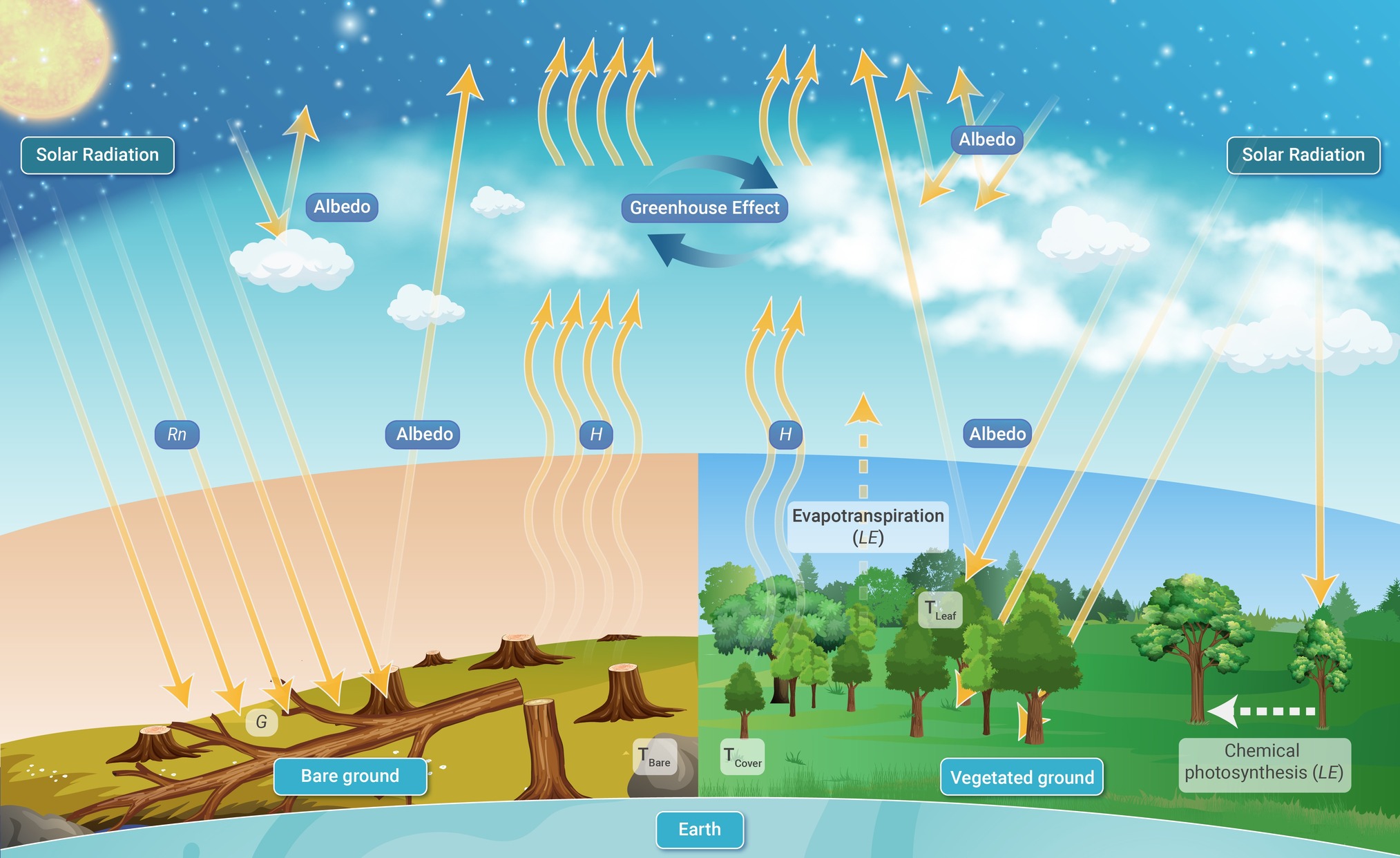
Figure 1.
Diagram illustrating energy balance in the atmosphere comparing bare and forested ground
-
Figure 5.
The differences in cooling effects among forest types
-
Figure 2.
$ {\mathit{T}}_{\mathit{L}\mathit{e}\mathit{a}\mathit{f}} $ $ {\mathit{T}}_{\mathit{B}\mathit{a}\mathit{r}\mathit{e},} $ $ {\mathit{T}}_{\mathit{C}\mathit{o}\mathit{v}\mathit{e}\mathit{r}} $ -
Figure 3.
Regression analysis and distribution of
$ {\mathit{T}}_{\mathit{L}\mathit{e}\mathit{a}\mathit{f}} $ $ {\mathit{T}}_{\mathit{B}\mathit{a}\mathit{r}\mathit{e}} $ $ {\mathit{T}}_{\mathit{C}\mathit{o}\mathit{v}\mathit{e}\mathit{r}} $ -
Figure 4.
The differences in cooling effects among taxonomic groups
-
Figure 6.
Linear regression analysis of
$ {\mathit{T}}_{\mathit{L}\mathit{e}\mathit{a}\mathit{f}}\mathit{ } $ $ \mathit{ }{\mathit{T}}_{\mathit{C}\mathit{o}\mathit{v}\mathit{e}\mathit{r}}\mathit{ } $ $ {\mathit{T}}_{\mathit{B}\mathit{a}\mathit{r}\mathit{e}} $
