
Long commuting, social inequality, and urban development with scaling laws in China
-
GRAPHICAL ABSTRACT
 DownLoad:
Full size image
DownLoad:
Full size image
-
PUBLIC SUMMARY
-
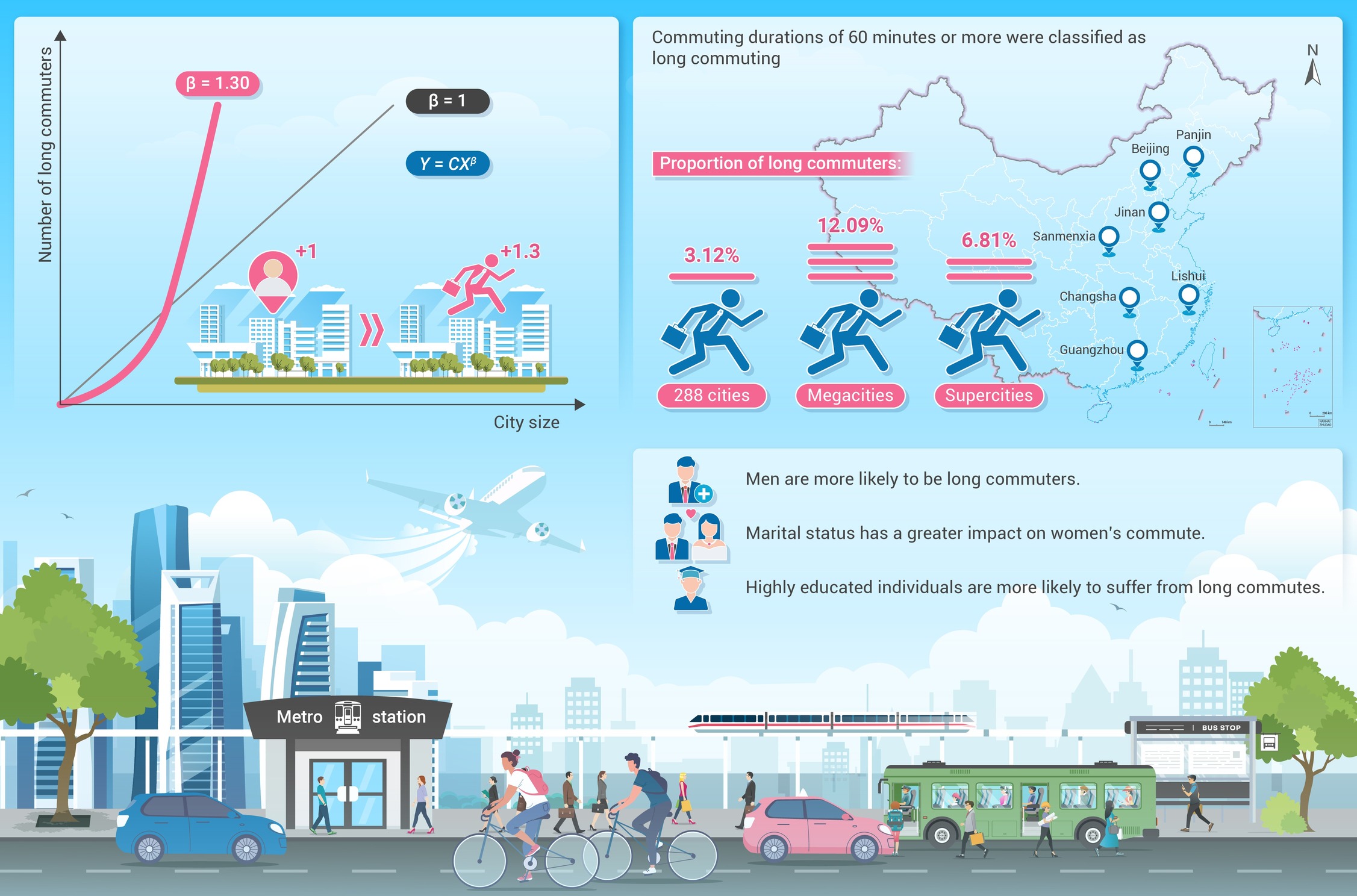
There is a super-linear relationship between city size and the number of long commuters.
The super-linear relationship suggests an optimal city size from the perspective of commuting efficiency.
Long commutes reflect gender, education, and housing inequality, ultimately impacting urban sustainability.
-
-
ABSTRACT
Long commuting is associated with negative consequences on the environment, economy, society, and ultimately on urban sustainability. It is still unclear to what extent long commuting, one of the most frequent daily activities for urban dwellers, can be explained with scaling laws. In this paper, we examine whether the number of people suffering from long commuting (LC) disproportionately grows as the city size (population) increases. We employ a census dataset of 811,452 participants, covering details of individual commutes and socioeconomic background in 288 cities in China. By identifying the most sensitive threshold of commuting time, this paper defines commute no less than 60 minutes as LC and explores the scaling laws accordingly. We find that there is a strong super-linear relationship in cities with more than 1.3 million people, suggesting that there exists an optimal city size from the perspective of commuting efficiency. For cities with more than 1.3 million people, this paper reveals that a 1% increase in the population of a city implies an increase of 1.57% in the number of commuters with LC. According to our model calculation, in 2022, the number of long-time commuters in cities with population over one million was 19.06 million in China. With the investigation of various urban attributes and LC, we conclude that mega-cities or above tend to have more LC, the more LC. Moreover, we find that long commuting can reflect on social inequality about gender, income, education, and housing issues, which can offer policy implications for future urban sustainability.-
Keywords:
- urban studies /
- scaling law /
- commute /
- China /
- mobility
-

-
REFERENCES
[1] Louf R. and Barthelemy M. (2013). Modeling the polycentric transition of cities. Phys. Rev. Lett. 111:198702. DOI:10.1103/PhysRevLett.111.198702 [2] González M.C., Hidalgo C.A. and Barabási A.L. (2008). Understanding individual human mobility patterns. Nature 453:779−782. DOI:10.1038/nature06958 [3] Simini F., González M.C., Maritan A., et al. (2012). A universal model for mobility and migration patterns. Nature 484:96−100. DOI:10.1038/nature10856 [4] Schläpfer M., Dong L., O’Keeffe K., et al. (2021). The universal visitation law of human mobility. Nature 593:522−527. DOI:10.1038/s41586-021-03480-9 [5] Alessandretti L., Aslak U. and Lehmann S. (2020). The scales of human mobility. Nature 587:402−407. DOI:10.1038/s41586-020-2909-1 [6] Barthelemy M. (2019). The statistical physics of cities. Nat. Rev. Phys. 1:406−415. DOI:10.1038/s42254-019-0054-2 [7] Verbavatz V. and Barthelemy M. (2020) The growth equation of cities. Nature 587:397–401. DOI:10.1038/s41586-020-2900-x [8] Bettencourt L.M.A., Lobo J., Helbing D, et al. (2007). Growth, innovation, scaling, and the pace of life in cities. Proc. Natl. Acad. Sci. U. S. A. 104:7301−7306. DOI:10.1073/pnas.0610172104 [9] West G.B. and Brown J.H. (2005). The origin of allometric scaling laws in biology from genomes to ecosystems: Towards a quantitative unifying theory of biological structure and organization. J. Exp. Biol. 208:1575−1592. DOI:10.1242/jeb.01589 [10] Banavar J.R., Moses M.E., Brown J.H., et al. (2010). A general basis for quarter-power scaling in animals. Proc. Natl. Acad. Sci. U. S. A. 107:15816−15820. DOI:10.1073/pnas.1009974107 [11] Li R., Dong L., Zhang J., et al. (2017). Simple spatial scaling rules behind complex cities. Nat. Commun. 8:1841. DOI:10.1038/s41467-017-01882-w [12] Loo B.P.Y. and Huang Z. (2021). Delineating traffic congestion zones in cities: An effective approach based on GIS. J. Transp. Geogr. 06:103108. DOI:10.1016/j.jtrangeo.2021.103108 [13] Ribeiro H.V., Rybski D. and Kropp J.P. (2019). Effects of changing population or density on urban carbon dioxide emissions. Nat. Commun. 10:3204. DOI:10.1038/s41467-019-11184-y [14] Besser L.M., Marcus M. and Frumkin H. (2008). Commute time and social capital in the US. Am. J. Prev. Med. 34:207−211. DOI:10.1016/j.amepre.2007.12.004 [15] Ommeren J.N.V. and i Puigarnau E.G. (2011). Are workers with a long commute less productive. An empirical analysis of absenteeism. Reg. Sci. Urban. Econ. 41:1−8. DOI:10.1016/j.regsciurbeco.2010.07.005 [16] Sandow E. (2014). Til work do us part: The social fallacy of long-distance commuting. Urban Stud. 51:526−543. DOI:10.1177/0042098013498280 [17] Sandow E., Westerlund O. and Lindgren U. (2014). Is your commute killing you. On the mortality risks of long-distance commuting. Environ. Plan. A 46:1496−1516. DOI:10.1068/a46267 [18] Raza A., Pulakka A., Hanson L.L.M., et al. (2021). Commuting distance and behavior-related health: A longitudinal study. Prev. Med. 150:106665. DOI:10.1016/j.ypmed.2021.106665 [19] Lyons G. and Chatterjee K. (2008). A human perspective on the daily commute: Costs, benefits and trade-offs. Transp. Rev. 28:181−198. DOI:10.1080/01441640701559484 [20] Friman M., Gärling T., Ettema D., et al. (2017). How does travel affect emotional well-being and life satisfaction. Transp. Res. Part A Policy Pract. 106:170−180. DOI:10.1016/j.tra.2017.09.024 [21] Lorenz O. (2018). Does commuting matter to subjective well-being. J. Transp. Geogr. 66:180−199. DOI:10.1016/j.jtrangeo.2017.11.019 [22] Louf R. and Barthelemy M. (2014). How congestion shapes cities: from mobility patterns to scaling. Sci. Rep. 4:5561. DOI:10.1038/srep05561 [23] Batty M. (2008). The Size, Scale, and Shape of Cities. Science 319:769−771. DOI:10.1126/science.1151419 [24] Stokes E. and Seto K. (2018). Tradeoffs in environmental and equity gains from job accessibility. Proc. Natl. Acad. Sci. U. S. A. 115:201807563. DOI:10.1073/pnas.1807563115 [25] Mahmassani H.S. (1990). Dynamic models of commuter behavior: Experimental investigation and application to the analysis of planned traffic disruptions. Transp. Res. Part A 24:465−484. DOI:10.1016/0191-2607(90)90036-6 [26] Huang J., Hu Y., Wang J., et al. (2021). A tale of two cities: Jobs–housing balance and urban spatial structures from the perspective of transit commuters. Environ. Plan B Urban Anal. City Sci. 48:1543−1557. DOI:10.1177/2399808320938803 [27] Sultana S. and Weber J. (2007). Journey-to-work patterns in the age of sprawl: Evidence from two midsize southern metropolitan areas. Prof. Geogr. 59:193−208. DOI:10.1111/j.1467-9272.2007.00607.x [28] Travisi C.M., Camagni R. and Nijkamp P. (2010). Impacts of urban sprawl and commuting: A modelling study for Italy. J. Transp. Geogr. 18:382−392. DOI:10.1016/j.jtrangeo.2009.08.008 [29] Mitchelson R.L. and Fisher J.S. (1987). Long distance commuting and income change in the towns of upstate New York. Econ. Geogr. 63:48−65. DOI:10.2307/143850 [30] Moeinaddini A. and Habibian M. (2025). Investigating the role of attitude toward transit safety on the effectiveness of transportation demand management measures: A Tehran case study. Case Stud. Transp. Policy 20:101434. DOI:10.1016/j.cstp.2025.101434 [31] Apichon W., and Athispat P. (2024). Development of Large-scale Trip Analysis Toolkits for Vehicle-based GPS Trajectories using Apache Spark and Open Data: A Case Study of Taxis in Bangkok, Thailand. Int. J. Geoinformatics 21:1−14. DOI:10.52939/ijg.v21i1.3783 [32] Carriel V., Lufín M. and Pérez-Trujillo M. (2022). Do workers negative self-select when they commute. Evidence for the Chilean case of long-distance commuting. Ann. Reg. Sci. 69:255−279. DOI:10.1007/s00168-022-01121-1 [33] Sandow E. and Westin K. (2010). The persevering commuter–Duration of long-distance commuting. Transp. Res. Part A Policy Pract. 44:433−445. DOI:10.1016/j.tra.2010.03.017 [34] Zhao P., Liu D., Yu Z., et al. (2020). Long commutes and transport inequity in China’s growing megacity: New evidence from Beijing using mobile phone data. Travel Behav. Soc. 20:248−263. DOI:10.1016/j.tbs.2020.04.007 [35] Sha F., Li B., Law Y.W., et al. (2019). Associations between commuting and well-being in the context of a compact city with a well-developed public transport system. J. Transp. Health 13:103−114. DOI:10.1016/j.jth.2019.03.016 [36] Allen J., Palm M., Tiznado-Aitken I., et al. (2022). Inequalities of extreme commuting across Canada. Travel Behav. Soc. 29:42−52. DOI:10.1016/j.tbs.2022.05.005 [37] Hamilton M.J., Milne B.T., Walker R.S., et al. (2007). Nonlinear scaling of space use in human hunter–gatherers. Proc. Natl. Acad. Sci. U. S. A. 104:4765−4769. DOI:10.1073/pnas.0611197104 [38] Ortman S.G., Cabaniss A.H., Sturm J.O., et al. (2015). Settlement scaling and increasing returns in an ancient society. Sci. Adv. 1:e1400066. DOI:10.1126/sciadv.1400066 [39] Gomez-Lievano A., Patterson-Lomba O. and Hausmann R. (2016). Explaining the prevalence, scaling and variance of urban phenomena. Nat. Hum. Behav. 1:0012. DOI:10.1038/s41562-016-0012 [40] Youn H., Bettencourt L.M.A., Lobo J., et al. (2016). Scaling and universality in urban economic diversification. J. R. Soc. Interface 13:20150937. DOI:10.1098/rsif.2015.0937 [41] Arvidsson M., Lovsjö N. and Keuschnigg M. (2023). Urban scaling laws arise from within-city inequalities. Nat. Hum. Behav. 7:365−374. DOI:10.1038/s41562-022-01509-1 [42] Barthelemy M. (2016). Mobility patterns. The structure and dynamics of cities: Urban Data Analysis and Theoretical Modeling (Cambridge University Press), pp: 129-160. DOI:10.1017/9781316271377 [43] Popović M., Štefančić H. and Zlatić V. (2012). Geometric origin of scaling in large traffic networks. Phys. Rev. Lett. 109:208701. DOI:10.1103/PhysRevLett.109.208701 [44] Song C., Koren T., Wang P., et al. (2010). Modelling the scaling properties of human mobility. Nat. Phys. 6:818−823. DOI:10.1038/nphys1760 [45] Huang J., Levinson D., Wang J., et al. (2018). Tracking job and housing dynamics with smartcard data. Proc. Natl. Acad. Sci. U. S. A. 115:201815928. DOI:10.1073/pnas.1815928115 [46] Palm M., Gregor B., Wang H., et al. (2014). The trade-offs between population density and households’ transportation-housing costs. Transp. Policy 36:160−172. DOI:10.1016/j.tranpol.2014.07.004 [47] McLafferty S. and Preston V. (2019). Who has long commutes to low-wage jobs. Gender, race, and access to work in the New York region. Urban Geogr. 40:1270−1290. DOI:10.1080/02723638.2019.1577091 [48] Klove R.C. (1952). The definition of standard metropolitan areas. Econ. Geogr. 28:95−104. DOI:10.2307/141019 [49] Anderson G. and Ge Y. (2005). The size distribution of Chinese cities. Reg. Sci. Urban Econ. 35:756−776. DOI:10.1016/j.regsciurbeco.2005.01.003 [50] Qi W., Liu S. and Jin H. (2016). Applicability of the new standard of city-size classification in China. Prog. Geogr. 35:47−56. DOI:10.18306/dlkxjz.2016.01.006 [51] Loo B.P.Y. and du Verle F. (2016). Transit-oriented development in future cities: towards a two-level sustainable mobility strategy. Int. J. Urban Sci. 21:54−67. DOI:10.1080/12265934.2016.1235488 [52] Vincent-Geslin S. and Ravalet E. (2016). Determinants of extreme commuting. Evidence from Brussels, Geneva and Lyon. J. Transp. Geogr. 54:240−237. DOI:10.1016/j.jtrangeo.2016.06.013 [53] Brueckner J.K. (2000). Urban sprawl: Diagnosis and remedies. Int. Reg. Sci. Rev. 23:160−171. DOI:10.1177/016001700761012710 [54] Glaeser E.L and Kahn ME. (2004). Sprawl and urban growth. Handbook of regional and urban economics (Elsevier), pp: 2481–2527. DOI:10.3386/w9733 [55] Duranton G. and Turner M.A. (2011). The fundamental law of road congestion: Evidence from US cities. Am. Econ. Rev. 101:2616−2652. DOI:10.1257/aer.101.6.2616 [56] Levinson D. and Wu H. (2020). Towards a general theory of access. J. Transp. Land Use 13:129−158. DOI:10.5198/jtlu.2020.1660 [57] Li X. and Gong P. (2016). Urban growth models: progress and perspective. Sci. Bull. 61:1637−1650. DOI:10.1007/s11434-016-1111-1 [58] Andersson F., Haltiwanger J.C., Kutzbach M.J., et al. (2018). Job displacement and the duration of joblessness: The role of spatial mismatch. Rev. Econ. Stat. 100:203−218. DOI:10.1162/REST a 00707. DOI:10.1162/RESTa00707 [59] Feng Z. and Boyle P. (2014). Do long journeys to work have adverse effects on mental health. Environ. Behav. 46:609−625. DOI:10.1177/0013916512472053 [60] Loo B.P.Y and Axhausen KW. Getting out of energy-intensive and “dirty” transport. Innovation 3:100339. DOI:10.1016/j.xinn.2022.100339 [61] Kuang W. (2020). 70 years of urban expansion across China: trajectory, pattern, and national policies. Sci. Bull. 65:1970−1974. DOI:10.1016/j.scib.2020.07.005 [62] Czamanski D. and Broitman D. (2018). The life cycle of cities. Habitat Int. 72:100−108. DOI:10.1016/j.habitatint.2016.09.002 [63] Cervero R. (1996). Jobs-housing balance revisited: trends and impacts in the San Francisco Bay Area. J. Am. Plann. Assoc. 62:492−511. DOI:10.1080/01944369608975714 [64] Ewing R. and Cervero R. (2010). Travel and the built environment: A meta-analysis. J. Am. Plann. Assoc. 76:265−294. DOI:10.1080/01944361003766766 [65] Zhou S., Liu Y. and Kwan M.P. (2016). Spatial mismatch in post-reform urban China: A case study of a relocated state-owned enterprise in Guangzhou. Habitat Int. 58:1−11. DOI:10.1016/j.habitatint.2016.08.003 [66] Tang J., Zhao P., Gong Z., et al. (2023). Resilience patterns of human mobility in response to extreme urban floods. Natl. Sci. Rev. 10:nwad097. DOI:10.1093/nsr/nwad097 -
ABOUT THIS ARTICLE
Cite this article:
Huang J., Fan W., Wang J., et al. (2025). Long commuting, social inequality, and urban development with scaling laws in China. The Innovation Geoscience 3:100164. https://doi.org/10.59717/j.xinn-geo.2025.100164
Welcome!
To request copyright permission to republish or share portions of our works, please visit Copyright Clearance Center's (CCC) Marketplace website at marketplace.copyright.com.
Article Metrics
Relative Articles
Cited by
Export File
Citation
Huang J., Fan W., Wang J., et al. (2025). Long commuting, social inequality, and urban development with scaling laws in China. The Innovation Geoscience 3:100164. https://doi.org/10.59717/j.xinn-geo.2025.100164

Format
Content
-
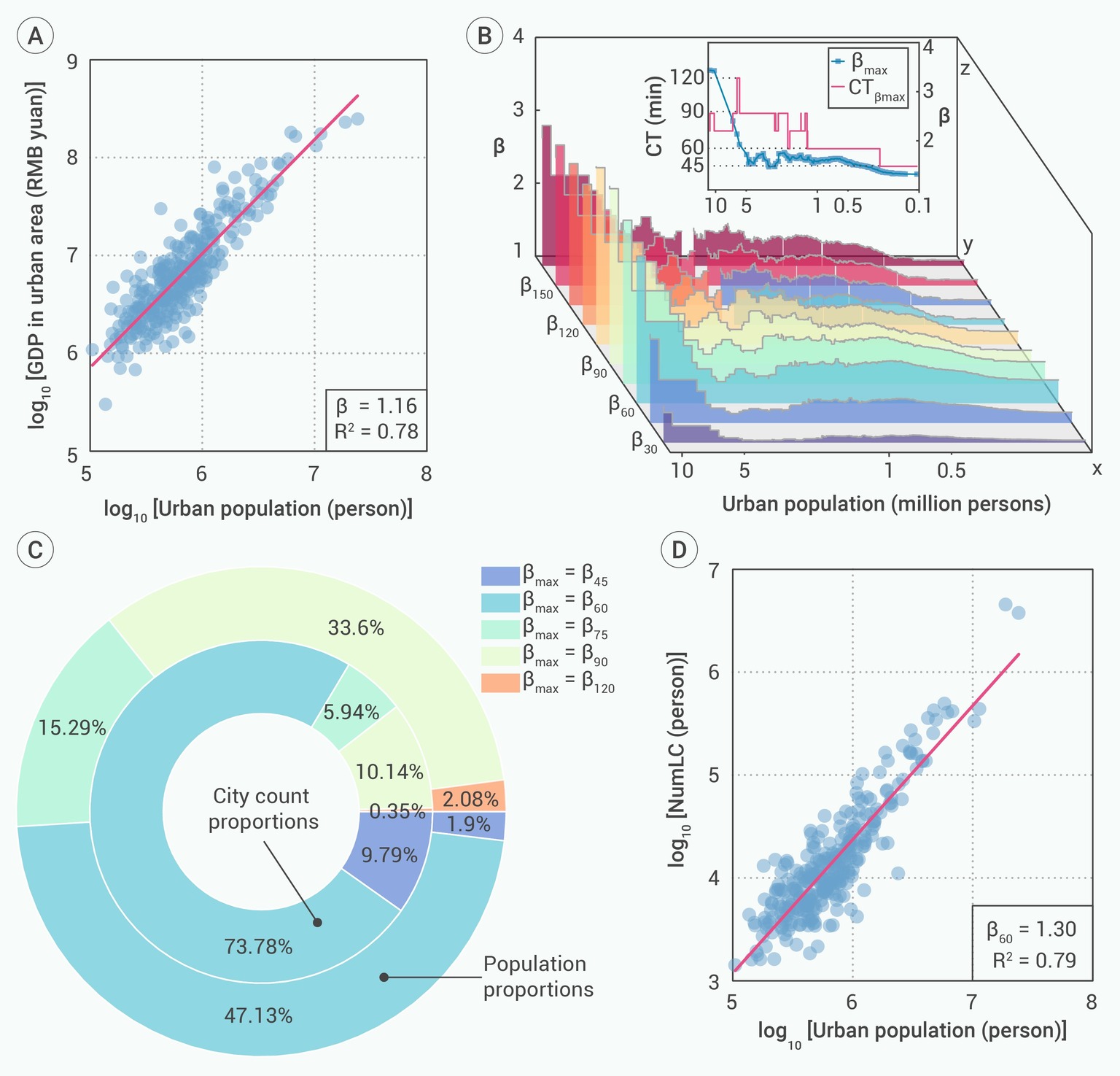
Figure 1.
Scaling laws verified for 288 cities of China in 2015
-
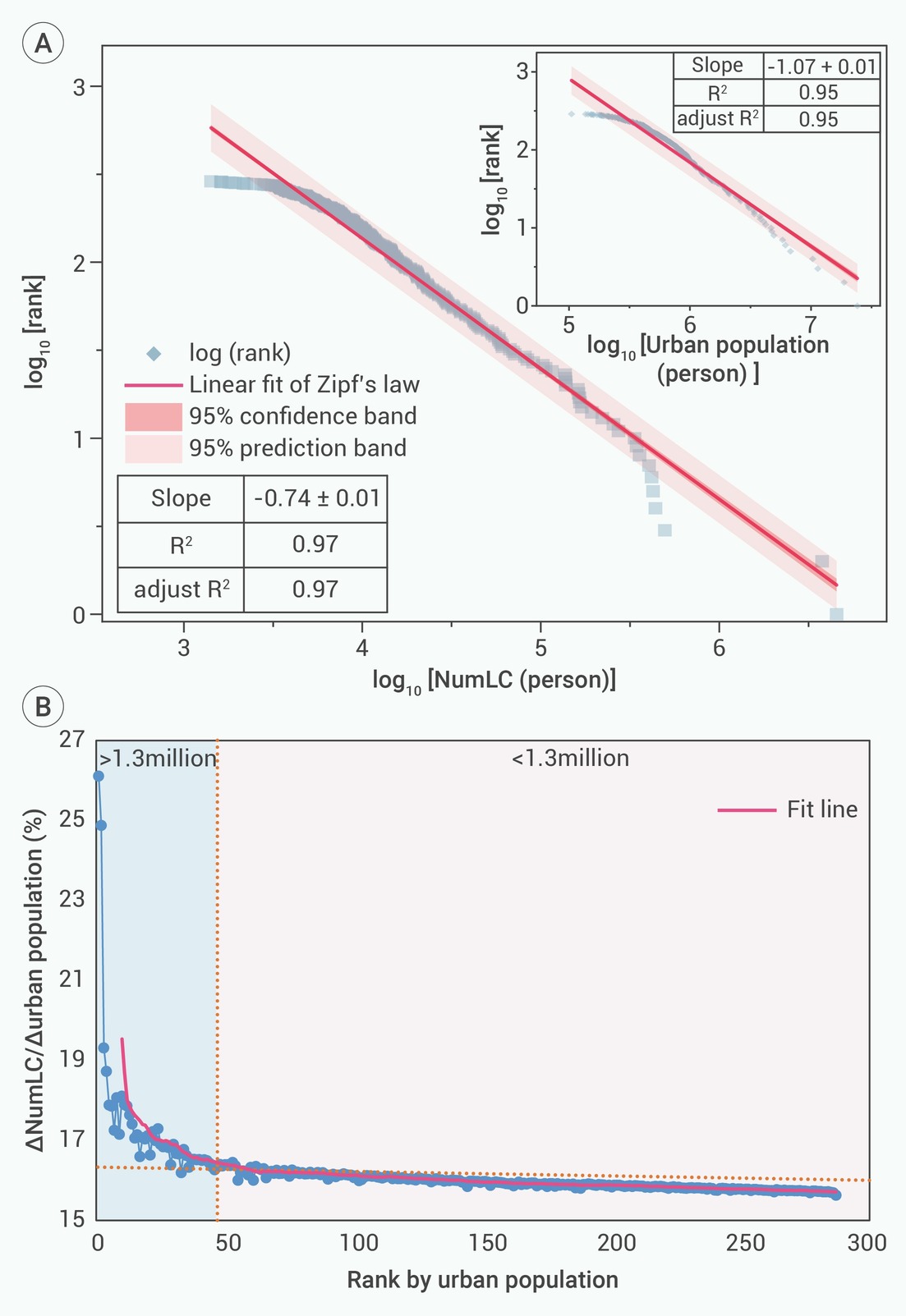
Figure 2.
The relationship between LC and city size
-
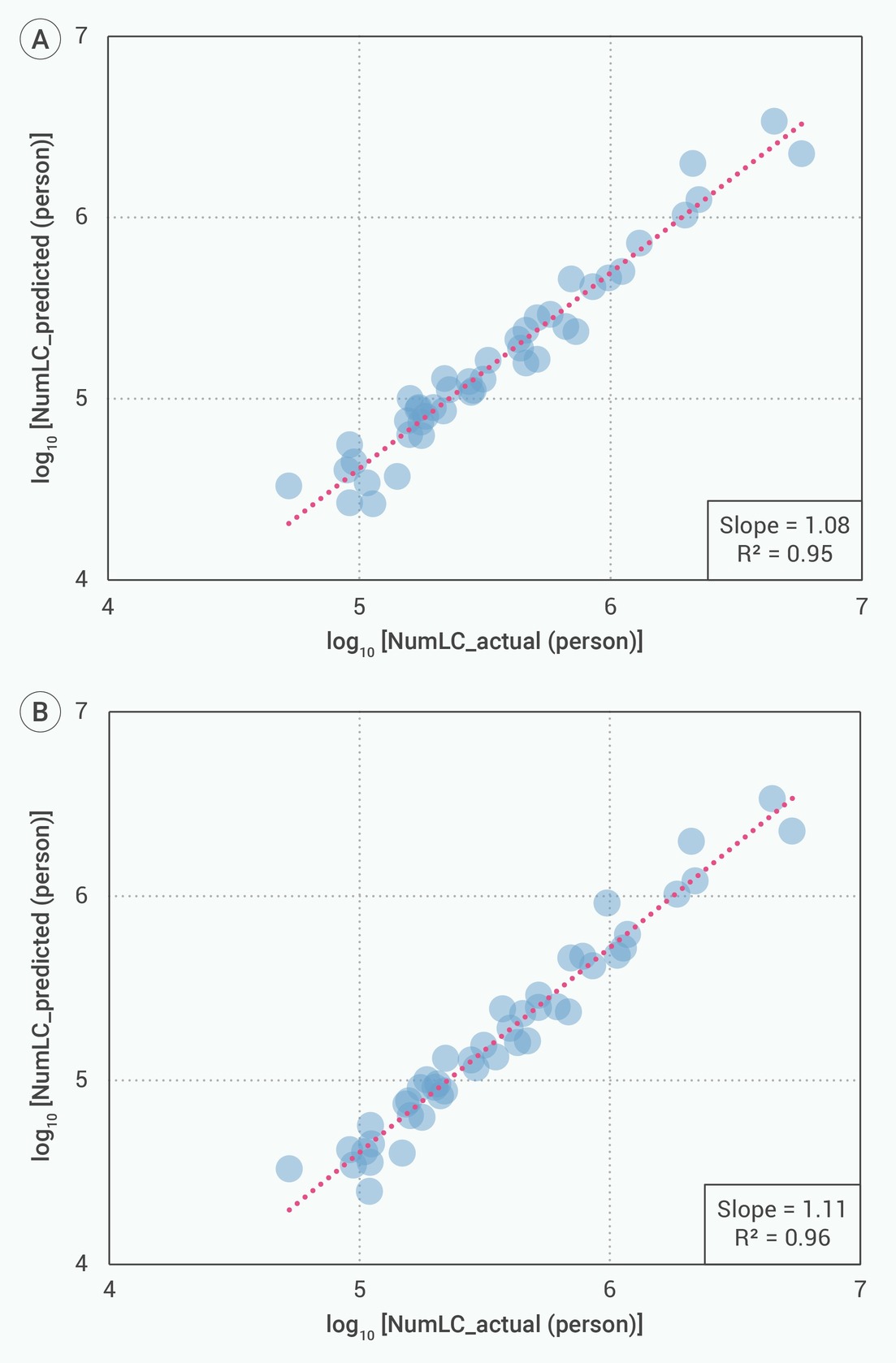
Figure 3.
The predication of the number of long-time commuters in 2021 and 2022 with the super-linear relationship captures.
-
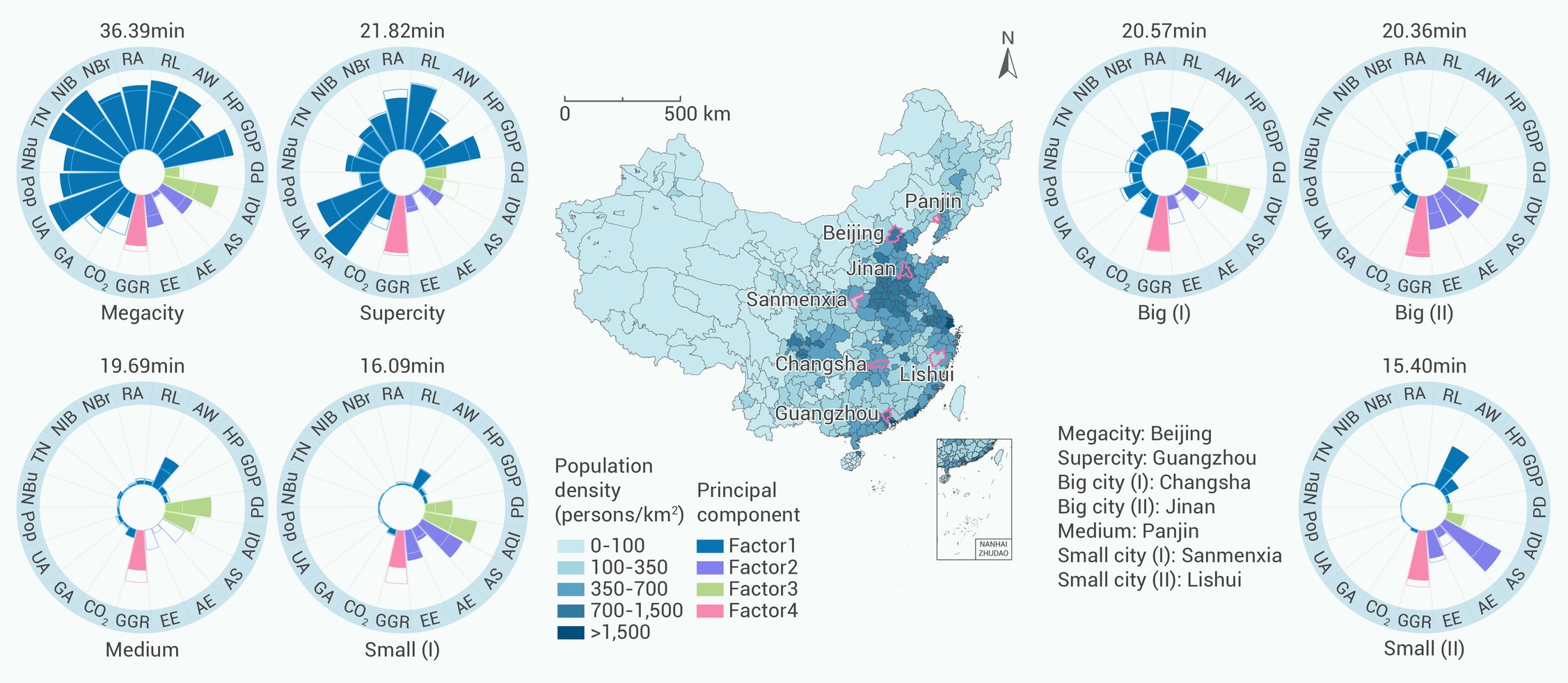
Figure 4.
Examples for various city sizes
-
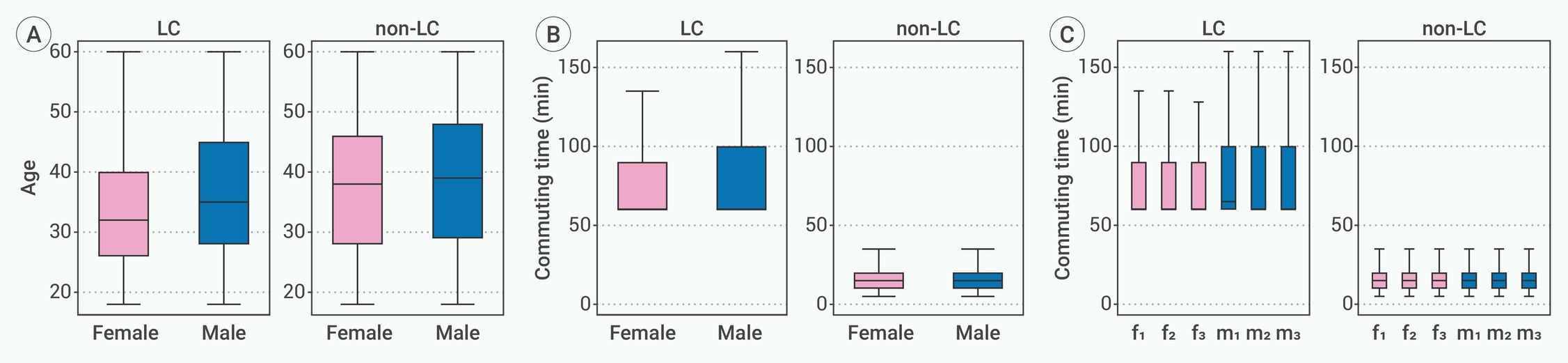
Figure 5.
LCers and non-LCers by demography
