
Decoding resources strategies: Food-energy-water nexus across varied development stages
-
GRAPHICAL ABSTRACT
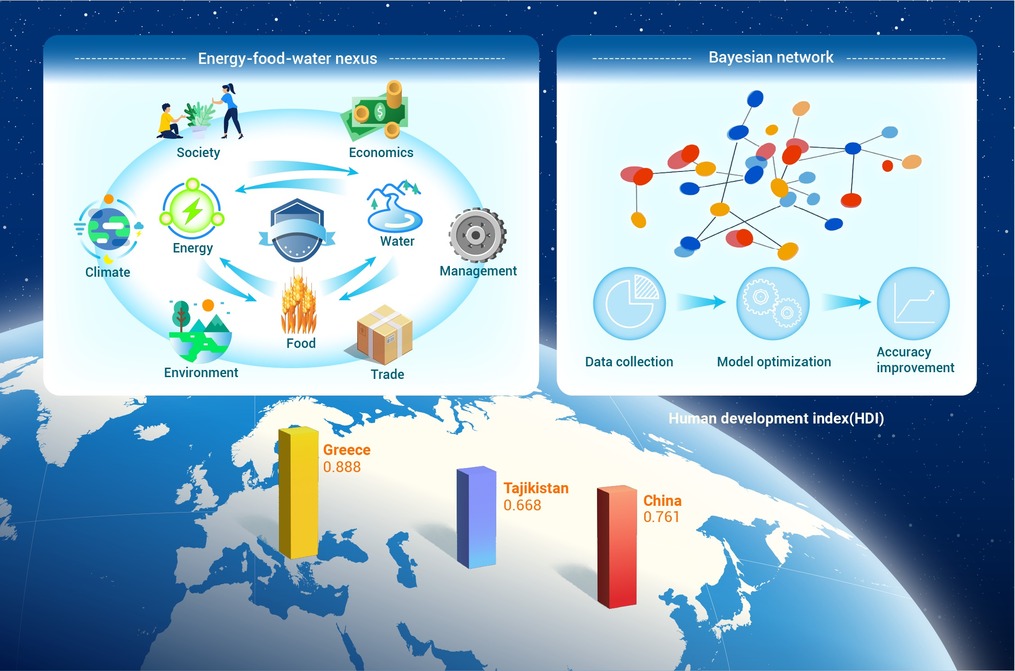
 DownLoad:
Full size image
DownLoad:
Full size image
-
PUBLIC SUMMARY
-
Multiple factors act upon the food-energy-water nexus and thus affect the security of the entire system.
An enhancement in the accuracy rate was observed after the Bayesian network model was optimized.
Validation and application of the model in varying development levels countries enables its broader promotion.
-
-
ABSTRACT
Globalization, climate change, and socioeconomic pressures intensify food-energy-water (FEW) nexus complexity and challenges, but existing models are constrained by regional biases and data gaps, limiting their generalization and adaptability for large-scale cross-regional analysis. This study develops a national-scale Bayesian network model using open-access datasets (e.g., FAO, World Bank) to ensure data availability across most countries, combined with an Expectation-Maximization (EM) algorithm to achieve 90% prediction accuracy under 10% data missingness, effectively overcoming regional and data constraints. Parameter optimization improves model accuracy by 18% compared to the lowest scenario, while it decreases accuracy by 2% compared to the highest scenario but improving prediction precision by 25%. Framework optimization extended the applicability of the model to multi-scenario application, including internal mechanism analysis, influencing factor analysis, and scenario analysis. Analyses of Greece, China, and Tajikistan indicate that the food system dominates FEW nexus in Greece and China, while the water system is dominant in Tajikistan. Socioeconomic development significantly influences all three countries. Greece faces severe energy risks (Energy dependence rate, EDR 74.9% - 81.3%), China has prominent water risks (Water stress, WS 39.7% - 42.0%), and Tajikistan confronts concurrent water and energy risks (WS 42.8% - 54.9%, EDR 33.5% - 43.7%). It is suggested that the dominant subsystems be given priority for control and management to enhance the regulatory efficiency, balance socioeconomic development with resource carrying capacity, address the cross-border water resources issue in Tajikistan and Greece’s dependence on energy imports through international cooperation to strengthen system resilience. -

-
REFERENCES
[1] United Nations. (2015). Transforming our world: The 2030 agenda for sustainable development. https://sdgs.un.org/publications/transforming-our-world-2030-agenda-sustainable-development-17981 [2] Vinca A., Parkinson S., Riahi K., et al. (2021). Transboundary cooperation a potential route to sustainable development in the Indus basin. Nat. Sustain. 4:331−339. DOI:10.1038/s41893-020-00654-7 [3] Mdee A., Ofori A., Lopez-Gonzalez G., et al. (2022). The top 100 global water questions: Results of a scoping exercise. One Earth 5:563−573. DOI:10.1016/j.oneear.2022.04.009 [4] Kornhuber K., Lesk C., Schleussner C.F., et al. (2023). Risks of synchronized low yields are underestimated in climate and crop model projections. Nat. Commun. 14:3528. DOI:10.1038/s41467-023-38906-7 [5] Hoff J. (2011). Understanding the nexus background paper for the Bonn 2011 Conference: The water, energy and food security nexus. Bonn, Germany, Stockholm Environment Institute (SEI): Stockholm, Sweden. https://www.sei.org/publications/understanding-the-nexus/ [6] Bardazzi E. and Bosello F. (2021). Critical reflections on water-energy-food nexus in computable general equilibrium models: A systematic literature review. Environ. Modell. Softw. 145:105201. DOI:10.1016/j.envsoft.2021.105201 [7] Zeng Y.J., Liu D.D., Guo S.L., et al. (2022). A system dynamic model to quantify the impacts of water resources allocation on water-energy-food-society (WEFS) nexus. Hydrol. Earth Syst. Sci. 26:3965−3988. DOI:10.5194/hess-26-3965-2022 [8] Li P.C. and Ma H.W. (2020). Evaluating the environmental impacts of the water-energy-food nexus with a life-cycle approach. Resour. Conserv. Recycl. 157:104789. DOI:10.1016/j.resconrec.2020.104789 [9] Elkamel M., Valencia A., Zhang W., et al. (2023). Multi-agent modeling for linking a green transportation system with an urban agriculture network in a food-energy-water nexus. Sust. Cities Soc. 89:104354. DOI:10.1016/j.scs.2022.104354 [10] Yuan M.H. and Lo S.L. (2020). Developing indicators for the monitoring of the sustainability of food, energy, and water. Renew. Sust. Energ. Rev. 119:109565. DOI:10.1016/j.rser.2019.109565 [11] Qin J., Duan W.L., Chen Y.N., et al. (2022). Comprehensive evaluation and sustainable development of water–energy–food–ecology systems in Central Asia. Renew. Sustain. Energy Rev. 157:112061. DOI:10.1016/j.rser.2021.112061 [12] Si Y., Li X., Yin D.Q., et al. (2019). Revealing the water-energy-food nexus in the Upper Yellow River Basin through multi-objective optimization for reservoir system. Sci. Total Environ. 682:1−18. DOI:10.1016/j.scitotenv.2019.04.427 [13] Ravar Z., Zahraie B., Sharifinejad A., et al. (2020). System dynamics modeling for assessment of water–food–energy resources security and nexus in Gavkhuni basin in Iran. Ecol. Ind. 108:105682. DOI:10.1016/j.ecolind.2019.105682 [14] Shi Y.X., Liu S.N. and Shi H.Y. (2022). Analysis of the water-food-energy nexus and water competition based on a Bayesian network. Water Resour. Manag. 36:3349−3366. DOI:10.1007/s11269-022-03205-1 [15] Song S.R., Chen X., Liu T., et al. (2023). Indicator-based assessments of the coupling coordination degree and correlations of water-energy-food-ecology nexus in Uzbekistan. J. Environ. Manag. 345:118674. DOI:10.1016/j.jenvman.2023.118674 [16] Daher B., Saad W., Pierce S.A., et al. (2017). Trade-offs and decision support tools for FEW nexus-oriented management. Curr. Sustain. Renewable Energy Rep. 4:153−159. DOI:10.1007/s40518-017-0075-3 [17] Zhang C., Chen X.X., Li Y., et al. (2018). Water-energy-food nexus: Concepts, questions and methodologies. J. Hydrol. 195:625−639. DOI:10.1016/j.jclepro.2018.05.194 [18] Mayfield H.J., Smith C., Gallagher M., et al. (2020). Considerations for selecting a machine learning technique for predicting deforestation. Environ. Model. Softw. 131:104741. DOI:10.1016/j.envsoft.2020.104741 [19] Nojavan A.F., Qian S.S. and Stow C.A. (2017). Comparative analysis of discretization methods in Bayesian networks. Environ. Modell. Softw. 87:64−71. DOI:10.1016/j.envsoft.2016.10.007 [20] Shi H.Y., Luo G.P., Zheng H.W., et al. (2020). Coupling the water-energy-food-ecology nexus into a Bayesian network for water resources analysis and management in the Syr Darya River basin. J. Hydrol. 581:124387. DOI:10.1016/j.jhydrol.2019.124387 [21] Chai J., Shi H.T., Lu Q.Y., et al. (2020). Quantifying and predicting the water-energy-food-economy-society-environment nexus based on Bayesian networks - A case study of China. J. Clean Prod. 256:120266. DOI:10.1016/j.jclepro.2020.120266 [22] Wang Y., Zhao Y., Wang Y.Y., et al. (2021). Supply-demand risk assessment and multi-scenario simulation of regional water-energy-food nexus: A case study of the Beijing-Tianjin-Hebei region. Resour. Conserv. Recycl. 174:105799. DOI:10.1016/j.resconrec.2021.105799 [23] Chen B., Duan Q., Zhao W., et al. (2023). Oasis sustainability is related to water supply mode. Agric. Water Manag. 290:108589. DOI:10.1016/j.agwat.2023.108589 [24] Yan X., Fang L. and Mu L. (2019). How does the water-energy-food nexus work in developing countries. An empirical study of China. Sci. Total Environ. 716:134791. DOI:10.1016/j.scitotenv.2019.134791 [25] D'Odorico P., Davis K.F., Rosa L., et al. (2018). The global food-energy-water nexus. Rev. Geophys. 56:456−531. DOI:10.1029/2017RG000591 [26] Wang K., Liu J.G., Xia J., et al. (2021). Understanding the impacts of climate change and socio-economic development through food-energy-water nexus: A case study of mekong river delta. Resour. Conserv. Recycl. 167:105390. DOI:10.1016/j.resconrec.2020.105390 [27] Wolde Z., Wei W., Likessa D., et al. (2021). Understanding the impact of land use and land cover change on water–energy–food nexus in the Gidabo watershed, east African rift valley. Nat. Resour. Res. 30:2687−2702. DOI:10.1007/s11053-021-09819-3 [28] Xu Z.C., Chen X.Z., Liu J.G., et al. (2020). Impacts of irrigated agriculture on food-energy-water-CO2 nexus across metacoupled systems. Nat. Commun. 11:5837. DOI:10.1038/s41467-020-19520-3 [29] Wang Q., Li S.Q., He G., et al. (2018). Evaluating sustainability of water-energy-food (WEF) nexus using an improved matter-element extension model: A case study of China. J. Clean Prod. 202:1097−1106. DOI:10.1016/j.jclepro.2018.08.213 [30] Nuez-lopez J.M., Cansino-Loeza B., Sánchez-Zarco X.G., et al. (2022). Involving resilience in assessment of the water-energy-food nexus for arid and semiarid regions. Clean Technol. Environ. Policy 24:1681−1693. DOI:10.1007/s10098-022-02273-6 [31] Hao L.G., Wang P., Yu J.J., et al. (2022). An integrative analytical framework of water-energy-food security for sustainable development at the country scale: A case study of five Central Asian countries. J. Hydrol. 607:127530. DOI:10.1016/j.jhydrol.2022.127530 [32] Lauritzen L. (1995). The EM algorithm for graphical association models with missing data. Comput. Stat. Data Anal. 19:191−201. DOI:10.1016/0167-9473(93)E0056-A [33] Uusitalo L. (2007). Advantages and challenges of Bayesian networks in environmental modeling. Ecol. Model. 203:312−318. DOI:10.1016/j.ecolmodel.2006.11.033 [34] Zheng Y., Xie Y.Z. and Long X.J. (2021). A comprehensive review of Bayesian statistics in natural hazards engineering. Nat. Hazards 108:63−91. DOI:10.1007/s11069-021-04729-2 [35] Aguilera P.A., Fernández A., Fernández R., et al. (2011). Bayesian networks in environmental modeling. Environ. Modell. Softw. 26:1376−1388. DOI:10.1016/j.envsoft.2011.06.004 [36] Endo A., Tsurita I., Burnett K., et al. (2017). A review of the current state of research on the water, energy, and food nexus. J. Hydrol. Reg. Stud. 1:20−30. DOI:10.1016/j.ejrh.2015.11.010 [37] Du T.S., Kang S.Z., Zhang J.H., et al. (2015). Deficit irrigation and sustainable water-resource strategies in agriculture for China's food security. J. Exp. Bot. 66:2253−2269. DOI:10.1093/jxb/erv034 [38] Macknick J., Newmark R., Heath G., et al. (2012). Operational water consumption and withdrawal factors for electricity generating technologies: a review of existing literature. Environ. Res. Lett. 7:045802. DOI 10.1088/1748-9326/7/4/045802 [39] Yang Y.C.E., Ringler C., Brown C., et al. (2016). Modeling the agricultural water–energy–food nexus in the indus river basin, Pakistan. J. Water Resour. Plan. Manage. 142:04016062. DOI:10.1061/(ASCE)WR.1943-5452.0000710 [40] Xu S.S. He W.J., Shen J.Q., et al. (2019). Coupling and coordination degrees of the Core water-energy-food nexus in China. Int. J. Environ. Res. Public Health 16:1648. DOI:10.3390/ijerph16091648 [41] Qi Y.Y., Farnoosh A., Lin L., et al. (2021). Coupling coordination analysis of China's provincial water-energy-food nexus. Environ. Sci. Pollut. Res. 29:23303−23313. DOI:10.1007/s11356-021-17036-x [42] Tabatabaie S.M.H. and Murthy G.S. (2021). Development of an input-output model for food-energy-water nexus in the pacific northwest, USA. Resour. Conserv. Recycl. 168:105267. DOI:10.1016/j.resconrec.2020.105267 [43] Han D.N., Yu D.Y. and Cao Q. (2020). Assessment on the features of coupling interaction of the food-energy-water nexus in China. J. Clean. Prod. 249:119379. DOI:10.1016/j.jclepro.2019.119379 [44] El-Gafy I. and Apul D. (2021). Expanding the dynamic modeling of water-food-energy nexus to include environmental, economic, and social aspects based on life cycle assessment thinking. Water Resour. Manag. 35:4349−4362. DOI:10.1007/s11269-021-02951-y [45] Food and Agriculture Organization. (2014). Walking the nexus talk: Assessing the water-energy-food nexus in the context of the sustainable energy for all initiative. Rome: Food and Agriculture Organization (FAO). https://agris.fao.org/search/en/providers/122621/records/6473966668b4c299a3fb4b4b [46] Campana P.E., Lastanao P., Zainali S., et al. (2022). Towards an operational irrigation management system for Sweden with a water–food–energy nexus perspective. Agric. Water Manage. 271:107734. DOI:10.1016/j.agwat.2022.107734 [47] Rubinsin N.J., Daud W.R.W., Kamarudin S.K., et al. (2021). Modelling and optimisation of oil palm biomass value chains and the environment-food-energy-water nexus in peninsular Malaysia. Biomas Bioenerg. 144:105912. DOI:10.1016/j.biombioe.2020.105912 [48] Owen A., Scott K. and Barrett J. (2018). Identifying critical supply chains and final products: An input-output approach to exploring the energy-water-food nexus. Appl. Energy 210:632−642. DOI:10.1016/j.apenergy.2017.09.069 [49] Taherzadeh O., Bithell M. and Richards K. (2021). Water, energy and land insecurity in global supply chains. Glob. Environ. Change -Human Policy Dimens. 67:102158. DOI:10.1016/j.gloenvcha.2020.102158 [50] Kim W., Iizumi T. and Nishimori M. (2019). Global patterns of crop production losses associated with droughts from 1983 to 2009. J. Appl. Meteorol. Climatol. 58:1233−1244. DOI:10.1175/jamc-d-18-0174.1 [51] BP. (2022). BP statistical review of world energy 2022. BP. https://www.bp.com/en/global/corporate/energy-economics/energy-outlook/energy-outlook-downloads.html [52] Dietzenbacher E., Kulionis V. and Capurro F. (2020). Measuring the effects of energy transition: A structural decomposition analysis of the change in renewable energy use between 2000 and 2014. Appl. Energy 258:114040. DOI:10.1016/j.apenergy.2019.114040 [53] Chen B., Zhang X. and Gu B. (2025). Managing nitrogen to achieve sustainable food-energy-water nexus in China. Nat. Commun. 16:4804. DOI:10.1038/s41467-025-60098-5 [54] Gao Y., Zhang Y., He S., et al. (2019). Fabrication of a hollow mesoporous silica hybrid to improve the targeting of a pesticide. Chem Eng J. 364:361−369. DOI:10.1016/j.cej.2019.01.105 [55] Guo A., Yue W., Yang J., et al. (2023). Cropland abandonment in China: Patterns, drivers, and implications for food security. J. Clean. Prod. 418:138154. DOI:10.1016/j.jclepro.2023.138154 [56] Bamisile O., Ojo O., Yimen N., et al. (2021). Comprehensive functional data analysis of China's dynamic energy security index. Energy Rep. 7:6246−6259. DOI:10.1016/j.egyr.2021.09.018 [57] Matsumoto K. and Matsumura Y. (2022). Challenges and economic effects of introducing renewable energy in a remote island: A case study of Tsushima Island, Japan. Renew. Sust. Energ. Rev. 162:112456. DOI:10.1016/j.rser.2022.112456 [58] Scanlon B., Ruddell B.L., Reed P.M., et al. (2018). The food-energy-water nexus: Transforming science for society. Water Resour. Res. 53:3550−3556. DOI:10.1002/2017WR020889 [59] Ghiat I. and Al-Ansari T. (2021). A review of carbon capture and utilisation as a CO2 abatement opportunity within the EWF nexus. J. CO2 Util. 45:101432. DOI:10.1016/j.jcou.2020.101432. [60] Rovithakis A., Grillakis M.G., Seiradakis K.D., et al. (2022). Future climate change impact on wildfire danger over the Mediterranean: The case of Greece. Environ. Res. Lett. 17:045022. DOI 10.1088/1748-9326/ac5f94. [61] Mallinis G., Domakinis C., Kokkoris I.P., et al. (2023). MAES implementation in Greece: Geodiversity. J. Environ. Manag. 342:118324. DOI:10.1016/j.jenvman.2023.118324 [62] World Bank. (2023). World Development Indicators. World Bank. https://databank.worldbank.org/reports.aspx?source=world-development-indicators [63] Jin H.Y., Chen X.H., Wu P., et al. (2021). Evaluation of spatial-temporal distribution of precipitation in mainland China by statistic and clustering methods. Atmos. Res. 262:105772. DOI:10.1016/j.atmosres.2021.105772 [64] Wu H.W., Wu J.L., Li J.L., et al. (2020). Spatial variations of hydrochemistry and stable isotopes in mountainous river water from the Central Asian headwaters of the Tajikistan Pamirs. Catena 193:104639. DOI:10.1016/j.catena.2020.104639 [65] Wang Y.L., Wang Z.W., He S.W., et al. (2019). A practical chiller fault diagnosis method based on discrete Bayesian network. Int. J. Refrig. 102:159−167. DOI:10.1016/j.ijrefrig.2019.03.008 [66] Marcot B.G. and Hanea A.M. (2021). What is an optimal value of k in k-fold cross-validation in discrete Bayesian network analysis. Comput. Stat. 36:2009−2031. DOI:10.1007/s00180-020-00999-9 [67] Chen Y., Pan Y. and Geng M. (2023). Identification of key brittleness factors and multi-scenario analysis of the water-energy-food-ecology nexus vulnerability based on NRS-BN. Front. Environ. Sci. 11:1273755. DOI:10.3389/fenvs.2023.1273755 [68] Zhang J.Z., Wang S., Pradhan P., et al. (2022). Mapping the complexity of the food-energy-water nexus from the lens of Sustainable Development Goals in China. Resour. Conserv. Recycl. 183:106357. DOI:10.1016/j.resconrec.2022.106357 [69] Laspidou C.S., Mellios N. and Kofinas D. (2019). Towards ranking the water–energy–food–land use–climate nexus interlinkages for building a nexus conceptual model with a heuristic algorithm. Water 11:306. DOI:10.3390/w11020306 [70] Georgopoulou E., Mirasgedis S., Sarafidis Y., et al. (2017). Climate change impacts and adaptation options for the Greek agriculture in 2021–2050: A monetary assessment. Clim. Risk Manag. 16:164−182. DOI:10.1016/j.crm.2017.02.002 [71] Kyriakopoulos G.L., Sebos I., Triantafyllou E., et al. (2023). Benefits and synergies in addressing climate change via the implementation of the common agricultural policy in Greece. Appl Sci 13:2216. DOI:10.3390/app13042216 [72] Papadopoulou C.A., Papadopoulou M.P. and Laspidou C. (2022). Implementing water-energy-land-food-climate nexus approach to achieve the sustainable development goals in Greece: Indicators and policy recommendations. Sustainability 14:4100. DOI:10.3390/su14074100 [73] Xiao Z.Y., Yao M.Q., Tang X.T., et al. (2019). Identifying critical supply chains: An input-output analysis for food-energy-water nexus in China. Ecol. Model. 392:31−37. DOI:10.1016/j.ecolmodel.2018.11.006 [74] Niva V., Cai J.L., Taka M., et al. (2020). China’s sustainable water-energy-food nexus by 2030: Impacts of urbanization on sectoral water demand. J. Clean Prod. 251:119755. DOI:10.1016/j.jclepro.2019.119755 [75] Yuan K., Yang Z. and Wang S. (2021). Water scarcity and adoption of water-saving irrigation technologies in groundwater over-exploited areas in the North China Plain. Irrig Sci 39:397−408. DOI:10.1007/s00271-021-00726-2 [76] Liu Y. and Zhou Y. (2021). Reflections on china’s food security and land use policy under rapid urbanization. Land Use Policy 109:105699. DOI:10.1016/j.landusepol.2021.105699 [77] Xu Z., Niu Y., Liang Y., et al. (2020). The integrated hydropower sustainability assessment in Tajikistan: A case study of Rogun Hydropower Plant. Adv. Civ. Eng. 2020:8894072. DOI:10.1155/2020/8894072 [78] Wang X.X., Cui B.L., Chen Y.N., et al. (2024). Dynamic changes in water resources and comprehensive assessment of water resource utilization efficiency in the Aral Sea basin, Central Asia. J. Environ. Manag. 351:120198. DOI:10.1016/j.jenvman.2024.120198 [79] Wehbe Y., Griffiths S., Al Mazrouei A., et al. (2023). Rethinking water security in a warming climate: Rainfall enhancement as an innovative augmentation technique. NPJ Clim. Atmos. Sci. 6:171. DOI:10.1038/s41612-023-00503-2 [80] Ntiamoah E.B., Chandio A.A., Yeboah E.N., et al. (2023). How do carbon emissions, economic growth, population growth, trade openness and employment influence food security. Recent evidence from the East Africa. Environ. Sci. Pollut. Res. 30:51844−51860. DOI:10.1007/s11356-023-26031-3 [81] Iyke B.N. (2024). Climate change, energy security risk, and clean energy investment. Energy Econ. 129:107225. DOI:10.1016/j.eneco.2023.107225 [82] Salman M., Zha D.L. and Wang G.M. (2022). Assessment of energy poverty convergence: A global analysis. Energy 255:124579. DOI:10.1016/j.energy.2022.124579 [83] Zhang A. and Zhao X. (2022). Changes of precipitation pattern in China: 1961–2010. Theor. Appl. Climatol. 148:1005−1019. DOI:10.1007/s00704-022-03986-w [84] Wang X., Xiao X.M., Zou Z.H., et al. (2020). Gainers and losers of surface and terrestrial water resources in China during 1989–2016. Nat. Commun. 11:3471. DOI:10.1038/s41467-020-17103-w [85] Su Q.M. and Chen X. (2021). Efficiency analysis of metacoupling of water transfer based on the parallel data envelopment analysis model: A case of the south–north water transfer project-middle route in China. J. Clean. Prod. 313:127952. DOI:10.1016/j.jclepro.2021.127952 [86] Wang X.X., Chen Y.N., Li Z., et al. (2020). Development and utilization of water resources and assessment of water security in Central Asia. Agric. Water Manag. 240:106297. DOI:10.1016/j.agwat.2020.106297 [87] Zhang S., Li Y., Huang G., et al. (2023). Developing a copula-based input-output method for analyzing energy-water nexus of Tajikistan. Energy 266:126511. DOI:10.1016/j.energy.2022.126511 [88] Liu B.C., Song C.Y., Wang Q.S., et al., (2022). Forecasting of China's solar PV industry installed capacity and analyzing of employment effect: based on GRA-BiLSTM model. Environ. Sci. Pollut. Res. 29:4557-4573. DOI:10.1007/s11356-021-15957-1 [89] Ma S.P., Liu Q.Q. and Zhang W.Z. (2022). Examining the effects of installed capacity mix and capacity factor on aggregate carbon intensity for electricity generation in China. Int. J. Environ. Res. Public Health 19:3471. DOI:10.3390/ijerph19063471 [90] Seth K., Fernandes S.J. and Camargo S.J. (2015). Two summers of São Paulo drought: Origins in the western tropical Pacific. Geophys. Res. Lett. 42:10816−10823. DOI:10.1002/2015GL066314 [91] Santos-Burgoa C., Sandberg J., Suárez E., et al. (2018). Differential and persistent risk of excess mortality from Hurricane Maria in Puerto Rico: A time-series analysis. Lancet Planet. Health 2:478−488. DOI:10.1016/S2542-5196(18)30209-2 [92] McKinnon K.A. and Simpson I.R. (2022). How unexpected was the 2021 Pacific Northwest heatwave. Geophys. Res. Lett. 49:e2022GL100380. DOI:10.1029/2022GL100380 [93] Iqbal A., Nazir H. and Khurshid N. (2024). Exploring the effects of floods in Pakistan: Pre/post flood analysis 2022. I Int. J. Disaster Risk Reduct. 115:105032. DOI:10.1016/j.ijdrr.2024.105032 [94] Udall B. and Overpeck J. (2017). The twenty-first century colorado river hot drought and implications for the future. Water Resour. Res. 53:2404−2418. DOI:10.1002/2016WR019638 -
ABOUT THIS ARTICLE
Cite this article:
Shi Y., Wang Y., Liu S., et al. (2025). Decoding resources strategies: Food-energy-water nexus across varied development stages. The Innovation Geoscience 3:100172. https://doi.org/10.59717/j.xinn-geo.2025.100172
Welcome!
To request copyright permission to republish or share portions of our works, please visit Copyright Clearance Center's (CCC) Marketplace website at marketplace.copyright.com.
Article Metrics
Relative Articles
Cited by
Export File
Citation
Shi Y., Wang Y., Liu S., et al. (2025). Decoding resources strategies: Food-energy-water nexus across varied development stages. The Innovation Geoscience 3:100172. https://doi.org/10.59717/j.xinn-geo.2025.100172

Format
Content
-
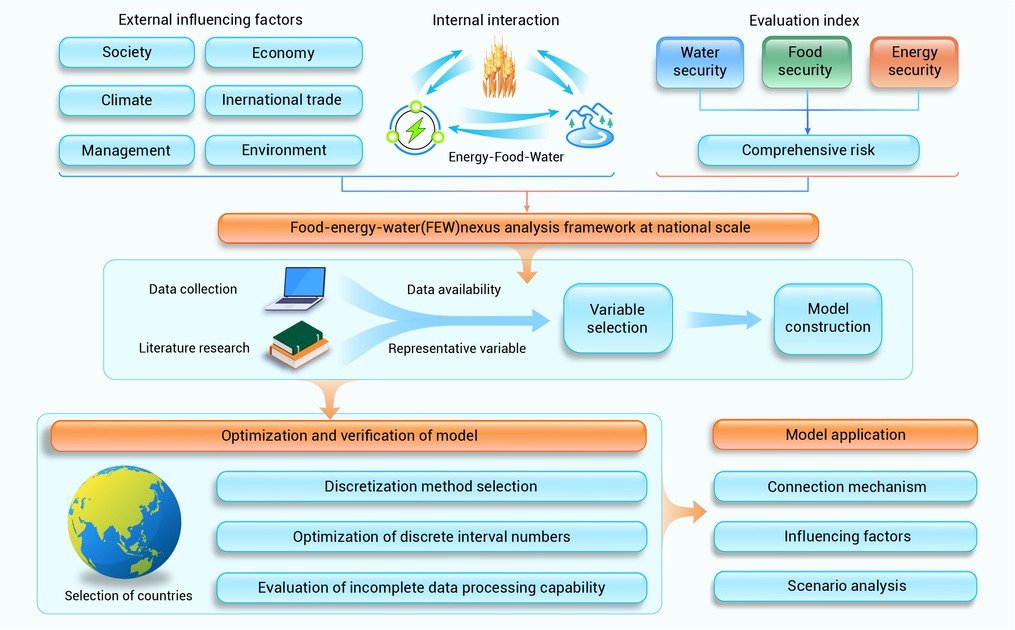
Figure 1.
The flowchart of this study.
-
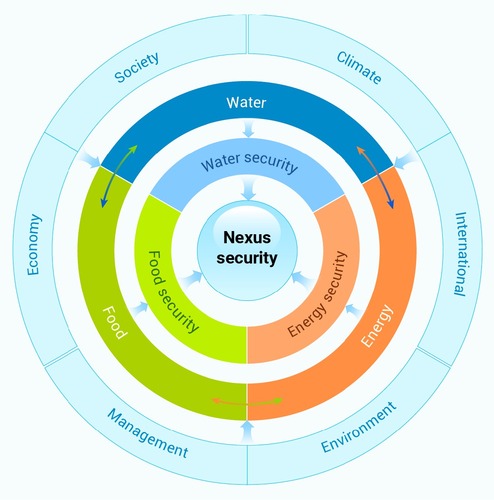
Figure 2.
The FEW nexus analysis framework at national scale International means international trade.
-
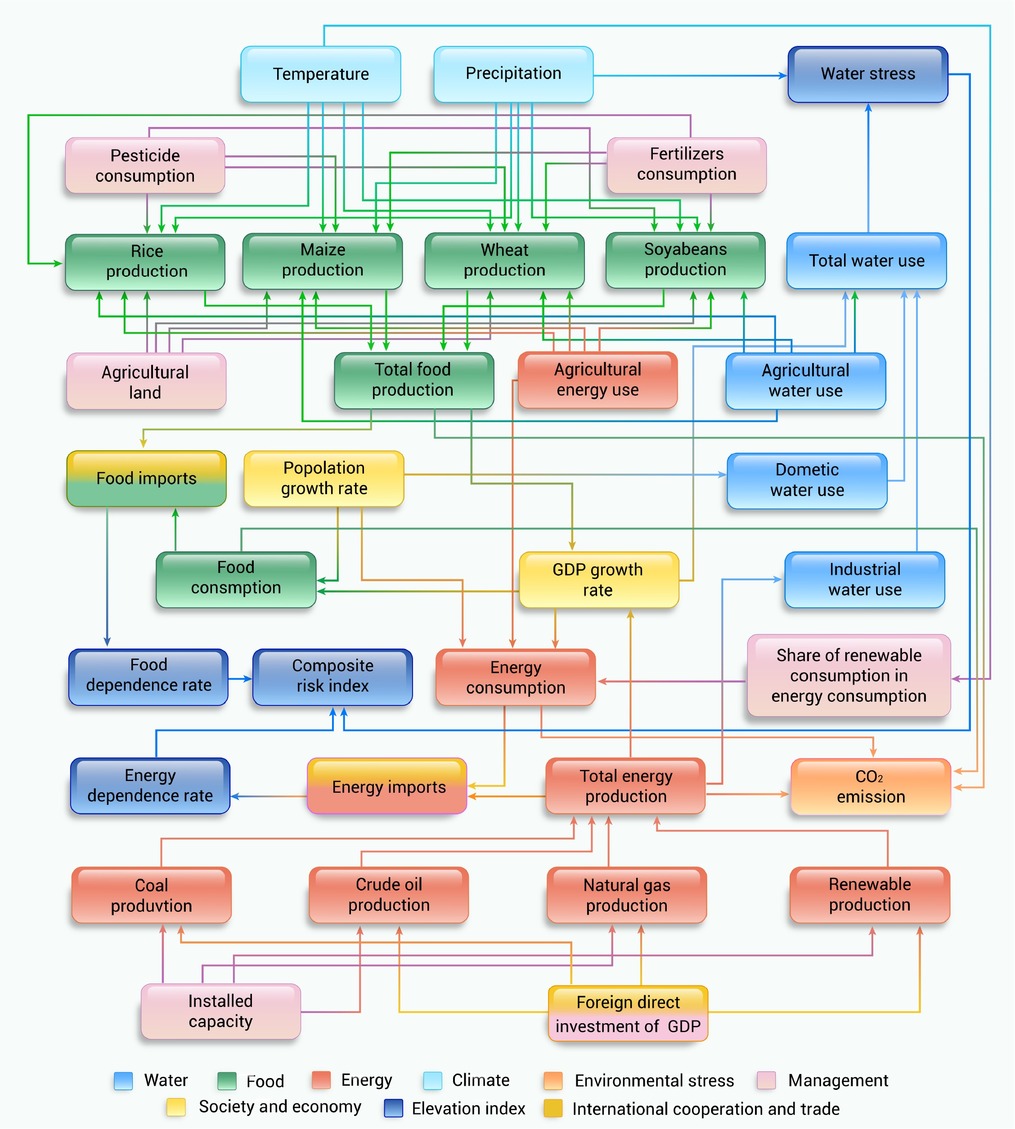
Figure 3.
Bayesian network structure of the FEW nexus analysis model.
-
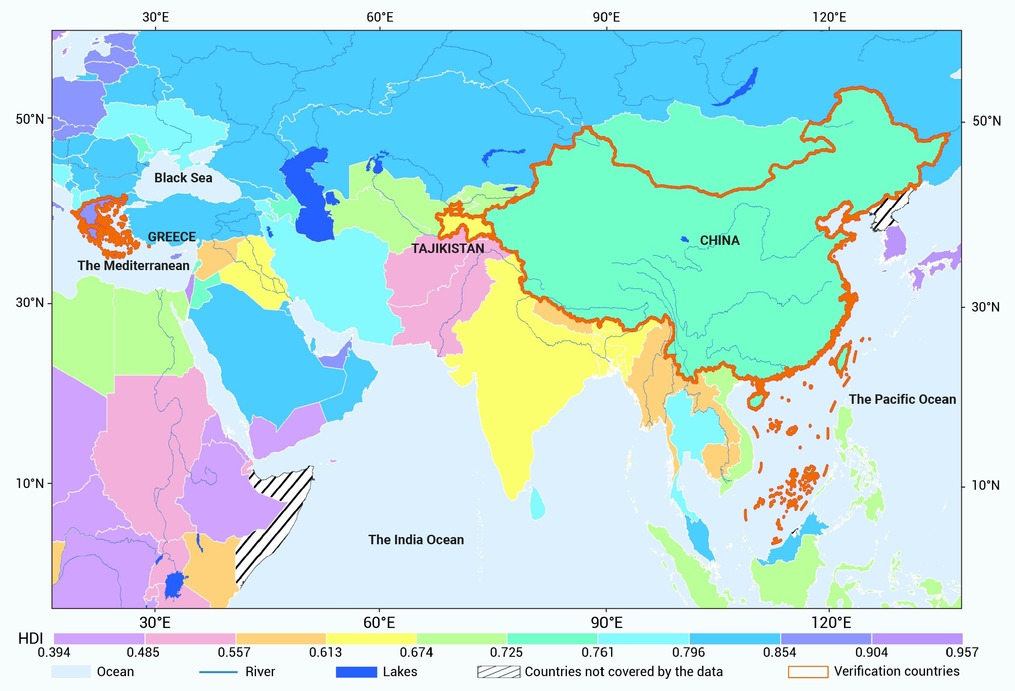
Figure 4.
Location of the three selected countries for verification.
-
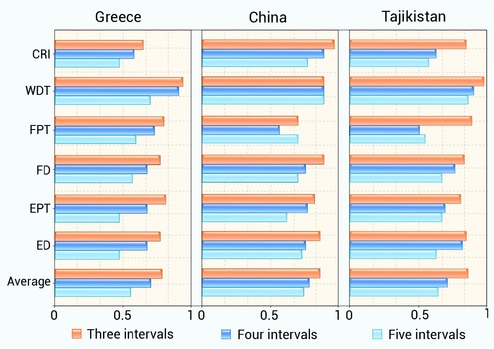
Figure 5.
The accuracy of model with different discretization intervals
-
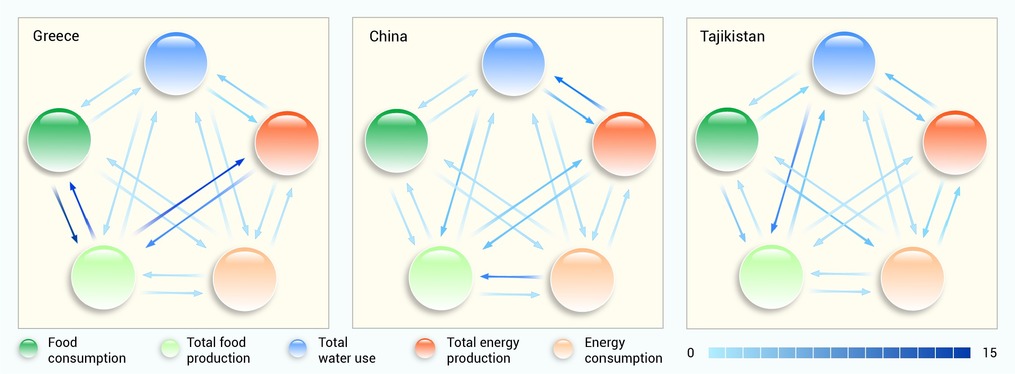
Figure 6.
Connection mechanism of food, energy, and water systems
-
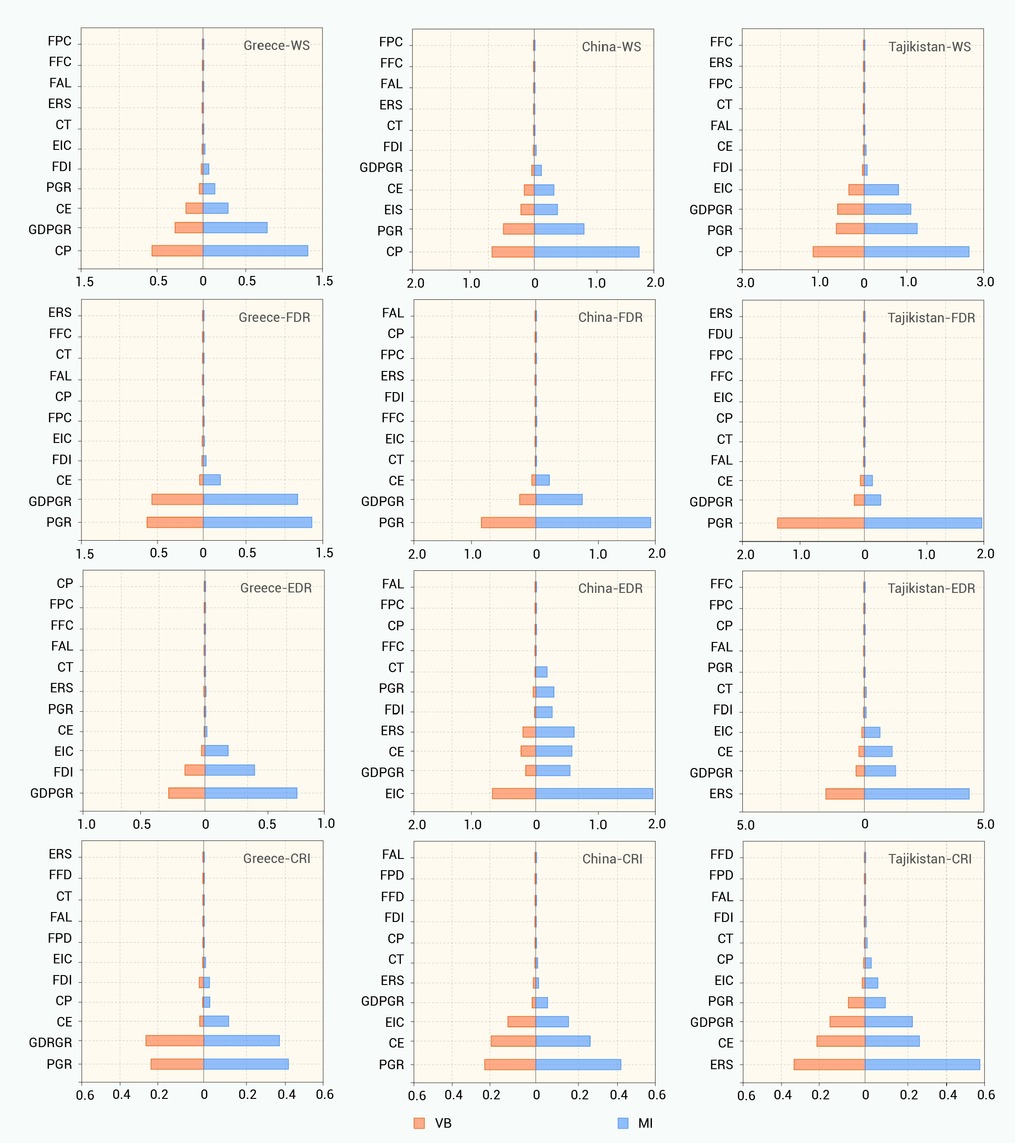
Figure 7.
Influencing factors of FEW nexus security in different countries
