
The trade-offs among fungal guilds are associated with soil organic carbon dynamics in alpine ecosystems
-
GRAPHICAL ABSTRACT
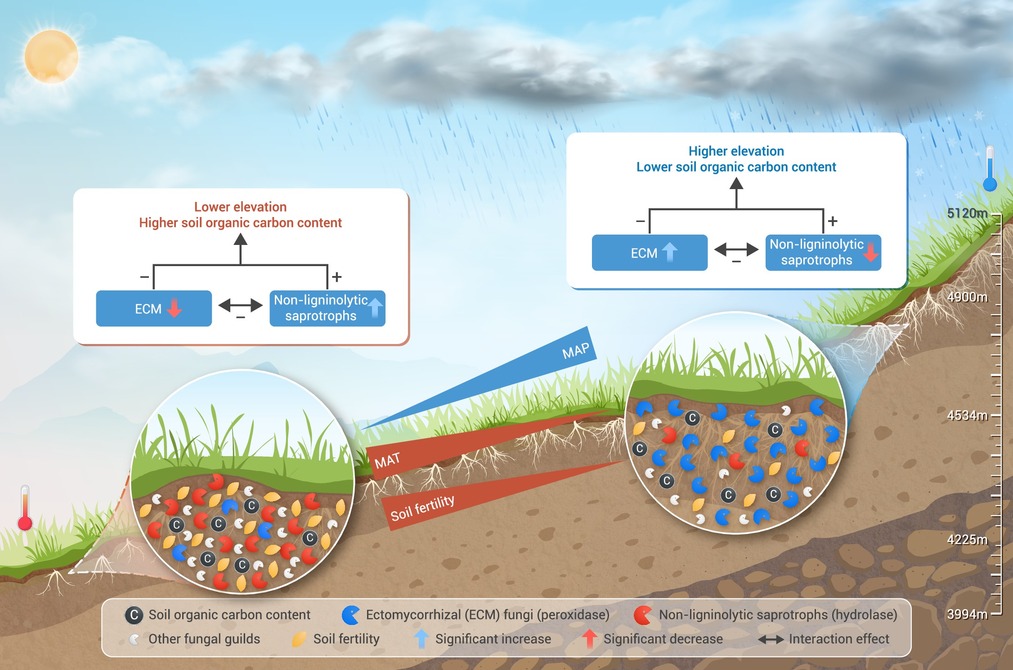
 DownLoad:
Full size image
DownLoad:
Full size image
-
PUBLIC SUMMARY
-
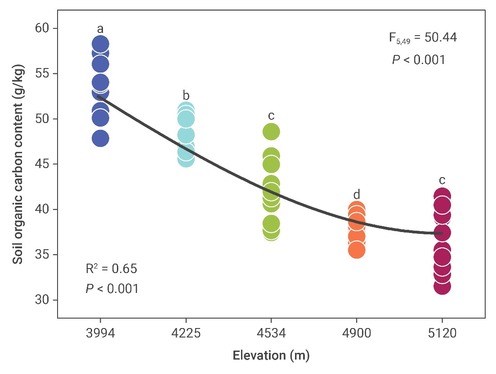
Soil organic carbon (SOC) decreases by 28% along the 3,994–5,120 m alpine gradient.
This decline is linked to trade-offs between ectomycorrhizal fungi and non-ligninolytic saprotrophs.
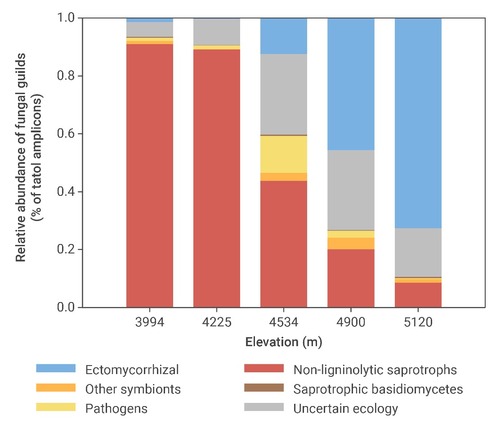
At higher elevations, ectomycorrhizal fungi dominate, linked to peroxidase activity and SOC turnover.
SOC fate is linked to trade-offs between fungal guilds along elevation gradients in alpine ecosystems.
-
-
ABSTRACT
Alpine ecosystems have vast amount of soil organic carbon (SOC) and are highly sensitive to climate change. Soil fungi play a crucial role in SOC cycling as decomposers but their contribution to alpine SOC dynamics across high elevation gradients remain poorly understood. Here, we explored fungal communities and their relationships with SOC content across an elevational gradient from 3,994 to 5,120 m on the Tibetan Plateau. We found that SOC content decreased by 28.3% from low to high elevation caused by the trade-offs between ectomycorrhizal fungi and non-ligninolytic saprotrophs. Higher elevation soils, with colder, wetter conditions and lower fertility, were dominated by ectomycorrhizal fungi at the expense of non-ligninolytic saprotrophic fungal species through environmental filtering and nutrient competition. Furthermore, ectomycorrhizal fungi are positively correlated with peroxidative enzyme activities, suggesting enhanced SOC turnover. Our work provides new evidence of, and insights into, the potential role of specific fungal guild trade-offs in shaping SOC fate in fragile alpine ecosystems.-
Keywords:
- Soil carbon cycling /
- Fungal community /
- Soil nutrient /
- Ectomycorrhiza /
- Peroxidase /
- High-elevation
-

-
REFERENCES
[1] Wang Y., Xiao J., Ma Y., et al. (2023). Persistent and enhanced carbon sequestration capacity of alpine grasslands on Earth’s Third Pole. Sci. Adv. 9:eade6875. DOI:10.1126/sciadv.ade6875 [2] Chen H., Ju P.J., Zhu Q., et al. (2022). Carbon and nitrogen cycling on the Qinghai-Tibetan Plateau. Nat. Rev. Earth Environ. 3:701−716. DOI:10.1038/s43017-022-00344-2 [3] Li H., Wu Y., Liu S., et al. (2022). Decipher soil organic carbon dynamics and driving forces across China using machine learning. Glob. Change Biol. 28:3394−3410. DOI:10.1111/gcb.16154 [4] Bradford M.A., Wieder W.R., Bonan G.B., et al. (2016). Managing uncertainty in soil carbon feedbacks to climate change. Nat. Clim. Change 6:751−758. DOI:10.1038/nclimate3071 [5] García-Palacios P., Crowther T.W., Dacal M., et al. (2021). Evidence for large microbial-mediated losses of soil carbon under anthropogenic warming. Nat. Rev. Earth Environ. 2:507−517. DOI:10.1038/s43017-021-00178-4 [6] Wei D., Tao J., Wang Z., et al. (2024). Elevation-dependent pattern of net CO2 uptake across China. Nat. Commun. 15:2489. DOI:10.1038/s41467-024-46930-4 [7] Floudas D., Binder M., Riley R., et al. (2012). The Paleozoic origin of enzymatic lignin decomposition reconstructed from 31 fungal genomes. Science 336:1715−1719. DOI:10.1126/science.1221748 [8] Baldrian P. (2008). Enzymes of saprotrophic basidiomycetes. In: Boddy L., Frankland J.C., & Van West P. (eds.), British Mycological society symposium series, Vol. 28. pp:19–41. DOI: 10.1016/S0275-0287(08)80004-5. [9] Bodeker I.T., Clemmensen K.E., de Boer W., et al. (2014). Ectomycorrhizal cortinarius species participate in enzymatic oxidation of humus in northern forest ecosystems. New Phytol. 203:245−256. DOI:10.1111/nph.12791 [10] Shigyo N. and Hirao T. (2021). Saprotrophic and ectomycorrhizal fungi exhibit contrasting richness patterns along elevational gradients in cool-temperate montane forests. Fungal Ecol. 50:101036. DOI:10.1016/j.funeco.2020.101036 [11] Kyaschenko J., Clemmensen K.E., Karltun E., et al. (2017). Below-ground organic matter accumulation along a boreal forest fertility gradient relates to guild interaction within fungal communities. Ecol. Lett. 20:1546−1555. DOI:10.1111/ele.12862 [12] Gadgil R.L.G. and Gadgil P.D. (1975). Suppression of litter decomposition by mycorrhizal roots of Pinus radiata. N. Z. J. For. Sci. 5:33−41. [13] Branco S., Schauster A., Liao H.L., et al. (2022). Mechanisms of stress tolerance and their effects on the ecology and evolution of mycorrhizal fungi. New Phytol. 235:2158−2175. DOI:10.1111/nph.18308 [14] Argiroff W.A., Zak D.R., Pellitier P.T., et al. (2022). Decay by ectomycorrhizal fungi couples soil organic matter to nitrogen availability. Ecol. Lett. 25:391−404. DOI:10.1111/ele.13923 [15] Lindahl B.D., Kyaschenko J., Varenius K., et al. (2021). A group of ectomycorrhizal fungi restricts organic matter accumulation in boreal forest. Ecol. Lett. 24:1341−1351. DOI:10.1111/ele.13746 [16] Shi X., Yu D., Warner E., et al. (2004). Soil database of 1:1,000,000 digital soil survey and reference system of the Chinese genetic soil classification system. Soil Surv. Horiz. 45:129−136. DOI:10.2136/sh2004.4.0129 [17] Ghannoum M.A., Jurevic R.J., Mukherjee P.K., et al. (2010). Characterization of the oral fungal microbiome (mycobiome) in healthy individuals. PLoS Pathog. 6:e1000713. DOI:10.1371/journal.ppat.1000713 [18] Nguyen N.H., Song Z.W., Bates S.T., et al. (2016). FUNGuild: An open annotation tool for parsing fungal community datasets by ecological guild. Fungal Ecol. 20:241−248. DOI:10.1016/j.funeco.2015.06.006 [19] Bodeker I.T.M., Nygren C.M.R., Taylor A.F.S., et al. (2009). Class II peroxidase-encoding genes are present in a phylogenetically wide range of ectomycorrhizal fungi. ISME J. 3:1387−1395. DOI:10.1038/ismej.2009.77 [20] Nagy L.G., Riley R., Tritt A., et al. (2016). Comparative genomics of early-diverging mushroom-forming fungi provides insights into the origins of lignocellulose decay capabilities. Mol. Biol. Evol. 33:959−970. DOI:10.1093/molbev/msv337 [21] Lombard V., Ramulu H.G., Drula E., et al. (2014). The carbohydrate-active enzymes database (CAZy) in 2013. Nucleic. Acids. Res. 42:D490−D495. DOI:10.1093/nar/gkt1178 [22] Smith S.E. and Read D.J. (2010). Mycorrhizal symbiosis.DOI:10.1016/B978-0-12-370526-6.X5001-6 [23] Seitzman B.H., Ouimette A., Mixon R.L., et al. (2011). Conservation of biotrophy in Hygrophoraceae inferred from combined stable isotope and phylogenetic analyses. Mycologia 103:280−290. DOI:10.3852/10-195 [24] Martino E., Morin E., Grelet G.A., et al. (2018). Comparative genomics and transcriptomics depict ericoid mycorrhizal fungi as versatile saprotrophs and plant mutualists. New Phytol. 217:1213−1229. DOI:10.1111/nph.14974 [25] Breiman L. (2001). Random forests. Mach. Learn. 45:5−32. DOI:10.1023/A:1010933404324 [26] Baker M.E. and King R.S. (2010). A new method for detecting and interpreting biodiversity and ecological community thresholds. Methods Ecol. Evol. 1:25−37. DOI:10.1111/j.2041-210X.2009.00007.x [27] Oksanen J., Kindt R., Legendre P., et al. (2007). The vegan package. Community Ecol. Package 10:719. [28] Xia M.X., Talhelm A.F. and Pregitzer K.S. (2015). Fine roots are the dominant source of recalcitrant plant litter in sugar maple-dominated northern hardwood forests. New Phytol. 208:715−726. DOI:10.1111/nph.13494 [29] Sun T., Hobbie S.E., Berg B., et al. (2018). Contrasting dynamics and trait controls in first-order root compared with leaf litter decomposition. Proc. Natl. Acad. Sci. USA 115:10392−10397. DOI:10.1073/pnas.1716595115 [30] Zheng H.P., Yang T.J., Bao Y.Z., et al. (2021). Network analysis and subsequent culturing reveal keystone taxa involved in microbial litter decomposition dynamics. Soil Biol. Biochem. 157:108230. DOI:10.1016/j.soilbio.2021.108230 [31] Baldrian P. (2006). Fungal laccases–occurrence and properties. FEMS Microbiol. Rev. 30:215−242. DOI:10.1111/j.1574-4976.2005.00010.x [32] Sinsabaugh R.L. and Follstad Shah J.J. (2012). Ecoenzymatic stoichiometry and ecological theory. Annu. Rev. Ecol. Evol. Syst. 43:313−343. DOI:10.1146/annurev-ecolsys-071112-124414 [33] Mayer M., Matthews B., Sanden H., et al. (2023). Soil fertility determines whether ectomycorrhizal fungi accelerate or decelerate decomposition in a temperate forest. New Phytol. 239:325−339. DOI:10.1111/nph.18930 [34] Bogar L., Peay K., Kornfeld A., et al. (2019). Plant-mediated partner discrimination in ectomycorrhizal mutualisms. Mycorrhiza 29:97−111. DOI:10.1007/s00572-018-00879-7 [35] Tedersoo L., Bahram M. and Zobel M. (2020). How mycorrhizal associations drive plant population and community biology. Science 367:eaba1223. DOI:10.1126/science.aba1223 [36] Peay K.G., Kennedy P.G. and Talbot J.M. (2016). Dimensions of biodiversity in the Earth mycobiome. Nat. Rev. Microbiol. 14:434−447. DOI:10.1038/nrmicro.2016.59 [37] Tedersoo L. and Bahram M. (2019). Mycorrhizal types differ in ecophysiology and alter plant nutrition and soil processes. Biol. Rev. 94:1857−1880. DOI:10.1111/brv.12538 [38] Defrenne C.E., Philpott T.J., Guichon S.H.A., et al. (2019). Shifts in ectomycorrhizal fungal communities and exploration types relate to the environment and fine-root traits across interior Douglas-fir forests of western Canada. Front. Plant Sci. 10:455053. DOI:10.3389/fpls.2019.00643 [39] Dahlberg A. and Stenlid J. (1994). Size, distribution and biomass of genets in populations of Suillus bovinus (L. : Fr.) Roussel revealed by somatic incompatibility. New Phytol. 128:225−234. DOI:10.1111/j.1469-8137.1994.tb04006.x [40] Du E.Z., Terrer C., Pellegrini A.F.A., et al. (2020). Global patterns of terrestrial nitrogen and phosphorus limitation. Nat. Geosci. 13:221−226. DOI:10.1038/s41561-019-0530-4 [41] Fernandez C.W. and Kennedy P.G. (2016). Revisiting the 'Gadgil effect': Do interguild fungal interactions control carbon cycling in forest soils. New Phytol. 209:1382−1394. DOI:10.1111/nph.13648 [42] Moore J.A.M., Anthony M.A., Pec G.J., et al. (2021). Fungal community structure and function shifts with atmospheric nitrogen deposition. Glob. Change Biol. 27:1349−1364. DOI:10.1111/gcb.15444 [43] Feng X. (2022). Plant influences on soil organic carbon dynamics. Rumpel, C. (eds). Understanding and fostering soil carbon sequestration (Burleigh Dodds Science Publishing). pp:47–82. DOI:10.19103/AS.2022.0106.03 [44] Wiesmeier M., Urbanski L., Hobley E., et al. (2019). Soil organic carbon storage as a key function of soils: A review of drivers and indicators at various scales. Geoderma 333:149−162. DOI:10.1016/j.geoderma.2018.07.026 [45] Wang M., Sun X., Cao B., et al. (2023). Long-term elevated precipitation induces grassland soil carbon loss via microbe–plant–soil interplay. Glob. Change Biol. 29:5429−5444. DOI:10.1111/gcb.16811 [46] Branco S., Bi K., Liao H.L., et al. (2017). Continental-level population differentiation and environmental adaptation in the mushroom Suillus brevipes. Mol. Ecol. 26:2063−2076. DOI:10.1111/mec.13892 [47] Allsup C.M., George I. and Lankau R.A. (2023). Shifting microbial communities can enhance tree tolerance to changing climates. Science 380:835−840. DOI:10.1126/science.adf2027 [48] Zhang Z., Phillips R.P., Zhao W., et al. (2019). Mycelia-derived C contributes more to nitrogen cycling than root-derived C in ectomycorrhizal alpine forests. Funct. Ecol. 33:346−359. DOI:10.1111/1365-2435.13236 [49] Bai X.J., Zhai G.Q., Wang B.R., et al. (2024). Litter quality controls the contribution of microbial carbon to main microbial groups and soil organic carbon during its decomposition. Biol. Fertil. Soils. 60:167−181. DOI:10.1007/s00374-023-01792-8 [50] Man M.L., Pierson D., Chiu R., et al. (2022). Twenty years of litter manipulation reveals that above-ground litter quantity and quality controls soil organic matter molecular composition. Biogeochemistry 159:393−411. DOI:10.1007/s10533-022-00934-8 -
ABOUT THIS ARTICLE
Cite this article:
Meng Z., Wu Y., Chen J., et al. (2026). The trade-offs among fungal guilds are associated with soil organic carbon dynamics in alpine ecosystems. The Innovation Geoscience 4:100178. https://doi.org/10.59717/j.xinn-geo.2026.100178
Welcome!
To request copyright permission to republish or share portions of our works, please visit Copyright Clearance Center's (CCC) Marketplace website at marketplace.copyright.com.
Article Metrics
Relative Articles
Cited by
Export File
Citation
Meng Z., Wu Y., Chen J., et al. (2026). The trade-offs among fungal guilds are associated with soil organic carbon dynamics in alpine ecosystems. The Innovation Geoscience 4:100178. https://doi.org/10.59717/j.xinn-geo.2026.100178

Format
Content
-
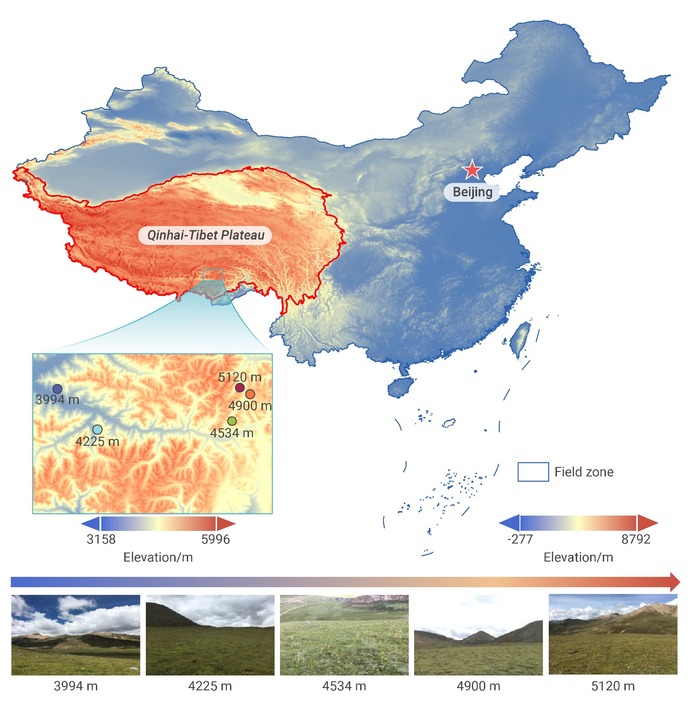
Figure 1.
Information about the sampling sites
-
Figure 2.
The changes in soil organic carbon (SOC) content along an elevational gradient
-
Figure 3.
The changes in the relative abundance of fungal guilds along an elevational gradient.
-
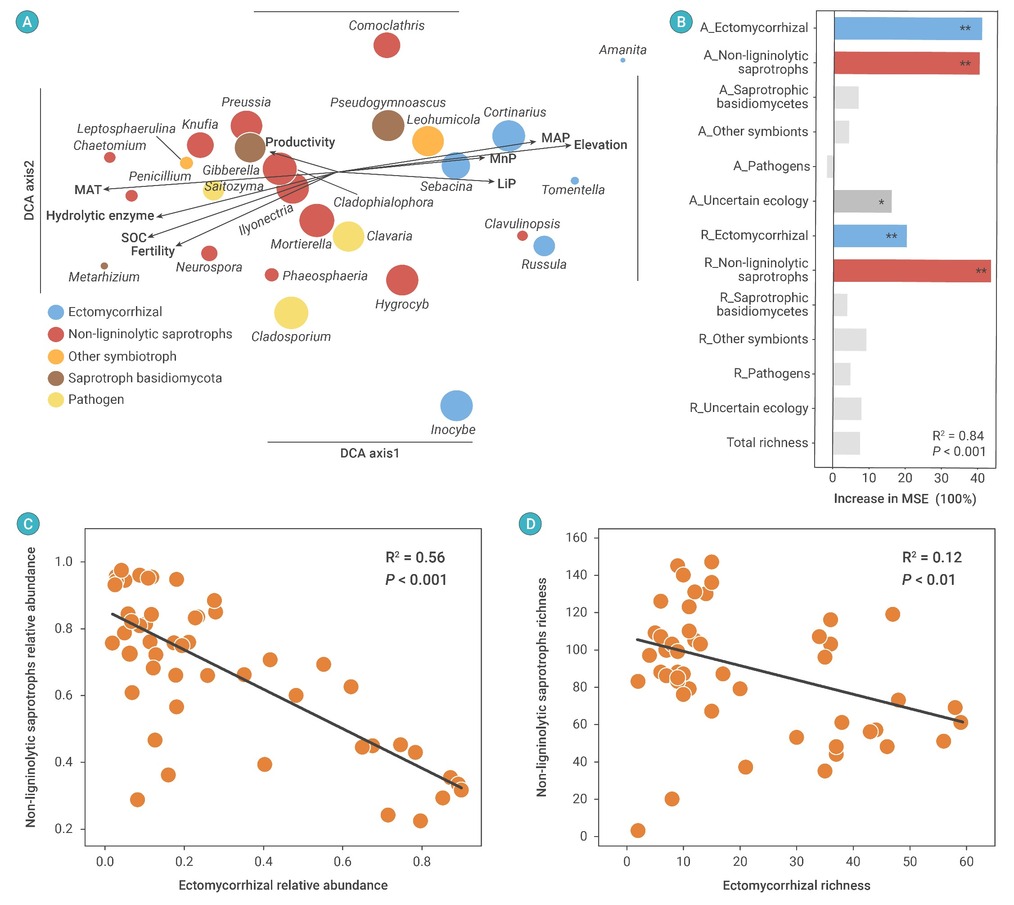
Figure 4.
Fungal community composition and its relationship with SOC content across an elevational gradient in alpine ecosystems
-
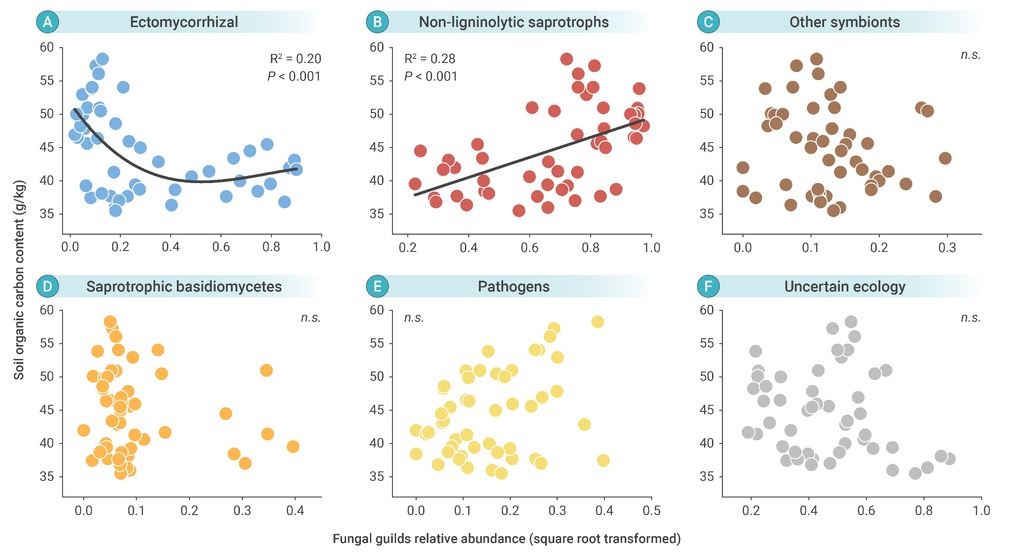
Figure 5.
Main fungal predictors of SOC content
-
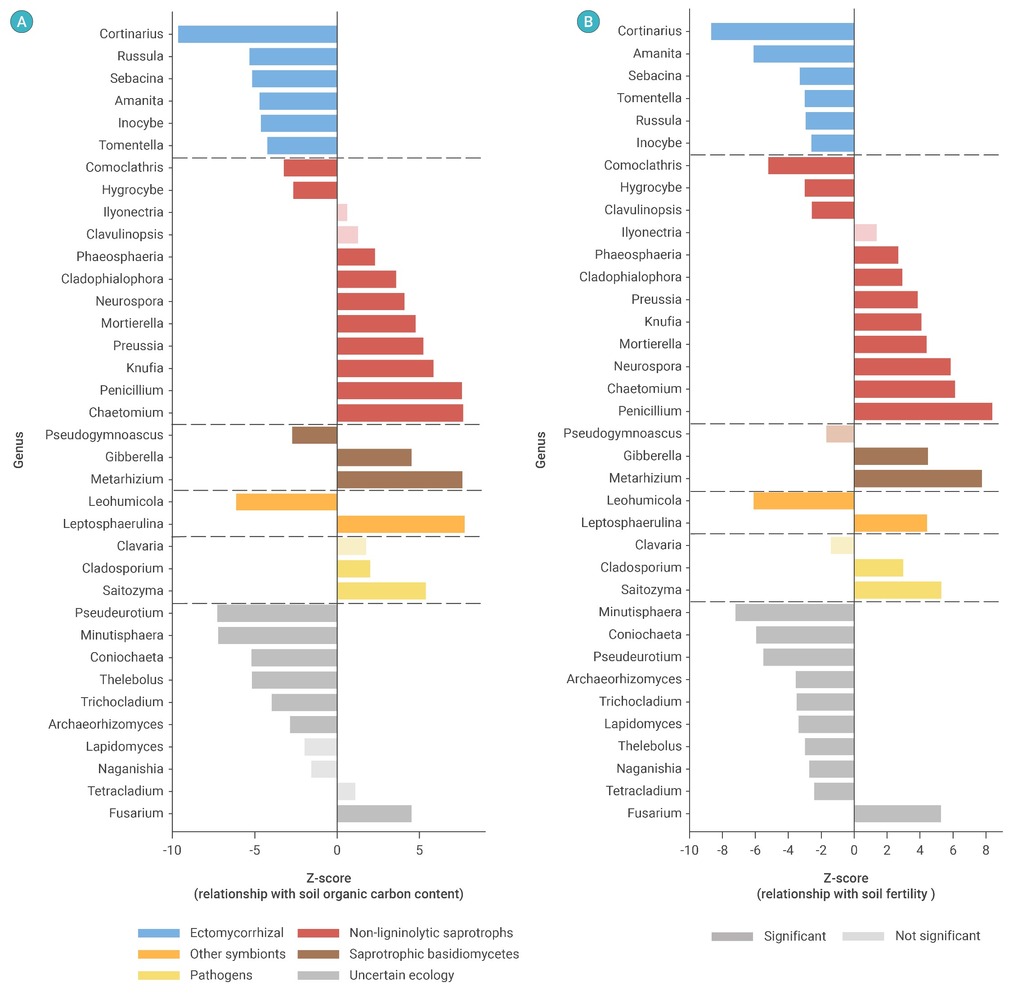
Figure 6.
Relationships between fungal genera and SOC content (A) and soil fertility (B)
-
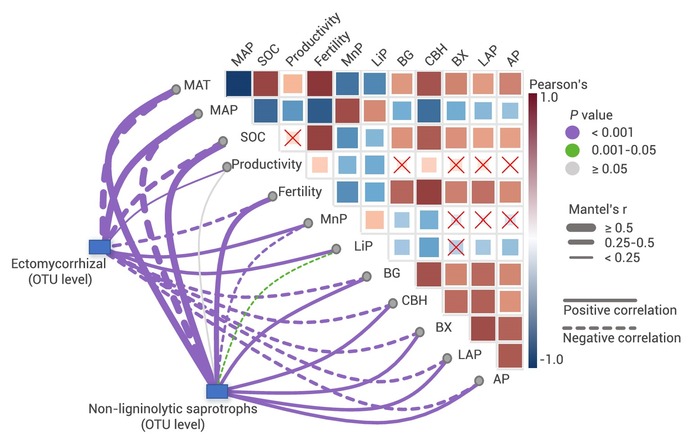
Figure 7.
The relationships between environmental factors and fungal guild composition
