
Synergistic effects of interconnectivity among coral reefs, seagrass beds, and mangroves under climate change
-
GRAPHICAL ABSTRACT
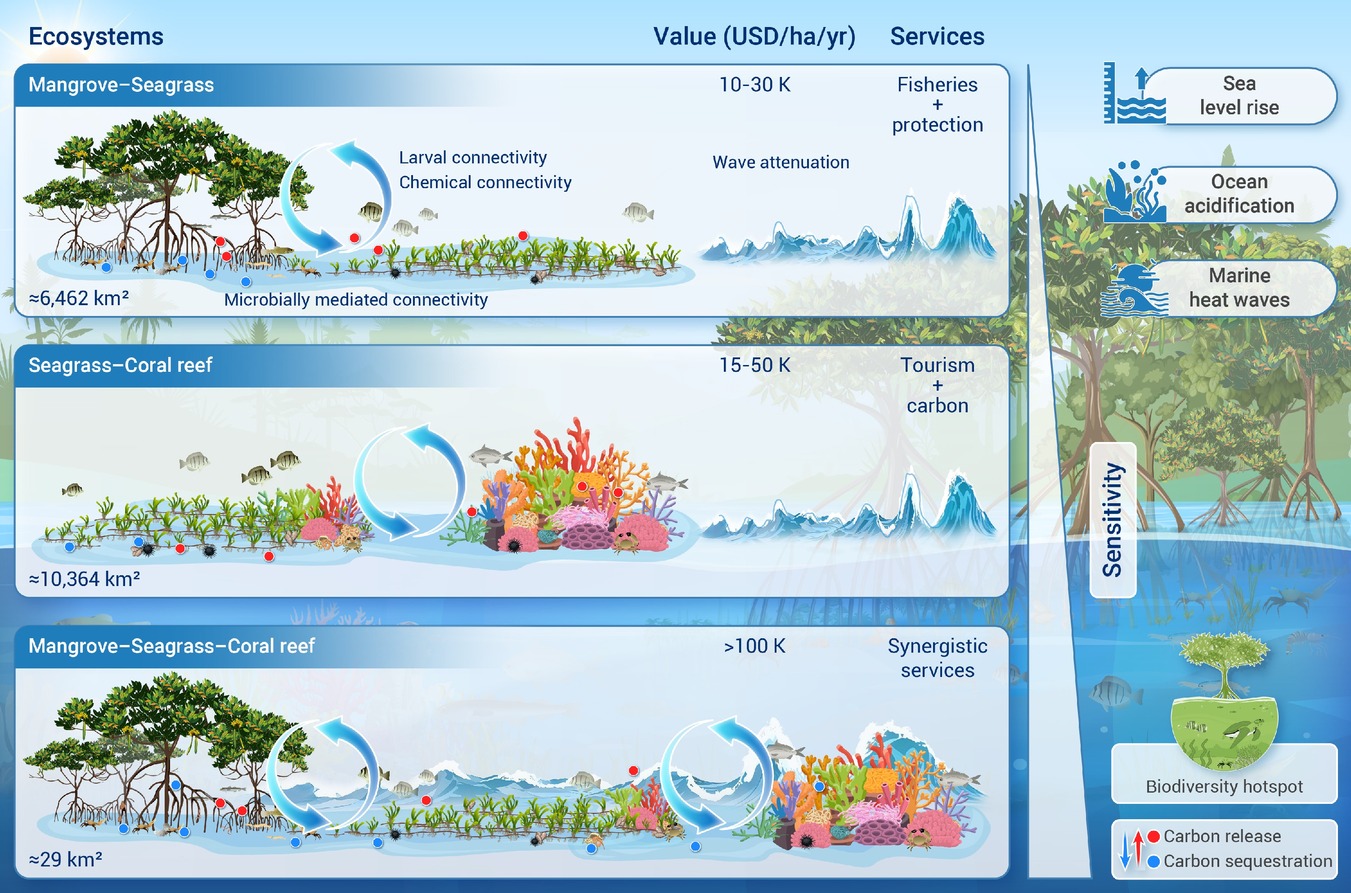
 DownLoad:
Full size image
DownLoad:
Full size image
-
PUBLIC SUMMARY
-
Coral, seagrass, and mangrove ecosystems are interconnected and enhance coastal resilience.
This connectivity supports biodiversity, protects shorelines, and helps fight against climate change.
These vital ecosystems are threatened by climate change and human activities.
We propose integrated management to conserve them as a single, connected unit.
-
-
ABSTRACT
The interconnectivity among coral reefs, seagrass ecosystems, and mangroves (CSM) forms a critical ecological continuum that sustains biodiversity, enhances resilience to environmental stressors, and supports coastal communities. This study reviews the synergistic interactions between these interconnected ecosystems under climate change, highlighting their importance in carbon sequestration, ocean acidification, shoreline protection, and biodiversity conservation. We examine how cross-ecosystem fluxes of organisms, nutrients, and energy enhance resistance and recovery to climate stressors, including ocean acidification, sea level rise, and marine heat waves. Despite their critical role, these ecosystems face significant vulnerability, and their continued decline poses a direct threat to coastal resilience and ecosystem services. The review emphasizes the necessity of maintaining habitat connectivity, which is integral to species survival and ecosystem function. A comprehensive conservation strategy is proposed, advocating for a polycentric governance model to address the complexities of CSM interactions, incorporating multiple stakeholders to promote sustainable management and policy coordination. Critical research gaps are identified, particularly in understanding the underappreciated role of seagrasses in marine conservation and the poorly understood spillover effects between CSM ecosystems. The study calls for a unified, evidence-based approach to coastal management that enhances the resilience of CSM ecosystems, mitigates climate impacts, and ensures the long-term sustainability of these invaluable systems for future generations.-
Keywords:
- Connectivity /
- climate change /
- coastal ecosystem /
- conservation /
- biodiversity /
- Coral Seagrass Mangrove (CSM).
-

-
REFERENCES
[1] Gedan K. B., Kirwan M. L., Wolanski E., et al. (2011). The present and future role of coastal wetland vegetation in protecting shorelines: Answering recent challenges to the paradigm. Clim. Change. 106:7−29. DOI:10.1007/s10584-010-0003-7 [2] Nagelkerken I., Blaber S. J. M., Bouillon S., et al. (2008). The habitat function of mangroves for terrestrial and marine fauna: A review. Aquat. Bot. 89:155−185. DOI:10.1016/j.aquabot.2007.12.007 [3] de Boer W. F. (2007). Seagrass–sediment interactions, positive feedbacks and critical thresholds for occurrence: A review. Hydrobiologia. 591:5−24. DOI:10.1007/s10750-007-0780-9 [4] Golbuu Y., Fabricius K., Victor S., et al. (2008). Gradients in coral reef communities exposed to muddy river discharge in Pohnpei, Micronesia. Estuarine, Estuar, Coast. Shelf Sci. 76:14−20. DOI:10.1016/j.ecss.2007.06.005 [5] Wang F., Liu J., Qin G., et al. (2023). Coastal blue carbon in China as a nature-based solution toward carbon neutrality. The Innovation. 4:100481. DOI:10.1016/j.xinn.2023.100481 [6] Hu Y., Zhang Z., Sun S., et al. (2024). Toward the generation of pure coral genomes with experimental and bioinformatic improvements. The Innovation. 5:100643. DOI:10.1016/j.xinn.2024.100643 [7] Sandilyan S. and Kathiresan K. (2012). Mangrove conservation: A global perspective. Biodivers. Conserv. 21:3523−3542. DOI:10.1007/s10531-012-0388-x [8] Goreau T. and Hilbertz W. (2005). Marine ecosystem restoration: Costs and benefits for coral reefs. World Res. Rev. 17:375−409. https://globalcoral.org [9] Earp H. S., Prinz N., Cziesielski M. J., et al. (2018). For a world without boundaries: Connectivity between marine tropical ecosystems in times of change. In S. Jungblut, V. Liebich, and M. Bode, eds. YOUMARES 8 – Oceans across boundaries: Learning from each other. Springer, Cham. DOI:10.1007/978-3-319-93284-2_9 [10] Guannel G., Arkema K., Ruggiero P., et al. (2016). The power of three: Coral reefs, seagrasses and mangroves protect coastal regions and increase their resilience. PLoS ONE 11:0158094. DOI:10.1371/journal.pone.0158094 [11] Hasim H. (2021). Mangrove ecosystem, seagrass, coral reef: Its role in self-purification and carrying capacity in coastal areas. Int. J. Pap. Adv. Sci. Rev. 2:37−49. DOI:10.47667/ijpasr.v2i1.93 [12] Wang F., Harindintwali J. D., Wei K., et al. (2023). Climate change: Strategies for mitigation and adaptation. The Innovation. 1:100015. DOI:10.59717/j.xinn-geo.2023.100015 [13] Eddy T. D., Lam V. W. Y., Reygondeau G., et al. (2021). Global decline in capacity of coral reefs to provide ecosystem services. One Earth 4:1278−1285. DOI:10.1016/j.oneear.2021.08.016 [14] Fourqurean J. W., Duarte C. M., Kennedy H., et al. (2012). Seagrass ecosystems as a globally significant carbon stock. Nat. Geosci. 5:505−509. DOI:10.1038/ngeo1477 [15] Nagelkerken I., Sheaves M., Baker R., et al. (2015). The seascape nursery: A novel spatial approach to identify and manage nurseries for coastal marine fauna. Fish Fish. 16:362−371. DOI:10.1111/faf.12057 [16] Harman R. R. and Kim T. N. (2024). Differentiating spillover: An examination of cross-habitat movement in ecology. Proc. R. Soc. B. 291:20232707. DOI:10.1098/rspb.2023.2707 [17] Kerr J. (2017). Introduction to energy and climate: Developing a sustainable environment. CRC Press, Boca Raton, FL. DOI:10.1201/9781315151885 [18] Li Y., Fu C., Hu J., et al. (2023). Soil carbon, nitrogen, and phosphorus stoichiometry and fractions in blue carbon ecosystems: Implications for carbon accumulation in allochthonous-dominated habitats. Environ. Sci. Technol. 57:5913−5923. DOI:10.1021/acs.est.3c00012 [19] Jia M., Wang Z., Mao D., et al. (2023). Mapping global distribution of mangrove forests at 10-m resolution. Sci. Bull. 68:1306−1316. DOI:10.1016/j.scib.2023.05.004 [20] Green A., Chadwick M. A. and Jones P. J. S. (2018). Variability of UK seagrass sediment carbon: Implications for blue carbon estimates and marine conservation management. PLoS ONE 13:e0204431. DOI:10.1371/journal.pone.0204431 [21] Koch M., Bowes G., Ross C., et al. (2013). Climate change and ocean acidification effects on seagrasses and marine macroalgae. Glob. Change Biol. 19:103−132. DOI:10.1111/j.1365-2486.2012.02791.x [22] Duarte C. M., Losada I. J., Hendriks I. E., et al. (2013). The role of coastal plant communities for climate change mitigation and adaptation. Nat. Clim. Change. 3:961−968. DOI:10.1038/nclimate1970 [23] Valiela I., Bowen J. L. and York J. K. (2001). Mangrove forests: One of the world's threatened major tropical environments: At least 35% of the area of mangrove forests has been lost in the past two decades, losses that exceed those for tropical rain forests and coral reefs, two other well-known threatened environments. Bioscience 51:807−815. DOI:10.1641/0006-3568(2001)051[0807:MFOOTW]2.0.CO;2 [24] Asplund M. E., Dahl M., Ismail R. O., et al. (2021). Dynamics and fate of blue carbon in a mangrove–seagrass seascape: influence of landscape configuration and land-use change. Landsc. Ecol. 36:1489−1509. DOI:10.1007/s10980-021-01216-8 [25] de los Santos C. B. (2020). Out of the blue: The value of seagrasses to the environment and to people. In Climate Change and Law Collection. Brill. https:// primarysources. brillonline.com;cccc0252202002520978 [26] Spalding M., Burke L., Hutchison J., et al. (2014). Attaining Aichi target 11: How well are marine ecosystem services covered by protected areas. Discussion paper for the World Parks Congress, Sydney. https://www.conservationgateway.org [27] Malhi Y., Franklin J., Seddon N., et al. (2020). Climate change and ecosystems: Threats, opportunities and solutions. Society B: Philos. Trans. of the R. Soc. B: Bio.Sci. 375:20190104. DOI:10.1098/rstb.2019.0104 [28] Barbier E. B. (2007). Valuing ecosystem services as productive inputs. Econ. Policy 22:178−229. DOI:10.1111/j.1468-0327.2007.00174.x [29] Cesar H., Burke L.and Pet-Soede L. (2003). The economics of worldwide coral reef degradation. Cesar environmental economics consulting (CEEC) https://www.researchgate.net/publication/272791623 [30] Costanza R., de Groot R., Sutton P., et al. (2014). Changes in the global value of ecosystem services. Glob. Environ. Change 26:152−158. DOI:10.1016/j.gloenvcha.2014.04.002 [31] Spalding M., Burke L., Wood S. A., et al. (2017). Mapping the global value and distribution of coral reef tourism. Mar. Policy 82:104−113. DOI:10.1016/j.marpol.2017.05.014 [32] White A. T., Vogt H. P. and Arin T. (2000). Philippine coral reefs under threat: The economic losses caused by reef destruction. Mar. Pollut. Bull. 40:598−605. DOI:10.1016/S0025-326X(00)00022-9 [33] McArthur L. C. and Boland J. W. (2006). The economic contribution of seagrass to secondary production in South Australia. Ecol. Model. 196:163−172. DOI:10.1016/j.ecolmodel.2006.02.030 [34] Worm B., Barbier E. B., Beaumont N., et al. (2006). Impacts of biodiversity loss on ocean ecosystem services. Science 314:787−790. DOI:10.1126/science.1132294 [35] Orth R. J., Carruthers T. J. B., Dennison W. C., et al. (2006). A global crisis for seagrass ecosystems. Bioscience 56:987−996. DOI:10.1641/0006-3568(2006)56[987:AGCFSE]2.0.CO;2 [36] Brown C., Corcoran E. and Herkenrath P. (2006). Marine and coastal ecosystems and human well-being: A synthesis report based on the findings of the Millennium Ecosystem Assessment (UNEP). https://www.biodiversitylibrary.org. [37] Lee S. Y., Hamilton S., Barbier E. B., et al. (2019). Better restoration policies are needed to conserve mangrove ecosystems. Nat. Ecol. Evol. 3:870−872. DOI:10.1038/s41559-019-0861-y [38] Beck M. W., Losada I. J., Menéndez P., et al. (2018). The global flood protection savings provided by coral reefs. Nat. Commun. 9:2186. DOI:10.1038/s41467-018-04568-z [39] Howard J., Sutton-Grier A. E., Smart L. S., et al. (2023). Blue carbon pathways for climate mitigation: Known, emerging and unlikely. Mar. Policy. 156:105788. DOI: 10.1016/ j.marpol. 2023.105788. DOI:10.1016/j.marpol.2023.105788 [40] Duarte C. M., Middelburg J. J. and Caraco N. (2005). Major role of marine vegetation on the oceanic carbon cycle. Biogeosciences 2:1−8. DOI:10.5194/bg-2-1-2005 [41] Nellemann C., Corcoran E., Duarte C., et al. (2009). Blue carbon: The role of healthy oceans in binding carbon. A rapid response assessment. UNEP/Earthprint, pp:1–80. https://www.grida.no/publications/145 [42] Macreadie P. I., Costa M. D. P., Atwood T. B., et al. (2021). Blue carbon as a natural climate solution. Nat. Rev. Earth Environ. 2:826−839. DOI:10.1038/s43017-021-00224-1 [43] Lovelock C. E. and Duarte C. M. (2019). Dimensions of blue carbon and emerging perspectives. Biol. Lett. 15(3):20180781. DOI:10.1098/rsbl.2018.0781 [44] Farahmand S., Hilmi N. and Duarte C. M. (2025). The rise and flows of blue carbon credits advance global climate and biodiversity goals. NPJ Ocean Sustain. 4:39. DOI:10.1038/s44183-025-00141-6 [45] Alongi D. M. (2014). Carbon cycling and storage in mangrove forests. Annu. Rev. Mar. Sci. 6:195−219. DOI:10.1146/annurev-marine-010213-135020 [46] Favasuli S. (2021).'Blue carbon' gains interest in effort against greenhouse gases, but challenges remain. S&P Global Commodity Insights, pp:1–5. https://www. spglobal.com [47] Pendleton L., Donato D. C., Murray B. C., et al. (2012). Estimating global “blue carbon” emissions from conversion and degradation of vegetated coastal ecosystems. PLoS One. 7:e43542. DOI:10.1371/journal.pone.0043542 [48] Barbier E. B. (2017). Marine ecosystem services. Curr. Biol. 27:R507−R510. DOI:10.1016/j.cub.2017.03.020 [49] Duarte C. M., Marbà N., Gacia E., et al. (2010). Seagrass community metabolism: Assessing the carbon sink capacity of seagrass meadows. Glob. Biogeochem. Cycles. 24. DOI: 10.1029/2010GB003793 [50] Saintilan N., Rogers K., Mazumder D., et al. (2013). Allochthonous and autochthonous contributions to carbon accumulation and carbon store in southeastern Australian coastal wetlands. Estuar. Coast. Shelf Sci. 128:84−92. DOI:10.1016/j.ecss.2013.05.010 [51] Ware J. R., Smith S. V. and Reaka-Kudla M. L. (1992). Coral reefs: Sources or sinks of atmospheric CO2. Coral Reefs 11:127−130. DOI:10.1007/BF00255465 [52] Erez J., Reynaud S., Silverman J., et al. (2011). Coral calcification under ocean acidification and global change. In coral reefs: An ecosystem in transition, Z. Dubinsky, and N. Stambler (eds). Springer Netherlands pp: 151-176. DOI:10.1007/978-94-007-0114-4_10 [53] Tremblay P., Grover R., Maguer J. F., et al. (2012). Autotrophic carbon budget in coral tissue: A new 13C-based model of photosynthate translocation. J. Exp. Biol. 215:1384−1393. DOI:10.1242/jeb.065201 [54] Mishra A. K., Singh J. and Mishra P. P. (2021). Microplastics in polar regions: An early warning to the world's pristine ecosystem. Sci. Total Environ. 784:147149. DOI:10.1016/j.scitotenv.2021.147149 [55] Rajamohanan Pillai R., Nandini Menon N., Elavumkudi Paulose N., et al. (2024). Assessment of coral reef connectivity in improved organic carbon storage of seagrass ecosystems in Palk Bay, India. Mar. Pollut. Bull. 207:116908. DOI:10.1016/j.marpolbul.2024.116908 [56] Bertram C., Quaas M., Reusch T. B. H., et al. (2021). The blue carbon wealth of nations. Nat. Clim. Change 11:704−709. DOI:10.1038/s41558-021-01089-4 [57] Macreadie P. I., Anton A., Raven J. A., et al. (2019). The future of Blue Carbon science. Nat. Commun. 10:3998. DOI:10.1038/s41467-019-11693-w [58] Salinas C., Duarte C. M., Lavery P. S., et al. (2020). Seagrass losses since mid-20th century fuelled CO2 emissions from soil carbon stocks. Glob. Change Biol. 26:4772−4784. DOI:10.1111/gcb.15204 [59] Stankovic M., Ambo-Rappe R., Carly F., et al. (2021). Quantification of blue carbon in seagrass ecosystems of Southeast Asia and their potential for climate change mitigation. Sci. Total Environ. 783:146858. DOI:10.1016/j.scitotenv.2021.146858 [60] Frankignoulle M. and Gattuso J. P. (1993). Air-sea CO2 Exchange in coastal ecosystems. In R. Wollast, F.T. Mackenzie, and L. Chou (eds) Interactions of C, N, P and S Biogeochemical Cycles and Global Change. Springer Berlin Heidelberg. https://link.springer.com/chapter/10.1007/978-3-642-76064-8_9 [61] Röhr M. E., Holmer M., Baum J. K., et al. (2018). Blue carbon storage capacity of temperate eelgrass (Zostera marina) meadows. Glob. Biogeochem. Cycles 32:1457−1475. DOI:10.1029/2018GB005941 [62] Bergstrom E., Silva J., Martins C., et al. (2019). Seagrass can mitigate negative ocean acidification effects on calcifying algae. Sci. Rep. 9:1932. DOI:10.1038/s41598-018-35670-3 [63] Yates K. K., Rogers C. S., Herlan J. J., et al. (2014). Diverse coral communities in mangrove habitats suggest a novel refuge from climate change. Biogeosciences 11:4321−4337. DOI:10.5194/bg-11-4321-2014 [64] Camp E. F., Suggett D. J., Gendron G., et al. (2016). Mangrove and deagrass beds provide different biogeochemical services for corals threatened by climate change. Front. Mar. Sci. 3:52. DOI:10.3389/fmars.2016.00052 [65] Lohr K. E., Smith D. J., Suggett D. J., et al. (2017). Coral community structure and recruitment in seagrass meadows. Front. Mar. Sci. 4:388. DOI:10.3389/fmars.2017.00388 [66] Albert S., Saunders M. I., Roelfsema C. M., et al. (2017). Winners and losers as mangrove, coral and seagrass ecosystems respond to sea-level rise in Solomon Islands. Environ. Res. Lett. 12:094009. DOI:10.1088/1748-9326/aa7e68 [67] Talbot F. F. and Wilkinson C. C. (2001). Coral reefs, mangroves and seagrasses: A sourcebook for managers. Australian Institute of Marine Science. https:// portals.iucn.org. [68] Hilmi N., Basu R., Crisóstomo M., et al. (2023). The pressures and opportunities for coral reef preservation and restoration in the Maldives. Front. Environ. Econ. 2:1110214. DOI:10.3389/frevc.2023.1110214 [69] Giri C., Ochieng E., Tieszen L. L., et al. (2011). Status and distribution of mangrove forests of the world using earth observation satellite data. Glob. Ecol. Biogeogr. 20:154−159. DOI:10.1111/j.1466-8238.2010.00584.x [70] Short F. T., Kosten S., Morgan P. A., et al. (2016). Impacts of climate change on submerged and emergent wetland plants. Aquat. Bot. 135:3−17. DOI:10.1016/j.aquabot.2016.06.006 [71] Burt A. J., Vogt-Vincent N., Johnson H., et al. (2024). Integration of population genetics with oceanographic models reveals strong connectivity among coral reefs across Seychelles. Sci. Rep. 14:4936. DOI:10.1038/s41598-024-55459-x [72] de Fouw J., Madden C. J., Furman B. T., et al. (2024). Reduced seagrass resilience due to environmental and anthropogenic effects may lead to future die-off events in Florida Bay. Front. Mar. Sci. 11:1366939. DOI:10.3389/fmars.2024.1366939 [73] Trégarot E., D'Olivo J. P., Botelho A. Z., et al. (2024). Effects of climate change on marine coastal ecosystems – A review to guide research and management. Biol. Conserv. 289:110394. DOI:10.1016/j.biocon.2023.110394 [74] Hughes T. P., Kerry J. T., Álvarez-Noriega M., et al. (2017). Global warming and recurrent mass bleaching of corals. Nature 543:373−377. DOI:10.1038/nature21707 [75] Duarte B., Martins I., Rosa R., et al. (2018). Climate change impacts on seagrass meadows and macroalgal forests: An integrative perspective on acclimation and adaptation potential. Front. Mar. Sci. 5. DOI:10.3389/fmars.2018.00190 [76] Cecino G., Valavi R. and Treml E. A. (2021). Testing the influence of seascape connectivity on marine-based species distribution models. Front. Mar. Sci.8. DOI:10.3389/fmars.2021.766915 [77] Cohen M. C. L., Lara R. J., Cuevas E., et al. (2016). Effects of sea-level rise and climatic changes on mangroves from southwestern littoral of Puerto Rico during the middle and late Holocene. Catena 143:187−200. DOI:10.1016/j.catena.2016.03.041 [78] Du J., Xie M., Wang Y., et al. (2020). Connectivity of fish assemblages along the mangrove-seagrass-coral reef continuum in Wenchang, China. Acta Oceanol. Sin. 39:43−52. DOI:10.1007/s13131-019-1490-7 [79] Bastos R. F., Lippi D. L., Gaspar A. L. B., et al. (2022). Ontogeny drives allochthonous trophic support of snappers: Seascape connectivity along the mangrove-seagrass-coral reef continuum of a tropical marine protected area. Estuar. Coast. Shelf Sci. 264:107591. DOI:10.1016/j.ecss.2021.107591 [80] Mumby P. J. (2006). Connectivity of reef fish between mangroves and coral reefs: Algorithms for the design of marine reserves at seascape scales. Biol. Conserv. 128:215−222. DOI:10.1016/j.biocon.2005.09.042 [81] Honda K., Nakamura Y., Nakaoka M., et al. (2013). Habitat use by fishes in coral reefs, seagrass beds and mangrove habitats in the Philippines. PLoS ONE 8:e65735. DOI:10.1371/journal.pone.0065735 [82] Jones G. P., McCormick M. I., Srinivasan M., et al. (2004). Coral decline threatens fish biodiversity in marine reserves. Proc. Natl. Acad. Sci. U.S.A. 101:8251−8253. DOI:10.1073/pnas.0401277101 [83] Booth D. and Beretta G. (2002). Changes in a fish assemblage after a coral bleaching event. Mar Ecol Prog Ser. 245:205−212. DOI:10.3354/meps245205 [84] Bråthen K. A. and Lortie C. (2016). A portfolio effect of shrub canopy height on species richness in both stressful and competitive environments. Funct. Ecol. 30:60−69. DOI:10.1111/1365-2435.12458 [85] Hughes T. P., Baird A. H., Bellwood D. R., et al. (2003). Climate change, human impacts, and the resilience of coral reefs. Science. 301:929−933. DOI:10.1126/science.1085046 [86] Jaxion-Harm J., Saunders J. and Speight M. R. (2012). Distribution of fish in seagrass, mangroves and coral reefs: Life-stage dependent habitat use in Honduras. Rev. Biol. Trop. 60:683−698. DOI:10.15517/rbt.v60i2.3984 [87] Wang W., Fu H., Lee S. Y., et al. (2020). Can strict protection dtop the fecline of mangrove rcosystems in China. From Rapid Destruction to Rampant Degradation.Forests. 11:55. DOI:10.3390/f11010055 [88] van Woesik R., Golbuu Y. and Roff G. (2015). Keep up or drown: Adjustment of western Pacific coral reefs to sea-level rise in the 21st century. R. Soc. Open Sci. 2:150181. DOI:10.1098/rsos.150181 [89] Davis T. R., Harasti D., Smith S. D. A., et al. (2016). Using modelling to predict impacts of sea level rise and increased turbidity on seagrass distributions in estuarine embayments. Estuar. Coast. Shelf Sci. 181:294−301. DOI:10.1016/j.ecss.2016.09.005 [90] Martínez M. L., Intralawan A., Vázquez G., et al. (2007). The coasts of our world: Ecological, economic and social importance. Ecol. Econ. 63:254−272. DOI:10.1016/j.ecolecon.2006.10.022 [91] Stewart H. A., Kline D. I., Chapman L. J., et al. (2021). Caribbean mangrove forests act as coral refugia by reducing light stress and increasing coral richness. Coast. Mar. Ecol. 12:e03413. DOI:10.1002/ecs2.3413 [92] Kellogg C., Moyer R., Jacobsen M., et al. (2020). Identifying mangrove-coral habitats in the Florida Keys. PeerJ 8. DOI:10.7717/peerj.9776 [93] Sullivan C. R., Smyth A. R., Martin C. W., et al. (2021). How does mangrove expansion affect structure and function of adjacent seagrass meadows. Estuaries Coasts 44:453−467. DOI:10.1007/s12237-020-00879-x [94] Kelleway J. J., Cavanaugh K., Rogers K., et al. (2017). Review of the ecosystem service implications of mangrove encroachment into salt marshes. Glob Chang Biol. 23:3967−3983. DOI:10.1111/gcb.13727 [95] Kelleway J. J., Saintilan N., Macreadie P. I., et al. (2016). Seventy years of continuous encroachment substantially increases ‘blue carbon’ capacity as mangroves replace intertidal salt marshes. Glob Chang Biol. 22:1097−1109. DOI:10.1111/gcb.13158 [96] Bouillon S., Borges A. V., Castañeda-Moya E., et al. (2008). Mangrove production and carbon sinks: A revision of global budget estimates. Glob. Biogeochem. Cycles. 22. DOI:10.1029/2007GB003052 [97] Unsworth R. K. F., Collier C. J., Henderson G. M., et al. (2012). Tropical seagrass meadows modify seawater carbon chemistry: Implications for coral reefs impacted by ocean acidification. Environ. Res. Lett. 7. DOI:10.1088/1748-9326/7/2/024026 [98] Hendriks I. E., Olsen Y. S., Ramajo L., et al. (2014). Photosynthetic activity buffers ocean acidification in seagrass meadows. Biogeosciences 11:333−346. DOI:10.5194/bg-11-333-2014 [99] Ulanowicz R. E. (2004). Quantitative methods for ecological network analysis. Comput. Biol. Chem. 28:321−339. DOI:10.1016/j.compbiolchem.2004.09.001 [100] Horn S., Coll M., Asmus H., et al. (2021). Food web models reveal potential ecosystem effects of seagrass recovery in the northern Wadden Sea. Restor. Ecol. 29:13328. DOI:10.1111/rec.13328 [101] Borrett S. R. and Lau M. K. (2014). enaR: An R package for ecosystem network analysis. Methods Ecol. Evol. 5:1206−1213. DOI:10.1111/2041-210X.12282 [102] Ortiz M., Hermosillo-Núñez B. B. and Jordán F. (2020). Trophic networks and ecosystem functioning. In: Gómez, I., Huovinen, P. (eds) Antarctic Seaweeds. Springer, Cham. DOI:10.1007/978-3-030-39448-6_16 [103] Selje T., Islam R. and Heinz B. (2024). An assessment of agent-based modelling tools for community-based adaptation to climate change. Applied Sciences. Appl. Sci. 4:11264. DOI:10.3390/app142311264 [104] Bach A. (2023). Intervene or wait. A model evaluating the timing of intervention in conservation conflicts adaptive management under uncertainty. Ecol. Soc. 27:3. DOI:10.5751/ES-13341-270303 [105] Roberts J. M., Devey C. W., Biastoch A., et al. (2023). A blueprint for integrating scientific approaches and international communities to assess basin-wide ocean ecosystem status. Commun. Earth Environ. 4:12. DOI:10.1038/s43247-022-00645-w [106] Verweij M. C., Nagelkerken I., Hans I., et al. (2008). Seagrass nurseries contribute to coral reef fish populations. Limnol. Oceanogr. 53:1540−1547. DOI:10.4319/lo.2008.53.4.1540 [107] Leal Filho W., Azeiteiro U. M., Balogun A.-L., et al. (2021). The influence of ecosystems services depletion to climate change adaptation efforts in Africa. Sci. Total Environ. 779:146414. DOI:10.1016/j.scitotenv.2021.146414 [108] Bohorquez J. J., Xue G., Frankstone T., et al. (2021). China’s little-known efforts to protect its marine ecosystems safeguard some habitats but omit others. Sci. Adv. 7:1569. DOI:10.1126/sciadv.abj1569 [109] Scavo Lord K., Lesneski K. C., Bengtsson Z. A., et al. (2020). Multi-year viability of a reef coral population living on mangrove roots suggests an important role for mangroves in the broader habitat mosaic of corals. Sec. Coral Reef Research.7. DOI: 10.3389/fmars. 2020.00377 [110] Souter D., Planes S., Wicquart J., et al. (2021). Status of coral reefs of the world: 2020: Executive summary. Global Coral Reef Monitoring Network (GCRMN) and International Coral Reef Initiative (ICRI). https://bvearmb.do/handle/123456789/3190 [111] Sudo K., Quiros T. E. A. L., Prathep A., et al. (2021). Distribution, temporal change, and conservation status of tropical seagrass beds in Southeast Asia: 2000–2020. Front. Mar. Sci. 8. DOI:10.3389/fmars.2021.637722 [112] Mwikamba E. M., Githaiga M. N., Briers R. A., et al. (2024). A review of seagrass cover, status and trends in Africa. Estuaries Coasts. 47:917−934. DOI:10.1007/s12237-024-01348-5 [113] Spalding M. and Grenfell A. (1998). New estimates of global and regional coral reef areas. Coral Reefs. 8:1464. DOI:10.1007/s003380050078 [114] de Los Santos C. B., Krause-Jensen D., Alcoverro T., et al. (2019). Recent trend reversal for declining European seagrass meadows. Nat. Commun. 10:3356. DOI:10.1038/s41467-019-11340-4 [115] Erftemeijer, P. L. and Shuail, D. A.(2012). Seagrass habitats in the Arabian Gulf: Distribution, tolerance thresholds and threats. Aquat. Ecosyst. Health Manag. 15:73-83. DOI:10.1080/14634988.2012.668479 [116] Salem M. E. and Mercer D. E. (2012). The economic value of mangroves: A meta-analysis. Sustainability 4:359−383. DOI:10.3390/su4030359 [117] Ferrario F., Beck M. W., Storlazzi C. D., et al. (2014). The effectiveness of coral reefs for coastal hazard risk reduction and adaptation. Nat. Commun. 5:3794. 10.1038/ncomms4794 [118] Burke L., Reytar K., Spalding M., et al. (2011). Reefs at risk revisited. World Resources Institute, pp:1–124. https://www.wri.org/research/reefs-risk-revisited. [119] van Bochove J. W., Sullivan E., Nakamura T., et al. (2014). The importance of mangroves to people: A call to action. United Nations Environment Programme (UNEP).DOI: 10.18356/0791f9de-en [120] Roelfsema C., Kovacs E., Ortiz J. C., et al. (2018). Coral reef habitat mapping: A combination of object-based image analysis and ecological modelling. Remote Sens. Environ. 208:27-41. DOI:https://doi.org/10.1016/j.rse.2018.02.005. [121] Roelfsema C. M., Kovacs E. M., Ortiz J. C., et al. (2020). Habitat maps to enhance monitoring and management of the Great Barrier Reef. Coral Reefs. 39:1039−1054. DOI:10.1007/s00338-020-01929-3 [122] Nguyen T., Liquet B., Mengersen K., et al. (2021). Mapping of coral reefs with multispectral satellites: A review of recent papers.Remote Sens. 13:4470. DOI:10.3390/rs13214470 [123] Mcleod E., Bruton-Adams M., Förster J., et al. (2019). Lessons from the Pacific Islands – adapting to climate change by supporting social and ecological resilience. Front. Mar. Sci. 6:289. DOI:10.3389/fmars.2019.00289 [124] Sele J. P. and Mark B. M. (2024). Community-based approaches to environmental conservation: Empowering local initiatives. Green. J. Soc. Sci.14, 289-299. DOI:10.15580/gjss.2024.2.122024211 [125] Turnbull J. W., Johnston E. L., Kajlich L., et al. (2020). Quantifying local coastal stewardship reveals motivations, models and engagement strategies. Biol. Conserv. 249:108714. DOI:10.1016/j.biocon.2020.108714 [126] Cinner J. E., Huchery C., Darling E. S., et al. (2013). Evaluating social and ecological vulnerability of coral reef fisheries to climate change. PLoS One 8:74321. DOI:10.1371/journal.pone.0074321 [127] Bell-James J., Boardman T. and Foster R. (2020). Can’t see the (mangrove) forest for the trees: Trends in the legal and policy recognition of mangrove and coastal wetland ecosystem services in Australia. Ecosyst. Serv. 45:101148. DOI:10.1016/j.ecoser.2020.101148 [128] Bell-James J., Foster R., Lovelock C., et al. (2023). Identifying priorities for reform to integrate coastal wetland ecosystem services into law and policy. Environ. Sci. Policy . 142:164−172. DOI:10.1016/j.envsci.2023.02.013 [129] Tilmant J. (2000). Coral reef protected areas: A guide for management. U.S. Department of the Interior, National Park Service, Water Resources Division. https://www.doi.gov [130] Carlson R. R., Evans L. J., Foo S. A., et al. (2021). Synergistic benefits of conserving land-sea ecosystems. Glob. Ecol. Conserv. 28:01684. DOI:10.1016/j.gecco.2021.e01684 [131] Costanza R. (1999). The ecological, economic, and social importance of the oceans. Ecol. Econ. 31:199−213. DOI:10.1016/S0921-8009(99)00079-8 [132] Himes-Cornell A., Pendleton L. and Atiyah P. (2018). Valuing ecosystem services from blue forests: A systematic review of the valuation of salt marshes, sea grass beds and mangrove forests. Ecosyst. Serv. 30:36−48. DOI:10.1016/j.ecoser.2018.01.006 [133] United Nations. (2023). 2025 United Nations conference to support the implementation of sustainable development goal 14: Conserve and sustainably use the oceans, seas and marine resources for sustainable development: Draft resolution. https://sdgs.un.org/conferences/ocean2025. [134] Saenger P., Gartside D. and Funge-Smith S. (2013). A review of mangrove and seagrass ecosystems and their linkage to fisheries and fisheries management. FAO Regional Office for Asia and the Pacific (RAP Publication 2013/09), pp:1–74. https://www.fao.org. [135] Mishra A. K. and Apte D. (2020). Ecological connectivity with mangroves influences tropical seagrass population longevity and meadow traits within an island ecosystem. Mar. Ecol. Prog. Ser. 644:47−63. DOI:10.3354/meps13349 [136] Kiprono A. (2021). An assessment of the effectiveness of mangrove restoration projects along the Kenyan coast. University of Nairobi. http://erepository.uonbi.ac. ke [137] Leal M., Diazgranados M. C., Canty S., et al. (2025). Accelerating mangrove restoration: Global mangrove alliance national chapters. Copernicus meetings. One ocean science congress 2025:693. DOI:10.5194/oos2025-693 [138] Hein M. Y., Vardi T., Shaver E. C., et al. (2021). Perspectives on the use of Coral Reef restoration as a strategy to support and improve reef ecosystem services. Front. Mar. Sci. 8:618303. DOI:10.3389/fmars.2021.618303 [139] Suggett D. J., Edwards M., Cotton D., et al. (2023). An integrative framework for sustainable coral reef restoration. One Earth 6:666−681. DOI:10.1016/j.oneear.2023.05.007 [140] Stronza A. L., Hunt C. A. and Fitzgerald L. A. (2019). Ecotourism for conservation. Annu. Rev. Environ. Resour. 44:229−253. DOI:10.1146/annurev-environ-101718-033046 [141] Praptiwi R. A., Maharja C., Fortnam M., et al. (2021). Tourism-based alternative livelihoods for small island communities transitioning towards a blue economy. Sustainability. 13:6655. DOI:10.3390/su13126655 [142] Thompson B., Friess D. and Primavera J. (2017). Governance and implementation challenges for mangrove forest payments for ecosystem services (PES): Empirical evidence from The Philippines. Ecosyst. Serv. 23:146−155. DOI:10.1016/j.ecoser.2016.12.007 -
ABOUT THIS ARTICLE
Cite this article:
Mao W., Geng X., Huai Z., et al. (2026). Synergistic effects of interconnectivity among coral reefs, seagrass beds, and mangroves under climate change. The Innovation Geoscience 4:100189. https://doi.org/10.59717/j.xinn-geo.2026.100189
Welcome!
To request copyright permission to republish or share portions of our works, please visit Copyright Clearance Center's (CCC) Marketplace website at marketplace.copyright.com.
Export File
Citation
Mao W., Geng X., Huai Z., et al. (2026). Synergistic effects of interconnectivity among coral reefs, seagrass beds, and mangroves under climate change. The Innovation Geoscience 4:100189. https://doi.org/10.59717/j.xinn-geo.2026.100189

Format
Content
-
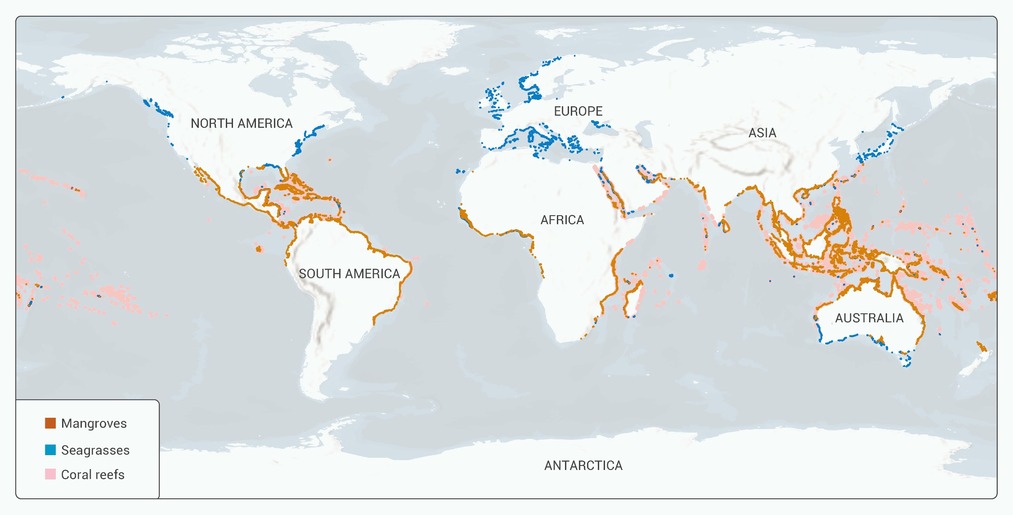
Figure 1.
Global overlap of CSM. Coral reef to seagrass: 10,364 km2, coral reef to mangrove: 5,011 km2, seagrass to mangrove:6,462 km2, three ecosystem overlap: 29 km2
-
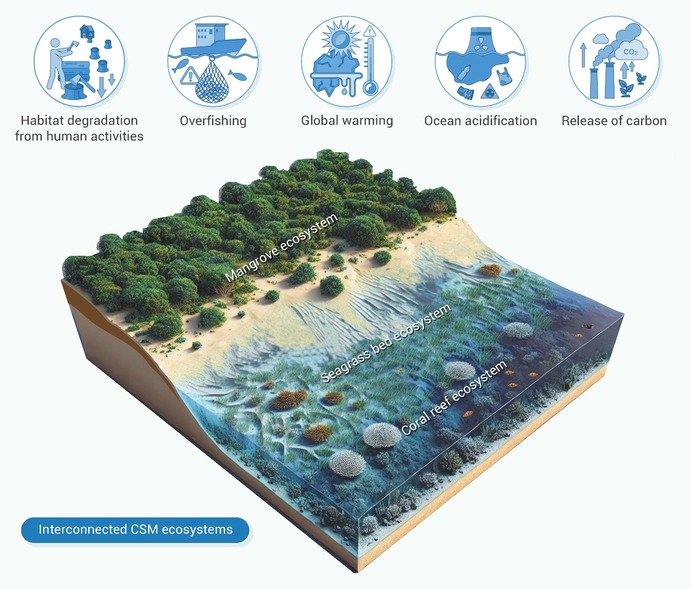
Figure 2.
Climate change and anthropogenic pressure impacts affecting CSM Connectivity.
-
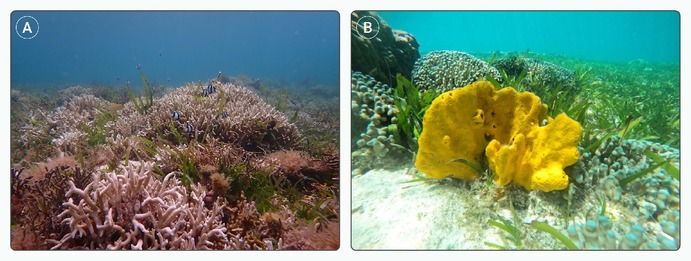
Figure 3.
Symbiotic relationship of seagrass and coral reef in South China Sea, China.
