
Increasing seasonal disparity in water availability across the Northern Hemisphere
-
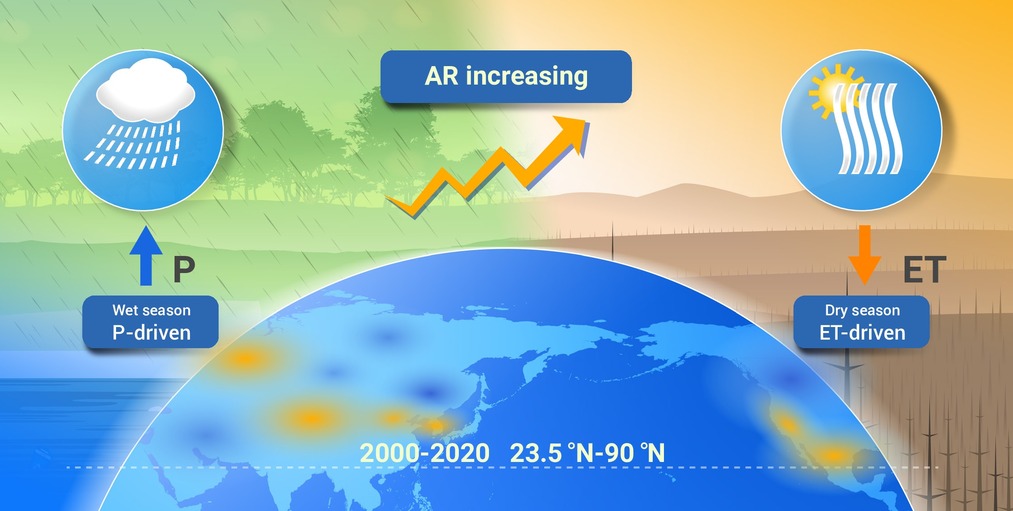
GRAPHICAL ABSTRACT
 DownLoad:
Full size image
DownLoad:
Full size image
-
PUBLIC SUMMARY
-
Seasonal disparity in land water availability have increased in recent decades.
Wet season precipitation (P)–evapotranspiration (ET) rises and dry season P–ET falls due to P and ET changes.
Most earth models can reproduce seasonal shifts in P–ET on a hemispheric scale.
-
-
ABSTRACT
The water cycle, including the seasonal variations in land water availability (precipitation minus actual evapotranspiration (P–ET)), is intensifying with climate warming. These changes in P–ET, particularly the fluctuations between wet and dry seasons, have profound implications for ecosystem functioning and services. Understanding the dynamics and drivers of these changes is crucial for effective water resource management and climate adaptation strategies. Here, we examined seasonal P–ET changes based on multiple datasets across the extratropical Northern Hemisphere over the past two decades. Our results demonstrate a substantial increasing tendency in annual range between wet and dry season P–ET. Specifically, we observed that this trend is driven by both an increase in wet season P–ET and a decrease in dry season P–ET. Further analysis indicated that the changes in wet season P–ET were primarily due to changes in P, whereas the reductions in dry season P–ET were largely attributed to changes in ET. The results reveal a pronounced intra-hemispheric heterogeneity delineating P-dominated versus ET-dominated regimes. Evaluation of 32 state-of-the-art Earth System Models shows that most models capture these seasonal trends during recent decades, although some fail to do so. Our results highlight an enhanced seasonality in hemispheric water availability, driven by distinct changes in wet and dry season dynamics.-
Keywords:
- Water availability /
- Climate change /
- Seasonality /
- Imbalance /
- Earth system models
-

-
REFERENCES
[1] Zhou S., Williams A. P., Lintner B. R., et al. (2022). Diminishing seasonality of subtropical water availability in a warmer world dominated by soil moisture-atmosphere feedbacks. Nat. Commun. 13:5756. DOI:10.1038/s41467-022-33473-9 [2] Zhang Y., Li C., Chiew F. H. S., et al. (2023). Southern Hemisphere dominates recent decline in global water availability. Science 382:579−584. DOI:10.1126/science.adh0716 [3] Seddon A. W., Macias-Fauria M., Long P. R., et al. (2016). Sensitivity of global terrestrial ecosystems to climate variability. Nature 531:229−232. DOI:10.1038/nature16986 [4] Kotz M., Levermann A. and Wenz L. (2022). The effect of rainfall changes on economic production. Nature 601:223−227. DOI:10.1038/s41586-021-04283-8 [5] Huggins X., Gleeson T., Kummu M., et al. (2022). Hotspots for social and ecological impacts from freshwater stress and storage loss. Nat. Commun. 13:439. DOI:10.1038/s41467-022-28029-w [6] Murray-Tortarolo, G., P. Friedlingstein, S. Sitch, S. I. et al. (2016). The dry season intensity as a key driver of NPP trends. Geophys. Res. Lett. 43:2632−2639. DOI:10.1002/2016GL068240 [7] Jung M., Reichstein M., Ciais P., et al. (2010). Recent decline in the global land evapotranspiration trend due to limited moisture supply. Nature 467:951−954. DOI:10.1038/nature09396 [8] Allan R. P., Barlow M., Byrne M. P., et al. (2020). Advances in understanding large-scale responses of the water cycle to climate change. Ann. N. Y. Acad. Sci. 1472:49−75. DOI:10.1111/nyas.14337 [9] Held I. M. and Soden B. J. (2006). Robust responses of the hydrological cycle to global warming. J. Clim. 19:5686−5699. DOI:10.1175/jcli3990.1 [10] Allan R. P. (2023). Amplified seasonal range in precipitation minus evaporation. Environ. Res. Lett. 18:094004. DOI:10.1088/1748-9326/acea36 [11] Intergovernmental Panel on Climate C. (2023). Climate change 2021 – The physical science basis: Working hroup I contribution to the sixth assessment report of the intergovernmental panel on climate change (Cambridge University Press). DOI: 10.1017/9781009157896 [12] Shi W., Zhao F., Wang Q., et al. (2026). Amplified global seasonality in water availability over land in recent decades. J. Clim. 39:249-259. DOI:10.1175/JCLI-D-24-0768.1 [13] Kumar S., Allan R. P., Zwiers F., et al. (2015). Revisiting trends in wetness and dryness in the presence of internal climate variability and water limitations over land. Geophys. Res. Lett. 42:867-875. DOI:10.1002/2015gl066858 [14] Chou C., Neelin J. D., Chen C.-A., et al. (2009). Evaluating the “rich-get-richer” mechanism in tropical precipitation change under global earming. J. Clim. 22:1982-2005. DOI:https://doi.org/10.1175/2008JCLI2471.1 [15] Chou C. and Lan C.-W. (2012). Changes in the annual range of precipitation under global warming. J. Clim. 25:222−235. DOI:10.1175/jcli-d-11-00097.1 [16] Liu C. and Allan R. P. (2013). Observed and simulated precipitation responses in wet and dry regions 1850–2100. Environ. Res. Lett. 8:034002. DOI:10.1088/1748-9326/8/3/034002 [17] Chou C., Chiang J. C. H., Lan C.-W., et al. (2013). Increase in the range between wet and dry season precipitation. Nat. Geosci. 6:263−267. DOI:10.1038/ngeo1744 [18] Zaitchik B. F., Rodell M., Biasutti M., et al. (2023). Wetting and drying trends under climate change. Nat. Water 1:502−513. DOI:10.1038/s44221-023-00073-w [19] Greve P., Orlowsky B., Mueller B., et al. (2014). Global assessment of trends in wetting and drying over land. Nat. Geosci. 7:716−721. DOI:10.1038/ngeo2247 [20] Byrne M. P. and O’Gorman P. A. (2015). The response of precipitation minus evapotranspiration to climate warming: Why the “wet-get-wetter, dry-get-drier” scaling does not hold over land. J. Clim. 28:8078-8092. DOI:10.1175/JCLI-D-15-0369.1 [21] Mankin J. S., Seager R., Smerdon J. E., et al. (2019). Mid-latitude freshwater availability reduced by projected vegetation responses to climate change. Nat. Geosci. 12:983−988. DOI:10.1038/s41561-019-0480-x [22] Kumar S., Lawrence D. M., Dirmeyer P. A., et al. (2014). Less reliable water availability in the 21st century climate projections. Earth's Future 2:152-160. DOI:https://doi.org/10.1002/2013EF000159. [23] Zhao F., Wang X., Wu Y., et al. (2023). Prefectures vulnerable to water scarcity are not evenly distributed across China. Commun. Earth Environ. 4:145. DOI:10.1038/s43247-023-00808-3 [24] Piao S., Ciais P., Huang Y., et al. (2010). The impacts of climate change on water resources and agriculture in China. Nature 467:43−51. DOI:10.1038/nature09364 [25] Jiao W., Wang L., Smith W. K., et al. (2021). Observed increasing water constraint on vegetation growth over the last three decades. Nat. Commun. 12:3777. DOI:10.1038/s41467-021-24016-9 [26] Harris I., Osborn T. J., Jones P., et al. (2020). Version 4 of the CRU TS monthly high-resolution gridded multivariate climate dataset. Sci. Data 7:109. DOI:10.1038/s41597-020-0453-3 [27] Schneider D. P., Deser C., Fasullo J., et al. (2013). Climate data guide spurs discovery and understanding. Trans. Amer. Geophys. Union 94:121-122. DOI:10.1002/2013EO130001 [28] Beck H. E., Wood E. F., Pan M., et al. (2019). MSWEP V2 global 3-hourly 0.1° precipitation: Methodology and quantitative assessment. Bull. Am. Meteorol. Soc. 100:473-500. DOI:10.1175/BAMS-D-17-0138.1 [29] Martens B., Miralles D. G., Lievens H., et al. (2016). GLEAM v3: Satellite-based land evaporation and root-zone soil moisture. Geosci. Model Dev. Discuss. DOI:10.5194/gmd-2016-162 [30] Mu Q., Zhao M. and Running S. W. (2011). Improvements to a MODIS global terrestrial evapotranspiration algorithm. Remote Sens. Environ. 115:1781-1800. DOI:10.1016/j.rse.2011.02.019 [31] Zhang Y., Kong D., Gan R., et al. (2019). Coupled estimation of 500 m and 8-day resolution global evapotranspiration and gross primary production in 2002–2017. Remote Sens. Environ. 222:165−182. DOI:10.1016/j.rse.2018.12.031 [32] Padrón R. S., Gudmundsson L., Decharme B., et al. (2020). Observed changes in dry-season water availability attributed to human-induced climate change. Nat. Geosci. 13:477−481. DOI:10.1038/s41561-020-0594-1 [33] Zhao F., Ma S. and Wu Y. (2021). Changes in dry-season water availability and attributions in the Yellow river basin, China. Front. Environ. Sci. 9:762137. DOI:10.3389/fenvs.2021.762137 [34] Theil H. (1992). Henri Theil’s contributions to economics and econometrics: econometric theory and methodology. Baldev Raj, Johan Koerts (eds). Springer Science & Business Media. DOI:10.1007/978-94-011-2546-8 [35] Sen P. K. (1968). Estimates of the regression coefficient based on Kendall's tau. J. Am. Stat. Assoc. 63:1379−1389. DOI:10.1080/01621459.1968.10480934 [36] Mann H. B. (1945). Nonparametric tests against trend. Econometrica, pp:245-259. DOI:10.2307/1907187 [37] Kendall M. G. (1948). Rank correlation methods. https://publ.lib.ru/ARCHIVES/Z/''Zarubejnye_statisticheskie_issledovaniya''_(seriya)/%CA%E5%ED%E4%FD%EB%20%CC._%20%D0%E0%ED%E3%EE%E2%FB%E5%20%EA%EE%F0%F0%E5%EB%FF%F6%E8%E8.(1975).pdf [38] Gillett N. P., Shiogama H., Funke B., et al. (2016). The detection and attribution model intercomparison project (DAMIP v1. 0) contribution to CMIP6. Geosci. Model Dev. 9:3685-3697. DOI:10.5194/gmd-9-3685-2016 [39] Eyring V., Bony S., Meehl G. A., et al. (2016). Overview of the coupled model intercomparison project phase 6 (CMIP6) experimental design and organization. Geosci. Model Dev. 9:1937−1958. DOI:10.5194/gmd-9-1937-2016 [40] Zhao F., Wu Y., Yin X., et al. (2022). Projected changes in population exposure to drought in China under CMIP6 forcing scenarios. Atmos. Environ. 282:119162. DOI:10.1016/j.atmosenv.2022.119162 [41] Greve P. and Seneviratne S. I. (2015). Assessment of future changes in water availability and aridity. Geophys. Res. Lett. 42:5493-5499. DOI:10.1002/2015GL064127 [42] Alduchov O. A. and Eskridge R. E. (1996). Improved Magnus form approximation of saturation vapor pressure. J. Appl. Meteorol. 35:601-609. DOI:10.1175/1520-0450(1996)035%3C0601:IMFAOS%3E2.0.CO;2 [43] Ghausi S. A. and Ghosh S. (2020). Diametrically opposite scaling of extreme precipitation and streamflow to temperature in South and Central Asia. Geophys. Res. Lett. 47. DOI:10.1029/2020gl089386 [44] Ivancic T. J. and Shaw S. B. (2016). AU.S.‐based analysis of the ability of the Clausius‐Clapeyron relationship to explain changes in extreme rainfall with changing temperature. J. Geophys. Res. Atmos. 121:3066−3078. DOI:10.1002/2015jd024288 [45] Li W., Migliavacca M., Forkel M., et al. (2022). Widespread increasing vegetation sensitivity to soil moisture. Nat. Commun. 13:3959. DOI:10.1038/s41467-022-31667-9 [46] Liu L., Ciais P., Wu M., et al. (2023). Increasingly negative tropical water-interannual CO2 growth rate coupling. Nature 618:755−760. DOI:10.1038/s41586-023-06056-x [47] Humphrey V., Zscheischler J., Ciais P., et al. (2018). Sensitivity of atmospheric CO2 growth rate to observed changes in terrestrial water storage. Nature 560:628−631. DOI:10.1038/s41586-018-0424-4 [48] Konapala G., Mishra A. K., Wada Y., et al. (2020). Climate change will affect global water availability through compounding changes in seasonal precipitation and evaporation. Nat. Commun. 11:3044. DOI:10.1038/s41467-020-16757-w [49] Zhao F., Ma S., Wu Y., et al. (2022). The role of climate change and vegetation greening on evapotranspiration variation in the Yellow River Basin, China. Agr. Forest Meteorol. 316:108842. DOI:10.1016/j.agrformet.2022.108842 [50] Zhao F., Wu Y., Yin X., et al. (2022). Toward sustainable revegetation in the Loess Plateau using coupled water and carbon management. Eng. 15:143−153. DOI:10.1016/j.eng.2020.12.017 [51] Zhou F., Bo Y., Ciais P., et al. (2020). Deceleration of China's human water use and its key drivers. Proc. Natl. Acad. Sci. USA 117:7702−7711. DOI:10.1073/pnas.1909902117 [52] Fu, J., Jian, Y., Wang, X. et al. (2023). Extreme rainfall reduces one-twelfth of China’s rice yield over the last two decades. Nat. Food 4. DOI:10.1038/s43016-023-00753-6. [53] Han J., Liu Z., Woods R., et al. (2024). Streamflow seasonality in a snow-dwindling world. Nature 629:1075−1081. DOI:10.1038/s41586-024-07299-y [54] Yao Y., Zheng C., Andrews C. B., et al. (2021). Role of groundwater in sustaining northern himalayan rivers. Geophys. Res. Lett.48: e2020GL092354. DOI:10.1029/2020gl092354 [55] Rodell M., Famiglietti J. S., Wiese D. N., et al. (2018). Emerging trends in global freshwater availability. Nature 557:651−659. DOI:10.1038/s41586-018-0123-1 [56] Zan B., Ge J., Mu M., et al. (2024). Spatiotemporal inequality in land water availability amplified by global tree restoration. Nat. Water 2:863−874. DOI:10.1038/s44221-024-00296-5 -
ABOUT THIS ARTICLE
Cite this article:
Zhao F., Shi W., Wu Y., et al. (2026). Increasing seasonal disparity in water availability across the Northern Hemisphere. The Innovation Geoscience 4:100191. https://doi.org/10.59717/j.xinn-geo.2026.100191
Welcome!
To request copyright permission to republish or share portions of our works, please visit Copyright Clearance Center's (CCC) Marketplace website at marketplace.copyright.com.
Export File
Citation
Zhao F., Shi W., Wu Y., et al. (2026). Increasing seasonal disparity in water availability across the Northern Hemisphere. The Innovation Geoscience 4:100191. https://doi.org/10.59717/j.xinn-geo.2026.100191

Format
Content
-
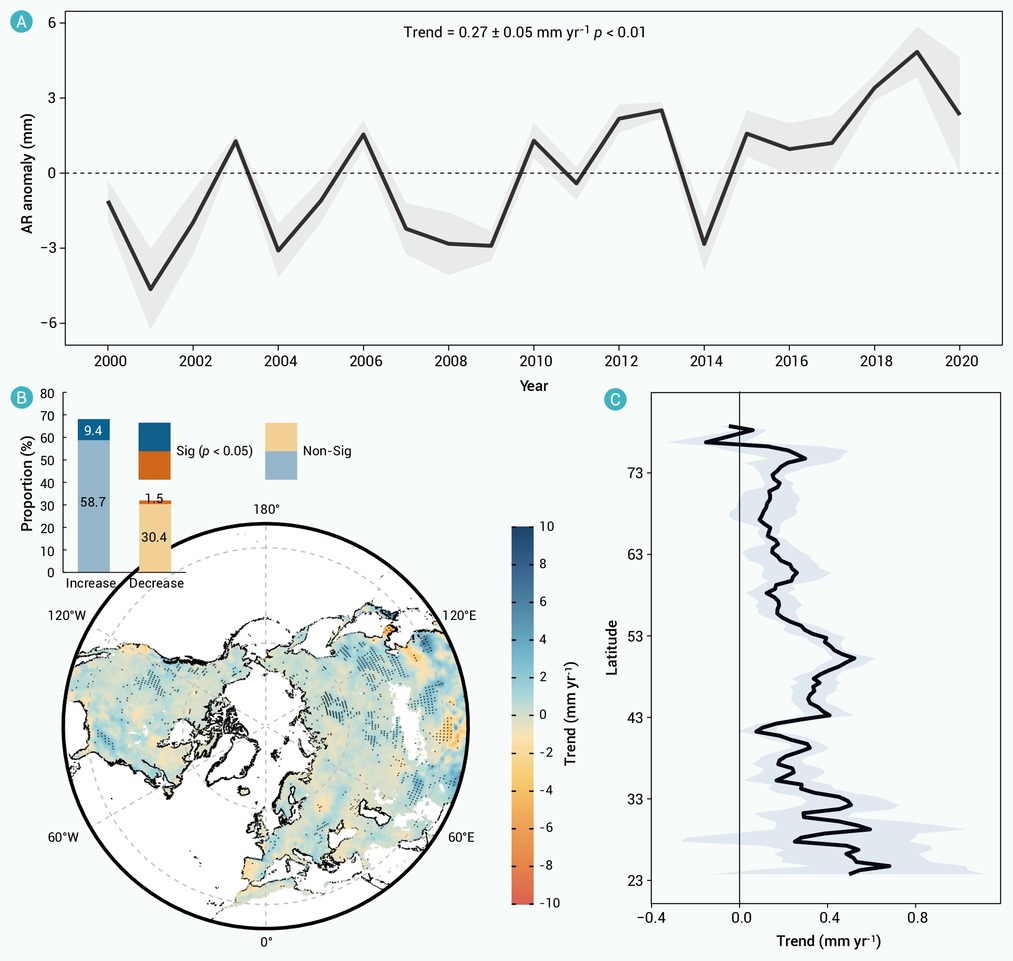
Figure 1.
Spatial and temporal changing trends of the annual range (AR) between the wet and dry season water availability in the Northern Hemisphere
-
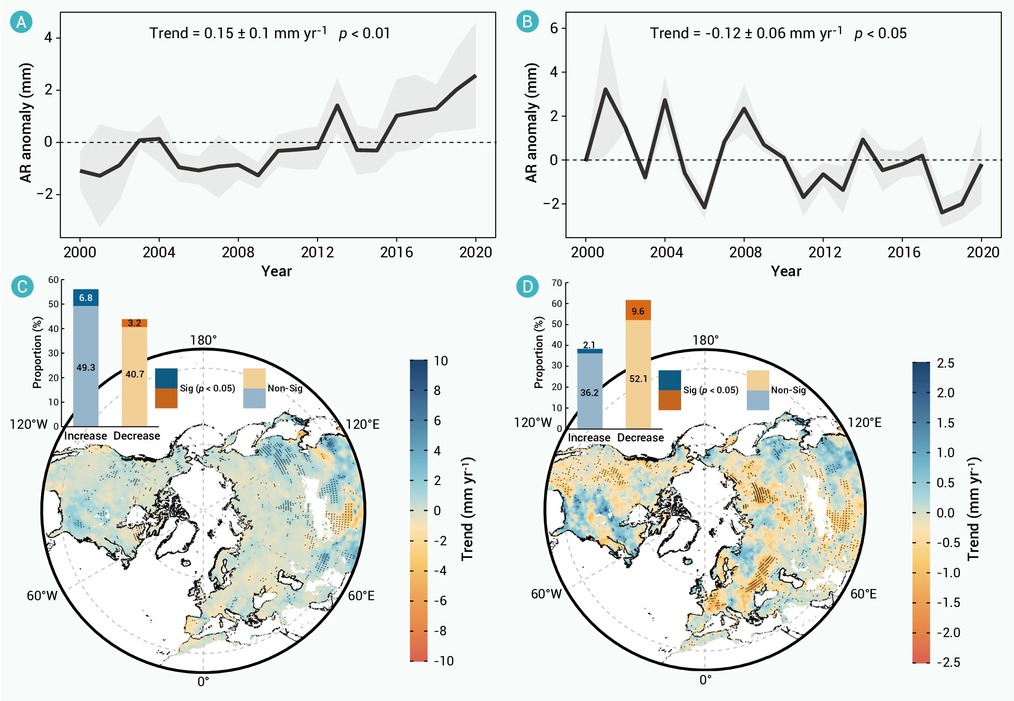
Figure 2.
Spatial and temporal changing trends of the wet and dry season water availability (WA) in the Northern Hemisphere
-
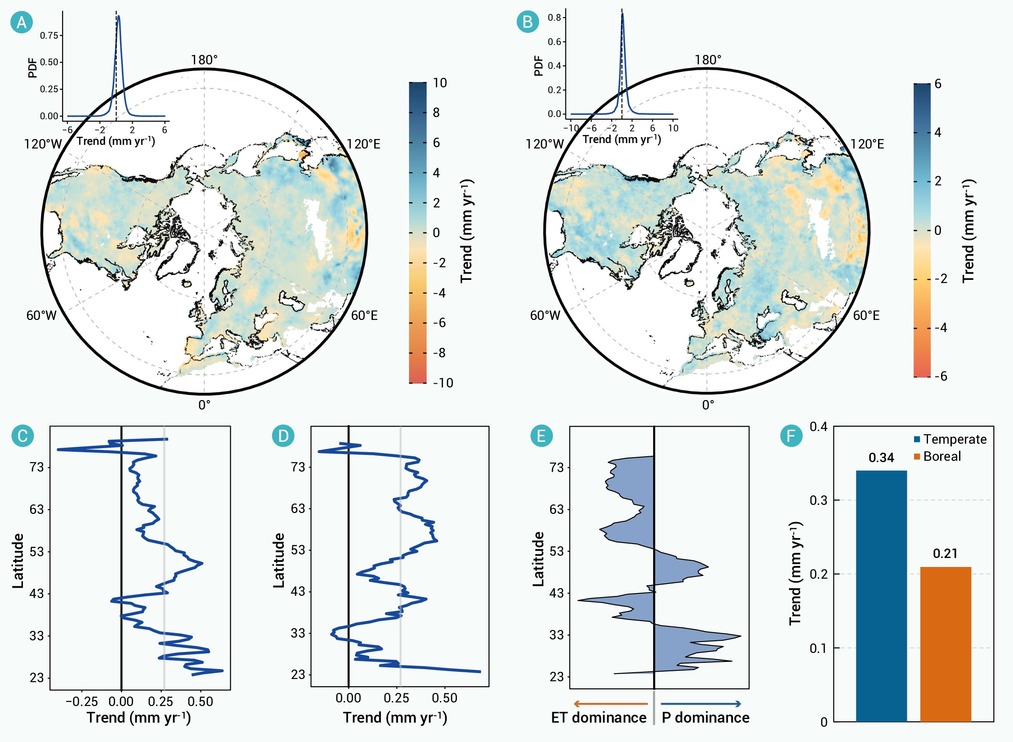
Figure 3.
Relative contributions of precipitation and evapotranspiration (P) changes (ET) to shifts in the annual range (AR)
-
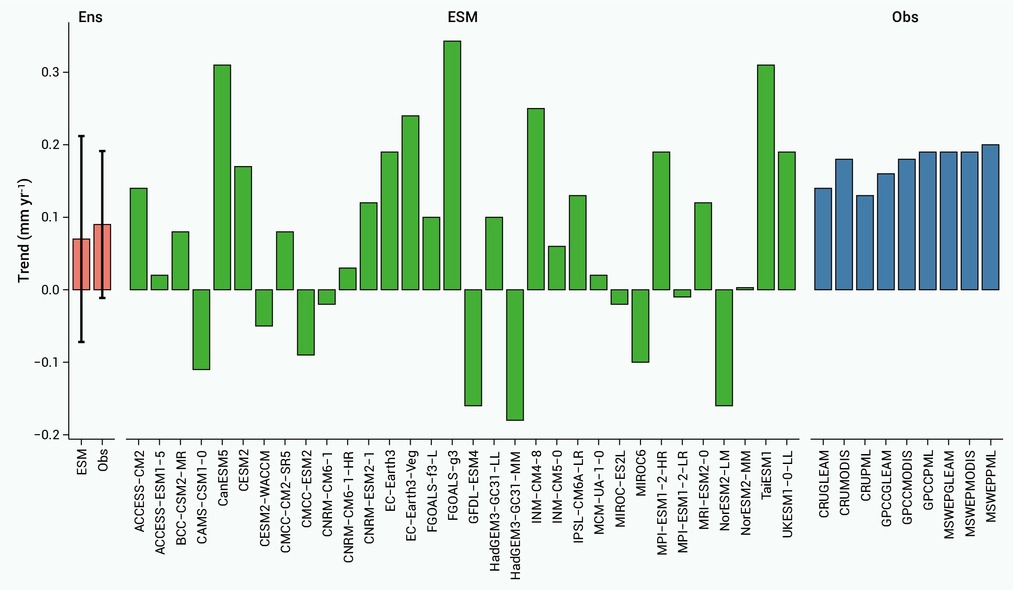
Figure 4.
Observed versus modelled trends in AR (wet–dry season water availability) for 2000–2014
