
Discovery of new formula accurately determining organic compounds aqueous diffusion coefficients by symbolic regression
-
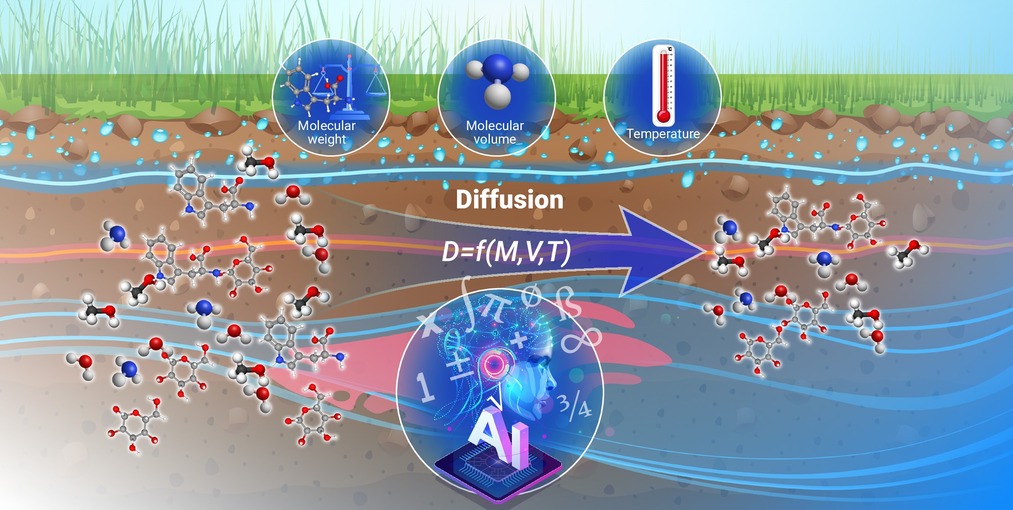
GRAPHICAL ABSTRACT
 DownLoad:
Full size image
DownLoad:
Full size image
-
PUBLIC SUMMARY
-
A novel formula for determining organic compounds aqueous diffusion coefficients was discovered.
The proposed formula achieved a higher accuracy compared to the currently available empirical equations.
The insights from this study are shedding light on understanding of organic compounds diffusion in water.
-
-
ABSTRACT
Aqueous diffusion coefficients of organic compounds are important parameters for many studies in geosciences and relevant applications, in particular, for modelling solute transport in groundwater. Accurately determining organic compounds aqueous diffusion coefficients still remains challenging due to lack of high-quality experimental data as well as reliable predictive tools. Based on symbolic regression incorporating theoretical constraints derived from the Stokes-Einstein hydrodynamics and Wilke-Chang theory, our study discovered a symbolic formula, which is mathematically linking the diffusion coefficients with water temperature, molecular weight, molecular volume and viscosity of water. The proposed formula achieved a preferential accuracy for predicting different organic compounds diffusion coefficients in water comparing with the currently available empirical equations. The complex interplay of molecular weight, molecular volume and water temperatures on aqueous diffusion coefficients of organic compounds is substantiated by causal inference and controlled test. The insights from this study are shedding light on better understanding of organic compounds diffusion in water.-
Keywords:
- Diffusion coefficient /
- Water /
- Symbolic regression /
- Temperature
-

-
REFERENCES
[1] Meng Y., Jiang J., Wu J., et al. (2024). A physics-enhanced neural network for estimating longitudinal dispersion coefficient and average solute transport velocity in porous media. Geophys. Res. Lett. 51:e2024GL110683. DOI:10.1029/2024GL110683 [2] Cussler E. L. (2015). Diffusion: Mass transfer in fluid systems (Cambridge University). DOI:10.1017/CBO9780511805134 [3] LaBolle E. M., Fogg G. E., Eweis J. B., et al. (2008). Isotopic fractionation by diffusion in groundwater. Water Resour. Res. 44:W07405. DOI:10.1029/2006WR005264 [4] Ma Y., Zhu C., Ma P., et al. (2005). Studies on the diffusion coefficients of amino acids in aqueous solutions. J. Chem. Eng. Data 50:1192−1196. DOI:10.1021/je049582g [5] Rana A., Renault C. and Dick J. E. (2023). Measuring liquid-into-liquid diffusion coefficients by dissolving microdroplet electroanalysis. Anal. Chem. 95:18748−18753. DOI:10.1021/acs.analchem.3c03256 [6] Weisz P. B. (1973). Diffusion and chemical transformation. Science 179:433−440. DOI:10.1126/science.179.4072.433 [7] Egger M., Riedinger N., Mogollón J. M., et al. (2018). Global diffusive fluxes of methane in marine sediments. Nat. Geosci. 11:421−425. DOI:10.1038/s41561-018-0122-8 [8] Jin B., Rolle M., Li T., et al. (2014). Diffusive fractionation of BTEX and chlorinated ethenes in aqueous solution: quantification of spatial isotope gradients. Environ. Sci. Technol. 48:6141−6150. DOI:10.1021/es4046956 [9] Lu W., Guo H., Chou I. M., et al. (2013). Determination of diffusion coefficients of carbon dioxide in water between 268 and 473K in a high-pressure capillary optical cell with in situ Raman spectroscopic measurements. Geochim. Cosmochim. Acta 115:183−204. DOI:10.1016/j.gca.2013.04.010 [10] Tanaka M., Takahashi Y., Yamaguchi N., et al. (2013). The difference of diffusion coefficients in water for arsenic compounds at various pH and its dominant factors implied by molecular simulations. Geochim. Cosmochim. Acta 105:360−371. DOI:10.1016/j.gca.2012.12.004 [11] Cao X. (2022). Diffusional isotope fractionation of singly and doubly substituted isotopologues of H2, N2 and O2 during air-water gas transfer. Geochim. Cosmochim. Acta 332:78−87. DOI:10.1016/j.gca.2022.06.022 [12] Liu S., Jin L., Yu H., et al. (2020). Understanding and predicting the diffusivity of organic chemicals for diffusive gradients in thin-films using a QSPR model. Sci. Total Environ. 706:135691. DOI:10.1016/j.scitotenv.2019.135691 [13] Urík J., Paschke A. and Vrana B. (2020). Diffusion coefficients of polar organic compounds in agarose hydrogel and water and their use for estimating uptake in passive samplers. Chemosphere 249:126183. DOI:10.1016/j.chemosphere.2020.126183 [14] Gharagheizi F. (2012). Determination of diffusion coefficient of organic compounds in water using a simple molecular-based method. Ind. Eng. Chem. Res. 51:2797−2803. DOI:10.1021/ie201944h [15] Einstein A. (1905). Über die von der molekularkinetischen Theorie der Wärme geforderte Bewegung von in ruhenden Flüssigkeiten suspendierten Teilchen. Ann. Phys. 322:549−560. DOI:10.1002/andp.19053220806 [16] Wilke C. R. and Chang P. (1955). Correlation of diffusion coefficients in dilute solutions. AIChE J. 1:264−270. DOI:10.1002/aic.690010222 [17] Scheibel E. G. (1954). Correspondence. Liquid diffusivities. Viscosity of gases. Ind. Eng. Chem. 46:2007−2008. DOI:10.1021/ie50537a062 [18] Hayduk W. and Laudie H. (1974). Prediction of diffusion coefficients for nonelectrolytes in dilute aqueous solutions. AIChE J. 20:611−615. DOI:10.1002/aic.690200329 [19] Worch E. (1993). Eine neue Gleichung zur Berechnung von Diffusionskoeffizienten gelöster Stoffe: A new equation for the calculation of diffusion coefficients for dissolved substances. Vom Wasser 81:289−297. https://www.researchgate.net/publication/313202269_Eine_neue_Gleichung_zur_Berechnung_von_Diffusionskoeffizienten_geloster_Stoffe [20] Evans R., Deng Z., Rogerson A. K., et al. (2013). Quantitative interpretation of diffusion-ordered NMR spectra: Can we rationalize small molecule diffusion coefficients. Angew. Chem. Int. Ed. 52:3199−3202. DOI:10.1002/anie.201207403 [21] Evans R., Dal Poggetto G., Nilsson M., et al. (2018). Improving the interpretation of small molecule diffusion coefficients. Anal. Chem. 90:3987−3994. DOI:10.1021/acs.analchem.7b05032 [22] Gharagheizi F., Eslamimanesh A., Mohammadi A. H., et al. (2011). Representation and prediction of molecular diffusivity of nonelectrolyte organic compounds in water at infinite dilution using the artificial neural network-group contribution method. J. Chem. Eng. Data 56:1741−1750. DOI:10.1021/je101190p [23] Bellaire D., Großmann O., Münnemann K., et al. (2022). Diffusion coefficients at infinite dilution of carbon dioxide and methane in water, ethanol, cyclohexane, toluene, methanol, and acetone: A PFG-NMR and MD simulation study. J. Chem. Thermodyn. 166:106691. DOI:10.1016/j.jct.2021.106691 [24] Miyabe K. and Isogai R. (2011). Estimation of molecular diffusivity in liquid phase systems by the Wilke–Chang equation. J. Chromatogr. A 1218:6639−6645. DOI:10.1016/j.chroma.2011.07.018 [25] Wang H., Fu T., Du Y., et al. (2023). Scientific discovery in the age of artificial intelligence. Nature 620:47−60. DOI:10.1038/s41586-023-06221-2 [26] Schmidt M. and Lipson H. (2009). Distilling free-form natural laws from experimental data. Science 324:81−85. DOI:10.1126/science.1165893 [27] Li Y., Wang H., Li Y., et al. (2023). Electron transfer rules of minerals under pressure informed by machine learning. Nat. Commun. 14:1815. DOI:10.1038/s41467-023-37384-1 [28] Liu S., Li Q., Shen X., et al. (2024). Automated discovery of symbolic laws governing skill acquisition from naturally occurring data. Nat. Comput. Sci. 4:334−345. DOI:10.1038/s43588-024-00629-0 [29] Cornelio C., Dash S., Austel V., et al. (2023). Combining data and theory for derivable scientific discovery with AI-Descartes. Nat. Commun. 14:1777. DOI:10.1038/s41467-023-37236-y [30] Wang T., Hu J., Ouyang R., et al. (2024). Nature of metal-support interaction for metal catalysts on oxide supports. Science 386:915−920. DOI:10.1126/science.adp6034 [31] Udrescu S.-M. and Tegmark M. (2020). AI Feynman: A physics-inspired method for symbolic regression. Sci. Adv. 6:eaay2631. DOI:10.1126/sciadv.aay2631 [32] Li X. and Guo Y. (2025). Paradigm shifts from data-intensive science to robot scientists. Sci. Bull. 70:14−18. DOI:10.1016/j.scib.2024.09.029 [33] Martínez-Sánchez Á., Arranz G. and Lozano-Durán A. (2024). Decomposing causality into its synergistic, unique, and redundant components. Nat. Commun. 15:9296. DOI:10.1038/s41467-024-53373-4 [34] Zhao Q., Yu Y., Gao Y., et al. (2022). Machine learning-based models with high accuracy and broad applicability domains for screening PMT/vPvM substances. Environ. Sci. Technol. 56:17880−17889. DOI:10.1021/acs.est.2c06155 [35] Han M., Liang J., Wang Z., et al. (2025). Accurate prediction of the diffusion coefficients of organic compounds in water by multimodal learning. J. Phys. Chem. A. DOI:10.1021/acs.jpca.5c01881 [36] Koza J. R. (1992). Genetic programming: On the programming of computers by means of natural selection (MIT Press). DOI:10.1016/0303-2647(94)90062-0 [37] Zhao Y. H., Abraham M. H. and Zissimos A. M. (2003). Determination of McGowan volumes for ions and correlation with van der Waals Volumes. J. Chem. Inf. Comput. Sci. 43:1848−1854. DOI:10.1021/ci0341114 [38] Lundberg S. M., Erion G., Chen H., et al. (2020). From local explanations to global understanding with explainable AI for trees. Nat. Mach. Intell. 2:56−67. DOI:10.1038/s42256-019-0138-9 [39] Cranmer M., Sanchez-Gonzalez A., Battaglia P., et al. (2020). Discovering symbolic models from deep learning with inductive biases. Adv. Neural Inf. Process. Syst. Curran Associates Inc.1462:17429–17442. DOI:10.5555/3495724.3497186 [40] Sharma A. and Kiciman E. (2020). DoWhy: An end-to-end library for causal inference. arXiv e-prints arXiv:2011.04216. DOI:10.48550/arXiv.2011.04216. [41] Bogdan A. R., Davies N. L. and James K. (2011). Comparison of diffusion coefficients for matched pairs of macrocyclic and linear molecules over a drug-like molecular weight range. Org. Biomol. Chem. 9:7727−7733. DOI:10.1039/C1OB05996C [42] Han M., Liang J., Jin B., et al. (2024). Machine learning coupled with causal inference to identify COVID-19 related chemicals that pose a high concern to drinking water. iScience 2:109012. DOI:10.1016/j.isci.2024.109012 [43] Ombadi M., Nguyen P., Sorooshian S., et al. (2020). Evaluation of methods for causal discovery in hydrometeorological systems. Water Resour. Res. 56:e2020WR027251. DOI:10.1029/2020WR027251 [44] Kang Q., Zhang B., Cao Y., et al. (2024). Causal prior-embedded physics-informed neural networks and a case study on metformin transport in porous media. Water Res. 261:121985. DOI:10.1016/j.watres.2024.121985 [45] Saberi-Movahed F., Najafzadeh M. and Mehrpooya A. (2020). Receiving more accurate predictions for longitudinal dispersion coefficients in water pipelines: Training group method of data handling using extreme learning machine conceptions. Water Resour. Manage. 34:529−561. DOI:10.1007/s11269-019-02463-w [46] Zhu S., Liu B., Li S., et al. (2025). Simulation and prediction of sulfamethazine migration, transformation and risk diffusion during cross-media infiltration from surface water to groundwater driven by dynamic water level: Machine learning coupled HYDRUS-GMS model. J. Environ. Manage. 373:123484. DOI:10.1016/j.jenvman.2024.123484 -
ABOUT THIS ARTICLE
Cite this article:
Han M. and Jin B. (2026). Discovery of new formula accurately determining organic compounds aqueous diffusion coefficients by symbolic regression. The Innovation Geoscience 4:100208. https://doi.org/10.59717/j.xinn-geo.2026.100208
Welcome!
To request copyright permission to republish or share portions of our works, please visit Copyright Clearance Center's (CCC) Marketplace website at marketplace.copyright.com.
Export File
Citation
Han M. and Jin B. (2026). Discovery of new formula accurately determining organic compounds aqueous diffusion coefficients by symbolic regression. The Innovation Geoscience 4:100208. https://doi.org/10.59717/j.xinn-geo.2026.100208

Format
Content
-
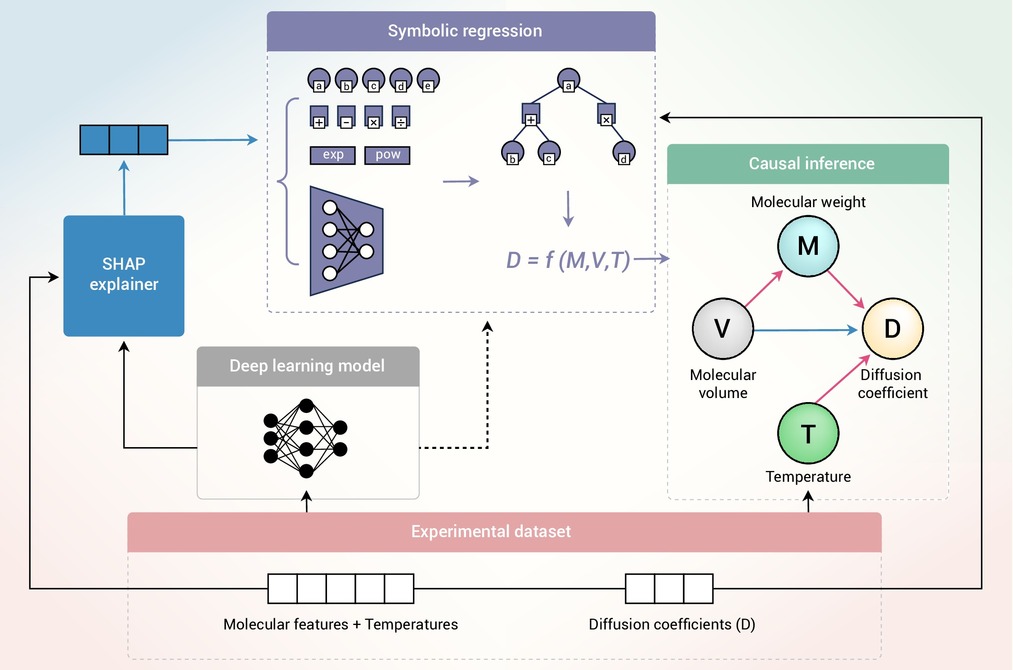
Figure 1.
Overview for the approach
-
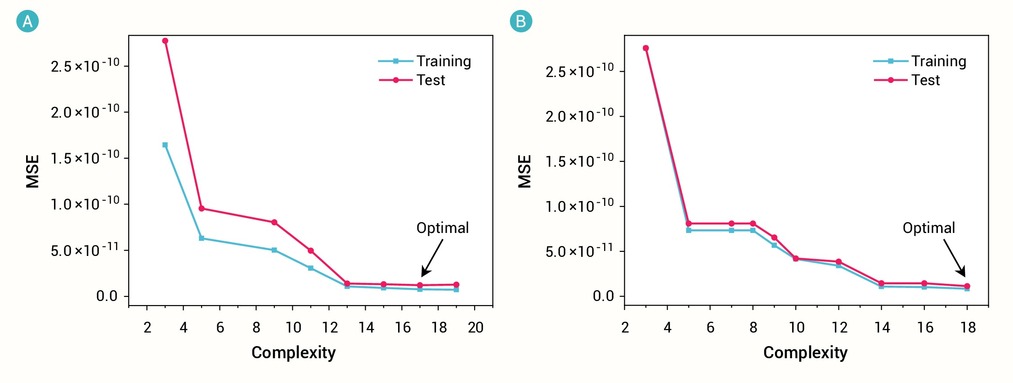
Figure 2.
Training and test mean square error (MSE) against the feature complexity for the data-driven models based on mixed dataset (A) and experimental dataset (B).
-
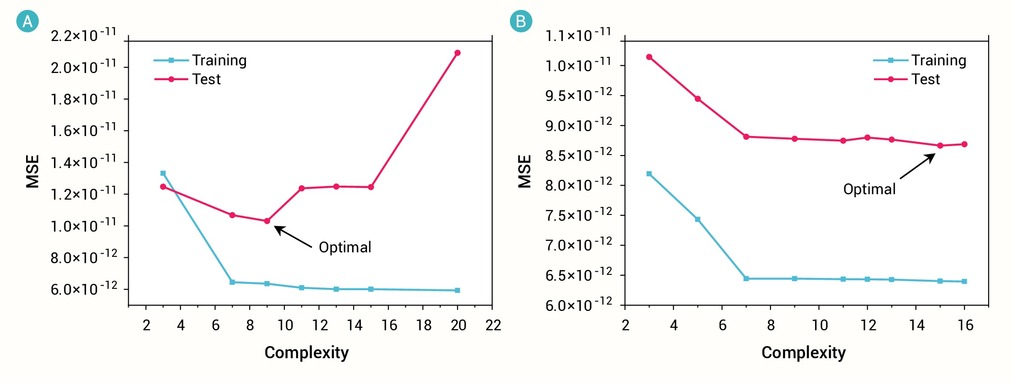
Figure 3.
Training and test mean square error (MSE) against the feature complexity for the hybrid models based on mixed dataset (A) and experimental dataset (B).
-
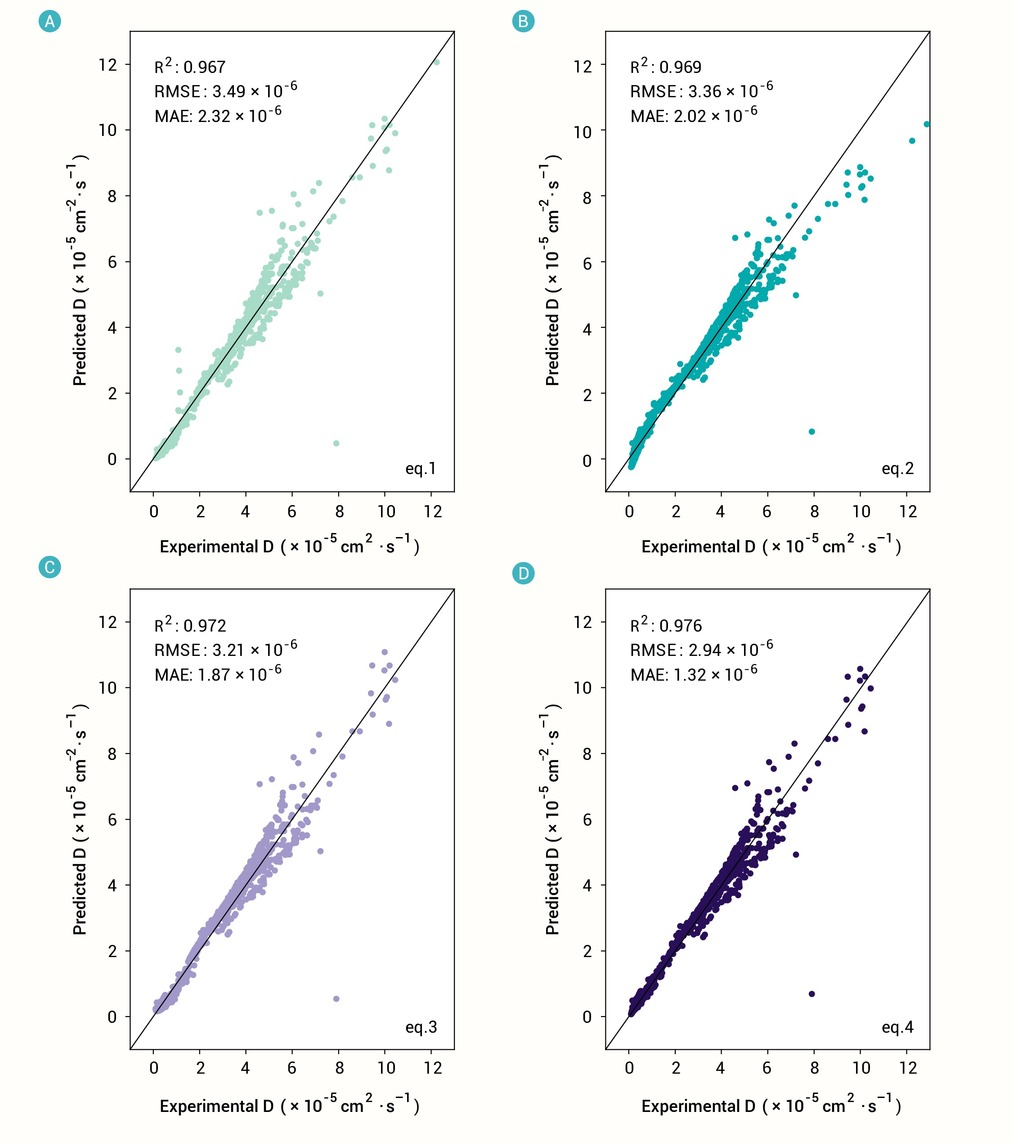
Figure 4.
Test accuracy of optimal models
-
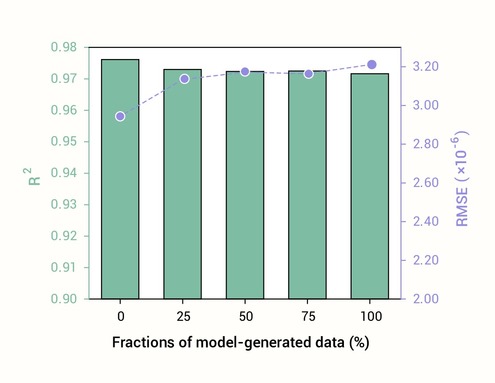
Figure 5.
Sensitivity analysis of hybrid model performance to progressive synthetic data integration.
-
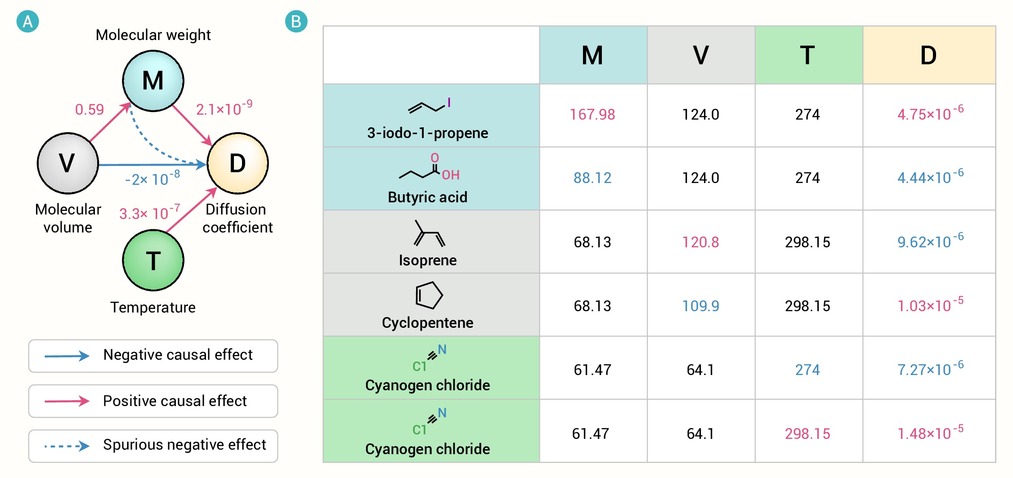
Figure 6.
The validation of symbolic formula
