
Organic carbon loss from the black soil region threatens food security in China
-
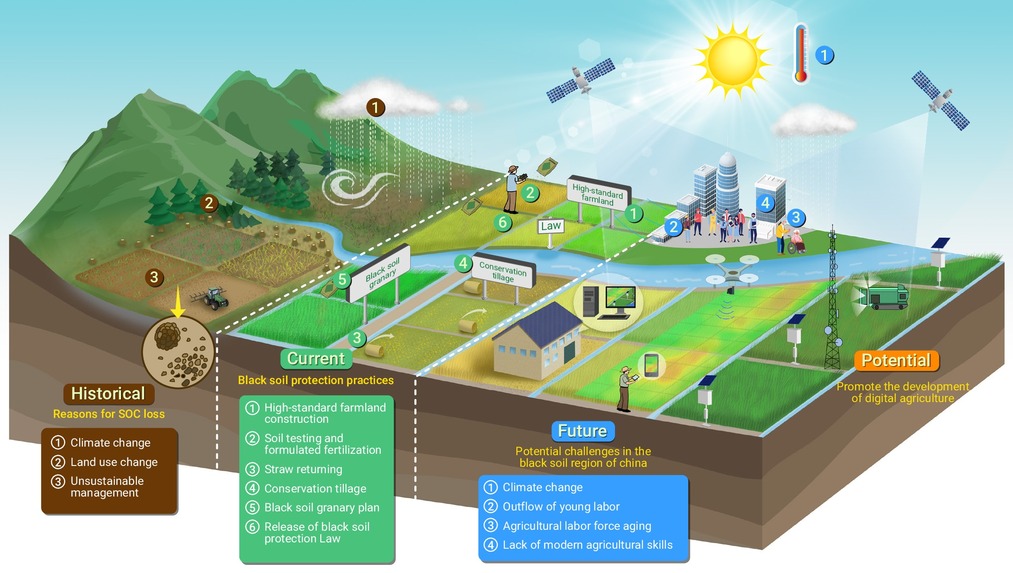
GRAPHICAL ABSTRACT
 DownLoad:
Full size image
DownLoad:
Full size image
-
PUBLIC SUMMARY
-
Mean soil organic carbon (SOC) in China's black soil region declined by 16.53% over the past four decades.
Historically, the loss of SOC did not directly exert a strong negative impact on crop yields.
Under future climate scenarios, topsoil SOC may decline 22%–29% by 2100, threatening long-term food security.
Digital agriculture is a potential pathway to support the sustainable use of black soils in the future.
-
-
ABSTRACT
Changes in soil organic carbon (SOC) within the world's most fertile black soils pose a major challenge to soil carbon-based climate change mitigation and food security. Yet limited understanding of the spatiotemporal dynamics of SOC across different depths in black soils and their effects on crop yields has constrained sustainable soil management (SSM). Using 18,314 field observations from China's black soil region, we integrated process-based and machine learning approaches to reconstruct and project spatiotemporally consistent SOC time series at the centennial scale. Results show that cropland topsoil (0–30 cm) SOC concentrations decreased from 24.2 to 20.2 g kg−1 between 1980 and 2023, with minimal changes in deeper soils. Under future climate scenarios, topsoil SOC may decline by 22%–29% by2100 , potentially reducing crop yields by 263–412 kg ha−1, which corresponds to 5.7%–8.9% of total crop production in Northeast China in 2023. Promoting SSM through digital agriculture could help mitigate declines in SOC and crop yields in China, while global coordination is urgently needed to establish standardized SOC monitoring systems and safeguard the sustainable productivity of black soils worldwide. -

-
REFERENCES
[1] Thaler E.A., Larsen I.J., and Yu Q. (2021). The extent of soil loss across the US Corn Belt. Proc. Natl. Acad. Sci. USA 118:e1922375118. DOI:10.1073/pnas.1922375118 [2] Zhang J.B., Sun B., Zhu J.J., et al. (2021). Black soil protection and utilization based on harmonization of mountain-river-forest-farmland-lake-grassland-sandy land ecosystems and strategic construction of ecological barrier. Bull. Chin. Acad. Sci. 36:1155−1164. DOI:10.16418/j.issn.1000-3045.20211010002 [3] FAO. (2022). Global Status of Black Soils, Roma. DOI:10.4060/cc3124en [4] Tong Y.X., Angelini M.E., Yigini Y. et al. (2024). Global black soil distribution. Front. Agric. Sci. Eng. 11:271−281. DOI:10.15302/J-FASE-2024567 [5] FAO. (2023). A call to protect the world's food basket: Black soils, Roma. https://openknowledge.fao.org/handle/20.500.14283/cc6845en [6] Zhang G.L., Long H., and Yang F. (2024). Understanding the formation time of black soils. Innov. Geosci. 1:100010. DOI:10.59717/j.xinn-geo.2023.100010 [7] Lu Y.L., Nakicenovic N., Visbeck M., et al. (2015). Five priorities for the UN sustainable development goals. Nature 520:432−433. DOI:10.1038/520432a [8] Rui Y.C., Jackson R.D., Cotrufo M.F., et al. (2022). Persistent soil carbon enhanced in Mollisols by well-managed grasslands but not annual grain or dairy forage cropping systems. Proc. Natl. Acad. Sci. USA 119:e2118931119. DOI:10.1073/pnas.2118931119 [9] Liu B.Y., Zhang G.L., Xie Y., et al. (2021). Delineating the black soil region and typical black soil region of northeastern China. Chin. Sci. B-Chin. 66:96−106. DOI:10.1360/TB-2020-0178 [10] Li R., Hu W.Y., Jia Z.J., et al. (2025). Soil degradation: A global threat to sustainable use of black soils. Pedosphere 35:264−279. DOI:10.1016/j.pedsph.2024.06.011 [11] Han X.Z. and Zou W.X. (2018). Effects and suggestions of black soil protection and soil fertility increase in Northeast China. Bull. Chin. Acad. Sci. 33:206−212. DOI:10.16418/j.issn.1000-3045.2018.02.011 [12] Li B.G., Liu Z., Huang F. et al. (2021). Ensuring national food security by strengthening high-productivity black soil granary in Northeast China. Bull. Chin. Acad. Sci. 36:1184−1193. DOI:10.16418/j.issn.1000-3045.20210706003 [13] Brinkman H. and Hendrix J.C.S. (2011). Food insecurity and violent conflict: Causes, consequences, and addressing the challenges. Occasional Paper 24, World Food Programme, Rome. DOI:10.13140/2.1.3379.2003 [14] Garnett T., Appleby M.C., Balmford A., et al. (2013). Sustainable intensification in agriculture: Premises and policies. Science 341:33−34. DOI:10.1126/science.1234485 [15] Laber M., Klimek P., Bruckner M., et al. (2023). Shock propagation from the Russia–Ukraine conflict on international multilayer food production network determines global food availability. Nat. Food 4:508−517. DOI:10.1038/s43016-023-00771-4 [16] Lu Y.L., Jenkins A., Ferrier R.C., et al. (2015). Addressing China's grand challenge of achieving food security while ensuring environmental sustainability. Sci. Adv. 1:e1400039. DOI:10.1126/sciadv.1400039 [17] Lu Y.L., Zhang Y.Q., Cao X.H., et al. (2019). Forty years of reform and opening up: China's progress toward a sustainable path. Sci. Adv. 5:eaau9413. DOI:10.1126/sciadv.aau9413 [18] Lal R. (2004). Soil carbon sequestration impacts on global climate change and food security. Science 304:1623−1627. DOI:10.1126/science.1097396 [19] Minasny B., Malone B.P., McBratney A.B., et al. (2017). Soil carbon 4 per mille. Geoderma 292:59−86. DOI:10.1016/j.geoderma.2017.01.002 [20] Qiao L. Wang X.H., Smith P., et al. (2022). Soil quality both increases crop production and improves resilience to climate change. Nat. Clim. Change 12:574−580. DOI:10.1038/s41558-022-01376-8 [21] Ma Y.Q., Woolf D., Fan M.S., et al. (2023). Global crop production increase by soil organic carbon. Nat. Geosci. 16:1159−1165. DOI:10.1038/s41561-023-01302-3 [22] Piao S.L. Fang J.Y., Ciais P., et al. (2009). The carbon balance of terrestrial ecosystems in China. Nature 458:1009−1013. DOI:10.1038/nature07944 [23] Fang J.Y., Yu G.R., Liu L.L., et al. (2018). Climate change, human impacts, and carbon sequestration in China. Proc. Natl. Acad. Sci. USA 115:4015−4020. DOI:10.1073/pnas.1700304115 [24] Zhao Y.C., Wang M.Y., Hu S.J., et al. (2018). Economics- and policy-driven organic carbon input enhancement dominates soil organic carbon accumulation in Chinese croplands. Proc. Natl. Acad. Sci. USA 115:4045−4050. DOI:10.1073/pnas.1700292114 [25] Wang X., Li S.J., Wang L.P., et al. (2023). Effects of cropland reclamation on soil organic carbon in China's black soil region over the past 35 years. Glob. Change Biol. 29:5460−5477. DOI:10.1111/gcb.16833 [26] Meng X.T., Bao Y.L., Luo C., et al. (2024). SOC content of global Mollisols at a 30 m spatial resolution from 1984 to 2021 generated by the novel ML-CNN prediction model. Remote Sens. Environ. 300:113911. DOI:10.1016/j.rse.2023.113911 [27] Zhou Z.H., Wang C.K., Li Y., et al. (2024). Carbon gain in upper but loss in deeper cropland soils across China over the last four decades. Proc. Natl. Acad. Sci. USA 122:e2422371122. DOI:10.1073/pnas.2422371122 [28] Loveland P. and Webb J. (2003). Is there a critical level of organic matter in the agricultural soils of temperate regions: A review. Soil Tillage Res. 70:1−18. DOI:10.1016/S0167-1987(02)00139-3 [29] Piao S.L., Ciais P., Huang Y., et al. (2010). The impacts of climate change on water resources and agriculture in China. Nature 467:43−51. DOI:10.1038/nature09364 [30] Zhao C., Liu B., Piao S.L., et al. (2017). Temperature increase reduces global yields of major crops in four independent estimates. Proc. Natl. Acad. Sci. USA 114:9326−9331. DOI:10.1073/pnas.1701762114 [31] Institute of Soil Science, Chinese Academy of Sciences. (1978). Soil Physics and Chemistry Analysis. Shanghai Science and Technology Press. http://opac.stlib.cn/bookInfo_01a0010630.html [32] Hassani A. Azapagic A., and Shokri N. (2020). Predicting long-term dynamics of soil salinity and sodicity on a global scale. Proc. Natl. Acad. Sci. USA 117:33017−33027. DOI:10.1073/pnas.2013771117 [33] Chen J., Xie E.Z., Peng Y.X., et al. (2025). Four-dimensional modelling reveals decline in cropland soil pH during last four decades in China's Mollisols region. Geoderma 453:117135. DOI:10.1016/j.geoderma.2024.117135 [34] Xie E.Z., Zhang X., Lu F.Y., et al. (2022). Integration of a process-based model into the digital soil mapping improves the space-time soil organic carbon modelling in intensively human-impacted area. Geoderma 7:115599. DOI:10.1016/j.geoderma.2021.115599 [35] Zhang X., Xie E.Z., Chen J., et al. (2023). Modelling the spatiotemporal dynamics of cropland soil organic carbon by integrating process-based models differing in structures with machine learning. J. Soils Sediments 23:2816−2831. DOI:10.1007/s11368-023-03516-9 [36] McBratney A.B., Mendonça Santos M.L., and Minasny B. (2003). On digital soil mapping. Geoderma 117:3−52. DOI:10.1016/S0016-7061(03)00223-4 [37] Sanchez P.A., Ahamed A., Carré F et al. (2009). Digital soil map of the world. Science 325:680−681. DOI:10.1126/science.1175084 [38] Minasny B. and McBratney A.B. (2016). Digital soil mapping: A brief history and some lessons. Geoderma 264:301−311. DOI:10.1016/j.geoderma.2015.07.017 [39] Institute of Tibetan Plateau Research, Chinese Academy of Sciences. (2022). 1 km multi-scenario and multi-model monthly precipitation, temperature, and potential evapotranspiration data for China in 2021–2100. DOI:10.11888/Atmos.tpdc.300558 [40] O'Neill B.C., Tebaldi C., van Vuuren D.P., et al. (2016). The scenario model intercomparison project (ScenarioMIP) for CMIP6. Geosci. Model Dev. 9:3461−3482. DOI:10.5194/gmd-9-3461-2016 [41] Iizumi T. and Sakai T. (2020). The global dataset of historical yields for major crops 1981–2016. Sci. Data 7:97. DOI:10.1038/s41597-020-0433-7 [42] Berdugo M., Gaitán J.J., Delgado-Baquerizo M., et al. (2022). Prevalence and drivers of abrupt vegetation shifts in global drylands. Proc. Natl. Acad. Sci. USA 119:e2123393119. DOI:10.1073/pnas.2123393119 [43] Li X.Y., Piao S.L., Huntingford C., et al. (2023). Global variations in critical drought thresholds that impact vegetation. Natl. Sci. Rev. 10:nwad049. DOI:10.1093/nsr/nwad049 [44] Fong Y.Y., Huang Y., Gilbert P.B., et al. (2017). chngpt: Threshold regression model estimation and inference. BMC Bioinformatics 18:454. DOI:10.1186/s12859-017-1863-x [45] Slessarev E.W., Mayer A., Kelly C., et al. (2023). Initial soil organic carbon stocks govern changes in soil carbon: Reality or artifact. Glob. Change Biol. 29:1239−1247. DOI:10.1111/gcb.16491 [46] Smith J.O., Smith P., Wattenbach M., et al. (2007). Projected changes in the organic carbon stocks of cropland mineral soils of European Russia and the Ukraine, 1990–2070. Glob. Change Biol. 13:342−356. DOI:10.1111/j.1365-2486.2006.01297.x [47] Gollany H.T., Rickman R.W., Liang Y., et al. (2011). Predicting agricultural management influence on long-term soil organic carbon dynamics: Implications for biofuel production. Agron. J. 103:234−246. DOI:10.2134/agronj2010.0203s [48] Taboada M.A., Micucci F.G., Cosentino D.J., et al. (1998). Comparison of compaction induced by conventional and zero tillage in two soils of the Rolling Pampa of Argentina. Soil Tillage Res. 49:57−63. DOI:10.1016/S0167-1987(98)00132-9 [49] Zhou G.Y., Xu S., Ciais P., et al. (2019). Climate and litter C/N ratio constrain soil organic carbon accumulation. Natl. Sci. Rev. 6:746−757. DOI:10.1093/nsr/nwz045 [50] Mishra U., Shelef E., Yang Y.H., et al. (2021). Spatial heterogeneity and environmental predictors of permafrost region soil organic carbon stocks. Sci. Adv. 7:eaaz5236. DOI:10.1126/sciadv.aaz5236 [51] Villarino S.H., Pinto P., Jackson R.B., et al. (2021). Plant rhizodeposition: A key factor for soil organic matter formation in stable fractions. Sci. Adv. 7:eabd3176. DOI:10.1126/sciadv.abd3176 [52] He C., Niu J.R., Xu C.T., et al. (2022). Effect of conservation tillage on crop yield and soil organic carbon in Northeast China: A meta‐analysis. Soil Use Manage. 38:1146−1161. DOI:10.1111/sum.12784 [53] Bayer A. and Black A. L. (1994). Quantification of the effect of soil organic matter content on soil productivity. Soil Sci. Soc. Am. J. 58:185−193. DOI:10.2136/sssaj1994.03615995005800010027x [54] Dı́az-Zorita M., Duarte A., and Grove J.H. (2002). A review of no-till systems and soil management for sustainable crop production in the subhumid and semiarid Pampas of Argentina. Soil Tillage Res. 65:1−18. DOI:10.1016/S0167-1987(01)00274-4 [55] Dutta K., Schuur E.A.G., Neff J.C. et al. (2006). Potential carbon release from permafrost soils of Northeastern Siberia. Glob. Change Biol. 12:2336−2351. DOI:10.1111/j.1365-2486.2006.01259.x [56] Wang X.W., Song C.C., Sun X.X., et al. (2013). Soil carbon and nitrogen across wetland types in discontinuous permafrost zone of the Xiao Xing'an Mountains, northeastern China. Catena 101:31−37. DOI:10.1016/j.catena.2012.09.007 [57] Wang J.K., Xu X.R., Pei J.B., et al. (2021). Current situations of black soil quality and facing opportunities and challenges in Northeast China. Chin. J. Soil Sci. 52:695−701. DOI:10.19336/j.cnki.trtb.2021011103 [58] Hou J.G. (2021). Science and technology innovation supporting sustainable use of black soil. Bull. Chin. Acad. Sci. 36:1123−1126. DOI:10.16418/j.issn.1000-3045.20210929001 [59] Jiang M., Wen Y., Sun M., et al. (2021). Thinking and implementation approach of science and technology strategy of well raising black soil. Bull. Chin. Acad. Sci. 36:1146−1154. DOI:10.16418/j.issn.1000-3045.20211009001 [60] Ge Q.S., Wang J.Y., and Zhu H.Y. (2021). Overall promotion of black soil protection and rural revitalization: Internal logic, main routes and policy suggestions. Bull. Chin. Acad. Sci. 36:1175−1183. DOI:10.16418/j.issn.1000-3045.20210805002 [61] Peng X.Z. (2011). China's demographic history and future challenges. Science 333:581−587. DOI:10.1126/science.1209396 [62] Ren C.C., Zhou X.Y., Wang C., et al. (2023). Ageing threatens sustainability of smallholder farming in China. Nature 616:96−103. DOI:10.1038/s41586-023-05738-w [63] Liao D., Cui K., and Ke L.J. (2022). A nationwide Chinese consumer study of public interest on agriculture. npj Sci. Food 6:32. DOI:10.1038/s41538-022-00147-1 [64] Basso B. and Antle J. (2020). Digital agriculture to design sustainable agricultural systems. Nat. Sustain. 3:254−256. DOI:10.1038/s41893-020-0510-0 [65] Deng O.P., Ran J.Y., Huang S., et al. (2024). Managing fragmented croplands for environmental and economic benefits in China. Nat. Food 5:230−240. DOI:10.1038/s43016-024-00938-7 [66] Northrup D.L., Basso B., Wang M.Q., et al. (2021). Novel technologies for emission reduction complement conservation agriculture to achieve negative emissions from row-crop production. Proc. Natl. Acad. Sci. USA 118:e2022666118. DOI:10.1073/pnas.2022666118 [67] Xiao L.J., Wang G.C., Wang E.L., et al. (2024). Spatiotemporal co-optimization of agricultural management practices towards climate-smart crop production. Nat. Food 5:59−71. DOI:10.1038/s43016-023-00891-x [68] Yu Q.Y., Hu Q., Wu H., et al. (2025). View from above: Farmland infrastructure and its impacts on agricultural landscapes. Innov. Geosci. 3:100107. DOI:10.59717/j.xinn-geo.2024.100107 [69] Lin H.H., Zhao H.J., Duan X.W., et al. (2026). Accelerated warming and soil erosion drive topsoil carbon decline across the Tibetan Plateau: A 40-year resampling analysis. Innov. Geosci. 4:100165. DOI:10.59717/j.xinn-geo.2025.100165 [70] Wang F., Harindintwali J.D., Wei K., et al., (2023). Climate change: Strategies for mitigation and adaptation. Innov. Geosci. 1: 100015. DOI: 10.59717/j.xinn-geo.2023.100015 [71] Gao S.Q., Hu Z.M., Wang H.S., et al. (2024). Nine-Step Approach of smart agricultural helps grain production reduce costs, increase yield and efficiency. Bull. Chin. Acad. Sci. 39:198−209. DOI:10.16418/j.issn.1000-3045.20230811003 [72] Hengl T., Consoli D., Tian X., et al. (2026). OpenLandMap-soildb: Global soil information at 30 m spatial resolution for 2000–2022+ based on spatiotemporal Machine Learning and harmonized legacy soil samples and observations. Earth Syst. Sci. Data 18:989−1036. DOI:10.5194/essd-18-989-2026 -
ABOUT THIS ARTICLE
Cite this article:
Chen J., Hu W., Xu X., et al. (2026). Organic carbon loss from the black soil region threatens food security in China. The Innovation Geoscience 4:100213. https://doi.org/10.59717/j.xinn-geo.2026.100213
Welcome!
To request copyright permission to republish or share portions of our works, please visit Copyright Clearance Center's (CCC) Marketplace website at marketplace.copyright.com.
Export File
Citation
Chen J., Hu W., Xu X., et al. (2026). Organic carbon loss from the black soil region threatens food security in China. The Innovation Geoscience 4:100213. https://doi.org/10.59717/j.xinn-geo.2026.100213

Format
Content
-
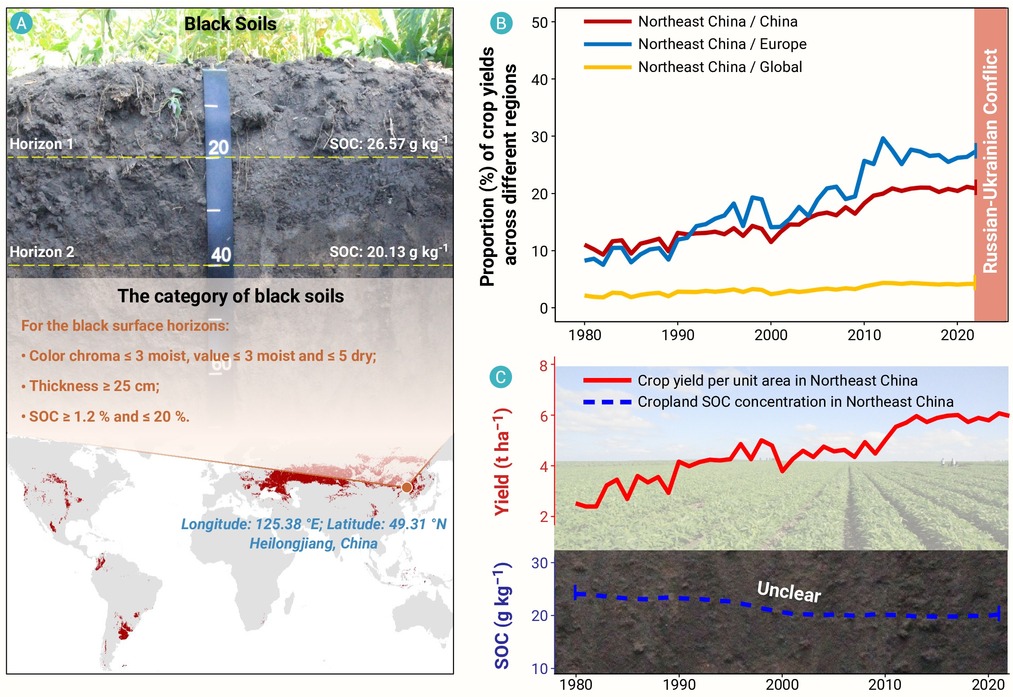
Figure 1.
Distribution and soil horizon properties of black soils worldwide, the proportion of crop yields in Northeast China relative to Europe and the world, and crop yields per hectare in Northeast China
-
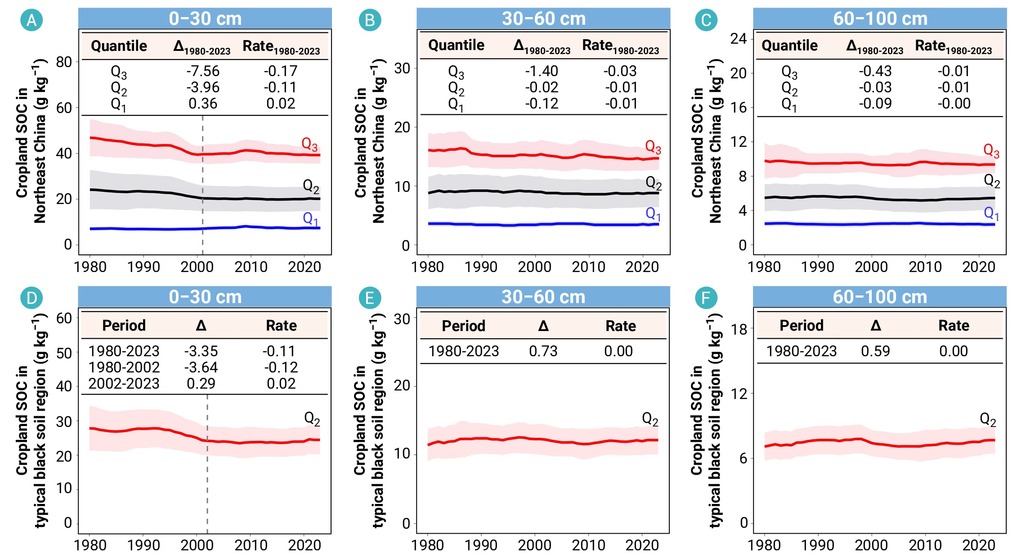
Figure 2.
Time series of cropland soil organic carbon (SOC) concentration for different soil depth intervals in Northeast China and its typical black soil region
-
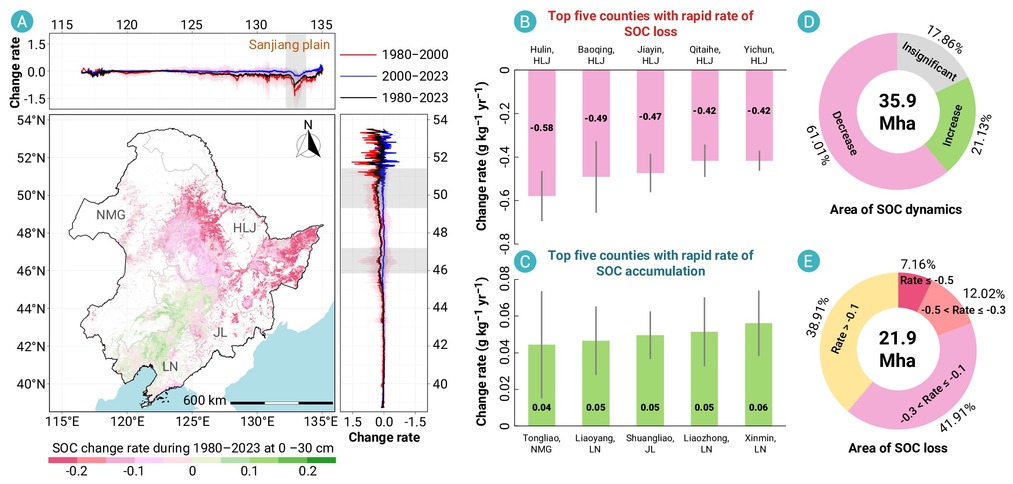
Figure 3.
The spatial patterns, county-level statistics, and area of cropland soil organic carbon (SOC) change at 0–30 cm in Northeast China, 1980–2023
-
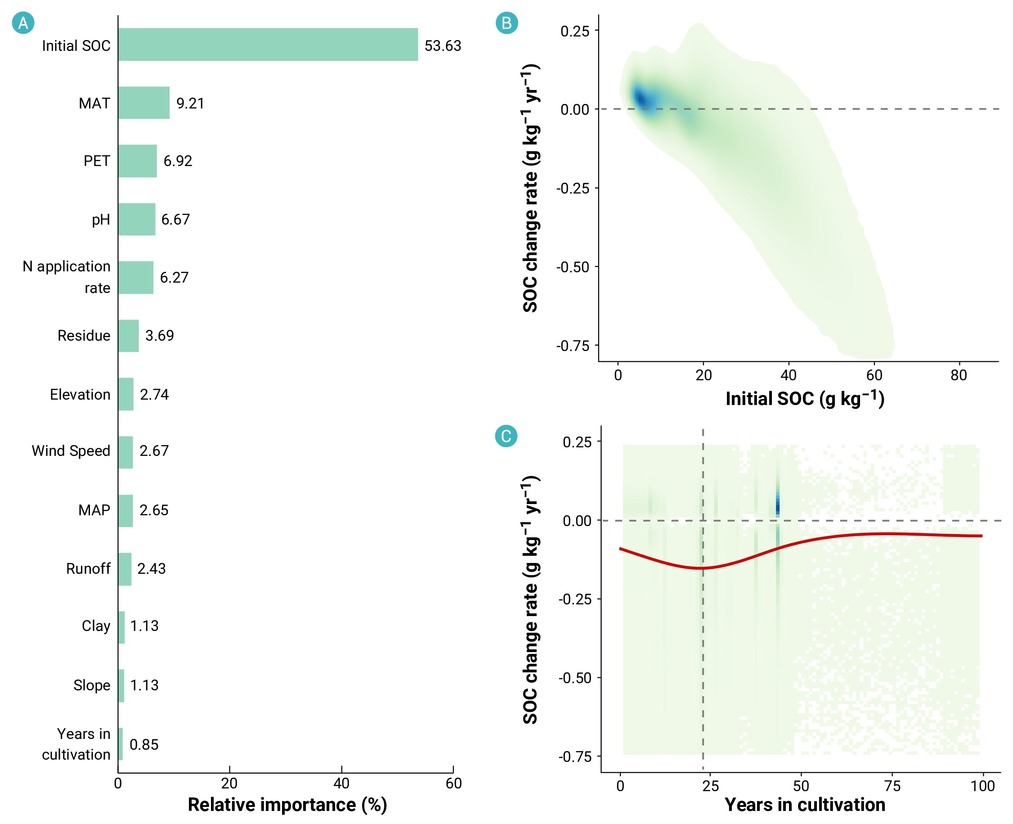
Figure 4.
Key drivers of changes in topsoil (0–30 cm) soil organic carbon (SOC) across Northeast China's croplands
-
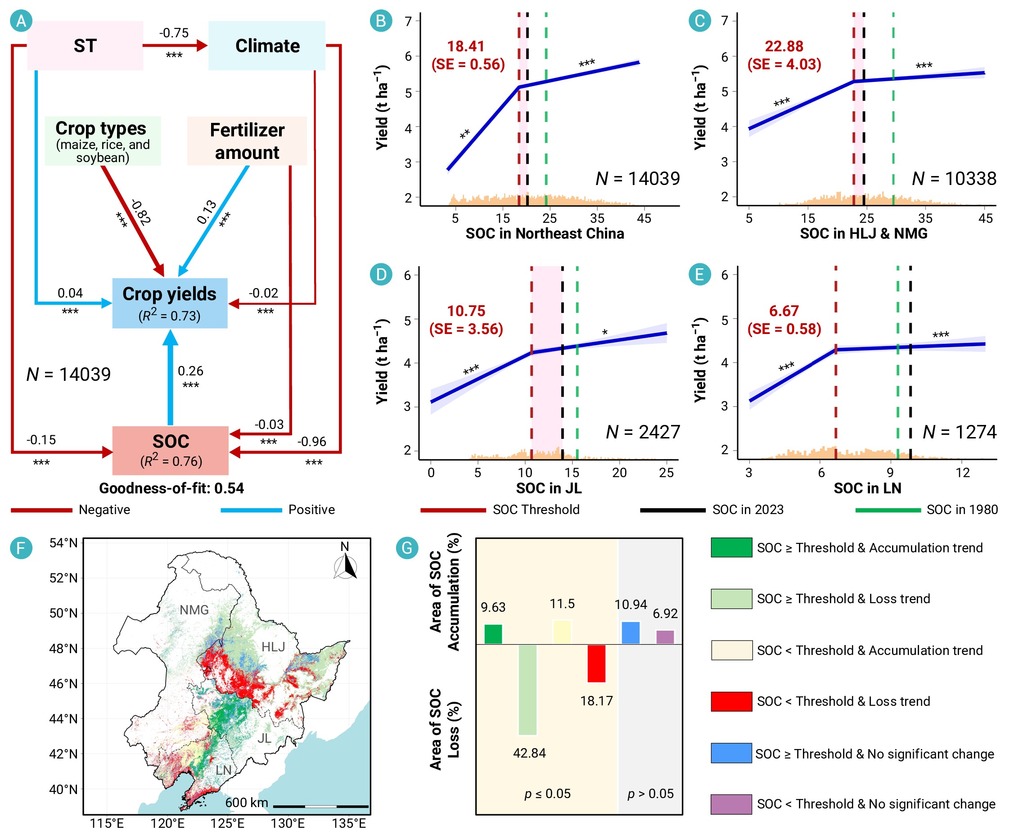
Figure 5.
Relationships between soil organic carbon (SOC) at 0–30 cm and crop yield
-
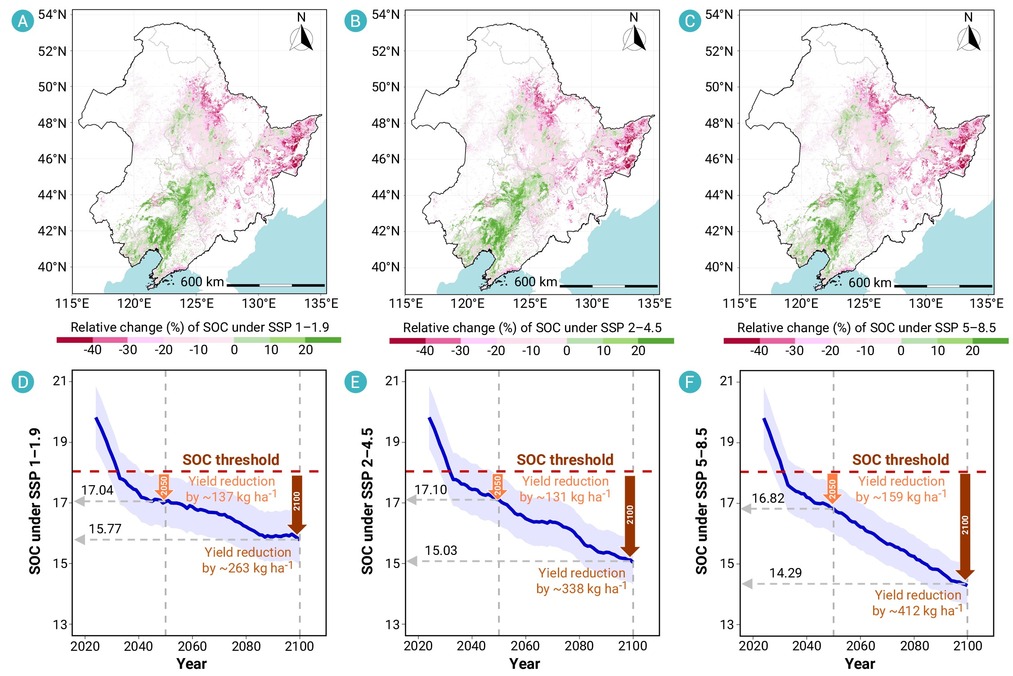
Figure 6.
Spatiotemporal changes in cropland soil organic carbon (SOC) (g kg−1) at 0–30 cm and its impact on crop yields under Shared Socioeconomic Pathways (SSPs) scenarios in Northeast China
-
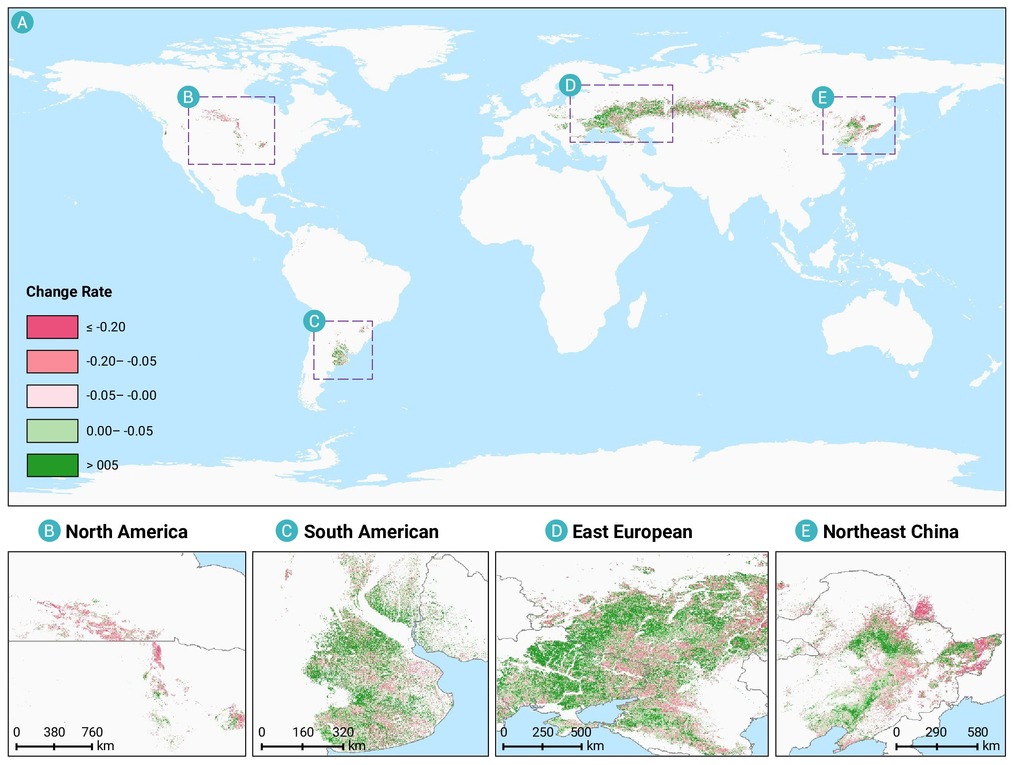
Figure 7.
Spatial patterns of change rates (g kg−1 yr−1) of cropland soil organic carbon (SOC) at 0–30 cm depth across global black soil regions during 2000–2022
