
Urbanization and climate change disproportionately affect worldwide rooftop solar viability for self-sufficient electricity
-
GRAPHICAL ABSTRACT
 DownLoad:
Full size image
DownLoad:
Full size image
-
PUBLIC SUMMARY
-
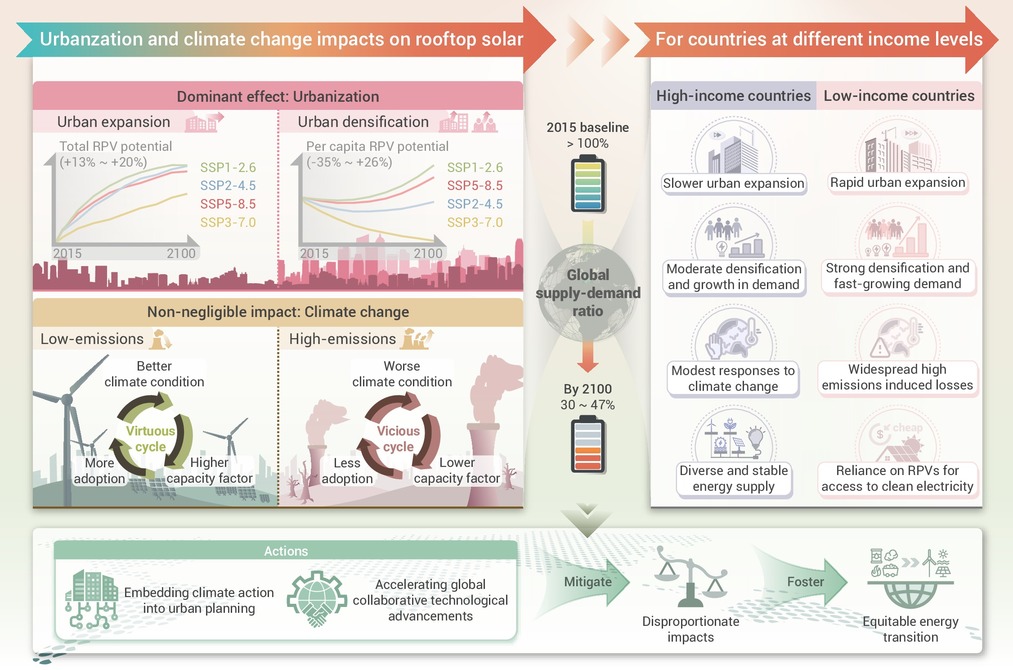
Urban expansion will considerably increase rooftop photovoltaic (RPV) potential over the 21st century.
Per capita RPV potential is likely to decline due to the prevailing trend towards urban densification.
Urbanization primarily drives RPV potential changes, but climate change impacts cannot be overlooked.
Urbanization and climate change may disproportionately constrain lower-income countries’ RPV viability.
-
-
ABSTRACT
Rooftop photovoltaics (RPVs) play an increasingly critical role in global zero-carbon energy transition, yet underexplored is to what extent RPV potential can supply the ever-rising electricity demand under the combined effects of urbanization and climate change. Here, we project that the global RPV potential will grow by 13%—20% from 2015 to2100 under four different socioeconomic-climate scenarios. This increase is primarily driven by RPV gains associated with urban expansion, although nearly one-fifth of them might be offset by climate-induced losses under high-emissions scenarios. However, future urban densification can drive down per capita RPV potential, which, alongside increasing individual consumption, will diminish RPVs' maximum feasible share in global electricity mix from 117% to 30%—47% by 2100. While simultaneously suffering from more severe and widespread high-emissions-induced losses, many developing countries, particularly the least developed, will undergo stronger urban densification, which shifts their RPV electricity supply-demand ratios from general surpluses over 200% to deficits much larger than those in wealthier countries. Given their reliance on RPVs for access to clean electricity, our results highlight the urgent need for strategic interventions, including embedding climate action into urban planning and accelerating global collaborative technological advancements, to mitigate these disproportionate impacts and foster an equitable energy transition.-
Keywords:
- Renewable energy /
- Solar potential /
- Rooftop photovoltaics /
- Urbanization /
- Climate change
-

-
REFERENCES
[1] Wang Y., Wang R., Tanaka K., et al. (2025). Global spatiotemporal optimization of photovoltaic and wind power to achieve the Paris agreement targets. Nat. Commun. 16:2127. DOI:10.1038/s41467-025-57292-w [2] Martinopoulos G. (2020). Are rooftop photovoltaic systems a sustainable solution for Europe. A life cycle impact assessment and cost analysis. Appl. Energy 257:114035. DOI:10.1016/j.apenergy.2019.114035 [3] Joshi S., Mittal S., Holloway P., et al. (2021). High resolution global spatiotemporal assessment of rooftop solar photovoltaics potential for renewable electricity generation. Nat. Commun. 12:5738. DOI:10.1038/s41467-021-25720-2 [4] Zhang Z., Chen M., Zhong T., et al. (2023). Carbon mitigation potential afforded by rooftop photovoltaic in China. Nat. Commun. 14:2347. DOI:10.1038/s41467-023-38079-3 [5] Barasa M., Bogdanov D., Oyewo A. S., et al. (2018). A cost optimal resolution for Sub-Saharan Africa powered by 100% renewables in 2030. Renew. Sust. Energ. Rev. 92:440−457. DOI:10.1016/j.rser.2018.04.110 [6] Zope R. Rooftop solar PV market size, share, growth, and regional forecast, 2025-2032. https://www.persistencemarketresearch.com/market-research/rooftop-solar-pv-market.asp [7] Assouline D., Mohajeri N. and Scartezzini J.-L. (2017). Quantifying rooftop photovoltaic solar energy potential: A machine learning approach. Sol. Energy 141:278−296. DOI:10.1016/j.solener.2016.11.045 [8] Frolking S., Mahtta R., Milliman T., et al. (2024). Global urban structural growth shows a profound shift from spreading out to building up. Nat. Cities 1:555−566. DOI:10.1038/s44284-024-00100-1 [9] Liu X., Wu X., Li X., et al. (2025). Global mapping of three-dimensional urban structures reveals escalating utilization in the vertical dimension and pronounced building space inequality. Engineering 47:86−99. DOI:10.1016/j.eng.2024.01.025 [10] Skoplaki E. and Palyvos J. A. (2009). On the temperature dependence of photovoltaic module electrical performance: A review of efficiency/power correlations. Sol. Energy 83:614−624. DOI:10.1016/j.solener.2008.10.008 [11] Chenni R., Makhlouf M., Kerbache T., et al. (2007). A detailed modeling method for photovoltaic cells. Energy 32:1724−1730. DOI:10.1016/j.energy.2006.12.006 [12] Chen X., Mao H., Cheng N., et al. (2024). Climate change impacts on global photovoltaic variability. Appl. Energy 374:124087. DOI:10.1016/j.apenergy.2024.124087 [13] Lei Y., Wang Z., Wang D., et al. (2023). Co-benefits of carbon neutrality in enhancing and stabilizing solar and wind energy. Nat. Clim. Change 13:693−700. DOI:10.1038/s41558-023-01692-7 [14] Isaza A., Kay M., Evans J. P., et al. (2023). Maximizing photovoltaic potential and minimizing costs in a future warmer climate: The role of atmospheric aerosols and greenhouse gas emissions. Renew. Energ. 219:119561. DOI:10.1016/j.renene.2023.119561 [15] Wild M., Folini D., Henschel F., et al. (2015). Projections of long-term changes in solar radiation based on CMIP5 climate models and their influence on energy yields of photovoltaic systems. Sol. Energy 116:12−24. DOI:10.1016/j.solener.2015.03.039 [16] Crook J. A., Jones L. A., Forster P. M., et al. (2011). Climate change impacts on future photovoltaic and concentrated solar power energy output. Energ. Environ. Sci. 4:3101−3109. DOI:10.1039/C1EE01495A [17] Zhang Z., Qian Z., Chen M., et al. (2025). Worldwide rooftop photovoltaic electricity generation may mitigate global warming. Nat. Clim. Change 15:393−402. DOI:10.1038/s41558-025-02276-3 [18] O’Neill B. C., Kriegler E., Riahi K., et al. (2014). A new scenario framework for climate change research: the concept of shared socioeconomic pathways. Clim. Change 122:387−400. DOI:10.1007/s10584-013-0905-2 [19] Lu N., Yao L., Qin J., et al. (2022). High emission scenario substantially damages China's photovoltaic potential. Geophys. Res. Lett. 49:e2022GL100068. DOI:10.1029/2022GL100068 [20] Masson-Delmotte V., Zhai P., Pörtner H.-O., et al. (2018). Global warming of 1.5 C: IPCC special report on impacts of global warming of 1.5 C above pre-industrial levels in context of strengthening response to climate change, sustainable development, and efforts to eradicate poverty. https://www.ipcc.ch/sr15/ [21] O’Neill B. C., Carter T. R., Ebi K., et al. (2020). Achievements and needs for the climate change scenario framework. Nat. Clim. Change 10:1074−1084. DOI:10.1038/s41558-020-00952-0 [22] van Vuuren D. P., Edmonds J., Kainuma M., et al. (2011). The representative concentration pathways: An overview. Clim. Change 109:5. DOI:10.1007/s10584-011-0148-z [23] Sirko W., Kashubin S., Ritter M., et al. (2021). Continental-scale building detection from high resolution satellite imagery. arXiv preprint arXiv:2107.12283. DOI:10.48550/arXiv.2107.12283 [24] Heris M. P., Foks N. L., Bagstad K. J., et al. (2020). A rasterized building footprint dataset for the United States. Sci. Data 7:207. DOI:10.1038/s41597-020-0542-3 [25] Zhang Z., Qian Z., Zhong T., et al. (2022). Vectorized rooftop area data for 90 cities in China. Sci. Data 9:66. DOI:10.1038/s41597-022-01168-x [26] Chen G., Li X., Liu X., et al. (2020). Global projections of future urban land expansion under shared socioeconomic pathways. Nat. Commun. 11:537. DOI:10.1038/s41467-020-14386-x [27] Lloyd C. T., Chamberlain H., Kerr D., et al. (2019). Global spatio-temporally harmonised datasets for producing high-resolution gridded population distribution datasets. Big Earth Data 3:108−139. DOI:10.1080/20964471.2019.1625151 [28] Li M., Zhou B.-B., Gao M., et al. (2022). Spatiotemporal dynamics of global population and heat exposure (2020–2100): Based on improved SSP-consistent population projections. Environ. Res. Lett. 17:094007. DOI:10.1088/1748-9326/ac8755 [29] Meijer J. R., Huijbregts M. A. J., Schotten K. C. G. J., et al. (2018). Global patterns of current and future road infrastructure. Environ. Res. Lett. 13:064006. DOI:10.1088/1748-9326/aabd42 [30] Hastings D. A. and Dunbar P. (1998). Development & assessment of the global land one-km base elevation digital elevation model (GLOBE). Int. Soc. Photogramm. Remote Sens. 4:218-221. https://www.isprs.org/proceedings/XXXII/part4/hastings54.pdf [31] Beck H. E., Zimmermann N. E., McVicar T. R., et al. (2018). Present and future Köppen-Geiger climate classification maps at 1-km resolution. Sci. Data 5:180214. DOI:10.1038/sdata.2018.214 [32] Thrasher B., Wang W., Michaelis A., et al. (2022). NASA global daily downscaled projections, CMIP6. Sci. Data 9:262. DOI:10.1038/s41597-022-01393-4 [33] World Bank Group (2019). Global solar atlas 2.0: Technical report (English). http://documents.worldbank.org/curated/en/529431592893043403 [34] Dobos A. P. (2012). An improved coefficient calculator for the california energy commission 6 parameter photovoltaic module model. J. Sol. Energy Eng. 134:021011. DOI:10.1115/1.4005759 [35] Keiner D., Gulagi A. and Breyer C. (2023). Energy demand estimation using a pre-processing macro-economic modelling tool for 21st century transition analyses. Energy 272:127199. DOI:10.1016/j.energy.2023.127199 [36] Chen T. and Guestrin C. (2016). XGBoost: A scalable tree boosting system. Krishnapuram, B., Shah M., Smola A., et al. (eds). Proceedings of the 22nd ACM SIGKDD International Conference on Knowledge Discovery and Data Mining (Association for Computing Machinery), pp:785–794. DOI: 10.1145/2939672.2939785 [37] Prokhorenkova L., Gusev G., Vorobev A., et al. (2018). CatBoost: Unbiased boosting with categorical features. Bengio, S., Wallach H. M., Larochelle H., et al. (eds). NIPS'18: Proceedings of the 32nd international conference on neural information processing systems (Curran Associates Inc.), pp:6639–6649. DOI: 10.5555/3327757.3327770 [38] Ke G., Meng Q., Finley T., et al. (2017). LightGBM: A highly efficient gradient boosting decision tree. Luxburg U. V., Guyon I., Bengio S., et al. (eds). NIPS'17: Proceedings of the 31st international conference on neural information processing systems (Curran Associates Inc.), pp:3149–3157. DOI: 10.5555/3294996.3295074 [39] Brenning A. (2012). Spatial cross-validation and bootstrap for the assessment of prediction rules in remote sensing: The R package sperrorest. 2012 IEEE IGARSS DOI: 10.1109/IGARSS.2012.6352393 [40] Mohajeri N., Assouline D., Guiboud B., et al. (2018). A city-scale roof shape classification using machine learning for solar energy applications. Renew. Energ. 121:81−93. DOI:10.1016/j.renene.2017.12.096 [41] Andrews R. W., Stein J. S., Hansen C., et al. (2014). Introduction to the open source PVLIB for python photovoltaic system modelling package. 2014 IEEE 40th PVSC DOI: 10.1109/PVSC.2014.6925501 [42] Müller J., Folini D., Wild M., et al. (2019). CMIP-5 models project photovoltaics are a no-regrets investment in Europe irrespective of climate change. Energy 171:135−148. DOI:10.1016/j.energy.2018.12.139 [43] Ineichen P., Perez R., Seal R., et al. (1992). Dynamic global-to-direct irradiance conversion models. Ashrae Trans. 98:354-369. https://www.researchgate.net/publication/279868352_Dynamic_global-to-direct_irradiance_conversion_models [44] Reda I. and Andreas A. (2004). Solar position algorithm for solar radiation applications. Sol. Energy 76:577−589. DOI:10.1016/j.solener.2003.12.003 [45] Hay J. E. and Davies J. A. (1980). Calculations of the solar radiation incident on an inclined surface. Hay, J.E. and Won T. K. (eds). Proceedings of first Canadian solar radiation data workshop (Ministry of Supply and Services), pp:59–72. https://archive.org/details/proceedingsfirst00cana [46] Kratochvil J. A., Boyson W. E. and King D. L. (2004). Photovoltaic array performance model. DOI: 10.2172/919131 [47] Galen L. B., Naïm R. D., Eric O. S., et al. (2022). Tracking the Sun: Pricing and design trends for distributed photovoltaic systems in the United States, 2022 Edition. https://emp.lbl.gov/publications/tracking-sun-pricing-and-design-1 [48] Bhattacharya S. and John S. (2019). Beyond 30% conversion efficiency in silicon solar cells: A numerical demonstration. Sci. Rep. 9:12482. DOI:10.1038/s41598-019-48981-w [49] European Commission (2022). EU solar energy strategy. https://eur-lex.europa.eu/legal-content/EN/TXT/HTML/?uri=CELEX:52022DC0221 [50] Bauer N., Calvin K., Emmerling J., et al. (2017). Shared socio-economic pathways of the energy sector–quantifying the narratives. Global Environ. Chang. 42:316−330. DOI:10.1016/j.gloenvcha.2016.07.006 [51] Miller L. M. and Keith D. W. (2018). Observation-based solar and wind power capacity factors and power densities. Env. Res. Lett. 13:104008. DOI:10.1088/1748-9326/aae102 [52] Bódis K., Kougias I., Jäger-Waldau A., et al. (2019). A high-resolution geospatial assessment of the rooftop solar photovoltaic potential in the European Union. Renew. Sust. Energ. Rev. 114:109309. DOI:10.1016/j.rser.2019.109309 [53] Tang Q., Wu J., Xiao J., et al. (2021). Assessment of global solar resource development. Glob. Energy Interconnect. 4:453−464. DOI:10.1016/j.gloei.2021.11.002 [54] van der Zwaan B., Kober T., Longa F. D., et al. (2018). An integrated assessment of pathways for low-carbon development in Africa. Energy Policy 117:387−395. DOI:10.1016/j.enpol.2018.03.017 [55] Ram M., Bogdanov D., Aghahosseini A., et al. (2022). Global energy transition to 100% renewables by 2050: Not fiction, but much needed impetus for developing economies to leapfrog into a sustainable future. Energy 246:123419. DOI:10.1016/j.energy.2022.123419 [56] Szabó S., Pinedo Pascua I., Puig D., et al. (2021). Mapping of affordability levels for photovoltaic-based electricity generation in the solar belt of sub-Saharan Africa, East Asia and South Asia. Sci. Rep. 11:3226. DOI:10.1038/s41598-021-82638-x [57] Peters R., Berlekamp J., Kabiri C., et al. (2024). Sustainable pathways towards universal renewable electricity access in Africa. Nat. Rev. Earth Env. 5:137−151. DOI:10.1038/s43017-023-00501-1 [58] Polimeni J. M., Iorgulescu R. I. and Chandrasekara R. (2014). Trans-border public health vulnerability and hydroelectric projects: The case of Yali Falls Dam. Ecol. Econ. 98:81−89. DOI:10.1016/j.ecolecon.2013.12.013 [59] Zarfl C. and Lucía A. (2018). The connectivity between soil erosion and sediment entrapment in reservoirs. Curr. Opin. Environ. Sci. Health 5:53−59. DOI:10.1016/j.coesh.2018.05.001 [60] Arnold W., Giuliani M. and Castelletti A. (2024). Floating photovoltaics may reduce the risk of hydro-dominated energy development in Africa. Nat. Energy 9:602−611. DOI:10.1038/s41560-024-01510-0 [61] Ram M., Aghahosseini A. and Breyer C. (2020). Job creation during the global energy transition towards 100% renewable power system by 2050. Technol. Forecast. Soc. 151:119682. DOI:10.1016/j.techfore.2019.06.008 [62] Adams S., Klobodu E. K. M. and Apio A. (2018). Renewable and non-renewable energy, regime type and economic growth. Renew. Energ. 125:755−767. DOI:10.1016/j.renene.2018.02.135 [63] Staffell I. and Green R. (2014). How does wind farm performance decline with age. Renew. Energ. 66:775−786. DOI:10.1016/j.renene.2013.10.041 [64] Kosmadakis I. E., Elmasides C., Koulinas G., et al. (2021). Energy unit cost assessment of six photovoltaic-battery configurations. Renew. Energ. 173:24−41. DOI:10.1016/j.renene.2021.03.010 [65] Solomon C. G., Salas R. N., Malina D., et al. (2022). Fossil-fuel pollution and climate change—A new NEJM group series. NEJM Catalyst 3:7. DOI. doi:10.1056/CAT.22.0186 [66] Carley S. and Konisky D. M. (2020). The justice and equity implications of the clean energy transition. Nat. Energy 5:569−577. DOI:10.1038/s41560-020-0641-6 [67] Ding L., Zhu Y., Zheng L., et al. (2023). What is the path of photovoltaic building (BIPV or BAPV) promotion. -The perspective of evolutionary games. Appl. Energ. 340:121033. DOI:10.1016/j.apenergy.2023.121033 [68] Awuku S. A., Bennadji A., Muhammad-Sukki F., et al. (2021). Myth or gold. The power of aesthetics in the adoption of building integrated photovoltaics (BIPVs). Energy Nexus 4:100021. DOI:10.1016/j.nexus.2021.100021 [69] Fazal M. A. and Rubaiee S. (2023). Progress of PV cell technology: Feasibility of building materials, cost, performance, and stability. Sol. Energy 258:203−219. DOI:10.1016/j.solener.2023.04.066 [70] Sovacool B. K., Newell P., Carley S., et al. (2022). Equity, technological innovation and sustainable behaviour in a low-carbon future. Nat. Hum. Behav. 6:326−337. DOI:10.1038/s41562-021-01257-8 [71] Gao X. and Zhang Y. (2022). What is behind the globalization of technology. Exploring the interplay of multi-level drivers of international patent extension in the solar photovoltaic industry. Renew. Sust. Energ. Rev. 163:112510. DOI:10.1016/j.rser.2022.112510 [72] Fyson C. L., Baur S., Gidden M., et al. (2020). Fair-share carbon dioxide removal increases major emitter responsibility. Nat. Clim. Change 10:836−841. DOI:10.1038/s41558-020-0857-2 [73] Li Q., Krapf S., Mou L., et al. (2024). Deep learning-based framework for city-scale rooftop solar potential estimation by considering roof superstructures. Appl. Energ. 374:123839. DOI:10.1016/j.apenergy.2024.123839 [74] Del Hierro López I. and Olivieri L. (2025). Comprehensive review of building-integrated photovoltaics in the renovation of heritage buildings. J. Build. Eng. 108:112883. DOI:10.1016/j.jobe.2025.112883 [75] Sunter D. A., Castellanos S. and Kammen D. M. (2019). Disparities in rooftop photovoltaics deployment in the United States by race and ethnicity. Nat. Sustain. 2:71−76. DOI:10.1038/s41893-018-0204-z [76] Poshnath A., Rismanchi B. and Rajabifard A. (2023). Adoption of Renewable Energy Systems in common properties of multi-owned buildings: Introduction of ‘Energy Entitlement’. Energ. Policy 174:113465. DOI:10.1016/j.enpol.2023.113465 [77] Kapsalis V., Maduta C., Skandalos N., et al. (2024). Critical assessment of large-scale rooftop photovoltaics deployment in the global urban environment. Renew. Sust. Energ. Rev. 189:114005. DOI:10.1016/j.rser.2023.114005 [78] Chen B., Wang W., You Y., et al. (2023). Influence of rooftop mitigation strategies on the thermal environment in a subtropical city. Urban. Clim. 49:101450. DOI:10.1016/j.uclim.2023.101450 [79] Zhang H., Luo M., Pei T., et al. (2023). Unequal urban heat burdens impede climate justice and equity goals. The Innovation 4:100488. DOI:10.1016/j.xinn.2023.100488 [80] Maurer B., Lienert J. and Cook L. M. (2023). Comparing PV-green and PV-cool roofs to diverse rooftop options using decision analysis. Build. Environ. 245:110922. DOI:10.1016/j.buildenv.2023.110922 [81] Zonato A., Martilli A., Gutierrez E., et al. (2021). Exploring the effects of rooftop mitigation strategies on urban temperatures and energy consumption. J. Geophys. Res. Atmos. 126:e2021JD035002. DOI:10.1029/2021JD035002 [82] Perera A. T. D., Javanroodi K., Mauree D., et al. (2023). Challenges resulting from urban density and climate change for the EU energy transition. Nat. Energy 8:397−412. DOI:10.1038/s41560-023-01232-9 -
ABOUT THIS ARTICLE
Cite this article:
Chen J., Chen Y., Luo M., et al. (2026). Urbanization and climate change disproportionately affect worldwide rooftop solar viability for self-sufficient electricity. The Innovation Geoscience 4:100222. https://doi.org/10.59717/j.xinn-geo.2026.100222
Welcome!
To request copyright permission to republish or share portions of our works, please visit Copyright Clearance Center's (CCC) Marketplace website at marketplace.copyright.com.
Export File
Citation
Chen J., Chen Y., Luo M., et al. (2026). Urbanization and climate change disproportionately affect worldwide rooftop solar viability for self-sufficient electricity. The Innovation Geoscience 4:100222. https://doi.org/10.59717/j.xinn-geo.2026.100222

Format
Content
-
Figure 1.
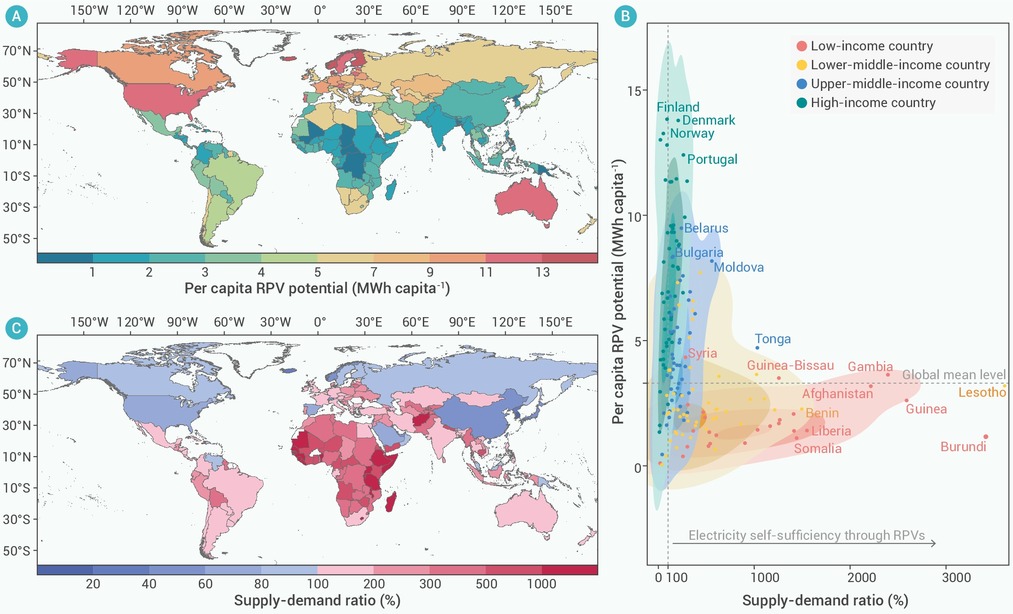
Global patterns of per capita RPV potential and the supply-demand ratio of RPV electricity in 2015
-
Figure 2.
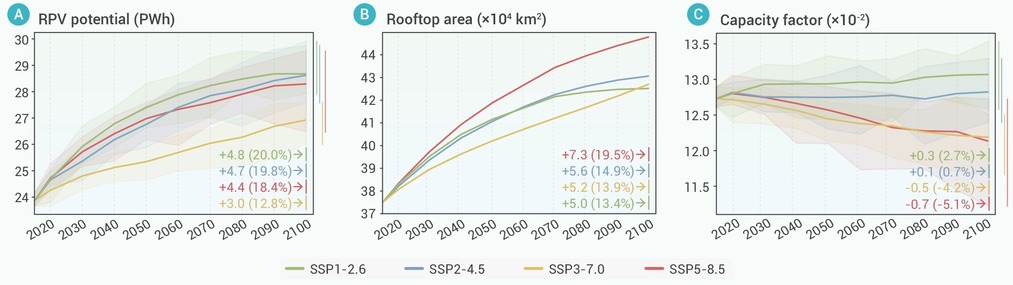
Projected RPV potential under different future scenarios of urban expansion and climate change
-
Figure 3.
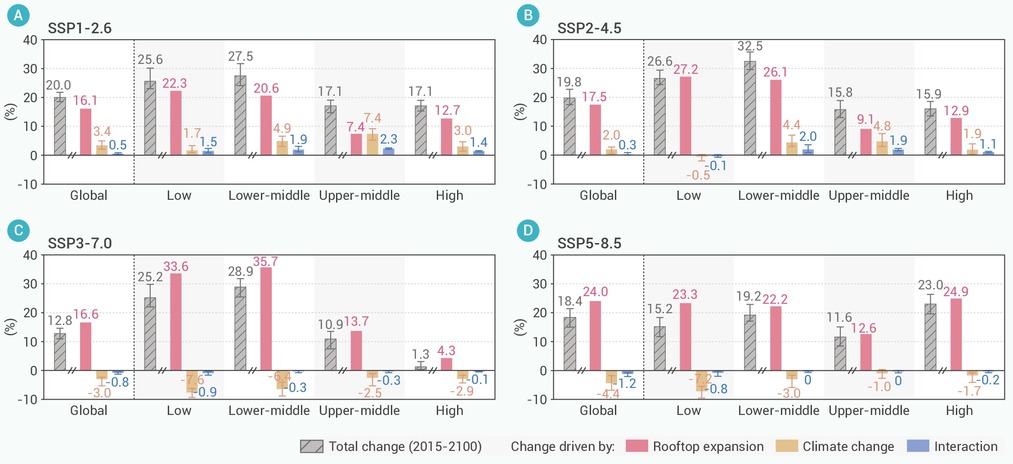
Contribution of rooftop expansion, climate change, and their interaction to RPV potential changes from 2015 to
2100 -
Figure 4.
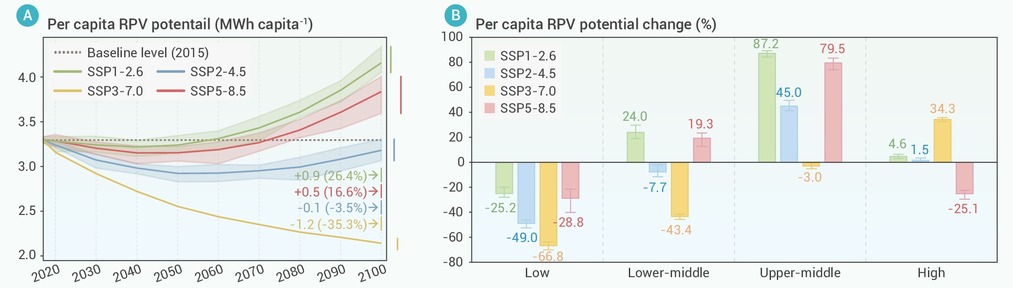
Projected per capita RPV potential from 2015 to
2100 -
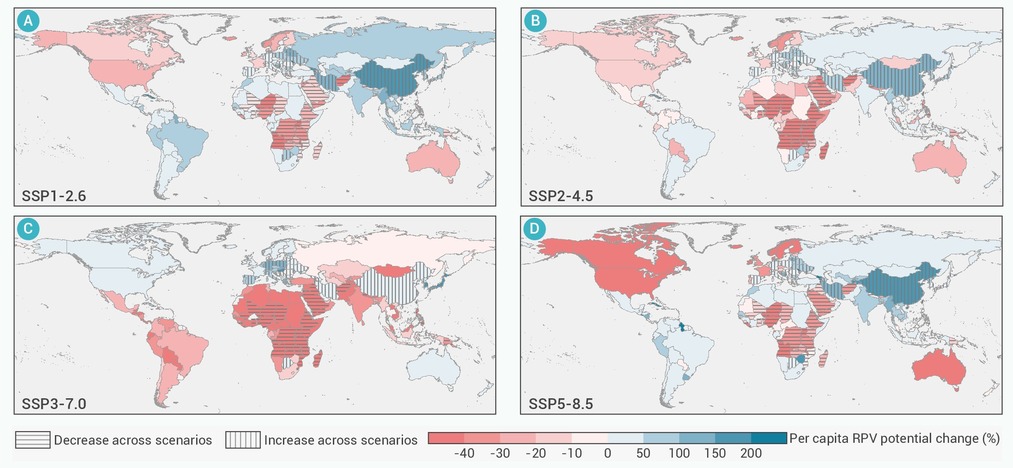
Figure 5.
Spatial distribution of projected change in per capita RPV potential
-
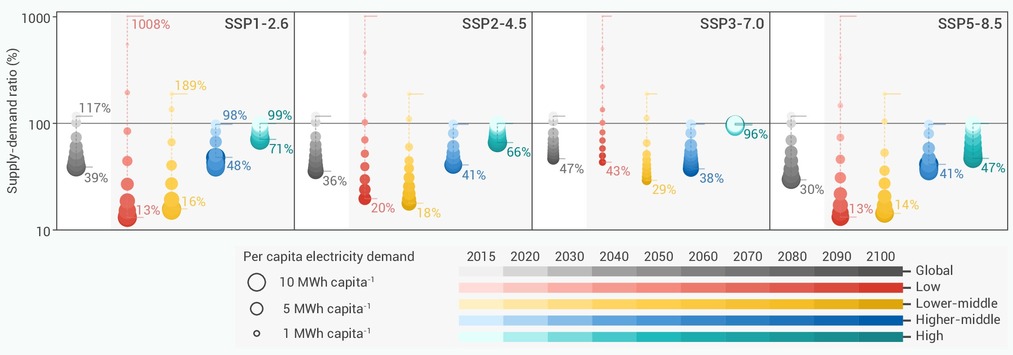
Figure 6.
Projected supply-demand ratio for RPV electricity from 2015 to
2100 -
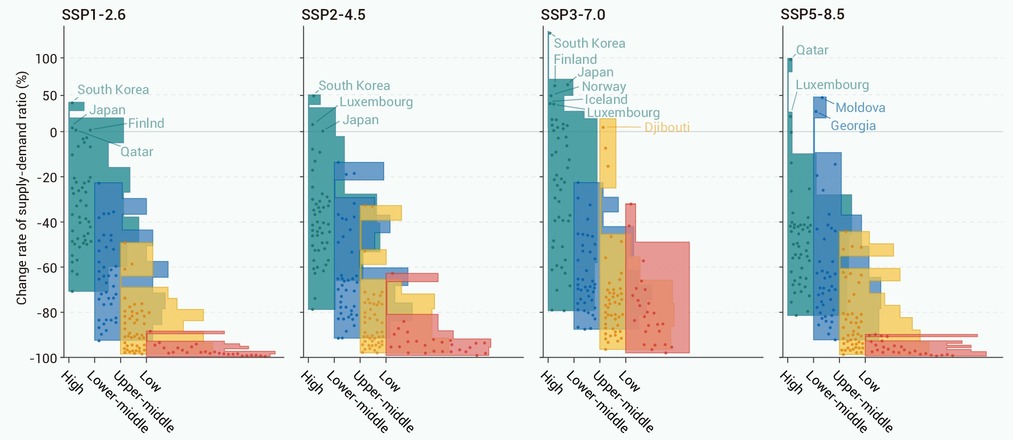
Figure 7.
Projected change in supply-demand ratio across countries of different income levels
