
Canopy structure–biomass coupling strengthens with age under stage-dependent environmental controls during China's forest recovery
-
GRAPHICAL ABSTRACT
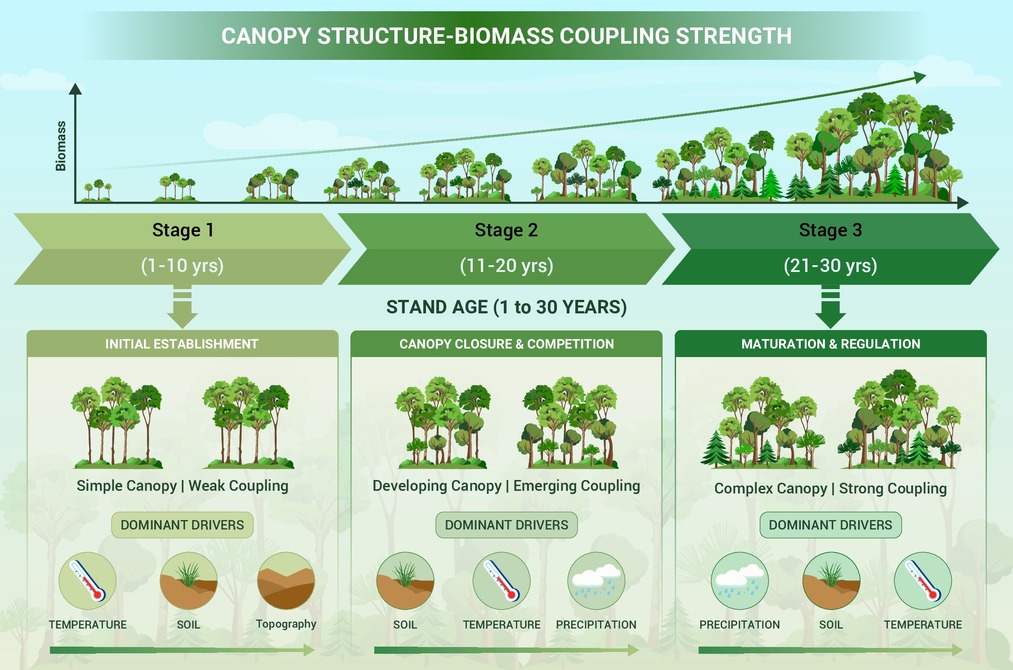
 DownLoad:
Full size image
DownLoad:
Full size image
-
PUBLIC SUMMARY
-
Stand age significantly strengthens the coupling of canopy structural complexity and biomass density.
Early-established structural fingerprints provide stable, biome-specific benchmarks for recovery.
Forest structure recovery drivers shift dynamically from temperature, to soil, and precipitation.
-
-
ABSTRACT
Forest restoration is a critical nature-based solution, yet our understanding of its structural development often relies on static, universal assumptions. This study challenges that paradigm by revealing the dynamic, context-dependent principles of forest recovery. By integrating multisource remote sensing data over China’s 30-year period of natural forest regeneration, we find that the positive coupling between canopy structural complexity and aboveground biomass strengthens significantly with stand age. We found that distinct forest biomes exhibit unique structural fingerprints that are established early and persist through early restoration. Crucially, these recovery pathways are characterized by a predictable shift in dominant environmental drivers: from initial filtering mainly by temperature to mid-stage limitation by soil resources, and finally to regulation by precipitation in more mature stands. This work presents a dynamic framework for establishing biome-specific restoration targets and developing adaptive management strategies to increase global ecosystem resilience. -

-
REFERENCES
[1] Hua F., Bruijnzeel L. A., Meli P., et al. (2022). The biodiversity and ecosystem service contributions and trade-offs of forest restoration approaches. Science 376:839−844. DOI:10.1126/science.abl4649 [2] Williams B. A., Beyer H. L., Fagan M. E., et al. (2024). Global potential for natural regeneration in deforested tropical regions. Nature 636:131−137. DOI:10.1038/s41586-024-08106-4 [3] Chazdon R. and Brancalion P. (2019). Restoring forests as a means to many ends. Science 365:24−25. DOI:10.1126/science.aax9539 [4] Erbaugh J. T., Pradhan N., Adams J., et al. (2020). Global forest restoration and the importance of prioritizing local communities. Nat. Ecol. Evol. 4:1472−1476. DOI:10.1038/s41559-020-01282-2 [5] Robinson N., Drever C. R., Gibbs D. A., et al. (2025). Protect young secondary forests for optimum carbon removal. Nat. Clim. Change 15:793−800. DOI:10.1038/s41558-025-02355-5 [6] Camarretta N., Harrison P. A., Bailey T., et al. (2020). Monitoring forest structure to guide adaptive management of forest restoration: A review of remote sensing approaches. New For. 51:573−596. DOI:10.1007/s11056-019-09754-5 [7] Rodrigues R. R., Lima R. A. F., Gandolfi S., et al. (2009). On the restoration of high diversity forests: 30 years of experience in the Brazilian Atlantic Forest. Biol. Conserv. 142:1242−1251. DOI:10.1016/j.biocon.2008.12.008 [8] Chaves R. B., Durigan G., Brancalion P. H. S., et al. (2015). On the need of legal frameworks for assessing restoration projects success: New perspectives from São Paulo state (Brazil). Restor. Ecol. 23:754−759. DOI:10.1111/rec.12267 [9] Fu X., Zhang Z., Cao L., et al. (2021). Assessment of approaches for monitoring forest structure dynamics using bi-temporal digital aerial photogrammetry point clouds. Remote Sens. Environ. 255:112300. DOI:10.1016/j.rse.2021.112300 [10] Masek J. G., Hayes D. J., Joseph Hughes M., et al. (2015). The role of remote sensing in process-scaling studies of managed forest ecosystems. For. Ecol. Manage. 355:109−123. DOI:10.1016/j.foreco.2015.05.032 [11] Santoro G. B., Molin P. G., Viveiros J. M. S. M., et al. (2025). Monitoring the structure of restored forests and assessing aboveground carbon density through canopy metrics derived from digital aerial photogrammetry and LiDAR. Restor. Ecol. 33:e70077. DOI:10.1111/rec.70077 [12] Ruiz-Jaén M. C. and Aide T. M. (2005). Vegetation structure, species diversity, and ecosystem processes as measures of restoration success. For. Ecol. Manage. 218:159−173. DOI:10.1016/j.foreco.2005.07.008 [13] De Almeida D. R. A., Broadbent E. N., Ferreira M. P., et al. (2021). Monitoring restored tropical forest diversity and structure through UAV-borne hyperspectral and lidar fusion. Remote Sens. Environ. 264:112582. DOI:10.1016/j.rse.2021.112582 [14] Liu X., Ma Q., Wu X., et al. (2022). A novel entropy-based method to quantify forest canopy structural complexity from multiplatform lidar point clouds. Remote Sens. Environ. 282:113280. DOI:10.1016/j.rse.2022.113280 [15] Hu T., Liu X., Wu X., et al. (2025). Advance in forest canopy structural complexity research. J Remote Sens-Prc. 29:83−101. DOI:10.11834/jrs.20244007 [16] de Conto T., Armston J. and Dubayah R. (2024). Characterizing the structural complexity of the Earth’s forests with spaceborne lidar. Nat. Commun. 15:8116. DOI:10.1038/s41467-024-52468-2 [17] Liu X., Feng Y., Hu T., et al. (2024). Enhancing ecosystem productivity and stability with increasing canopy structural complexity in global forests. Sci. Adv. 10:eadl1947. DOI:10.1126/sciadv.adl1947 [18] Fahey C., Choi D., Wang J., et al. (2025). Canopy complexity drives positive effects of tree diversity on productivity in two tree diversity experiments. Ecology 106:e4500. DOI:10.1002/ecy.4500 [19] LaRue E. A., Fahey R. T., Alveshere B. C., et al. (2023). A theoretical framework for the ecological role of three-dimensional structural diversity. Front. Ecol. Environ. 21:4−13. DOI:10.1002/fee.2587 [20] Gough C. M., Atkins J. W., Fahey R. T., et al. (2019). High rates of primary production in structurally complex forests. Ecology 100:e02864. DOI:10.1002/ecy.2864 [21] Chazdon R. L., Letcher S. G., van Breugel M., et al. (2006). Rates of change in tree communities of secondary neotropical forests following major disturbances. Phil. Trans. R. Soc. B. 362:273−289. DOI:10.1098/rstb.2006.1990 [22] Poorter L., Bongers F., Aide T. M., et al. (2016). Biomass resilience of Neotropical secondary forests. Nature 530:211−214. DOI:10.1038/nature16512 [23] Poorter H., Niklas K. J., Reich P. B., et al. (2012). Biomass allocation to leaves, stems and roots: meta-analyses of interspecific variation and environmental control. New Phytol. 193:30−50. DOI:10.1111/j.1469-8137.2011.03952.x [24] Ehbrecht M., Seidel D., Annighöfer P., et al. (2021). Global patterns and climatic controls of forest structural complexity. Nat. Commun. 12:519. DOI:10.1038/s41467-020-20767-z [25] Bazzaz F. A. (1990). The response of natural ecosystems to the rising global CO2 levels. Annu. Rev. Ecol. Evol. S. 21:167−196. DOI:10.1146/annurev.es.21.110190.001123 [26] Cheng K., Zhang Y., Ren Y., et al. (2025). Natural forest restoration potential to mitigate climate change in China. Earths Future 13:e2024EF005794. DOI:10.1029/2024EF005794 [27] Bastin J.-F., Finegold Y., Garcia C., et al. (2019). The global tree restoration potential. Science 365:76−79. DOI:10.1126/science.aax0848 [28] Cheng K., Zhang Y., Yang H., et al. (2025). China’s naturally regenerated forests currently have greater aboveground carbon accumulation rates than newly planted forests. Commun. Earth Environ. 6:345. DOI:10.1038/s43247-025-02323-z [29] Nagy R. C., Rastetter E. B., Neill C., et al. (2017). Nutrient limitation in tropical secondary forests following different management practices. Ecol. Appl. 27:734−755. DOI:10.1002/eap.1478 [30] Phillips O. L., Aragão L. E. O. C., Lewis S. L., et al. (2009). Drought sensitivity of the amazon rainforest. Science 323:1344−1347. DOI:10.1126/science.1164033 [31] Stephenson N. L., Das A. J., Condit R., et al. (2014). Rate of tree carbon accumulation increases continuously with tree size. Nature 507:90−93. DOI:10.1038/nature12914 [32] Chazdon R. L., Broadbent E. N., Rozendaal D. M. A., et al. (2016). Carbon sequestration potential of second-growth forest regeneration in the Latin American tropics. Sci. Adv. 2:e1501639. DOI:10.1126/sciadv.1501639 [33] Pugh T. A. M., Lindeskog M., Smith B., et al. (2019). Role of forest regrowth in global carbon sink dynamics. Proc. Natl. Acad. Sci. USA 116:4382−4387. DOI:10.1073/pnas.1810512116 [34] Evans M. E. K., Adler P. B., Angert A. L., et al. (2025). Reconsidering space-for-time substitution in climate change ecology. Nat. Clim. Change 15:809−812. DOI:10.1038/s41558-025-02392-0 [35] Duncanson L., Kellner J. R., Armston J., et al. (2022). Aboveground biomass density models for NASA’s global ecosystem dynamics investigation (GEDI) lidar mission. Remote Sens. Environ. 270:112845. DOI:10.1016/j.rse.2021.112845 [36] Liang J., Gamarra J. G. P., Picard N., et al. (2022). Co-limitation towards lower latitudes shapes global forest diversity gradients. Nat. Ecol. Evol. 6:1423−1437. DOI:10.1038/s41559-022-01831-x [37] Liu F., Wu H., Zhao Y., et al. (2022). Mapping high resolution national soil information grids of China. Sci. Bull. 67:328−340. DOI:10.1016/j.scib.2021.10.013 [38] Su Y., Guo Q., Hu T., et al. (2020). An updated vegetation map of China (1:1000000). Sci. Bull. 65:1125−1136. DOI:10.1016/j.scib.2020.04.004 [39] Chazdon and Lee R. (2014). Second growth: The promise of tropical forest regeneration in an age of deforestation. DOI:10.7208/chicago/9780226118109.001.0001 [40] Griscom B. W., Adams J., Ellis P. W., et al. (2017). Natural climate solutions. Proc. Natl. Acad. Sci. USA 114:11645−11650. DOI:10.1073/pnas.1710465114 [41] Perea S. (2025). Listening to forest recovery. Nat. Rev. Biodivers. 1:496−496. DOI:10.1038/s44358-025-00073-6 [42] Saatchi S. S., Harris N. L., Brown S., et al. (2011). Benchmark map of forest carbon stocks in tropical regions across three continents. Proc. Natl. Acad. Sci. USA 108:9899−9904. DOI:10.1073/pnas.1019576108 [43] Avitabile V., Herold M., Heuvelink G. B. M., et al. (2016). An integrated pan-tropical biomass map using multiple reference datasets. Global Change Biol. 22:1406−1420. DOI:10.1111/gcb.13139 [44] McDowell N. G., Allen C. D., Anderson-Teixeira K., et al. (2020). Pervasive shifts in forest dynamics in a changing world. Science 368:eaaz9463. DOI:10.1126/science.aaz9463 [45] Binkley D., Stape J. L., Ryan M. G., et al. (2002). Age-related decline in forest ecosystem growth: An individual-tree, stand-structure hypothesis. Ecosystems 5:58−67. DOI:10.1007/s10021-001-0055-7 [46] Wright I. J., Reich P. B., Westoby M., et al. (2004). The worldwide leaf economics spectrum. Nature 428:821−827. DOI:10.1038/nature02403 [47] Kunstler G., Falster D., Coomes D. A., et al. (2016). Plant functional traits have globally consistent effects on competition. Nature 529:204−207. DOI:10.1038/nature16476 [48] Reich P. B. (2014). The world-wide ‘fast–slow’ plant economics spectrum: A traits manifesto. J. Ecol. 102:275−301. DOI:10.1111/1365-2745.12211 [49] Pretzsch H. (2014). Canopy space filling and tree crown morphology in mixed-species stands compared with monocultures. For. Ecol. Manage. 327:251−264. DOI:10.1016/j.foreco.2014.04.027 [50] Morin X. (2015). Species richness promotes canopy packing: A promising step towards a better understanding of the mechanisms driving the diversity effects on forest functioning. Funct. Ecol. 29:993−994. DOI:10.1111/1365-2435.12473 [51] Condit R., Engelbrecht B. M. J., Pino D., et al. (2013). Species distributions in response to individual soil nutrients and seasonal drought across a community of tropical trees. Proc. Natl. Acad. Sci. USA 110:5064−5068. DOI:10.1073/pnas.1218042110 [52] Seidl R., Thom D., Kautz M., et al. (2017). Forest disturbances under climate change. Nat. Clim. Change 7:395−402. DOI:10.1038/nclimate3303 [53] Hatfield J. L. and Prueger J. H. (2015). Temperature extremes: Effect on plant growth and development. Weather Clim. Extremes 10:4−10. DOI:10.1016/j.wace.2015.08.001 [54] Buira A., Fernández-Mazuecos M., Aedo C., et al. (2021). The contribution of the edaphic factor as a driver of recent plant diversification in a Mediterranean biodiversity hotspot. J. Ecol. 109:987−999. DOI:10.1111/1365-2745.13527 [55] Indoria A. K., Sharma K. L. and Reddy K. S. (2020). Chapter 18 - Hydraulic properties of soil under warming climate. In climate change and soil interactions, M.N.V. Prasad, and M. Pietrzykowski, eds. (Elsevier), pp:473-508. DOI:10.1016/B978-0-12-818032-7.00018-7 [56] Štraus D., Redondo M. Á., Castaño C., et al. (2024). Plant–soil feedbacks among boreal forest species. J. Ecol. 112:138−151. DOI:10.1111/1365-2745.14224 [57] Nimalka Sanjeewani H. K., Samarasinghe D. P. and De Costa W. A. J. M. (2024). Influence of elevation and the associated variation of climate and vegetation on selected soil properties of tropical rainforests across a wide elevational gradient. CATENA 237:107823. DOI:10.1016/j.catena.2024.107823 [58] Muscarella R., Kolyaie S., Morton D. C., et al. (2020). Effects of topography on tropical forest structure depend on climate context. J. Ecol. 108:145−159. DOI:10.1111/1365-2745.13261 [59] Wang G., Yang L., Wu X., et al. (2025). Density-dependent selection effect of dominant species rather than species diversity increased aboveground biomass accumulation in a temperate oak forest. For. Ecol. Manage. 582:122563. DOI:10.1016/j.foreco.2025.122563 [60] Kang H., Xue Y., Cui Y., et al. (2024). Nutrient limitation mediates soil microbial community structure and stability in forest restoration. Sci. Total Environ. 935:173266. DOI:10.1016/j.scitotenv.2024.173266 [61] Spohn M. and Stendahl J. (2024). Soil carbon and nitrogen contents in forest soils are related to soil texture in interaction with pH and metal cations. Geoderma 441:116746. DOI:10.1016/j.geoderma.2023.116746 [62] Iroshaka Gregory Marcelus Cooray P. L., Chalmers G. and Chittleborough D. (2025). A review of properties of organic matter fractions in soils of mangrove wetlands: Implications for carbon storage. Soil Biol. Biochem. 201:109660. DOI:10.1016/j.soilbio.2024.109660 [63] Van Sundert K., Horemans J. A., Stendahl J., et al. (2018). The influence of soil properties and nutrients on conifer forest growth in Sweden, and the first steps in developing a nutrient availability metric. Biogeosciences 15:3475−3496. DOI:10.5194/bg-15-3475-2018 [64] Pan Y., Fan Y., Chen C., et al. (2024). Does soil nutrient heterogeneity affect the competition and adaptation of Vernicia montana. For. Ecol. Manage. 561:121877. DOI:10.1016/j.foreco.2024.121877 [65] Russo S. E., Davies S. J., King D. A., et al. (2005). Soil-related performance variation and distributions of tree species in a Bornean rain forest. J. Ecol. 93:879−889. DOI:10.1111/j.1365-2745.2005.01030.x [66] Zhang B., Jackson T. D., Coomes D. A., et al. (2025). Soils and topography drive large and predictable shifts in canopy dynamics across tropical forest landscapes. New Phytol. 247:1666−1679. DOI:10.1111/nph.70300 [67] Tao S., Guo Q., Li C., et al. (2016). Global patterns and determinants of forest canopy height. Ecology 97:3265−3270. DOI:10.1002/ecy.1580 [68] Murphy B. A., May J. A., Butterworth B. J., et al. (2022). Unraveling forest complexity: Resource use efficiency, disturbance, and the structure-function relationship. J. Geophys. Res-biogeo. 127:e2021JG006748. DOI:10.1029/2021JG006748 [69] Jiang S., Zhao P., Ma Q., et al. (2025). Evidence of threat from short-timescale dry season drought on tree radial growth in China’s humid subtropical forest. Agric. For. Meteorol. 373:110744. DOI:10.1016/j.agrformet.2025.110744 [70] Su J., Gou X., HilleRisLambers J., et al. (2021). Increasing climate sensitivity of subtropical conifers along an aridity gradient. For. Ecol. Manage. 482:118841. DOI:10.1016/j.foreco.2020.118841 [71] Njoroge B., Li Y., Otieno D., et al. (2022). Seasonal droughts drive up carbon gain in a subtropical forest. J. Plant Ecol. 16:Page−range. DOI:10.1093/jpe/rtac088 [72] Laflower D. M., Hurteau M. D., Koch G. W., et al. (2016). Climate-driven changes in forest succession and the influence of management on forest carbon dynamics in the Puget Lowlands of Washington State, USA. For. Ecol. Manage. 362:194−204. DOI:10.1016/j.foreco.2015.12.015 [73] Campbell J. L., Driscoll C. T., Jones J. A., et al. (2022). Forest and freshwater ecosystem responses to climate change and variability at US LTER Sites. BioScience 72:851−870. DOI:10.1093/biosci/biab124 [74] Grimm N. B., Chapin III F. S., Bierwagen B., et al. (2013). The impacts of climate change on ecosystem structure and function. Front. Ecol. Environ. 11:474−482. DOI:10.1890/120282 [75] Xie Y., Wang X. and Silander J. A. (2015). Deciduous forest responses to temperature, precipitation, and drought imply complex climate change impacts. Proc. Natl. Acad. Sci. USA 112:13585−13590. DOI:10.1073/pnas.1509991112 [76] Gu H., Qiao Y., Xi Z., et al. (2022). Warming-induced increase in carbon uptake is linked to earlier spring phenology in temperate and boreal forests. Nat. Commun. 13:3698. DOI:10.1038/s41467-022-31496-w [77] Zhang X., Rademacher T., Liu H., et al. (2023). Fading regulation of diurnal temperature ranges on drought-induced growth loss for drought-tolerant tree species. Nat. Commun. 14:6916. DOI:10.1038/s41467-023-42654-z [78] Zhao F., Shi W., Xiao J., et al. (2025). Recent weakening of carbon-water coupling in northern ecosystems. npj Clim. Atmos. Sci. 8:161. DOI:10.1038/s41612-025-01059-z [79] Cui J., Deng O., Zheng M., et al. (2024). Warming exacerbates global inequality in forest carbon and nitrogen cycles. Nat. Commun. 15:9185. DOI:10.1038/s41467-024-53518-5 [80] Foster D., Swanson F., Aber J., et al. (2003). The importance of land-use legacies to ecology and conservation. BioScience 53:77−88. DOI:10.1641/0006-3568(2003)053[0077:Tiolul]2.0.Co;2 [81] Perring M. P., De Frenne P., Baeten L., et al. (2016). Global environmental change effects on ecosystems: The importance of land-use legacies. Global Change Biol. 22:1361−1371. DOI:10.1111/gcb.13146 [82] Schimel D., Pavlick R., Fisher J. B., et al. (2015). Observing terrestrial ecosystems and the carbon cycle from space. Global Change Biol. 21:1762−1776. DOI:10.1111/gcb.12822 [83] Yang Q., Niu C., Liu X., et al. (2023). Mapping high-resolution forest aboveground biomass of China using multisource remote sensing data. GISci. Remote Sens. 60:2203303. DOI:10.1080/15481603.2023.2203303 [84] Liu A., Cheng X. and Chen Z. (2021). Performance evaluation of GEDI and ICESat-2 laser altimeter data for terrain and canopy height retrievals. Remote Sens. Environ. 264:112571. DOI:10.1016/j.rse.2021.112571 [85] Dietze M. C., Fox A., Beck-Johnson L. M., et al. (2018). Iterative near-term ecological forecasting: Needs, opportunities, and challenges. Proc. Natl. Acad. Sci. USA 115:1424−1432. DOI:10.1073/pnas.1710231115 [86] Walker L. R., Wardle D. A., Bardgett R. D., et al. (2010). The use of chronosequences in studies of ecological succession and soil development. J. Ecol. 98:725−736. DOI:10.1111/j.1365-2745.2010.01664.x -
ABOUT THIS ARTICLE
Cite this article:
Cheng K., Chen A., Zhang Y., et al. (2026). Canopy structure–biomass coupling strengthens with age under stage-dependent environmental controls during China's forest recovery. The Innovation Geoscience 4:100228. https://doi.org/10.59717/j.xinn-geo.2026.100228
Welcome!
To request copyright permission to republish or share portions of our works, please visit Copyright Clearance Center's (CCC) Marketplace website at marketplace.copyright.com.
Export File
Citation
Cheng K., Chen A., Zhang Y., et al. (2026). Canopy structure–biomass coupling strengthens with age under stage-dependent environmental controls during China's forest recovery. The Innovation Geoscience 4:100228. https://doi.org/10.59717/j.xinn-geo.2026.100228

Format
Content
-
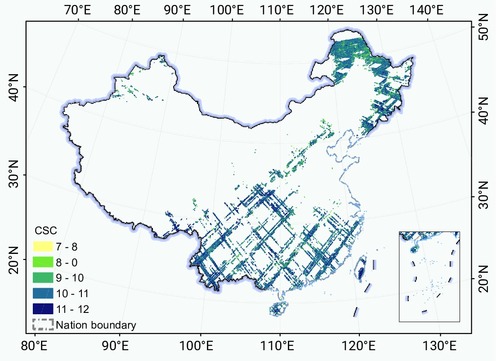
Figure 2.
Distribution of CSC across China’s natural forest recovery areas.
-
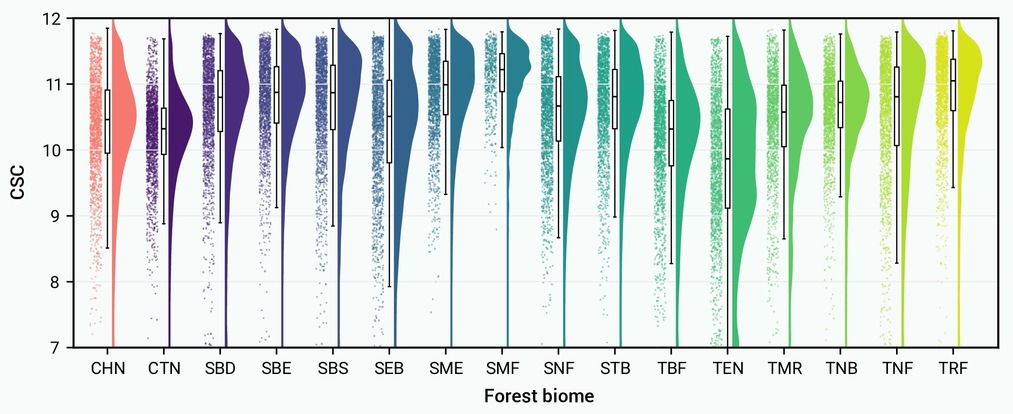
Figure 3.
Distributions of CSC values across various forest biomes
-
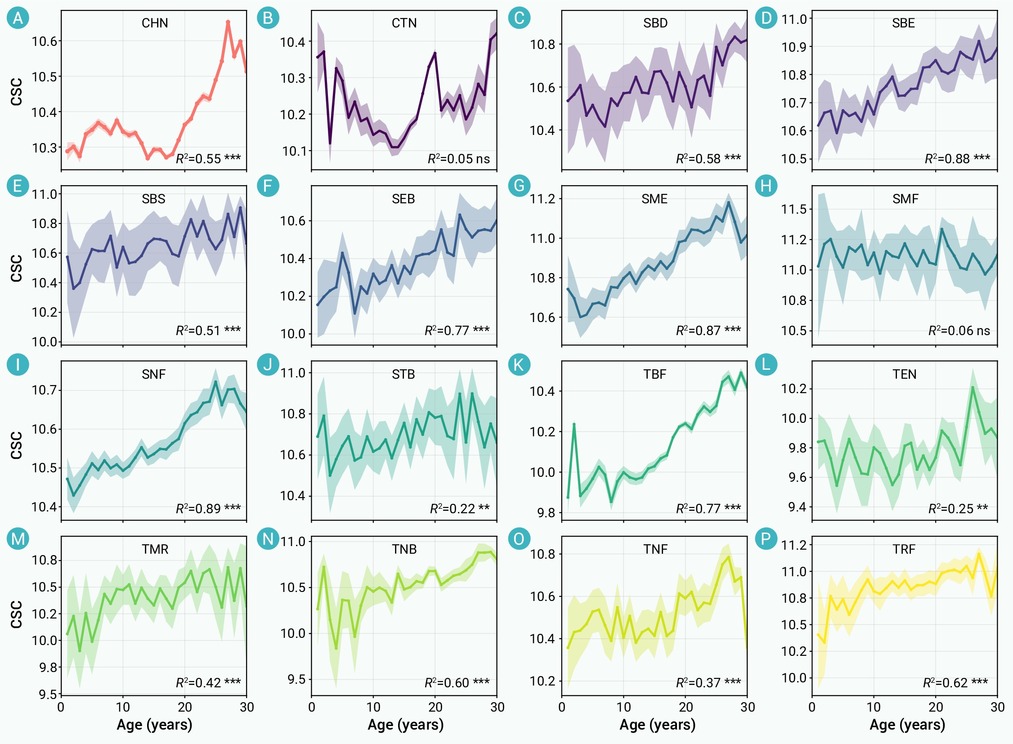
Figure 4.
Temporal trajectories of CSC values over a 30-year period for all forests combined and for each forest type across China
-
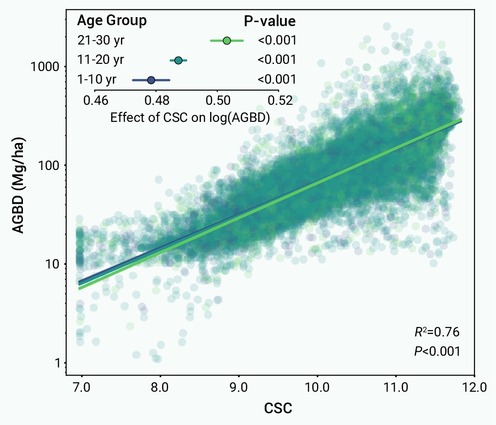
Figure 1.
Influence of CSC on the AGBD across the three early recovery stages
-
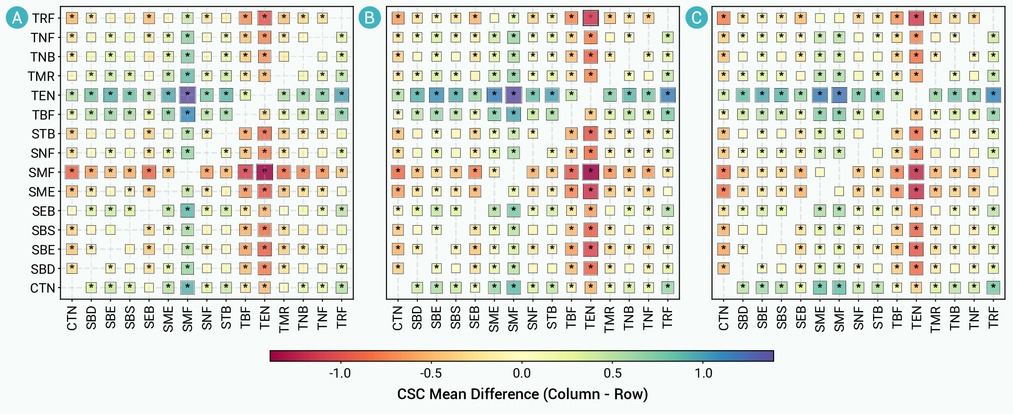
Figure 5.
Persistent structural hierarchy among forest biomes during early recovery
-
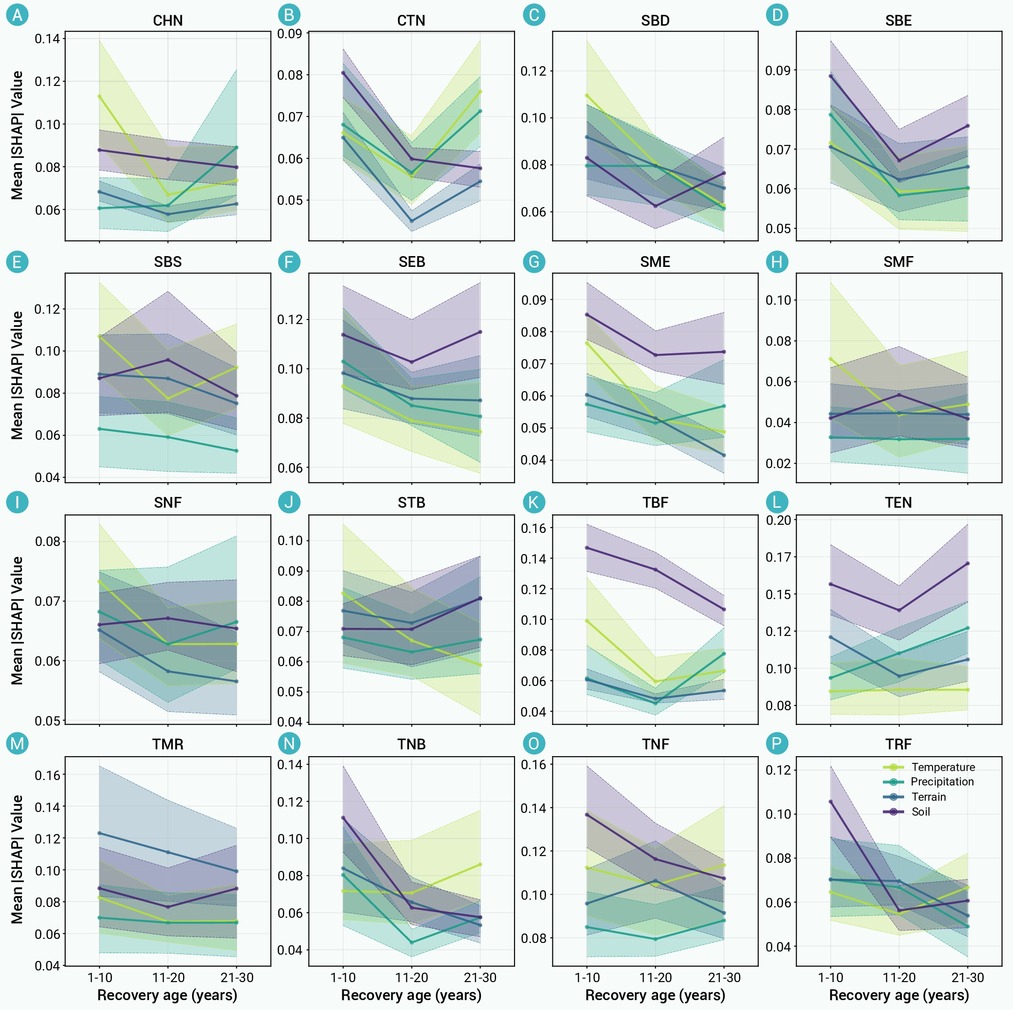
Figure 6.
The shifting relative importance of four major environmental driver categories (temperature, precipitation, terrain, and soil) on CSC
-
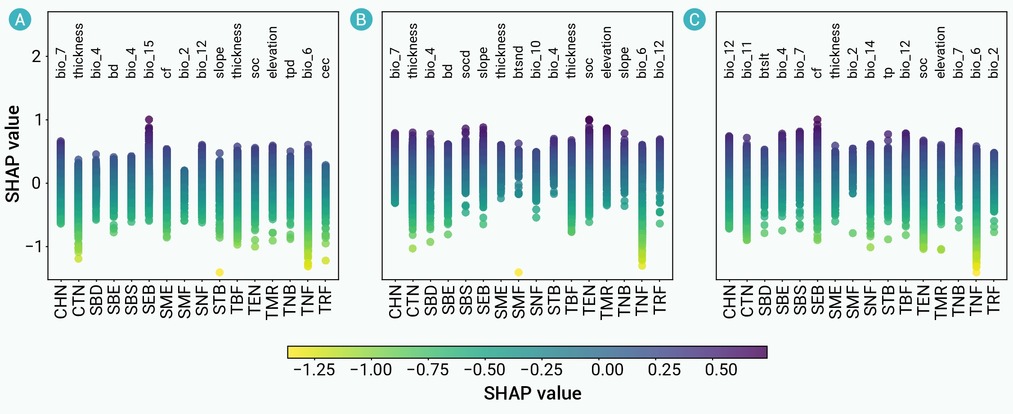
Figure 7.
Detailed SHAP summary plots for the most influential individual variables within each recovery stage, ranked by their global mean importance
