
Unequal futures: Projecting lake trophic states in China under landscape transformation scenarios
-
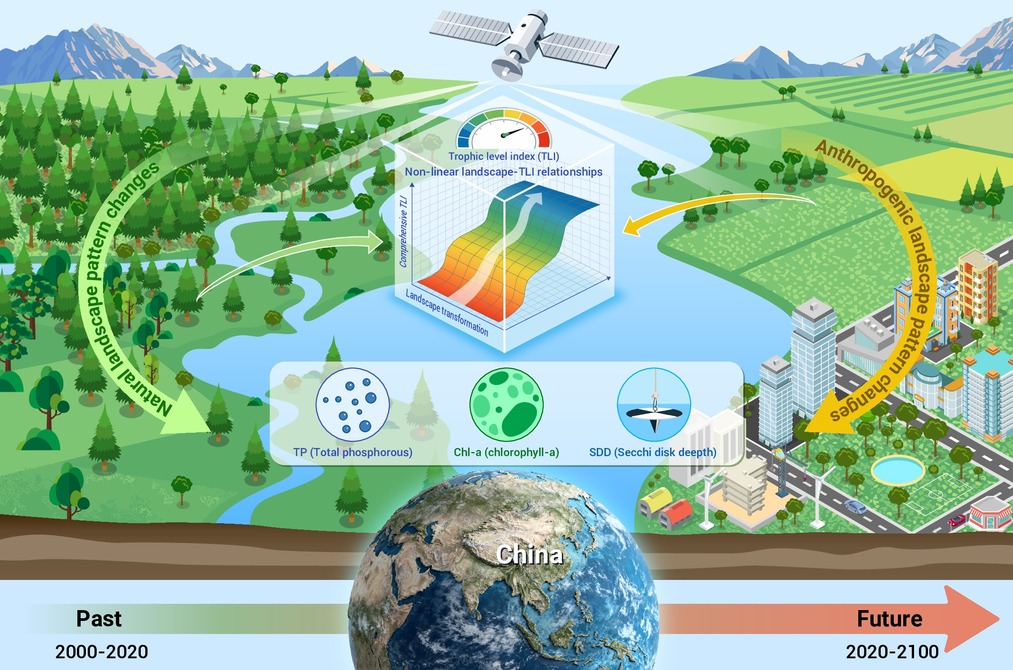
GRAPHICAL ABSTRACT
 DownLoad:
Full size image
DownLoad:
Full size image
-
PUBLIC SUMMARY
-
Lakes on Yunnan-Guizhou Plateau are most sensitive to landscape changes.
Model explanations guide threshold-based planning to prevent eutrophication across regions.
Future biofuel cropland growth along scenario RCP2.6 should avoid sacrificing water quality.
-
-
ABSTRACT
Landscape transformations driven by China's rapid development have contributed to widespread lake eutrophication, but their spatial heterogeneity, underlying mechanisms, and future trajectories remain unclear. We assessed the comprehensive trophic level index (TLI) for 443 Chinese lakes from 2000 to 2020 using integrated datasets of chlorophyll-a (Chl-a), total phosphorus (TP), and Secchi disk depth (SDD) datasets. We modeled TLI responses to landscape changes using an interpretable machine-learning framework. Our findings revealed a national decline in eutrophic lakes (TLI > 50) from 69.1% to 44.2% by 2020, but trends varied regionally. Northwestern lakes improved significantly, with remarkable increases in SDD associated with a 1.2%–2.4% reduction in barren land, whereas southeastern lakes faced persistent pressures from impervious land expansion, with TP rising 6%–10%. Landscape dynamics accounted for 43.9% (Eastern Plain) to 70.1% (Yunnan-Guizhou Plateau) variations in TLI. In the northwest, natural landscape configuration (e.g., woodland largest-patch index) was the strongest predictor. In the southeast, anthropogenic landscape complexity dominated lake trophic dynamics. Land-use projections under Representative Concentration Pathway (RCP) 2.6 indicate potential TLI increases in the Yunnan-Guizhou Plateau, Xinjiang, and Tibetan Plateau due to cropland expansion. RCP8.5 projections produce greater spatial inequality in TLI by 2100. Our findings underscore the necessity for region-tailored land-use strategies to ensure equitable water-quality outcomes under future landscape transformations and to optimize water–food–energy nexus.-
Keywords:
- Lake /
- trophic level index (TLI) /
- landscape pattern /
- machine learning /
- future scenarios
-

-
REFERENCES
[1] Messager M. L., Lehner B., Grill G., et al. (2016). Estimating the volume and age of water stored in global lakes using a geo-statistical approach. Nat. Commun. 7:13603. DOI:10.1038/ncomms13603 [2] Bakker K. (2012). Water security: Research challenges and opportunities. Science 337:914−915. DOI:10.1126/science.1226337 [3] Sinha E., Michalak A. M., Calvin K. V., et al. (2019). Societal decisions about climate mitigation will have dramatic impacts on eutrophication in the 21st century. Nat. Commun. 10:939. DOI:10.1038/s41467-019-08884-w [4] Hu M., Ma R., Xue K., et al. (2024). A dataset of trophic state index for nation-scale lakes in China from 40-year Landsat observations. Sci. Data. 11:659. DOI:10.1038/s41597-024-03506-7 [5] Chaplin-Kramer R., Hamel P., Sharp R., et al. (2016). Landscape configuration is the primary driver of impacts on water quality associated with agricultural expansion. Environ. Res. Lett. 11:074012. DOI:10.1088/1748-9326/11/7/074012 [6] Heino J., Alahuhta J., Bini L. M., et al. (2021). Lakes in the era of global change: Moving beyond single‐lake thinking in maintaining biodiversity and ecosystem services. Biol. Rev. 96:89−106. DOI:10.1111/brv.12647 [7] Vasistha P. and Ganguly R. (2020). Water quality assessment of natural lakes and its importance: An overview. Mater. Today: Proc. 32:544−552. DOI:10.1016/j.matpr.2020.02.092 [8] Smol J. P. (2019). Under the radar: Long-term perspectives on ecological changes in lakes. Proc. Biol. Sci. 286:20190834. DOI:10.1098/rspb.2019.0834 [9] Huang S., Zhang K., Lin Q., et al. (2022). Abrupt ecological shifts of lakes during the Anthropocene. Earth Sci. Rev. 227:103981. DOI:10.1016/j.earscirev.2022.103981 [10] Jane S. F., Hansen G. J., Kraemer B. M., et al. (2021). Widespread deoxygenation of temperate lakes. Nature 594:66−70. DOI:10.1038/s41586-021-03550-y [11] Vörösmarty C. J., McIntyre P. B., Gessner M. O., et al. (2010). Global threats to human water security and river biodiversity. Nature 467:555−561. DOI:10.1038/nature09440 [12] Guo L. (2007). Doing battle with the green monster of Taihu Lake. Science 317:1166−1166. DOI:10.1126/science.317.5842.1166 [13] Beaulieu J. J., DelSontro T. and Downing J. A. (2019). Eutrophication will increase methane emissions from lakes and impoundments during the 21st century. Nat. Commun. 10:1375. DOI:10.1038/s41467-019-09100-5 [14] Frazier A. E., & Kedron P. (2017). Landscape metrics: Past progress and future directions. Curr. Landscape Ecol. Rep. 2:63−72. DOI:10.1007/s40823-017-0026-0 [15] Paule-Mercado M. C., Rabaneda-Bueno R., Porcal P., et al. (2024). Climate and land use shape the water balance and water quality in selected European lakes. Sci. Rep. 14:8049. DOI:10.1038/s41598-024-58401-3 [16] Scanlon B. R., Reedy R. C., Stonestrom D. A., et al. (2005). Impact of land use and land cover change on groundwater recharge and quality in the southwestern US. Glob. Change Biol. 11:1577−1593. DOI:10.1111/j.1365-2486.2005.01026.x [17] Wei W., Gao Y., Huang J., et al. (2020). Exploring the effect of basin land degradation on lake and reservoir water quality in China. J. Cleaner Prod. 268:122249. DOI:10.1016/j.jclepro.2020.122249 [18] Wang R., Kim J. H. and Li M. H. (2021). Predicting stream water quality under different urban development pattern scenarios with an explainable machine learning approach. Sci. Total Environ. 761:144057. DOI:10.1016/j.scitotenv.2020.144057 [19] Simpson I. M., Winston R. J. and Brooker M. R. (2022). Effects of land use, climate, and imperviousness on urban stormwater quality: A meta-analysis. Sci. Total Environ. 809:152206. DOI:10.1016/j.scitotenv.2021.152206 [20] Song Y., Song X. and Shao G. (2020). Response of water quality to landscape patterns in an urbanized watershed in Hangzhou, China. Sustainability 12:5500. DOI:10.3390/su12145500 [21] Zhou Y., Chen L., Zhou L., et al. (2023). Key factors driving dissolved organic matter composition and bioavailability in lakes situated along the Eastern Route of the South-to-North Water Diversion Project, China. Water Res. 233:119782. DOI:10.1016/j.watres.2023.119782 [22] Xie G., Zhang Y., Wang Q., et al. (2025). Multiple impacts of climate change and anthropogenic activities on lacustrine trophic state. Glob. Change Biol., 31:e70510. DOI:10.1111/gcb.70510 [23] China National Environmental Monitoring Centre (CNEMC). (2023). National Surface Water Quality Report. Available at: https://www.cnemc.cn/jcbg/qgdbsszyb/202308/P020230826693677796005.pdf (Accessed: 3 April 2024 [24] Zhang K., Yang X., Kattel G., et al. (2018). Freshwater lake ecosystem shift caused by social-economic transitions in Yangtze River Basin over the past century. Sci. Rep. 8:17146. DOI:10.1038/s41598-018-35482-5 [25] Radwan T. M., Blackburn G. A., Whyatt J. D., et al. (2021). Global land cover trajectories and transitions. Sci. Rep. 11:12814. DOI:10.1038/s41598-021-92256-2 [26] Mao D., Wang Z., Wu J., et al. (2018). China's wetland loss to urban expansion. Land Degrad. Dev. 29:2644−2657. DOI:10.1002/ldr.2939 [27] Yang J. and Huang X. (2024). The 30 m annual land cover datasets and its dynamics in China from 1985 to 2023. Zenodo. Earth Sys. Sci. Data. DOI:10.5281/zenodo.12779975 [28] Kong X., Fu M., Zhao X., et al. (2022). Ecological effects of land-use change on two sides of the Hu Huanyong Line in China. Land Use Policy 113:105895. DOI:10.1016/j.landusepol.2021.105895 [29] Li S., Xu S., Song K., et al. (2023). Remote quantification of the trophic status of Chinese lakes. Hydrol. Earth Syst. Sci. 27:3581−3599. DOI:10.5194/hess-27-3581-2023 [30] Martinuzzi S., Januchowski-Hartley S.R., Pracheil B.M., et al. (2014), Threats and opportunities for freshwater conservation under future land use change scenarios in the United States. Glob. Change Biol. 20: 113-124. DOI:10.1111/gcb.12383 [31] China National Environmental Monitoring Centre (2026). National Surface Water Quality Report. Available at: https://www.cnemc.cn/jcbg/qgdbsszyb/202606/P020260625576645158655.pdf (Accessed: 21 July 2026 [32] Yu D., Shi P., Liu Y., et al. (2013). Detecting land use-water quality relationships from the viewpoint of ecological restoration in an urban area. Ecol. Eng. 53:205−216. DOI:10.1016/j.ecoleng.2012.12.045 [33] Peng S. and Li S. (2021). Scale relationship between landscape pattern and water quality in different pollution source areas: A case study of the Fuxian Lake watershed, China. Ecol. Indic. 121:107136. DOI:10.1016/j.ecolind.2020.107136 [34] Venkateswarlu T., Anmala J. and Dharwa M. (2020). PCA, CCA, and ANN modeling of climate and land-use effects on stream water quality of Karst watershed in Upper Green River, Kentucky. J. Hydrol. Eng. 25:05020008. DOI:10.1061/(ASCE)HE.1943-5584.00019 [35] Merghadi A., Yunus A. P., Dou J., et al. (2020). Machine learning methods for landslide susceptibility studies: A comparative overview of algorithm performance. Earth Sci. Rev. 207:103225. DOI:10.1016/j.earscirev.2020.103225 [36] Yu Q., Ji W., Prihodko L., et al. (2021). Study becomes insight: Ecological learning from machine learning. Methods Ecol. Evol. 12:2117−2128. DOI:10.1111/2041-210X.13686 [37] Pichler M. and Hartig F. (2023). Machine learning and deep learning—A review for ecologists. Methods Ecol. Evol. 14:994−1016. DOI:10.1111/2041-210X.14061 [38] Wei Y., Li H. and Yue W. (2017). Urban land expansion and regional inequality in transitional China. Landscape Urban Plann. 163:17−31. DOI:10.1016/j.landurbplan.2017.02.019 [39] Zhang G., Yao T., Chen W., et al. (2019). Regional differences of lake evolution across China during 1960s–2015 and its natural and anthropogenic causes. Remote Sens. Environ. 221:386−404. DOI:10.1016/j.rse.2018.11.038 [40] Zhang G. (2019). China lake dataset (1960s-2020). National Tibetan Plateau / Third Pole Environment Data Center. DOI:10.11888/Hydro.tpdc.270302 [41] Shi X., Mao D., Song K., et al. (2024). Effects of landscape changes on water quality: A global meta-analysis. Water Res. 260:121946. DOI:10.1016/j.watres.2024.121946 [42] Chen T. (2020). Basin boundary dataset of lakes over 10 km2 in China. Lake-Watershed Science Data Center, National Earth System Science Data Center, National Science & Technology Infrastructure of China. DOI: 10.11971/lim.2023.003.db.pro2018YFD1100100 [43] GEBCO Compilation Group (2023). GEBCO 2023 Grid. DOI:10.5285/f98b053b-0cbc-6c23-e053-6c86abc0af7b [44] McGarigal K., Cushman S. A., Neel M. C., et al. (2002). FRAGSTATS: Spatial pattern analysis program for categorical maps (Version 4.2). Available at: https://www.fragstats.org/index.php [45] Fang C., Song C., Wang X., et al. (2024). A novel total phosphorus concentration retrieval method based on two-line classification in lakes and reservoirs across China. Sci. Total Environ. 906:167522. DOI:10.1016/j.scitotenv.2023.167522 [46] Li S., Song K., Wang S., et al. (2021). Quantification of chlorophyll-a in typical lakes across China using Sentinel-2 MSI imagery with machine learning algorithm. Sci. Total Environ. 778:146271. DOI:10.1016/j.scitotenv.2021.146271 [47] Liu D., Duan H., Loiselle S., et al. (2020). Observations of water transparency in China’s lakes from space. Int. J. Appl. Earth Obs. Geoinf. 92:102187. DOI:10.1016/j.jag.2020.102187 [48] Qin B., Zhou J., Elser J. J., et al. (2020). Water depth underpins the relative roles and fates of nitrogen and phosphorus in lakes. Environ. Sci. Technol. 54:3191−3198. DOI:10.1021/acs.est.9b05858 [49] Miller A., Panneerselvam J. and Liu L. (2022). A review of regression and classification techniques for analysis of common and rare variants and gene-environmental factors. Neurocomputing 489:466−485. DOI:10.1016/j.neucom.2021.08.150 [50] Breiman L., Cutler A., Liaw A., et al. (2024). randomForest: Breiman and Cutlers Random Forests for Classification and Regression. CRAN: R-Project. https://cran.r-project.org/web/packages/randomForest/ [51] Kuhn M., Wing J., Weston S., et al. (2024). caret: Classification and Regression Training. CRAN: R-Project. https://cran.r-project.org/web/packages/caret/index.html [52] Liaw A., & Wiener M. (2002). Classification and regression by randomForest. R News 2:18−22.https://journal.r-project.org/articles/RN-2002-022 [53] Karsoliya S. (2012). Approximating number of hidden layer neurons in multiple hidden layer BPNN architecture. Int. J. Eng. Trends Technol. 3:714−717. DOI:10.14445/22315381/IJETT-V3I6P206 [54] Biecek P., Maksymiuk S. and Baniecki H. (2025). DALEX: moDel Agnostic Language for Exploration and eXplanation. CRAN: R-Project. https://cran.r-project.org/web/packages/DALEX/index.html [55] Greenwell B. (2024). fastshap: Fast Approximate Shapley Values. CRAN: R-Project. https://cran.r-project.org/web/packages/fastshap/index.html [56] Lundberg S. M., Erion G., Chen H., et al. (2020). From local explanations to global understanding with explainable AI for trees. Nat. Mach. Intell. 2:56−67. DOI:10.1038/s42256-019-0138-9 [57] Gong P. (2018). Global land use/land cover prediction dataset FROM-GLC-simulation. National Earth System Science Center. http://www.geodata.cn [58] Hurtt G. C., Chini L. P., Frolking S., et al. (2011). Harmonization of land-use scenarios for the period 1500–2100: 600 years of global gridded annual land-use transitions, wood harvest, and resulting secondary lands. Clim. Change 109:117−161. DOI:10.1007/s10584-011-0153-2 [59] Xu Y., Xu X. and Tang Q. (2016). Human activity intensity of land surface: Concept, methods and application in China. J. Geogr. Sci. 26:1349−1361. DOI:10.1007/s11442-016-1331-y [60] Tang Q., Hua L., Cao Y., et al. (2024). Human activities are the key driver of water erosion changes in northeastern China. Land Degrad. Dev. 35:62−75. DOI:10.1002/ldr.4897 [61] Alewell C., Ringeval B., Ballabio C., et al. (2020). Global phosphorus shortage will be aggravated by soil erosion. Nat. Commun. 11:4546. DOI:10.1038/s41467-020-18326-7 [62] Liu X., Liu H., Xig J., et al. (2023). How the land use/cover changes and environmental factors at different scales affect lake water quality in arid and semi-arid regions. Front. Ecol. Evol. 11:1188927. DOI:10.3389/fevo.2023.1188927 [63] Yi Y., Zhong J., Bao H., et al. (2021). The impacts of reservoirs on the sources and transport of riverine organic carbon in the karst area: A multi-tracer study. Water Res. 194:116933. DOI:10.1016/j.watres.2021.116933 [64] Chen X. F., Chuai X. M. and Yang L. Y. (2014). Status quo, historical evolution and causes of eutrophication in lakes in typical lake regions of China. Journal of Ecology and Rural Environment 30:438−443. https://ere.ac.cn/en/article/id/10723 [65] Guan Q., Feng L., Hou X., et al. (2020). Eutrophication changes in fifty large lakes on the Yangtze Plain of China derived from MERIS and OLCI observations. Remote Sens. Environ. 246:111890. DOI:10.1016/j.rse.2020.111890 [66] Miller J. D. and Hutchins M. (2017). The impacts of urbanisation and climate change on urban flooding and urban water quality: A review of the evidence concerning the United Kingdom. J. Hydrol. Reg. Stud. 12:345−362. DOI:10.1016/j.ejrh.2017.06.006 [67] Ji P., Chen J., Chen R., et al. (2024). Nitrogen and phosphorus trends in lake sediments of China may diverge. Nat. Commun. 15:2644. DOI:10.1038/s41467-024-46968-4 [68] Chang D. (1981). The vegetation zonation of the Tibetan Plateau. Mountain research and development 1:29-48. DOI:10.2307/3672945 [69] Lee M., Stock C. A., Shevliakova E., et al. (2024). Uneven consequences of global climate mitigation pathways on regional water quality in the 21st century. Nat. Commun. 15:5464. DOI:10.1038/s41467-024-49866-x [70] Wetland International (2016). Wetlands and biofuels. Available at: https://www.wetlands.org/case-study/wetlands-and-biofuels/ (Accessed: 17 March 2025 [71] Wang M., Janssen A. B., Bazin J., et al. (2022). Accounting for interactions between Sustainable Development Goals is essential for water pollution control in China. Nat. Commun. 13:730. DOI:10.1038/s41467-022-28351-3 [72] Thomson A. M., Calvin K. V., Smith S. J., et al. (2011). RCP4.5: A pathway for stabilization of radiative forcing by 2100. Clim. Change 109: 77-94. DOI:10.1007/s10584-011-0151-4 [73] Tian D., Guo Y. and Dong W. (2015). Future changes and uncertainties in temperature and precipitation over China based on CMIP5 models. Adv. Atmos. Sci. 32:487−496. DOI:10.1007/s00376-014-4102-7 [74] Cheng Y., Liu H., Du J., et al. (2025). Quantifying biodiversity's present and future: Current potentials and SSP‐RCP‐driven land use impacts. Earth's Future 13:e2024EF005191. DOI:10.1029/2024EF005191 [75] Xu F., Zhang G., Woolway R. I., et al. (2024). Widespread societal and ecological impacts from projected Tibetan Plateau lake expansion. Nat. Geosci. 17:516−523. DOI:10.1038/s41561-024-01446-w [76] Zhang Q., Yang J., Wang W., et al. (2021). Climatic warming and humidification in the arid region of Northwest China: Multi-scale characteristics and impacts on ecological vegetation. J. Meteorolog. Res. 35:113−127. DOI:10.1007/s13351-021-0105-3 [77] Wei F., Cui S., Liu N., et al. (2021). Ecological civilization: China's effort to build a shared future for all life on earth. Natl. Sci. Rev. 8:nwaa279. DOI:10.1093/nsr/nwaa279 -
ABOUT THIS ARTICLE
Cite this article:
Shi X., Mao D., Luo L., et al. (2026). Unequal futures: Projecting lake trophic states in China under landscape transformation scenarios. The Innovation Geoscience 4:100247. https://doi.org/10.59717/j.xinn-geo.2026.100247
Welcome!
To request copyright permission to republish or share portions of our works, please visit Copyright Clearance Center's (CCC) Marketplace website at marketplace.copyright.com.
Export File
Citation
Shi X., Mao D., Luo L., et al. (2026). Unequal futures: Projecting lake trophic states in China under landscape transformation scenarios. The Innovation Geoscience 4:100247. https://doi.org/10.59717/j.xinn-geo.2026.100247

Format
Content
-
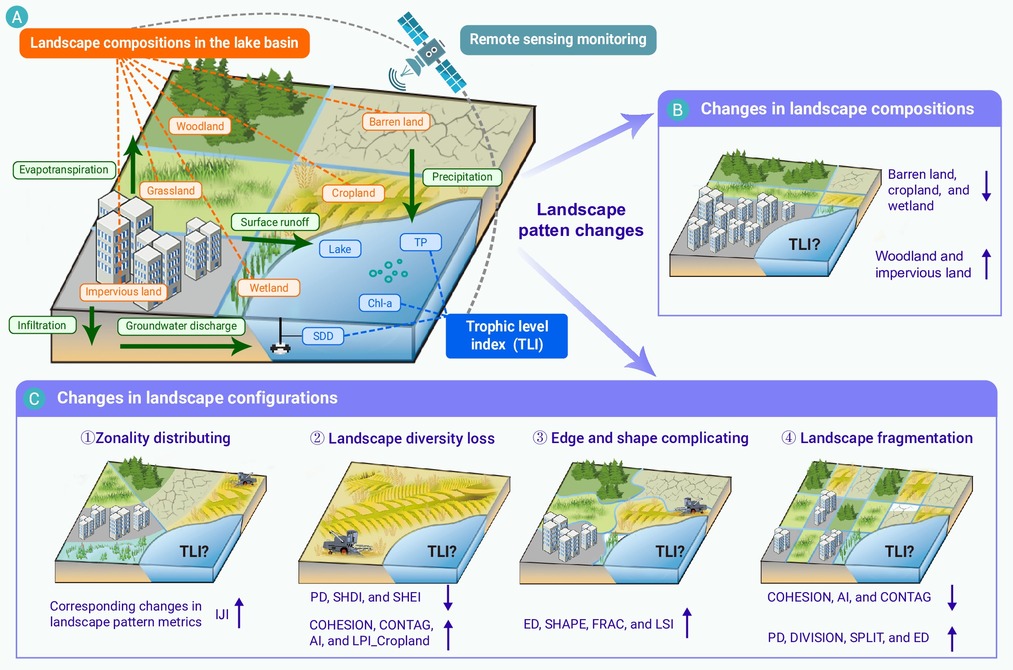
Figure 1.
Conceptual diagram illustrating how landscape transformations influence lake trophic states
-
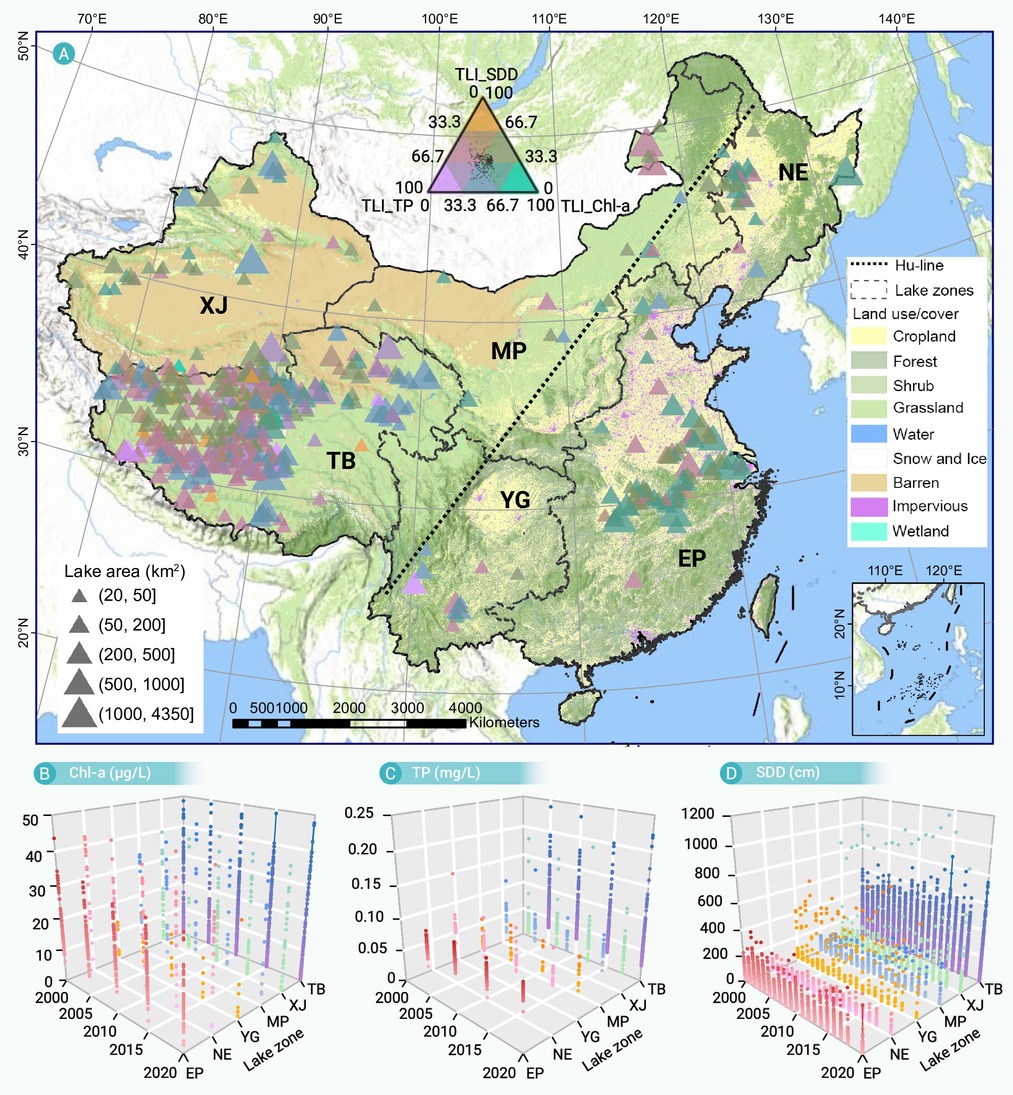
Figure 2.
Spatial distribution and trophic characteristics of 443 Chinese lakes (> 20 km2)
-
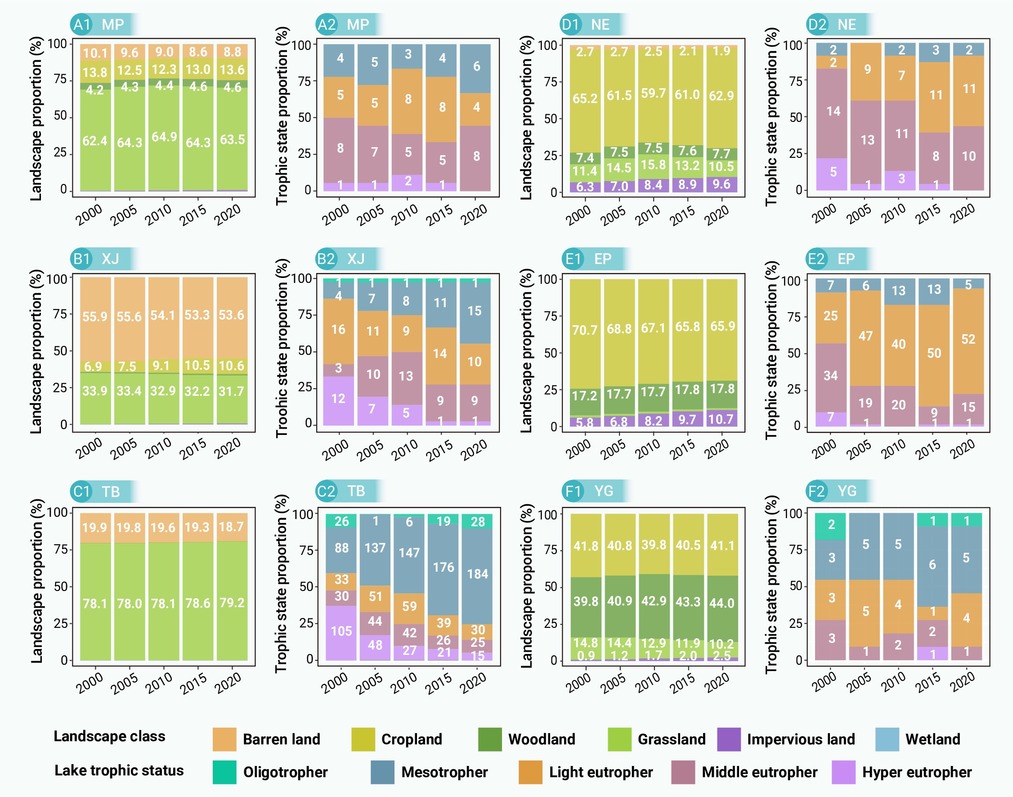
Figure 3.
Temporal variations in basin landscape composition and lake trophic state across six limnetic zones (2000-2020)
-
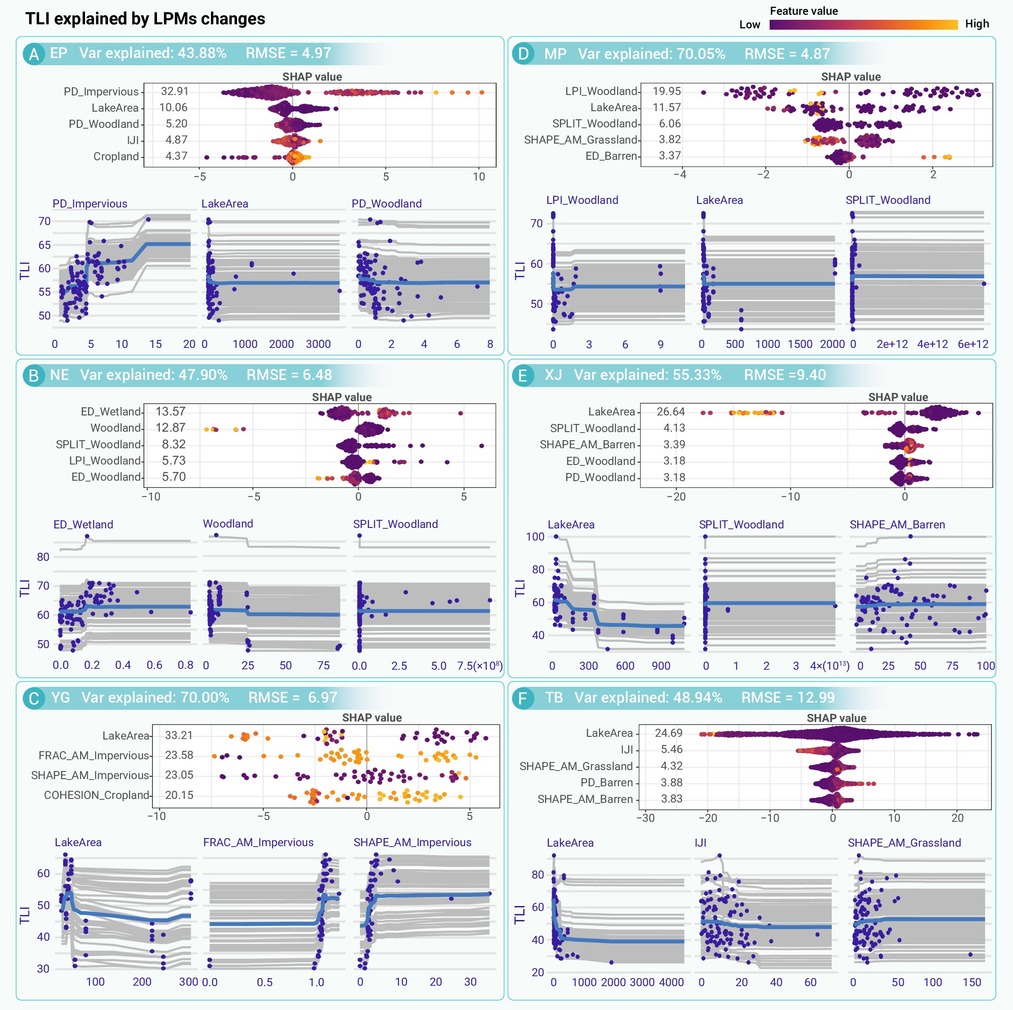
Figure 4.
SHAP- and PDP-based interpretation of landscape controls on lake trophic state across six limnetic zones (2000-2020)
-
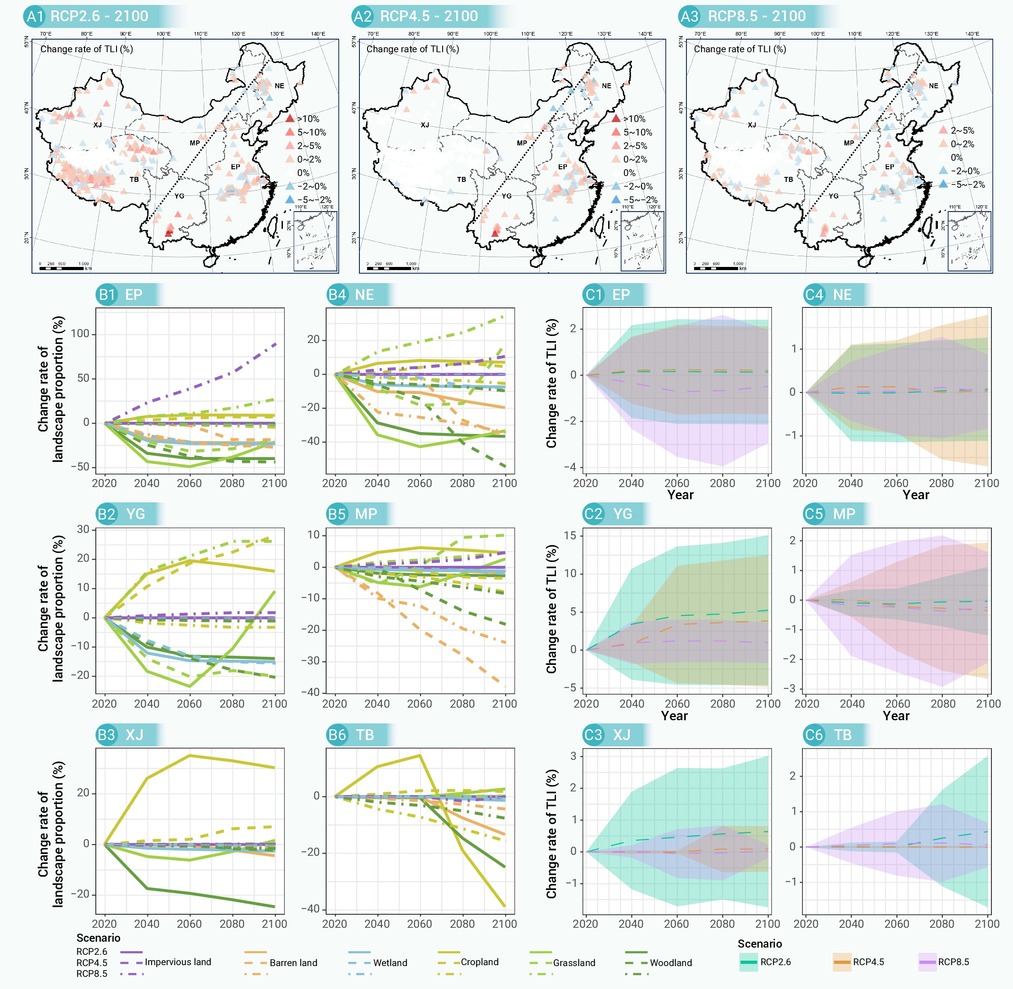
Figure 5.
Projected trajectories of lake trophic state and basin landscape composition under RCP2.6, RCP4.5, and RCP8.5
-
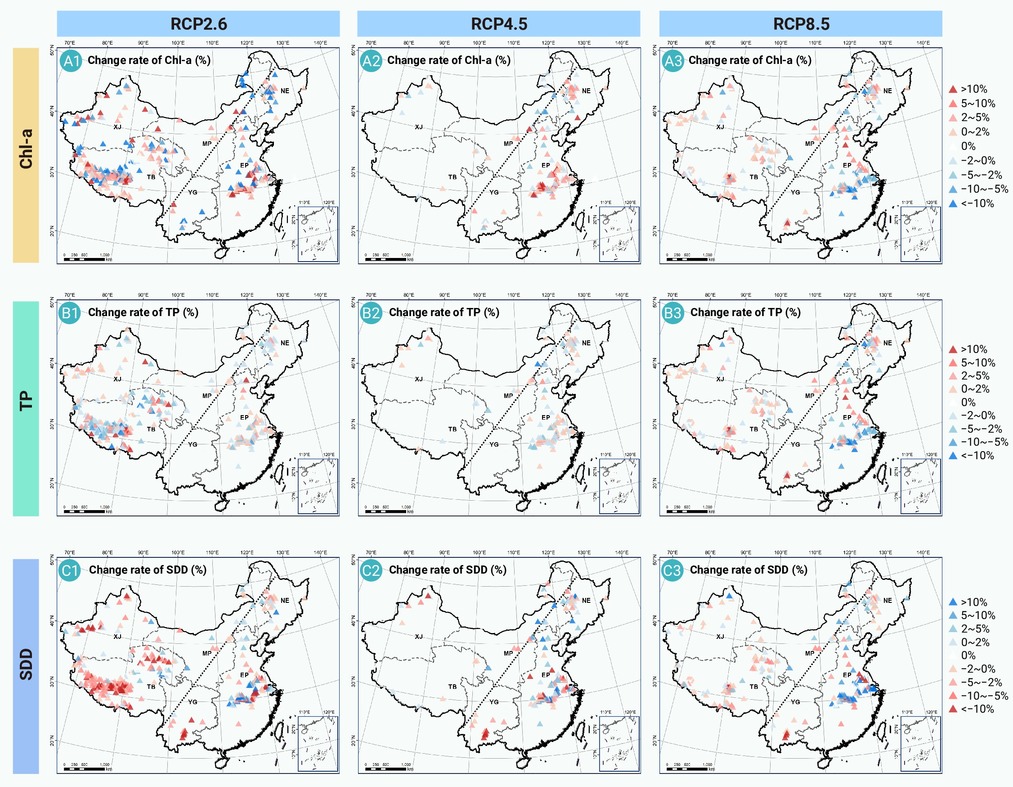
Figure 6.
Projected trajectories of Chl-a (A1–A3), TP(B1–B3), and SDD(C1–C3) under RCP2.6, RCP4.5, and RCP8.5
