
Depth-dependent heat amplification across soil and atmosphere driven by soil moisture-temperature hypersensitive regime
-
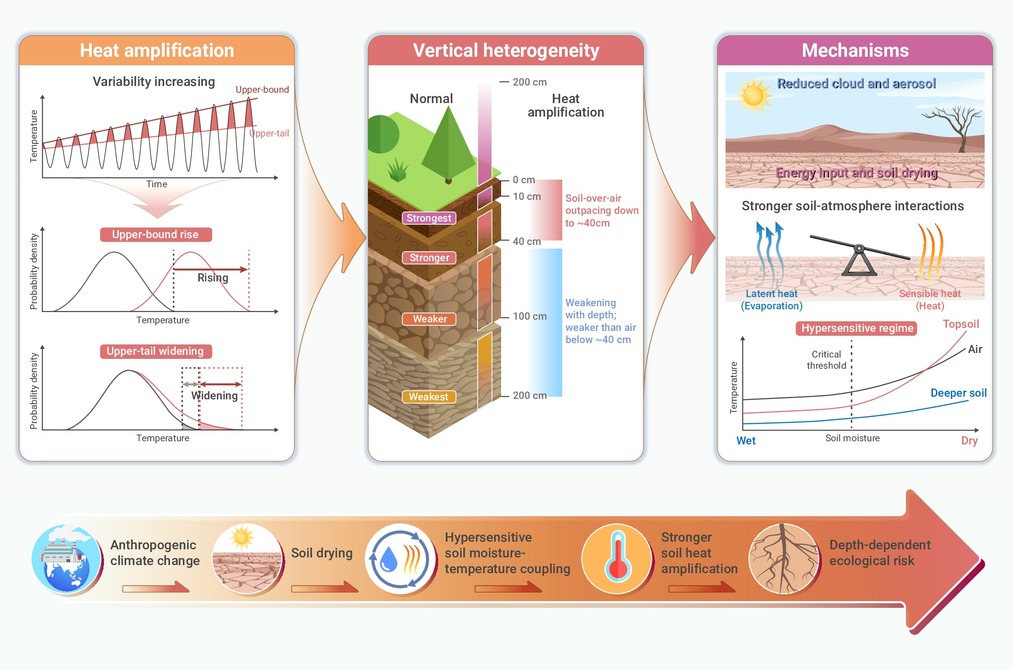
GRAPHICAL ABSTRACT
 DownLoad:
Full size image
DownLoad:
Full size image
-
PUBLIC SUMMARY
-
Depth-dependent soil heat amplification outpace than near-surface air down to ~40 cm depth.
Stronger soil heat amplification is driven by hypersensitive soil moisture-temperature coupling regime.
Both soil heat amplification and its depth dependence are projected to persist in the future.
-
-
ABSTRACT
Record-breaking heat extremes are increasingly amplified by soil-atmosphere interactions, threatening ecosystems and agriculture. Yet the vertical heterogeneity of this amplification across air and multiple soil layers and potential mechanisms remain unclear. Here, we integrate multi-source datasets to quantify depth dependence of heat-extreme amplification (i.e., upper-bound rise and upper-tail widening) in soil and atmosphere worldwide over the past four decades. For annual upper-bound rise of air and soil temperatures, we find that soil heat extremes outpace near-surface air across western North America, South America, central Africa, Europe, northeastern Asia, and southern Australia, with this soil-over-air “outpacing” obviously detectable to ~40 cm soil depth. These hotspots also exhibit pronounced, depth-dependent upper-tail widening of soil temperature distributions, which diminishes with depth and becomes weaker than the air counterpart below ~40 cm. Amplification in soil exceeds that in atmosphere because long-term soil drying frequently triggers an unfamiliar hypersensitive soil moisture-temperature coupling regime: once soil moisture drops below a critical threshold, soil temperature responds to drying more rapidly and dramatically than air. Persistent drying also raises soil temperature variability through this hypersensitivity, thereby widening the upper tail of soil temperature distributions. Under the business-as-usual scenario, both soil heat amplification and its depth dependence are projected to persist. These findings imply ecological risk assessment and management must explicitly consider the depth reached by heat amplification, prioritizing the 0–40 cm biotic layer now and systematically extending to deeper soils. -

-
REFERENCES
[1] Thompson V., Kennedy-Asser A.T., Vosper E., et al. (2022). The 2021 western North America heat wave among the most extreme events ever recorded globally. Sci. Adv. 8:eabm6860. DOI:10.1126/sciadv.abm6860 [2] Fischer E.M., Sippel S. and Knutti R. (2021). Increasing probability of record-shattering climate extremes. Nat. Clim. Change 11:689−695. DOI:10.1038/s41558-021-01092-9 [3] White R.H., Anderson S., Booth J.F., et al. (2023). The unprecedented Pacific Northwest heatwave of June 2021. Nat. Commun. 14:727. DOI:10.1038/s41467-023-36289-3 [4] Gloege L., Kornhuber K., Skulovich O., et al. (2022). Land-atmosphere cascade fueled the 2020 Siberian heatwave. AGU Adv. 3:e2021AV000619. DOI:10.1029/2021AV000619 [5] Fischer E.M., Seneviratne S.I., Vidale P.L., et al. (2007). Soil moisture-atmosphere interactions during the 2003 European summer heat wave. J. Clim. 20:5081−5099. DOI:10.1175/JCLI4288.1 [6] Schumacher D.L., Keune J., Van Heerwaarden C.C., et al. (2019). Amplification of mega-heatwaves through heat torrents fuelled by upwind drought. Nat. Geosci. 12:712−717. DOI:10.1038/s41561-019-0431-6 [7] Bartusek S., Kornhuber K. and Ting M. (2022). 2021 North American heatwave amplified by climate change-driven nonlinear interactions. Nat. Clim. Change 12:1143−1150. DOI:10.1038/s41558-022-01520-4 [8] Zhang Y. and Boos W.R. (2023). An upper bound for extreme temperatures over midlatitude land. Proc. Natl. Acad. Sci. USA 120:e2215278120. DOI:10.1073/pnas.2215278120 [9] An N., Chen Y., Liao Z., et al. (2025). Trans-seasonal vegetation-land-atmosphere interactions explained record-breaking cascading extremes in the upper reaches of the Yangtze River. Geophys. Res. Lett. 52:e2024GL114165. DOI:10.1029/2024GL114165 [10] Kornhuber K., Bartusek S., Seager R., et al. (2024). Global emergence of regional heatwave hotspots outpaces climate model simulations. Proc. Natl. Acad. Sci. 121:e2411258121. DOI:10.1073/pnas.2411258121 [11] Ciais P., Reichstein M., Viovy N., et al. (2005). Europe-wide reduction in primary productivity caused by the heat and drought in 2003. Nature 437:529−533. DOI:10.1038/nature03972 [12] Schlenker W. and Roberts M.J. (2009). Nonlinear temperature effects indicate severe damages to U. S. crop yields under climate change. Proc. Natl. Acad. Sci. USA 106:15594−15598. DOI:10.1073/pnas.0906865106 [13] Abatzoglou J.T. and Williams A.P. (2016). Impact of anthropogenic climate change on wildfire across western US forests. Proc. Natl. Acad. Sci. USA 113:11770−11775. DOI:10.1073/pnas.1607171113 [14] García-García A., Cuesta-Valero F.J., Miralles D.G., et al. (2023). Soil heat extremes can outpace air temperature extremes. Nat. Clim. Change 13:1237−1241. DOI:10.1038/s41558-023-01812-3 [15] Fischer E.M., Beyerle U., Bloin-Wibe L., et al. (2023). Storylines for unprecedented heatwaves based on ensemble boosting. Nat. Commun. 14:4643. DOI:10.1038/s41467-023-40112-4 [16] Miralles D.G., Teuling A.J., Van Heerwaarden C.C., et al. (2014). Mega-heatwave temperatures due to combined soil desiccation and atmospheric heat accumulation. Nat. Geosci. 7:345−349. DOI:10.1038/ngeo2141 [17] Loikith P.C., Neelin J.D., Meyerson J., et al. (2018). Short warm-side temperature distribution tails drive hot spots of warm temperature extreme increases under near-future warming. J. Clim. 31:9469−9487. DOI:10.1175/JCLI-D-17-0878.1 [18] McKinnon K.A., Simpson I.R. and Williams A.P. (2024). The pace of change of summertime temperature extremes. Proc. Natl. Acad. Sci. USA 121:e2406143121. DOI:10.1073/pnas.2406143121 [19] Wang M., Guo X., Zhang S., et al. (2022). Global soil profiles indicate depth-dependent soil carbon losses under a warmer climate. Nat. Commun. 13:5514. DOI:10.1038/s41467-022-33278-w [20] Peng Z., Van Der Heijden M.G.A., Liu Y., et al. (2025). Agricultural subsoil microbiomes and functions exhibit lower resistance to global change than topsoils in Chinese agroecosystems. Nat. Food 6:375−388. DOI:10.1038/s43016-024-01106-7 [21] Wu L., Zhang Y., Guo X., et al. (2022). Reduction of microbial diversity in grassland soil is driven by long-term climate warming. Nat. Microbiol. 7:1054−1062. DOI:10.1038/s41564-022-01147-3 [22] Li J., Pei J., Fang C., et al. (2024). Drought may exacerbate dryland soil inorganic carbon loss under warming climate conditions. Nat. Commun. 15:617. DOI:10.1038/s41467-024-44895-y [23] Pregitzer K.S., King J.S., Burton A.J., et al. (2000). Responses of tree fine roots to temperature. New Phytol. 147:105−115. DOI:10.1046/j.1469-8137.2000.00689.x [24] Lembrechts J.J., Van Den Hoogen J., Aalto J., et al. (2022). Global maps of soil temperature. Glob. Change Biol. 28:3110−3144. DOI:10.1111/gcb.16060 [25] Balsamo G., Albergel C., Beljaars A., et al. (2015). ERA-Interim/Land: A global land surface reanalysis data set. Hydrol. Earth Syst. Sci. 19:389−407. DOI:10.5194/hess-19-389-2015 [26] Liang X., Jiang L., Pan Y., et al. (2020). A 10-yr global land surface reanalysis interim dataset (CRA-Interim/Land): Implementation and preliminary evaluation. J. Meteorol. Res. 34:101−116. DOI:10.1007/s13351-020-9083-0 [27] Tetzlaff A., Bourgeois Q., Stöckli R., et al. (2024). CM SAF land surface temperature dataset from Meteosat first and second generation - edition 2 (SUMET ed. 2). DOI:10.5676/EUM_SAF_CM/LST_METEOSAT/V002 [28] Cornes R.C., Van Der Schrier G., Van Den Besselaar E.J.M., et al. (2018). An ensemble version of the E-OBS temperature and precipitation data sets. J. Geophys. Res. Atmos. 123:9391−9409. DOI:10.1029/2017JD028200 [29] Rohde R., Muller R., Jacobsen R., et al. (2013). Berkeley Earth temperature averaging process. Geoinformatics Geostat. Overv. 1:1000103. DOI:10.4172/2327-4581.1000103 [30] Wang D., Wang A. and Wang Z. (2023). A multilayer daily high-resolution gridded homogenized soil temperature over continental China. Int. J. Climatol. 43:2015−2030. DOI:10.1002/joc.7959 [31] Xu Y., Gao X., Shen Y., et al. (2009). A daily temperature dataset over China and its application in validating a RCM simulation. Adv. Atmos. Sci. 26:763−772. DOI:10.1007/s00376-009-9029-z [32] Hersbach H., Bell B., Berrisford P., et al. (2020). The ERA5 global reanalysis. Q. J. R. Meteorol. Soc. 146:1999−2049. DOI:10.1002/qj.3803 [33] Gelaro R., McCarty W., Suárez M.J., et al. (2017). The Modern-Era Retrospective Analysis for Research and Applications, Version 2 (MERRA-2). J. Clim. 30:5419−5454. DOI:10.1175/JCLI-D-16-0758.1 [34] Martens B., Miralles D.G., Lievens H., et al. (2017). GLEAM v3: Satellite-based land evaporation and root-zone soil moisture. Geosci. Model Dev. 10:1903−1925. DOI:10.5194/gmd-10-1903-2017 [35] Dirmeyer P.A., Gao X., Zhao M., et al. (2006). GSWP-2: Multimodel analysis and implications for our perception of the land surface. Bull. Am. Meteorol. Soc. 87:1381−1398. DOI:10.1175/BAMS-87-10-1381 [36] Poggio L., de Sousa L.M., Batjes N.H., et al. (2021). SoilGrids 2.0: Producing soil information for the globe with quantified spatial uncertainty. Soil 7:217–240. DOI:10.5194/soil-7-217-2021 [37] Smith A.B., Walker J.P., Western A.W., et al. (2012). The murrumbidgee soil moisture monitoring network data set. Water Resour. Res. 48:2012WR011976. DOI:10.1029/2012WR011976 [38] Pastorello G., Trotta C., Canfora E., et al. (2020). The FLUXNET2015 dataset and the ONEFlux processing pipeline for eddy covariance data. Sci. Data 7:225. DOI:10.1038/s41597-020-0534-3 [39] Rodell M., Houser P.R., Jambor U., et al. (2004). The Global land data assimilation system. Bull. Am. Meteorol. Soc. 85:381−394. DOI:10.1175/BAMS-85-3-381 [40] Wang L. and Chen W. (2014). Equiratio cumulative distribution function matching as an improvement to the equidistant approach in bias correction of precipitation. Atmos. Sci. Lett. 15:1−6. DOI:10.1002/asl2.454 [41] Frieler K., Volkholz J., Lange S., et al. (2024). Scenario setup and forcing data for impact model evaluation and impact attribution within the third round of the inter-sectoral impact model intercomparison project (ISIMIP3a). Geosci. Model Dev. 17:1−51. DOI:10.5194/gmd-17-1-2024 [42] Yokohata T., Kinoshita T., Sakurai G., et al. (2020). MIROC-INTEG-LAND version 1: A global biogeochemical land surface model with human water management, crop growth, and land-use change. Geosci. Model Dev. 13:4713−4747. DOI:10.5194/gmd-13-4713-2020 [43] Guimberteau M., Zhu D., Maignan F., et al. (2018). ORCHIDEE-MICT (v8.4.1), a land surface model for the high latitudes: Model description and validation. Geosci. Model Dev. 11:121–163. DOI:10.5194/gmd-11-121-2018 [44] Cucchi M., Weedon G.P., Amici A., et al. (2020). WFDE5: Bias-adjusted ERA5 reanalysis data for impact studies. Earth Syst. Sci. Data 12:2097−2120. DOI:10.5194/essd-12-2097-2020 [45] Slivinski L.C., Compo G.P., Whitaker J.S., et al. (2019). Towards a more reliable historical reanalysis: Improvements for version 3 of the Twentieth Century Reanalysis system. Q. J. R. Meteorol. Soc. 145:2876−2908. DOI:10.1002/qj.3598 [46] Lange S. (2019). Trend-preserving bias adjustment and statistical downscaling with ISIMIP3BASD (v1.0). Geosci. Model Dev. 12:3055–3070. DOI:10.5194/gmd-12-3055-2019 [47] O’Neill B.C., Tebaldi C., Van Vuuren D.P., et al. (2016). The Scenario Model Intercomparison Project (ScenarioMIP) for CMIP6. Geosci. Model Dev. 9:3461−3482. DOI:10.5194/gmd-9-3461-2016 [48] Guan Y., Gu X., Slater L.J., et al. (2023). Increase in ocean-onto-land droughts and their drivers under anthropogenic climate change. npj Clim. Atmos. Sci. 6:195. DOI:10.1038/s41612-023-00523-y [49] Gutjahr O., Putrasahan D., Lohmann K., et al. (2019). Max Planck Institute Earth System Model (MPI-ESM1.2) for the High-Resolution Model Intercomparison Project (HighResMIP). Geosci. Model Dev. 12:3241–3281. DOI:10.5194/gmd-12-3241-2019 [50] Padrón R.S., Gudmundsson L., Decharme B., et al. (2020). Observed changes in dry-season water availability attributed to human-induced climate change. Nat. Geosci. 13:477−481. DOI:10.1038/s41561-020-0594-1 [51] Berg A., Sheffield J., Milly P.C.D. (2017). Divergent surface and total soil moisture projections under global warming. Geophys. Res. Lett. 44:236−244. DOI:10.1002/2016GL071921 [52] Balesdent J., Basile-Doelsch I., Chadoeuf J., et al. (2018). Atmosphere-soil carbon transfer as a function of soil depth. Nature 559:599−602. DOI:10.1038/s41586-018-0328-3 [53] Fan Y., Miguez-Macho G., Jobbágy E.G., et al. (2017). Hydrologic regulation of plant rooting depth. Proc. Natl. Acad. Sci. USA 114:10572−10577. DOI:10.1073/pnas.1712381114 [54] Miralles D.G., Van Den Berg M.J., Teuling A.J., et al. (2012). Soil moisture-temperature coupling: A multiscale observational analysis. Geophys. Res. Lett. 39:2012GL053703. DOI:10.1029/2012GL053703 [55] Hsu H., Dirmeyer P.A., Seo E. (2024). Exploring the mechanisms of the soil moisture-air temperature hypersensitive coupling regime. Water Resour. Res. 60:e2023WR036490. DOI:10.1029/2023WR036490 [56] Zhang W., Zhou T., Wu P. (2024). Anthropogenic amplification of precipitation variability over the past century. Science 385:427−432. DOI:10.1126/science.adp0212 [57] Zhong Z., He B., Chen H.W., et al. (2023). Reversed asymmetric warming of sub-diurnal temperature over land during recent decades. Nat. Commun. 14:7189. DOI:10.1038/s41467-023-43007-6 [58] Wang H., Liu J., Klaar M., et al. (2024). Anthropogenic climate change has influenced global river flow seasonality. Science 383:1009−1014. DOI:10.1126/science.adi9501 [59] Ribes A., Planton S. and Terray L. (2013). Application of regularised optimal fingerprinting to attribution. Part I: Method, properties and idealised analysis. Clim. Dyn. 41:2817−2836. DOI:10.1007/s00382-013-1735-7 [60] Seneviratne S.I., Corti T., Davin E.L., et al. (2010). Investigating soil moisture-climate interactions in a changing climate: A review. Earth-Sci. Rev. 99:125−161. DOI:10.1016/j.earscirev.2010.02.004 [61] Wu J., Feng Y., Li L., et al. (2024). Earth greening mitigates hot temperature extremes despite the effect being dampened by rising CO2. One Earth 7:100−109. DOI:10.1016/j.oneear.2023.12.003 [62] Vereecken H., Amelung W., Bauke S.L., et al. (2022). Soil hydrology in the earth system. Nat. Rev. Earth Environ. 3:573−587. DOI:10.1038/s43017-022-00324-6 [63] Roesch C.M., Fons E., Ballinger A.P., et al. (2025). Decreasing aerosols increase the European summer diurnal temperature range. npj Clim. Atmos. Sci. 8:47. DOI:10.1038/s41612-025-00922-3 [64] Jiang Y., Yang X.-Q., Liu X., et al. (2020). Impacts of wildfire aerosols on global energy budget and climate: The role of climate feedbacks. J. Clim. 33:3351−3366. DOI:10.1175/JCLI-D-19-0572.1 [65] Wankmüller F.J.P., Delval L., Lehmann P., et al. (2024). Global influence of soil texture on ecosystem water limitation. Nature 635:631−638. DOI:10.1038/s41586-024-08089-2 [66] Piao S., Nan H., Huntingford C., et al. (2014). Evidence for a weakening relationship between interannual temperature variability and northern vegetation activity. Nat. Commun. 5:5018. DOI:10.1038/ncomms6018 [67] Ge J., Liu Q., Zan B., et al. (2022). Deforestation intensifies daily temperature variability in the northern extratropics. Nat. Commun. 13:5955. DOI:10.1038/s41467-022-33622-0 [68] Xie S.-P., Miyamoto A., Zhang P., et al. (2025). What made 2023 and 2024 the hottest years in a row. npj Clim. Atmos. Sci. 8:117. DOI:10.1038/s41612-025-01006-y [69] Song F., Dong H., Wu L., et al. (2025). Hot season gets hotter due to rainfall delay over tropical land in a warming climate. Nat. Commun. 16:2188. DOI:10.1038/s41467-025-57501-6 [70] Tuttle S. and Salvucci G. (2016). Empirical evidence of contrasting soil moisture-precipitation feedbacks across the United States. Science 352:825−828. DOI:10.1126/science.aaa7185 [71] Albrecht B.A. (1989). Aerosols, cloud microphysics, and fractional cloudiness. Science 245:1227−1230. DOI:10.1126/science.245.4923.1227 [72] Wang Y., Mao J., Hoffman F.M., et al. (2022). Quantification of human contribution to soil moisture-based terrestrial aridity. Nat. Commun. 13:6848. DOI:10.1038/s41467-022-34071-5 [73] Norris J.R., Allen R.J., Evan A.T., et al. (2016). Evidence for climate change in the satellite cloud record. Nature 536:72−75. DOI:10.1038/nature18273 [74] Chung E.-S. and Soden B.J. (2017). Hemispheric climate shifts driven by anthropogenic aerosol-cloud interactions. Nat. Geosci. 10:566−571. DOI:10.1038/ngeo2988 [75] Zhang X., Gu X., Li L., et al. (2026). Drying soil moisture dominates enhancing summer soil moisture-temperature coupling under climate change. Geophys. Res. Lett. 53:e2025GL119826. DOI:10.1029/2025GL119826 [76] Xu H., Lian X., Slette I.J., et al. (2022). Rising ecosystem water demand exacerbates the lengthening of tropical dry seasons. Nat. Commun. 13:4093. DOI:10.1038/s41467-022-31826-y [77] Lin Z., Zhang R., Tang J., et al. (2011). Effects of high soil water content and temperature on soil respiration. Soil Sci. 176:150. DOI:10.1097/SS.0b013e31820d1d76 [78] Kan Z.-R., Li Z., Amelung W., et al. (2025). Soil carbon accrual and crop production enhanced by sustainable subsoil management. Nat. Geosci. 18:631−638. DOI:10.1038/s41561-025-01720-5 [79] Pei J., Li J., Luo Y., et al. (2025). Patterns and drivers of soil microbial carbon use efficiency across soil depths in forest ecosystems. Nat. Commun. 16:5218. DOI:10.1038/s41467-025-60594-8 [80] Soong J.L., Phillips C.L., Ledna C., et al. (2020). CMIP5 models predict rapid and deep soil warming over the 21st century. J. Geophys. Res. Biogeosci. 125:e2019JG005266. DOI:10.1029/2019JG005266 -
ABOUT THIS ARTICLE
Cite this article:
Gu X., Wang S., Guan Y., et al. (2026). Depth-dependent heat amplification across soil and atmosphere driven by soil moisture-temperature hypersensitive regime. The Innovation Geoscience 4:100250. https://doi.org/10.59717/j.xinn-geo.2026.100250
Welcome!
To request copyright permission to republish or share portions of our works, please visit Copyright Clearance Center's (CCC) Marketplace website at marketplace.copyright.com.
Export File
Citation
Gu X., Wang S., Guan Y., et al. (2026). Depth-dependent heat amplification across soil and atmosphere driven by soil moisture-temperature hypersensitive regime. The Innovation Geoscience 4:100250. https://doi.org/10.59717/j.xinn-geo.2026.100250

Format
Content
-
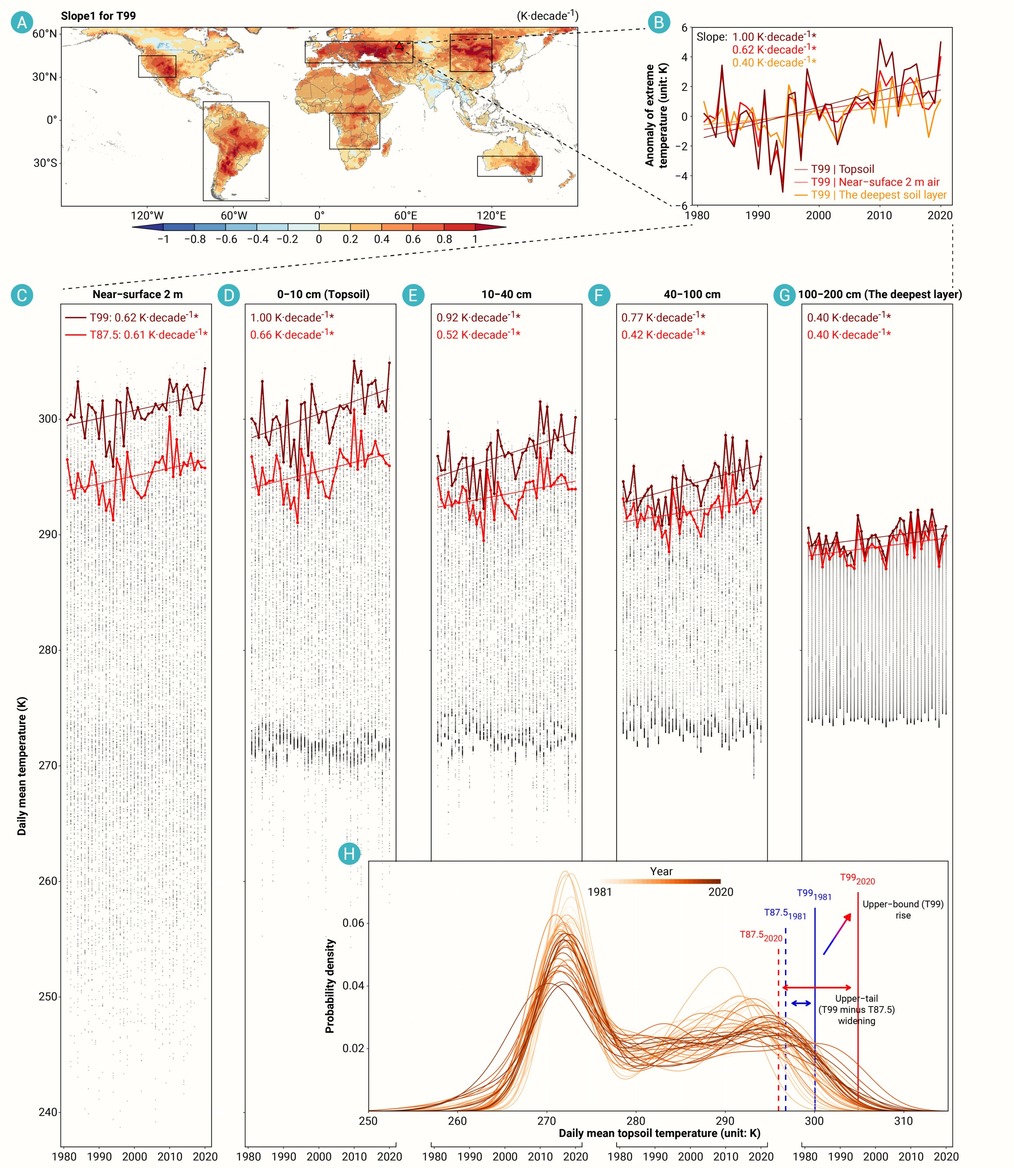
Figure 1.
Annual temperature distributions across soil and atmosphere during 1981–2020 based on ERA5-Land
-
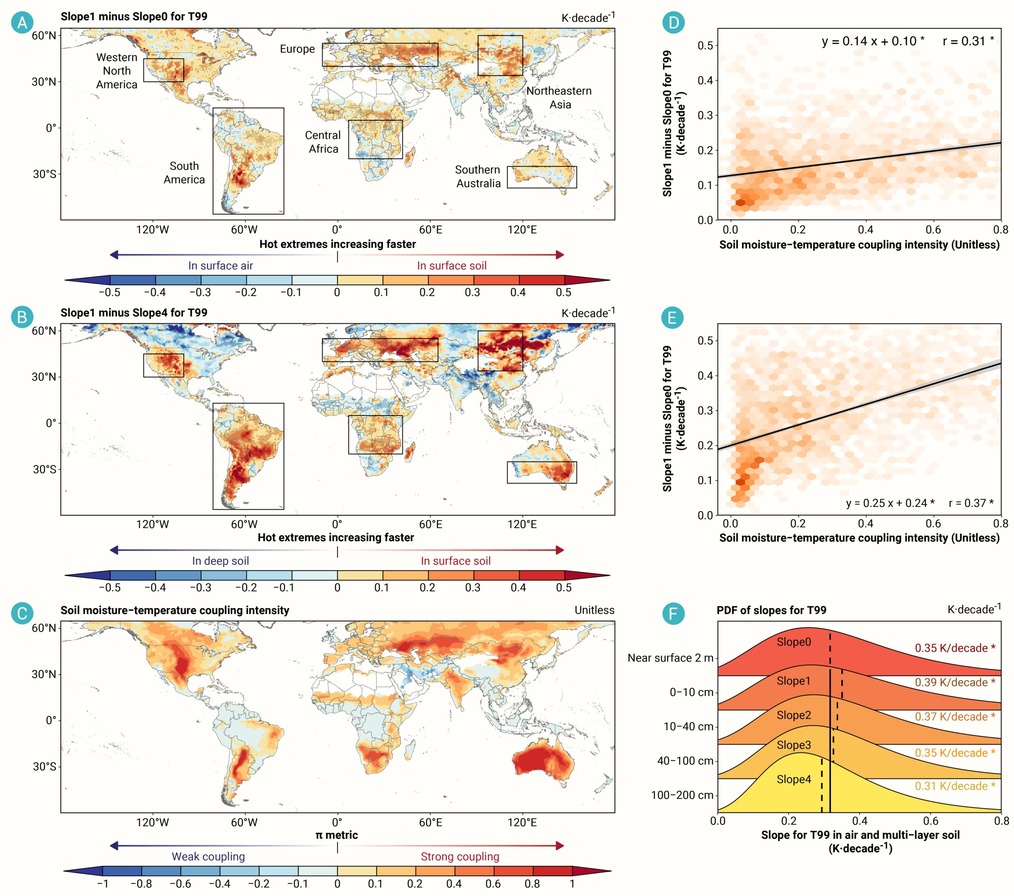
Figure 2.
Upper-bound rise of annual temperature distributions and its vertical heterogeneity in soil and atmosphere during 1981–2020
-
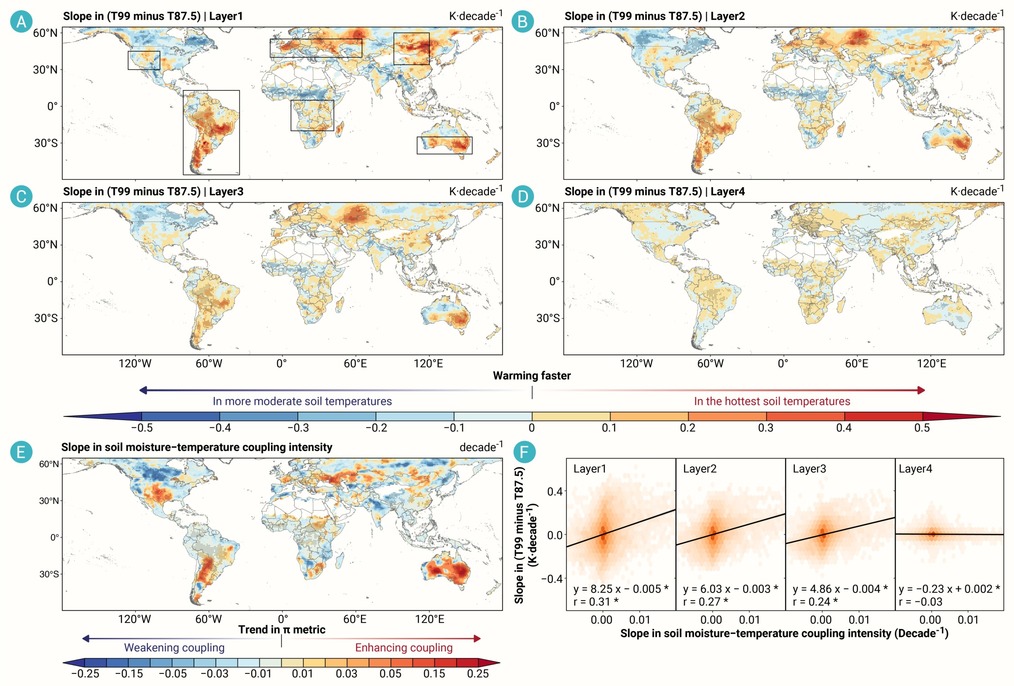
Figure 3.
Upper-tail widening of soil temperature distributions and its depth dependence during 1981–2020
-
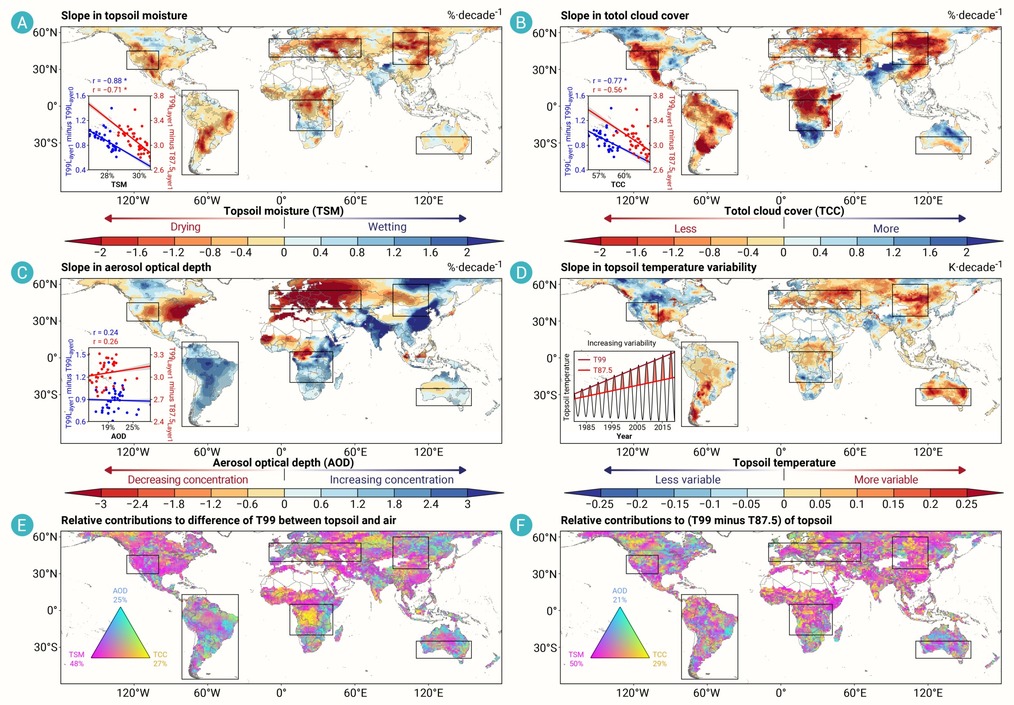
Figure 4.
Long-term trends and contributions in drivers behind heat amplification
-
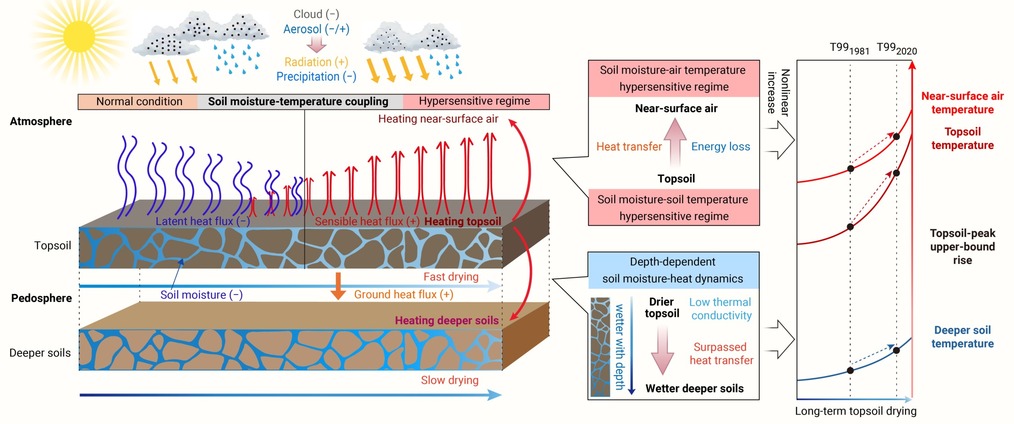
Figure 5.
Conceptual diagram illustrating vertical heterogeneity of heat extreme amplification in atmosphere and soil
-
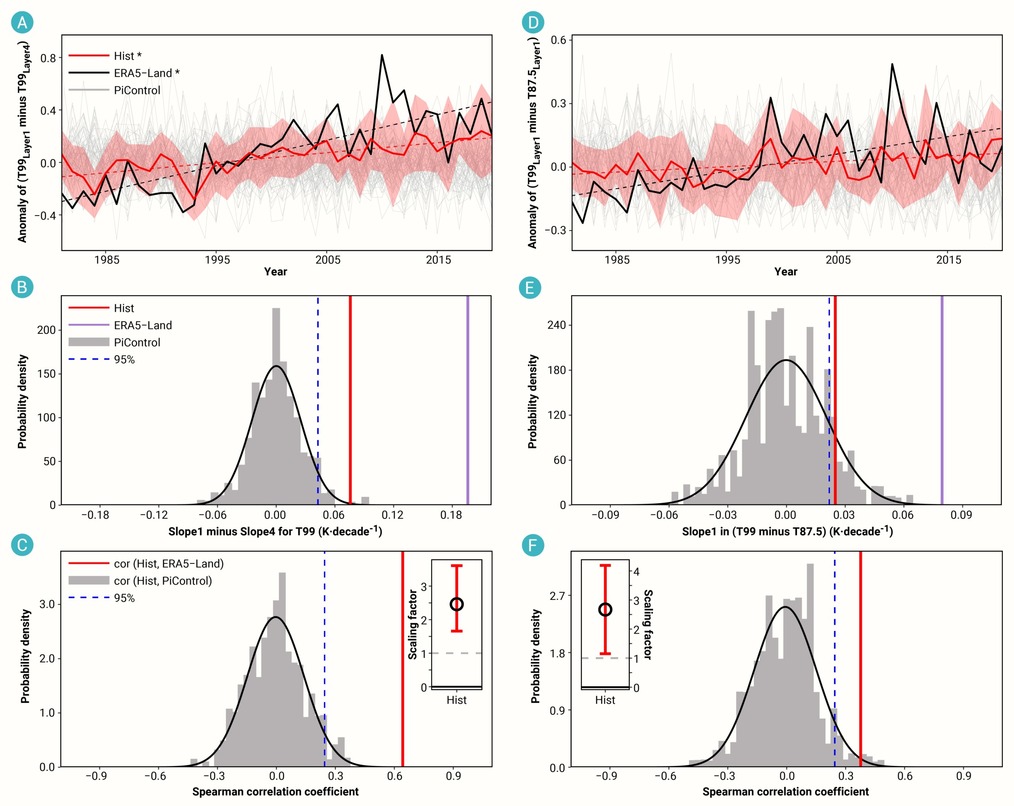
Figure 6.
Detection and attribution of soil heat amplification and its depth dependence during 1981–2020
-
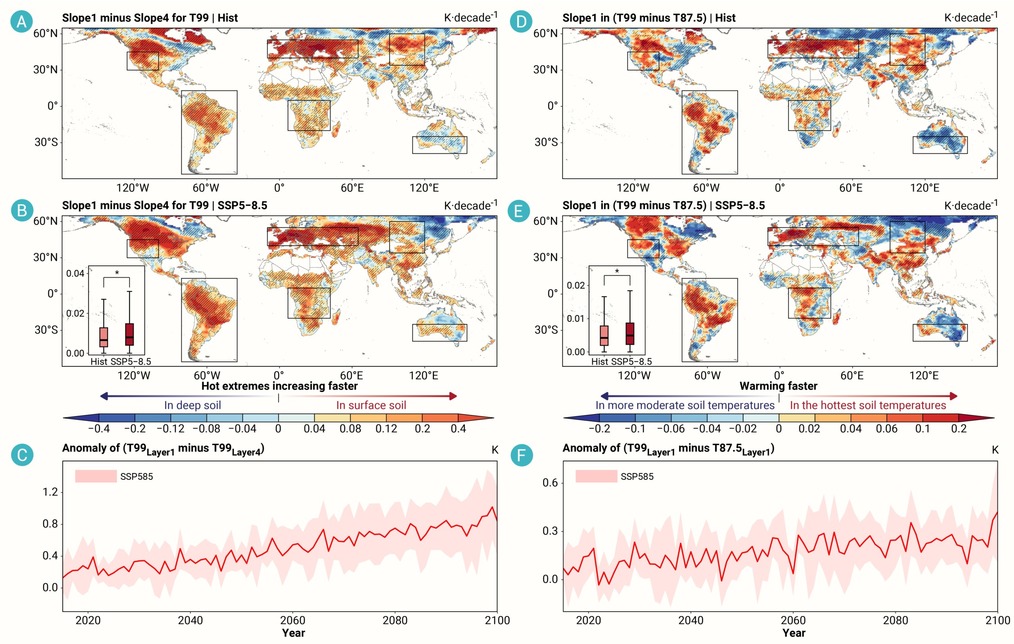
Figure 7.
Projected soil heat amplification and its depth dependence
