
AeroVerse-Review: Comprehensive survey on aerial embodied vision-and-language navigation
-
GRAPHICAL ABSTRACT
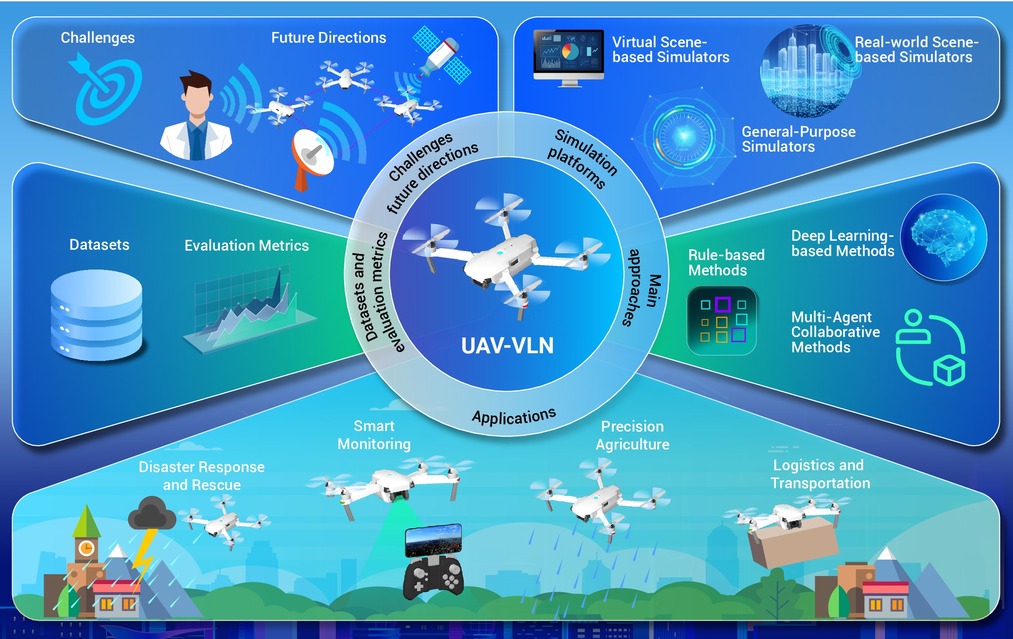
 DownLoad:
Full size image
DownLoad:
Full size image
-
PUBLIC SUMMARY
-
Comprehensive review of unmanned aerial vehicle based vision-and-language navigation (UAV-VLN).
Provide a summary of methodological evolution, from single-UAV navigation to multi-agent collaboration.
Outline promising future directions, such as embodied world models and space-air-ground unmanned systems.
-
-
ABSTRACT
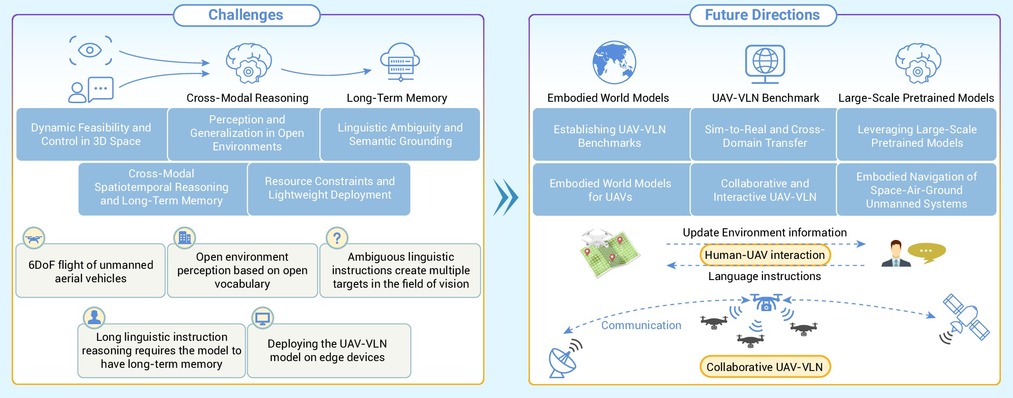
With the rapid advancement of unmanned aerial vehicle (UAV) technology, embedding intelligence into aerial platforms has become an increasingly important research direction. UAV-based vision-and-language navigation (UAV-VLN), as a representative paradigm of aerospace embodied intelligence, requires UAVs to understand natural language instructions and integrate multimodal perception to autonomously plan and execute navigation tasks in three-dimensional environments. This survey provides a comprehensive review of UAV-VLN research, covering simulation platforms, task definitions, core methodologies, datasets and evaluation metrics, application scenarios, as well as key challenges and future directions. We first present the design principles and capabilities of mainstream simulators, followed by a structured summary of methodological progress, including rule-based approaches, deep learning-driven models, and multi-agent collaborative strategies. We then discuss critical technical challenges in UAV-VLN, such as dynamic feasibility and control in 3D space, perception and generalization in complex environments, linguistic ambiguity and cross-modal semantic grounding, long-term spatiotemporal reasoning, and deployment under resource constraints. Based on these challenges, we outline promising future directions, including standardized benchmark development, Sim-to-Real and cross-domain transfer, pretrained large model integration, embodied world model, collaborative and interactive UAV-VLN, and embodied navigation of space-air-ground unmanned systems. This survey aims to provide a structured reference for future research and to guide the practical deployment of UAV-VLN systems. -

-
REFERENCES
[1] Yao F., Yue Y., Liu Y., et al. (2024). Aeroverse: Uav-agent benchmark suite for simulating, pre-training, finetuning, and evaluating aerospace embodied world models. arXiv preprint. DOI:10.48550/arXiv.2408.15511 [2] Liu Y., Yao F., Yue Y., et al (2024). Navagent: Multi-scale urban street view fusion for uav embodied vision-and-language navigation. arXiv preprint. DOI:10.48550/arXiv.2411.08579 [3] Li J. and Yang S.X. (2025). Digital twins to embodied artificial intelligence: Review and perspective. Intell. Robot. 5:202−227. DOI:10.20517/ir.2025.11 [4] Sarkar A., Narasimhan S.S., Singh A.P., et al. (2024). Gomaa-geo: Goal modality agnostic active geo-localization. arXiv preprint. DOI:10.48550/arXiv.2406.01917 [5] Liu J., Cui J., Ye M., et al. (2024). Shooting condition insensitive unmanned aerial vehicle object detection. Expert Syst. Appl. 246:123221. DOI:10.1016/j.eswa.2023.123221 [6] Qiu H., Li J., Gan J., et al. (2024). Dronegpt: Zero-shot video question answering for drones. CVDL '24. 64:1–6. DOI: 10.1145/3653804.3654608 [7] Chen G. (2023). Typefly: Flying drones with large language model. arXiv preprint. DOI:10.48550/arXiv.2312.14950 [8] Kondo K. (2023). Real: Resilience and adaptation using large language models on autonomous aerial robots. arXiv preprint. DOI:10.48550/arXiv.2311.01403 [9] Long X., Zhao Q., Zhang K., et al. (2025). A survey: Learning embodied intelligence from physical simulators and world models. arXiv preprint. DOI:10.48550/arXiv.2507.00917 [10] DJI. (2022). Dji drone solutions for inspection and infrastructure construction in the oil and gas industry. https://enterprise.dji.com/cn/oil-and-gas [11] DJI. (2022). Dji drone solutions for optimizing operations in the public safety industry. https://enterprise.dji.com/cn/public-safety [12] DJI. (2022). Dji drone solutions for surveying, urban planning, aec, and natural resource management. https://enterprise.dji.com/cn/surveying [13] Anderson P., Wu Q., Teney D., et al. (2018). Vision-and-language navigation: Interpreting visually-grounded navigation instructions in real environments. Comp. Vis. Pattern Recogn.2018:3674–3683. DOI:10.1109/CVPR.2018.00387 [14] Qi Y., Wu Q., Anderson P., et al. (2020). Reverie: Remote embodied visual referring expression in real indoor environments. Comp. Vis. Pattern Recogn.2020:9975–9984. DOI:10.1109/CVPR42600.2020.01000 [15] Jain V., Magalhaes G., Ku A., et al. (2019). Stay on the path: Instruction fidelity in vision-and-language navigation. Assoc. Comput. Ling.1: 1867–1876. DOI:10.18653/v1/P19-1181 [16] Ku A., Anderson P., Patel R., et al. (2020). Room-across-room: Multilingual vision-and-language navigation with dense spatiotemporal grounding. Empir. Methods Nat. Lang. Process. 2020:4392–4412. DOI: 10.18653/v1/2020.emnlp-main.355 [17] Li C., Xia F., Martín-Martín R., et al. (2021). Igibson 2.0: Object-centric simulation for robot learning of everyday household tasks. Conf. Robot Learn.155:455–465. DOI: 10.48550/arXiv.2108.03272 [18] Shen B., Xia F., Li C., et al. (2021). Igibson 1.0: A simulation environment for interactive tasks in large realistic scenes. Int. Conf. Intell. Robots Syst. 2021:7520–7527. DOI:10.1109/IROS51168.2021.9636509 [19] Xia F., Shen W.B., Li C., et al. (2020). Interactive gibson benchmark: A benchmark for interactive navigation in cluttered environments. IEEE Robot. Autom. Lett. 5:713−720. DOI:10.1109/LRA.2020.2965079 [20] Huang Y., Chen J. and Huang D. (2022). Ufpmp-det: Toward accurate and efficient object detection on drone imagery. AAAI Conf. Artif. Intell. 36:1026−1033. DOI:10.1609/aaai.v36i1.19986 [21] Zhu X., Lyu S., Wang X., et al. (2021). Tph-yolov5: Improved yolov5 based on transformer prediction head for object detection on drone-captured scenarios. IEEE Int. Conf. Comput. Vis. 2021:2778–2788. DOI:10.1109/ICCVW54120.2021.00312 [22] Lin F. (2025). Uavs meet llms: Overviews and perspectives toward agentic low-altitude mobility. Inf. Fusion. 122:103158. DOI:10.1016/j.inffus.2025.103158 [23] Hao W., Li C., Lee P., et al. (2020). Towards learning a generic agent for vision-and-language navigation via pre-training. Comp. Vis. Pattern Recogn. 2020:13134–13143. DOI:10.1109/CVPR42600.2020.01315 [24] Ke L., Li X., Huang B., et al. (2019). Tactical rewind: Self-correction via backtracking in vision-and-language navigation. Comp. Vis. Pattern Recogn. 2019:6734–6743. DOI:10.1109/CVPR.2019.00689 [25] Qi Y., Pan Z., Zhang S., et al. (2020). Object-and-action aware model for visual language navigation. Eur. Conf. Comput. Vis. 2020:303–317. DOI:10.1007/978-3-030-58598-3_19 [26] Chattopadhyay P., Hoffman J., Parikh D., et al. (2021). Robustnav: Towards benchmarking robustness in embodied navigation. Int. Conf. Comput. Vis. 2021:15671–15680. DOI:10.1109/ICCV48922.2021.01539 [27] Chen S., Guhur P.L., Tapaswi M., et al. (2022). Think global, act local: Dual-scale graph transformer for vision-and-language navigation. Comp. Vis. Pattern Recogn. 2022:16516–16526. DOI:10.1109/CVPR52688.2022.01607 [28] Shah S., Dey D., Lovett C., et al. (2018). Airsim: High-fidelity visual and physical simulation for autonomous vehicles. Field Serv. Robot. 2018:621–635. DOI:10.1007/978-3-319-67361-5_40 [29] Lee J., Miyanishi T., Kurita S., et al. (2024). Citynav: Language-goal aerial navigation dataset with geographic information. Int. Conf. Comput. Vis. 2024:1–12. DOI:10.48550/arXiv.2406.14240 [30] Liu S., Zhang H., Qi Y., et al. (2023). Aerialvln: Vision-and-language navigation for uavs. arXiv preprint. DOI:10.48550/arXiv.2308.06735 [31] Gao Y., Li C., You Z., et al. (2025). Openfly: A versatile toolchain and large-scale benchmark for aerial vision-language navigation. arXiv preprint. DOI:10.48550/arXiv.2502.18041 [32] Wu Y. (2025). Learning occlusion-robust vision transformers for real-time uav tracking. arXiv preprint. DOI:10.48550/arXiv.2504.09228 [33] Wang Z., Li J. and Mahmoudian N. (2024). Synergistic reinforcement and imitation learning for vision-driven autonomous flight of uav along river. Int. Conf. Intell. Robots Syst. 2024:9976–9982. DOI:10.1109/IROS47612.2024.10611488 [34] Wang X., Huang Q., Celikyilmaz A., et al. (2019). Reinforced cross-modal matching and self-supervised imitation learning for vision-language navigation. Comp. Vis. Pattern Recogn. 2019:6629–6638. DOI:10.1109/CVPR.2019.00679 [35] Sautenkov O. (2025). Uav-codeagents: Scalable uav mission planning via multi-agent react and vision-language reasoning. arXiv preprint. DOI:10.48550/arXiv.2505.07236 [36] Zhou G. (2023). Navgpt: Explicit reasoning in vision-and-language navigation with large language models. arXiv preprint. DOI:10.48550/arXiv.2305.16986 [37] Kong L. (2025). Eventfly: Event camera perception from ground to the sky. arXiv preprint. DOI:10.48550/arXiv.2503.19916 [38] Wang H., Wang W., Liang W., et al. (2021). Structured scene memory for vision-language navigation. Comp. Vis. Pattern Recogn. 2021:8455–8464. DOI:10.1109/CVPR46437.2021.00846 [39] Anderson P., Shrivastava A., Parikh D., et al. (2019). Chasing ghosts: Instruction following as bayesian state tracking. Adv. Neural Inf. Process. Syst. 2019:371–381. DOI:10.48550/arXiv.1907.02022 [40] Zhou Z., Zhang Z., Peng X., et al. (2023). Decentralized cooperative navigation method for multi-uavs based on memory fusion mode. Acta Aeronaut. Astronaut. Sin. 44:28440. DOI:10.7527/S10006893.2023.28440 [41] Yuan S. (2025). Airswarm: Enabling cost-effective multi-uav research with cots drones. arXiv preprint. DOI:10.48550/arXiv.2503.06890 [42] Chen J. (2025). Aeroduo: Aerial duo for uav-based vision and language navigation. ACM Int. Conf. Multimedia. 2025:1–10. DOI:10.48550/arXiv.2508.15232 [43] Zhang Y., Hu Y., Song Y., et al. (2025). Learning vision-based agile flight via differentiable physics. Nat. Mach. Intell. 7:954–966. DOI:10.1038/s42256-025-01048-0 [44] Liao Y., Su J., Ma D., et al. (2025). Uav-satellite cross-view image matching based on adaptive threshold-guided ring partitioning framework. Remote Sens. 17:2448. DOI:10.3390/rs17142448 [45] Gong N., Li L., Sha J., et al. (2024). A satellite-drone image cross-view geolocalization method based on multi-scale information and dual-channel attention mechanism. Remote Sens. 16:941. DOI:10.3390/rs16060941 [46] Sautenkov O. (2025). Uav-vlpa: A vision-language-path-action system for optimal route generation on a large scales. arXiv preprint. DOI:10.48550/arXiv.2503.02454 [47] Anderson P., Wu Q., Teney D., et al. (2018). Vision-and-language navigation: Interpreting visually-grounded navigation instructions in real environments. Comp. Vis. Pattern Recogn. 2018:3674–3683. DOI:10.1109/CVPR.2018.00387 [48] Jain V., Magalhaes G., Ku A., et al. (2019). Stay on the path: Instruction fidelity in vision-and-language navigation. Assoc. Comput. Ling. 2019:1867–1876. DOI:10.18653/v1/P19-1181 [49] Chen H., Suhr A., Misra D., et al. (2019). Touchdown: Natural language navigation and spatial reasoning in visual street environments. Comp. Vis. Pattern Recogn. 2019:12538–12547. DOI:10.1109/CVPR.2019.01281 [50] Hong Y., Wu Q., Qi Y., et al. (2020). Language and visual entity relationship graph for agent reasoning in vision-and-language navigation. Adv. Neural Inf. Process. Syst. 644:7685–7696. DOI:10.48550/arXiv.2010.09304 [51] Tan M. and Le Q. (2019). Efficientnet: Rethinking model scaling for convolutional neural networks. Int. Conf. Mach. Learn. 2019:6105–6114. DOI:10.48550/arXiv.1905.11946 [52] Dosovitskiy A., Beyer L., Kolesnikov A., et al. (2020). An image is worth 16x16 words: Transformers for image recognition at scale. arXiv preprint. DOI:10.48550/arXiv.2010.11929 [53] Mnih V., Kavukcuoglu K., Silver D., et al. (2015). Human-level control through deep reinforcement learning. Nature. 518:529−533. DOI:10.1038/nature14236 [54] Schulman J. (2017). Proximal policy optimization algorithms. arXiv preprint. DOI:10.48550/arXiv.1707.06347 [55] Haarnoja T., Zhou A., Abbeel P., et al. (2018). Soft actor-critic: Off-policy maximum entropy deep reinforcement learning with a stochastic actor. Int. Conf. Mach. Learn. 2018:1861–1870. DOI: 10.48550/arXiv.1801.01290 [56] Ross S., Gordon G. and Bagnell D. (2011). A reduction of imitation learning and structured prediction to no-regret online learning. Artif. Intell. Stat. 2011:627–635. DOI: 10.48550/arXiv.1011.0686 [57] Chen T., Kornblith S., Norouzi M., et al. (2020). A simple framework for contrastive learning of visual representations. Int. Conf. Mach. Learn. 2020:1597–1607. DOI: 10.48550/arXiv.2002.05709 [58] He K., Fan H., Wu Y., et al. (2020). Momentum contrast for unsupervised visual representation learning. arXiv preprint. DOI:10.48550/arXiv.1911.05722 [59] Kipf T.N. and Welling M. (2017). Semi-supervised classification with graph convolutional networks. arXiv preprint. DOI: 10.48550/arXiv.1609.02907. [60] Yang Y., Li Y., Song W., et al. (2018). Graph r-cnn for scene graph generation. Eur. Conf. Comput. Vis. 2018:690–706. DOI:10.1007/978-3-030-01246-5_41 [61] Hu R., Rohrbach A., Darrell T., et al. (2020). Language-conditioned graph networks for relational reasoning. Int. Conf. Comput. Vis. 2020:10294–10303. DOI:10.1109/ICCV.2019.01039 [62] Bonetto E. (2023). Grade: Generating realistic and dynamic environments for robotics research with isaac sim. arXiv preprint. DOI:10.48550/arXiv.2303.04466 [63] Handa A. (2021). Isaac gym: High performance gpu-based physics simulation for robot learning. arXiv preprint. DOI:10.48550/arXiv.2108.10470 [64] Richards A. and How J. (2002). Robust model predictive control for autonomous unmanned rotorcraft. AIAA Guid. Navig. Control Conf. 3:1936−1941. [65] Forster C., Pizzoli M. and Scaramuzza D. (2014). Svo: Fast semi-direct monocular visual odometry. Int. Conf. Robot. Autom. 2014:15−22. DOI:10.1109/ICRA.2014.6906584 [66] LaValle S. M. (1998). Rapidly-exploring random trees: A new tool for path planning. Tech. Rep. Comput. Sci. Dep. Iowa State Univ. [67] Karaman S. and Frazzoli E. (2011). Sampling-based algorithms for optimal motion planning. Robot. Sci. Syst. arXiv preprint. DOI: 10.1177/0278364911406761 [68] Mellinger D. and Kumar V. (2011). Minimum snap trajectory generation and control for quadrotors. Int. Conf. Robot. Autom. 2011:2520−2525. DOI:10.1109/ICRA.2011.5980409 [69] Kamel M., Burri M. and Siegwart R. (2017). Linear vs nonlinear mpc for trajectory tracking applied to rotary wing micro aerial vehicles. IFAC World Congr. 50:3463−3469. DOI:10.1016/j.ifacol.2017.08.926 [70] Mur-Artal R. and Tardós J.D. (2017). Orb-slam2: An open-source slam system for monocular, stereo, and rgb-d cameras. IEEE Trans. Robot. 33:1255−1262. DOI:10.1109/TRO.2017.2705103 [71] Hart P.E., Nilsson N.J. and Raphael B. (1968). A formal basis for the heuristic determination of minimum cost paths. IEEE Trans. Syst. Sci. Cybern. 4:100−107. DOI:10.1109/TSSC.1968.300136 [72] Kamel M., Stastny T., Alexis K., et al. (2017). Linear vs non-linear mpc for trajectory tracking applied to rotary wing micro aerial vehicles. IFAC World Congr. 50: 3463–3469. DOI: 10.1016/j.ifacol.2017.08.927 [73] Mayne D.Q. (2014). Model predictive control: Recent developments and future promise. Automatica. 50:2967−2986. DOI:10.1016/j.automatica.2014.10.128 [74] Vaswani A., Shazeer N., Parmar N., et al. (2017). Attention is all you need. Adv. Neural Inf. Process. Syst. 30:5998–6008. DOI: 10.48550/arXiv.1706.03762 [75] He K., Zhang X., Ren S., et al. (2016). Deep residual learning for image recognition. Comp. Vis. Pattern Recogn. 2016: 770–778. DOI:10.1109/CVPR.2016.90 [76] Peng X.B., Andrychowicz M., Zaremba W., et al. (2018). Sim-to-real transfer of robotic control with dynamics randomization. Int. Conf. Robot. Autom. 2018:3803–3810. DOI:10.1109/ICRA.2018.8460528 [77] Tassa Y., Doron Y., Muldal A., et al. (2018). Deepmind control suite. arXiv preprint. DOI:10.48550/arXiv.1801.00690 [78] Wu S.T. and Hong J.L. (2010). Bayesian relational memory for semantic visual navigation. Int. Conf. Comput. Vis. 2010: 2769–2779. DOI:10.1109/ICCV.2019.00286 [79] Loquercio A., Maqueda A.I., Del-Blanco C.R., et al. (2018). Dronet: Learning to fly by driving. IEEE Robot. Autom. Lett. 3:1088−1095. DOI:10.1109/LRA.2018.2795645 [80] Tai L., Paolo G. and Liu M. (2017). Virtual-to-real deep reinforcement learning: Continuous control of mobile robots for mapless navigation. Int. Conf. Intell. Robots Syst. 2017:31–36. DOI:10.1109/IROS.2017.8202134 [81] Bekmezci I., Sahingoz O.K. and Temel O. (2013). Flying ad-hoc networks (fanets): A survey. Ad Hoc Netw. 11:1254−1270. DOI:10.1016/j.adhoc.2012.12.004 [82] Brambilla M., Ferrante E., Birattari M., et al. (2013). Swarm robotics: A review from the swarm engineering perspective. Swarm Intell. 7:1−41. DOI:10.1007/s11721-012-0075-2 [83] Howard A., Zhu M., Chen B., et al. (2020). Multi-uav coordination for large-scale area coverage: A survey and taxonomy. Robot. Auton. Syst. 125:103400. DOI:10.1016/j.robot.2020.103400 [84] Chen J. (2025). Aeroduo: Aerial duo for uav-based vision and language navigation. arXiv preprint. DOI:10.48550/arXiv.2508.15232 [85] Radford A., Kim J.W., Hallacy C., et al. (2021). Learning transferable visual models from natural language supervision. arXiv preprint. DOI:10.48550/arXiv.2103.00020 [86] Dosovitskiy A., Beyer L., Kolesnikov A., et al. (2021). An image is worth 16x16 words: Transformers for image recognition at scale. arXiv preprint. DOI: 10.48550/arXiv.2010.11929 [87] Liu Z., Lin Y., Cao Y., et al. (2021). Swin transformer: Hierarchical vision transformer using shifted windows. Int. Conf. Comput. Vis. 2021:10012–10022. DOI:10.1109/ICCV48922.2021.00986 [88] Radford A., Wu J., Child R., et al. (2019). Language models are unsupervised multitask learners. OpenAI Blog. 1:9.https://cdn.openai.com/better-language-models/language_models_are_unsupervised_multitask_learners.pdf [89] Yan L. (2023). Vlm-nav: Vision-language models for uav navigation. arXiv preprint.DOI:10.48550/arXiv.2310.02971 [90] Bouabdallah S. (2007). Design and control of quadrotors with application to autonomous flying. PhD Thesis, EPFL. DOI:10.5075/epfl-thesis-3727 [91] Hoffmann G.M., Huang H., Waslander S.L., et al. (2007). Quadrotor helicopter flight dynamics and control: Theory and experiment. AIAA Guid. Navig. Control Conf 2007:6461. DOI: 10.2514/6.2007-6461 [92] Mahony R., Kumar V. and Corke P. (2012). Multirotor aerial vehicles: Modeling, estimation, and control of quadrotor. IEEE Robot. Autom. Mag. 19:20−32. DOI:10.1109/MRA.2012.2205474 [93] Faessler M., Franchi A. and Scaramuzza D. (2018). Differential flatness of quadrotor dynamics subject to rotor drag for accurate tracking control. IEEE Robot. Autom. Lett. 3:620−626. DOI:10.1109/LRA.2017.2776355 [94] Tobin J., Fong R., Ray A., et al. (2017). Domain randomization for transferring deep neural networks from simulation to the real world. Int. Conf. Intell. Robots Syst. 2019:23–30. DOI:10.1109/IROS.2017.8202133 [95] Peng X.B., Andrychowicz M., Zaremba W., et al. (2018). Sim-to-real transfer of robotic control with dynamics randomization. arXiv preprint. DOI: 10.48550/arXiv.1710.06537 [96] Hinton G., Vinyals O. and Dean J. (2015). Distilling the knowledge in a neural network. arXiv preprint. DOI: 10.48550/arXiv.1503.02531 [97] Sandler M., Howard A., Zhu M., et al. (2018). Mobilenetv2: Inverted residuals and linear bottlenecks. Comp. Vis. Pattern Recogn. 4510–4520. DOI:10.1109/CVPR.2018.00474 [98] Redmon J. and Farhadi A. (2018). Yolov3: An incremental improvement. arXiv preprint. DOI:10.48550/arXiv.1804.02767 [99] NVIDIA Corporation. (2022). Nvidia isaac sim. https://developer.nvidia.com/isaac-sim [100] Epic Games. (2022). Unreal engine. https://www.unrealengine.com [101] Koenig N. and Howard A. (2004). Design and use paradigms for gazebo, an open-source multi-robot simulator. Int. Conf. Intell. Robots Syst. 2004:2149–2154. DOI:10.1109/IROS.2004.1389727 [102] Gorelick N., Hancher M., Dixon M., et al. (2017). Google earth engine: Planetary-scale geospatial analysis for everyone. Remote Sens. Environ. 202:18−27. DOI:10.1016/j.rse.2017.06.031 [103] Ji Y., He B., Tan Z., et al. (2025). Game4loc: A uav geo-localization benchmark from game data. AAAI Conf. Artif. Intell. 39:3913−3921. DOI:10.1609/aaai.v39i4.32409 [104] Rohmer E., Singh S.P.N. and Freese M. (2013). Coppeliasim (formerly v-rep): A versatile and scalable robot simulation framework. Int. Conf. Intell. Robots Syst 2013:1321-1326. DOI:10.1109/IROS.2013.6696520 [105] Michel O. (2004). Webots: Professional mobile robot simulation. Int. J. Adv. Robot. Syst. 1:39−42. DOI:10.5772/5618 [106] Echeverria G., Lemaignan S., Degroote A., et al. (2011). Modular open robots simulation engine: Morse. Int. Conf. Robot. Autom. 2011:46–51. DOI:10.1109/ICRA.2011.5980355 [107] Carpin S., Lewis M., Wang J., et al. (2007). Usarsim: A robot simulator for research and education. Int. Conf. Robot. Autom. 2007:1400–1405. DOI:10.1109/ROBOT.2007.363204 [108] Panerati J. and Schoellig A.P. (2021). Learning to fly—a gym environment with pybullet physics for reinforcement learning of multi-agent quadcopter control. Int. Conf. Intell. Robots Syst. 2021:7512–7519. DOI:10.1109/IROS51168.2021.9636161 [109] Kshitij. (2018). Drone simulation with realistic controls. https://github.com/Kshitij08/Drone-Simulation [110] Fan Y., Chen W., Jiang T., et al. (2023). Aerial vision-and-dialog navigation. Assoc. Comput. Ling. 2023:3043–3061. DOI: 10.18653/v1/2023.findings-acl.190 [111] Gao C., Zhao B., Zhang W., et al. (2024). Embodiedcity: A benchmark platform for embodied agent in real-world city environment. arXiv preprint. DOI:10.48550/arXiv.2410.09604 [112] Lin L., Liu Y., Hu Y., et al. (2022). Capturing, reconstructing, and simulating: The urbanscene3d dataset. Eur. Conf. Comput. Vis. 2022:93–109. DOI:10.1007/978-3-031-20056-4_6 [113] Schmittle M., Lukina A., Vacek L., et al. (2018). Openuav: A uav testbed for the cps and robotics community. Int. Conf. Cyber-Phys. Syst. 2018:130–139. DOI:10.1109/ICCPS.2018.00019 [114] Zhong F. (2024). Unrealzoo: Enriching photo-realistic virtual worlds for embodied ai. arXiv preprint. DOI:10.48550/arXiv.2412.20977 [115] Long R. (2025). Embodied crowd counting. arXiv preprint. DOI:10.48550/arXiv.2503.08367 [116] Wang H. (2024). Grutopia: Dream general robots in a city at scale. arXiv preprint. DOI:10.48550/arXiv.2407.10943 [117] Wu W. (2024). Metaurban: An embodied ai simulation platform for urban micromobility. arXiv preprint. DOI:10.48550/arXiv.2407.08725 [118] Xu Z., Deng D., Dong Y., et al. (2022). Dpmpc-planner: A real-time uav trajectory planning framework for complex static environments with dynamic obstacles. Int. Conf. Robot. Autom. 2022:250–256. DOI:10.1109/ICRA46639.2022.9812165 [119] Mourikis A.I. and Roumeliotis S.I. (2007). A multi-state constraint kalman filter for vision-aided inertial navigation. Int. Conf. Robot. Autom. 2007:3565–3572. DOI:10.1109/ROBOT.2007.364024 [120] Oleynikova H., Burri M., Taylor Z., et al. (2016). Continuous-time trajectory optimization for online uav replanning. Int. Conf. Intell. Robots Syst. 2016:5332–5339. DOI:10.1109/IROS.2016.7759774 [121] Mohta K., Sun K., Liu S., et al. (2018). Experiments in fast, autonomous, gps-denied quadrotor flight. IEEE Int. Conf. Robot. Autom. 2018:7832–7839. DOI:10.1109/ICRA.2018.8461076 [122] Ren Y., Zhu F., Lu G., et al. (2025). Safety-assured high-speed navigation for mavs. Sci. Robot. 10:eado6187. DOI:10.1126/scirobotics.ado6187 [123] Xu W., Cai Y., He D., et al. (2022). Fast-lio2: Fast direct lidar-inertial odometry. IEEE Trans. Robot. 38:2053−2073. DOI:10.1109/TRO.2022.3141876 [124] Cao S., Lu X. and Shen S. (2022). Gvins: Tightly coupled gnss–visual–inertial fusion for smooth and consistent state estimation. IEEE Trans. Robot. 38:2004−2021. DOI:10.1109/TRO.2022.3148900 [125] Hui Y., Chen X., Xu S., et al. (1998). An unmanned air vehicle (uav) gps location and navigation system. Int. Conf. Microwave Millim. Wave Technol. 1998:472–475. DOI:10.1109/ICMMT.1998.768328 [126] Williamson W.R., Rios T. and Speyer J.L. (1999). Carrier phase differential gps/ins positioning for formation flight. Am. Control Conf. 5:3665−3670 DOI:10.1109/ACC.1999.786276 [127] Williamson W.R., Abdel-Hafez M.F., Rhee I., et al. (2007). An instrumentation system applied to formation flight. IEEE Trans. Control Syst. Technol. 15:75−85. DOI:10.1109/TCST.2006.883336 [128] Pany T., Akos D., Arribas J., et al. (2024). Gnss software-defined radio: History, current developments, and standardization efforts. Navigation. 71. DOI:10.33012/navi.628 [129] Mohta K., Watterson M., Mulgaonkar Y., et al. (2018). Fast, autonomous flight in gps-denied and cluttered environments. J. Field Robot. 35:101−120. DOI:10.1002/rob.21774 [130] Forster C., Zhang Z., Gassner M., et al. (2017). Svo: Semidirect visual odometry for monocular and multicamera systems. IEEE Trans. Robot. 33:249−265. DOI:10.1109/TRO.2016.2623335 [131] Wang Q., Zheng C. and Wu P. (2022). Geomagnetic/inertial navigation integrated matching navigation method. Heliyon. 8:e11249. DOI:10.1016/j.heliyon.2022.e11249 [132] Fang Z., Yang S., Jain S., et al. (2017). Robust autonomous flight in constrained and visually degraded shipboard environments. J. Field Robot. 34:25−52. DOI:10.1002/rob.21673 [133] Oleynikova H., Taylor Z., Fehr M., et al. (2017). Voxblox: Incremental 3d euclidean signed distance fields for on-board mav planning. IEEE/RSJ Int. Conf. Intell. Robots Syst. 2017:1366–1373. DOI:10.1109/IROS.2017.8202315 [134] Oleynikova H., Honegger D. and Pollefeys M. (2015). Reactive avoidance using embedded stereo vision for mav flight. IEEE Int. Conf. Robot. Autom. 2015:50–56. DOI:10.1109/ICRA.2015.7138992 [135] Lin J., Zhu H. and Alonso-Mora J. (2020). Robust vision-based obstacle avoidance for micro aerial vehicles in dynamic environments. IEEE Int. Conf. Robot. Autom. 2020:2680–2686. DOI:10.1109/ICRA40945.2020.9196975. [136] Wang Y., Ji J., Wang Q., et al. (2021). Autonomous flights in dynamic environments with onboard vision. IEEE/RSJ Int. Conf. Intell. Robots Syst. 2021:1966–1973. DOI:10.1109/IROS51168.2021.9636005 [137] Zhou B., Gao F., Wang L., et al. (2019). Robust and efficient quadrotor trajectory generation for fast autonomous flight. IEEE Robot. Autom. Lett. 4:3529−3536. DOI:10.1109/LRA.2019.2926660 [138] Zhou X., Wang Z., Xu C., et al. (2021). Ego-planner: An esdf-free gradient-based local planner for quadrotors. IEEE Robot. Autom. Lett. 6:478−485. DOI:10.1109/LRA.2020.3047704 [139] Xu Z., Xiu Y., Lyu X., et al. (2023). Vision-aided uav navigation and dynamic obstacle avoidance using gradient-based b-spline trajectory optimization. IEEE Int. Conf. Robot. Autom. 2023:1214–1220. DOI:10.1109/ICRA48891.2023.10160899 [140] Liu J.Y., Guo Z.Q. and Liu S.Y. (2012). The simulation of the uav collision avoidance based on the artificial potential field method. Adv. Mater. Res. 591-593:1400–1404. DOI: 10.4028/www.scientific.net/AMR.591-593.1400 [141] Jenie Y.I., van Kampen E.J., de Visser C.C., et al. (2016). Three-dimensional velocity obstacle method for uav’s uncoordinated avoidance maneuver. AIAA Guid. Navig. Control Conf. 2016:1842. DOI:10.2514/6.2016-1842 [142] Emami Y., Zhou H., Almeida L., et al. (2025). Diffusion models for smarter uavs: Decision-making and modeling. arXiv preprint. DOI:10.48550/arXiv.2501.05819 [143] Ali A.M., Gupta A. and Hashim H.A. (2024). Deep reinforcement learning for sim-to-real policy transfer of vtol-uavs offshore docking operations. Appl. Soft Comput.165:111843 DOI: 10.1016/j.asoc.2024.111843 [144] Zhu Y., Chen M., Wang S., et al. (2024). Collaborative reinforcement learning based unmanned aerial vehicle (uav) trajectory design for 3d uav tracking. IEEE Trans. Mob. Comput. 23:10787−10802. DOI:10.1109/TMC.2024.3382913 [145] Dash P., Chan E., Lawrence N.P., et al. (2025). Armor: Robust reinforcement learning-based control for uavs under physical attacks. arXiv preprint. DOI:10.48550/arXiv.2506.22423 [146] Tai J.J., Wong J., Innocente M., et al. (2023). Pyflyt–uav simulation environments for reinforcement learning research. arXiv preprint. DOI:10.48550/arXiv.2304.01305 [147] He M., Wang P., Chen H., et al. (2025). Optimization of flying ad hoc network topology and collaborative path planning for multiple uavs. arXiv preprint. DOI:10.48550/arXiv.2506.17945 [148] Xu Z., Han X., Shen H., et al. (2025). Navrl: Learning safe flight in dynamic environments. IEEE Robot. Autom. Lett. DOI:10.1109/LRA.2025.3452541 [149] Xu H., Hu Y., Gao C., et al. (2025). Geonav: Empowering mllms with explicit geospatial reasoning abilities for language-goal aerial navigation. arXiv preprint. DOI:10.48550/arXiv.2504.09587 [150] Wu G., Zhao Z. and He Y. (2023). Relax: Reinforcement learning enabled 2d-lidar autonomous system for parsimonious uavs. arXiv preprint. DOI:10.48550/arXiv.2309.08095 [151] Zhang W., Gao C., Yu S., et al. (2025). Citynavagent: Aerial vision-and-language navigation with hierarchical semantic planning and global memory. Assoc. Comput. Ling. 2025:1511–1521. DOI: 10.18653/v1/2025.acl-long.1511 [152] Zhan Z., Yu L., Yu S., et al. (2024). Mc-gpt: Empowering vision-and-language navigation with memory map and reasoning chains. arXiv preprint. DOI:10.48550/arXiv.2405.10620 [153] Long Y., Cai W., Wang H., et al. (2024). Instructnav: Zero-shot system for generic instruction navigation in unexplored environment. arXiv preprint. DOI:10.48550/arXiv.2406.04882 [154] Shah D., Osiński B., ichter B., et al. (2023). Lm-nav: Robotic navigation with large pre-trained models of language, vision, and action. Conf. Robot Learn. 229:492–504. DOI:10.48550/arXiv.2207.04429 [155] Li D., Chen W. and Lin X. (2024). Tina: Think, interaction, and action framework for zero-shot vision language navigation. arXiv preprint. DOI:10.48550/arXiv.2403.08833 [156] Lin B., Nie Y., Wei Z., et al. (2024). Navcot: Boosting llm-based vision-and-language navigation via learning disentangled reasoning. IEEE Trans. Pattern Anal. Mach. Intell. 46:9423-9438. DOI:10.1109/TPAMI.2024.3457291 [157] Hong Y., Wu Q., Qi Y., et al. (2021). A recurrent vision-and-language bert for navigation. arXiv preprint. DOI:10.48550/arXiv.2011.13922 [158] Zhang X., Tian Y., Zhu F., et al. (2025). Logisticsvln: Vision-language navigation for low-altitude terminal delivery based on agentic uavs. arXiv preprint. DOI:10.48550/arXiv.2505.03460 [159] Cai H., Dong J., Tan J., et al. (2025). Flightgpt: Towards generalizable and interpretable uav vision-and-language navigation with vision-language models. arXiv preprint. DOI:10.48550/arXiv.2505.12835 [160] Gao Y., Wang Z., Jing L., et al. (2024). Exploring spatial representation to enhance llm reasoning in aerial vision-language navigation. arXiv preprint. DOI:10.48550/arXiv.2410.08500 [161] Saxena P., Raghuvanshi N. and Goveas N. (2025). Uav-vln: End-to-end vision language guided navigation for uavs. arXiv preprint. DOI:10.48550/arXiv.2504.21432 [162] Li T., Huai T., Li Z., et al. (2025). Skyvln: Vision-and-language navigation and nmpc control for uavs in urban environments. arXiv preprint. DOI:10.48550/arXiv.2507.06564 [163] Chen J., Lin B., Xu R., et al. (2024). Mapgpt: Map-guided prompting with adaptive path planning for vision-and-language navigation. Assoc. Comput. Ling. 2024.acl-long:9796–9810. DOI: 10.18653/v1/2024.acl-long.529 [164] Long Y., Li X., Cai W., et al. (2024). Discuss before moving: Visual language navigation via multi-expert discussions. IEEE Int. Conf. Robot. Autom. 2024:10807-10813. DOI:10.1109/ICRA57147.2024.10610391 [165] Gao Y., Wang Z., Jing L., et al. (2024). Aerial vision-and-language navigation via semantic-topo-metric representation guided llm reasoning. arXiv preprint. DOI:10.48550/arXiv.2410.08500 [166] Pan R., Xu S. and Brigade S. (2017). Multi-uav cooperative navigation algorithm based on geometric characteristics. J. Ordnance Equip. Eng. 38:55−59. [167] Horyna J., Kratky V., Pritzl V., et al. (2024). Fast swarming of uavs in gnss-denied feature-poor environments without explicit communication. IEEE Robot. Autom. Lett. 9:5284−5291. DOI:10.1109/LRA.2024.3387830 [168] Zhang L., Cao X., Su M., et al. (2025). Collaborative integrated navigation for unmanned aerial vehicle swarms under multiple uncertainties. Sensors. 25:617. DOI:10.3390/s25030617 [169] Braik M., Al-Hiary H., Alzoubi H., et al. (2025). Tornado optimizer with coriolis force: A novel bio-inspired meta-heuristic algorithm for solving engineering problems. Artif. Intell. Rev. 58:123. DOI:10.1007/s10462-025-11118-9 [170] Zhou Z., Zhang Z., Peng X., et al. (2021). A collaborative path planning method for multi-uav based on conflict-based search. Patent. CN113885567A. [171] Tang H., Sun W., Lü L., et al. (2024). Unmanned aerial vehicle formation path planning method based on dynamic reward strategy. Syst. Eng. Electron. 46:3506−3518. DOI:10.12305/j.issn.1001-506X.2024.10.27 [172] Zhou Z., Zhang Z., Zhang Z., et al. (2021). A distributed collaborative trajectory planning method for multi-uav targets tracking in complex dynamic environment. Chin. J. Aeronaut. 34:1−13. DOI:10.1016/j.cja.2021.05.001 [173] Chen Z., Li S., Khan A.T., et al. (2025). Competition of tribes and cooperation of members algorithm: An evolutionary computation approach for model free optimization. Expert Syst. Appl. 265:125908. DOI:10.1016/j.eswa.2024.125908 [174] Han T., Tang A., Zhou H., et al. (2022). Multi-uav cooperative trajectory planning method based on lassa algorithm. Syst. Eng. Electron. 44:233−241. DOI:10.12305/j.issn.1001-506X.2022.01.29 [175] Wang Z., Zhang M., Zhang Z., et al. (2024). Uav cooperative path planning based on multi-index dynamic priority. Acta Aeronaut. Astronaut. Sin. 45:328816. DOI:10.7527/S1000-6893.2023.28816 [176] Tong P., Yang X., Yang Y., et al. (2023). Multi-uav collaborative absolute vision positioning and navigation: A survey and discussion. Drones. 7:261. DOI:10.3390/drones7040261 [177] Leishman R.C., McLain T.W. and Beard R.W. (2014). Relative navigation approach for vision-based aerial gps-denied navigation. J. Intell. Robot. Syst. 74:97−111. DOI:10.1007/s10846-013-9914-7 [178] Xu H., Liu P., Chen X., et al. (2024). D2slam: Decentralized and distributed collaborative visual-inertial slam system for aerial swarm. IEEE Trans. Robot. 40:3445−3464. DOI:10.1109/TRO.2024.3411984 [179] Wang T., Zhang Y., Liang J., et al. (2020). Multi-uav collaborative system with a feature fast matching algorithm. Front. Inf. Technol. Electron. Eng. 21:1695−1712. DOI:10.1631/FITEE.2000239 [180] Huang H., Zhu G., Fan Z., et al. (2022). Vision-based distributed multi-uav collision avoidance via deep reinforcement learning for navigation. IEEE/RSJ Int. Conf. Intell. Robots Syst. 2022:13745–13752. DOI:10.1109/IROS47612.2022.9981803 [181] Mo K., Chu L., Zhang X., et al. (2024). Dral: Deep reinforcement adaptive learning for multi-uavs navigation in unknown indoor environment. IEEE Int. Conf. Mechatron. Control Eng. 2024:1–6. DOI:10.1109/MCTE62870.2024.00012 [182] Xu Y., Wei Y., Jiang K., et al. (2023). Multiple uavs path planning based on deep reinforcement learning in communication denial environment. Mathematics. 11:405. DOI:10.3390/math11020405 [183] Wang J., Yu Z., Zhou D., et al. (2024). Vision-based deep reinforcement learning of uav autonomous navigation using privileged information. arXiv preprint. DOI:10.48550/arXiv.2412.06313 [184] Duffy J.P., Cunliffe A.M., DeBell L., et al. (2018). Location, location, location: Considerations when using lightweight drones in challenging environments. Remote Sens. Ecol. Conserv. 4:7−19. DOI:10.1002/rse2.89 [185] Zhu P., Wen L., Bian X., et al. (2018). Vision meets drones: A challenge. arXiv preprint. DOI:10.48550/arXiv.1804.07437 [186] Couturier A. and Akhloufi M.A. (2021). A review on absolute visual localization for uav. Robot. Auton. Syst. 135:103666. DOI:10.1016/j.robot.2020.103666 [187] Russell J.S., Ye M., Anderson B.D.O., et al. (2020). Cooperative localization of a gps-denied uav using direction-of-arrival measurements. IEEE Trans. Aerosp. Electron. Syst. 56:1966−1978. DOI:10.1109/TAES.2019.2950136 [188] Hou Y., Zhang H. and Zhou S. (2015). Convolutional neural network-based image representation for visual loop closure detection. IEEE Int. Conf. Inf. Autom. 2015:2238–2245. DOI:10.1109/ICInfA.2015.7279665 [189] Al-Jarrah O.Y., Shatnawi A.S., Shurman M.M., et al. (2024). Exploring deep learning-based visual localization techniques for uavs in gps-denied environments. IEEE Access. 12:113049−113071. DOI:10.1109/ACCESS.2024.3439350 [190] Sautenkov O., Yaqoot Y., Lykov A., et al. (2025). Uav-vla: Vision-language-action system for large scale aerial mission generation. arXiv preprint. DOI:10.48550/arXiv.2501.05014 [191] Ding X., Zhang X., Ma N., et al. (2021). Repvgg: Making vgg-style convnets great again. IEEE/CVF Conf. Comput. Vis. Pattern Recogn. 2021:13733–13742. DOI:10.1109/CVPR46437.2021.01352 [192] Shuvo M.M.H., Islam S.K., Cheng J., et al. (2023). Efficient acceleration of deep learning inference on resource-constrained edge devices: A review. Proc. IEEE. 111:42−91. DOI:10.1109/JPROC.2022.3226530 [193] Huang X. (2025). The small-drone revolution is coming — scientists need to ensure it will be safe. Nature. 637:29−30. DOI:10.1038/d41586-024-04167-7 [194] Jin W., Yang J., Fang Y., et al. (2020). Research on application and deployment of uav in emergency response. IEEE Int. Conf. Electron. Inf. Emerg. Commun. 2020:277–280. DOI:10.1109/ICEIEC49280.2020.9152338 [195] Wolfe V., Frobe W., Shrinivasan V., et al. (2015). Detecting and locating cell phone signals from avalanche victims using unmanned aerial vehicles. Int. Conf. Unmanned Aircr. Syst. 2015:704–713. DOI:10.1109/ICUAS.2015.7152352 [196] Bejiga M.B., Zeggada A. and Melgani F. (2016). Convolutional neural networks for near real-time object detection from uav imagery in avalanche search and rescue operations. IEEE Int. Geosci. Remote Sens. Symp. 2016:693–696. DOI:10.1109/IGARSS.2016.7729163 [197] Martinez-Alpiste I., Golcarenarenji G., Wang Q., et al. (2021). Search and rescue operation using uavs: A case study. Expert Syst. Appl. 178:114937. DOI:10.1016/j.eswa.2021.114937 [198] Jo D. and Kwon Y. (2017). Development of rescue material transport uav (unmanned aerial vehicle). World J. Eng. Technol. 5:720−729. DOI:10.4236/wjet.2017.54061 [199] Zhang X., Zhao H., Zhang J., et al. (2023). Cooperative trajectory design of multiple uav base stations with heterogeneous graph neural networks. IEEE Trans. Wireless Commun. 22:1495−1509. DOI:10.1109/TWC.2022.3204794 [200] Yuan X., Zhang J., Zhao J., et al. (2024). Poster abstract: Emergency networking using uavs: A reinforcement learning approach with large language model. Int. Conf. Inf. Process. Sensor Netw. 2024:287–288. DOI:10.1109/IPSN61024.2024.00056 [201] Yong S.P. and Yeong Y.C. (2018). Human object detection in forest with deep learning based on drone’s vision. Int. Conf. Comput. Inf. Sci. 2018:1–5. DOI:10.1109/ICCOINS.2018.8510564 [202] Menouar H., Guvenc I., Akkaya K., et al. (2017). Uav-enabled intelligent transportation systems for the smart city: Applications and challenges. IEEE Commun. Mag. 55:22−28. DOI:10.1109/MCOM.2017.1600238CM [203] Telikani A., Sarkar A., Du B., et al. (2024). Machine learning for uav-aided its: A review with comparative study. IEEE Trans. Intell. Transp. Syst. 25:15388−15406. DOI:10.1109/TITS.2024.3422039 [204] Du Q., Dong W., Su W., et al. (2022). Uav inspection technology and application of transmission line. IEEE Int. Conf. Inf. Syst. Comput. Aided Educ. 2022:594–597. DOI:10.1109/ICISCAE57069.2022.10075457 [205] Duan H., Shi F., Gao B., et al. (2025). A novel real-time intelligent detector for monitoring uavs in live-line operation on 10 kv distribution networks. Intell. Robot. 5:70−87. DOI:10.20517/ir.2025.05 [206] Ince E. (2024). Transmission line inspection with uavs: A review of technologies, applications, and challenges. Int. J. Energy Smart Grid. 9:60−69. DOI:10.23884/ijesg.2024.9.1.05 [207] Iversen N., Schofield O.B. and Ebeid E. (2020). Locator - lightweight and low-cost autonomous drone system for overhead cable detection and soft grasping. IEEE Int. Symp. Saf. Secur. Rescue Robot. 2020:205–212. DOI:10.1109/SSRR50563.2020.9292591 [208] Dadrass Javan F., Samadzadegan F., Toosi A., et al. (2025). Unmanned aerial geophysical remote sensing: A systematic review. Remote Sens. 17:110. DOI:10.3390/rs17010110 [209] Iglay R.B., Jones L.R., Elmore J.E., et al. (2024). Wildlife monitoring with drones: A survey of end users. Wildl. Soc. Bull. 48:e1533. DOI:10.1002/wsb.1533 [210] Su J., Zhu X., Li S., et al. (2023). Ai meets uavs: A survey on ai empowered uav perception systems for precision agriculture. Neurocomputing. 518:242−270. DOI:10.1016/j.neucom.2022.10.072 [211] Kerkech M., Hafiane A. and Canals R. (2020). Vine disease detection in uav multispectral images with deep learning segmentation approach. Comput. Electron. Agric. 169:105236. DOI:10.1016/j.compag.2019.105236 [212] Rajagopal M.K. and Sarker B.M. (2023). Artificial intelligence based drone for early disease detection and precision pesticide management in cashew farming. arXiv preprint. DOI:10.48550/arXiv.2303.08556. [213] Zhou Y., Lao C., Yang Y., et al. (2021). Diagnosis of winter-wheat water stress based on uav-borne multispectral image texture and vegetation indices. Agric. Water Manag. 256:107076. DOI:10.1016/j.agwat.2021.107076 [214] Huang Y., Hoffmann W.C., Lan Y., et al. (2015). Development of a low-volume sprayer for an unmanned helicopter. J. Agric. Sci. 7:148−153. DOI:10.5539/jas.v7n1p148 [215] Shendryk Y., Sofonia J., Skocaj G., et al. (2020). Fine-scale prediction of biomass and leaf nitrogen content in sugarcane using uav lidar and multispectral imaging. Int. J. Appl. Earth Obs. Geoinf. 92:102177. DOI:10.1016/j.jag.2020.102177 [216] Huang X. (2025). The small-drone revolution is coming — scientists need to ensure it will be safe. Nature. 637:29−30. DOI:10.1038/d41586-024-04167-7 [217] Wang L., Wang L., Qiao Z., et al. (2022). The optimization of the "uav-vehicle" joint delivery route considering mountainous cities. PLoS One. 17:e0265518. DOI:10.1371/journal.pone.0265518 [218] Li X., Tupayachi J., Sharmin A., et al. (2023). Drone-aided delivery methods, challenge, and the future: A methodological review. Drones. 7:191. DOI:10.3390/drones7030191 [219] Gaia Consulting Oy. (2021). Potential benefits of drone deliveries in Helsinki. https://kstatic.googleusercontent.com/files/cccdb99966ab71d08af6b990e4e3ff687751122130934f82f55f960ecfcf75a987ec36a5ae4be130c482824eeb0febc6790d8346a3a707508165c045c2c74436 [220] Awasthi S., Gramse N., Reining C., et al. (2022). Uavs for industries and supply chain management. arXiv preprint. DOI:10.48550/arXiv.2212.03346 [221] Rejeb A., Rejeb K., Simske S., et al. (2023). Drones for supply chain management and logistics: A review and research agenda. Int. J. Logist. Res. Appl. 26:708−731. DOI:10.1080/13675567.2021.1981273 [222] Das A., Datta S., Gkioxari G., et al. (2018). Embodied question answering. IEEE Conf. Comput. Vis. Pattern Recogn. 2018:1–10. DOI:10.1109/CVPR.2018.00006 [223] Mu Y., Zhang Q., Hu M., et al. (2023). Embodiedgpt: Vision-language pre-training via embodied chain of thought. arXiv preprint. DOI:10.48550/arXiv.2305.15021 [224] Shah D., Osiński B., Ichter B., et al. (2022). Lm-nav: Robotic navigation with large pre-trained models of language, vision, and action. arXiv preprint. DOI:10.48550/arXiv.2207.04429 [225] Wu Z., Wang Z., Xu X., et al. (2023). Embodied task planning with large language models. arXiv preprint. DOI:10.48550/arXiv.2307.01848 [226] Tian H., Meng J., Zheng W.-S., et al. (2024). Loc4plan: Locating before planning for outdoor vision and language navigation. arXiv preprint. DOI:10.48550/arXiv.2408.05090 [227] Chen J., Lin B., Xu R., et al. (2024). Mapgpt: Map-guided prompting with adaptive path planning for vision-and-language navigation. arXiv preprint. DOI:10.48550/arXiv.2401.07314 [228] Hong Y., Zhen H., Chen P., et al. (2023). 3d-llm: Injecting the 3d world into large language models. Neural Inf. Process. Syst. DOI:10.48550/arXiv.2307.12981 [229] Luo J., Liu Y., Chen W., et al. (2025). Dspnet: Dual-vision scene perception for robust 3d question answering. arXiv preprint. DOI:10.48550/arXiv.2503.03190 [230] Saxena P., Raghuvanshi N. and Goveas N. (2025). Uav-vln: End-to-end vision language guided navigation for uavs. arXiv preprint. DOI:10.48550/arXiv.2504.21432 [231] Wang X., Yang D., Wang Z., et al. (2024). Towards realistic uav vision-language navigation: Platform, benchmark, and methodology. arXiv preprint. DOI:10.48550/arXiv.2410.07087 [232] Messaoudi F., Simon G. and Ksentini A. (2015). Dissecting games engines: The case of unity3d. Int. Workshop Netw. Syst. Support Games. 2015:1–6. DOI:10.1109/NetGames.2015.7382997 [233] Shah S., Dey D., Lovett C., et al. (2018). Airsim: High-fidelity visual and physical simulation for autonomous vehicles. Field Serv. Robot. 2018:621–635. DOI:10.1007/978-3-319-67361-5_40 [234] Unreal Engine. (2018). Unreal engine. https://www.unrealengine.com [235] Yao Y., Sun C., Wang T., et al. (2024). Uav geo-localization dataset and method based on cross-view matching. Sensors. 24:6905. DOI:10.3390/s24216905 [236] Sun Z., Liu Y., Zhu H., et al. (2025). Refdrone: A challenging benchmark for referring expression comprehension in drone scenes. arXiv preprint. DOI:10.48550/arXiv.2502.00392 [237] Xiao J., Sun Y., Shao Y., et al. (2025). Uav-on: A benchmark for open-world object goal navigation with aerial agents. arXiv preprint. DOI:10.48550/arXiv.2508.00288 [238] Wang S., Zhou D., Xie L., et al. (2025). Panogen++: Domain-adapted text-guided panoramic environment generation for vision-and-language navigation. Neural Netw. 187:107320. DOI:10.1016/j.neunet.2025.107320 [239] Meegahapola L., Hassoune H. and Gatica-Perez D. (2024). M3bat: Unsupervised domain adaptation for multimodal mobile sensing with multi-branch adversarial training. Proc. ACM Interact. Mob. Wearable Ubiquitous Technol. 8:1−30. DOI:10.1145/3659623 [240] Mumuni A., Mumuni F. and Gerrar N.K. (2024). A survey of synthetic data augmentation methods in machine vision. Mach. Intell. Res. 21:831−869. DOI:10.1007/s11633-022-1411-7 [241] Vettoruzzo A., Bouguelia M.-R., Vanschoren J., et al. (2024). Advances and challenges in meta-learning: A technical review. IEEE Trans. Pattern Anal. Mach. Intell. 46:4763−4779. DOI:10.1109/TPAMI.2024.3357847 [242] Xu X., Li M., Tao C., et al. (2024). A survey on knowledge distillation of large language models. arXiv preprint. DOI:10.48550/arXiv.2402.13116 [243] Long X., Zhao Q., Zhang K., et al. (2025). A survey: Learning embodied intelligence from physical simulators and world models. arXiv preprint. DOI:10.48550/arXiv.2507.00917 -
ABOUT THIS ARTICLE
Cite this article:
Yao F., Liu Y., Zhang W., et al. (2025). AeroVerse-Review: Comprehensive survey on aerial embodied vision-and-language navigation. The Innovation Informatics 1:100015. https://doi.org/10.59717/j.xinn-inform.2025.100015
Welcome!
To request copyright permission to republish or share portions of our works, please visit Copyright Clearance Center's (CCC) Marketplace website at marketplace.copyright.com.
Export File
Citation
Yao F., Liu Y., Zhang W., et al. (2025). AeroVerse-Review: Comprehensive survey on aerial embodied vision-and-language navigation. The Innovation Informatics 1:100015. https://doi.org/10.59717/j.xinn-inform.2025.100015

Format
Content
-
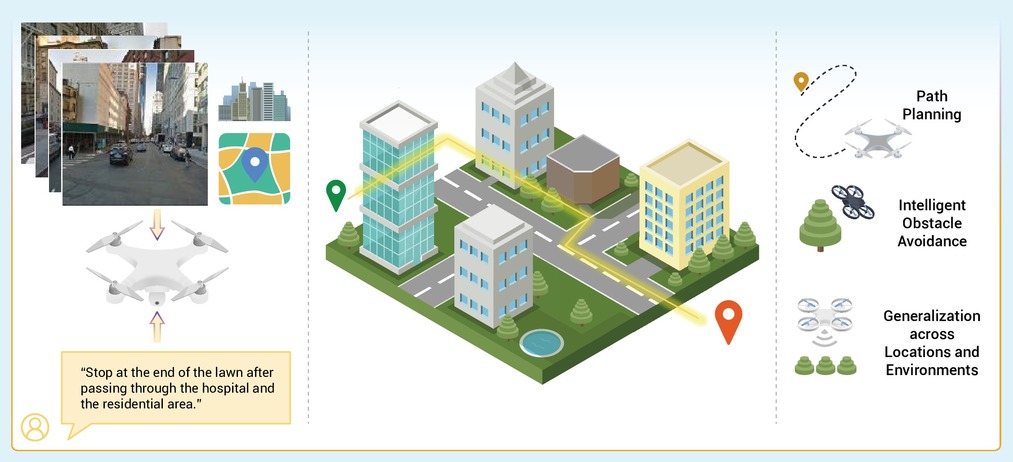
Figure 1.
Schematic diagram of UAV-VLN tasks
-
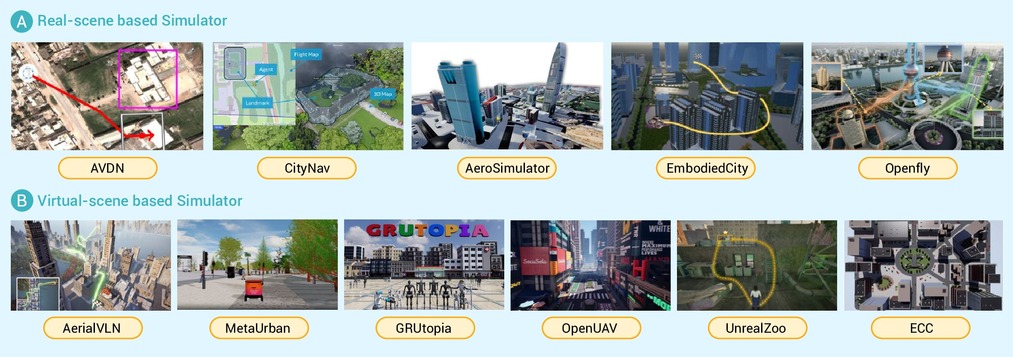
Figure 2.
Typical scenarios of simulators based on real scene reconstruction and virtual scene construction.
-
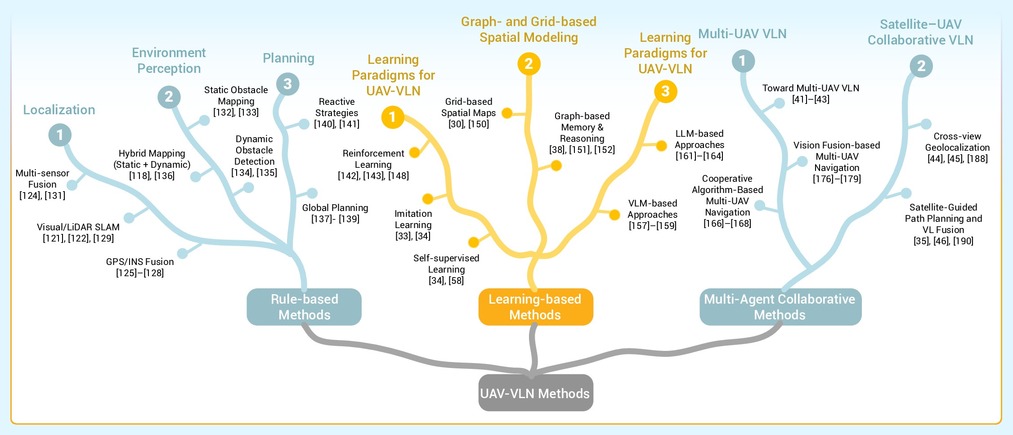
Figure 3.
A taxonomy of UAV-VLN methods, covering rule-based, learning-based, multi-agent collaborative paradigms.
-
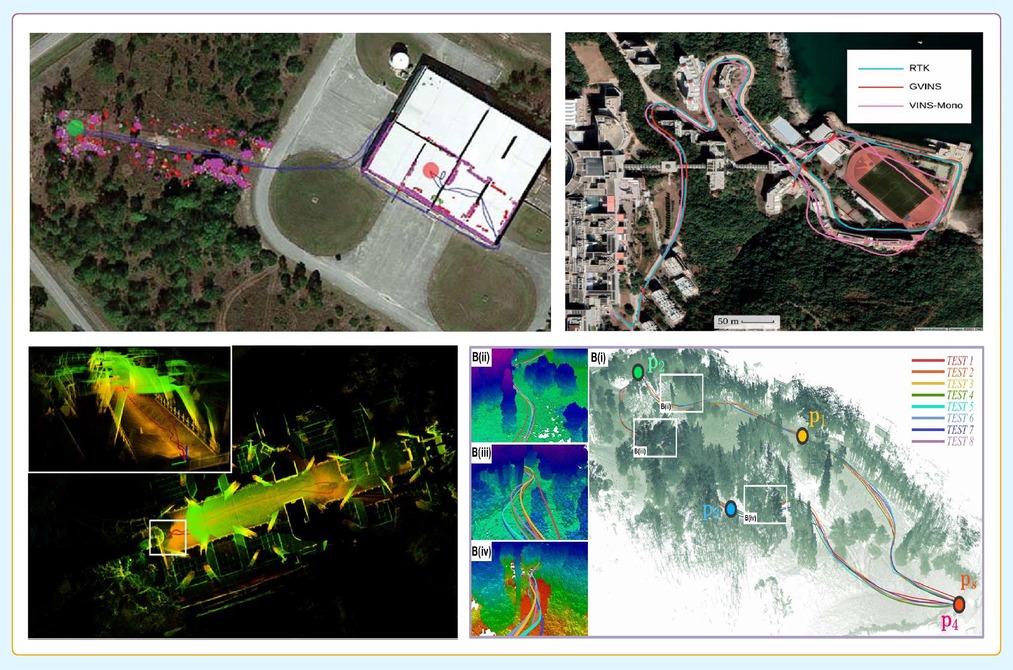
Figure 4.
UAV localization: determining relative position for navigation and action planning through onboard sensors and external sources
-
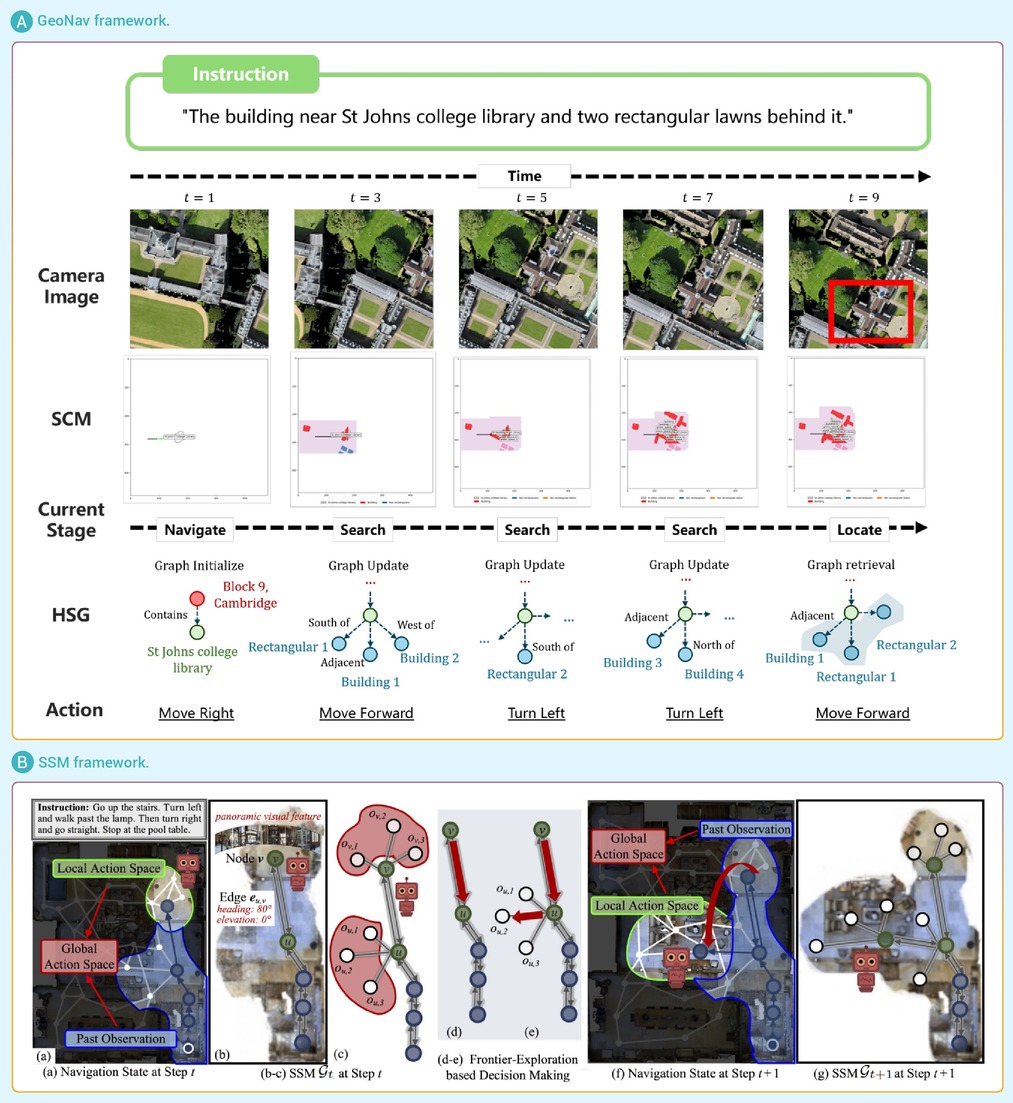
Figure 5.
(A) The GeoNav framework149
-
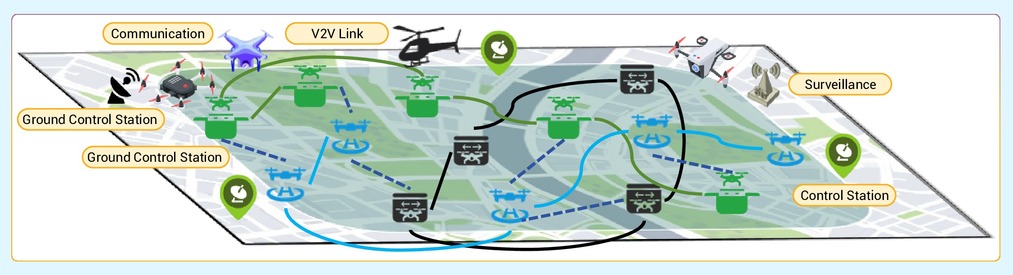
Figure 6.
Multi-UAV cooperative navigation in urban low-altitude airspace
-
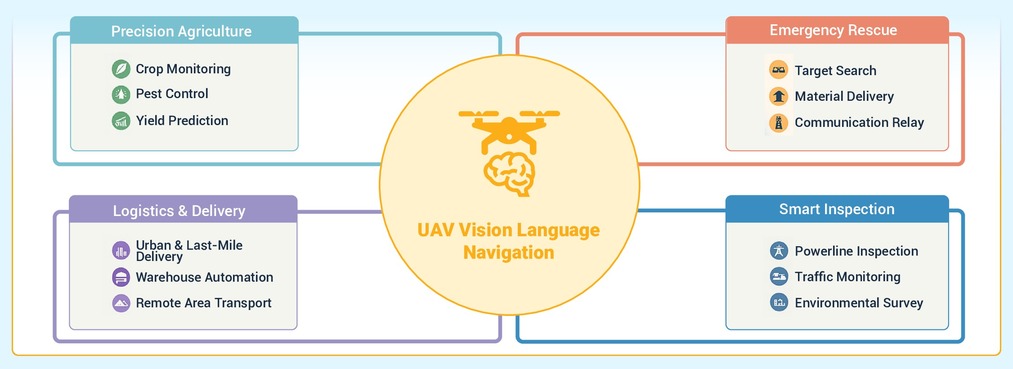
Figure 7.
Embodied intelligence technologies centered on UAV-VLN are driving innovations across key industries
-
Figure 8.
Challenge and future directions of UAV-VLN.
