
Measuring human likeness of artificial intelligence to natural intelligence
-
GRAPHICAL ABSTRACT
 DownLoad:
Full size image
DownLoad:
Full size image
-
PUBLIC SUMMARY
-
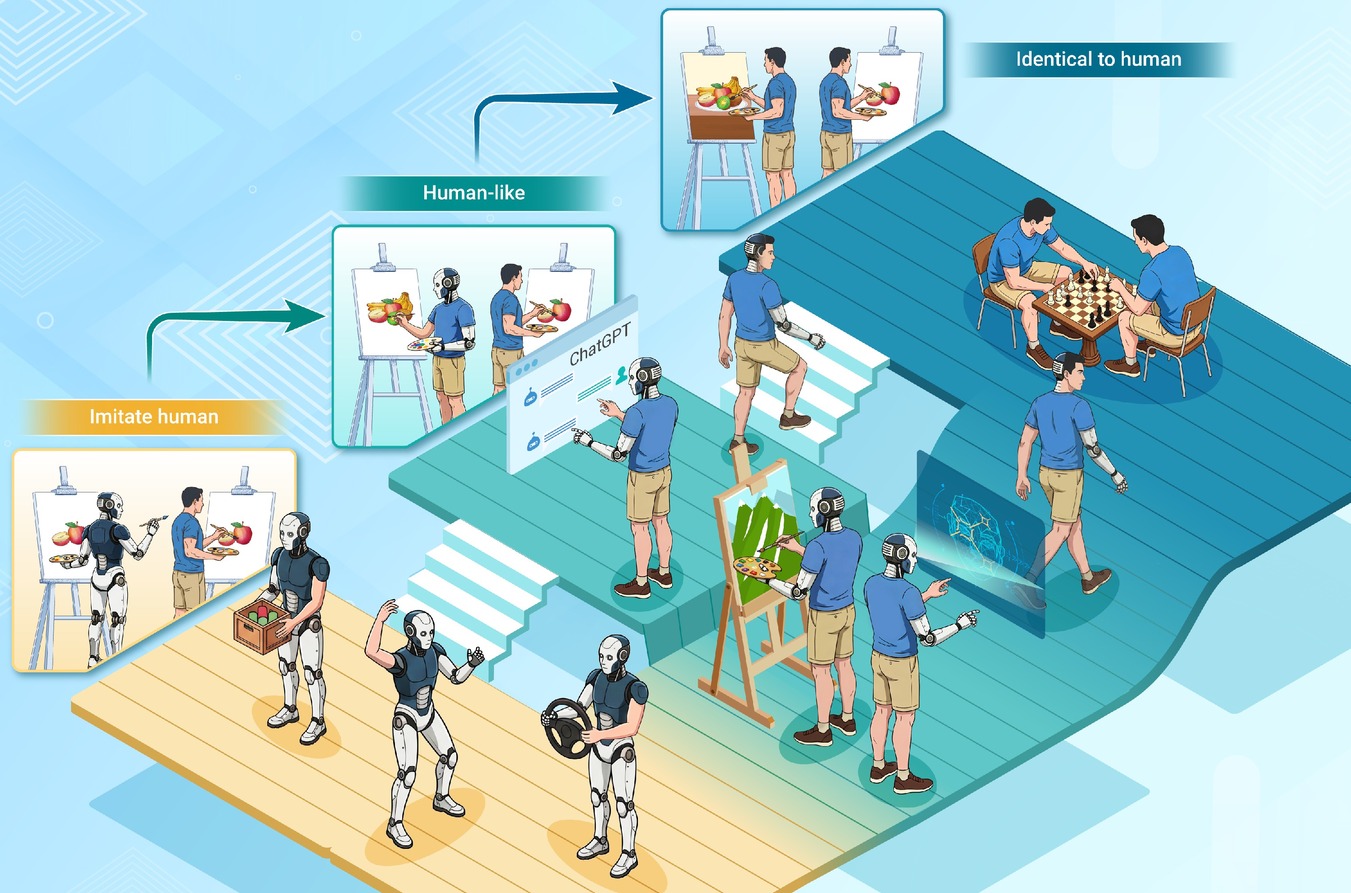
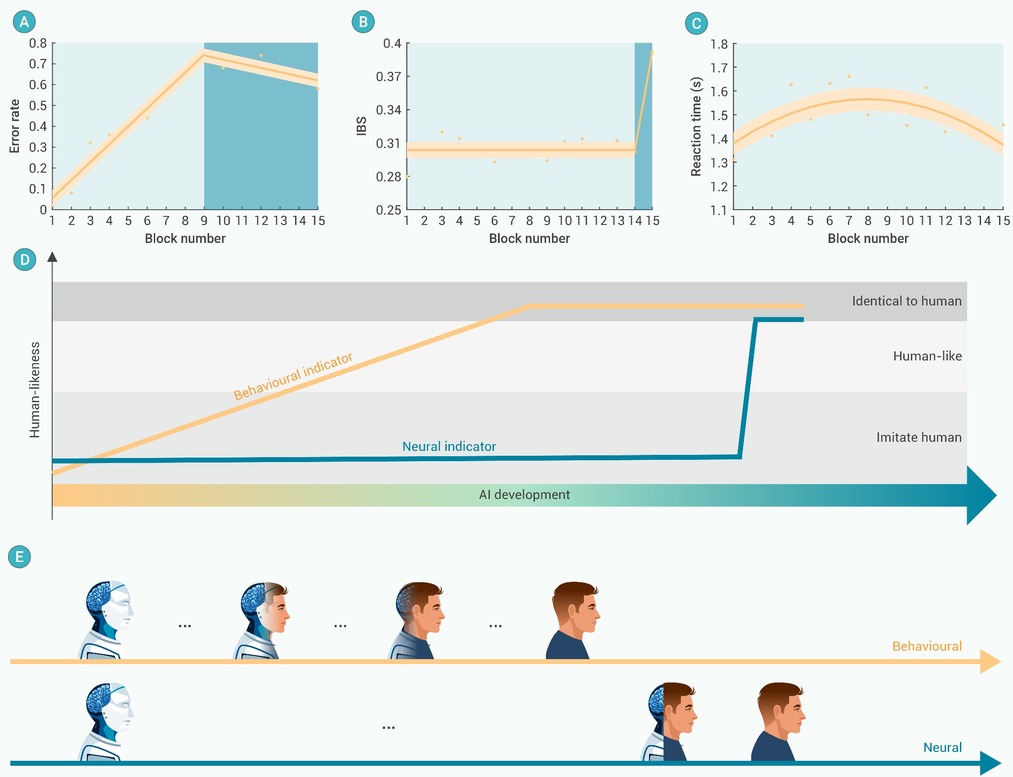
Human likeness of artificial intelligence (AI) was quantified behaviourally and neurally.
Comprehensive measurements were used to replace binary self-reports of the Turing test.
Behavioural human likeness linearly increased when AI’s behavioural pattern approached human.
Neural human likeness did not increase until the AI performed identically to human.
-
-
ABSTRACT
Natural intelligence (NI) is considered the biological foundation and ultimate aim of artificial intelligence (AI). Leveraging the steep increase in computational power and high-performance algorithms, many AI-empowered applications have claimed to attain human-level natural intelligence and behave like humans in certain tasks. However, these claims are primarily based on the classical Turing test and heavily rely on the binary self-reported ratings. Here, we introduced comprehensive behavioural and neural measurements to quantify the continuous distinctions between AI and NI. An adaptive-learning nonverbal Turing test was used to imitate the certainty and variability of human behaviours simultaneously, and typical LLM-based implementations were conducted as validation. Our results clarify the human behavioural and neural sensitivity of evaluating AI human likeness, extending Turing's testing criteria, and illustrate an empirical basis for pointing out directions of various human-like AI applications to approach NI.-
Keywords:
- Human-likeness /
- Turing test /
- fNIRS /
- Artificial intelligence
-

-
REFERENCES
[1] Cottam R. and Vounckx R. (2024). Intelligence: Natural, artificial, or what. Biosystems 246:105343. DOI:10.1016/j.biosystems.2024.105343 [2] Forli A. and Yartsev M.M. (2024). Understanding the neural basis of natural intelligence. Cell 187:5833−5837. DOI:10.1016/j.cell.2024.07.049 [3] Xu N.-l. (2024). How the brain's primary processing units compute to give rise to intelligence. Nat. Rev. Neurosci. DOI:10.1038/s41583-024-00810-4 [4] Cai H., Ao Z., Tian C., et al. (2023). Brain organoid reservoir computing for artificial intelligence. Nat. Electron. 6:1032−1039. DOI:10.1038/s41928-023-01069-w [5] Noy S. and Zhang W. (2023). Experimental evidence on the productivity effects of generative artificial intelligence. Science 381:187−192. DOI:10.1126/science.adh2586 [6] Kumar D., Addu S.R., Lind M., et al. (2026). AI-driven hybrid deep learning and swarm intelligence for predictive maintenance of smart manufacturing robots in Industry 4.0. Electronics 15:715. DOI:10.3390/electronics15030715 [7] Kiyasseh D., Cohen A., Jiang C., et al. (2024). A framework for evaluating clinical artificial intelligence systems without ground-truth annotations. Nat. Commun. 15:1808. DOI:10.1038/s41467-024-46000-9 [8] Kurvers R.H.J.M., Nuzzolese A.G., Russo A., et al. (2023). Automating hybrid collective intelligence in open-ended medical diagnostics. Proc. Natl. Acad. Sci. USA 120:e2221473120. DOI:10.1073/pnas.2221473120 [9] Liu L.T., Wang S., Britton T., et al. (2023). Reimagining the machine learning life cycle to improve educational outcomes of students. Proc. Natl. Acad. Sci. USA 120:e2204781120. DOI:10.1073/pnas.2204781120 [10] Belpaeme T., Kennedy J., Ramachandran A., et al. (2018). Social robots for education: A review. Sci. Robot. 3:eaat5954. DOI:10.1126/scirobotics.aat5954 [11] Grossberg S. (1988). Neural networks and natural intelligence. MIT Press. DOI:10.7551/mitpress/4934.001.0001 [12] Gielen S. (2007). Natural intelligence and artificial intelligence: Bridging the gap between neurons and neuro-imaging to understand intelligent behaviour. In Duch W. and Mańdziuk J. (eds). Challenges for computational intelligence. Springer, pp:145-161. DOI:10.1007/978-3-540-71984-7_7 [13] Qiu J. (2016). Research and development of artificial intelligence in China. Natl. Sci. Rev. 3:538−541. DOI:10.1093/nsr/nww076 [14] Han X., Zhang Z., Ding N., et al. (2021). Pre-trained models: Past, present and future. AI Open 2:225−250. DOI:10.1016/j.aiopen.2021.08.002 [15] LeCun Y., Bengio Y. and Hinton G. (2015). Deep learning. Nature 521:436−444. DOI:10.1038/nature14539 [16] Acerbi A. and Stubbersfield J.M. (2023). Large language models show human-like content biases in transmission chain experiments. Proc. Natl. Acad. Sci. USA 120:e2313790120. DOI:10.1073/pnas.2313790120 [17] Prillaman M. (2024). Is ChatGPT making scientists hyper-productive. The highs and lows of using AI. Nature 627:16−17. DOI:10.1038/d41586-024-00592-w [18] Epstein Z. and Hertzmann A. (2023). Art and the science of generative AI. Science 380:1110−1111. DOI:10.1126/science.adh4451 [19] Nass C., Steuer J. and Tauber E.R. (1994). Computers are social actors. Proc. SIGCHI Conf. Hum. Factors Comput. Syst.1994:72-78. DOI:10.1145/191666.191703 [20] Waytz A., Heafner J. and Epley N. (2014). The mind in the machine: Anthropomorphism increases trust in an autonomous vehicle. J. Exp. Soc. Psychol. 52:113−117. DOI:10.1016/j.jesp.2014.01.005 [21] de Visser E.J., Pak R. and Shaw T.H. (2018). From “automation” to “autonomy”: The importance of trust repair in human–machine interaction. Ergonomics 61:1409−1427. DOI:10.1080/00140139.2018.1457725 [22] Robinette P., Li W., Allen R., et al. (2016). Overtrust of robots in emergency evacuation scenarios. Proc. 11th ACM/IEEE Int. Conf. Hum.-Robot Interact. 2016:101-108. DOI:10.1109/HRI.2016.7451740 [23] Turing A.M. (1950). Computing machinery and intelligence. Mind 59:433−460. DOI:10.1093/mind/LIX.236.433 [24] Ciardo F., De Tommaso D. and Wykowska A. (2022). Human-like behavioral variability blurs the distinction between a human and a machine in a nonverbal Turing test. Sci. Robot. 7:eabo1241. DOI:10.1126/scirobotics.abo1241 [25] Mei Q., Xie Y., Yuan W., et al. (2024). A Turing test of whether AI chatbots are behaviorally similar to humans. Proc. Natl. Acad. Sci. USA 121:e2313925121. DOI:10.1073/pnas.231392512 [26] Johnson D.J., Hopwood C.J., Cesario J., et al. (2017). Advancing research on cognitive processes in social and personality psychology: A hierarchical drift diffusion model primer. Soc. Psychol. Personal. Sci. 8:413−423. DOI:10.1177/1948550617703174 [27] Fudenberg D., Newey W., Strack P., et al. (2020). Testing the drift-diffusion model. Proc. Natl. Acad. Sci. USA 117:33141−33148. DOI:10.1073/pnas.2011446117 [28] Bayne T. and Williams I. (2023). The Turing test is not a good benchmark for thought in LLMs. Nat. Hum. Behav. 7:1806−1807. DOI:10.1038/s41562-023-01710-w [29] Biever C. (2023). ChatGPT broke the Turing test—The race is on for new ways to assess AI. Nature 619:686−689. DOI:10.1038/d41586-023-02361-7 [30] Harnad S. (1991). Other bodies, other minds: A machine incarnation of an old philosophical problem. Minds Mach. 1:43−54. DOI:10.1007/BF00360578 [31] Rebol M., Gütl C. and Pietroszek K. (2021). Passing a non-verbal Turing test: Evaluating gesture animations generated from speech. Proc. IEEE Virtual Real. 3D User Interfaces, 573-581. DOI:10.1109/VR50410.2021.00082 [32] Pfeiffer U.J., Timmermans B., Bente G., et al. (2011). A non-verbal Turing test: Differentiating mind from machine in gaze-based social interaction. PLOS ONE 6:e27591. DOI:10.1371/journal.pone.0027591 [33] Sebanz N., Knoblich G. and Prinz W. (2003). Representing others' actions: Just like one's own. Cognition 88:B11−B21. DOI:10.1016/S0010-0277(03)00043-X [34] Simon J.R. and Craft J.L. (1970). Effects of an irrelevant auditory stimulus on visual choice reaction time. J. Exp. Psychol. 86:272−274. DOI:10.1037/h0029961 [35] Wei Z., Chen Y., Zhao Q., et al. (2023). Implicit perception of differences between NLP-produced and human-produced language in the mentalizing network. Adv. Sci. 10:e2203990. DOI:10.1002/advs.202203990 [36] Mayo O. and Shamay-Tsoory S. (2024). Dynamic mutual predictions during social learning: A computational and interbrain model. Neurosci. Biobehav. Rev. 157:105513. DOI:10.1016/j.neubiorev.2023.105513 [37] Réveillé C., Vergotte G., Perrey S., et al. (2024). Using interbrain synchrony to study teamwork: A systematic review and meta-analysis. Neurosci. Biobehav. Rev. 159:105593. DOI:10.1016/j.neubiorev.2024.105593 [38] Henschel A., Hortensius R. and Cross E.S. (2020). Social cognition in the age of human–robot interaction. Trends Neurosci. 43:373−384. DOI:10.1016/j.tins.2020.03.013 [39] Frith C.D. and Frith U. (2007). Social cognition in humans. Curr. Biol. 17:R724−R732. DOI:10.1016/j.cub.2007.05.068 [40] Dehaene S., Naccache L., Le Clec'H G., et al. (1998). Imaging unconscious semantic priming. Nature 395:597−600. DOI:10.1038/26967 [41] Hsu M., Bhatt M., Adolphs R., et al. (2005). Neural systems responding to degrees of uncertainty in human decision-making. Science 310:1680−1683. DOI:10.1126/science.1115327 [42] Holzinger A., Kieseberg P., Weippl E., et al. (2018). Current advances, trends and challenges of machine learning and knowledge extraction: From machine learning to explainable AI. In Holzinger, A., Kieseberg, P., Tjoa, A.M., and Weippl, E. (eds.), Machine learning and knowledge extraction: CD-MAKE 2018, pp. 1-8. Cham: Springer. https://doi.org/10.1007/978-3-319-99740-7_1 [43] Tsai C.-C., Kuo W.-J., Hung D.L., et al. (2008). Action co-representation is tuned to other humans. J. Cogn. Neurosci. 20:2015−2024. DOI:10.1162/jocn.2008.20144 [44] Montague P.R., Berns G.S., Cohen J.D., et al. (2002). Hyperscanning: Simultaneous fMRI during linked social interactions. NeuroImage 16:1159−1164. DOI:10.1006/nimg.2002.1150 [45] Trafton J.G., McCurry J.M., Zish K., et al. (2024). The perception of agency. ACM Trans. Hum.-Robot Interact. 13:14. DOI:10.1145/3640011 [46] Kendall G. and Teixeira da Silva J.A. (2024). Risks of abuse of large language models, like ChatGPT, in scientific publishing: Authorship, predatory publishing, and paper mills. Learn. Publ. 37:55−62. DOI:10.1002/leap.1578 [47] Xia Y., Chen H. and Chen X. (2023). Integrating social neuroscience into human-machine mutual behavioral understanding for autonomous driving. Innovation 4:100455. DOI:10.1016/j.xinn.2023.100455 [48] Xia Y., Geng M., Chen Y., et al. (2023). Understanding common human driving semantics for autonomous vehicles. Patterns 4:100730. DOI:10.1016/j.patter.2023.100730 [49] Stilgoe J. (2023). We need a Weizenbaum test for AI. Science 381:eadk0176. DOI:10.1126/science.adk0176 [50] Schoepe T., Janotte E., Milde M.B. et al. (2024). Finding the gap: Neuromorphic motion-vision in dense environments. Nat. Commun. 15:817. DOI:10.1038/s41467-024-45063-y [51] Milisav F. and Misic B. (2023). Spatially embedded neuromorphic networks. Nat. Mach. Intell. 5:1342−1343. DOI:10.1038/s42256-023-00771-w [52] Geng M. (2024). Leveraging artificial intelligence to natural intelligence. Zenodo. DOI:10.5281/zenodo.11381796 [53] Zhu B. (2025). Leveraging artificial intelligence to natural intelligence. Zenodo. DOI:10.5281/zenodo.15546296 [54] Lin S., Zhao H. and Duan H. (2023). Brain-to-brain synchrony during dyadic action co-representation under acute stress: Evidence from fNIRS-based hyperscanning. Front. Psychol. 14:1251533. DOI:10.3389/fpsyg.2023.1251533 [55] Song X., Dong M., Feng K., et al. (2024). Influence of interpersonal distance on collaborative performance in the joint Simon task—An fNIRS-based hyperscanning study. NeuroImage 285:120473. DOI:10.1016/j.neuroimage.2023.120473 [56] Faul F., Erdfelder E., Lang A.-G., et al. (2007). G*Power 3: A flexible statistical power analysis program for the social, behavioral, and biomedical sciences. Behav. Res. Methods 39:175−191. DOI:10.3758/BF03193146 [57] Pan Y., Cheng X. and Hu Y. (2023). Three heads are better than one: Cooperative learning brains wire together when a consensus is reached. Cereb. Cortex 33:1155−1169. DOI:10.1093/cercor/bhac127 [58] Czeszumski A., Eustergerling S., Lang A., et al. (2020). Hyperscanning: A valid method to study neural inter-brain underpinnings of social interaction. Front. Hum. Neurosci. 14:39. DOI:10.3389/fnhum.2020.00039 [59] Dommer L., Jäger N., Scholkmann F., et al. (2012). Between-brain coherence during joint n-back task performance: A two-person functional near-infrared spectroscopy study. Behav. Brain Res. 234:212−222. DOI:10.1016/j.bbr.2012.06.024 [60] Holper L., Scholkmann F. and Wolf M. (2012). Between-brain connectivity during imitation measured by fNIRS. NeuroImage 63:212−222. DOI:10.1016/j.neuroimage.2012.06.028 [61] Takeuchi N., Mori T., Suzukamo Y., et al. (2017). Integration of teaching processes and learning assessment in the prefrontal cortex during a video game teaching–learning task. Front. Psychol. 7:2052. DOI:10.3389/fpsyg.2016.02052 [62] Cope M. and Delpy D.T. (1988). System for long-term measurement of cerebral blood and tissue oxygenation on newborn infants by near infra-red transillumination. Med. Biol. Eng. Comput. 26:289−294. DOI:10.1007/BF02447083 [63] Hoshi Y. (2007). Functional near-infrared spectroscopy: Current status and future prospects. J. Biomed. Opt. 12:062106. DOI:10.1117/1.2804911 [64] Ding X.P., Fu G. and Lee K. (2014). Neural correlates of own- and other-race face recognition in children: A functional near-infrared spectroscopy study. NeuroImage 85:335−344. DOI:10.1016/j.neuroimage.2013.07.051 [65] Homae F., Watanabe H., Nakano T., et al. (2007). Prosodic processing in the developing brain. Neurosci. Res. 59:29−39. DOI:10.1016/j.neures.2007.05.005 [66] Hou X., Zhang Z., Zhao C., et al. (2021). NIRS-KIT: A MATLAB toolbox for both resting-state and task fNIRS data analysis. Neurophotonics 8:010802. DOI:10.1117/1.NPh.8.1.010802 [67] Cui X., Bray S. and Reiss A.L. (2010). Functional near infrared spectroscopy (NIRS) signal improvement based on negative correlation between oxygenated and deoxygenated hemoglobin dynamics. NeuroImage 49:3039−3046. DOI:10.1016/j.neuroimage.2009.11.050 [68] Grinsted A., Moore J.C. and Jevrejeva S. (2004). Application of the cross wavelet transform and wavelet coherence to geophysical time series. Nonlinear Process. Geophys. 11:561−566. DOI:10.5194/npg-11-561-2004 [69] Torrence C. and Compo G.P. (1998). A practical guide to wavelet analysis. Bull. Am. Meteorol. Soc. 79:61−78. DOI:2.0.CO;2">10.1175/1520-0477(1998)079<0061:APGTWA>2.0.CO;2 [70] Reindl V., Gerloff C., Scharke W., et al. (2018). Brain-to-brain synchrony in parent-child dyads and the relationship with emotion regulation revealed by fNIRS-based hyperscanning. NeuroImage 178:493−502. DOI:10.1016/j.neuroimage.2018.05.060 [71] Zhao H., Zhang C., Tao R., et al. (2023). Distinct inter-brain synchronization patterns underlying group decision-making under uncertainty with partners in different interpersonal relationships. NeuroImage 272:120043. DOI:10.1016/j.neuroimage.2023.120043 [72] Li L., Wang H., Lin Y., et al. (2023). One single-person bicycling enhances interpersonal cooperation via increasing interpersonal neural synchronization in left frontal cortex. Hum. Brain Mapp. 44:4535−4544. DOI:10.1002/hbm.26397 [73] Benjamini Y. and Hochberg Y. (1995). Controlling the false discovery rate: A practical and powerful approach to multiple testing. J. R. Stat. Soc. Ser. B Methodol. 57:289−300. DOI:10.1111/j.2517-6161.1995.tb02031.x -
ABOUT THIS ARTICLE
Cite this article:
Xia Y., Zhu B., Geng M., et al. (2026). Measuring human likeness of artificial intelligence to natural intelligence. The Innovation Informatics 2:100047. https://doi.org/10.59717/j.xinn-inform.2026.100047
Welcome!
To request copyright permission to republish or share portions of our works, please visit Copyright Clearance Center's (CCC) Marketplace website at marketplace.copyright.com.
Export File
Citation
Xia Y., Zhu B., Geng M., et al. (2026). Measuring human likeness of artificial intelligence to natural intelligence. The Innovation Informatics 2:100047. https://doi.org/10.59717/j.xinn-inform.2026.100047

Format
Content
-
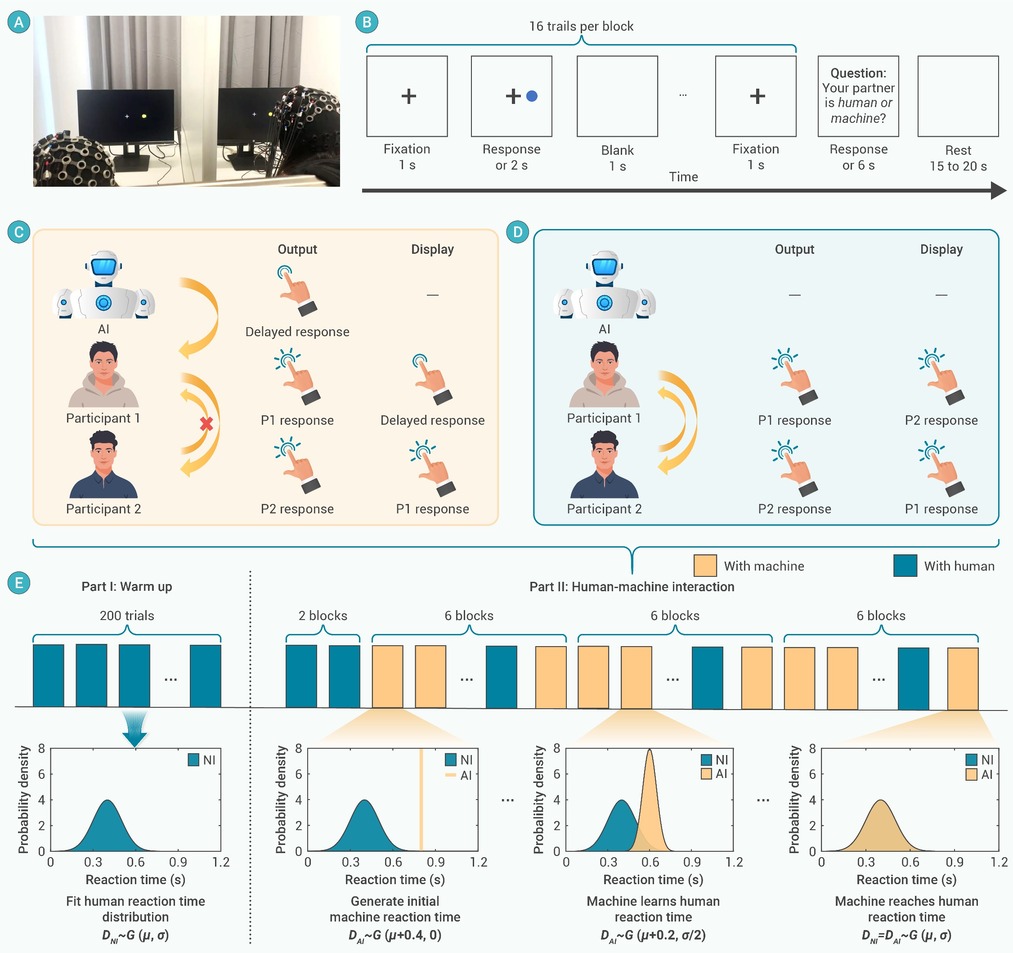
Figure 1.
Experimental task and procedures
-
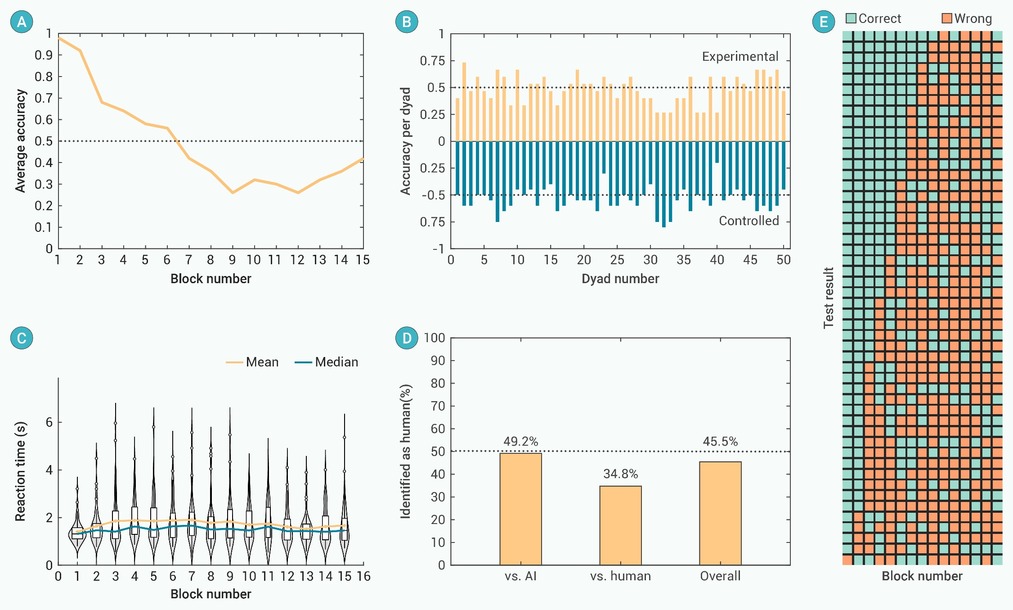
Figure 2.
Behavioural performance
-
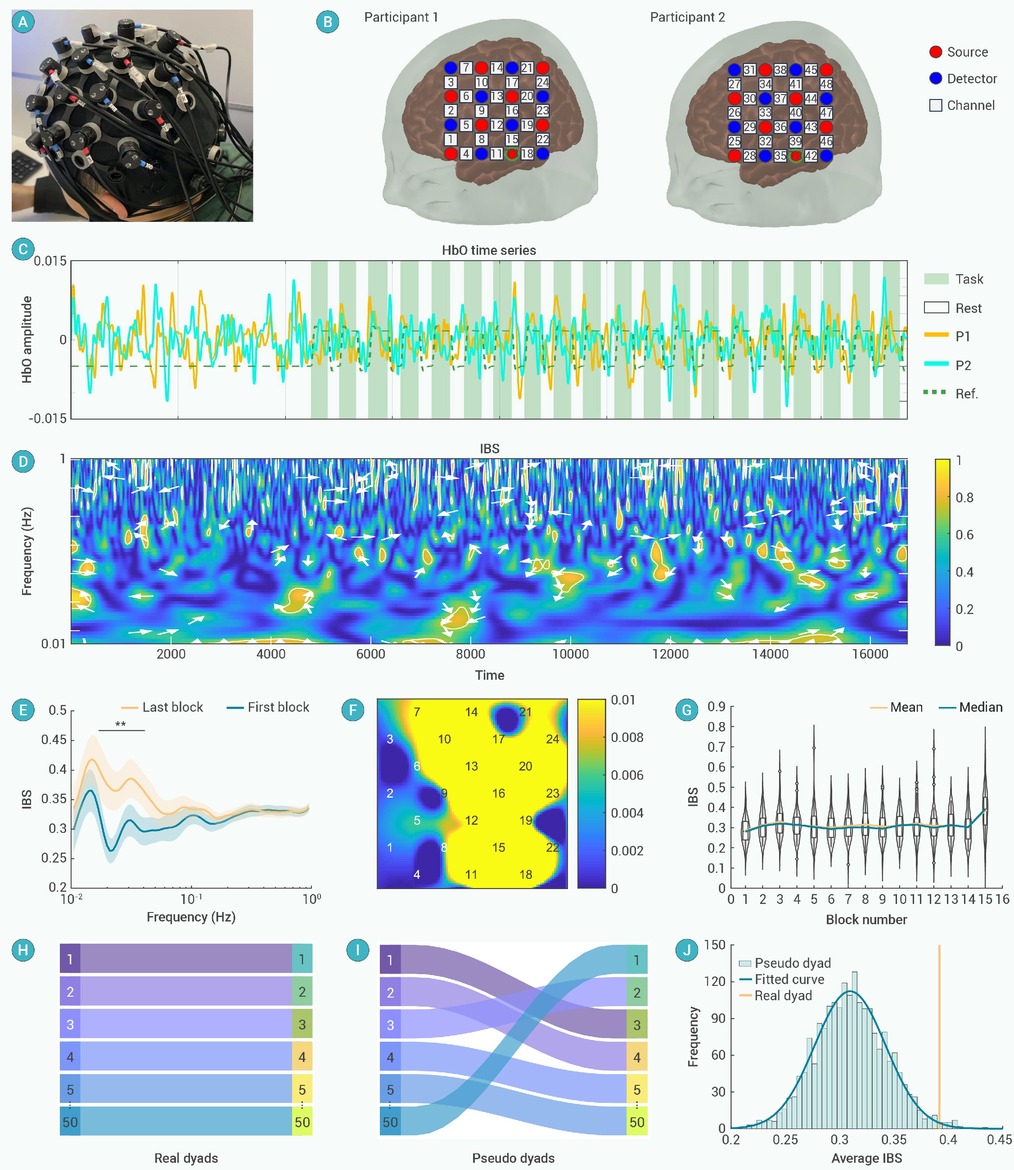
Figure 3.
IBS analysis and neural performance
-
Figure 4.
Summary of the results of the proposed experiment
-
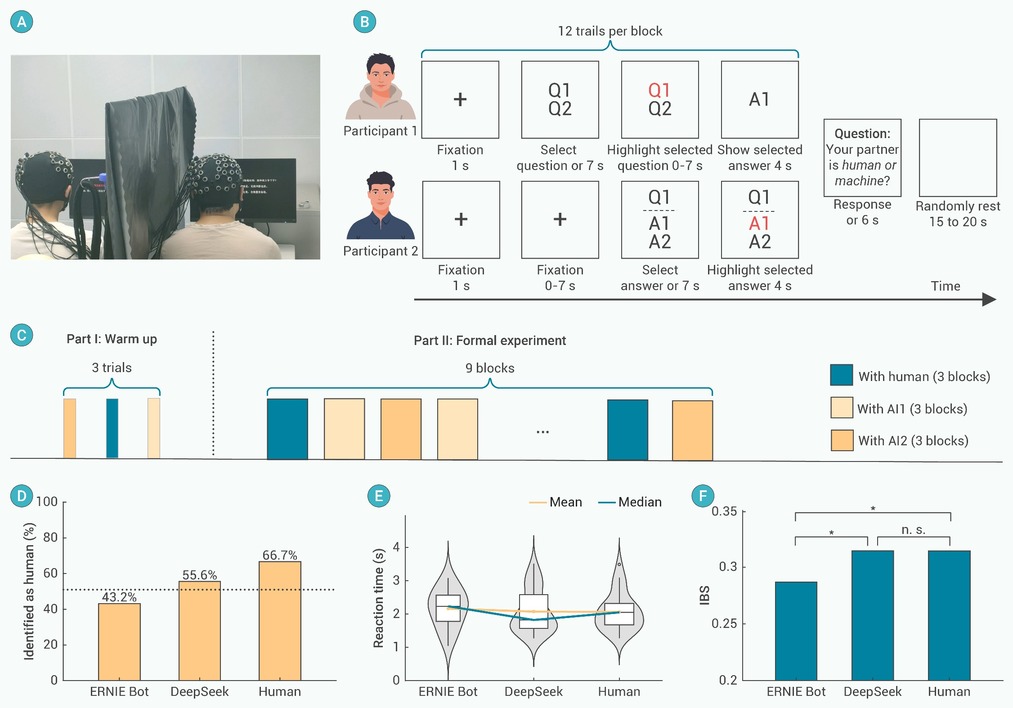
Figure 5.
Experimental procedures and results of the verbal Turing test
