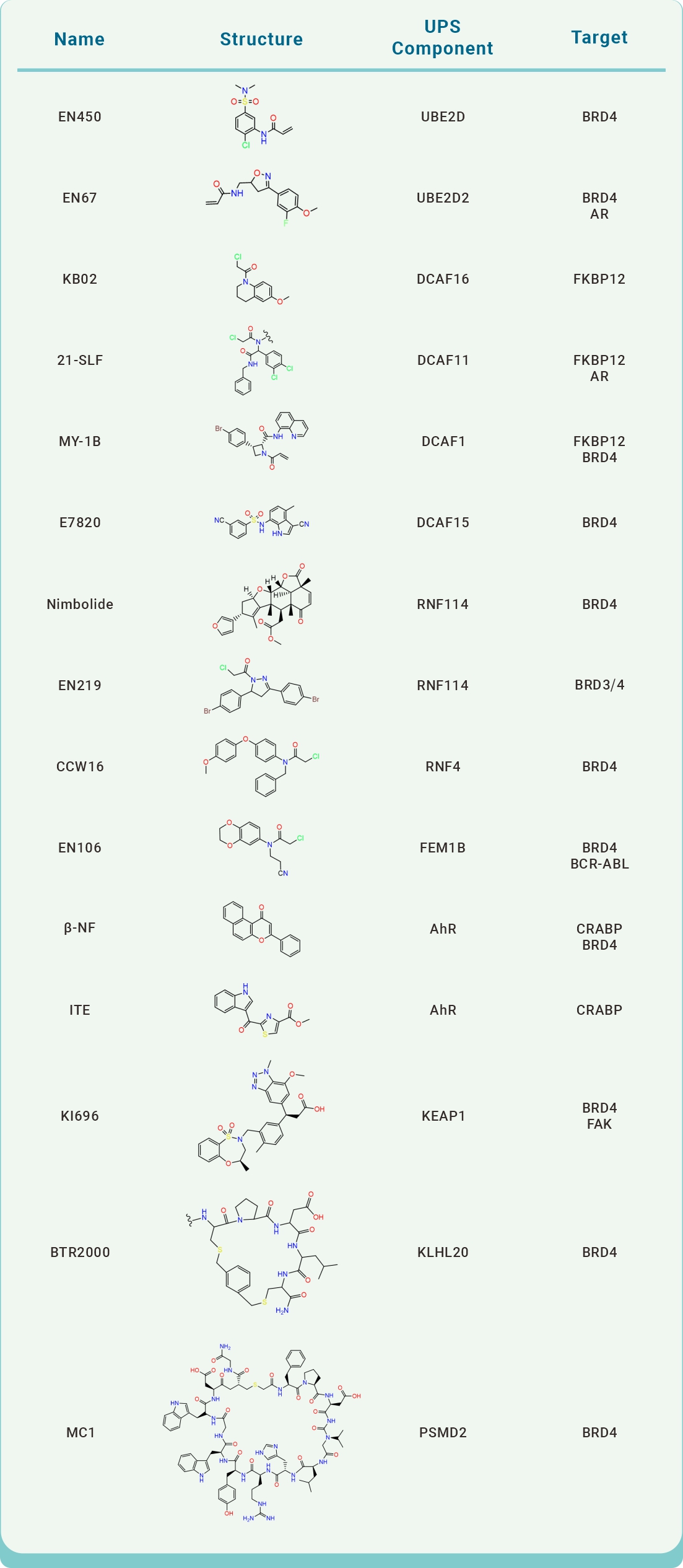
Targeted protein degradation bypassing cereblon and von Hippel-Lindau

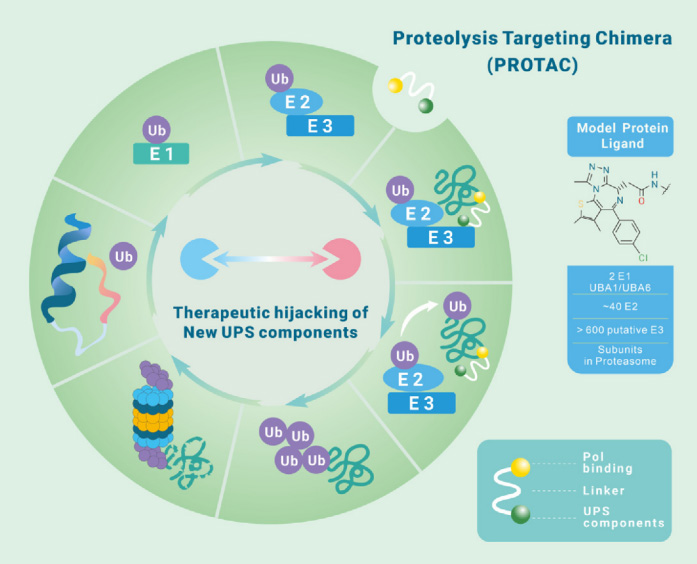
The ubiquitin-proteasome pathway that can be hijacked for PROTAC application
Targeted protein degradation (TPD) has emerged as a new drug discovery approach to wipe out disease-causing proteins by harnessing the ubiquitin-proteasome system (UPS). A major class of molecules in the field are called proteolysis-targeting chimeras (PROTACs), which are heterobifunctional molecules encompassing two ligands that bind to a protein of interest and the E3 ligase, respectively joint by a linker.1 Due to its catalytic mechanism that enables event-driven pharmacology, PROTACs technology can induce an efficient degradation and therefore achieve the pharmacology at a lower dose compared with traditional small molecule inhibitors that exert their inhibition through an occupancy-driven mechanism.