
Metabolic collaboration between cells in the tumor microenvironment has a negligible effect on tumor growth
-
GRAPHICAL ABSTRACT
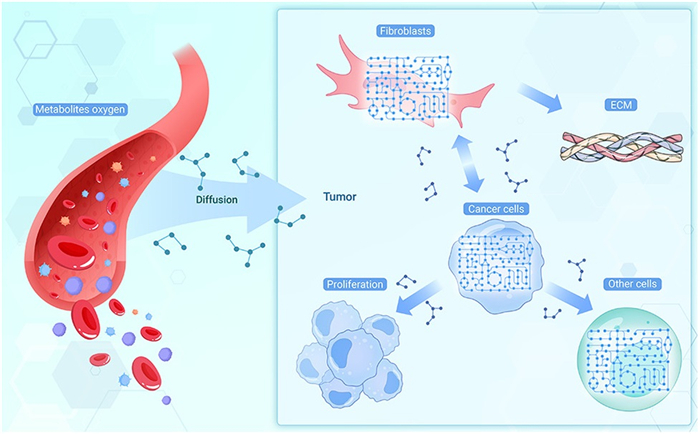
 DownLoad:
Full size image
DownLoad:
Full size image
-
PUBLIC SUMMARY
- ■ Simplified application of enzyme usage constraints to genome-scale metabolic models with the software GECKO Light.
- ■ Estimation of maximum metabolite influx into tumors at varying levels of hypoxia.
- ■ Simulations of tumor metabolism explain "glutamine addiction" in cancers.
- ■ Metabolic collaboration between cell types in the tumor microenvironment does not increase tumor growth.
-
ABSTRACT
-

-
REFERENCES
[1] Forster, J.C., Harriss-Phillips, W.M., Douglass, M.J., et al. (2017). A review of the development of tumor vasculature and its effects on the tumor microenvironment. Hypoxia 5: 21–32. https://doi.org/10.2147/HP.S133231. [2] Nagy, J.A., Chang, S.-H., Dvorak, A.M., et al. (2009). Why are tumour blood vessels abnormal and why is it important to know? Br. J. Cancer 100: 865–869. https://doi.org/10.1038/sj.bjc. 6604929. [3] Jain, R.K., Martin, J.D., Chauhan, V.P., et al. (2020). 8 - Tumor Microenvironment: Vascular and Extravascular Compartment. In Abeloff’s Clinical Oncology, Sixth Edition, J.E. Niederhuber, J.O. Armitage, and M.B. Kastan, et al., eds. (Elsevier), pp. 108–126.e7. https://doi.org/10.1016/B978-0-323-47674-4.00008-6. [4] Sefidgar, M., Soltani, M., Raahemifar, K., et al. (2014). Effect of tumor shape, size, and tissue transport properties on drug delivery to solid tumors. J. Biol. Eng. 8: 12. https://doi.org/10.1186/1754-1611-8-12. [5] Busk, M., Overgaard, J., and Horsman, M.R. (2020). Imaging of Tumor Hypoxia for Radiotherapy: Current Status and Future Directions. Semin. Nucl. Med. 50: 562–583. https://doi.org/10.1053/j.semnuclmed.2020.05.003. [6] Liberti, M.V., and Locasale, J.W. (2016). The Warburg Effect: How Does it Benefit Cancer Cells? Trends Biochem. Sci. 41: 211–218. https://doi.org/10.1016/j.tibs.2015.12.001. [7] Cammann, C., Rath, A., Reichl, U., et al. (2016). Early changes in the metabolic profile of activated CD8+ T cells. BMC Cell Biol. 17: 28. https://doi.org/10.1186/s12860-016-0104-x. [8] Wise, D.R., and Thompson, C.B. (2010). Glutamine Addiction: A New Therapeutic Target in Cancer. Trends Biochem. Sci. 35: 427–433. https://doi.org/10.1016/j.tibs.2010.05.003. [9] Nilsson, A., Björnson, E., Flockhart, M., et al. (2019). Complex I is bypassed during high intensity exercise. Nat. Commun. 10: 5072. https://doi.org/10.1038/s41467-019-12934-8. [10] Martinez-Outschoorn, U.E., Lisanti, M.P., and Sotgia, F. (2014). Catabolic cancer-associated fibroblasts transfer energy and biomass to anabolic cancer cells, fueling tumor growth. Semin. Cancer Biol. 25: 47–60. https://doi.org/10.1016/j.semcancer.2014.01.005. [11] Pavlides, S., Whitaker-Menezes, D., Castello-Cros, R., et al. (2009). The reverse Warburg effect: Aerobic glycolysis in cancer associated fibroblasts and the tumor stroma. Cell Cycle 8: 3984–4001. https://doi.org/10.4161/cc.8.23.10238. [12] Zhao, H., Yang, L., Baddour, J., et al. (2016). Tumor microenvironment derived exosomes pleiotropically modulate cancer cell metabolism. Elife 5: e10250. https://doi.org/10.7554/eLife.10250. [13] Avagliano, A., Granato, G., Ruocco, M.R., et al. (2018). Metabolic Reprogramming of Cancer Associated Fibroblasts: The Slavery of Stromal Fibroblasts. BioMed Res. Int. 2018: 6075403. https://doi.org/10.1155/2018/6075403. [14] Hui, S., Ghergurovich, J.M., Morscher, R.J., et al. (2017). Glucose feeds the TCA cycle via circulating lactate. Nature 551: 115–118. https://doi.org/10.1038/nature24057. [15] Orth, J.D., Thiele, I., and Palsson, B.Ø. (2010). What is flux balance analysis? Nat. Biotechnol. 28: 245–248. https://doi.org/10.1038/nbt.1614. [16] Lewis, J.E., Forshaw, T.E., Boothman, D.A., et al. (2021). Personalized Genome-Scale Metabolic Models Identify Targets of Redox Metabolism in Radiation-Resistant Tumors. Cell Syst. 12: 68–81.e11. https://doi.org/10.1016/j.cels.2020.12.001. [17] Wang, H., Robinson, J.L., Kocabas, P., et al. (2021). Genome-scale metabolic network reconstruction of model animals as a platform for translational research. Proc. Natl. Acad. Sci. USA 118: e2102344118. https://doi.org/10.1073/pnas.2102344118. [18] Sánchez, B.J., Zhang, C., Nilsson, A., et al. (2017). Improving the phenotype predictions of a yeast genome-scale metabolic model by incorporating enzymatic constraints. Mol. Syst. Biol. 13: 935. https://doi.org/10.15252/msb.20167411. [19] Robinson, J.L., Kocabaş, P., Wang, H., et al. (2020). An atlas of human metabolism. Sci. Signal. 13: eaaz1482. https://doi.org/10.1126/scisignal.aaz1482. [20] Opdam, S., Richelle, A., Kellman, B., et al. (2017). A Systematic Evaluation of Methods for Tailoring Genome-Scale Metabolic Models. Cell Syst. 4: 318–329.e6. https://doi.org/10.1016/j.cels.2017.01.010. [21] Kilburn, D.G., Lilly, M.D., and Webb, F.C. (1969). The Energetics of Mammalian Cell Growth. J. Cell Sci. 4: 645–654. [22] Domenzain, I., Sánchez, B., Anton, M., et al. (2021). Reconstruction of a catalogue of genome-scale metabolic models with enzymatic constraints using GECKO 2.0. Preprint at bioRxiv. https://doi.org/10.1101/2021.03.05.433259. [23] Chang, A., Jeske, L., Ulbrich, S., et al. (2021). BRENDA, the ELIXIR core data resource in 2021: new developments and updates. Nucleic Acids Res. 49: D498–D508. https://doi.org/10.1093/nar/gkaa1025. [24] Liu, D., Chalkidou, A., Landau, D.B., et al. (2014). Interstitial diffusion and the relationship between compartment modelling and multi-scale spatial-temporal modelling of 18 F-FLT tumour uptake dynamics. Phys. Med. Biol. 59: 5175–5202. https://doi.org/10.1088/0031-9155/59/17/5175. [25] Harada, S., Hirayama, A., Chan, Q., et al. (2018). Reliability of plasma polar metabolite concentrations in a large-scale cohort study using capillary electrophoresis-mass spectrometry. PLoS One 13: e0191230. https://doi.org/10.1371/journal.pone.0191230. [26] Hoogenboezem, E.N., and Duvall, C.L. (2018). Harnessing Albumin as a Carrier for Cancer Therapies. Adv. Drug Deliv. Rev. 130: 73–89. https://doi.org/10.1016/j.addr.2018.07.011. [27] Quehenberger, O., Armando, A.M., Brown, A.H., et al. (2010). Lipidomics reveals a remarkable diversity of lipids in human plasma1[S]. J. Lipid Res. 51: 3299–3305. https://doi.org/10.1194/jlr.M009449. [28] Siggaard-andersen, O., Gøthgen, I.H., Wimberley, P.D., et al. (1990). The oxygen status of the arterial blood revised: Relevant oxygen parameters for monitoring the arterial oxygen availability. Scand. J. Clin. Lab. Invest. 203: 17–28. https://doi.org/10.3109/00365519009087488. [29] Zhang, X., Li, C.-G., Ye, C.-H., et al. (2001). Determination of Molecular Self-Diffusion Coefficient Using Multiple Spin-Echo NMR Spectroscopy with Removal of Convection and Background Gradient Artifacts. Anal. Chem. 73: 3528–3534. https://doi.org/10.1021/ac0101104. [30] Chary, S.R., and Jain, R.K. (1989). Direct measurement of interstitial convection and diffusion of albumin in normal and neoplastic tissues by fluorescence photobleaching. Proc. Natl. Acad. Sci. USA 86: 5385–5389. https://doi.org/10.1073/pnas.86.14.5385. [31] Goldstick, T.K., Ciuryla, V.T., and Zuckerman, L. (1976). Diffusion of oxygen in plasma and blood. Adv. Exp. Med. Biol. 75: 183–190. https://doi.org/10.1007/978-1-4684-3273-2_23. [32] Valencia, D.P., and González, F.J. (2012). Estimation of diffusion coefficients by using a linear correlation between the diffusion coefficient and molecular weight. J. Electroanal. Chem. 681: 121–126. https://doi.org/10.1016/j.jelechem.2012.06.013. [33] Fan, J., Kamphorst, J.J., Mathew, R., et al. (2013). Glutamine-driven oxidative phosphorylation is a major ATP source in transformed mammalian cells in both normoxia and hypoxia. Mol. Syst. Biol. 9: 712. https://doi.org/10.1038/msb.2013.65. [34] Seidlitz, E.P., Sharma, M.K., Saikali, Z., et al. (2009). Cancer cell lines release glutamate into the extracellular environment. Clin. Exp. Metastasis 26: 781–787. https://doi.org/10.1007/s10585-009-9277-4. [35] Nilsson, A., Haanstra, J.R., Engqvist, M., et al. (2020). Quantitative analysis of amino acid metabolism in liver cancer links glutamate excretion to nucleotide synthesis. Proc. Natl. Acad. Sci. USA 117: 10294–10304. https://doi.org/10.1073/pnas.1919250117. [36] Chinopoulos, C., and Seyfried, T.N. (2018). Mitochondrial Substrate-Level Phosphorylation as Energy Source for Glioblastoma: Review and Hypothesis. ASN Neuro 10: 1759091418818261. https://doi.org/10.1177/1759091418818261. [37] Wang, Y., Bai, C., Ruan, Y., et al. (2019). Coordinative metabolism of glutamine carbon and nitrogen in proliferating cancer cells under hypoxia. Nat. Commun. 10: 201. https://doi.org/10.1038/s41467-018-08033-9. [38] Corbet, C., and Feron, O. (2017). Tumour acidosis: from the passenger to the driver’s seat. Nat. Rev. Cancer 17: 577–593. https://doi.org/10.1038/nrc.2017.77. [39] Jain, M., Nilsson, R., Sharma, S., et al. (2012). Metabolite profiling identifies a key role for glycine in rapid cancer cell proliferation. Science 336: 1040–1044. https://doi.org/10.1126/science.1218595. [40] Hollinshead, K.E.R., Parker, S.J., Eapen, V.V., et al. (2020). Respiratory Supercomplexes Promote Mitochondrial Efficiency and Growth in Severely Hypoxic Pancreatic Cancer. Cell Rep. 33: 108231. https://doi.org/10.1016/j.celrep.2020.108231. [41] Ma, G., Zhang, Z., Li, P., et al. (2022). Reprogramming of glutamine metabolism and its impact on immune response in the tumor microenvironment. Cell Commun. Signal. 20: 114. https://doi.org/10.1186/s12964-022-00909-0. [42] Tanner, J.J., Fendt, S.-M., and Becker, D.F. (2018). The Proline Cycle As a Potential Cancer Therapy Target. Biochemistry 57: 3433–3444. https://doi.org/10.1021/acs.biochem.8b00215. [43] Moxley, M.A., and Becker, D.F. (2012). Rapid Reaction Kinetics of Proline Dehydrogenase in the Multifunctional Proline Utilization A Protein. Biochemistry 51: 511–520. https://doi.org/10.1021/bi201603f. [44] Quinlan, C.L., Orr, A.L., Perevoshchikova, I.V., et al. (2012). Mitochondrial Complex Ⅱ Can Generate Reactive Oxygen Species at High Rates in Both the Forward and Reverse Reactions. J. Biol. Chem. 287: 27255–27264. https://doi.org/10.1074/jbc.M112.374629. [45] Spinelli, J.B., Rosen, P.C., Sprenger, H.-G., et al. (2021). Fumarate is a terminal electron acceptor in the mammalian electron transport chain. Science 374: 1227–1237. https://doi.org/10.1126/science.abi7495. [46] Tedeschi, P.M., Markert, E.K., Gounder, M., et al. (2013). Contribution of serine, folate and glycine metabolism to the ATP, NADPH and purine requirements of cancer cells. Cell Death Dis. 4: e877. https://doi.org/10.1038/cddis.2013.393. [47] Jung, J.G., and Le, A. (2021). Targeting Metabolic Cross Talk Between Cancer Cells and Cancer-Associated Fibroblasts. In The Heterogeneity of Cancer Metabolism Advances in Experimental Medicine and Biology, A. Le, ed. (Springer International Publishing), pp. 205–214. https://doi.org/10.1007/978-3-030-65768-0_15. [48] Sousa, C.M., Biancur, D.E., Wang, X., et al. (2016). Pancreatic stellate cells support tumour metabolism through autophagic alanine secretion. Nature 536: 479–483. https://doi.org/10.1038/nature19084. [49] Capparelli, C., Guido, C., Whitaker-Menezes, D., et al. (2012). Autophagy and senescence in cancer-associated fibroblasts metabolically supports tumor growth and metastasis, via glycolysis and ketone production. Cell Cycle 11: 2285–2302. https://doi.org/10.4161/cc.20718. [50] Sonveaux, P., Végran, F., Schroeder, T., et al. (2008). Targeting lactate-fueled respiration selectively kills hypoxic tumor cells in mice. J. Clin. Invest. 118: 3930–3942. https://doi.org/10.1172/JCI36843. [51] de la Cruz-López, K.G., Castro-Muñoz, L.J., Reyes-Hernández, D.O., et al. (2019). Lactate in the Regulation of Tumor Microenvironment and Therapeutic Approaches. Front. Oncol. 9: 1143. https://doi.org/10.3389/fonc.2019.01143. [52] Ohl, K., and Tenbrock, K. (2018). Reactive Oxygen Species as Regulators of MDSC-Mediated Immune Suppression. Front. Immunol. 9: 2499. [53] Vitale, I., Manic, G., Coussens, L.M., et al. (2019). Macrophages and Metabolism in the Tumor Microenvironment. Cell Metabol. 30: 36–50. https://doi.org/10.1016/j.cmet.2019.06.001. [54] Lin, Y., Xu, J., and Lan, H. (2019). Tumor-associated macrophages in tumor metastasis: biological roles and clinical therapeutic applications. J. Hematol. Oncol. 12: 76. https://doi.org/10.1186/s13045-019-0760-3. [55] Guido, C., Whitaker-Menezes, D., Capparelli, C., et al. (2012). Metabolic reprogramming of cancer-associated fibroblasts by TGF-b drives tumor growth: connecting TGF-b signaling with “Warburg-like” cancer metabolism and L-lactate production. Cell Cycle 11: 3019–3035. https://doi.org/10.4161/cc.21384. [56] Faubert, B., Li, K.Y., Cai, L., et al. (2017). Lactate Metabolism in Human Lung Tumors. Cell 171: 358–371.e9. https://doi.org/10.1016/j.cell.2017.09.019. [57] Hosios, A.M., Hecht, V.C., Danai, L.V., et al. (2016). Amino acids rather than glucose account for the majority of cell mass in proliferating mammalian cells. Dev. Cell 36: 540–549. https://doi.org/10.1016/j.devcel.2016.02.012. [58] Wei, Z., Liu, X., Cheng, C., et al. (2020). Metabolism of Amino Acids in Cancer. Front. Cell Dev. Biol. 8: 603837. https://doi.org/10.3389/fcell.2020.603837. [59] Yang, L., Venneti, S., and Nagrath, D. (2017). Glutaminolysis: A Hallmark of Cancer Metabolism. Annu. Rev. Biomed. Eng. 19: 163–194. https://doi.org/10.1146/annurev-bioeng-071516-044546. [60] Notarangelo, G., Spinelli, J.B., Perez, E.M., et al. (2022). Oncometabolite d -2HG alters T cell metabolism to impair CD8 + T cell function. Science 377: 1519–1529. https://doi.org/10.1126/science.abj5104. [61] Yang, L., Achreja, A., Yeung, T.-L., et al. (2016). Targeting Stromal Glutamine Synthetase in Tumors Disrupts Tumor Microenvironment-Regulated Cancer Cell Growth. Cell Metabol. 24: 685–700. https://doi.org/10.1016/j.cmet.2016.10.011. -
ABOUT THIS ARTICLE
Cite this article:
Johan Gustafsson, Fariba Roshanzamir, Anders Hagnestål, Sagar M. Patel, Oseeyi I. Daudu, Donald F. Becker, Jonathan L. Robinson, Jens Nielsen. Metabolic collaboration between cells in the tumor microenvironment has a negligible effect on tumor growth[J]. The Innovation, 2024, 5(2). https://doi.org/10.1016/j.xinn.2024.100583
Welcome!
To request copyright permission to republish or share portions of our works, please visit Copyright Clearance Center's (CCC) Marketplace website at marketplace.copyright.com.
Export File
Citation
Johan Gustafsson, Fariba Roshanzamir, Anders Hagnestål, Sagar M. Patel, Oseeyi I. Daudu, Donald F. Becker, Jonathan L. Robinson, Jens Nielsen. Metabolic collaboration between cells in the tumor microenvironment has a negligible effect on tumor growth[J]. The Innovation, 2024, 5(2). https://doi.org/10.1016/j.xinn.2024.100583

Format
Content

-
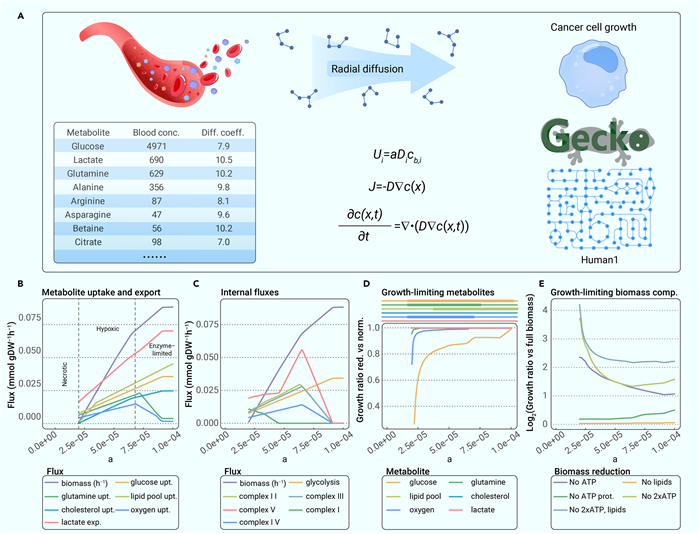
Figure 1.
Modeling cancer cell growth in the tumor microenvironment
-
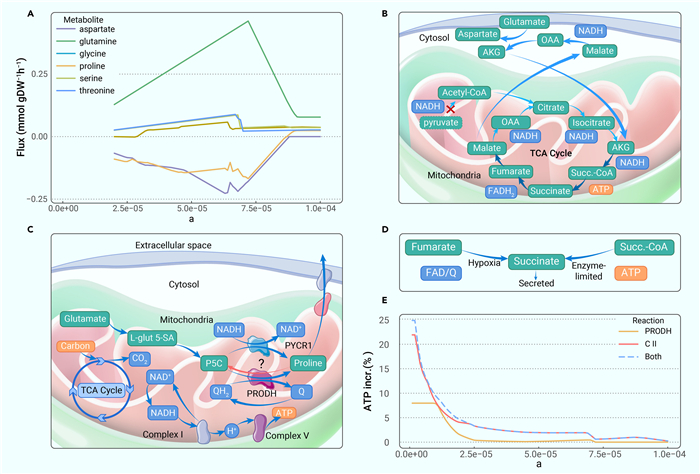
Figure 2.
Predicted amino acid metabolism in simulation of cancer cell growth
-
Figure 3.
Collaboration between cell types in the TME
