
A multifunctional flexible sensor based on PI-MXene/SrTiO3 hybrid aerogel for tactile perception
-
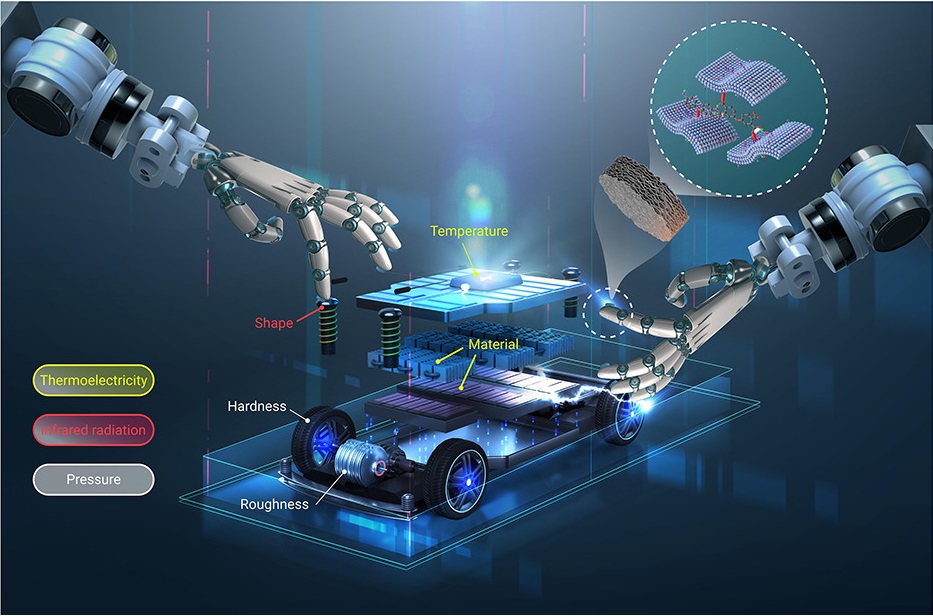
GRAPHICAL ABSTRACT
 DownLoad:
Full size image
DownLoad:
Full size image
-
PUBLIC SUMMARY
- ■ The multifunctional tactile sensing function of humanoid robotic arm is seriously lacking.
- ■ This novel composite sensitive aerogel is adaptable to complex environments.
- ■ The new composite aerogel has both system stability and multifunctional sensing function.
- ■ The flexible tactile sensor can realize multifunctional tactile sensing function stably in a complex environment.
-
ABSTRACT
The inadequacy of tactile perception systems in humanoid robotic manipulators limits the breadth of available robotic applications. Here, we designed a multifunctional flexible tactile sensor for robotic fingers that provides capabilities similar to those of human skin sensing modalities. This sensor utilizes a novel PI-MXene/SrTiO3 hybrid aerogel developed as a sensing unit with the additional abilities of electromagnetic transmission and thermal insulation to adapt to certain complex environments. Moreover, polyimide (PI) provides a high-strength skeleton, MXene realizes a pressure-sensing function, and MXene/SrTiO3 achieves both thermoelectric and infrared radiation response behaviors. Furthermore, via the pressure response mechanism and unsteady-state heat transfer, these aerogel-derived flexible sensors realize multimodal sensing and recognition capabilities with minimal cross-coupling. They can differentiate among 13 types of hardness and four types of material from objects with accuracies of 94% and 85%, respectively, using a decision tree algorithm. In addition, based on the infrared radiation-sensing function, a sensory array was assembled, and different shapes of objects were successfully recognized. These findings demonstrate that this PI-MXene/SrTiO3 aerogel provides a new concept for expanding the multifunctionality of flexible sensors such that the manipulator can more closely reach the tactile level of the human hand. This advancement reduces the difficulty of integrating humanoid robots and provides a new breadth of application scenarios for their possibility. -

-
REFERENCES
[1] Raspopovic, S., Valle, G., and Petrini, F.M. (2021). Sensory feedback for limb prostheses in amputees. Nat. Mater. 20(7): 925–939. https://doi.org/10.1038/s41563-021-00966-9. [2] Zhu, P., Wang, Y., Wang, Y., et al. (2020). Flexible 3D Architectured Piezo/Thermoelectric Bimodal Tactile Sensor Array for E-Skin Application. Adv. Energy Mater. 10(39). https://doi.org/10.1002/aenm.202001945. [3] Xu, J., Sun, X., Sun, B., et al. (2023). Stretchable, Adhesive, and Bioinspired Visual Electronic Skin with Strain/Temperature/Pressure Multimodal Non-Interference Sensing. ACS Appl. Mater. Interfaces 15(28): 33774–33783. https://doi.org/10.1021/acsami.3c07857. [4] Xiao, H., Li, S., He, Z., et al. (2023). Dual Mode Strain–Temperature Sensor with High Stimuli Discriminability and Resolution for Smart Wearables. Adv. Funct. Mater. 33(16). https://doi.org/10.1002/adfm.202214907. [5] Wei, X., Wang, B., Wu, Z., et al. (2022). An Open-Environment Tactile Sensing System: Toward Simple and Efficient Material Identification. Adv. Mater. 34(29): e2203073. https://doi.org/10.1002/adma.202203073. [6] Wang, H.L., Chen, T., Zhang, B., et al. (2023). A Dual-Responsive Artificial Skin for Tactile and Touchless Interfaces. Small 19(21): e2206830. https://doi.org/10.1002/smll.202206830. [7] Qu, X., Liu, Z., Tan, P., et al. (2022). Artificial tactile perception smart finger for material identification based on triboelectric sensing. Sci. Adv. 8(31): eabq2521. https://doi.org/10.1126/sciadv.abq2521. [8] Ma, X., Wang, C., Wei, R., et al. (2022). Bimodal Tactile Sensor without Signal Fusion for User-Interactive Applications. ACS Nano 16(2): 2789–2797. https://doi.org/10.1021/acsnano.1c09779. [9] Liu, M., Zhang, Y., Wang, J., et al. (2022). A star-nose-like tactile-olfactory bionic sensing array for robust object recognition in non-visual environments. Nat. Commun. 13(1): 79. https://doi.org/10.1038/s41467-021-27672-z. [10] Pirozzi, S. (2020). Tactile Sensors for Robotic Applications. Sensors 20(24): 7009. https://doi.org/10.3390/s20247009. [11] Yuan, Z., and Shen, G. (2023). Materials and device architecture towards a multimodal electronic skin. Mater. Today 64: 165–179. https://doi.org/10.1016/j.mattod.2023.02.023. [12] Liu, F., Deswal, S., Christou, A., et al. (2022). Neuro-inspired electronic skin for robots. Sci. Robot. 7(67): eabl7344. https://doi.org/10.1126/scirobotics.abl7344. [13] Wu, F., Yu, P., and Mao, L. (2023). Neurotronics: Communicating with brain through chemically intelligent materials. The Innovation Materials 1(1): 100007. https://doi.org/10.59717/j.xinn-mater.2023.100007. [14] Wang, Y., Wu, H., Xu, L., et al. (2020). Hierarchically patterned self-powered sensors for multifunctional tactile sensing. Sci. Adv. 6(34): eabb9083. https://doi.org/10.1126/sciadv.abb9083. [15] Liu, W., Duo, Y., Liu, J., et al. (2022). Touchless interactive teaching of soft robots through flexible bimodal sensory interfaces. Nat. Commun. 13(1): 5030. https://doi.org/10.1038/s41467-022-32702-5. [16] Li, Y., Zhao, M., Yan, Y., et al. (2022). Multifunctional biomimetic tactile system via a stick-slip sensing strategy for human–machine interactions. npj Flex. Electron. 6(1): 46. https://doi.org/10.1038/s41528-022-00183-7. [17] Bao, R., Tao, J., Zhao, J., et al. (2023). Integrated intelligent tactile system for a humanoid robot. Sci. Bull. 68(10): 1027–1037. https://doi.org/10.1016/j.scib.2023.04.019. [18] Xu, Q., Qu, S., Ming, C., et al. (2020). Conformal organic–inorganic semiconductor composites for flexible thermoelectrics. Energy Environ. Sci. 13(2): 511–518. https://doi.org/10.1039/c9ee03776d. [19] Du, C., Cao, M., Li, G., et al. (2022). Toward Precision Recognition of Complex Hand Motions: Wearable Thermoelectrics by Synergistic 2D Nanostructure Confinement and Controlled Reduction. Adv. Funct. Mater. 32(36). https://doi.org/10.1002/adfm.202206083. [20] Lin, M., Zheng, Z., Yang, L., et al. (2022). A High-Performance, Sensitive, Wearable Multifunctional Sensor Based on Rubber/CNT for Human Motion and Skin Temperature Detection. Adv. Mater. 34(1): e2107309. https://doi.org/10.1002/adma.202107309. [21] Yang, W., Liu, H., Du, H., et al. (2023). Robust and superelastic spider web-like polyimide fiber-based conductive composite aerogel for extreme temperature-tolerant linear pressure sensor. Sci. China Mater. 66(7): 2829–2842. https://doi.org/10.1007/s40843-022-2418-1. [22] Xu, B., Ye, F., Chen, R., et al. (2022). A wide sensing range and high sensitivity flexible strain sensor based on carbon nanotubes and MXene. Ceram. Int. 48(7): 10220–10226. https://doi.org/10.1016/j.ceramint.2021.12.235. [23] Riazi, H., Taghizadeh, G., and Soroush, M. (2021). MXene-Based Nanocomposite Sensors. ACS Omega 6(17): 11103–11112. https://doi.org/10.1021/acsomega.0c05828. [24] Guo, X., Lu, X., Jiang, P., et al. (2022). SrTiO3/CuNi-Heterostructure-Based Thermopile for Sensitive Human Radiation Detection and Noncontact Human–Machine Interaction. Adv. Mater. 34(35): e2204355. https://doi.org/10.1002/adma.202204355. [25] Ahmad, K., Mohammad, A., Mathur, P., et al. (2016). Preparation of SrTiO3 perovskite decorated rGO and electrochemical detection of nitroaromatics. Electrochim. Acta 215: 435–446. https://doi.org/10.1016/j.electacta.2016.08.123. [26] Wan, X., Lu, X., Sun, L., et al. (2022). Interface-enhanced thermoelectric output power in CrN/SrTiO3− heterostructure. J. Energy Chem. 64: 16–22. https://doi.org/10.1016/j.jechem.2021.04.056. [27] Zou, X., Xu, Y., and Duan, W. (2021). 2D materials: Rising star for future applications. Innovation 2(2): 100115. https://doi.org/10.1016/j.xinn.2021.100115. [28] Wang, Z., Chen, M., Cao, Z., et al. (2022). MXene Nanosheet/Organics Superlattice for Flexible Thermoelectrics. ACS Appl. Nano Mater. 5(11): 16872–16883. https://doi.org/10.1021/acsanm.2c03813. [29] Liu, H., Chen, X., Zheng, Y., et al. (2021). Lightweight, Superelastic, and Hydrophobic Polyimide Nanofiber/MXene Composite Aerogel for Wearable Piezoresistive Sensor and Oil/Water Separation Applications. Adv. Funct. Mater. 31(13). https://doi.org/10.1002/adfm.202008006. [30] Yang, L., Li, Y., Fu, L., et al. (2023). Flexible pressure/temperature sensing system based on Te-PEDOT:PSS composite thermoelectric material. Sci. Sin. -Tech. 53(4): 487–498. https://doi.org/10.1360/sst-2022-0191. [31] Deng, Q., Huang, Y., Chen, B., et al. (2022). Conductive V2C MXene and paralelectric SrTiO3 containing polymer composites with high dielectric constant. Colloids Surf. A Physicochem. Eng. Asp. 632: 127763. https://doi.org/10.1016/j.colsurfa.2021.127763. [32] Wang, L., Zhang, M., Yang, B., et al. (2020). Highly Compressible, Thermally Stable, Light-Weight, and Robust Aramid Nanofibers/Ti(3)AlC(2) MXene Composite Aerogel for Sensitive Pressure Sensor. ACS Nano 14(8): 10633–10647. https://doi.org/10.1021/acsnano.0c04888. [33] Liu, J., Zhang, H.-B., Xie, X., et al. (2018). Multifunctional, Superelastic, and Lightweight MXene/Polyimide Aerogels. Small 14(45): e1802479. https://doi.org/10.1002/smll.201802479. [34] Zhao, L., Wang, L., Zheng, Y., et al. (2021). Highly-stable polymer-crosslinked 2D MXene-based flexible biocompatible electronic skins for in vivo biomonitoring. Nano Energy 84: 105921. https://doi.org/10.1016/j.nanoen.2021.105921. [35] Ballard, Z., Brown, C., Madni, A.M., et al. (2021). Machine learning and computation-enabled intelligent sensor design. Nat. Mach. Intell. 3(7): 556–565. https://doi.org/10.1038/s42256-021-00360-9. [36] Zhou, Z., Chen, K., Li, X., et al. (2020). Sign-to-speech translation using machine-learning-assisted stretchable sensor arrays. Nature Electronics 3(9): 571–578. https://doi.org/10.1038/s41928-020-0428-6. [37] Shih, B., Shah, D., Li, J., et al. (2020). Electronic skins and machine learning for intelligent soft robots. Sci. Robot. 5(41): eaaz9239. https://doi.org/10.1126/scirobotics.aaz9239. [38] Sundaram, S., Kellnhofer, P., Li, Y., et al. (2019). Learning the signatures of the human grasp using a scalable tactile glove. Nature 569(7758): 698–702. https://doi.org/10.1038/s41586-019-1234-z. [39] Li, Y., Yang, L., Deng, S., et al. (2023). A machine learning-assisted multifunctional tactile sensor for smart prosthetics. InfoMat 5. https://doi.org/10.1002/inf2.12463. [40] Shu, S., Wang, Z., Chen, P., et al. (2023). Machine-Learning Assisted Electronic Skins Capable of Proprioception and Exteroception in Soft Robotics. Adv. Mater. 35(18): e2211385. https://doi.org/10.1002/adma.202211385. [41] Niu, H., Yin, F., Kim, E.S., et al. (2023). Advances in flexible sensors for intelligent perception system enhanced by artificial intelligence. InfoMat 5(5). https://doi.org/10.1002/inf2.12412. [42] Wang, Y., Adam, M.L., Zhao, Y., et al. (2023). Machine Learning-Enhanced Flexible Mechanical Sensing. Nano-Micro Lett. 15(1): 55. https://doi.org/10.1007/s40820-023-01013-9. -
ABOUT THIS ARTICLE
Cite this article:
Deng S., Li Y., Li S., et al., (2024). A multifunctional flexible sensor based on PI-MXene/SrTiO3 hybrid aerogel for tactile perception. The Innovation 5(3), 100596. https://doi.org/10.1016/j.xinn.2024.100596
Welcome!
To request copyright permission to republish or share portions of our works, please visit Copyright Clearance Center's (CCC) Marketplace website at marketplace.copyright.com.

Export File
Citation
Deng S., Li Y., Li S., et al., (2024). A multifunctional flexible sensor based on PI-MXene/SrTiO3 hybrid aerogel for tactile perception. The Innovation 5(3), 100596. https://doi.org/10.1016/j.xinn.2024.100596

Format
Content

-
Figure 1.
Schematic diagram of a multifunctional flexible tactile sensor based on PI-MXene/SrTiO3 nanocomposite aerogel
-
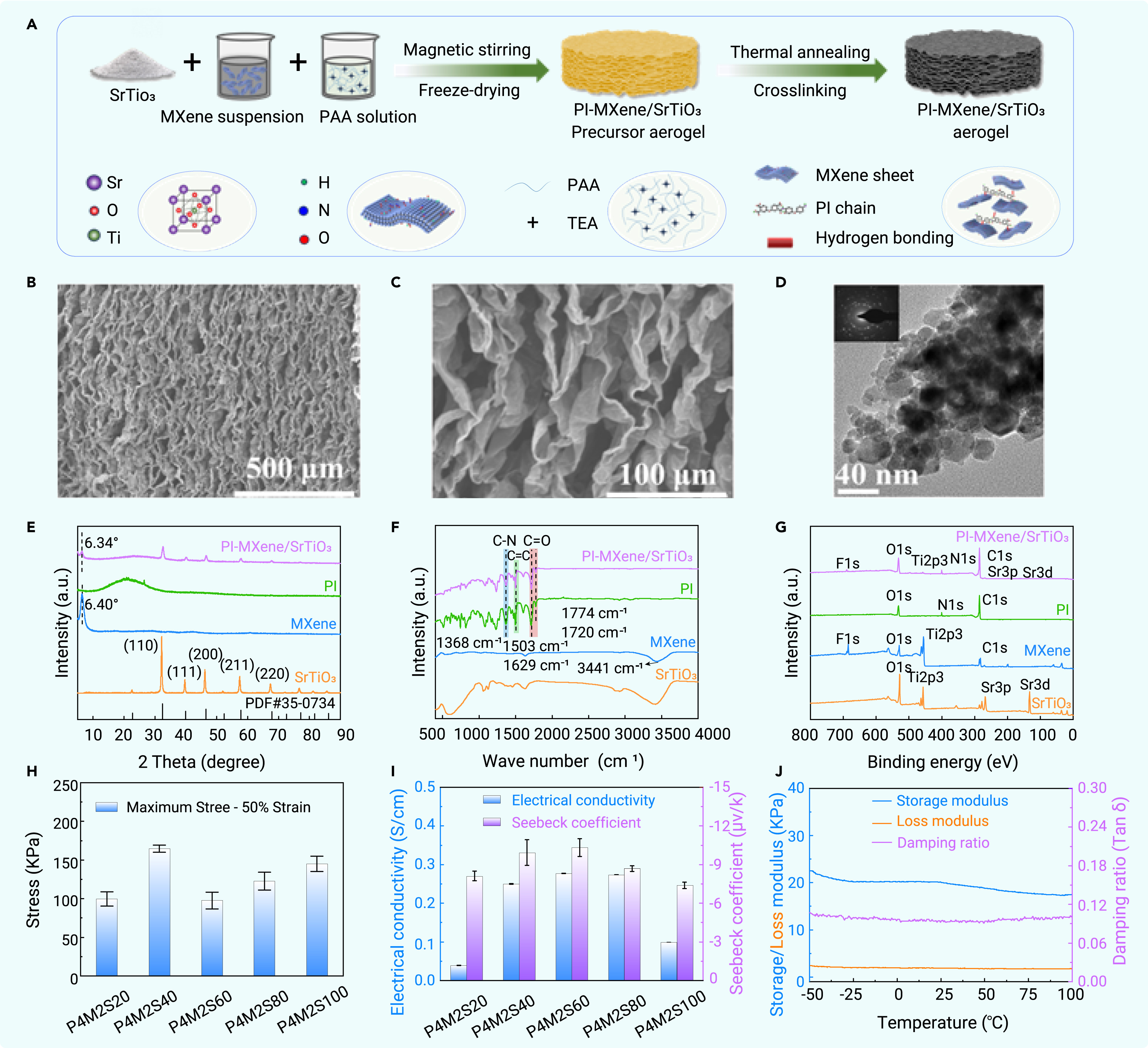
Figure 2.
Preparation and characterization of aerogel
-
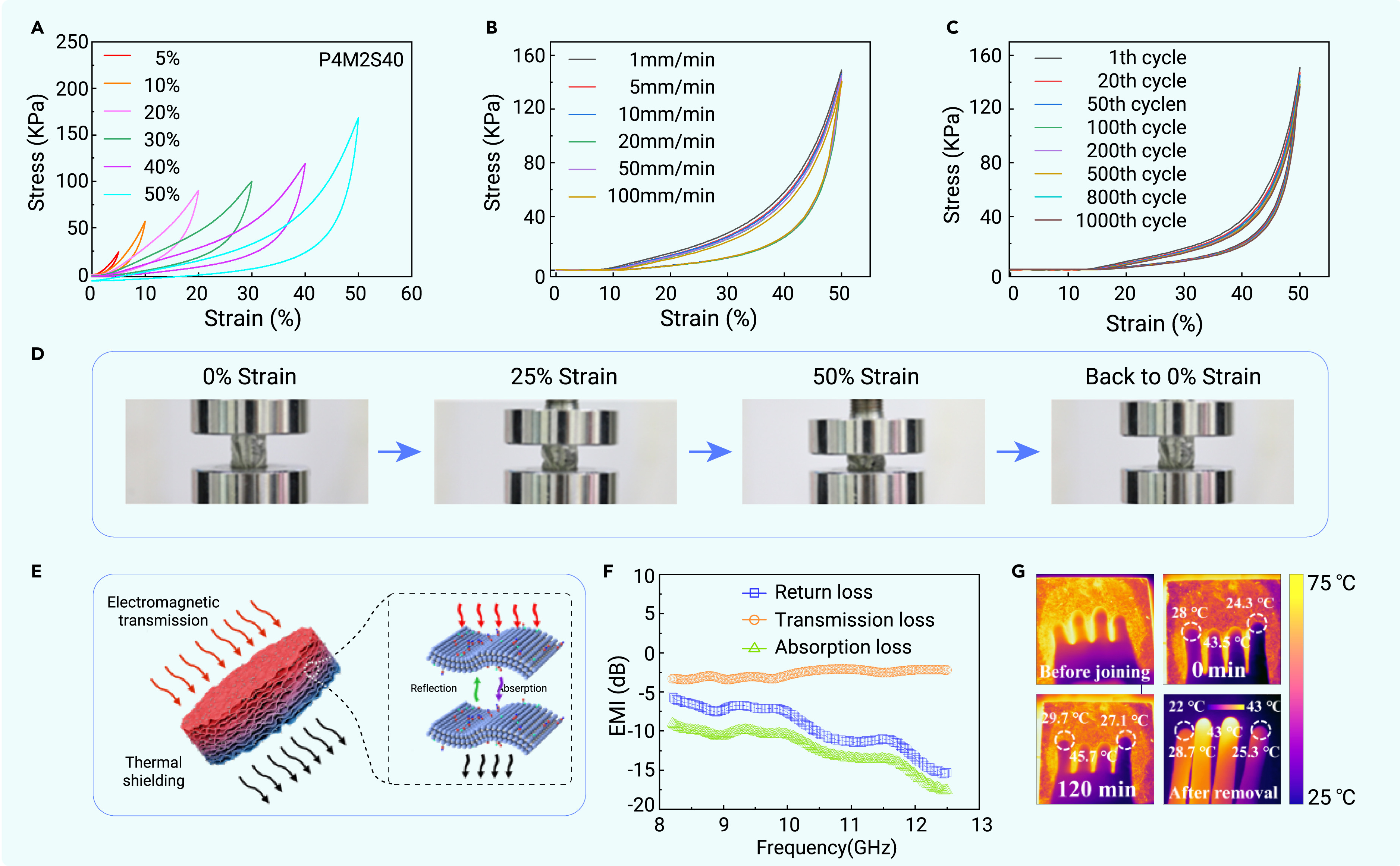
Figure 3.
Compression mechanics, electromagnetic transmission, and thermal insulation properties of aerogel
-
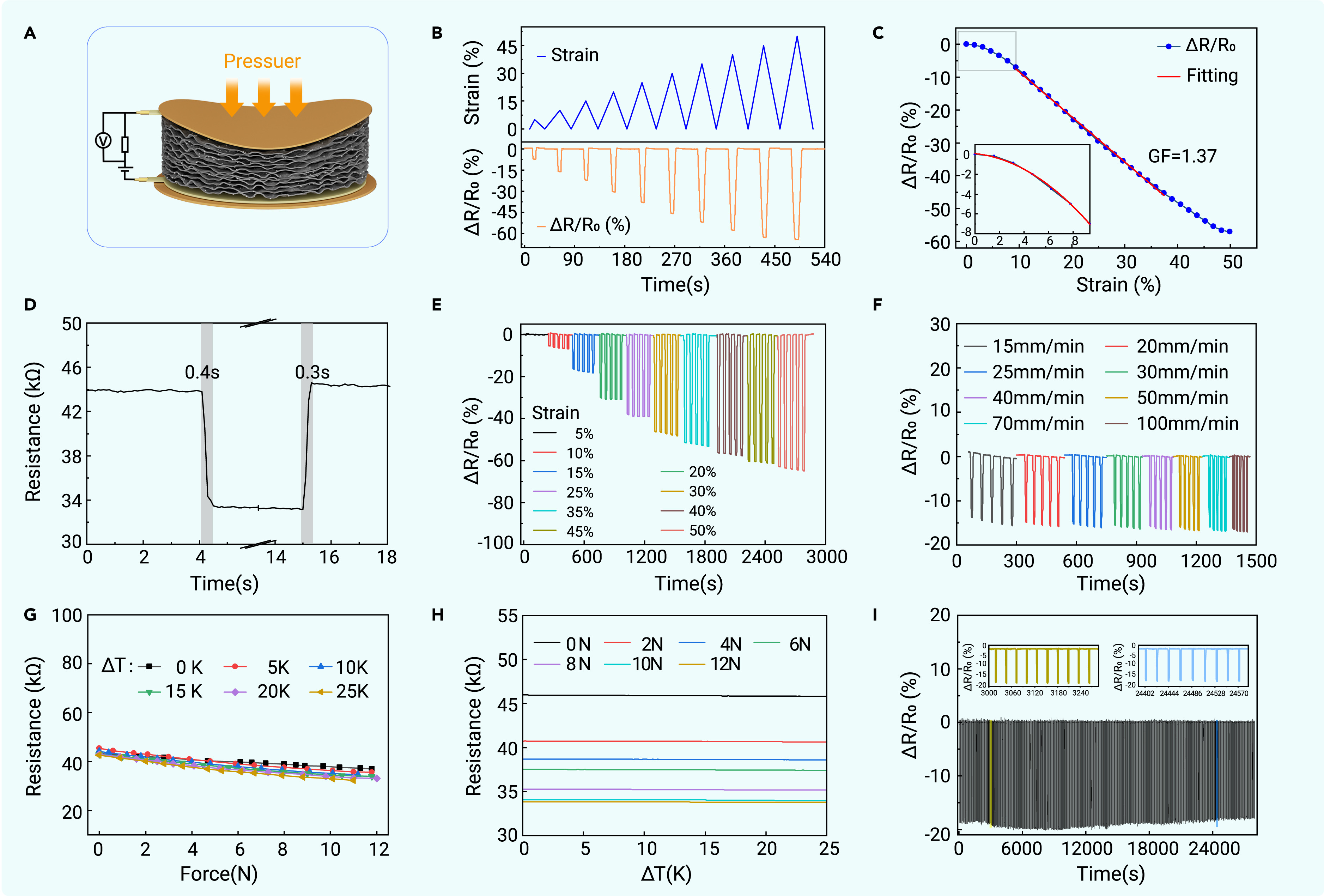
Figure 4.
Piezoresistive sensing performance of the sensor
-
Figure 5.
Thermoelectric sensing performance of the sensor
-
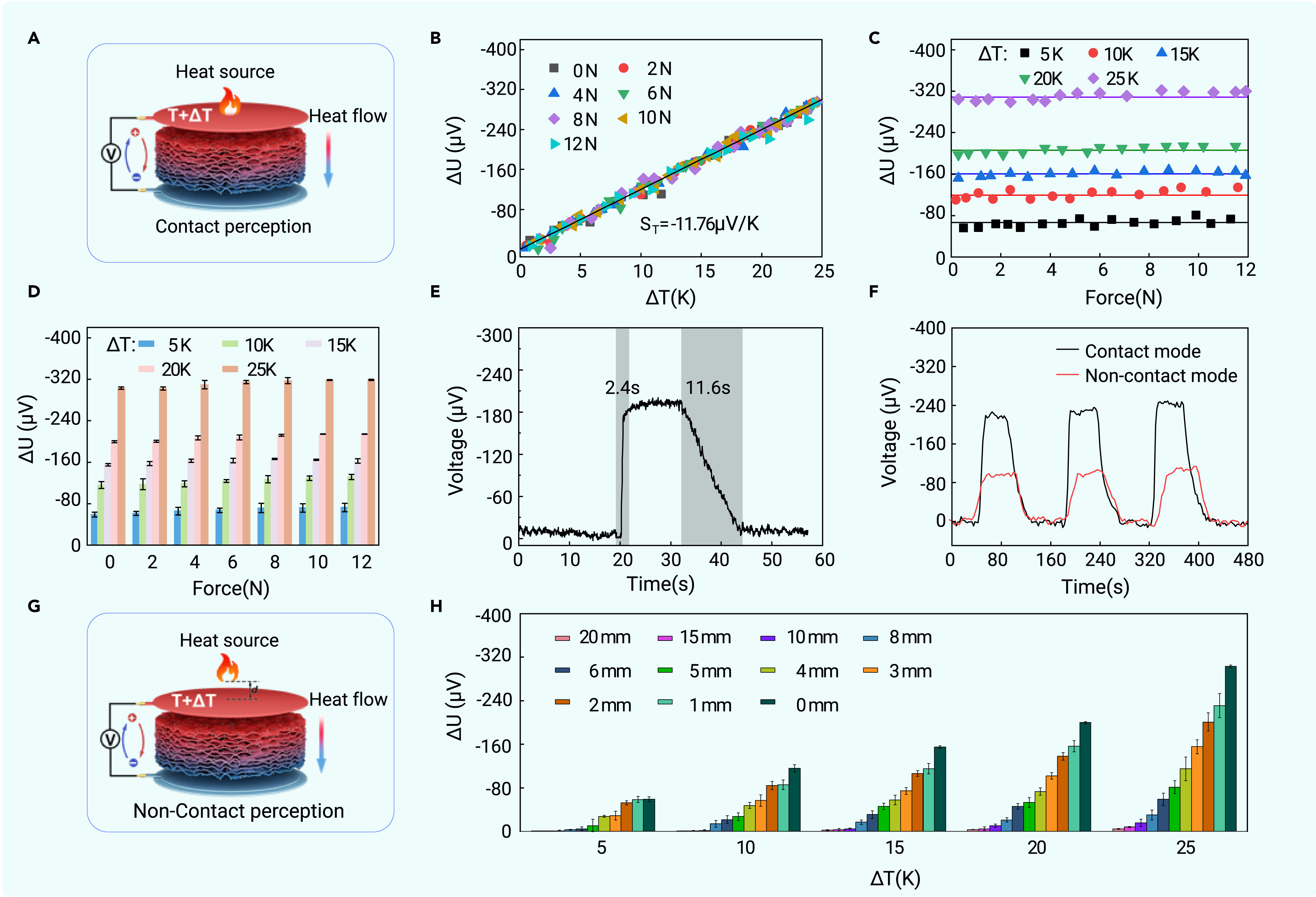
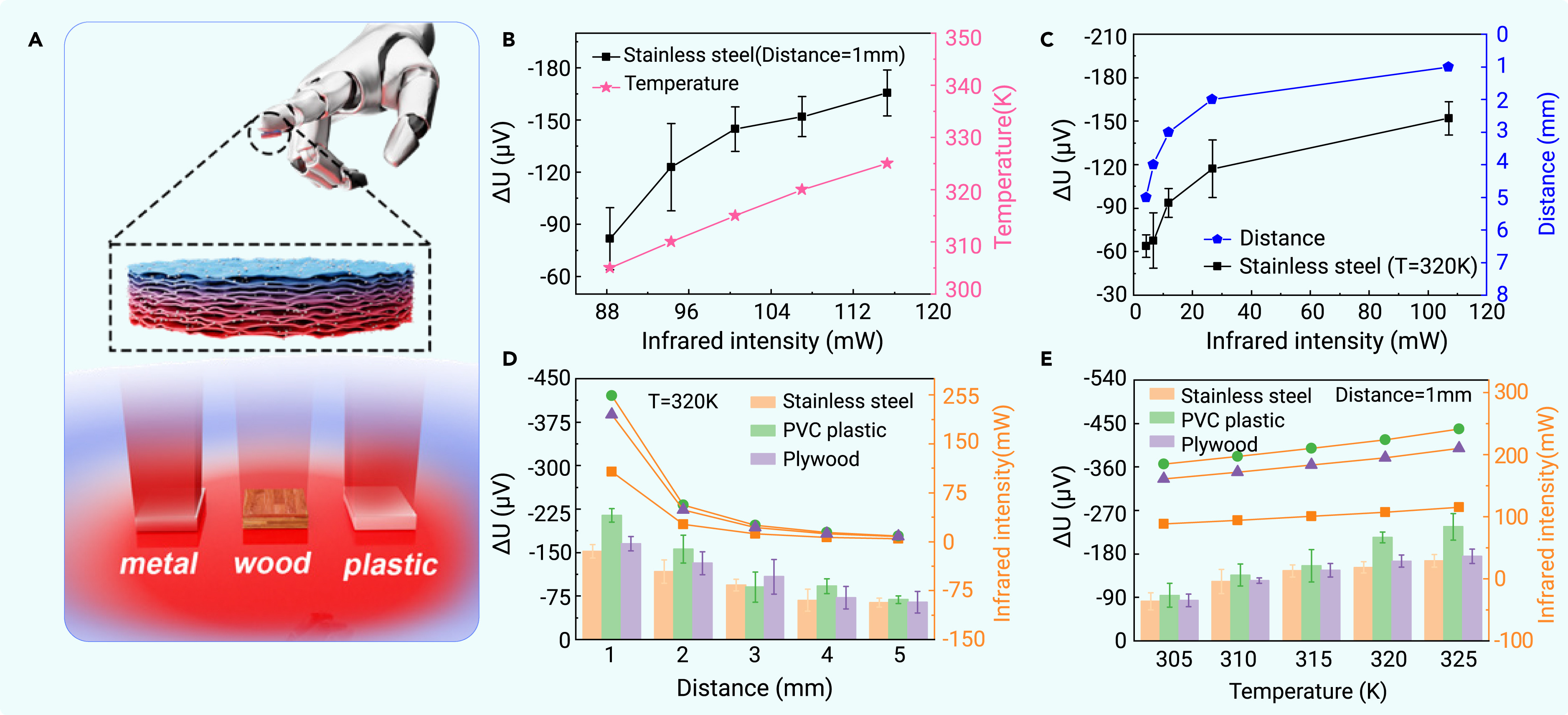
Figure 6.
Infrared radiation-sensing performance of the sensor
-
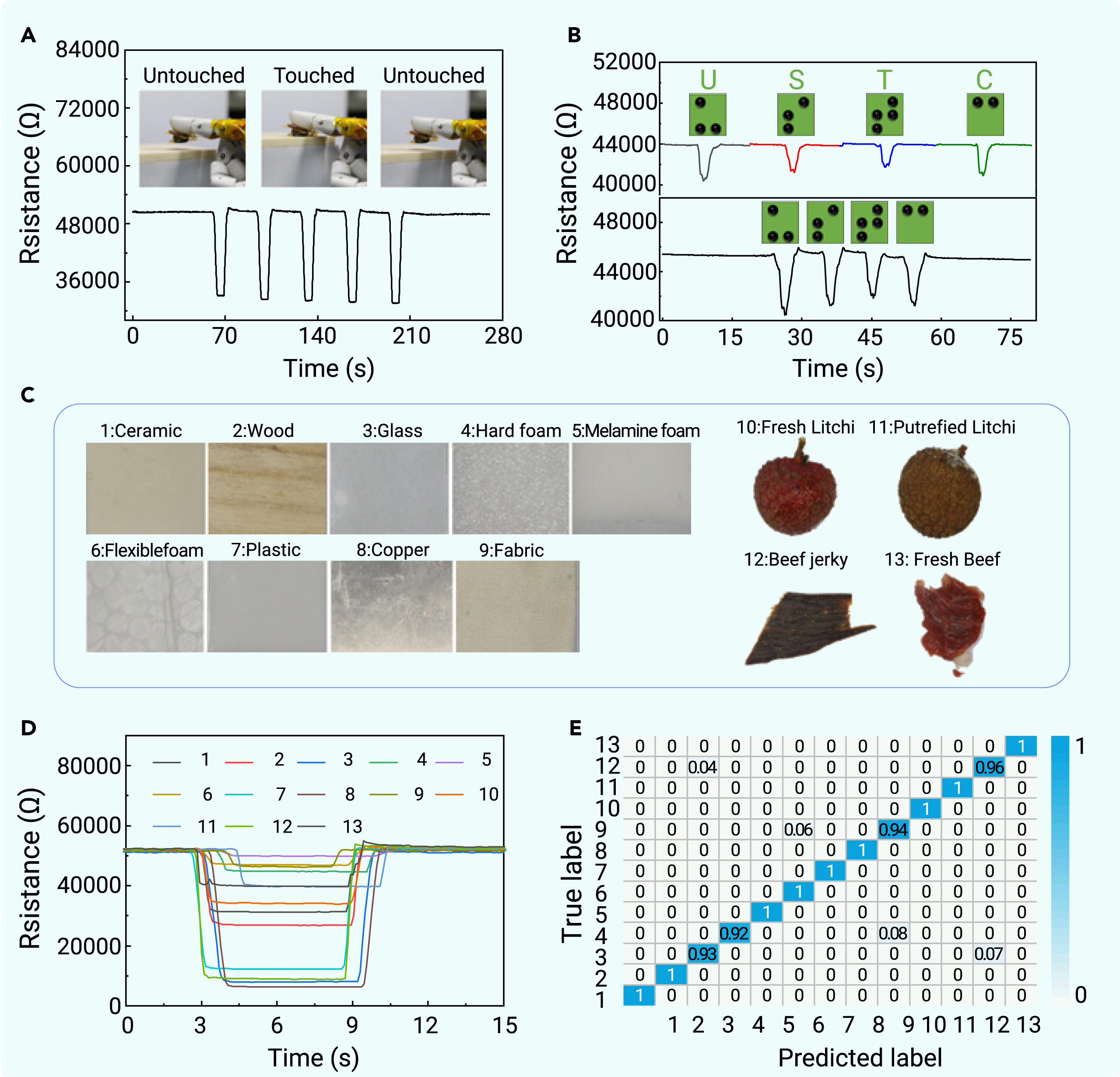
Figure 7.
Application demonstration of piezoresistive sensing performance based on sensor
-
Figure 8.
Application demonstration of sensor sensing performance based on thermoelectric and infrared radiation
