
Residential energy transition and chronic respiratory diseases
-
GRAPHICAL ABSTRACT
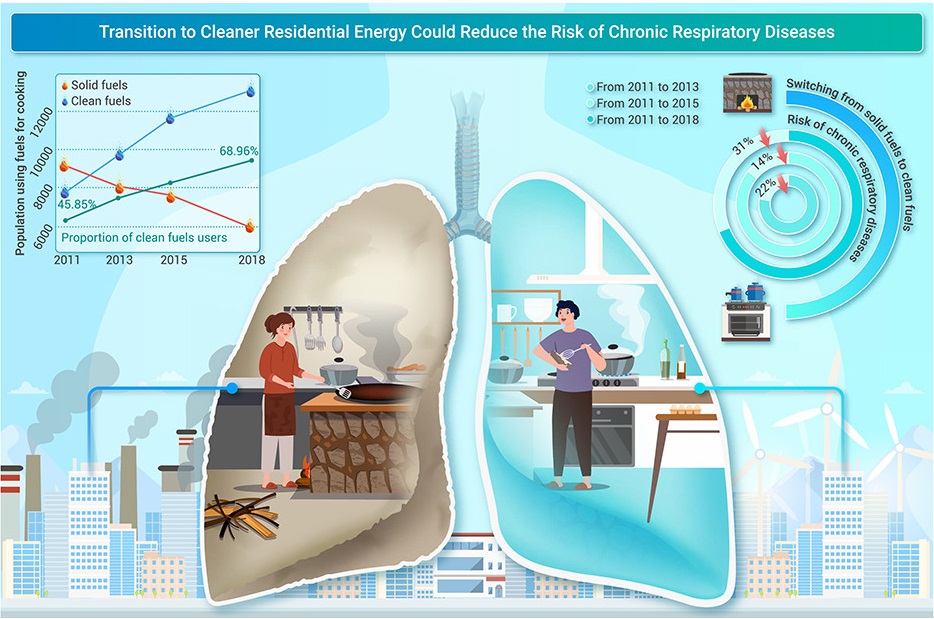
 DownLoad:
Full size image
DownLoad:
Full size image
-
PUBLIC SUMMARY
- ■ Obtaining clean energy is of prime importance for planetary health and sustainable development.
- ■ Despite great progress, huge disparities in access to clean energy persist globally.
- ■ Household energy transition from solid to clean fuels could reduce the risk of chronic respiratory diseases.
- ■ Accelerating energy switching could achieve promising gains in public health.
-
ABSTRACT
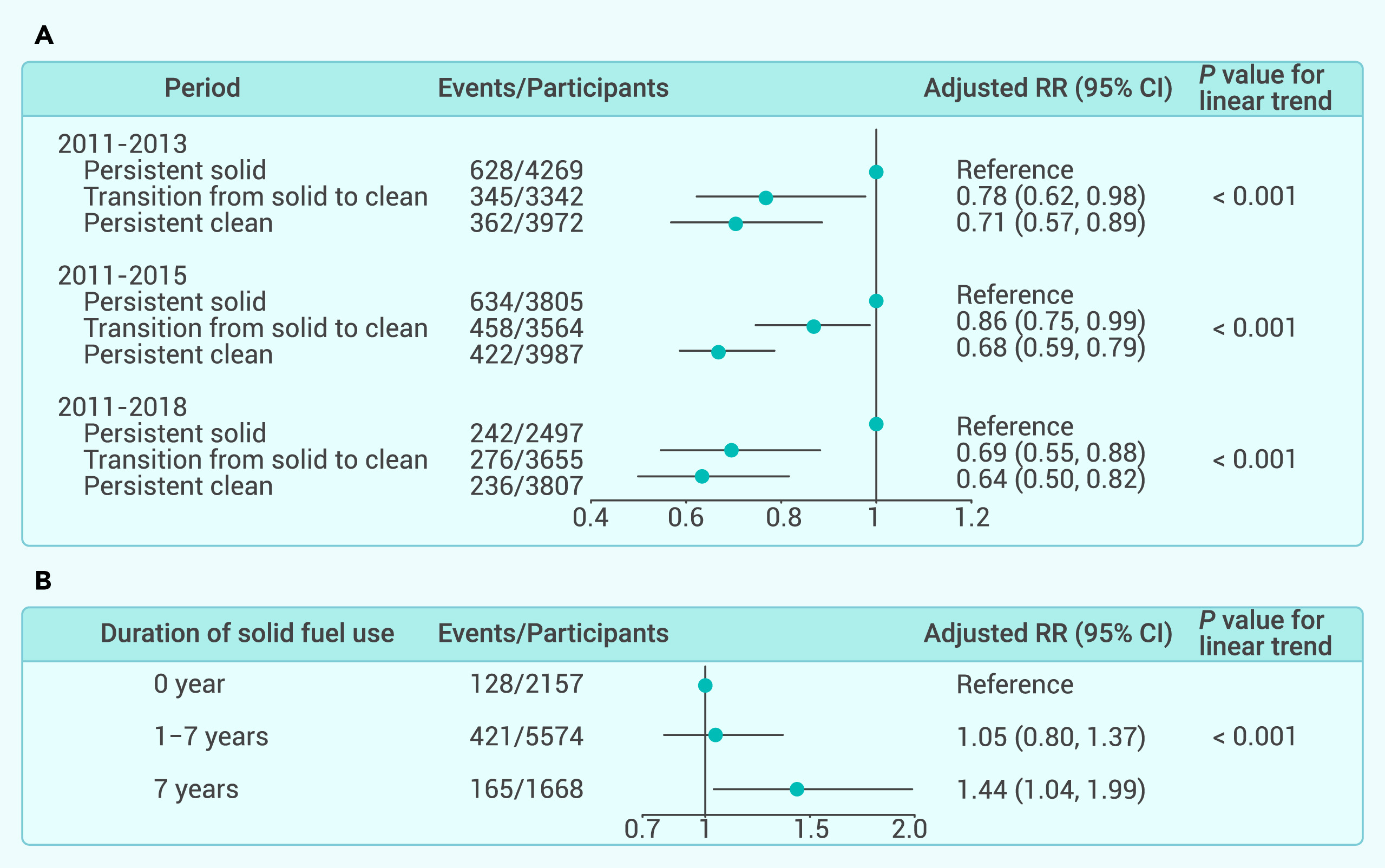
Obtaining clean energy is of prime importance for planetary health and sustainable development. We aimed to assess the association between residential energy transition and the risk of chronic respiratory diseases. Using data from the Global Health Observatory and Global Burden of Diseases, Injuries, and Risk Factors Study, we delineated the spatial distribution and temporal trends of the population using clean fuels for cooking at a global scale. In the China Health and Retirement Longitudinal Study, we performed rigorous and well-structured multistage analyses incorporating both cross-sectional and prospective data analyses to examine the associations between solid fuel use, residential energy transition, duration of solid fuel use, and the risk of chronic respiratory diseases. Despite great progress, huge disparities in access to clean energy persist globally. Residential energy transition was associated with a lower risk of chronic respiratory diseases. In the period of 2011–2013, compared with persistent solid fuel users, both participants who switched from solid to clean fuels (adjusted risk ratio [RR] 0.78, 95% confidence interval [CI] 0.62–0.98) and persistent clean fuel users (adjusted RR 0.71, 95% CI 0.57–0.89) had significantly lower risk of chronic respiratory diseases (p < 0.001 for trend). Consistent associations were observed in the period of 2011–2015 and 2011–2018. Household energy transition from solid to clean fuels could reduce the risk of chronic respiratory diseases. This is a valuable lesson for policy-makers and the general public to accelerate energy switching to alleviate the burden of chronic respiratory diseases and achieve health benefits, particularly in low- and middle-income countries. -

-
REFERENCES
[1] (2020). The State of Global Air 2020: A Special Report on Global Exposure to Air Pollution and its Health Impacts (Health Effects Institute). [2] Clark, M.L., Peel, J.L., Balakrishnan, K., et al. (2013). Health and household air pollution from solid fuel use: the need for improved exposure assessment. Environ. Health Perspect. 121(10): 1120–1128. https://doi.org/10.1289/ehp.1206429. [3] Huang, T., Liu, M., Xing, R., et al. (2023). Threat of air pollution in the cleanest plateau. Innovation 4(2): 100390. https://doi.org/10.1016/j.xinn.2023.100390. [4] (2020). Global burden of 87 risk factors in 204 countries and territories, 1990-2019: a systematic analysis for the Global Burden of Disease Study 2019. Lancet 396(10258): 1223–1249. https://doi.org/10.1016/s0140-6736(20)30752-2. [5] (2020). Global burden of 369 diseases and injuries in 204 countries and territories, 1990- 2019: a systematic analysis for the Global Burden of Disease Study 2019. Lancet 396(10258): 1204–1222. https://doi.org/10.1016/s0140-6736(20)30925-9. [6] (2020). Prevalence and attributable health burden of chronic respiratory diseases, 1990-2017: a systematic analysis for the Global Burden of Disease Study 2017. Lancet Respir. Med. 8(6): 585–596. https://doi.org/10.1016/s2213-2600(20)30105-3. [7] World Health Organization (2022). https://www.who.int/news-room/fact-sheets/. [8] Mortimer, K., Gordon, S.B., Jindal, S.K., et al. (2012). Household air pollution is a major avoidable risk factor for cardiorespiratory disease. Chest 142(5): 1308–1315. https://doi.org/10.1378/chest.12-1596. [9] Chan, K.H., Kurmi, O.P., Bennett, D.A., et al. (2019). Solid Fuel Use and Risks of Respiratory Diseases. A Cohort Study of 280,000 Chinese Never-Smokers. Am. J. Respir. Crit. Care Med. 199(3): 352–361. https://doi.org/10.1164/rccm.201803-0432OC. [10] Li, J., Qin, C., Lv, J., et al. (2019). Solid Fuel Use and Incident COPD in Chinese Adults: Findings from the China Kadoorie Biobank. Environ. Health Perspect. 127(5): 57008. https://doi.org/10.1289/ehp2856. [11] Dai, X., Bui, D.S., Perret, J.L., et al. (2021). Exposure to household air pollution over 10 years is related to asthma and lung function decline. Eur. Respir. J. 57(1): 2000602. https://doi.org/10.1183/13993003.00602-2020. [12] Mishra, V. (2003). Effect of indoor air pollution from biomass combustion on prevalence of asthma in the elderly. Environ. Health Perspect. 111(1): 71–78. https://doi.org/10.1289/ehp.5559. [13] Hystad, P., Duong, M., Brauer, M., et al. (2019). Health Effects of Household Solid Fuel Use: Findings from 11 Countries within the Prospective Urban and Rural Epidemiology Study. Environ. Health Perspect. 127(5): 57003. https://doi.org/10.1289/ehp3915. [14] Siddharthan, T., Grigsby, M.R., Goodman, D., et al. (2018). Association between Household Air Pollution Exposure and Chronic Obstructive Pulmonary Disease Outcomes in 13 Low- and Middle-Income Country Settings. Am. J. Respir. Crit. Care Med. 197(5): 611–620. https://doi.org/10.1164/rccm.201709-1861OC. [15] United Nations (2022). Sustainable Development Goals Report. https://www.un.org/sustainabledevelopment/. [16] Shen, G., Xing, R., Zhou, Y., et al. (2022). Revisiting the proportion of clean household energy users in rural China by accounting for energy stacking. Sustainable Horizons 1: 100010. https://doi.org/10.1016/j.horiz.2022.100010. [17] China State Council (2013). Air Pollution Prevention and Control Action Plan. [in Chinese]. http://www.gov.cn/zwgk/2013-09/12/content_2486773.htm. [18] Tao, S., Ru, M.Y., Du, W., et al. (2018). Quantifying the rural residential energy transition in China from 1992 to 2012 through a representative national survey. Nat. Energy 3(7): 567–573. https://doi.org/10.1038/s41560-018-0158-4. [19] Shen, G., Ru, M., Du, W., et al. (2019). Impacts of air pollutants from rural Chinese households under the rapid residential energy transition. Nat. Commun. 10(1): 3405. https://doi.org/10.1038/s41467-019-11453-w. [20] Zhang, W., Yun, X., Meng, W., et al. (2021). Urban residential energy switching in China between 1980 and 2014 prevents 2.2 million premature deaths. One Earth 4(11): 1602–1613. https://doi.org/10.1016/j.oneear.2021.10.013. [21] Cho, S.J., and Stout-Delgado, H.W. (2020). Aging and Lung Disease. Annu. Rev. Physiol. 82: 433–459. https://doi.org/10.1146/annurev-physiol-021119-034610. [22] Zhao, B., Zheng, H., Wang, S., et al. (2018). Change in household fuels dominates the decrease in PM(2.5) exposure and premature mortality in China in 2005-2015. Proc. Natl. Acad. Sci. USA 115(49): 12401–12406. https://doi.org/10.1073/pnas.1812955115. [23] Yu, K., Lv, J., Qiu, G., et al. (2020). Cooking fuels and risk of all-cause and cardiopulmonary mortality in urban China: a prospective cohort study. Lancet Global Health 8(3): e430-e439. https://doi.org/10.1016/s2214-109x(19)30525-x. [24] Wang, Y., Duong, M., Brauer, M., et al. (2023). Household Air Pollution and Adult Lung Function Change, Respiratory Disease, and Mortality across Eleven Low- and Middle-Income Countries from the PURE Study. Environ. Health Perspect. 131(4): 047015. https://doi.org/10.1289/EHP11179. [25] Fedak, K.M., Good, N., Walker, E.S., et al. (2020). Acute changes in lung function following controlled exposure to cookstove air pollution in the subclinical tests of volunteers exposed to smoke (STOVES) study. Inhal. Toxicol. 32(3): 115–123. https://doi.org/10.1080/08958378.2020.1751750. [26] Clasen, T.F., Chang, H.H., Thompson, L.M., et al. (2022). Liquefied Petroleum Gas or Biomass for Cooking and Effects on Birth Weight. N. Engl. J. Med. 387(19): 1735–1746. https://doi.org/10.1056/NEJMoa2206734. [27] Checkley, W., Williams, K.N., Kephart, J.L., et al. (2021). Effects of a Household Air Pollution Intervention with Liquefied Petroleum Gas on Cardiopulmonary Outcomes in Peru. A Randomized Controlled Trial. Am. J. Respir. Crit. Care Med. 203(11): 1386–1397. https://doi.org/10.1164/rccm.202006-2319OC. [28] Romieu, I., Riojas-Rodríguez, H., Marrón-Mares, A.T., et al. (2009). Improved biomass stove intervention in rural Mexico: impact on the respiratory health of women. Am. J. Respir. Crit. Care Med. 180(7): 649–656. https://doi.org/10.1164/rccm.200810-1556OC. [29] Thakur, M., Nuyts, P.A.W., Boudewijns, E.A., et al. (2018). Impact of improved cookstoves on women’s and child health in low and middle income countries: a systematic review and meta-analysis. Thorax 73(11): 1026–1040. https://doi.org/10.1136/thoraxjnl-2017-210952. [30] Yun, X., Shen, G., Shen, H., et al. (2020). Residential solid fuel emissions contribute significantly to air pollution and associated health impacts in China. Sci. Adv. 6(44): eaba7621. https://doi.org/10.1126/sciadv.aba7621. [31] Zhao, Y., Hu, Y., Smith, J.P., et al. (2014). Cohort profile: the China Health and Retirement Longitudinal Study (CHARLS). Int. J. Epidemiol. 43(1): 61–68. https://doi.org/10.1093/ije/dys203. -
ABOUT THIS ARTICLE
Cite this article:
Wei H., Yu Q., Chen D., et al., (2024). Residential energy transition and chronic respiratory diseases. The Innovation 5(3), 100597. https://doi.org/10.1016/j.xinn.2024.100597
Welcome!
To request copyright permission to republish or share portions of our works, please visit Copyright Clearance Center's (CCC) Marketplace website at marketplace.copyright.com.
Export File
Citation
Wei H., Yu Q., Chen D., et al., (2024). Residential energy transition and chronic respiratory diseases. The Innovation 5(3), 100597. https://doi.org/10.1016/j.xinn.2024.100597

Format
Content
-
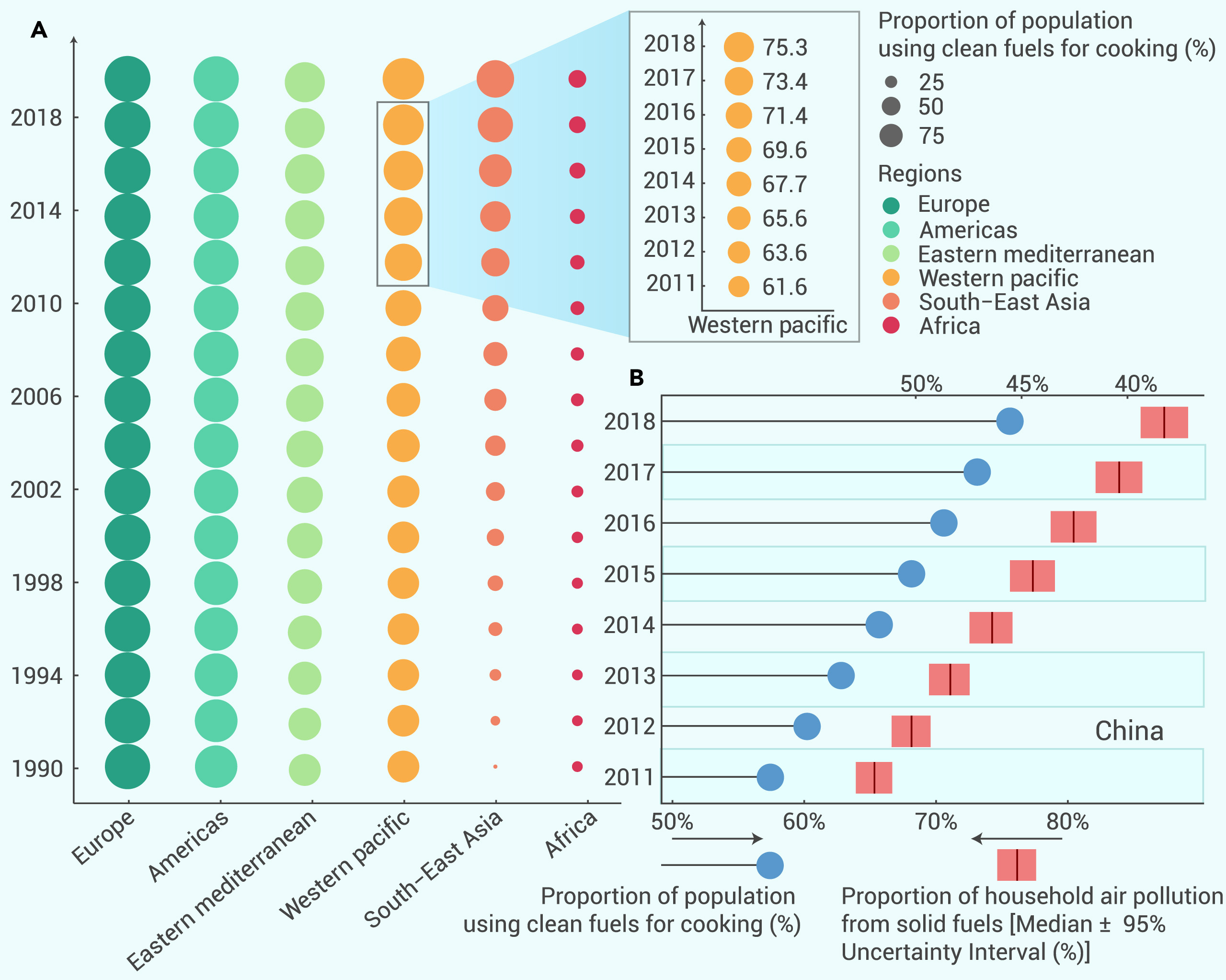
Figure 1.
Proportion of the population with primary reliance on clean fuels for cooking globally, particularly in China
-
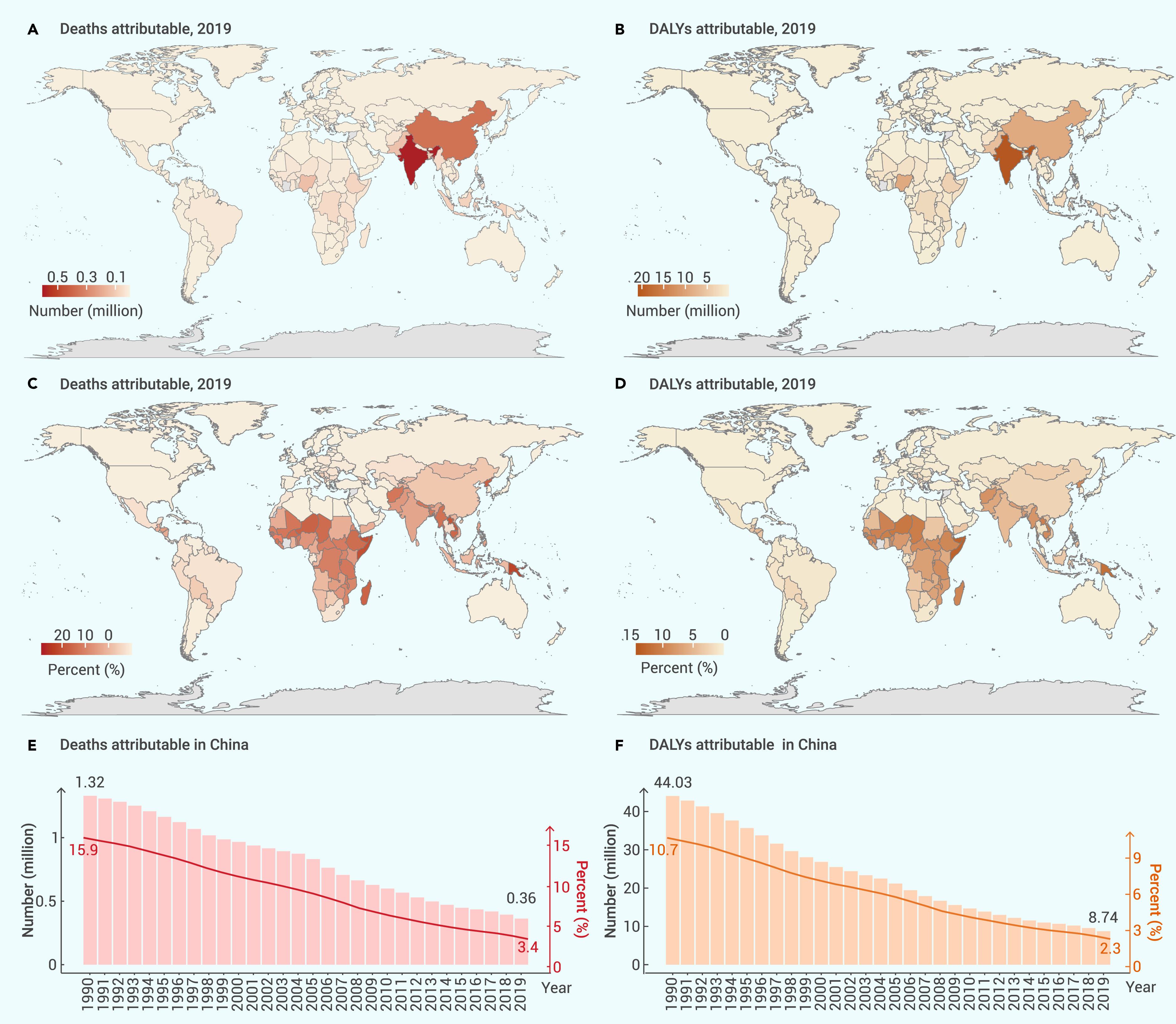
Figure 2.
Deaths and DALYs attributable to HAP from solid fuels for all ages and all causes globally, particularly in China
-
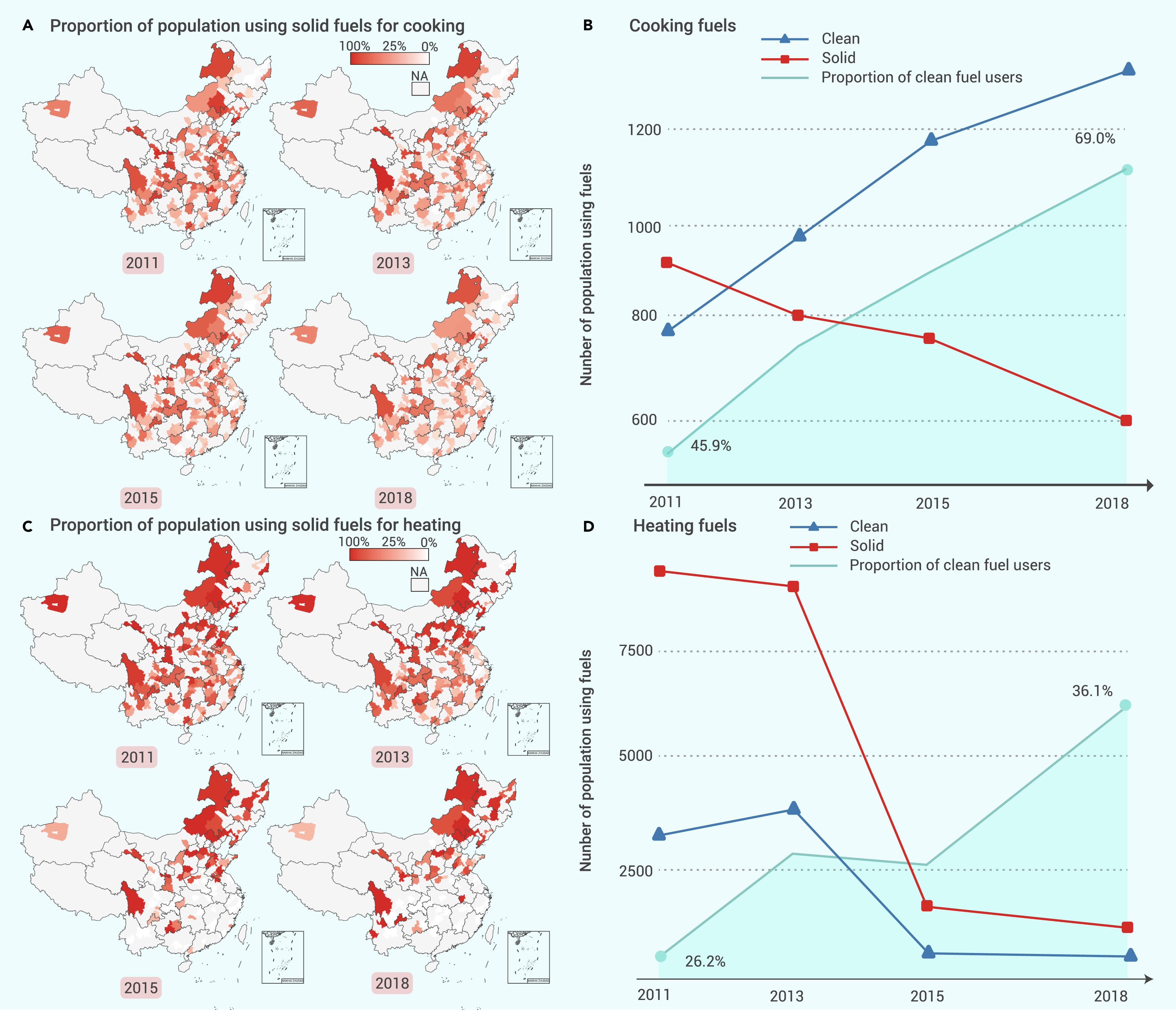
Figure 3.
Spatial distribution and temporal trends of the population using solid fuels for residential energy in the CHARLS across four waves
-
Figure 4.
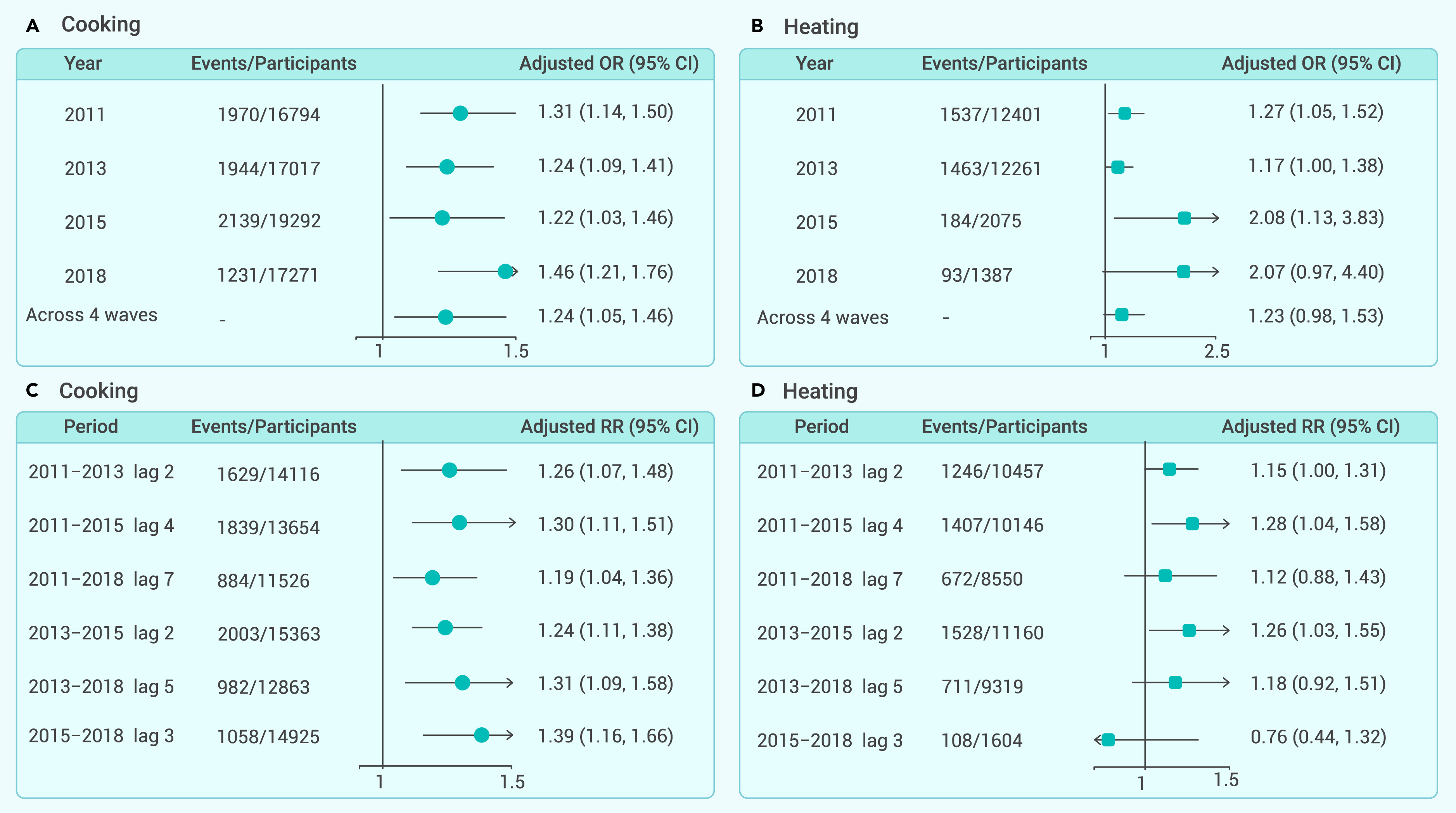
Adjusted odds ratios (ORs) and risk ratios (RRs) for chronic respiratory diseases (CRDs) according to solid fuel use for cooking and heating
-
Figure 5.
Respiratory health benefits of residential energy transition
-
Figure 6.
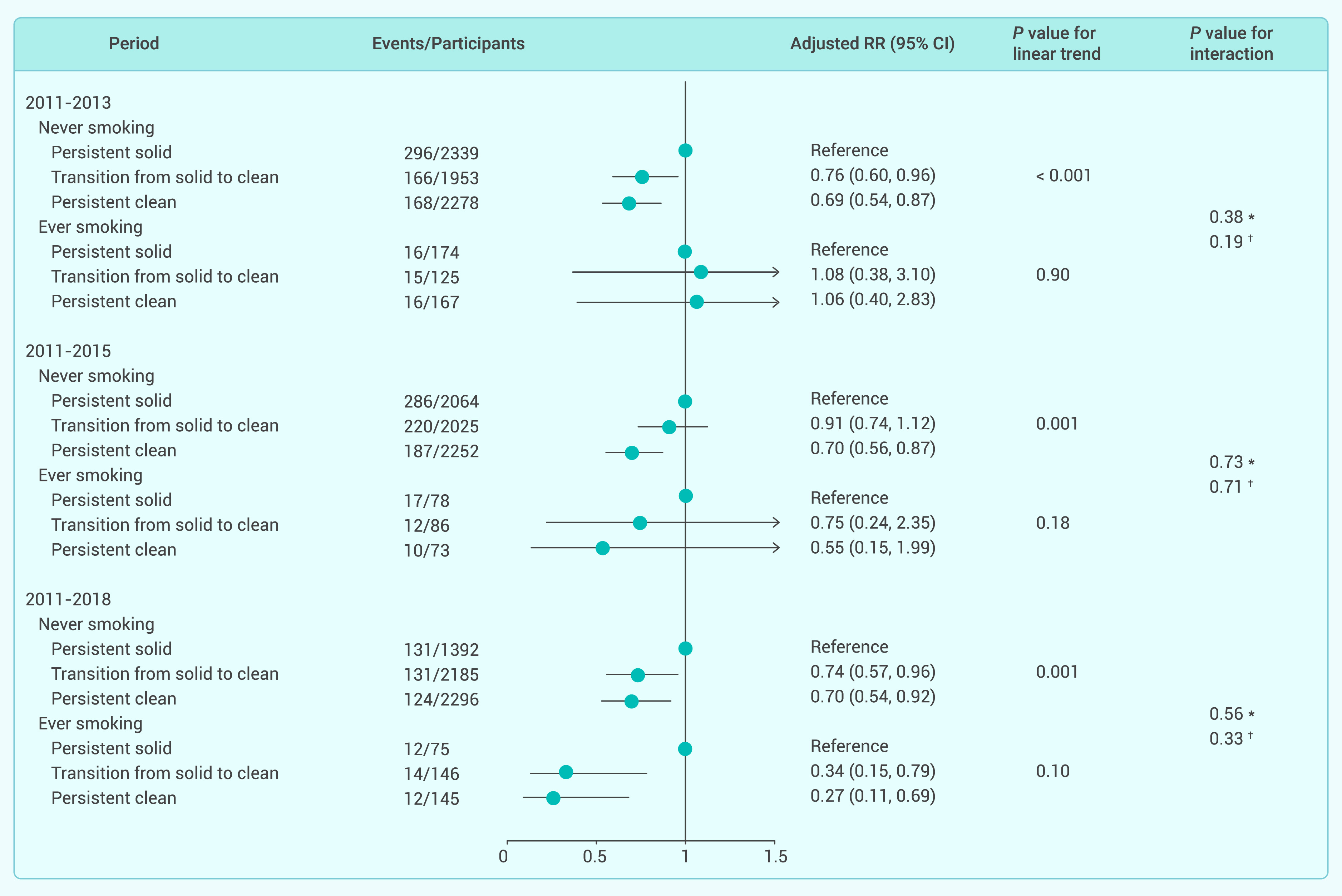
Adjusted RRs for CRDs in association with residential energy switching and persistent clean fuel use compared with persistent solid fuel use for cooking stratified by smoking status from baseline to follow-ups
-
Figure 7.
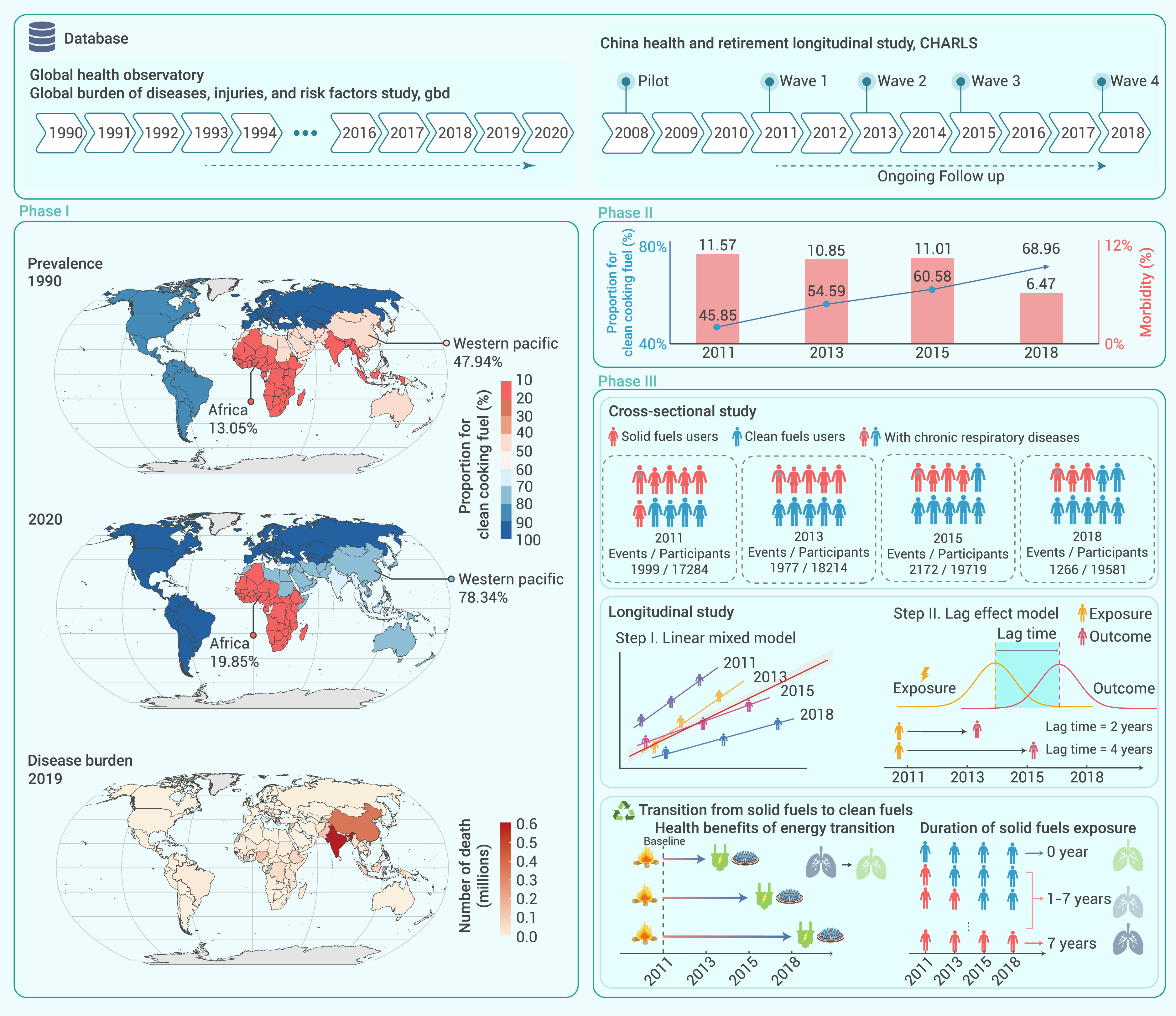
The overall study design
