
Integrated analysis of public datasets for the discovery and validation of survival-associated genes in solid tumors
-
GRAPHICAL ABSTRACT
 DownLoad:
Full size image
DownLoad:
Full size image
-
PUBLIC SUMMARY
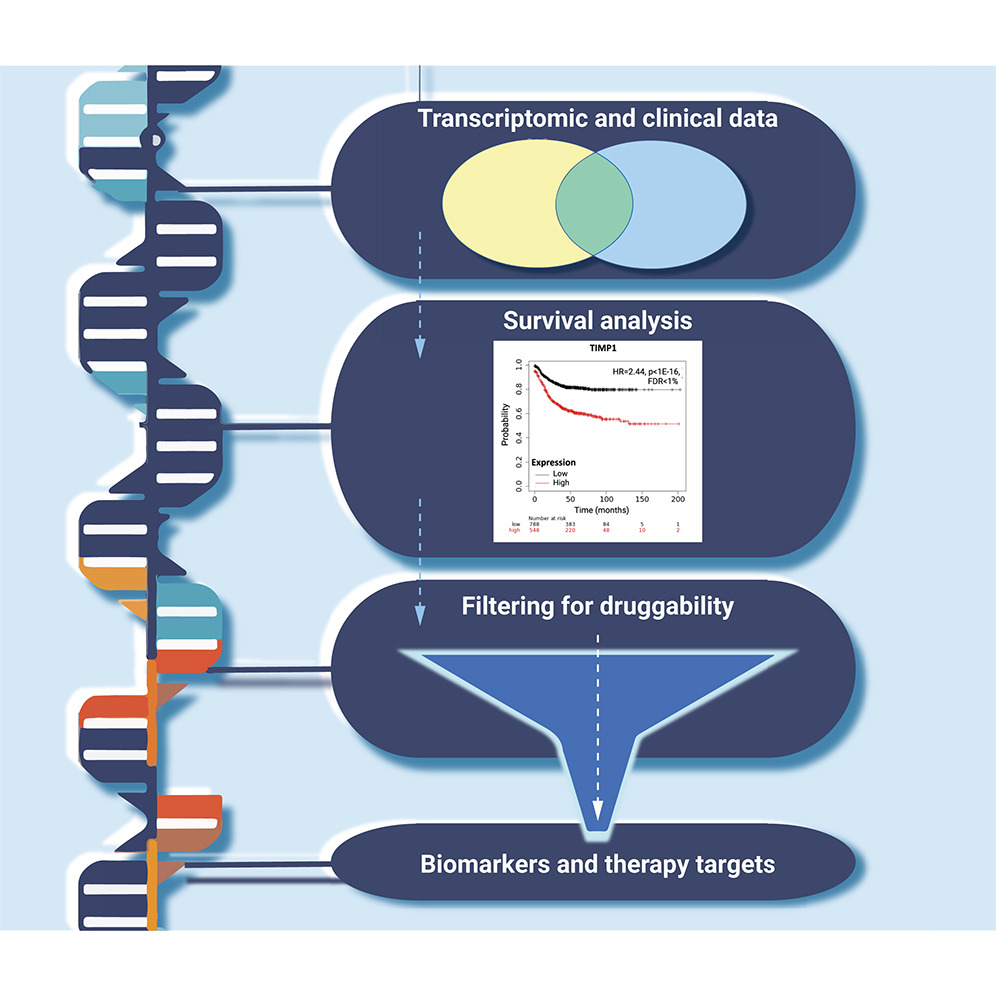
- ■ We established a large integrated transcriptomic database of colorectal cancer suitable for biomarker discovery.
- ■ The cohort was used to uncover genes with the highest correlation to relapse-free survival in colon cancer.
- ■ The top genes were filtered to include hits with higher expression and potential druggability.
- ■ This pipeline can be used to prioritize clinically useful biomarkers of solid tumors by excluding likely failures.
-
ABSTRACT
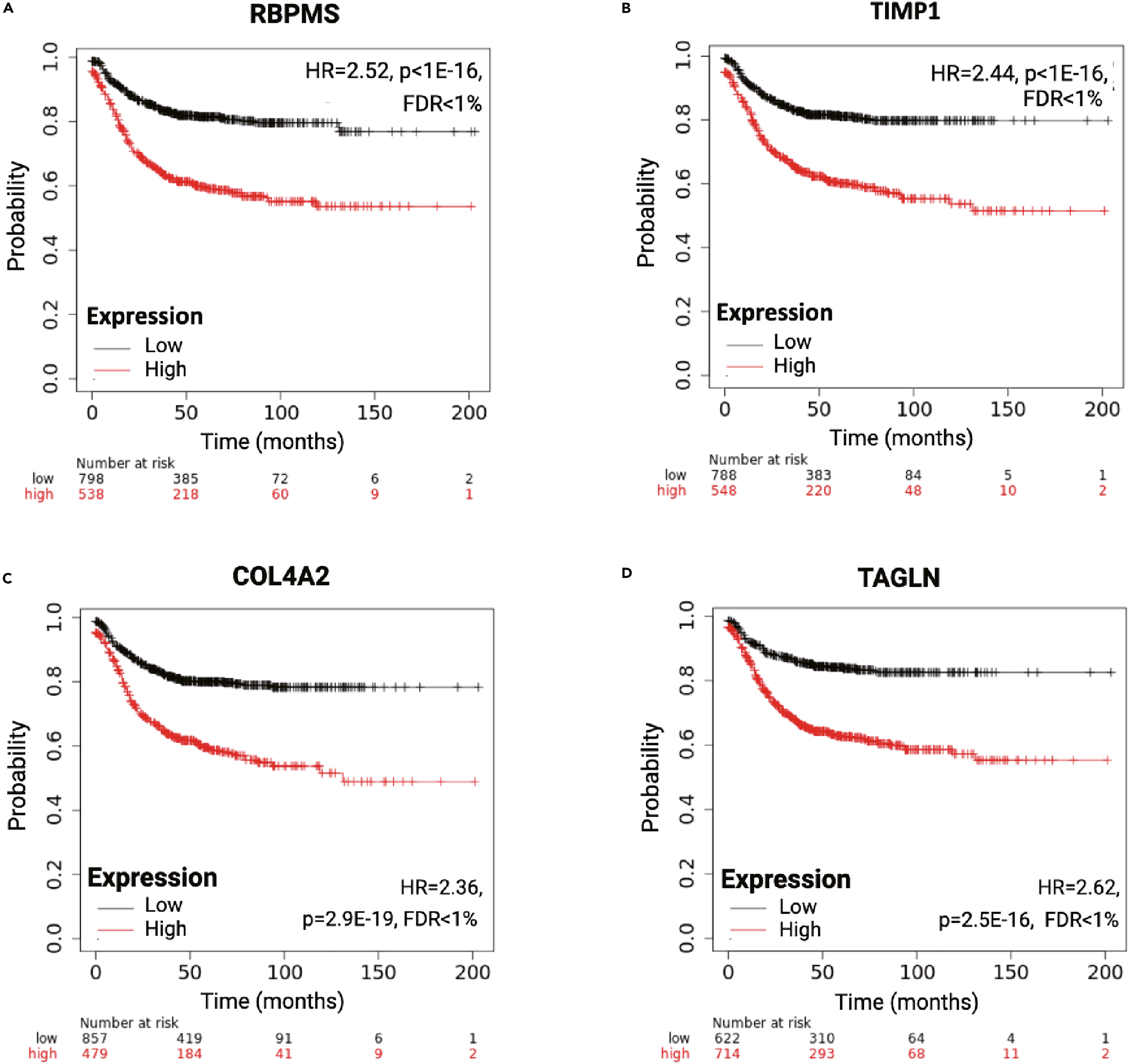
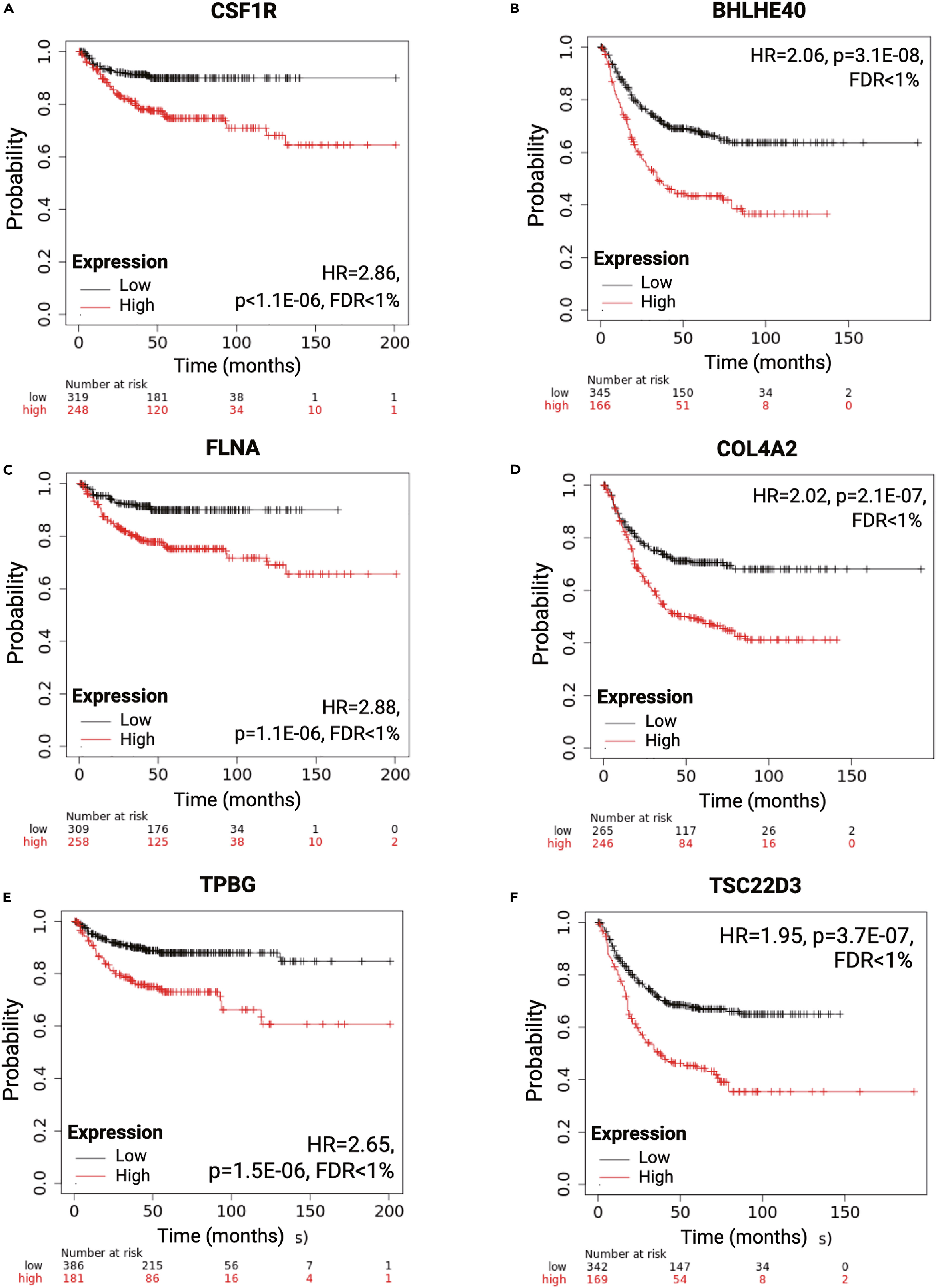
Identifying genes with prognostic significance that can act as biomarkers in solid tumors can help stratify patients and uncover novel therapy targets. Here, our goal was to expand our previous ranking analysis of survival-associated genes in various solid tumors to include colon cancer specimens with available transcriptomic and clinical data. A Gene Expression Omnibus search was performed to identify available datasets with clinical data and raw gene expression measurements. A combined database was set up and integrated into our Kaplan-Meier plotter, making it possible to identify genes with expression changes linked to altered survival. As a demonstration of the utility of the platform, the most powerful genes linked to overall survival in colon cancer were identified using uniand multivariate Cox regression analysis. The combined colon cancer database includes 2, 137 tumor samples from 17 independent cohorts. The most significant genes associated with relapse-free survival with a false discovery rate below 1% in colon cancer carcinoma were RBPMS(hazard rate [HR] = 2.52), TIMP1 (HR = 2.44), and COL4A2 (HR = 2.36). The three strongest genes associated with shorter survival in stage Ⅱ colon cancer include CSF1R (HR = 2.86), FLNA (HR = 2.88), and TPBG (HR = 2.65). In summary, a new integrated database for colon cancer is presented. A colon cancer analysis subsystem was integrated into our Kaplan-Meier plotter that can be used to mine the entire database (https://www.kmplot.com). The portal has the potential to be employed for the identification and prioritization of promising biomarkers and therapeutic target candidates in multiple solid tumors including, among others, breast, lung, ovarian, gastric, pancreatic, and colon cancers. -

-
REFERENCES
[1] Nagy, Á., Pongor, L.S., Szabó, A., et al. (2017). KRAS driven expression signature has prognostic power superior to mutation status in non-small cell lung cancer. Int. J. Cancer 140(4): 930-937. https://doi.org/10.1002/ijc.30509. [2] Andrijes, R., Hejmadi, R.K., Pugh, M., et al. (2021). Tetraspanin 6 is a regulator of carcinogenesis in colorectal cancer. Proc. Natl. Acad. Sci. USA. 118(39): e2011411118. https://doi.org/10.1073/pnas.2011411118. [3] Van Allen, E.M., Wagle, N., and Levy, M.A. (2013). Clinical analysis and interpretation of cancer genome data. J. Clin. Oncol. 31(15): 1825-1833. https://doi.org/10.1200/JCO.2013.48.7215. [4] Györffy, B., Lanczky, A., Eklund, A.C., et al. (2010). An online survival analysis tool to rapidly assess the effect of 22, 277 genes on breast cancer prognosis using microarray data of 1, 809 patients. Breast Cancer Res. Treat. 123(3): 725-731. https://doi.org/10.1007/s10549-009-0674-9. [5] Lánczky, A., and Győrffy, B. (2021). Web-based survival analysis tool tailored for medical research (KMplot): Development and implementation. J. Med. Internet Res. 23(7): e27633. https://doi.org/10.2196/27633. [6] Siegel, R.L., Miller, K.D., Wagle, N.S., et al. (2023). Cancer statistics, 2023. CA A. CA A Cancer J. Clin. 73(1): 17-48. https://doi.org/10.3322/caac.21763. [7] Cronin, K.A., Lake, A.J., Scott, S., et al. (2018). Annual report to the nation on the status of cancer, part I: National cancer statistics. Cancer 124(13): 2785-2800. https://doi.org/10.1002/cncr.31551. [8] Mattiuzzi, C., Sanchis-Gomar, F., and Lippi, G. (2019). Concise update on colorectal cancer epidemiology. Ann. Transl. Med. 7(21): 609. https://doi.org/10.21037/atm.2019.07.91. [9] Patel, J.N., Fong, M.K., and Jagosky, M. (2019). Colorectal cancer biomarkers in the era of personalized medicine. J. Phys. Math. 9(1): 3. https://doi.org/10.3390/jpm9010003. [10] Lièvre, A., Bachet, J.-B., Le Corre, D., et al. (2006). KRAS mutation status is predictive of response to cetuximab therapy in colorectal cancer. Cancer Res. 66(8): 3992-3995. https://doi.org/10.1158/0008-5472.CAN-06-0191. [11] Hurwitz, H.I., Yi, J., Ince, W., et al. (2009). The clinical benefit of bevacizumab in metastatic colorectal cancer is independent of K-RAS mutation status: analysis of a phase III study of bevacizumab with chemotherapy in previously untreated metastatic colorectal cancer. Oncol. 14(1): 22-28. https://doi.org/10.1634/theoncologist.2008-0213. [12] Bertagnolli, M.M., Niedzwiecki, D., Compton, C.C., et al. (2009). Microsatellite instability predicts improved response to adjuvant therapy with irinotecan, fluorouracil, and leucovorin in stage Ⅲ colon cancer: cancer and leukemia group B protocol 89803. J. Clin. Orthod. 27(11): 1814-1821. https://doi.org/10.1200/JCO.2008.18.2071. [13] Cercek, A., Lumish, M., Sinopoli, J., et al. (2022). PD-1 blockade in mismatch repair–deficient, locally advanced rectal cancer. N. Engl. J. Med. 386(25): 2363-2376. https://doi.org/10.1056/NEJMoa2201445. [14] Kovács, S.A., Fekete, J.T., and Győrffy, B. (2023). Predictive biomarkers of immunotherapy response with pharmacological applications in solid tumors. Acta Pharmacol. Sin. 44(9): 1879-1889. https://doi.org/10.1038/s41401-023-01079-6. [15] Li, Q., Birkbak, N.J., Gyorffy, B., et al. (2011). Jetset: Selecting the optimal microarray probe set to represent a gene. BMC Bioinf. 12: 474. https://doi.org/10.1186/1471-2105-12-474. [16] Benjamini, Y., and Hochberg, Y. (1995). Controlling the false discovery rate: A practical and powerful approach to multiple testing. J. Roy. Stat. Soc. B. 57(1): 289-300. https://doi.org/10.1111/j.2517-6161.1995.tb02031.x. [17] Győrffy, B. (2023). Discovery and ranking of the most robust prognostic biomarkers in serous ovarian cancer. Geroscience 45(3): 1889-1898. https://doi.org/10.1007/s11357-023-00742-4. [18] Freshour, S.L., Kiwala, S., Cotto, K.C., et al. (2021). Integration of the drug–gene interaction database (DGIdb 4.0) with open crowdsource efforts. Nucleic Acids Res. 49(D1): D1144-D1151. https://doi.org/10.1093/nar/gkaa1084. [19] Bartha, Á., and Győrffy, B. (2021). TNMplot.com: a web tool for the comparison of gene expression in normal, tumor and metastatic tissues. Indian J. Manag. Sci. 22(5): 2622. https://doi.org/10.3390/ijms22052622. [20] Ross, J.S., and Fletcher, J.A. (1998). The HER-2/neu oncogene in breast cancer: Prognostic factor, predictive factor, and target for therapy. Stem Cell. 16(6): 413-428. https://doi.org/10.1002/stem.160413. [21] Ma, B., Ueda, H., Okamoto, K., et al. (2022). TIMP1 promotes cell proliferation and invasion capability of right-sided colon cancers via the FAK/Akt signaling pathway. Cancer Sci. 113(12): 4244-4257. https://doi.org/10.1111/cas.15567. [22] Macedo, F.C., Cunha, N., Pereira, T.C., et al. (2022). A prospective cohort study of TIMP1 as prognostic biomarker in gastric and colon cancer. Chin. Clin. Oncol. 11(6): 43. https://doi.org/10.21037/cco-22-69. [23] Yokota, M., Kojima, M., Higuchi, Y., et al. (2016). Gene expression profile in the activation of subperitoneal fibroblasts reflects prognosis of patients with colon cancer. Int. J. Cancer 138(6): 1422-1431. https://doi.org/10.1002/ijc.29851. [24] Varghese, A. (2015). Chemotherapy for stage Ⅱ colon cancer. Clin. Colon Rectal Surg. 28(4): 256-261. https://doi.org/10.1055/s-0035-1564430. [25] Shi, G., Yang, Q., Zhang, Y., et al. (2019). Modulating the tumor microenvironment via oncolytic viruses and CSF-1R inhibition synergistically enhances anti-PD-1 immunotherapy. Mol. Ther. 27(1): 244-260. https://doi.org/10.1016/j.ymthe.2018.11.010. [26] Lee, K.-H., Yen, W.-C., Lin, W.-H., et al. (2021). Discovery of BPR1R024, an orally active and selective CSF1R inhibitor that exhibits antitumor and immunomodulatory activity in a murine colon tumor model. J. Med. Chem. 64(19): 14477-14497. https://doi.org/10.1021/acs.jmedchem.1c01006. [27] Wang, J., Li, B., Yang, S., et al. (2022). Upregulation of INHBA mediated by the transcription factor BHLHE40 promotes colon cancer cell proliferation and migration. J. Clin. Lab. Anal. 36(7): e24539. https://doi.org/10.1002/jcla.24539. [28] Martinez-Romero, J., Bueno-Fortes, S., Martín-Merino, M., et al. (2018). Survival marker genes of colorectal cancer derived from consistent transcriptomic profiling. BMC Genom. 19(Suppl 8): 857. https://doi.org/10.1186/s12864-018-5193-9. [29] Menyhart, O., Weltz, B., and Győrffy, B. (2021). MultipleTesting.com: a tool for life science researchers for multiple hypothesis testing correction. PLoS One 16(6): e0245824. https://doi.org/10.1371/journal.pone.0245824. -
ABOUT THIS ARTICLE
Cite this article:
Győrffy B. (2024). Integrated analysis of public datasets for the discovery and validation of survival-associated genes in solid tumors. The Innovation 5(3), 100625. https://doi.org/10.1016/j.xinn.2024.100625
Welcome!
To request copyright permission to republish or share portions of our works, please visit Copyright Clearance Center's (CCC) Marketplace website at marketplace.copyright.com.

Export File
Citation
Győrffy B. (2024). Integrated analysis of public datasets for the discovery and validation of survival-associated genes in solid tumors. The Innovation 5(3), 100625. https://doi.org/10.1016/j.xinn.2024.100625

Format
Content
-
Figure 1.
Clinicopathological characteristics of all tumor samples contained within the integrated database
-
Figure 2.
Most robust genes associated with relapse-free survival in colon carcinoma
-
Figure 3.
Most significant druggable genes associated with shorter relapse-free survival
