Protist 10,000 Genomes Project


The Protist 10,000 Genomes Project
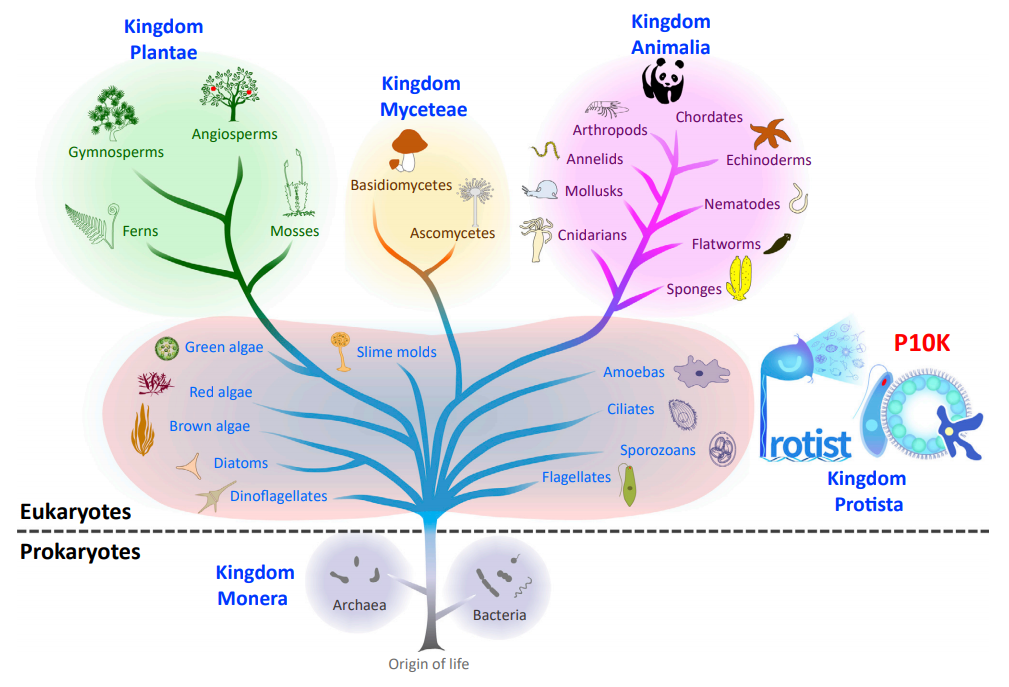
Protists are a highly diverse group of microscopic eukaryotic organisms that are not fungi, animals, or plants. Protists were some of the microbes first visualized and described by Anton van Leeuwenhoek using the microscope in the seventeenth century. After that, the description and cataloging of these diverse microbial eukaryotes was pursued by microbiologists throughout the following centuries.1 So far, more than 60,000 protist species have been recorded in the NCBI taxonomy system, but many have yet to be identified. Protists have long been considered important models in fundamental biological studies, such as cell biology, genetics, ecology and evolution, toxicology, and applied fields, including biofuels, nutritional supplements and aquaculture feed production, environmental monitoring and pollution treatment, protozoan parasitic disease treatment and prevention, as well as agriculture.
Cite this article
Miao, W., Song, L., Ba, S., Zhang, L., Guan, G., Zhang, Z. and Ning, K. Protist 10,000 Genomes Project. The Innovation 1 (3), 100058 (2020). doi: 10.1016/j.xinn.2020.100058