Synthetic microbiome for a sustainable poultry industry

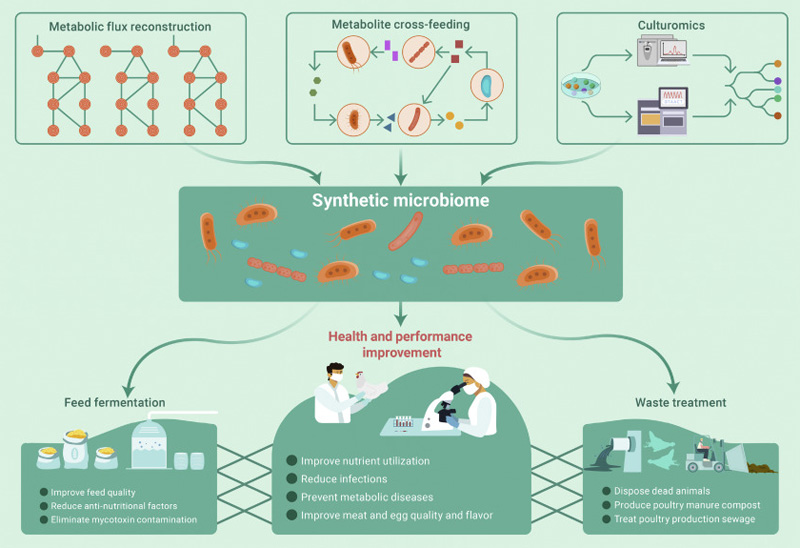
Applications of the synthetic microbiome in poultry production
Poultry meat and eggs are among the most common sources of animal protein for humans worldwide. The global poultry market was valued at $322.55 billion in 2020 and will reach $422.97 billion in 2025 at a compound annual growth rate (CAGR) of 7%. The Asia Pacific was the largest region in the global poultry market in 2020, contributing to 32% of the total market. In China, 15.57 billion poultry were slaughtered in 2020 with a yearover-year increase of 6.35%.
A growing demand for raw poultry and poultry products worldwide has put forward new requirements for sustainable poultry production. Antimicrobials had been widely used in animal farming, since the addition of low doses of antibiotics to the animal diet was discovered to promote animal growth in the 1950s. It is estimated that in the United States, 70% of antibiotics (24.5 million pounds per year) are used in animals, while only 30% are consumed by humans. The heavy use of antimicrobials for both therapeutic and growthpromoting purposes in farm animals fuels the development and dissemination of antimicrobial resistance among animals, humans, and environments. Fortunately, an increasing number of countries have banned the use of antimicrobials as growth promoters in recent years. China banned colistin in 2017 and all antimicrobial growth promoters (AGPs) in 2020. These actions are beneficial for preventing the development of antimicrobial resistance and reducing drug residues in animal foods; however, they pose challenges for maintaining the efficiency and sustainability of food animal production.

