Self-organization principles in stem-cell-derived synthetic embryo models

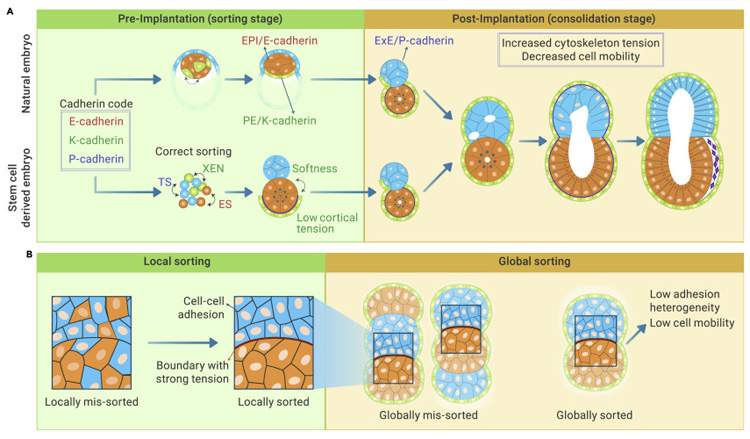
Self-organization principles in stem-cell-derived and natural embryos
As embryos, we were extremely lucky to survive implantation, when we transitioned from a simple ball of undifferentiated cells to a complex structure of distinct lineages. During development, fertilization generates a totipotent zygote that ultimately gives rise to the myriad cell types of the whole organism. In mouse embryos, the first cell fate decision leads to trophectoderm (TE) progenitors on the outside of the early embryo, surrounding the inner cell mass. Epiblast (EPI) and primitive endoderm (PE) cells then arise from the inner cell mass and are initially intermingled (embryonic day 3.5).

