Emerging paradigms in exploring the interactions among diet, probiotics, and cancer immunotherapeutic response

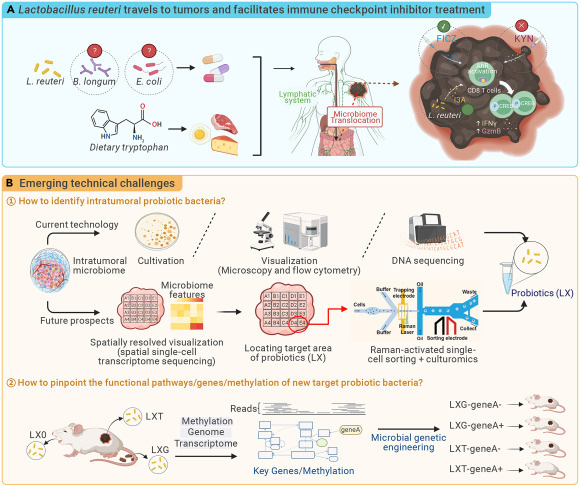
Illustration of the scientific significance of critical findings in Dr. Meisel's team's work published in Cell
In the new issue of Cell, Dr. Meisel's team characterized how the orally administrated probiotic bacteria Lactobacillus reuteri (Lr) translocated from the gut to tumors in mice with melanoma.1 Furthermore, its production of a compound called indole-3-aldehyde (I3A) derived from dietary tryptophan directly stimulates immune cells to make cancer immunotherapy more effective (Figure 1A). Here, we highlight and comment on the essential findings and provide our insights into the emerging research paradigm for future exploration of novel anti-tumor probiotics and underlying mechanisms.

