Treatment options for adult intermediate-risk AML patients in CR1: Allo-HSCT or chemotherapy?

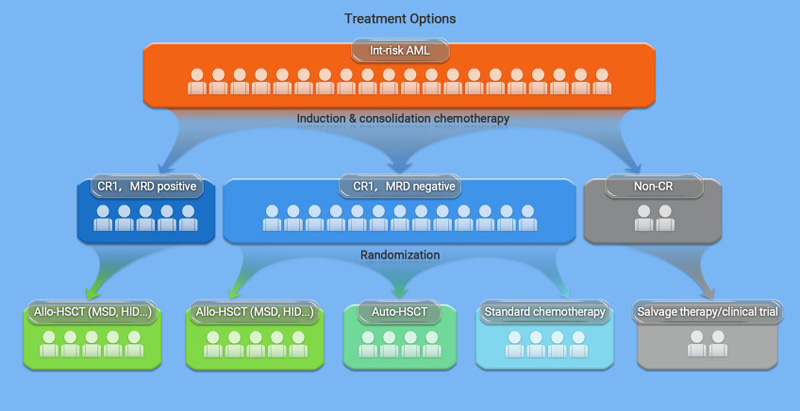
The proposed paradigm of the MRD-directed randomized trial in adult intermediate-risk AML patients
Acute myeloid leukemia (AML), which is the most common form of acute leukemia in adults, is a heterogeneous, clonal hematopoietic disorder characterized by the accumulation of immature myeloid progenitors. This heterogeneity is especially obvious in the “intermediate-risk group” as defined by international criteria such as those of the European LeukemiaNet, Medical Research Council (MRC), and National Comprehensive Cancer Network. However, with new molecular markers being identified by polymerase chain reaction, next-generation sequencing (NGS), and other new methods, which could predict the prognosis, patients who were originally classified into the intermediate-risk group are reclassified into the favorable-risk group or the adverse-risk group according to their prognosis. Nevertheless, the intermediate-risk group still accounts for the largest proportion of patients (50%–60%) and is the most heterogeneous subgroup of AML in adults. Thus far, the postremission treatment (PRT) options for these patients remain controversial. Allogeneic hematopoietic stem cell transplantation (allo-HSCT) is not presented as an option for most AML patients in the favorable-risk group but is recommended for patients in the adverse-risk group. However, whether allo-HSCT can benefit patients in the intermediate-risk group remains unknown.

