Immunomodulatory biomaterials against bacterial infections: Progress, challenges, and future perspectives

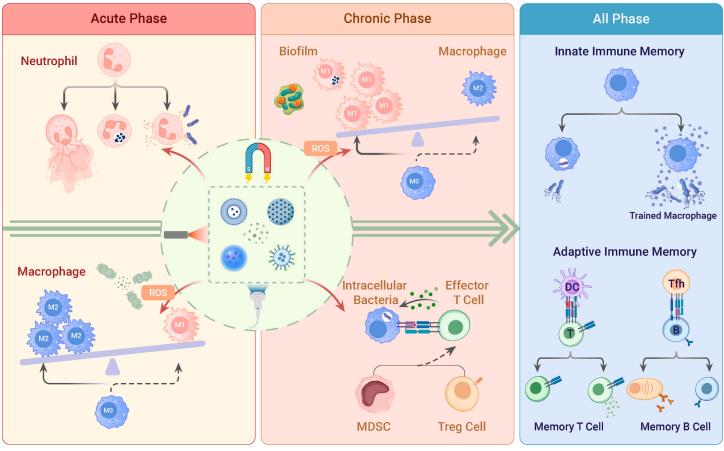
Graphical abstract
Bacterial infectious diseases are one of the leading causes of death worldwide. Even with the use of multiple antibiotic treatment strategies, 4.95 million people died from drug-resistant bacterial infections in 2019. By 2050, the number of deaths will reach 10 million annually. The increasing mortality may be partly due to bacterial heterogeneity in the infection microenvironment, such as drug-resistant bacteria, biofilms, persister cells, intracellular bacteria, and small colony variants. In addition, the complexity of the immune microenvironment at different stages of infection makes biomaterials with direct antimicrobial activity unsatisfactory for the long-term treatment of chronic bacterial infections.

