
Nontraditional biomanipulation: A powerful ecotechnology to combat cyanobacterial blooms in eutrophic freshwaters
-
GRAPHICAL ABSTRACT
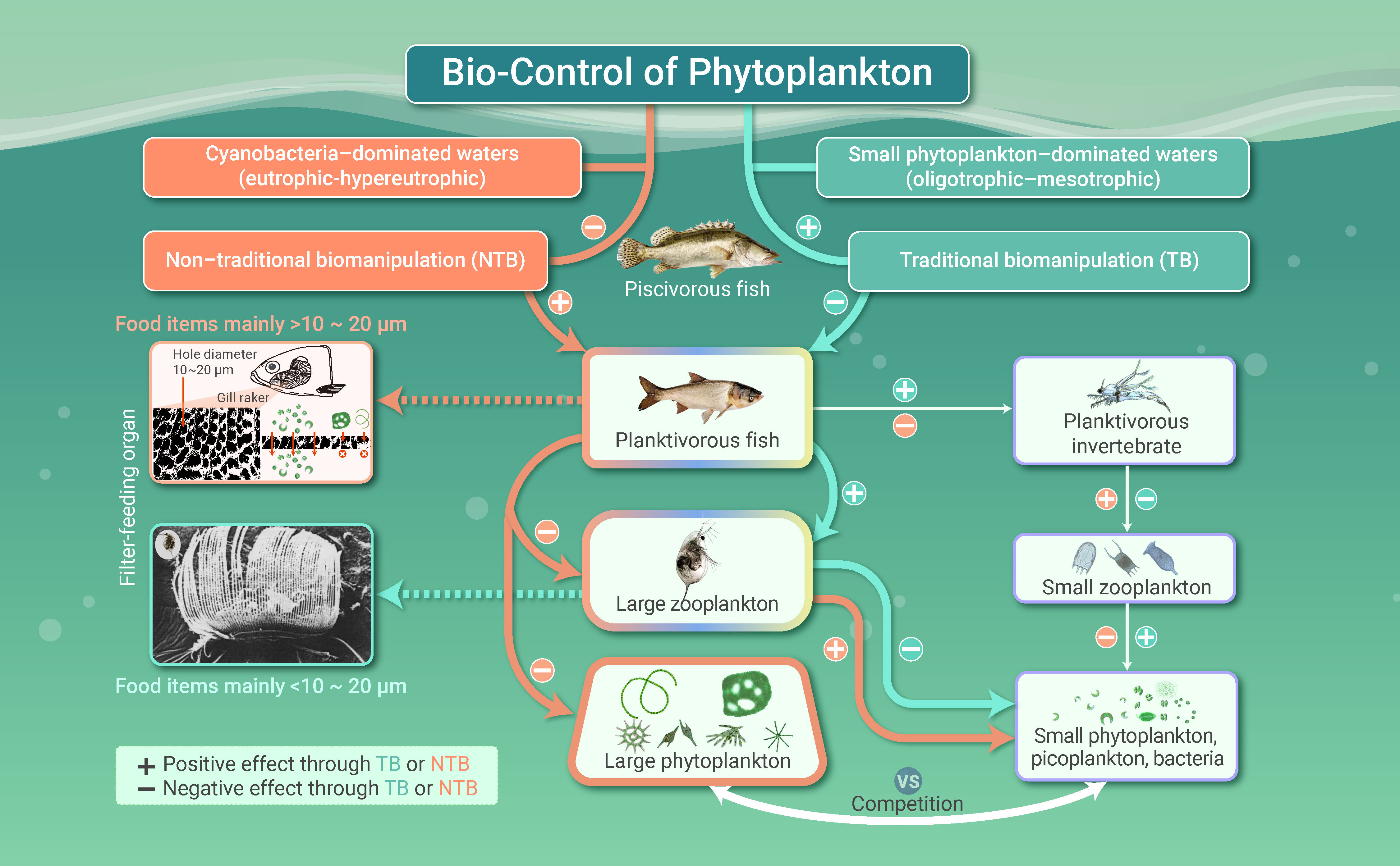
 DownLoad:
Full size image
DownLoad:
Full size image
-
PUBLIC SUMMARY
-
It is a global challenge to control harmful cyanobacterial blooms in freshwaters by top-down forces during the past half century.
Traditional biomanipulation (TB) and nontraditional biomanipulation (NTB) use filter-feeding Daphnia and fish, respectively.
NTB is reviewed, and its effectiveness has been validated in 88% of the experimental or whole-lake studies.
NTB is an effective, persistent and profitable ecotechnology to combat cyanobacterial blooms in eutrophic freshwaters.
-
-
ABSTRACT
Cyanobacterial blooms, occurring frequently in eutrophic freshwaters worldwide, are considered as potential hazards to ecosystems and human health, and it is often difficult and expensive to control their outbreaks in large lakes through reduction of nutrient loadings. Biomanipulation, launched as an ecology-based solution in the 1970s, was once believed to be an effective way to counteract cyanobacterial blooms. It is divided into traditional biomanipulation (TB) and nontraditional biomanipulation (NTB) that use filter-feeding Daphnia and filter-feeding fish, respectively. There have been numerous reviews on the former, yet few on the latter. Here, we first revisit the debate on the digestibility of cyanobacteria in silver and bighead carp. Then, we review 42 experiments that clearly mention cyanobacterial changes and reveal substantial reductions in cyanobacterial abundance by filter-feeding carp in 88% of the cases. In particular, in a whole-lake experiment in Lake Donghu, increased stock of silver and bighead carp effectively decreased Microcystis blooms from a coverage of 87% in 2021 to 0% in 2022. Finally, we discuss possible factors related to NTB’s effectiveness that depends not only on standing stock, niche divergence and shape preference of the fish but also on trophic status of the waterbodies. Particularly, silver and bighead carp feed more effectively on colony-forming Microcystis than on filamentous cyanobacteria, but are capable of increasing small-sized algae. NTB can be used to prevent or diminish cyanobacterial blooms that are poorly grazed by Daphnia, providing an effective and sustainable in-lake ecotechnology to combat heavy cyanobacterial blooms in eutrophic waterbodies. -

-
REFERENCES
[1] Francis, G. (1878). Poisonous Australian lake. Nature 18 : 11−12. DOI: 10.1038/018011d0. [2] Ibelings, B.W., Fastner, J., Bormans, M., et al. (2016). Cyanobacterial blooms. Ecology, prevention, mitigation and control: Editorial to a CYANOCOST Special Issue. Aquat. Ecol. 50 : 327−331. DOI: 10.1007/s10452-016-9595-y. [3] Huisman, J., Codd, G.A., Paerl, H.W., et al. (2018). Cyanobacterial blooms. Nat. Rev. Microbiol. 16 : 471−483. DOI: 10.1038/s41579-018-0040-1. [4] Wilhelm, S.W., Bullerjahn, G.S. and McKayc, R.M.L. (2020). The complicated and confusing ecology of Microcystis blooms. mBio 11 : e00529−20. 10.1128/mBio.00529-20. [5] Zhao, X., Liu, Y., Guo, Y.M., et al. (2023). Meta-analysis reveals cyanotoxins risk across African inland waters. J. Hazard. Mat. 451 : 131160. DOI: 10.1016/j.jhazmat.2023.131160. [6] Jilbert, T., Couture, R.M., Huser, B.J., et al. (2020). Preface: Restoration of eutrophic lakes: current practices and future challenges. Hydrobiologia 847 : 4343−4357. DOI: 10.1007/s10750-020-04457-x. [7] Xie, L.Q., Xie, P., Guo, L.G., et al. (2005). Organ distribution and bioaccumulation of microcystins in freshwater fish at different trophic levels from the eutrophic Lake Chaohu, China. Environ. Toxicol. 20 : 293−300. DOI: 10.1002/tox.20120. [8] Chen, J., Xie, P., Guo, L.G., et al. (2005). Tissue distributions and seasonal dynamics of the hepatotoxic microcystins-LR and -RR in a freshwater nail (Bellamya aeruginosa) from a large shallow, eutrophic lake of the subtropical China. Environ. Pollut. 134 : 423−430. DOI: 10.1016/j.envpol.2004.09.014. [9] Chen, J. and Xie, P. (2005). Tissue distributions and seasonal dynamics of the hepatotoxic microcystins-LR and -RR in two freshwater shrimps, Palaemon modestus and Macrobrachium nipponensis, from a large shallow, eutrophic lake of the subtropical China. Toxicon 45 : 615−625. DOI: 10.1016/j.toxicon.2005.01.003. [10] Jeppesen, E., Søndergaard, M., Lauridsen, T.L., et al. (2012). Biomanipulation as a restoration tool to combat eutrophication: recent advances and future challenges. Adv. Ecol. Res. 47 : 411−488. DOI: 10.1016/B978-0-12-398315-2.00006-5. [11] Zhang, D.W., Xie, P., Liu, Y., et al. (2009). Transfer, distribution and bioaccumulation of microcystins in the aquatic food web in Lake Taihu, China, with potential risks to human health. Sci. Total Environ. 407 : 2191−2199. DOI: 10.1016/j.scitotenv.2008.12.039. [12] Chen, J., Xie, P., Li, L., et al. (2009). First identification of the hepatotoxic microcystins in the serum of a chronically exposed human population together with indication of hepatocellular damage. Toxicol. Sci. 108 : 81−89. DOI: 10.1093/toxsci/kfp009. [13] Chen, L., Chen, J., Zhang, X.Z., et al. (2016). A review of reproductive toxicity of microcystins. J. Hazard. Mat. 301 : 381−399. DOI: 10.1016/j.jhazmat.2015.08.041. [14] Li, Y., Chen, J., Zhao, Q., et al. (2011). A cross-sectional investigation of chronic exposure to microcystin in relationship to childhood liver damage in the Three Gorges Reservoir region, China. Environ. Health Persp. 119 : 1483−1488. DOI: 10.1289/ehp.1002412. [15] Wang, H., Xu, C., Liu, Y., et al. (2021). From unusual suspect to serial killer: Cyanotoxins boosted by climate change may jeopardize megafauna. The Innovation 2 : 100092. DOI: 10.1016/j.xinn.2021.100092. [16] He, J., Chen, J., Chen, F., et al. (2022). Health risks of chronic exposure to small doses of microcystins: An integrative metabolomic and biochemical study of human serum. Environ. Sci. Technol. 56 : 6548−6559. DOI: 10.1021/acs.est.2c00973. [17] Chen, L., Giesy, J.P., Adamovsky, O., et al. (2021). Challenges of using blooms of Microcystis spp. in animal feeds: A comprehensive review of nutritional, toxicological and microbial health evaluation. Sci. Total Environ. 764 : 142319. DOI: 10.1016/j.scitotenv.2020.142319. [18] Sun, Y.F., Guo, Y.M., Xu, C., et al. (2023). Will “air eutrophication” increase the risk of ecological threat to public health. Environ. Sci. Technol. 57 : 10512−10520. DOI: 10.1021/acs.est.3c01368. [19] Xie, L.Q., Xie, P., Li, S.X., et al. (2003). The low TN: TP ratio, a cause or a result of Microcystis blooms. Water Res. 37 : 2073−2080. DOI: 10.1016/S0043-1354(02)00532-8. [20] Triest, L., Stiers, I. and van Onsem, S. (2016). Biomanipulation as a nature-based solution to reduce cyanobacterial blooms. Aquat. Ecol. 50 : 461−483. DOI: 10.1007/s10452-015-9548-x. [21] Xie, P. and Liu, J.K. (2001). Practical success of biomanipulation using filter-feeding fish to control cyanobacteria blooms: A synthesis of decades of research and application in a subtropical hypereutrophic lake. Sci. World J. 1 : 276487. DOI: 10.1100/tsw.2001.67. [22] Xie, P., Chen, J. and Liu, J.R. (2023). A regime shift from cyanobacterial steady state to non-cyanobacterial one by using non-traditional biomanipulation - a whole lake testing experiment in Lake Donghu, Wuhan. J. Lake Sci. 35 : 1−11. DOI: doi.org/10.18307/2023.0199. [23] Xie, L.Q., Xie, P. and Tang, H.J. (2003). Enhancement of dissolved phosphorus release from sediment to lake water by Microcystis blooms - an enclosure experiment in a hyper-eutrophic, subtropical Chinese lake. Environ. Pollut. 122 : 391−399. DOI: 10.1016/S0269-7491(02)00305-6. [24] Xie, P. (2006). Biological mechanisms driving the seasonal changes in the internal loading of phosphorus in shallow lakes. Sci China: D Earth Sci. 49(Supp.I) : 14-27. DOI: 10.1007/s11430-006-8102-z. [25] Jeppesen, E., Meerhoff, M., Jacobsen, B.A., et al. (2007). Restoration of shallow lakes by nutrient control and biomanipulation—the successful strategy varies with lake size and climate. Hydrobiologia 581 : 269−285. DOI: 10.1007/s10750-006-0507-3. [26] Qin, B., Deng, J., Shi, K., et al. (2021). Extreme climate anomalies enhancing cyanobacterial blooms in eutrophic Lake Taihu, China. Water Resour. Res. 57 : e2020WR029371. DOI: 10.1029/2020WR029371. [27] Shapiro, J., Lamarra, V. and Lynch, M. (1975). Biomanipulation: an ecosystem approach to lake restoration. In: Brezonik, P.L. & Fox, J.L. (eds.) Proceedings of a Symposium on Water Quality Management through Biological Control. University of Florida, Gainesville, pp. 85-89. [28] Zhang, X., Xie, P. and Huang, X. (2008). A review of nontraditional biomanipulation. Sci. World J. 8 : 1184−1196. DOI: 10.1100/tsw.2008.144. [29] DeMelo, R., Fracne, R. and McQueen, D.J. (1992). Biomanipulation: Hit or myth. Limnol. Oceanogr. 37 : 192−207. DOI: 10.4319/lo.1992.37.1.0192. [30] Hansson, L.A., Annadotter, H., Bergman, E., et al. (1998). Biomanipulation as an application of food-chain theory: Constraints, synthesis, and recommendations for temperate lakes. Ecosystems 1 : 558−574. DOI: 10.1007/s100219900051. [31] Drenner, R. and Hambright, K.D. (1999). Review: Biomanipulation of fish assemblages as a lake restoration technique. Arch. Hydrobiol. 146 : 129−165. DOI: 10.1127/archiv-hydrobiol/146/1999/129. [32] Mehner, T., Benndorf, J., Kasprzak, P., et al. (2002). Biomanipulation of lake ecosystems: Successful applications and expanding complexity in the underlying science. Freshwat. Biol. 47 , 2453−2465. DOI: 10.1046/j.1365-2427.2002.01003.x. [33] Bernes, C., Carpenter, S.R., and Gårdmark, A. (2016). What is the influence of a reduction of planktivorous and benthivorous fish on water quality in temperate eutrophic lakes. A systematic review. Environ. Evid. 4 : 7. DOI: 10.1186/s13750-015-0032-9. [34] Kaur, S. (2020). Bio-manipulation: A restoration tool for eutrophied lakes. IJFBS 7 : 1−4. [35] Paul, B., Purkayastha, K.D., Bhattacharya, S., et al. (2022). Eco-bioengineering tools in ecohydrological assessment of eutrophic water bodies. Ecotoxicology 31 : 581−601. DOI: 10.1007/s10646-021-02509-z. [36] Straskraba, M. (1965). The effect of fish on the number of invertebrate in ponds and streams. Mitt. Int. Ver. Limnol. 13 : 106−127. DOI: 10.1080/05384680.1965.11903821. [37] Gophen, M. (1990). Biomanipulation: retrospective and future development. Hydrobiologia 200/201 : 1−11. DOI: 10.1007/BF02530324. [38] Hrbacek, J., Dvorakova, M., Korinek, V., et al. (1961). Demonstration of the effect of the fish stock on the species composition of zooplankton and the intensity of metabolism of the whole plankton assemblage. Verh. Int. Ver. Theoret. Angew. Limnol. 14 : 192−195. DOI: 10.1080/03680770.1959.11899269. [39] Brooks, J.L. and Dodson, S.I. (1965). Predation, body size, and composition of plankton. Science 150 : 28−35. DOI: 10.1126/science.150.3692.28. [40] Hurlbert, S.H., Zedler, J. and Fairbanks, D. (1972). Ecosystem alteration by mosquitofish (Gambusia affinis) predation. Science 175 : 639−641. DOI: 10.1126/science.175.4022.639. [41] Shapiro, J. (1990). Biomanipulation: the next phase - making it stable. Hydrobiologia 200/201 : 13−27. DOI: 10.1007/BF02530325. [42] Kasprzak, P., Benndorf, T., Mehner, T., et al. (2002). Biomanipulation of lake ecosystems: an introduction. Freshwat. Biol. 47 : 2277−2281. DOI: 10.1046/j.1365-2427.2002.01001.x. [43] Su, H., Wang, R., Feng, Y., et al. (2021). Long-term empirical evidence, early warning signals and multiple drivers of regime shifts in a lake ecosystem. J. Ecol. 109 : 3182−3194. DOI: 10.1111/1365-2745.13544. [44] Su, H., Feng, Y., Chen, J.F., et al. (2021). Determinants of trophic cascade strength in freshwater ecosystems: a global analysis. Ecology 102 : e03370. DOI: 10.1002/ecy.3370. [45] Wetzel, R.G. (2001). Limnology: Lake and River Ecosystems (Third Edition), Elsevier. [46] Shapiro, J. and Wright, D.I. (1984). Lake restoration by biomanipulation: Round Lake, Minnesota, the first two years. Freshwat. Biol. 14 : 371−383. DOI: 10.1111/j.1365-2427.1984.tb00161.x. [47] Drenner, R. and Hambright, K.D. (2002). Piscivores, trophic cascades, and lake management. Sci World J. 2 : 284−307. DOI: 10.1100/tsw.2002.138. [48] Mcqueen, D.J. (1990). Manipulating lake community structure: where do we go from here. Freshwat. Biol. 23 : 613−620. DOI: 10.1111/j.1365-2427.1990.tb00299.x. [49] Mcqueen, D.J. (1998). Freshwater food web biomanipulation: A powerful tool for water quality improvement, but maintenance is required. Lakes Reserv. Res. Manag. 3 : 83−94. DOI: 10.1111/j.1440-1770.1998.tb00035.x. [50] Salonen, K., Sarvala, J., Horppila, J., et al. (2020). Development of Lake Vesijarvi through four decades of remediation efforts. Hydrobiologia 847 : 4601−4619. DOI: 10.1007/s10750-020-04338-3. [51] Nandini, S. and Sarma, S.S.S. (2023). Experimental studies on zooplankton-toxic cyanobacteria interactions: a review. Toxics 11 : 176. DOI: 10.3390/toxics11020176. [52] Burn, C.W. (1968). The relationship between body size of filter-feeding Cladocera and the maximum size of particle ingested. Limnol. Oceanogr. 13 : 675−678. DOI: 10.4319/lo.1968.13.4.0675. [53] Gliwicz, Z.M. (1977). Food size selection and seasonal succession of filter feeding zooplankton in an eutrophic lake. Ekol. Pol. 25 : 179−225. [54] Geller, W. and Müller, H. (1981). The filtration apparatus of Cladocera: filter mesh-sizes and their implications of food selectivity. Oecologia 49 : 316−321. DOI: 10.1007/BF00347591. [55] Hanson, M.A. and Butler, M.G. (1994). Responses of plankton, turbidity, and macrophytes to biomanipulation in a shallow prairie lake. Can. J. Fish. Aquat. Sci. 51 : 1180−1188. DOI: 10.1139/f94-117. [56] Dawidowicz, P., Prejs A., Engelmayer, A., et al. (2002). Hypolimnetic anoxia hampers top-down food-web manipulation in a eutrophic lake. Freshwat. Biol. 47 : 2401−2409. DOI: 10.1046/j.1365-2427.2002.01007.x. [57] Guo, N. and Xie, P. (2006). Development of tolerance against toxic Microcystis aeruginosa in three cladocerans and the ecological implications. Environ. Pollut. 143 : 513−518. DOI: 10.1016/j.envpol.2005.11.044. [58] Liu, J.K. and Xie, P. (1999). Unraveling the enigma of the disappearance of water bloom from the east lake (Lake Donghu) of Wuhan. Resour. Environ. Yangtze Basin 8 : 312−319. [59] Lazzaro, X. (1987). A review of planktivorous fishes: Their evolution, feeding behaviours, selectivities, and impacts. Hydrobiologia 146 : 97−167. DOI: 10.1007/BF00008764. [60] Wu, X. and Rao, Q. (1961). Chapter two, History of freshwater fisheries in China. In: Committee to Summarize Experiences on Aquaculture of Freshwater Fishes (ed.) Cultivation of the Chinese Freshwater Fishes. pp: 343-380. Beijing, China. (in Chinese) [61] Ni, D. and Chiang, S. (1954). On food of silver carp and bighead carp. Acta Zool. Sin. 6 , 59-71. (in Chinese) [62] Xu, J. and Xie, P. (2004). Studies on the food web structure of Lake Donghu using stable carbon and nitrogen isotope ratios. J. Freshwat. Ecol. 19 : 645−650. DOI: 10.1080/02705060.2004.9664746. [63] Fang, P.W. (1928). Notes on the gill-rakers and their related structures of Hypophthalmichthys nobilis and H. molitrix Contri. Biol. Lab. Sci. Soc. China 4, 1−30. [64] Voropaev, N.V. (1968). New investigations on ecology and propagation of plant feeding fish. In: Nikolskij, G.V. (ed.) Moskva, Izdat. Akad. Nauk SSSR, pp. 206-217. [65] Wilamovski, A. (1972). Structure of the gill apparatus and the suprabranchial organ of Hypophthalmichthys molitrix Val. (silver carp). Bamidgeh 24 : 87−98. [66] Iwata, K. (1976). Morphological and physiological studies on the phytoplankton feeders of cyprinids: I. Developmental changes of feeding organs and ingestion rates in Kawachibura (Carassius auratus cuvieri), silver carp (Hypophthalmichthys molitrix) and Nigorobuna (C. auratus grandoculis). Jpn. J. Limnol. 37 : 137-147. DOI: 10.3739/rikusui.37.135. DOI: 10.3739/rikusui.37.135. [67] Kajak, Z., Spodniewska, I., and Wisniewski, R.J. (1977). Studies on food selectivity of silver carp, Hypophthalmichthys molitrix (Val. ). Ekol. Pol. 25 : 227−239. [68] Schroeder, G. (1978). Autotrophic and heterotrophic production of microorganisms in intensively-manured fish ponds, and related fish yields. Aquaculture 14 : 303−325. DOI: 10.1016/0044-8486(78)90014-5. [69] Cremer, M.C. and Smitherman, R.O. (1980). Food habits and growth of silver and bighead carp in cages and ponds. Aquaculture 20 : 57−64. DOI: 10.1016/0044-8486(80)90061-7. [70] Liu, H. (1981). The apparatus of filtering and feeding of silver carp and bighead carp. J. Dalian Fish. College 1 : 13−33. [71] Hampl, A., Jirasek, J. and Sirotek, D. (1983). Growth morphology of the filtering apparatus of silver carp (Hypophthalmichthys molitrix): II. Microscopic anatomy. Aquaculture 31 : 153−158. DOI: 10.1016/0044-8486(83)90309-5. DOI: 10.1016/0044-8486(83)90309-5. [72] Spataru, P., Wohlfarth, G.W. and Hulata, G. (1983). Studies on the natural food of different fish species in intensively manured polyculture ponds. Aquaculture 35, 283−398. DOI: 10.1016/0044-8486(83)90101-1. [73] Smith, D.W. (1989). The feeding selectivity of silver carp, Hypophthalmicthys molitrix Val. J. Fish. Biol. 34 : 819−828. DOI: 10.1111/j.1095-8649.1989.tb03366.x. [74] Herodek, S., Tatrai, I., Olah, J., et al. (1989). Feeding experiments with silver carp (Hypophthalmichthys molitrix Val. ) fry. Aquaculture 83 : 331−344. DOI: 10.1016/0044-8486(89)90044-6. [75] Xie, P. and Liu, J.K. (1991). Phytoplankton, especially diatoms, in the gut contents and feces of two planktivorous cyprinids – silver carp and bighead carp. In: Liu, J. (ed) Annual Report of FEBL for 1990 (International Academic Publishers, Beijing), pp:31-38. [76] Xie, P. (1999). Gut contents of silver carp, Hypopthalmichthys molitrix, and the disruption of a centric diatom, Cyclotella, on passage through the esophagus and intestine. Aquaculture 180 : 295−305. DOI: 10.1016/S0044-8486(99)00205-7. [77] Xie, P. (2001). Gut contents of bighead carp (Aristichthys nobilis) and the process and digestion of algal cells in the alimentary canal. Aquaculture 195 : 149−161. DOI: 10.1016/S0044-8486(00)00549-4. [78] Sun, X. and Meng, Q. (1992). Development and structure of the filter and digestive organs and their relations with the food habits in silver carp and bighead. J. Fisher. China 16 : 202−212. [79] Liu, H., Li, M., Li, L., et al. (1993). A study on the biology of post-larval development of the filtering apparatus in silver carp. J. Dalian Fisher. Coll. 8 : 1−19. [80] Wang, L. and Guo, S. (1994). A scanning electron microscopical study of the gill of Hypophthalmichthys molitrix. Acta Scient. Nat. Univ. Nankaiensis (Nat. Sci. Ed.) 1 : 71−76. [81] Li, D. and Dong, S. (1996). The structure and function of the filtering apparatus of silver carp and bighead carp. Acta Zool. Sinica 42 : 10−14. [82] Voros, L., Oldal, I., Presing, M., et al. (1997). Size-selective filtration and taxon-specific digestion of plankton algae by silver carp (Hypophthalmichthys molitrix Val). Hydrobiologia 342/343 : 223−228. DOI: 10.1023/A:1017039423485. [83] Zeng, Q. (2001). Study on the digestion of phacus by Hypophthalmichthys molitrix and Aristichthys nobilis. J. Anhui Agr. Sci. 29 : 549−552. [84] Lu, K., Wang, Y. and Cai, W. (2005). A comparative study on the activities of digestive enzymes and histomorphology of digestive organs of two phytoplanktivorous fishes. Reserv. Fisher. 25 : 37−39. [85] Boruckij, E.V. (1973). Feeding of Hypophthalmichthys molitrix (Val,) and Aristichthys nobilis [Val,) in natural waters of Soviet Union. [Pitanie belogo (Hypophthalmichthys molitrix (Val.)) i pestrogo (Aristichthys nobilis (Val.)) tolstoiobikov v estestvennych vodoemach i prudaclr SSSR] In: Nikolskij, G.V., Piroznikov, P. L (eds.), Trofologia vodnych zivotnych. Itogi i zadaci. Izdattelstvo 'Nauka', Moskva, pp: 299- 322. [86] Bitterlich, G. (1985). Digestive enzyme pattern of two stomachless filter feeders, silver carp, Hypophthalmichthys molitrix Val. , and bighead carp, Aristichthys nobilis Rich. J. Fish Biol. 27 : 103−112. DOI: 10.1111/J.1095-8649.1985.TB04013.X. [87] Moriarty, D.J.W., Darlington, J.P.E.C., Dunn, I.G., et al. (1973). Quantitative estimation of the daily ingestion of phytoplankton by Tilapia nilotica and Haplochromis nigripinnis in Lake George, Uganda. Proc. Roy. Soc. Lond. 184B : 299−319. DOI: 10.1111/J.1469-7998.1973.TB07513.X. [88] Caulton, M.S. (1976). The importance of pre-digestive food preparation to Tilapia rendalli Boulanger when feeding on aquatic macrophytes. Trans. Rhod. Sci. Assoc. 57 : 22−28. [89] Payne, A.I. (1978). Gut pH and digestive strategies in estuarine grey mullet (Mugilidae) and tilapia (Cichlidae). J. Fish. Res. Board Can. 13 : 627−629. DOI: 10.1111/j.1095-8649.1978.tb03476.x. [90] Bitterlich, G. (1985). The nutrition of stomachless phytoplanktivorous fish in comparison with Tilapia. Hydrobiologia 121 : 173−179. DOI: 10.1007/BF00008721. [91] Savina, P.A. (1965). Filter feeding of silver carp Hypophthamichthys molitrix (Val. ). [Filtracionnoe pitanie belogo tolstolobika Hypophlhalmichthys molitrix (Val.)]. Vopr. Ichtiol. 5 : 135−140. [92] Malyarevskaya, A.Y.A., Birger, T.I., Arsan, O.M., et al. (1972). Metabolic relationship between blue-green algae and fish. Hydrobiol. J. 8 : 35−41. [93] Vovk, P. S. (1974). The possibilities of using silver carp Hypophthalmichthys molitrix (Val.) to increase the fish productivity and to decrease the eutrophication of the Dniepr reservoirs. [O vozmoznosti ispolzovanija belogo tolstolobika (Hypophthalmichthys molitrix (Val.)) dla povysenija ryboproduktivnosti i snizenija urovnija evtrofikacii Dneprovskich vodochranilisc]. Vopr. Ikhtiol. 14 : 406-414. [94] Bitterlich, G. (1985). Digestive processes in silver carp (Hypophthalmichthys molitrix) studied in vitro. Aquaculture 50 : 123−131. DOI: 10.1016/0044-8486(85)90158-9. [95] Cai, R. and Hua, Y. (1962). Studies on the digestion and absorption of unicellular green algae by black carp, grass carp, silver carp, bighead carp and common carp using labeled atom. Atomic Energy Sci. Technol. 3 : 231-235. (in Chinese) [96] Shi, Z., Fang, D., Zhang, W. (1975). Tracer experiments on the digestion and absorption of Anabaena spiroides by fingerling silver carp and other species. Acta Hrdrobiol. Sinica 6 : 497−502. [97] Panov, D.A., Sorokin, Y., and Motenkova, L.G. (1969). Experimental research in the feeding of the young bighead and silver carp. Vop. Ikhtiol. 9 : 138−152. [98] Shi, Z., Fang, D. and Chang, W. (1976). Studies on the feeding capacity and rate of assimilation of fingerling silver carp fed on Anabaena spiroides. Acta Hydrobiol. Sin. 6 : 89−95. [99] Iwata, K. (1977). Morphological and physiological studies on the phytoplankton feeders of cyprinids. II. Developmental changes of assimilation efficiency in terms of carbon, estimated by using 14C-labeled green algae in Carassius auratus cuvieri, Hypophthhalmichthys molitrix and C. auratus grandoculis). Jpn. J. Limnol. 38 : 19-32. (in Japanese with English abstract [100] Zhu, H. (1982). Studies on the digestion of algae by fish: I. The digestion and absorption of Scendemus obliqus by silver carp. Acta Hydrobiol. Sin. 7 : 547−550. DOI: 10.3724/issn1000-3207-1980-4-547-a. [101] Zhu, H. and Deng, W. (1983). Studies on the digestion of algae by fish (II) Microcystis aeruginosa and Euglena sp. digested and absorbed by silver carp and bighead. Trans. Chin. Ichthyol. Soc. 3 : 77−91. [102] Dong, S. (1992). Experimental studies on the feeding biology of silver carp (Hypophthalmichthys molitrix) and bighead carp (Aristichys nobilis). PhD thesis (Ocean University of Qingdao). [103] Spataru, P. (1977). Gut contents of silver carp - Hypophthalmicthys molitrix (Val. ) and some trophic relations to other fish species in a polyculture system. Aquaculture 11 : 137−146. DOI: 10.1016/0044-8486(77)90071-0. [104] Chen, S. and Liu, X. (1989). Study on the digestion and utilization of fish feces by silver carp and bighead fingerlings. Acta Hydrobiol. Sinica 13 : 250−258. [105] Chen, S., Liu, X.; Hu, C., et al. (1990). On the digestion and utilization of Microcystis by fingerlings of silver carp and bighead. Acta Hydrobiol. Sinica 14 : 49−59. [106] Chen, J., Xie, P., Zhang, D., et al. (2006). In situ studies on the bioaccumulation of microcystins in the phytoplanktivorous silver carp (Hypophthalmichthys molitrix) stocked in Lake Taihu with dense toxic Microcystis blooms. Aquaculture 261 : 1026−1038. DOI: 10.1016/j.aquaculture.2006.08.028. [107] Chen, J., Xie, P., Zhang, D., et al. (2007). In situ studies on the distribution patterns and dynamics of microcystins in a biomanipulation fish - bighead carp (Aristichthys nobilis). Environ. Pollut. 147 : 150−157. DOI: 10.1016/j.envpol.2006.08.015. [108] Qiu, T., Xie, P. and Ke, Z.X. (2007). In situ studies on physiological and biochemical responses of four fishes with different trophic levels to toxic cyanobacterial blooms in a large Chinese lake. Toxicon 50 : 365−376. DOI: 10.1016/j.toxicon.2007.04.006. [109] Xie, L.Q., Xie, P., Ozawa, K., et al. (2004). Dynamics of microcystins-LR and -RR in the phytoplanktivorous silver carp in a sub-chronic toxicity experiment. Environ. Pollut. 127 : 431−439. DOI: 10.1016/j.envpol.2003.08.011. [110] Chen, F., Xue, G., Wang, Y.K., et al. (2023). Evolution of the Yangtze River and its biodiversity. The Innovation 4 : 100417. DOI: 10.1016/j.xinn.2023.100417. [111] Wang, H., Wang, P., Xu, C., et al. (2022). Can the “10-year fishing ban” rescue biodiversity of the Yangtze River. The Innovation 3 : 100235. DOI: 10.1016/j.xinn.2022.100235. [112] Xie, P. (2003). Silver carp and bighead, and their use in the control of algal blooms (Science Press, Beijing). (in Chinese) [113] Welcomme, R.L. (1988). International Introductions of Inland Aquatic Species (FAO of the United Nations). [114] Opuszynski, K. and Shireman, J.V. (1993). Food habits, feeding behaviour and impact of triploid bighead carp, Hypophthalmichthys nobilis, in experimental ponds. J. Fish Biol. 42 : 517−530. DOI: 10.1111/j.1095-8649.1993.tb00356.x. [115] Kajak, Z., Rybak, J.I., Spodniewska, I., et al. (1975). Influence of the planktonivorous fish Hypophthalmichthys molitrix (Val. ) on the plankton and benthos of eutrophic lake. Pol. Arch. Hydrobiol. 22 : 301−310. [116] Smith, D.W. (1985). Biological control of extensive phytoplankton growth and the enhancement of aquaculture production. Can. J. Fish. Aquat. Sci. 42 : 1940−1945. DOI: 10.1139/f85-240. [117] Januszko, M. (1974). The effect of three species of phytophagous on algae development. Pol. Arch. Hydrobiol. 21 : 431−454. [118] Opuszynski, K. (1979). Silver carp, Hypophthalmichthys molitrix (Val.), in carp ponds. 3. Influence on ecosystem. Ekol. Pol. 27 : 117-133. [119] Burke, J.S., Bayne, D.R. and Rea, H. (1986). Impact of silver and bighead carps on plankton communities of channel catfish ponds. Aquaculture 55 : 59−68. DOI: 10.1016/0044-8486(86)90056-6. [120] Laws, E.A. and Weisburd, R.S.J. (1990). Use of silver carp to control algal biomass in aquaculture ponds. Prog. Fish-Cult. 52 : 1−8. DOI: 10.1577/1548-8640(1990)052<0001:UOSCTC>2.3.CO;2. [121] Starling, F.L.R.M. and Rocha, A.J.A. (1990). Experimental study of the impacts of planktivorous fishes on plankton community and eutrophication of a tropical Brazilian reservoir. Hydrobiologia 200/201 : 581−591. DOI: 10.1007/BF02530375. [122] Xie, P. and Liu, J.K. (1992). Studies on the influence of planktivorous fishes (silver carp and bighead carp) on the “water bloom” in a shallow, eutrophic Chinese lake (Lake Donghu) using enclosure method. FEBL Annual Report for 1991 (Beijing: International Academic Publishers). pp: 21-24. [123] Xie, P., Wang, S., Wang, J., et al. (1993). An enclosure experiment on the influence of three “domestic” carps, silver carp, bighead carp and grass carp, on the “water bloom” in a shallow, eutrophic Chinese lake (Lake Donghu). FEBL Annual Report for l992 (Beijing: International Academic Publishers). pp: 13- 20. [124] Xie, P. (1996). Experimental studies on the role of planktivorous fishes in the elimination of Microcystis bloom from Donghu Lake using enclosure method. Chin. J. Oceanol. Limnol. 14 : 193−204. DOI: 10.1007/BF02850380. [125] Li, Q., Li, D., Xiong, B., et al. (1993). Influence of silver carp (Hypophthalmichthys molitrix C et V) on plankton community in reservoir enclosures. Acta Ecol. Sinica 13 : 30−37. [126] Starling, F., Beveridge, M., Lazzaro, X., et al. (1998). Silver carp biomass effects on the plankton community in Paranoá Reservoir (Brazil) and an assessment of its potential for improving water quality in lacustrine environments. Int. Rev. Hydrobiol. 83 : 499−507. [127] Datta, S. and Jana, B.B. (1998). Control of bloom in a tropical lake: grazing efficiency of some herbivorous fishes. J. Fish Biol. 53 : 12−24. DOI: 10.1111/j.1095-8649.1998.tb00104.x. [128] Wang, H., Liu, Y., Xiao, B., et al. (2004). Ecological meaning and bloom controlling of different density of silver carp followed with Potamogetion crispus in enclosures. Acta Hydrobiol. Sinica 28 : 141−146. [129] Zhang, X., Xie, P., Hao, L., et al. (2006). Effects of the phytoplanktivorous silver carp (Hypophthalmichthys molitrix) on plankton and the hepatotoxic microcystins in an enclosure experiment in a eutrophic lake, Lake Shichahai in Beijing. Aquaculture 257 : 173−186. DOI: 10.1016/j.aquaculture.2006.03.018. [130] Hu, X., Liao, R., Meng, Q., et al. (2007). Study on silver carp stocking for controlling water bloom in urban rivers and lakes of Beijing. Chin. J. Environ. Eng. 1 : 30−35. [131] Cai, J., Pan, W., Wang, J., et al. (2008). Impact on Cyanobacteria blooms and water quality by silver carp (Hypophthalmichthys molitrix) and Tilapia (Oreochromis niloticus × O. aureus) in one eutrophic shallow pond. J. Hydroecol. 1 : 56−61. [132] Xiao, L., Ouyang, H., Li, H., et al. (2010). Enclosure study on phytoplankton response to stocking of silver carp (Hypophthalmichthys molitrix) in a eutrophic tropical reservoir in south China. Internat. Rev. Hydrobiol. 95 : 428−439. DOI: 10.1002/iroh.201011249. [133] Wang, S., Wang, Q., Zhang, L., et al. (2009). Large enclosures experimental study on algal control by silver carp and bighead. China Environ. Sci. 29 : 1190−1195. [134] Wang, L., Xu, L., Chen, Q., et al. (2011). Stocking level effects of silver and bighead carps on the phytoplankton community in enclosures in Dianshan Lake. Chin. J. Environ. Eng. 5 : 1790−1795. [135] Yin, C., Guo, L., Yi, C., et al. (2017). Physicochemical process, crustacean, and Microcystis biomass changes in situ enclosure after introduction of silver carp at Meiliang Bay, Lake Taihu. Scientifica 17 : 9643234. DOI: 10.1155/2017/9643234. [136] Yi, C., Guo, L., and Ni, L. (2016). Silver carp exhibited an enhanced ability of biomanipulation to control cyanobacteria bloom compared to bighead carp in hypereutrophic Lake Taihu mesocosms. Ecol. Eng. 89 : 7−13. DOI: 10.1016/j.ecoleng.2016.01.022. [137] Yang, X., Su, Y., Zhang, Y., et al. (2013). Enclosures experimental study on algae control by fish in Tangban Reservoir in spring. J. Subtrop. Resour. Environ. 8 : 25−30. [138] Su, Y., Li, H., Zhang, Y., et al. (2016). Research on the effects of algae controlling by mesocosm stocking fish in different seasons as Shanzi Reservoir. J Fujian Norm. Uni. (Nat. Sci. Ed.) 32 : 47−55. [139] Jin, X., Tang, Y., Guo, J., et al. (2023). Effects of different sizes of silver carp (Hypophthalmichthys molitrix) on phytoplankton assemblage in eutrophic water body. Ecol. Sci. 42 : 98−105. DOI: 10.1111/FWB.12042. [140] Domaizon, I. and Devaux, J. (1999). Experimental study of the impacts of silver carp on plankton communities of eutrophic Villerest reservoir (France). Aqu. Ecol. 33 : 193−204. [141] Cui, F., Lin, T., Ma, F., et al. (2004). Experimental studies on biomanipulation of silver carp and bighead carp in water resources management. J. Nanjing Univ. Sci. Tech. 28 : 668−672. [142] Lang, Y., Zhu, L., Liu, C., et al. (2006). Bio-control of silver carp on phytoplankton in freshwater. J. Agro-Environ. Sci. 25 : 683- 686. [143] Lin, H., Zhou, G., Zhang, T., et al. (2009). Control of cyanobacteria by aquatic animals in artificial waters. Jiangsu J. Agr. Sci. 25 : 685−688. [144] Guo, Y., Gao, Y., Zhang, Y., et al. (2016). Effect of Xenocypris microlepis on feces and Microcystis activity from Microcystis-diatary silver carp and bighead carp. China Environ. Sci. 36 : 3784−3792. [145] Chen, L., Gao, Y., Zhang, Y., et al. (2019). Effects of Plagiogathops micrloepis Bleeker, Hypophthalmichthys molitrix and Aristichthys nobilis polyculture on water environment and nitrogen migration and transformation. China Environ. Sci. 39 : 1181−1188. [146] Shen, R., Gu, X., Chen, H., et al. (2020). Combining bivalve (Corbicula fluminea) and filter-feeding fish (Aristichthys nobilis) enhances the bioremediation effect of algae: an outdoor mesocosm study. Sci Total Environ. 727 : 138692. DOI: 10.1016/j.scitotenv.2020.138692. [147] Zhang, Y., Shen, R., Li, K., et al. (2023). Top-down effects of filter-feeding fish and bivalves moderate bottom-up effects of nutrients on phytoplankton in subtropical shallow lakes: An outdoor mesocosm study. Eco. Evol. 13 : e1056. DOI: 10.1002/ece3.10567. [148] Liang, X., Yan, H., Han, Q., et al. (2008). Effect of Hypophthaimichthys Molitrix on phytoplankton diversity and water quality. J. Shanxi Univ. 31 (S2) : 113-117. [149] Zhang, Z., Shi, Y. and Zhang, J. (2022). Experimental observation on the effects of bighead carp (Hypophthalmichthys nobilis) on the plankton and water quality in ponds. Environ. Sci. Pollut. Res. 29 : 56658−56675. DOI: 10.1007/s11356-022-19923-3. [150] Hu, Z., Zhang, J., Zhang, Z., et al. (2021). Effect of silver carp (Hypophthalmichthys molitrix) stocking density on phytoplankton community structure in ponds along Qiandao Lake. J. Hydroecol. 42 : 57−63. DOI: 10.1111/fwb.12042. [151] Sun, L., Shen, Y., Yang, Y., et al. (2019). Effects of polyculturing different numbers of silver carps on cyanobacteria bloom and water quality in ponds of Macrobrachium Rosenbergii. J. Aquacult. 40 : 48−52. [152] Tang, H., Su, S., and Yao, W. (2003). Study of the relationship of silver carp and Daphnia longispina with phytoplankton. J. Southwest Agri. Univ. 25 : 451−455. [153] Han, S., Fan, C. and Yan, S. (2006). Study on the plankton communities and its biomanipulation in the eutrophic beach ponds. Acta Hydrobiol. Sinica 30 : 344−348. DOI: 10.3724/issn1000-3207-2006-3-344-o. [154] Shen, R., Gu, X., Chen, H., et al. (2021). Silver carp (Hypophthalmichthys molitrix) stocking promotes phytoplankton growth by suppression of zooplankton rather than through nutrient recycling: An outdoor mesocosm study. Freshwat. Biol. 66 : 1074−1088. DOI: 10.1111/fwb.13700. [155] Ma, H., Cui, F., Fan, Z., et al. (2012). Characters and key factors of algae removal performance-using silver carp in front of waterworks. Water Wastewater Eng. 38 : 34−38. [156] Fan, Z., Cui, F., Ma, H., et al. (2008). Effectiveness and characteristics of treating algae-laden raw water by stocking silver carp. Environ. Sci. 29 : 632−637. [157] Ma, H., Cui, F., Liu, Z., et al. (2009). Removal of algae by silver carp combined with conventional drinking water treatment process. Acta Sci. Circumst. 29 : 2519−2524. [158] Jia, B. and Ma, H. (2017). Biological control technology for removal of algae in source water. China Water Wastewater 33 : 11−15. [159] Ke, Z.X., Xie, P., Guo, L., et al. (2007). In situ study on the control of toxic Microcystis blooms using phytoplanktivorous fish in the subtropical Lake Taihu of China: A large fish pen experiment. Aquaculture 165 : 127−138. [160] Xie, L.Q. and Xie, P. (2022). Long-term (1956–1999) dynamics of phosphorus in a shallow, subtropical Chinese lake with the possible effects of cyanobacterial blooms. Water Res. 36 : 343−349. DOI: 10.1016/s0043-1354(01)00198-1. [161] Zeng, Q., Gu, X., Mao, Z., et al. (2010). Ecological effect of the excretion from silver carp and bighead carp in algal bloom control: A review. Chin. J. Ecol. 29 : 1806−1811. [162] Wang, Y.P., Gu, X.H., Zeng, Q.F., et al. (2014). Growth and photosynthetic activity of Microcystis colonies after gut passage through silver carp and bighead carp. Acta Eco. Sinica 34 : 1707−1715. DOI: 10.5846/stxb201211151602. [163] Wang, Y.P., Gu, X.H., Zeng, Q.F., et al. (2015). Impacts of faeces from Microcystis-dietary silver carp (Hypophthalmichthys molitrix) and tilapia (Oreochromis niloticus) on the aquatic environments and the transferring of faeces-sourced nitrogen. J. Lake Sci. 27 : 475−485. DOI: 10.18307/2015.0315. [164] Mao, Z., Gu, X., Gao, Y., et al. (2020). The role of top-down and bottom-up control for phytoplankton in a subtropical shallow eutrophic lake: evidence based on long-term monitoring and modeling. Ecosystems 23 : 1449−1463. DOI: 10.1007/s10021-020-00480-0. [165] Gu, X., Li, H., Mao, Z., et al. (2021). Ecological interaction between cyanobacterial blooms and freshwater fish. Chin. Sci. Bull. 66 : 2649−2662. DOI: 10.1360/TB-2020-0905. [166] Shi, X., Yang, J., Chen, K. et al. (2022). Review on the control and mitigation strategies of lake cyanobacterial blooms. J. Lake Sci. 34 : 349−375. DOI: 10.18307/2022.0201. [167] Opuszynski, K. (1978). The influence of silver carp (Hypophthalmichthys molitrix) on eutrophication of the environment of carp ponds. VII. Recapitulation. Rocn. Nauk Roln. Ser. H 99 : 127−149. [168] Xiao, X., Tian, N., Xing, M., et al. (2023). Effect of polyculture of silver carp and Xenocypris on water environment. Bio. Resour. 45 : 108−116. DOI: 10.1080/02705060.1997.9663554. [169] Lazareva, L.P., Omarov, M.O. and Lezina, A.N. (1977). Feeding and growth of the bighead, Aristichthys nobilis, in the waters of Dagestan. J. Ichthyol. 17 : 65−75. [170] Ke, Z.X., Xie, P. and Guo, L.G. (2008). In situ study on effect of food competition on diet shifts and growth of silver and bighead carps in large biomanipulation fish pens in Meiliang Bay, Lake Taihu. J. Appl. Ichthyol. 24 : 263−268. DOI: 10.1111/j.1439-0426.2008.01060.x. [171] Chiang, W. (1971). Studies on feeding and protein digestibility of silver carp, Hypophthalmichthys molitrix (C & V. ). Jt. Comm. Reconstr. Fish. Seres 11 : 95−114. [172] Iwata, K. (1976). Morphological and physiological studies on the phytoplankton feeders of cyprinids: II. Developmental changes of assimilation efficiency in terms of carbon, estimated by using 14C-labeled green algae in Carassius auratus cuvieri, Hypophthalmichthys molitrix and C. auratus grandoculis. Jpn. J. Limnol. 38 : 19-32. DOI: 10.3739/rikusui.37.135. [173] Opuszynski, K., Shireman, J.V., and Cichra, C.E. (1991). Food assimilation and filtering rate of bighead carp kept in cages. Hydrobiologia 220 : 49−56. DOI: 10.1007/BF00017491. [174] Dong, S. and Li, D. (1994). Comparative studies on the feeding capacity of silver carp (Hypophalmichthy mo1itrix) and bighead carp (Aristichthys nobilis). Oceanol. Limnol. Sinica 12 : 185−190. DOI: 10.1007/BF02850518. [175] Mu, H., Yao, J., Fang, G., et al. (2012). Analysis on the diet content of Hypophthalmichthys molitrix and Aristichthys nobilis in the Hongfeng Lake of Guiyang. Freshwat. Fish. 42 : 44−49. [176] Li, Q., Huang, H., Zhang, Q., et al. (2013). Annual variation of plankton in different water area of the East Taihu Lake and feeding habits of Hypophalmichthy mo1itrix and Aristichthys nobilis. Mar. Sci. 37 : 104−110. [177] Chen, F., Smith, C., Wang, Y.K., et al. (2021). The evolution of alternative buoyancy mechanisms in freshwater fish eggs. Front. Ecol. Evol. 9 : 736718. DOI: 10.3389/fevo.2021.736718. [178] Chen, F., Wang, Y.K., He, J., et al. (2022). Molecular mechanisms of spawning habits for the adaptive radiation of endemic East Asian cyprinid fishes. Research 2022 : 9827986. DOI: 10.34133/2022/9827986. [179] Wang, Y.K., Chen, F., He, J., et al. (2022). Comparative ultrastructure and proteomics of two economic species (common carp and grass carp) egg envelope. Aquaculture 546 : 737276. DOI: 10.1016/j.aquaculture.2021.737276. [180] Jeppesen, E., Kronvang, B., Meerhoff, M., et al. (2009). Climate change effects on runoff, catchment phosphorus loading and lake ecological state, and potential adaptations. J. Environ. Quality 38 : 1930−1941. DOI: 10.2134/jeq2008.0113. [181] Chick, J.H. and Pegg, M.A. (2001). Invasive carp in the Mississippi River Basin. Science 292 : 2250−2251. DOI: 10.1126/science.292.5525.2250. [182] Xie, P. and Chen, Y. (2001). Invasive carp in China's plateau lakes. Science 294 : 999−1000. DOI: 10.1126/science.294.5544.999c. [183] Harris, B.S., DeBoer, J.A., and Lamer, J.T. (2020). Trophic reorganization of native planktivorous fishes at different density extremes of bigheaded carps in the Illinois and Mississippi rivers, USA. Biol. Invasions 24 : 3013−3031. DOI: 10.1007/s10530-022-02822-6. [184] Kibuye, F.A., Zamyadi, A. and Wert, E.C. (2021). A critical review on operation and performance of source water control strategies for cyanobacterial blooms: Part II-mechanical and biological control methods. Harmful Algae 109 : 102119. DOI: 10.1016/j.hal.2021.102119. [185] Su, H., Chen, J., Li, Y., et al. (2022). Carp stocking and climate change are potentially more important factors than nutrient enrichment driving water quality deterioration in subtropical freshwater lakes in China. Limnol. Oceanogr. 68 : S131−S143. DOI: 10.1002/lno.12280. [186] Zhang, Y., Shen, R., Gu, X.H., et al. (2023). Simultaneous increases of filter-feeding fish and bivalves are key for controlling cyanobacterial blooms in a shallow eutrophic lake. Water Res. 245 : 120579. DOI: 10.1016/j.watres.2023.120579. -
ABOUT THIS ARTICLE
Cite this article:
Chen J., Liu J., Han S., et al., (2023). Nontraditional biomanipulation: A powerful ecotechnology to combat cyanobacterial blooms in eutrophic freshwaters. The Innovation Life 1(3), 100038. https://doi.org/10.59717/j.xinn-life.2023.100038
Welcome!
To request copyright permission to republish or share portions of our works, please visit Copyright Clearance Center's (CCC) Marketplace website at marketplace.copyright.com.
Supplementary Information
-
download_supplementary
Supplementary Videos S1-S3.
Article Metrics
Relative Articles
Cited by
Export File
Citation
Chen J., Liu J., Han S., et al., (2023). Nontraditional biomanipulation: A powerful ecotechnology to combat cyanobacterial blooms in eutrophic freshwaters. The Innovation Life 1(3), 100038. https://doi.org/10.59717/j.xinn-life.2023.100038

Format
Content

-
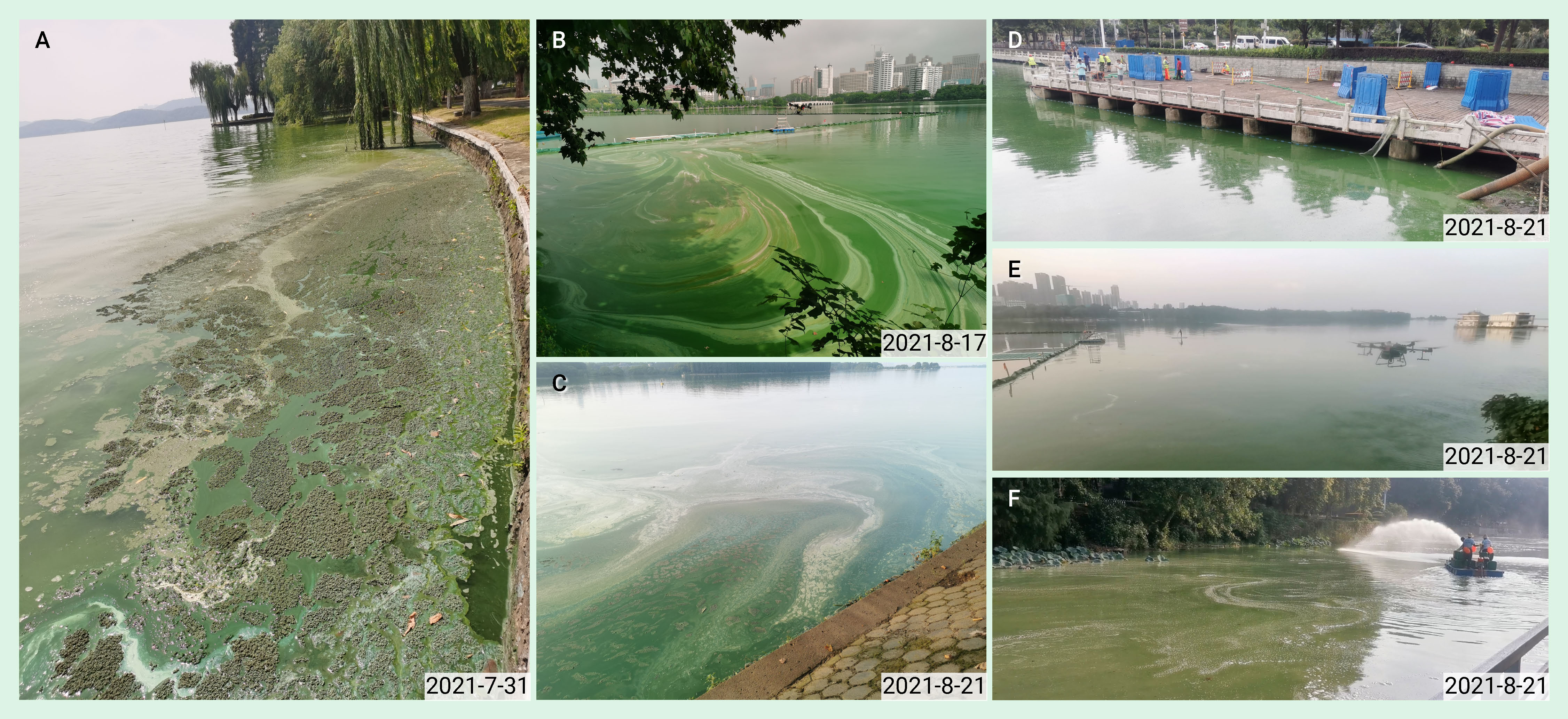
Figure 1.
The outbreak of cyanobacterial blooms and the treatments in the summer of 2021 in Lake Donghu
-
Figure 2.
Seasonal changes of phytoplankton, nutrients and standing stock of silver and bighead carp during 2000 and 2022 in Lake Donghu (mid-lake station), Wuhan, China
-
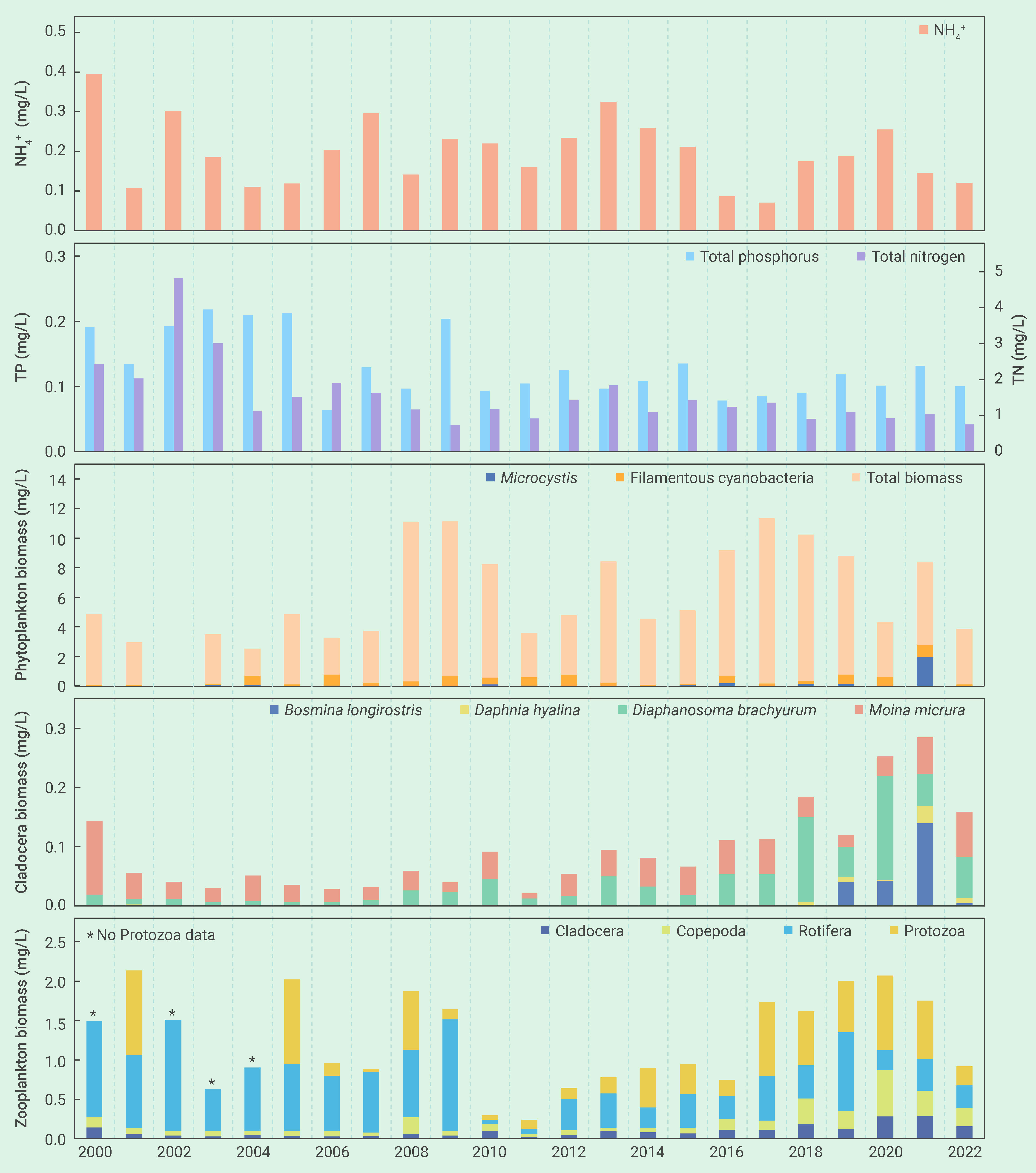
Figure 3.
Changes in the annual means of NH4+, total phosphorus, total nitrogen, and biomass of phytoplankton, Cladocera and zooplankton during 2000 and 2022 in Lake Donghu.
