
Comprehensive profiling of antibiotic resistance genes in diverse environments and novel function discovery
-
GRAPHICAL ABSTRACT

 DownLoad:
Full size image
DownLoad:
Full size image
-
PUBLIC SUMMARY
-
ONN4ARG is an ontology-aware neural network model for antibiotic resistance gene (ARG) prediction.
ONN4ARG detects remotely homologous ARGs and generates a comprehensive set of ARGs with high fidelity.
ONN4ARG enables comprehensive enrichment analysis of ARGs among diverse hosts and environments.
Computational work and wet-lab experimental validation together validated a novel streptomycin ARG.
-
-
ABSTRACT
Antibiotic resistance genes (ARGs) have emerged in pathogens and are arousing worldwide concern, and accurately identifying unknown ARGs is a formidable challenge in studying the generation and spread of antibiotic resistance in diverse environments. Current methods can identify known ARGs but have limited utility for the discovery of novel ARGs, thus rendering the profiling of ARGs incomprehensive. Here, we developed ONN4ARG, an ontology-aware deep learning approach for comprehensive ARG discovery. Systematic evaluation revealed that ONN4ARG outperforms previous methods in terms of efficiency, accuracy, and comprehensiveness. Experiments using 200 million microbial genes collected from 815 metagenomic samples from diverse environments or hosts have resulted in 120,726 candidate ARGs, of which more than 20% are not yet present in public databases. The comprehensive set of ARGs revealed environment-specific and host-specific patterns. The wet-lab functional validation together with structural investigation have validated a novel streptomycin resistance gene from oral microbiome samples, confirming ONN4ARG’s ability to discover novel functions. In summary, ONN4ARG enables comprehensive ARG discovery toward a grand view of ARGs worldwide.-
Keywords:
- antibiotic resistance gene /
- ontology-aware neural network /
- deep learning /
- novel ARG /
- microbiome
-

-
REFERENCES
[1] Zha, Y., Chong, H., Yang, P., et al. (2022). Microbial dark matter: from discovery to applications. Genomics, Proteomics & Bioinformatics 20: 867−881. DOI: 10.1016/j.gpb.2022.02.007. [2] Li, J., Jia, H., Cai, X., et al. (2014). An integrated catalog of reference genes in the human gut microbiome. Nat. Biotechnol. 32: 834−841. DOI: 10.1038/nbt.2942. [3] Brogan, D.M., and Mossialos, E. (2016). A critical analysis of the review on antimicrobial resistance report and the infectious disease financing facility. Global Health 12: 8−8. DOI: 10.1186/s12992-016-0147-y. [4] Goossens, H., Ferech, M., Stichele, R.V., et al. (2005). Outpatient antibiotic use in Europe and association with resistance: A cross-national database study. The Lancet 365: 579−587. DOI: 10.1016/S0140-6736(05)17907-0. [5] Jia, B., Raphenya, A.R., Alcock, B., et al. (2017). CARD 2017: expansion and model-centric curation of the comprehensive antibiotic resistance database. Nucleic Acids Res. 45: D566−D573. DOI: 10.1093/nar/gkw1004. [6] Alcock, B.P., Raphenya, A.R., Lau, T.T.Y., et al. (2019). CARD 2020: Antibiotic resistome surveillance with the comprehensive antibiotic resistance database. Nucleic Acids Res. 48: D517−D525. DOI: 10.1093/nar/gkz935. [7] Böhm, M.-E., Razavi, M., Marathe, N.P., et al. (2020). Discovery of a novel integron-borne aminoglycoside resistance gene present in clinical pathogens by screening environmental bacterial communities. Microbiome 8: 1−11. DOI: 10.1186/s40168-020-00814-z. [8] Bortolaia, V., Kaas, R.S., Ruppe, E., et al. (2020). ResFinder 4.0 for predictions of phenotypes from genotypes. J. Antimicrob. Chemother. 75 : 3491-3500. DOI: 10.1093/jac/dkaa345. [9] Bateman, A., Martin, M.J., O'Donovan, C., et al. (2015). UniProt: A hub for protein information. Nucleic Acids Res 43(D1): D204−D212. DOI: 10.1093/nar/gku989. [10] Rowe, W., Baker, K.S., Verner-Jeffreys, D., et al. (2015). Search engine for antimicrobial resistance: a cloud compatible pipeline and web interface for rapidly detecting antimicrobial resistance genes directly from sequence data. PLoS One 10: e0133492. DOI: 10.1371/journal.pone.0133492. [11] Kleinheinz, K.A., Joensen, K.G., and Larsen, M.V. (2014). Applying the ResFinder and VirulenceFinder web-services for easy identification of acquired antibiotic resistance and E. coli virulence genes in bacteriophage and prophage nucleotide sequences. Bacteriophage 4: e27943. doi:10.4161/bact.27943. [12] Arango-Argoty, G., Garner, E., Pruden, A., et al. (2018). DeepARG: A deep learning approach for predicting antibiotic resistance genes from metagenomic data. Microbiome 6: 23. DOI: 10.1186/s40168-018-0401-z. [13] Davis, J.J., Boisvert, S., Brettin, T., et al. (2016). Antimicrobial resistance prediction in PATRIC and RAST. Sci. Rep. 6: 27930. DOI: 10.1038/srep27930. [14] Lakin, S.M., Kuhnle, A., Alipanahi, B., et al. (2019). Hierarchical Hidden Markov models enable accurate and diverse detection of antimicrobial resistance sequences. Commun. Biol. 2: 294. DOI: 10.1038/s42003-019-0545-9. [15] Doster, E., Lakin, S.M., Dean, C.J., et al. (2020). MEGARes 2.0: A database for classification of antimicrobial drug, biocide and metal resistance determinants in metagenomic sequence data. Nucleic Acids Res. 48 : D561-D569. DOI: 10.1093/nar/gkz1010. [16] Li, Y., Xu, Z., Han, W., et al. (2021). HMD-ARG: hierarchical multi-task deep learning for annotating antibiotic resistance genes. Microbiome 9: 40. DOI: 10.1186/s40168-021-01002-3. [17] Gupta, S.K., Padmanabhan, B.R., Diene, S.M., et al. (2014). ARG-ANNOT, a new bioinformatic tool to discover antibiotic resistance genes in bacterial genomes. Antimicrob. Agents Chemother. 58: 212−220. DOI: 10.1128/AAC.01310-13. [18] Feldgarden, M., Brover, V., Haft, D.H., et al. (2019). Validating the AMRFinder tool and resistance gene database by using antimicrobial resistance genotype-phenotype correlations in a collection of isolates. Antimicrob. Agents Chemother. 63: e00483−00419. DOI: 10.1128/AAC.00483-19. [19] Inouye, M., Dashnow, H., Raven, L.A., et al. (2014). SRST2: Rapid genomic surveillance for public health and hospital microbiology labs. Genome. Med. 6: 90. DOI: 10.1186/s13073-014-0090-6. [20] Rowe, W.P.M. and Winn, M.D. (2018). Indexed variation graphs for efficient and accurate resistome profiling. Bioinformatics 34: 3601−3608. DOI: 10.1093/bioinformatics/bty387. [21] Altschul, S.F., Gish, W., Miller, W.C., et al. (1990). Basic local alignment search tool. J. Mol. Biol. 215: 403−410. DOI: 10.1016/S0022-2836(05)80360-2. [22] Edgar, R.C. (2010). Search and clustering orders of magnitude faster than BLAST. Bioinformatics 26: 2460−2461. DOI: 10.1093/bioinformatics/btq461. [23] Buchfink, B., Xie, C., and Huson, D.H. (2015). Fast and sensitive protein alignment using DIAMOND. Nat. Methods 12: 59−60. DOI: 10.1038/nmeth.3176. [24] Lakin, S.M., Dean, C., Noyes, N.R., et al. (2017). MEGARes: an antimicrobial resistance database for high throughput sequencing. Nucleic Acids Res. 45: D574−D580. DOI: 10.1093/nar/gkw1009. [25] Steinegger, M., Meier, M., Mirdita, M., et al. (2019). HH-suite3 for fast remote homology detection and deep protein annotation. BMC Bioinformatics 20: 1−15. DOI: 10.1186/s12859-019-3019-7. [26] Wang, X.-R., Lian, X.-L., Su, T.-T., et al. (2021). Duck wastes as a potential reservoir of novel antibiotic resistance genes. Sci. Total Environ. 771: 144828. DOI: 10.1016/j.scitotenv.2020.144828. [27] Wang, S., Wei, L., Gao, Y., et al. (2022). Novel amikacin resistance genes identified from human gut microbiota by functional metagenomics. J. Appl. Microbiol. 133: 898−907. DOI: 10.1111/jam.15615. [28] Sunagawa, S., Coelho, L.P., Chaffron, S., et al. (2015). Structure and function of the global ocean microbiome. Science 348: 1261359. DOI: 10.1126/science.1261359. [29] Mitchell, A.L., Scheremetjew, M., Denise, H., et al. (2018). EBI metagenomics in 2017: Enriching the analysis of microbial communities, from sequence reads to assemblies. Nucleic Acids Res. 46: D726−D735. DOI: 10.1093/nar/gkx967. [30] Hyatt, D., Chen, G.L., LoCascio, P.F., et al. (2010). Prodigal: Prokaryotic gene recognition and translation initiation site identification. BMC Bioinform. 11: 119. DOI: 10.1186/1471-2105-11-119. [31] Qian, X., Gunturu, S., Guo, J., et al. (2021). Metagenomic analysis reveals the shared and distinct features of the soil resistome across tundra, temperate prairie, and tropical ecosystems. Microbiome 9: 108. DOI: 10.1186/s40168-021-01047-4. [32] Ning, K., Ji, L., Zhang, L., et al. (2022). Is rice-crayfish co-culture a better aquaculture model: from the perspective of antibiotic resistome profiles. Environ. Pollut. 292: 118450. DOI: 10.1016/j.envpol.2021.118450. [33] Li, B., Yang, Y., Ma, L., et al. (2015). Metagenomic and network analysis reveal wide distribution and co-occurrence of environmental antibiotic resistance genes. ISME J. 9: 2490−2502. DOI: 10.1038/ismej.2015.59. [34] Plata, G., Baxter, N.T., Susanti, D., et al. (2022). Growth promotion and antibiotic induced metabolic shifts in the chicken gut microbiome. Commun. Biol. 5: 293. DOI: 10.1038/s42003-022-03239-6. [35] Wang, L., Zhang, Y., Xu, J., et al. (2023). Listening to enteric bacteria from the perspective of antibiotic alternatives in animal husbandry. The Innovation Life 1: 100022. DOI: 10.59717/j.xinn-life.2023.100022. [36] Qi, F., Lei, C., Li, F., et al. (2018). Deciphering the late steps of rifamycin biosynthesis. Nat. Commun. 9: 2342. DOI: 10.1038/s41467-018-04772-x. [37] Floss, H.G., and Yu, T.-W. (2005). Rifamycin-mode of action, resistance, and biosynthesis. Chem. Rev. 105: 621−632. DOI: 10.1021/cr030112j. [38] Yao, Y., Zhang, W., Jiao, R., et al. (2002). Efficient isolation of total RNA from antibiotic-producing bacterium Amycolatopsis mediterranei. J. Microbiol. Methods 51: 191−195. DOI: 10.1016/s0167-7012(02)00078-7. [39] Wilson, M.C., Gulder, T.A.M., Mahmud, T., et al. (2010). Shared biosynthesis of the saliniketals and rifamycins in Salinispora arenicola is controlled by the sare1259-encoded cytochrome P450. J. Am. Chem. Soc. 132: 12757−12765. DOI: 10.1021/ja105891a. [40] Saxena, A., Kumari, R., Mukherjee, U., et al. (2014). Draft genome sequence of the rifamycin producer Amycolatopsis rifamycinica DSM 46095. Genome Announc. 2: e00662−00614. DOI: 10.1128/genomea.00662-14. [41] Huang, H., Lv, J., Hu, Y., et al. (2008). Micromonospora rifamycinica sp.nov., a novel actinomycete from mangrove sediment. Int. J. Syst. Evol. Microbiol. 58: 17−20. DOI: 10.1099/ijs.0.64484-0. [42] Pinto-Alphandary, H., Mabilat, C., and Courvalin, P. (1990). Emergence of aminoglycoside resistance genes aadA and aadE in the genus Campylobacter. Antimicrob. Agents Chemother. 34: 1294−1296. DOI: 10.1128/AAC.34.6.1294. [43] Holden, M.T.G., Hauser, H., Sanders, M., et al. (2009). Rapid evolution of virulence and drug resistance in the emerging zoonotic pathogen Streptococcus suis. PloS One 4: e6072. DOI: 10.1371/journal.pone.0006072. [44] Leplae, R., Hebrant, A., Wodak, S.J., et al. (2004). ACLAME: A classification of mobile genetic elements. Nucleic Acids Res. 32: D45−D49. DOI: 10.1093/nar/gkh084. [45] Ramirez, M.S., Nikolaidis, N., and Tolmasky, M. (2013). Rise and dissemination of aminoglycoside resistance: the aac(6′)-Ib paradigm. Front. Microbiol. 4: 121. DOI: 10.3389/fmicb.2013.00121. [46] Gligorijević, V., Renfrew, P.D., Kosciolek, T., et al. (2021). Structure-based protein function prediction using graph convolutional networks. Nat. Commun. 12: 3168. DOI: 10.1038/s41467-021-23303-9. [47] Jumper, J., Evans, R., Pritzel, A., et al. (2021). Highly accurate protein structure prediction with AlphaFold. Nature 596: 583−589. DOI: 10.1038/s41586-021-03819-2. [48] Liu, Y., Chen, Y., and Han, L. (2023). Bioinformatics: Advancing biomedical discovery and innovation in the era of big data and artificial intelligence. The Innovation Medicine 1: 100012. DOI: 10.59717/j.xinn-med.2023.100012. [49] Yang, P. and Ning, K. (2022). How much metagenome data is needed for protein structure prediction: The advantages of targeted approach from the ecological and evolutionary perspectives. iMeta 1: e9. DOI: 10.1002/imt2.9. [50] Wu, Y. and He, K. (2020). Group Normalization. Int. J. Comput. Vis. 128: 742−755. DOI: 10.1007/s11263-019-01198-w. [51] Hendrycks, D., and Gimpel, K. (2016). Gaussian error linear units (gelus). arXiv. DOI: 10.48550/arXiv.1606.08415. [52] He, K., Zhang, X., Ren, S., et al. (2016). Deep residual learning for image recognition. 2016 IEEE Conference on Computer Vision and Pattern Recognition (CVPR). [53] Wood, D.E., Lu, J., and Langmead, B. (2019). Improved metagenomic analysis with Kraken 2. Genome Biol. 20: 1−13. DOI: 10.1186/s13059-019-1891-0. [54] Kumar, S., Stecher, G., Li, M., et al. (2018). MEGA X: Molecular evolutionary genetics analysis across computing platforms. Mol. Biol. Evol. 35: 1547−1549. DOI: 10.1093/molbev/msy096. [55] Letunic, I. and Bork, P. (2019). Interactive tree of life (iTOL) v4: Recent updates and new developments. Nucleic Acids Res. 47: W256−W259. DOI: 10.1093/nar/gkz239. [56] Rohl, C.A., Strauss, C.E.M., Misura, K.M.S., et al. (2004). Protein structure prediction using Rosetta. Methods Enzymol 383: 66−93. DOI: 10.1016/S0076-6879(04)83004-0. [57] Tian, W., Chen, C., Lei, X., et al. (2018). CASTp 3.0: computed atlas of surface topography of proteins. Nucleic Acids Res. 46 : W363-W367. DOI: 10.1093/nar/gky473. [58] Cole, J.C., Korb, O., McCabe, P., et al. (2018). Knowledge-based conformer generation using the cambridge structural database. J. Chem. Inf. Model. 58: 615−629. DOI: 10.1021/acs.jcim.7b00697. [59] Trott, O. and Olson, A.J. (2010). AutoDock Vina: Improving the speed and accuracy of docking with a new scoring function, efficient optimization, and multithreading. J. Comput. Chem. 31: 455−461. DOI: 10.1002/jcc.21334. [60] Benjamin, D.J., Berger, J.O., Johannesson, M., et al. (2018). Redefine statistical significance. Nat. Hum. Behav. 2: 6−10. DOI: 10.1038/s41562-017-0189-z. -
ABOUT THIS ARTICLE
Cite this article:
Zha Y., Chen C., Jiao Q., et al., (2024). Comprehensive profiling of antibiotic resistance genes in diverse environments and novel function discovery. The Innovation Life 2(1): 100054. https://doi.org/10.59717/j.xinn-life.2024.100054
Welcome!
To request copyright permission to republish or share portions of our works, please visit Copyright Clearance Center's (CCC) Marketplace website at marketplace.copyright.com.

Supplementary Information
-
download_supplementary
Supplementary Table (S5 S8 S9 S10 S12)
Article Metrics
Relative Articles
Cited by
Export File
Citation
Zha Y., Chen C., Jiao Q., et al., (2024). Comprehensive profiling of antibiotic resistance genes in diverse environments and novel function discovery. The Innovation Life 2(1): 100054. https://doi.org/10.59717/j.xinn-life.2024.100054

Format
Content


-
Figure 1.
The ONN4ARG model employs an ontology-aware neural network and shows potential for novel ARG discovery in metagenomic data
-
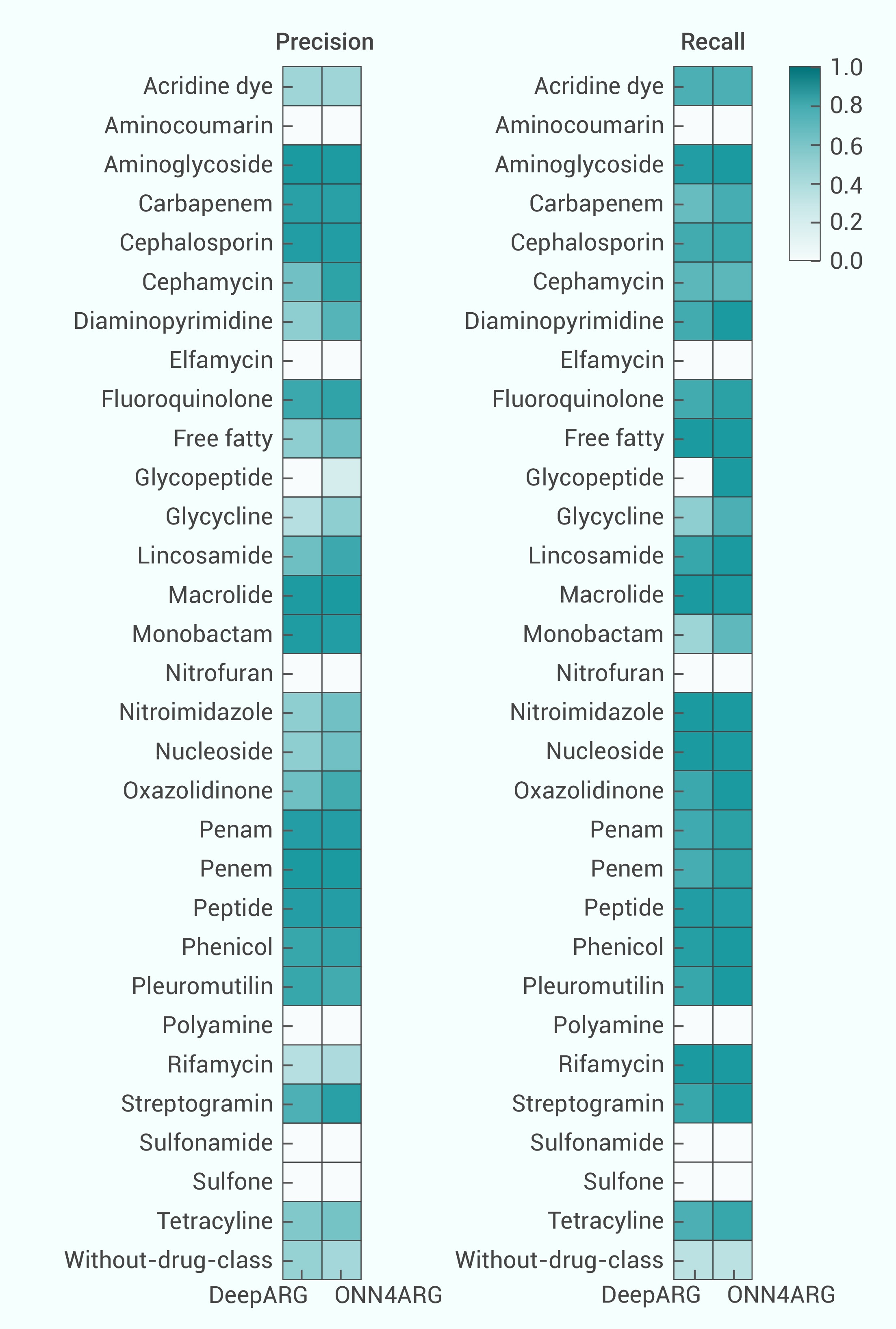
Figure 2.
ONN4ARG outperformed DeepARG in terms of precision and recall
-
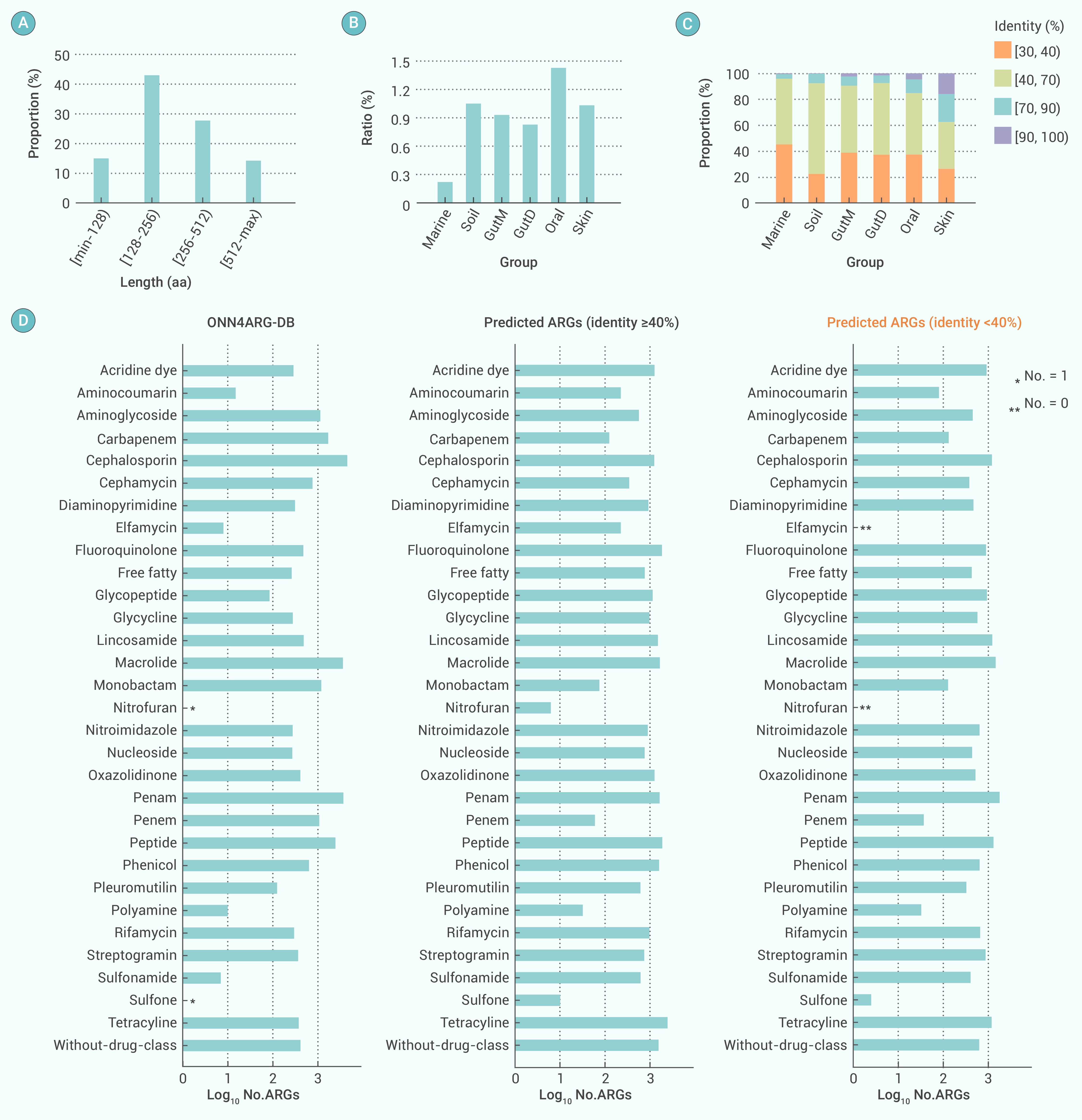
Figure 3.
The length, abundance and novelty of the predicted ARGs varied among the diverse environments
-
Figure 4.
The predicted ARGs exhibited environment-specific and host-specific enrichment patterns
-
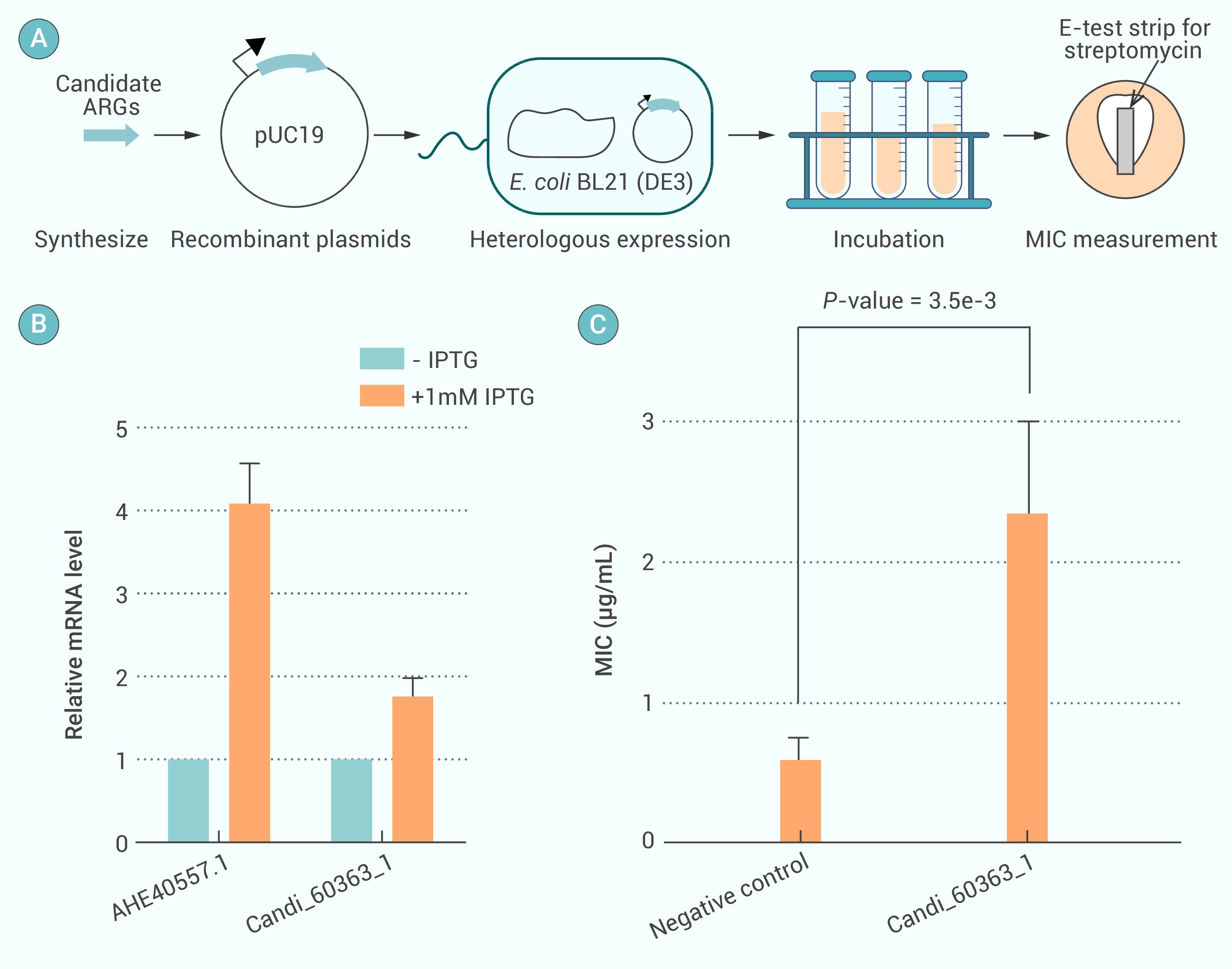
Figure 5.
Functional validation of a candidate novel ARG (Candi_
60363 _1) revealed an increased minimal inhibitory concentration (MIC) of streptomycin -
Figure 6.
Phylogenetic analysis and structural investigation of Candi_
60363 _1 confirmed its close evolutionary relationship with known aminoglycoside adenylyltransferases and showed great antibiotic resistance potential
