
Hormonal control of fruitless expression and male sexual orientation in Drosophila
-
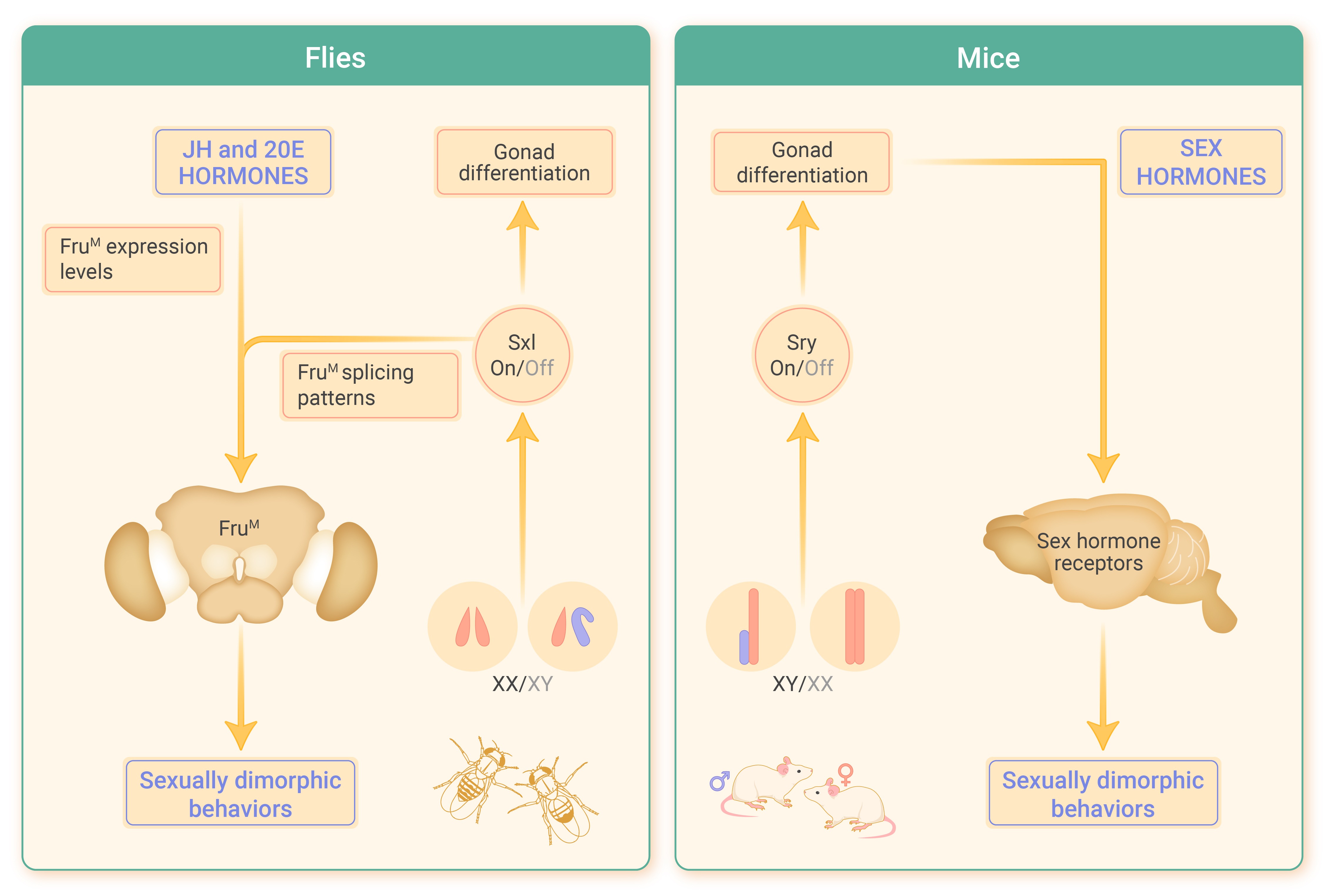
GRAPHICAL ABSTRACT
 DownLoad:
Full size image
DownLoad:
Full size image
-
PUBLIC SUMMARY
-
Ecdysone promotes larval and pupal expression of fruitless (fru), a master gene for male courtship in flies.
Juvenile hormone suppresses larval fru expression by inhibiting ecdysone signaling.
Ecdysone regulates the morphology and activity of courtship command-like neurons to alter male sexual orientation.
Fly hormones and vertebrate sex hormones play conserved and diversified roles in sexual development and behaviors.
-
-
ABSTRACT
Sex determination genes control the differentiation of gonads that synthesize and secret sex hormones to remotely control sexual development and behaviors in mammals. In contrast, sex determination genes in insects directly control sexual development and behaviors in a cell-autonomous way, which is largely independent of hormones. In this study, we find that two important hormones, juvenile hormone (JH) and 20-hydroxyecdysone (20E), oppositely regulate the dynamic expression of FruM, the male-specific product of the sex determination gene fruitless in Drosophila. 20E signaling is essential to the high-level expression of FruM proteins in the pupal stage, while JH suppresses larval FruM expression through inhibiting 20E signaling. We further show that 20E signaling regulates both the development and physiological function of the male-specific P1 neurons to mediate sexual orientation in male flies. Our results demonstrate both conserved and diversified functions of hormones in sexual development and behaviors in flies and mice. -

-
REFERENCES
[1] Gubbay, J., Collignon, J., Koopman, P., et al. (1990). A gene mapping to the sex-determining region of the mouse Y chromosome is a member of a novel family of embryonically expressed genes. Nature 346: 245−250. DOI: 10.1038/346245a0. [2] Christiansen, A.E., Keisman, E.L., Ahmad, S.M., et al. (2002). Sex comes in from the cold: the integration of sex and pattern. Trends. Genet. 18: 510−516. DOI: 10.1016/s0168-9525(02)02769-5. [3] Yamamoto, D. and Koganezawa, M. (2013). Genes and circuits of courtship behaviour in Drosophila males. Nat. Rev. Neurosci. 14: 681−692. DOI: 10.1038/nrn3567. [4] Chen, J., Jin, S., Chen, D., et al. (2021). Fruitless tunes functional flexibility of courtship circuitry during development. Elife 10: e59224. DOI: 10.7554/eLife.59224. [5] Peng, Q., Chen, J., and Pan, Y. (2021). From fruitless to sex: On the generation and diversification of an innate behavior. Genes Brain Behav. 20: e12772. DOI: 10.1111/gbb.12772. [6] Shukla, J.N. and Nagaraju, J. (2010). Doublesex: a conserved downstream gene controlled by diverse upstream regulators. J. Genet. 89: 341−356. DOI: 10.1007/s12041-010-0046-6. [7] Salvemini, M., Polito, C., and Saccone, G. (2010). Fruitless alternative splicing and sex behaviour in insects: An ancient and unforgettable love story. J. Genet. 89(3): 287−299. DOI: 10.1007/s12041-010-0040-z. [8] Han, C., Peng, Q., Su, X., et al. (2022). A male-specific doublesex isoform reveals an evolutionary pathway of sexual development via distinct alternative splicing mechanisms. Commun. Biol. 5: 728. DOI: 10.1038/s42003-022-03664-7. [9] Lin, H.H., Cao, D.S., Sethi, S., et al. (2016). Hormonal modulation of pheromone detection enhances male courtship success. Neuron 90: 1272−1285. DOI: 10.1016/j.neuron.2016.05.004. [10] Zhao, S., Deanhardt, B., Barlow, G.T., et al. (2020). Chromatin-based reprogramming of a courtship regulator by concurrent pheromone perception and hormone signaling. Sci. Adv. 6: eaba6913. DOI: 10.1126/sciadv.aba6913. [11] Zhang, B., Sato, K., and Yamamoto, D. (2018). Ecdysone signaling regulates specification of neurons with a male-specific neurite in Drosophila. Biol. Open 7: bio029744. DOI: 10.1242/bio.029744. [12] Bilen, J., Atallah, J., Azanchi, R., et al. (2013). Regulation of onset of female mating and sex pheromone production by juvenile hormone in Drosophila melanogaster. Proc. Natl. Acad. Sci. USA 110: 18321−18326. DOI: 10.1073/pnas.1318119110. [13] Chen, N., Liu, Y.J., Fan, Y.L., et al. (2022). A single gene integrates sex and hormone regulators into sexual attractiveness. Nat. Ecol. Evol. 6: 1180−1190. DOI: 10.1038/s41559-022-01808-w. [14] Dalton, J.E., Lebo, M.S., Sanders, L.E., et al. (2009). Ecdysone receptor acts in fruitless- expressing neurons to mediate Drosophila courtship behaviors. Curr. Biol. 19: 1447−1452. DOI: 10.1016/j.cub.2009.06.063. [15] Ganter, G.K., Walton, K.L., Merriman, J.O., et al. (2007). Increased male-male courtship in ecdysone receptor deficient adult flies. Behav. Genet. 37: 507−512. DOI: 10.1007/s10519-006-9140-1. [16] Gotoh, H., Miyakawa, H., Ishikawa, A., et al. (2014). Developmental link between sex and nutrition; doublesex regulates sex-specific mandible growth via juvenile hormone signaling in stag beetles. PLoS Genet. 10: e1004098. DOI: 10.1371/journal.pgen.1004098. [17] Li, J., Ning, C., Liu, Y., et al. (2023). Prothoracicotropic hormone controls female sexual receptivity through the function of ecdysone in pC1 neurons of Drosophila. eLife 12: RP92545. DOI: 10.7554/elife.92545.1. [18] Sethi, S., Lin, H.H., Shepherd, A.K., et al. (2019). Social context enhances hormonal modulation of pheromone detection in Drosophila. Curr. Biol. 29: 3887−3898.e3884. DOI: 10.1016/j.cub.2019.09.045. [19] Dubrovsky, E.B. (2005). Hormonal cross talk in insect development. Trends Endocrinol. Metab. 16: 6−11. DOI: 10.1016/j.tem.2004.11.003. [20] Zhang, X., Li, S., and Liu, S. (2021). Juvenile hormone studies in Drosophila melanogaster. Front. Physiol. 12: 785320. DOI: 10.3389/fphys.2021.785320. [21] Jin, M., North, H.L., Peng, Y., et al. (2023). Adaptive evolution to the natural and anthropogenic environment in a global invasive crop pest, the cotton bollworm. The Innovation 4 : 100454. DOI: https://doi.org/10.1016/j.xinn.2023.100454. [22] Ren, C., Chen, N., and Li, S. (2023). Harnessing “little mighty” cockroaches: Pest management and beneficial utilization. The Innovation 4 : 100531. DOI: https://doi.org/10.1016/j.xinn.2023.100531. [23] Niwa, Y.S. and Niwa, R. (2014). Neural control of steroid hormone biosynthesis during development in the fruit fly Drosophila melanogaster. Genes Genet. Syst. 89: 27−34. DOI: 10.1266/ggs.89.27. [24] Riddiford, L.M., Cherbas, P., and Truman, J.W. (2000). Ecdysone receptors and their biological actions. Vitam. Horm. 60: 1−73. DOI: 10.1016/s0083-6729(00)60016-x. [25] Li, K., Jia, Q.Q., and Li, S. (2019). Juvenile hormone signaling - a mini review. Insect. Sci. 26: 600−606. DOI: 10.1111/1744-7917.12614. [26] Godlewski, J., Wang, S., and Wilson, T.G. (2006). Interaction of bHLH-PAS proteins involved in juvenile hormone reception in Drosophila. Biochem. Biophys. Res. Commun. 342: 1305−1311. DOI: 10.1016/j.bbrc.2006.02.097. [27] Ashok, M., Turner, C., and Wilson, T.G. (1998). Insect juvenile hormone resistance gene homology with the bHLH-PAS family of transcriptional regulators. Proc. Natl. Acad. Sci. USA 95: 2761−2766. DOI: 10.1073/pnas.95.6.2761. [28] Wilson, T.G., and Fabian, J. (1986). A Drosophila melanogaster mutant resistant to a chemical analog of juvenile hormone. Dev. Biol. 118: 190−201. DOI: 10.1016/0012-1606(86)90087-4. [29] He, Q., Wen, D., Jia, Q., et al. (2014). Heat shock protein 83 (Hsp83) facilitates methoprene-tolerant (Met) nuclear import to modulate juvenile hormone signaling. J. Biol. Chem. 289: 27874−27885. DOI: 10.1074/jbc.M114.582825. [30] Minakuchi, C., Zhou, X., and Riddiford, L.M. (2008). Krüppel homolog 1 (Kr-h1) mediates juvenile hormone action during metamorphosis of Drosophila melanogaster. Mech. Dev. 125: 91−105. DOI: 10.1016/j.mod.2007.10.002. [31] Riddiford, L.M., Truman, J.W., Mirth, C.K., et al. (2010). A role for juvenile hormone in the prepupal development of Drosophila melanogaster. Development 137: 1117−1126. DOI: 10.1242/dev.037218. [32] Liu, Y., Sheng, Z., Liu, H., et al. (2009). Juvenile hormone counteracts the bHLH-PAS transcription factors MET and GCE to prevent caspase-dependent programmed cell death in Drosophila. Development 136: 2015−2025. DOI: 10.1242/dev.033712. [33] Stockinger, P., Kvitsiani, D., Rotkopf, S., et al. (2005). Neural circuitry that governs Drosophila male courtship behavior. Cell 121: 795−807. DOI: 10.1016/j.cell.2005.04.026. [34] Zhang, W., Guo, C., Chen, D., et al. (2018). Hierarchical control of Drosophila sleep, courtship, and feeding behaviors by male-specific P1 neurons. Neurosci. Bull. 34: 1105−1110. DOI: 10.1007/s12264-018-0281-z. [35] Cao, J., Li, Y., Xia, W., et al. (2011). A Drosophila metallophosphoesterase mediates deglycosylation of rhodopsin. EMBO J. 30: 3701−3713. DOI: 10.1038/emboj.2011.254. [36] Wen, D., Rivera-Perez, C., Abdou, M., et al. (2015). Methyl farnesoate plays a dual role in regulating Drosophila metamorphosis. PLoS Genet. 11: e1005038. DOI: 10.1371/journal.pgen.1005038. [37] Talbot, W.S., Swyryd, E.A., and Hogness, D.S. (1993). Drosophila tissues with different metamorphic responses to ecdysone express different ecdysone receptor isoforms. Cell 73: 1323−1337. DOI: 10.1016/0092-8674(93)90359-x. [38] Truman, J.W., Talbot, W.S., Fahrbach, S.E., et al. (1994). Ecdysone receptor expression in the CNS correlates with stage-specific responses to ecdysteroids during Drosophila and Manduca development. Development 120: 219−234. DOI: 10.1242/dev.120.1.219. [39] Bender, M., Imam, F.B., Talbot, W.S., et al. (1997). Drosophila ecdysone receptor mutations reveal functional differences among receptor isoforms. Cell 91: 777−788. DOI: 10.1016/s0092-8674(00)80466-3. [40] Schubiger, M., Wade, A.A., Carney, G.E., et al. (1998). Drosophila EcR-B ecdysone receptor isoforms are required for larval molting and for neuron remodeling during metamorphosis. Development 125: 2053−2062. DOI: 10.1242/dev.125.11.2053. [41] Liu, S., Li, K., Gao, Y., et al. (2018). Antagonistic actions of juvenile hormone and 20-hydroxyecdysone within the ring gland determine developmental transitions in Drosophila. Proc. Natl. Acad. Sci. USA 115: 139−144. DOI: 10.1073/pnas.1716897115. [42] Kimura, K., Hachiya, T., Koganezawa, M., et al. (2008). Fruitless and doublesex coordinate to generate male-specific neurons that can initiate courtship. Neuron 59: 759−769. DOI: 10.1016/j.neuron.2008.06.007. [43] Jiang, X., and Pan, Y. (2022). Neural control of action selection among innate behaviors. Neurosci. Bull. 38: 1541−1558. DOI: 10.1007/s12264-022-00886-x. [44] Pan, Y., Meissner, G.W., and Baker, B.S. (2012). Joint control of Drosophila male courtship behavior by motion cues and activation of male-specific P1 neurons. Proc. Natl. Acad. Sci. USA. 109: 10065−10070. DOI: 10.1073/pnas.1207107109. [45] Lee, T., Marticke, S., Sung, C., et al. (2000). Cell-autonomous requirement of the USP/EcR-B ecdysone receptor for mushroom body neuronal remodeling in Drosophila. Neuron 28: 807−818. DOI: 10.1016/s0896-6273(00)00155-0. [46] Brown, H.L., Cherbas, L., Cherbas, P., et al. (2006). Use of time-lapse imaging and dominant negative receptors to dissect the steroid receptor control of neuronal remodeling in Drosophila. Development 133: 275−285. DOI: 10.1242/dev.02191. [47] Cherbas, L., Hu, X., Zhimulev, I., et al. (2003). EcR isoforms in Drosophila: testing tissue-specific requirements by targeted blockade and rescue. Development 130: 271−284. DOI: 10.1242/dev.00205. [48] Mouillet, J.F., Henrich, V.C., Lezzi, M., et al. (2001). Differential control of gene activity by isoforms A, B1 and B2 of the Drosophila ecdysone receptor. Eur. J. Biochem. 268: 1811−1819. DOI: 10.1046/j.1432-1327.2001.02051.x. [49] Hu, X., Cherbas, L., and Cherbas, P. (2003). Transcription activation by the ecdysone receptor (EcR/USP): Identification of activation functions. Mol. Endocrinol. 17: 716−731. DOI: 10.1210/me.2002-0287. [50] Handler, A.M. (1982). Ecdysteroid titers during pupal and adult development in Drosophila melanogaster. Dev. Biol. 93: 73−82. DOI: 10.1016/0012-1606(82)90240-8. [51] Yang, C.F. and Shah, N.M. (2014). Representing sex in the brain, one module at a time. Neuron 82: 261−278. DOI: 10.1016/j.neuron.2014.03.029. [52] Schwedes, C., Tulsiani, S., and Carney, G.E. (2011). Ecdysone receptor expression and activity in adult Drosophila melanogaster. J. Insect Physiol. 57 : 899-907. DOI: 10.1016/j.jinsphys.2011.03.027. -
ABOUT THIS ARTICLE
Cite this article:
Ji X., Wang L., Li X., et al., (2024). Hormonal control of fruitless expression and male sexual orientation in Drosophila. The Innovation Life 2(1): 100060. https://doi.org/10.59717/j.xinn-life.2024.100060
Welcome!
To request copyright permission to republish or share portions of our works, please visit Copyright Clearance Center's (CCC) Marketplace website at marketplace.copyright.com.
Article Metrics
Relative Articles
Cited by
Export File
Citation
Ji X., Wang L., Li X., et al., (2024). Hormonal control of fruitless expression and male sexual orientation in Drosophila. The Innovation Life 2(1): 100060. https://doi.org/10.59717/j.xinn-life.2024.100060

Format
Content
-
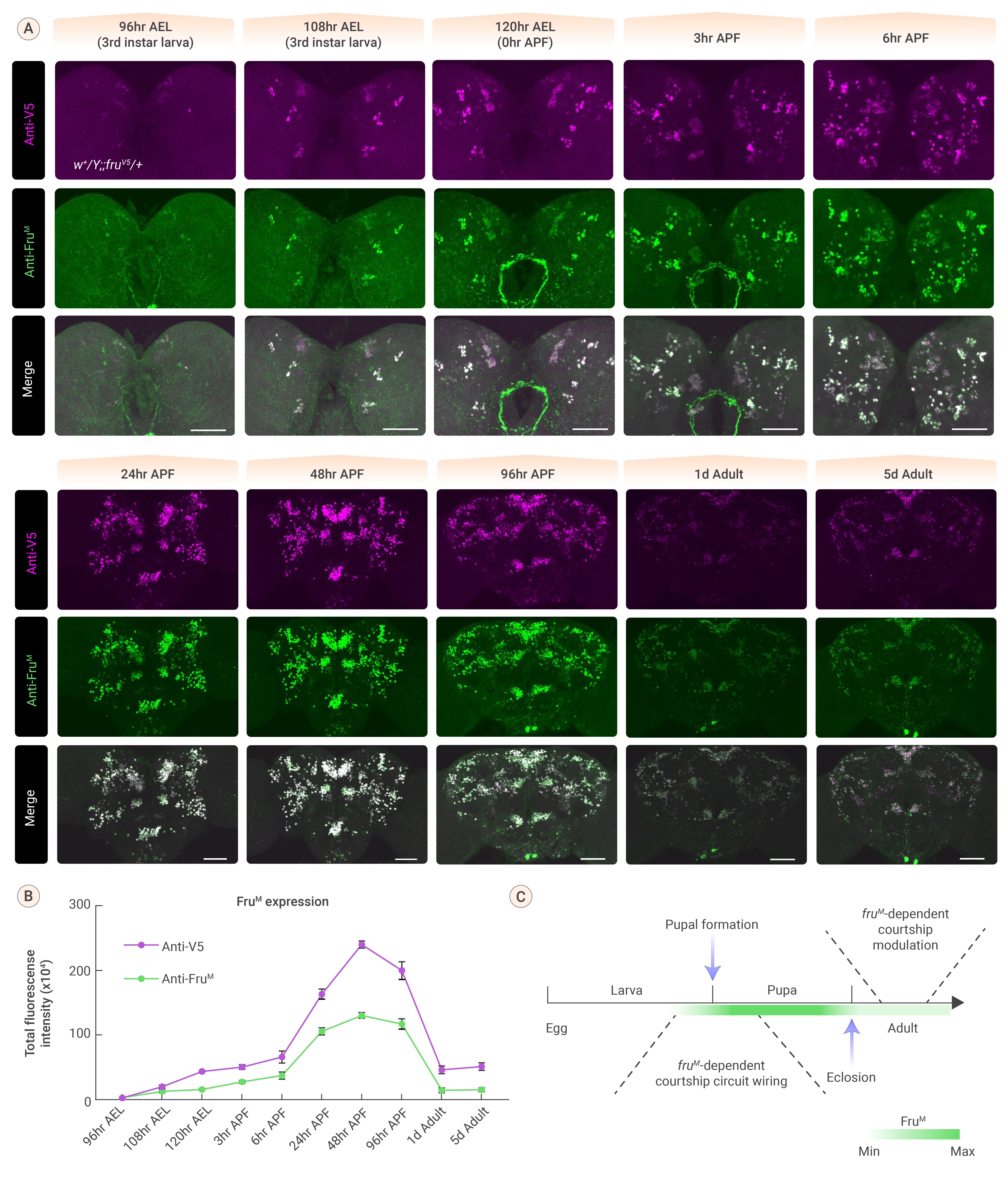
Figure 1.
Dynamic expression of FruM during development
-
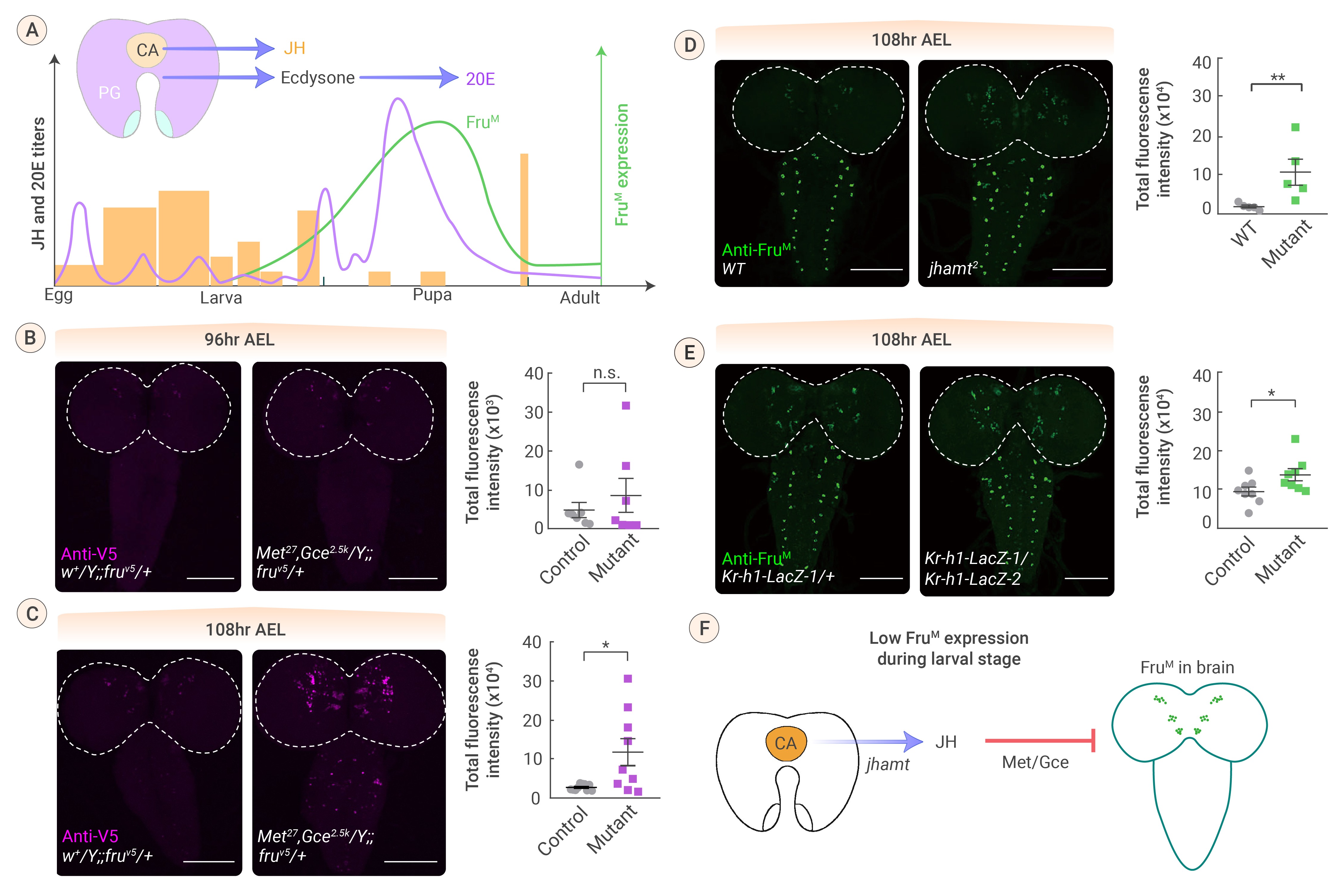
Figure 2.
JH signaling inhibits larval FruM expression through Met/Gce
-
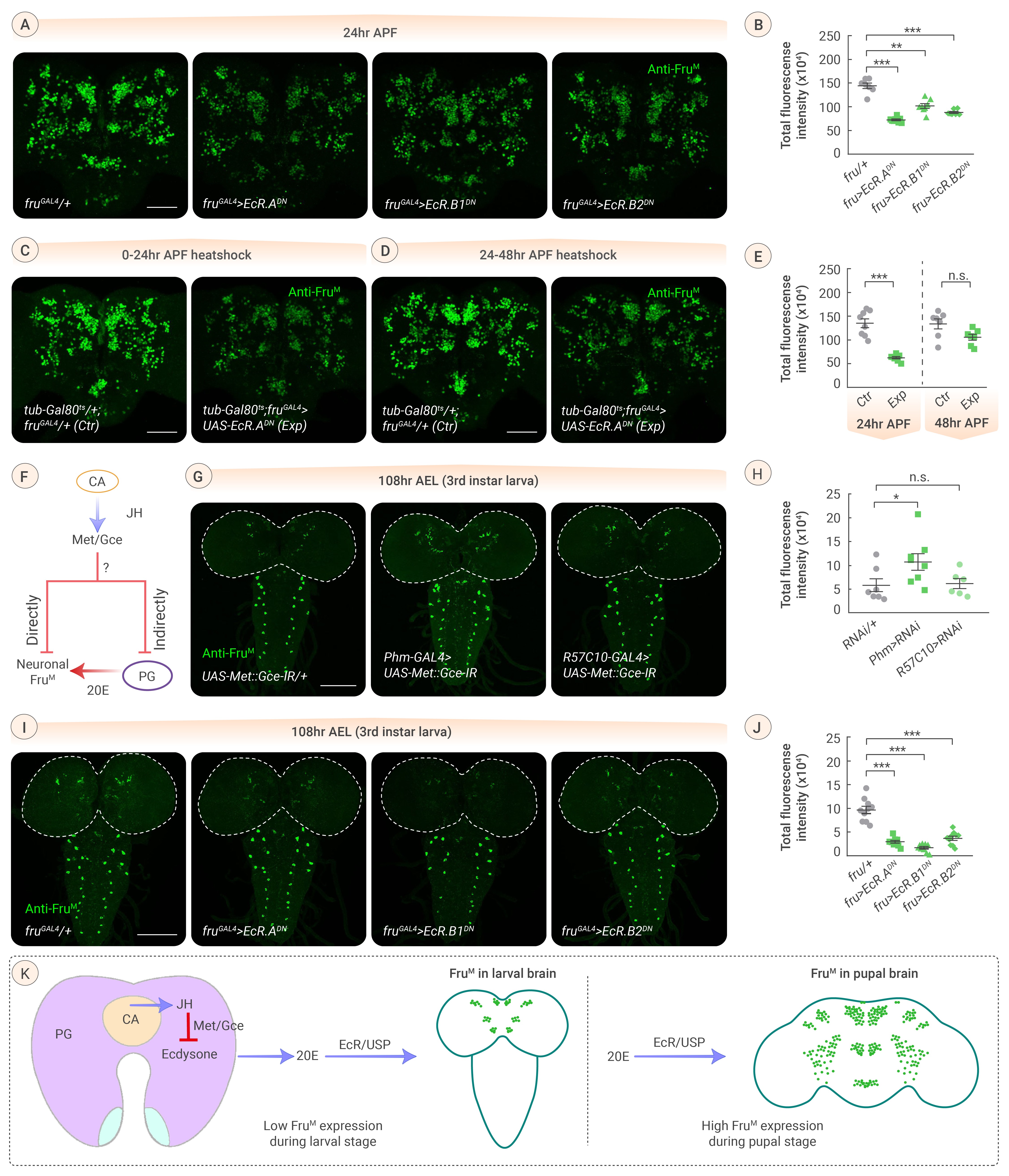
Figure 3.
20E signaling promotes larval and pupal FruM expression
-
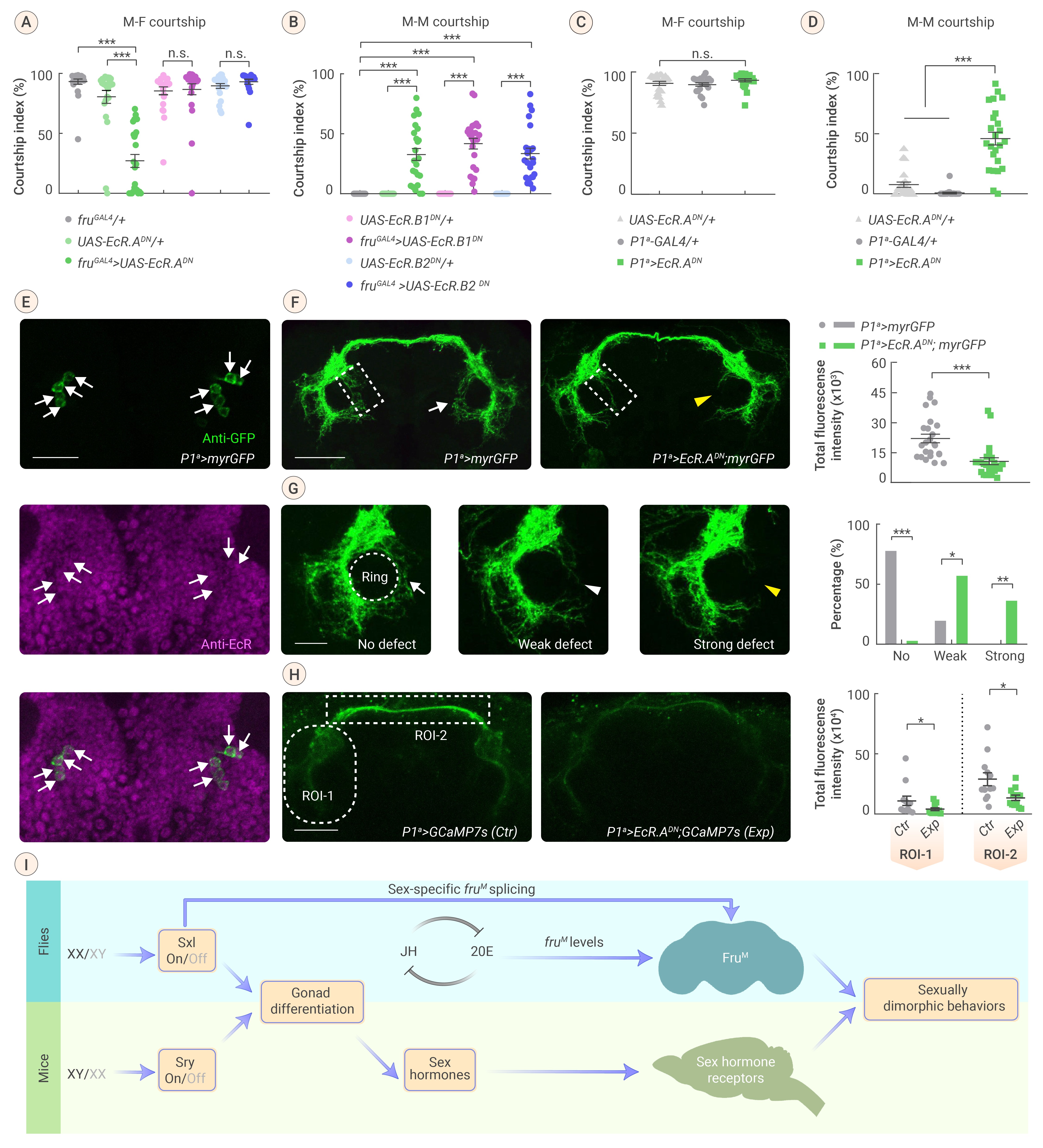
Figure 4.
20E signaling regulates the morphology and activity of P1a neurons to alter male sexual orientation
