
-
GRAPHICAL ABSTRACT
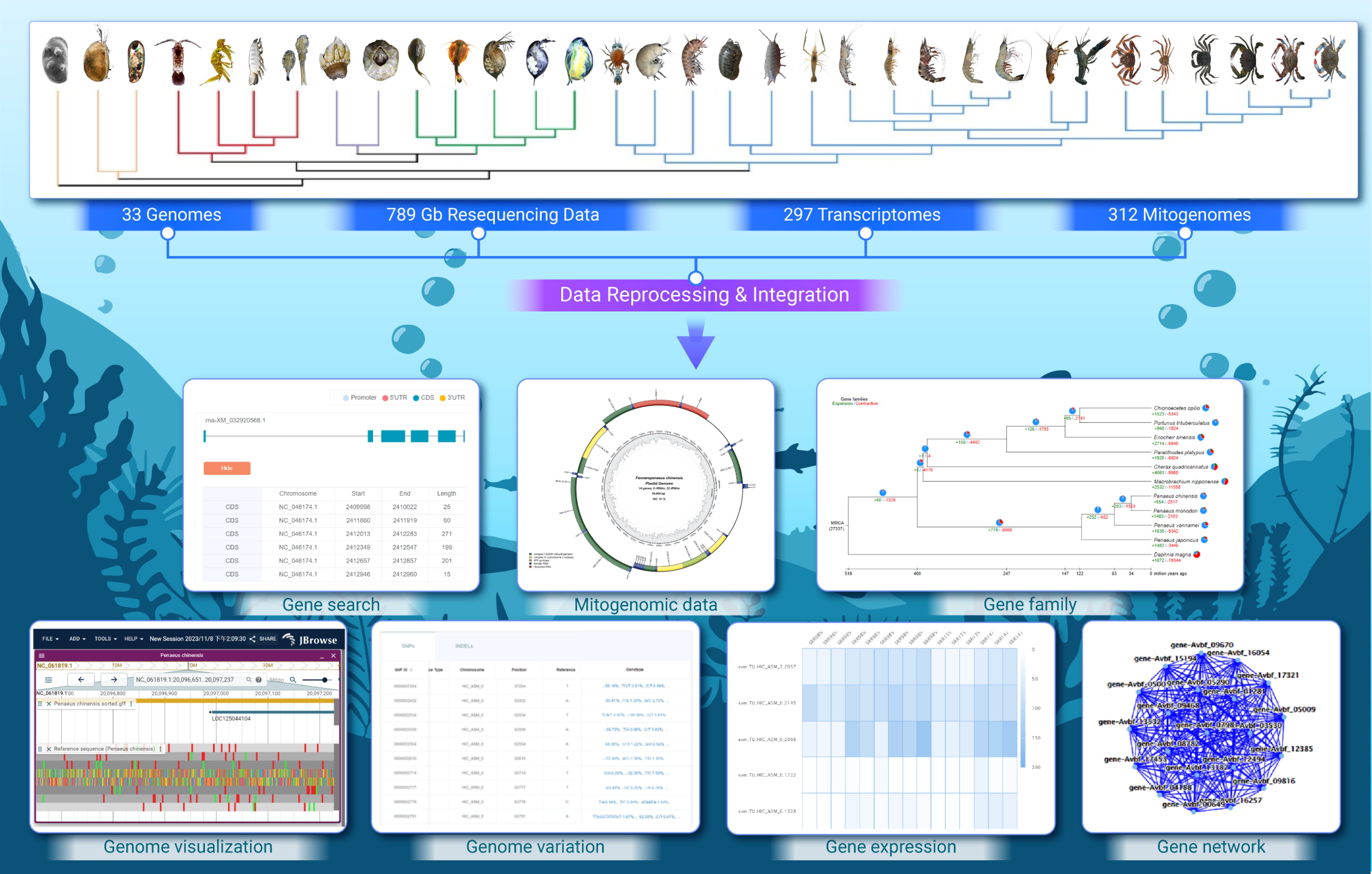
 DownLoad:
Full size image
DownLoad:
Full size image
-
PUBLIC SUMMARY
-
CRUSTADB is an open-access comprehensive genomic database specifically for crustaceans.
CRUSTADB provides foundational resources for variant detection and gene expression evaluation within genomes.
CRUSTADB offers a suite of user-friendly tools designed for multifaceted integrative and comparative analyses.
-
-
ABSTRACT
Crustacea is a species-rich subphylum of Arthropoda that contains mostly aquatic species. Here, we established a comprehensive genomic database dedicated to the Crustacea. CRUSTADB represents a significant advancement in crustacean genomics, integrating an extensive array of genomic resources. The database encompasses 33 latest genomes, providing a foundational resource for genetic and genomic studies within this clade. Additionally, it includes an impressive 789 Gb of resequencing data across 10 species within the order Decapoda, 297 transcriptomes from 28 diverse species, and 312 mitochondrial genomes, offering a broad spectrum of genetic information. CRUSTADB is not merely a repository of genomic data; it also offers a suite of user-friendly tools designed for multifaceted integrative and comparative analyses. These tools enable users to visually browse the genomes and access a wide range of detailed information, including genome assembly statistics, genomic variations, gene annotations, expression profiles, gene family dynamics, and mitochondrial genomic data. Thus, CRUSTADB will facilitate a comprehensive understanding of crustacean genomics, serving as an invaluable resource for researchers in the field. CRUSTADB can be accessed at http://crustacean_ysfri.qnlm.ac/#/home. -

-
REFERENCES
[1] Soderhall I. (2016). Crustacean hematopoiesis. Dev. Comp. Immunol. 58:129−141. DOI:10.1016/j.dci.2015.12.009 [2] Yuan J., Yu Y., Zhang X., et al. (2023). Recent advances in crustacean genomics and their potential application in aquaculture. Rev. Aquac. 15:1−21. DOI:10.1111/raq.12791 [3] FAO (2024). The State of World Fisheries and Aquaculture 2024. Blue Transformation in action. [4] Stillman J. H., Colbourne J. K., Lee C. E., et al. (2008). Recent advances in crustacean genomics. Integr. Comp. Biol. 48:852−868. DOI:10.1093/icb/icn096 [5] Colbourne J. K., Pfrender M. E., Gilbert D., et al. (2011). The ecoresponsive genome of Daphnia pulex. Science 331:555−561. DOI:10.1126/science.1197761 [6] Kao D., Lai A. G., Stamataki E., et al. (2016). The genome of the crustacean Parhyale hawaiensis, a model for animal development, regeneration, immunity and lignocellulose digestion. eLife 5:e20062. DOI:10.7554/eLife.20062 [7] Gutekunst J., Andriantsoa R., Falckenhayn C., et al. (2018). Clonal genome evolution and rapid invasive spread of the marbled crayfish. Nat. Ecol. Evol. 2:567−573. DOI:10.1038/s41559-018-0467-9 [8] Aquaculture Genomics, Genetics and Breeding Workshop, Abdelrahman H., ElHady M., et al. (2017). Aquaculture genomics, genetics and breeding in the United States: Current status, challenges, and priorities for future research. BMC Genomics 18:191. DOI:10.1186/s12864-017-3557-1 [9] Zhang X., Yuan J., Sun Y., et al. (2019). Penaeid shrimp genome provides insights into benthic adaptation and frequent molting. Nat. Commun. 10:356. DOI:10.1038/s41467-018-08197-4 [10] Perez-Moreno J. L., Kozma M. T., DeLeo D. M., et al. (2023). CrusTome: A transcriptome database resource for large-scale analyses across Crustacea. G3 (Bethesda) 13:jkad098. DOI:10.1093/g3journal/jkad098 [11] Hyde C. J., Fitzgibbon Q. P., Elizur A., et al. (2020). CrustyBase: An interactive online database for crustacean transcriptomes. BMC Genomics 21:637. DOI:10.1186/s12864-020-07063-2 [12] Qin J., Hu Y., Ma K. Y., et al. (2017). CrusTF: A comprehensive resource of transcriptomes for evolutionary and functional studies of crustacean transcription factors. BMC Genomics 18:908. DOI:10.1186/s12864-017-4305-2 [13] Nong W., Chai Z. Y. H., Jiang X., et al. (2020). A crustacean annotated transcriptome (CAT) database. BMC Genomics 21:32. DOI:10.1186/s12864-019-6433-3 [14] Servant F., Bru C., Carrere S., et al. (2002). ProDom: automated clustering of homologous domains. Brief Bioinform 3:246−251. DOI:10.1093/bib/3.3.246 [15] Attwood T. K., Beck M. E., Bleasby A. J., et al. (1994). PRINTS--a database of protein motif fingerprints. Nucleic Acids Res. 22 :3590-3596. [16] Mistry J., Chuguransky S., Williams L., et al. (2021). Pfam: The protein families database in 2021. Nucleic Acids Res. 49:D412−D419. DOI:10.1093/nar/gkaa913 [17] Letunic I., Khedkar S. and Bork P. (2021). SMART: Recent updates, new developments and status in 2020. Nucleic Acids Res. 49:D458−D460. DOI:10.1093/nar/gkaa937 [18] Thomas P. D., Ebert D., Muruganujan A., et al. (2022). PANTHER: Making genome-scale phylogenetics accessible to all. Protein Sci. 31:8−22. DOI:10.1002/pro.4218 [19] Hulo N., Bairoch A., Bulliard V., et al. (2006). The PROSITE database. Nucleic Acids Res. 34:D227−230. DOI:10.1093/nar/gkj063 [20] Buels R., Yao E., Diesh C. M., et al. (2016). JBrowse: A dynamic web platform for genome visualization and analysis. Genome Biol. 17:66. DOI:10.1186/s13059-016-0924-1 [21] Edgar R. C. (2004). MUSCLE: Multiple sequence alignment with high accuracy and high throughput. Nucleic Acids Res. 32:1792−1797. DOI:10.1093/nar/gkh340 [22] Edgar R. C. (2004). MUSCLE: A multiple sequence alignment method with reduced time and space complexity. BMC Bioinform. 5:113. DOI:10.1186/1471-2105-5-113 [23] Rokas A. (2011). Phylogenetic analysis of protein sequence data using the Randomized Axelerated Maximum Likelihood (RAXML) Program. Curr Protoc. Mol. Biol. Chapter 19 :Unit19 11. DOI:10.1002/0471142727.mb1911s96. [24] Stamatakis A. (2014). RAxML version 8: A tool for phylogenetic analysis and post-analysis of large phylogenies. Bioinformatics 30:1312−1313. DOI:10.1093/bioinformatics/btu033 [25] Yang Z. (2007). PAML 4: Phylogenetic analysis by maximum likelihood. Mol. Biol. Evol. 24:1586−1591. DOI:10.1093/molbev/msm088 [26] De Bie T., Cristianini N., Demuth J. P., et al. (2006). CAFE: A computational tool for the study of gene family evolution. Bioinformatics 22:1269−1271. DOI:10.1093/bioinformatics/btl097 [27] Patel R. K. and Jain M. (2012). NGS QC Toolkit: A toolkit for quality control of next generation sequencing data. PLoS One 7:e30619. DOI:10.1371/journal.pone.0030619 [28] Li H. and Durbin R. (2010). Fast and accurate long-read alignment with Burrows-Wheeler transform. Bioinformatics 26:589−595. DOI:10.1093/bioinformatics/btp698 [29] McKenna A., Hanna M., Banks E., et al. (2010). The genome analysis toolkit: A MapReduce framework for analyzing next-generation DNA sequencing data. Genome Res. 20:1297−1303. DOI:10.1101/gr.107524.110 [30] Dobin A., Davis C. A., Schlesinger F., et al. (2013). STAR: Ultrafast universal RNA-seq aligner. Bioinformatics 29:15−21. DOI:10.1093/bioinformatics/bts635 [31] Anders S. and Huber W. (2010). Differential expression analysis for sequence count data. Genome Biol. 11:R106. DOI:10.1186/gb-2010-11-10-r106 [32] Love M. I., Huber W. and Anders S. (2014). Moderated estimation of fold change and dispersion for RNA-seq data with DESeq2. Genome Biol. 15:550. DOI:10.1186/s13059-014-0550-8 [33] Robinson M. D., McCarthy D. J. and Smyth G. K. (2010). edgeR: A Bioconductor package for differential expression analysis of digital gene expression data. Bioinformatics 26:139−140. DOI:10.1093/bioinformatics/btp616 [34] Li B. and Dewey C. N. (2011). RSEM: Accurate transcript quantification from RNA-Seq data with or without a reference genome. BMC Bioinform. 12:323. DOI:10.1186/1471-2105-12-323 [35] Bachvaroff T. R., McDonald R. C., Plough L. V., et al. (2021). Chromosome-level genome assembly of the blue crab, Callinectes sapidus. G3 (Bethesda) 11 :jkab212. DOI:10.1093/g3journal/jkab212. [36] Zhao M., Wang W., Zhang F., et al. (2021). A chromosome-level genome of the mud crab (Scylla paramamosain estampador) provides insights into the evolution of chemical and light perception in this crustacean. Mol. Ecol. Resour. 21:1299−1317. DOI:10.1111/1755-0998.13332 [37] Lv J., Li R., Su Z., et al. (2022). A chromosome-level genome of Portunus trituberculatus provides insights into its evolution, salinity adaptation and sex determination. Mol. Ecol. Resour. 22:1606−1625. DOI:10.1111/1755-0998.13564 [38] Cui Z., Liu Y., Yuan J., et al. (2021). The Chinese mitten crab genome provides insights into adaptive plasticity and developmental regulation. Nat. Commun. 12:2395. DOI:10.1038/s41467-021-22604-3 [39] Tang B., Wang Z., Liu Q., et al. (2021). Chromosome-level genome assembly of Paralithodes platypus provides insights into evolution and adaptation of king crabs. Mol. Ecol. Resour. 21:511−525. DOI:10.1111/1755-0998.13266 [40] Wang Q., Ren X., Liu P., et al. (2022). Improved genome assembly of Chinese shrimp (Fenneropenaeus chinensis) suggests adaptation to the environment during evolution and domestication. Mol. Ecol. Resour. 22:334−344. DOI:10.1111/1755-0998.13463 [41] Uengwetwanit T., Pootakham W., Nookaew I., et al. (2021). A chromosome-level assembly of the black tiger shrimp (Penaeus monodon) genome facilitates the identification of growth-associated genes. Mol. Ecol. Resour. 21:1620−1640. DOI:10.1111/1755-0998.13357 [42] Ren X., Lv J., Liu M., et al. (2022). A chromosome-level genome of the kuruma shrimp (Marsupenaeus japonicus) provides insights into its evolution and cold-resistance mechanism. Genomics 114:110373. DOI:10.1016/j.ygeno.2022.110373 [43] Jin S., Bian C., Jiang S., et al. (2021). A chromosome-level genome assembly of the oriental river prawn, Macrobrachium nipponense. Gigascience 10:giaa160. DOI:10.1093/gigascience/giaa160 [44] Gutekunst J., Maiakovska O., Hanna K., et al. (2021). Phylogeographic reconstruction of the marbled crayfish origin. Commun. Biol. 4:1096. DOI:10.1038/s42003-021-02609-w [45] Becking T., Chebbi M. A., Giraud I., et al. (2019). Sex chromosomes control vertical transmission of feminizing Wolbachia symbionts in an isopod. PLoS Biol. 17:e3000438. DOI:10.1371/journal.pbio.3000438 [46] Chebbi M. A., Becking T., Moumen B., et al. (2019). The genome of Armadillidium vulgare (crustacea, isopoda) provides insights into sex chromosome evolution in the context of cytoplasmic sex determination. Mol. Biol. Evol. 36:727−741. DOI:10.1093/molbev/msz010 [47] Poynton H. C., Hasenbein S., Benoit J. B., et al. (2018). The toxicogenome of Hyalella azteca: A model for sediment ecotoxicology and evolutionary toxicology. Environ. Sci. Technol. 52:6009−6022. DOI:10.1021/acs.est.8b00837 [48] Patra A. K., Chung O., Yoo J. Y., et al. (2020). First draft genome for the sand-hopper Trinorchestia longiramus. Sci. Data 7:85. DOI:10.1038/s41597-020-0424-8 [49] Tran Van P., Anselmetti Y., Bast J., et al. (2021). First annotated draft genomes of nonmarine ostracods (Ostracoda, Crustacea) with different reproductive modes. G3 (Bethesda) 11 :jkab043. DOI:10.1093/g3journal/jkab043. [50] Bernot J. P., Avdeyev P., Zamyatin A., et al. (2022). Chromosome-level genome assembly, annotation, and phylogenomics of the gooseneck barnacle Pollicipes pollicipes. Gigascience 11:.giac021. DOI:10.1093/gigascience/giac021 [51] Gallardo-Escarate C., Valenzuela-Munoz V., Nunez-Acuna G., et al. (2021). Chromosome-scale genome assembly of the sea louse Caligus rogercresseyi by SMRT sequencing and Hi-C analysis. Sci. Data 8:60. DOI:10.1038/s41597-021-00842-w [52] Skern-Mauritzen R., Malde K., Eichner C., et al. (2021). The salmon louse genome: Copepod features and parasitic adaptations. Genomics 113:3666−3680. DOI:10.1016/j.ygeno.2021.08.002 [53] Barreto F. S., Watson E. T., Lima T. G., et al. (2018). Genomic signatures of mitonuclear coevolution across populations of Tigriopus californicus. Nat. Ecol. Evol. 2:1250−1257. DOI:10.1038/s41559-018-0588-1 [54] Eyun S. I., Soh H. Y., Posavi M., et al. (2017). Evolutionary history of chemosensory-related gene families across the Arthropoda. Mol. Biol. Evol. 34:1838−1862. DOI:10.1093/molbev/msx147 [55] Wersebe M. J., Sherman R. E., Jeyasingh P. D., et al. (2023). The roles of recombination and selection in shaping genomic divergence in an incipient ecological species complex. Mol. Ecol. 32:1478−1496. DOI:10.1111/mec.16383 [56] Lee B. Y., Choi B. S., Kim M. S., et al. (2019). The genome of the freshwater water flea Daphnia magna: A potential use for freshwater molecular ecotoxicology. Aquat. Toxicol. 210:69−84. DOI:10.1016/j.aquatox.2019.02.009 [57] Savojardo C., Luchetti A., Martelli P. L., et al. (2019). Draft genomes and genomic divergence of two Lepidurus tadpole shrimp species (Crustacea, Branchiopoda, Notostraca). Mol. Ecol. Resour. 19:235−244. DOI:10.1111/1755-0998.12952 [58] VanHook A. M. and Patel N. H. (2008). Crustaceans. Curr. Biol. 18:R547−550. DOI:10.1016/j.cub.2008.05.021 [59] Hyde C. J., Elizur A. and Ventura T. (2019). The crustacean ecdysone cassette: A gatekeeper for molt and metamorphosis. J. Steroid. Biochem. Mol. Biol. 185:172−183. DOI:10.1016/j.jsbmb.2018.08.012 [60] Giribet G. and Edgecombe G. D. (2012). Reevaluating the arthropod tree of life. Annu. Rev. Entomol. 57:167−186. DOI:10.1146/annurev-ento-120710-100659 [61] Yao Z., Long S., Wang C., et al. (2022). Population genetic characteristics of Hainan medaka with whole-genome resequencing. Front. Genet. 13:946006. DOI:10.3389/fgene.2022.946006 [62] Jones F. C., Grabherr M. G., Chan Y. F., et al. (2012). The genomic basis of adaptive evolution in threespine sticklebacks. Nature 484:55−61. DOI:10.1038/nature10944 [63] Gaither M. R., Gkafas G. A., de Jong M., et al. (2018). Genomics of habitat choice and adaptive evolution in a deep-sea fish. Nat. Ecol. Evol. 2:680−687. DOI:10.1038/s41559-018-0482-x [64] Narum S. R., Di Genova A., Micheletti S. J., et al. (2018). Genomic variation underlying complex life-history traits revealed by genome sequencing in Chinook salmon. Proc. Biol. Sci. 285 . DOI:10.1098/rspb.2018.0935. [65] Brookes B., Jeon H. B., Derry A. M., et al. (2022). Neutral and adaptive drivers of genomic change in introduced brook trout (Salvelinus fontinalis) populations revealed by pooled sequencing. Ecol. Evol. 12:e8584. DOI:10.1002/ece3.8584 [66] Ezzeddini R., Somi M. H., Taghikhani M., et al. (2021). Association of Foxp3 rs3761548 polymorphism with cytokines concentration in gastric adenocarcinoma patients. Cytokine 138:155351. DOI:10.1016/j.cyto.2020.155351 [67] Guo L., Gao Z. and Qian Q. (2014). Application of resequencing to rice genomics, functional genomics and evolutionary analysis. Rice (N Y) 7:4. DOI:10.1186/s12284-014-0004-7 [68] Altman R. B. and Raychaudhuri S. (2001). Whole-genome expression analysis: Challenges beyond clustering. Curr. Opin. Struct. Biol. 11:340−347. DOI:10.1016/s0959-440x(00)00212-8 [69] Jiang Z., Zhou X., Li R., et al. (2015). Whole transcriptome analysis with sequencing: Methods, challenges and potential solutions. Cell Mol. Life Sci. 72:3425−3439. DOI:10.1007/s00018-015-1934-y [70] Toyota K., Miyakawa H., Hiruta C., et al. (2021). Sex determination and differentiation in decapod and Cladoceran Crustaceans: An overview of endocrine regulation. Genes-Basel 12:305. DOI:10.3390/genes12020305 [71] Schwentner M., Combosch D. J., Nelson J. P., et al. (2017). A phylogenomic solution to the origin of insects by resolving Crustacean-Hexapod relationships. Curr. Biol. 27:1818−1824.e5. DOI:10.1016/j.cub.2017.05.040 [72] Oakley T. H., Wolfe J. M., Lindgren A. R., et al. (2013). Phylotranscriptomics to bring the understudied into the fold: Monophyletic ostracoda, fossil placement, and pancrustacean Phylogeny. Mol. Biol. Evol. 30:215−233. DOI:10.1093/molbev/mss216 [73] Schoch C. L., Ciufo S., Domrachev M., et al. (2020). NCBI Taxonomy: A comprehensive update on curation, resources and tools. Database (Oxford) 2020 :baaa062. DOI:10.1093/database/baaa062 [74] Bernot J. P., Owen C. L., Wolfe J. M., et al. (2023). Major revisions in pancrustacean phylogeny and evidence of sensitivity to taxon sampling. Mol. Biol. Evol. 40 . DOI:10.1093/molbev/msad175. [75] von Reumont B. M., Jenner R. A., Wills M. A., et al. (2012). Pancrustacean phylogeny in the light of new phylogenomic data: Support for Remipedia as the possible sister group of Hexapoda. Mol. Biol. Evol. 29:1031−1045. DOI:10.1093/molbev/msr270 [76] Richter S. (2002). The Tetraconata concept: Hexapod-crustacean relationships and the phylogeny of Crustacea. Org. Divers Evol. 2:217−237. DOI:10.1078/1439-6092-00048 [77] Jenner R. A. (2010). Higher-level crustacean phylogeny: Consensus and conflicting hypotheses. Arthropod. Struct. Dev. 39:143−153. DOI:10.1016/j.asd.2009.11.001 [78] Richter S., Loesel R., Purschke G., et al. (2010). Invertebrate neurophylogeny: Suggested terms and definitions for a neuroanatomical glossary. Front. Zool. 7:29. DOI:10.1186/1742-9994-7-29 -
ABOUT THIS ARTICLE
Cite this article:
Wang Q., Lv J., Liu P., et al. (2025). CRUSTADB: An integrated genomics platform for crustaceans. The Innovation Life 3:100116. https://doi.org/10.59717/j.xinn-life.2024.100116
Welcome!
To request copyright permission to republish or share portions of our works, please visit Copyright Clearance Center's (CCC) Marketplace website at marketplace.copyright.com.

Export File
Citation
Wang Q., Lv J., Liu P., et al. (2025). CRUSTADB: An integrated genomics platform for crustaceans. The Innovation Life 3:100116. https://doi.org/10.59717/j.xinn-life.2024.100116

Format
Content
-
Figure 1.
Overview of the CRUSTADB and summary of data composition and module setting.
-
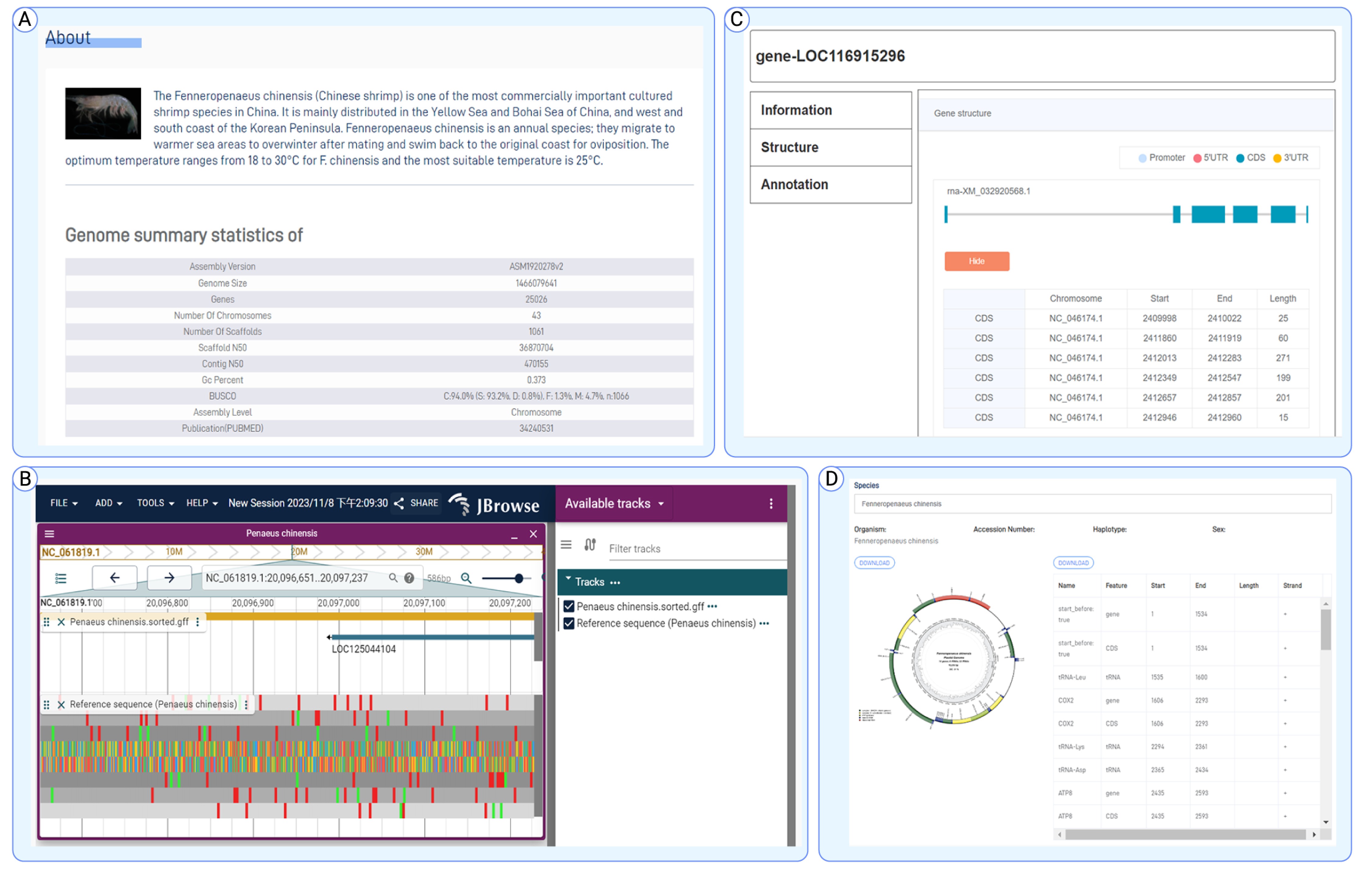
Figure 2.
Screenshots of the web interfaces of the genomic modules
-
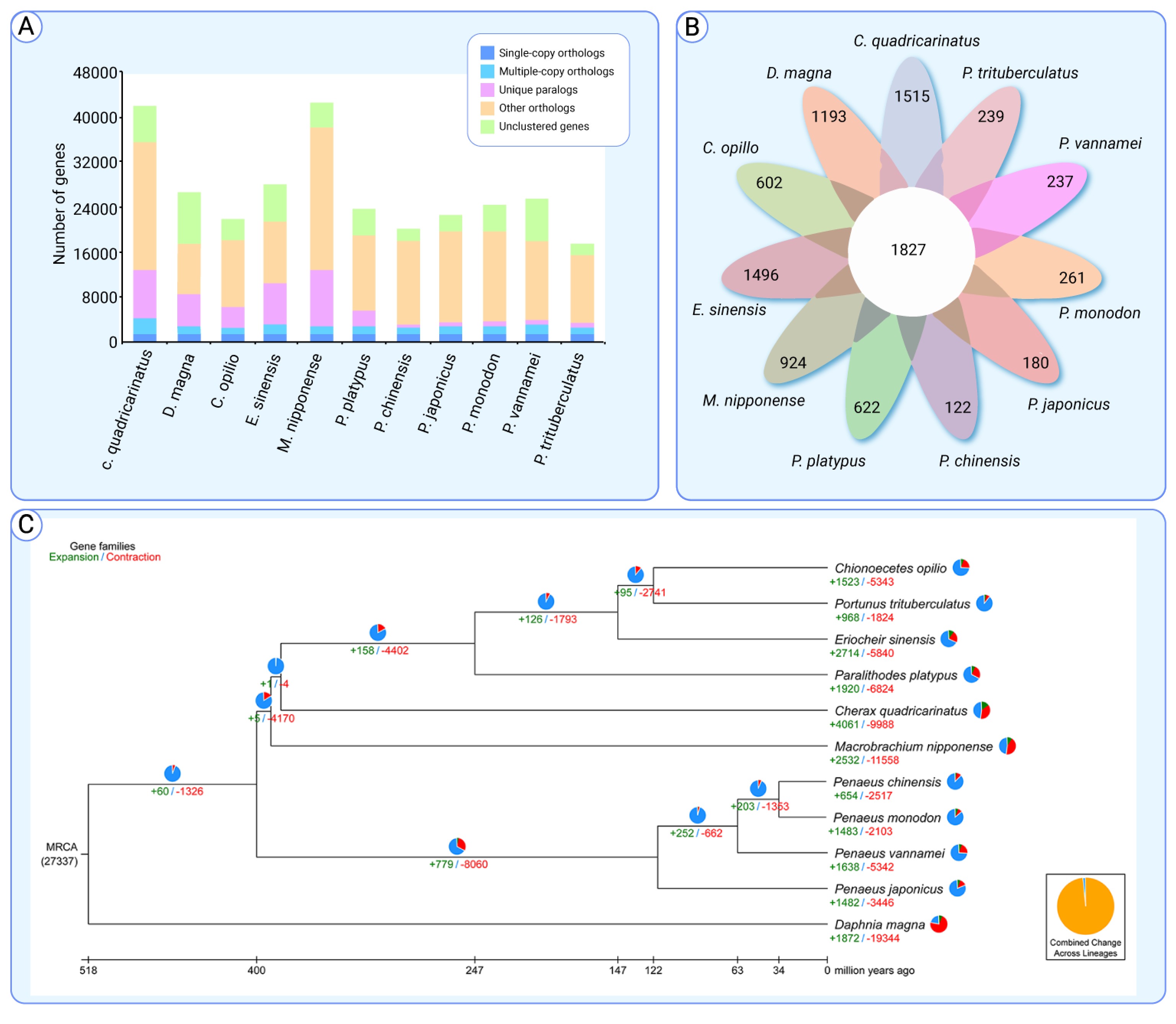
Figure 3.
Phylogenetic analysis of the Decapoda species
-
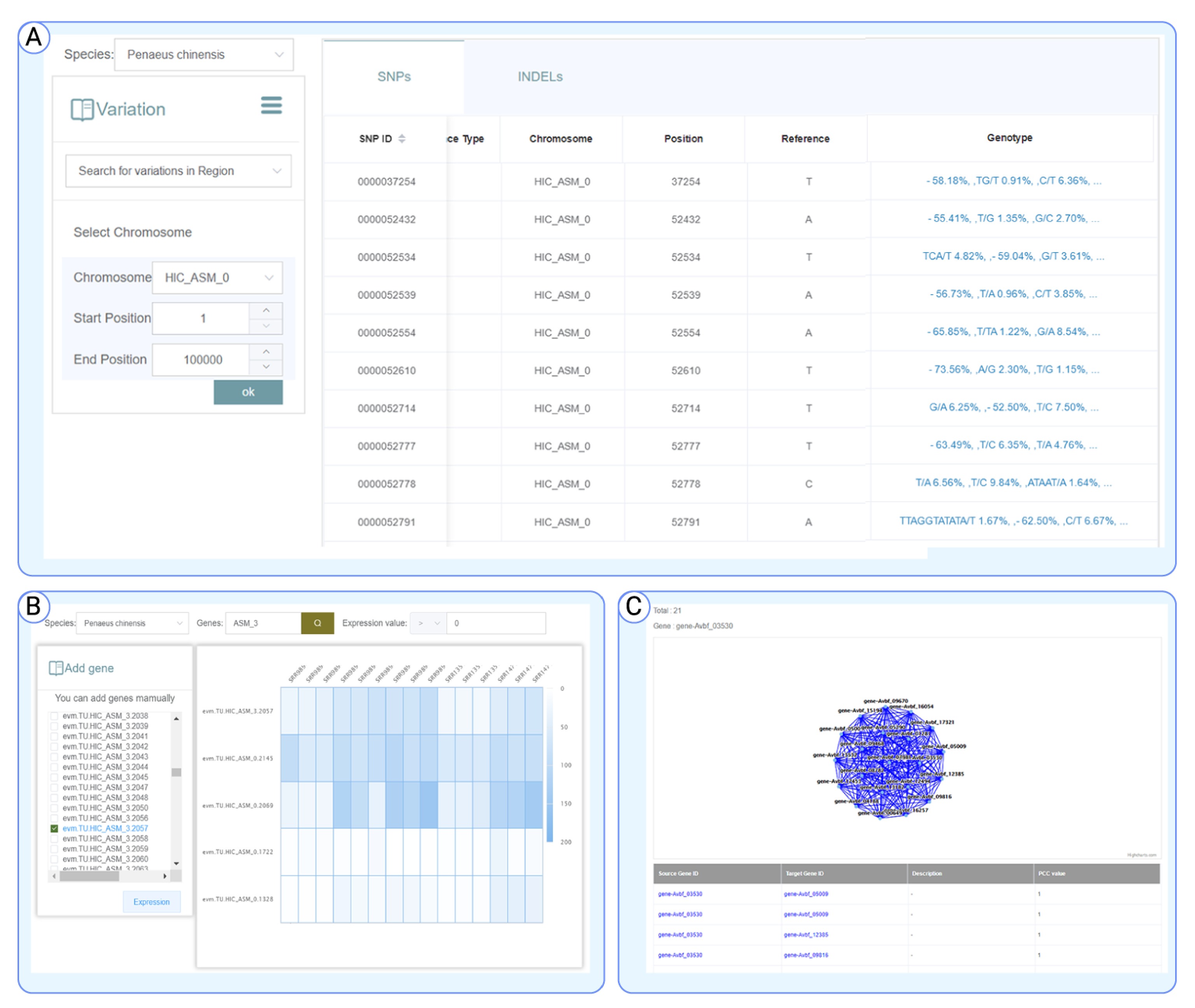
Figure 4.
Screenshots of the resequencing and transcriptomic related modules
