
Dix-seq: An integrated pipeline for fast amplicon data analysis
-
GRAPHICAL ABSTRACT

 DownLoad:
Full size image
DownLoad:
Full size image
-
PUBLIC SUMMARY
-
An integrated pipeline for optimized amplicon analysis has been developed.
Dix-seq offers a one-step process with a single parameter sheet file to complete the entire pipeline.
The modular design of Dix-seq supports custom analysis.
Retrospective scripts make reproducing results or debugging errors easy.
-
-
ABSTRACT
Rapid advancements in sequencing technologies in the past decade have driven the widespread adoption of amplicon metagenome. However, current amplicon data analysis software/pipelines often require manual intervention spanning multiple steps, necessitating a clear understanding of parameters and hindering inexperienced users from automating their workflows. Here, we introduce Dix-seq, a fully containerized tool for rapid, automated, and scalable amplicon data analysis. With one single command, Dix-seq can process raw amplicon sequences down to various statistical and visualization results, generate html-based reports, and retrospective logfiles. Dix-seq utilizes a single parameter sheet file to drastically simplify its command line interface, making it much more approachable by inexperienced users while improving study reproducibility. The modular design of Dix-seq enables rapid adoption of new methods and databases into its software frame. Currently, more than 21 algorithms, software, and third-party procedures have been integrated into eight modules in Dix-seq, while more are coming down the line. This approach also allows experienced users to fine-tune the workflow, facilitating customized analysis. Benchmarks performed on datasets from real-world case studies demonstrated Dix-seq’s capabilities in generating publish-ready figures integrated with statistical information and extracting biologically meaningful patterns. Furthermore, it remained highly effective at detecting variance upon simulated sequencing depth drop, the results remained robust down to a depth of11000 and1000 in all and certain fronts, such as phylogenetic diversity and Pearson correlation, respectively. In summary, Dix-seq is a convenient yet highly customizable tool for amplicon data analysis, making it an ideal choice for both entry-level and experienced users. -

-
REFERENCES
[1] Turnbaugh P., Ley R., Hamady M., et al. (2007). The Human Microbiome Project. Nature 449:804−810 DOI:10.1038/nature06244 [2] Gilbert J.A., Jansson J.K. and Knight R. (2014). The Earth Microbiome Project: Successes and aspirations. BMC Biol. 12:69 DOI:10.1186/s12915-014-0069-1 [3] Blaser M., Bork P., Fraser C. et al. (2013). The microbiome explored: recent insights and future challenges. Nat. Rev. Microbiol. 11:213−217 DOI:10.1038/nrmicro2973 [4] Ruppert K.M., Kline R.J. and Rahman M.S. (2019). Past, present, and future perspectives of environmental DNA (eDNA). metabarcoding: A systematic review in methods, monitoring, and applications of global eDNA. Glob. Ecol. Conserv. 17:e00547 DOI:10.1016/j.gecco.2019.e00547 [5] Zhou L. (2023). Microbial taxonomy with DNA sequence data as nomenclatural type: How far should we go. The Innovation Life 1:100017 DOI:10.59717/j.xinn-life.2023.100017 [6] Jin J., Liu X. and Shiroguchi K. (2024). Long journey of 16S rRNA‐amplicon sequencing toward cell‐based functional bacterial microbiota characterization. IMetaOmics 1:imo2.9 DOI:10.1002/imo2.9 [7] Zhang Z., Jiao N. and Zhang Y. (2024). Global ocean microbiome catalogue: A gateway to unlock marine microbial resources and ecosystem functions. The Innovation Life 2:100099 DOI:10.59717/j.xinn-life.2024.100099 [8] Li C., Gillings M., Zhang C., et al. (2024). Ecology and risks of the global plastisphere as a newly expanding microbial habitat. The Innovation 5:100543 DOI:10.1016/j.xinn.2023.100543 [9] Ewels P., Magnusson M., Lundin S., et al. (2016). MultiQC: Summarize analysis results for multiple tools and samples in a single report. Bioinformatics 32:3047−3048 DOI:10.1093/bioinformatics/btw354 [10] Bolger A.M., Lohse M. and Usadel B. (2014). Trimmomatic: a flexible trimmer for Illumina sequence data. Bioinformatics 30:2114−2120 DOI:10.1093/bioinformatics/btu170 [11] Martin, M. (2011). Cutadapt removes adapter sequences from high-throughput sequencing reads. EMBnet J. 17:10 DOI:10.14806/ej.17.1.200 [12] Magoč T. and Salzberg S.L. (2011). FLASH: Fast length adjustment of short reads to improve genome assemblies. Bioinformatics 27:2957−2963 DOI:10.1093/bioinformatics/btr507 [13] Edgar R. (2016). UNOISE2: Improved error-correction for Illumina 16S and ITS amplicon sequencing. BioRxiv:081257. DOI:10.1101/081257 [14] Callahan B.J., McMurdie P.J., Rosen M.J., et al. (2016). DADA2: High-resolution sample inference from Illumina amplicon data. Nat. Methods 13:581−583 DOI:10.1038/nmeth.3869 [15] Amir A., McDonald D., Navas-Molina J., et al. (2017). Deblur rapidly resolves single‐nucleotide community sequence patterns. MSystems 2:e00191−16 DOI:10.1128/mSystems.00191-16 [16] Edgar R. (2013). UPARSE: Highly accurate OTU sequences from microbial amplicon reads. Nat. Methods 10(10):996−998 DOI:10.1038/nmeth.2604 [17] Edgar R. (2010). Search and clustering orders of magnitude faster than BLAST. Bioinformatics 26:2460−2461 DOI:10.1093/bioinformatics/btq461 [18] Kopylova E., Noé L. and Touzet H. (2012). SortMeRNA: Fast and accurate filtering of ribosomal RNAs in metatranscriptomic data. Bioinformatics 28:3211−3217 DOI:10.1093/bioinformatics/bts611 [19] Edgar R. (2016). SINTAX: A simple non-Bayesian taxonomy classifier for 16S and ITS sequences. BioRxiv:074161. DOI:10.1101/074161 [20] Wang Q., Garrity G.M., Tiedje J.M., et al. (2007). Naïve Bayesian classifier for rapid assignment of rRNA sequences into the new bacterial taxonomy. Appl. Environ. Microbiol. 73:5261−5267 DOI:10.1128/AEM.00062-07 [21] Bolyen E., Rideout J.R., Dillon M.R., et al. (2019). Reproducible, interactive, scalable and extensible microbiome data science using QIIME 2. Nat. Biotechnol. 37:852−857 DOI:10.1038/s41587-019-0209-9 [22] Wood D.E., Lu J. and Langmead B. (2019). Improved metagenomic analysis with Kraken 2. Genome Biol. 20:257 DOI:10.1186/s13059-019-1891-0 [23] Dixon P. (2003). VEGAN, a package of R functions for community ecology. J. Veg. Sci. 14:927−930 DOI:10.1111/j.1654-1103.2003.tb02228.x [24] McMurdie P.J. and Holmes S. (2013). phyloseq: An R Package for Reproducible Interactive Analysis and Graphics of Microbiome Census Data. PLoS ONE 8:e61217 DOI:10.1371/journal.pone.0061217 [25] Lu Y., Zhou G. and Ewald J., et al. (2023). MicrobiomeAnalyst 2.0: Comprehensive statistical, functional and integrative analysis of microbiome data. Nucleic Acids Res. 51 :W310–W318. DOI:10.1093/nar/gkad407 [26] Liu C., Cui Y., Li, X. and Yao M. (2021). Microeco: An R package for data mining in microbial community ecology. FEMS Microbiol. Ecol. 97:fiaa255 DOI:10.1093/femsec/fiaa255 [27] Liu B., Huang L., Liu Z., et al. (2022). EasyMicroPlot: An efficient and convenient R package in microbiome downstream analysis and visualization for clinical study. Front. Genet. 12:803627 DOI:10.3389/fgene.2021.803627 [28] Wen T., Xie P., Yang S., et al. (2022). ggClusterNet: An R package for microbiome network analysis and modularity‐based multiple network layouts. IMeta 1:imt2.32 DOI:10.1002/imt2.32 [29] Schloss P.D., Westcott S.L., Ryabin T., et al. (2009). Introducing mothur: Open-Source, Platform-Independent, Community-Supported Software for Describing and Comparing Microbial Communities. Appl. Environ. Microbiol. 75:7537−7541 DOI:10.1128/AEM.01541-09 [30] Rognes T., Flouri T., Nichols B., et al. (2016). VSEARCH: A versatile open source tool for metagenomics. PeerJ. 4:e2584 DOI:10.7717/peerj.2584 [31] Caporaso J.G., Kuczynski J., Stombaugh J., et al. (2010). QIIME allows analysis of high-throughput community sequencing data. Nat. Methods 7:335−6 DOI:10.1038/nmeth.f.303 [32] Comeau A.M., Douglas G.M. and Langille, M.G.I. (2017). Microbiome Helper: A custom and streamlined workflow for microbiome research. MSystems 2:e00127−16 DOI:10.1128/mSystems.00127-16 [33] Liu Y., Chen L., Ma T., et al. (2023). EasyAmplicon: An easy‐to‐use, open‐source, reproducible, and community‐based pipeline for amplicon data analysis in microbiome research. IMeta 2:imt2.83 DOI:10.1002/imt2.83 [34] Weissbecker C., Schnabel B. and Heintz-Buschart A. (2020). Dadasnake, a Snakemake implementation of DADA2 to process amplicon sequencing data for microbial ecology. Gigascience 9:giaa135 DOI:10.1093/gigascience/giaa135 [35] Weinstein M.M., Prem A., Jin M., et al. (2019). FIGARO: An efficient and objective tool for optimizing microbiome rRNA gene trimming parameters. BioRxiv:610394. DOI:10.1101/610394 [36] Gonzalez A., Navas-Molina J.A., Kosciolek T., et al. (2018). Qiita: Rapid, web-enabled microbiome meta-analysis. Nat. Methods 15:796−798 DOI:10.1038/s41592-018-0141-9 [37] Keegan K.P., Glass E.M. and Meyer, F. (2016). MG-RAST, a metagenomics service for analysis of microbial community structure and function. Methods Mol Biol. 1399:207−233 DOI:10.1007/978-1-4939-3369-3_13 [38] Abueg L.A.L., Afgan E., Allart O., et al. (2024). The Galaxy platform for accessible, reproducible, and collaborative data analyses: 2024 update. Nucleic Acids Res. 52(W1):W83−W94 DOI:10.1093/nar/gkae410 [39] Shi W., Qi H., Sun Q., et al. (2019). gcMeta: A Global Catalogue of Metagenomics platform to support the archiving, standardization and analysis of microbiome data. Nucleic Acids Res. 47:D637−D648 DOI:10.1093/nar/gky1008 [40] Chen Y., Li J., Zhang Y., et al. (2022). Parallel‐Meta Suite: Interactive and rapid microbiome data analysis on multiple platforms. IMeta 1:imt2.1 DOI:10.1002/imt2.1 [41] Peng X. and Dorman K.S. (2021). AmpliCI: A high-resolution model-based approach for denoising Illumina amplicon data. Bioinformatics 36:5151−5158 DOI:10.1093/bioinformatics/btaa648 [42] Nilsen T., Snipen L.-G., Angell, I.L., et al. (2024). Swarm and UNOISE outperform DADA2 and Deblur for denoising high-diversity marine seafloor samples. ISME Communications 4:ycae071 DOI:10.1093/ismeco/ycae071 [43] Nearing J.T., Douglas G.M., Comeau A.M., et al. (2018). Denoising the Denoisers: An independent evaluation of microbiome sequence error-correction approaches. PeerJ 6:e5364 DOI:10.7717/peerj.5364 [44] Chiarello M., McCauley M., Villéger S., et al. (2022). Ranking the biases: The choice of OTUs vs. ASVs in 16S rRNA amplicon data analysis has stronger effects on diversity measures than rarefaction and OTU identity threshold. PLOS ONE 17 :e0264443. DOI:10.1371/journal.pone.0264443 [45] Bokulich N.A., Kaehler B.D., Rideout J.R., et al. (2018). Optimizing taxonomic classification of marker-gene amplicon sequences with QIIME 2’s q2-feature-classifier plugin. Microbiome 6:90 DOI:10.1186/s40168-018-0470-z [46] Edgar R.C. (2018). Accuracy of taxonomy prediction for 16S rRNA and fungal ITS sequences. PeerJ 6:e4652 DOI:10.7717/peerj.4652 [47] Zhu Q., Huang S., Gonzalez A., et al. (2022). Phylogeny-aware analysis of metagenome community ecology based on matched reference genomes while bypassing taxonomy. MSystems 7:e00167−22 DOI:10.1128/msystems.00167-22 [48] Douglas G.M., Maffei V.J., Zaneveld J.R., et al. (2020). PICRUSt2 for prediction of metagenome functions. Nat. Biotechnol. 38:685−688 DOI:10.1038/s41587-020-0548-6 [49] DeSantis T. Z., Hugenholtz P., Larsen N., et al. (2006). Greengenes, a chimera-checked 16S rRNA gene database and workbench compatible with ARB. Appl. Environ. Microbiol. 72:5069−5072 DOI:10.1128/AEM.03006-05 [50] Kõljalg U., Larsson K. and Abarenkov K. (2005). UNITE: A database providing web‐based methods for the molecular identification of ectomycorrhizal fungi. New Phytol. 166:1063−1068 DOI:10.1111/j.1469-8137.2005.01376.x [51] Quast C., Pruesse E. and Yilmaz P., et al. (2012). The SILVA ribosomal RNA gene database project: improved data processing and web-based tools. Nucleic Acids Res. 41:D590−D596 DOI:10.1093/nar/gks1219 [52] Escapa F.I., Huang Y., Chen T., et al. (2020). Construction of habitat-specific training sets to achieve species-level assignment in 16S rRNA gene datasets. Microbiome 8:65 DOI:10.1186/s40168-020-00841-w [53] Dueholm M. K. D., Nierychlo M., Andersen K. S., et al. (2022). MiDAS 4: A global catalogue of full-length 16S rRNA gene sequences and taxonomy for studies of bacterial communities in wastewater treatment plants. Nat. Commun. 13:1908 DOI:10.1038/s41467-022-29438-7 [54] Wang Y., Wang K., Huang L., et al. (2020). Fine-scale succession patterns and assembly mechanisms of bacterial community of Litopenaeus vannamei larvae across the developmental cycle. Microbiome 8:106 DOI:10.1186/s40168-020-00879-w [55] Love M.I., Huber W. and Anders S. (2014). Moderated estimation of fold change and dispersion for RNA-seq data with DESeq2. Genome Biol. 15:550 DOI:10.1186/s13059-014-0550-8 [56] Khleborodova A., Gamboa-Tuz S.D., Ramos M., et al. (2024). Lefser: Implementation of metagenomic biomarker discovery tool, LEfSe, in R. Bioinformatics 40 . DOI: 10.1093/bioinformatics/btae707 [57] Wei Y., Jiang S., Tian L., et al. (2022). Benthic microbial biogeography along the continental shelf shaped by substrates from the Changjiang River plume. Acta Oceanol. Sin. 41:118−131 DOI:10.1007/s13131-021-1861-8 [58] Nguyen N.-P., Warnow T., Pop M., et al. (2016). A perspective on 16S rRNA operational taxonomic unit clustering using sequence similarity. Npj Biofilms Microbiomes 2:16004 DOI:10.1038/npjbiofilms.2016.4 [59] Johnson J.S., Spakowicz D.J., Hong B.-Y., et al. (2019). Evaluation of 16S rRNA gene sequencing for species and strain-level microbiome analysis. Nat. Commun. 10:5029 DOI:10.1038/s41467-019-13036-1 [60] Dong P., Guo H., Huang L., et al. (2023). Glucose addition improves the culture performance of Pacific white shrimp by regulating the assembly of Rhodobacteraceae taxa in gut bacterial community. Aquaculture 567:739254 DOI:10.1016/j.aquaculture.2023.739254 [61] Dong P., Guo H., Wang Y., et al. (2021). Gastrointestinal microbiota imbalance is triggered by the enrichment of Vibrio in subadult Litopenaeus vannamei with acute hepatopancreatic necrosis disease. Aquaculture 533:736199 DOI:10.1016/j.aquaculture.2020.736199 -
ABOUT THIS ARTICLE
Cite this article:
Dong P., Chen Y., Wei Y., et al. (2025). Dix-seq: An integrated pipeline for fast amplicon data analysis. The Innovation Life 3:100120. https://doi.org/10.59717/j.xinn-life.2024.100120
Welcome!
To request copyright permission to republish or share portions of our works, please visit Copyright Clearance Center's (CCC) Marketplace website at marketplace.copyright.com.
Article Metrics
Relative Articles
Cited by
Export File
Citation
Dong P., Chen Y., Wei Y., et al. (2025). Dix-seq: An integrated pipeline for fast amplicon data analysis. The Innovation Life 3:100120. https://doi.org/10.59717/j.xinn-life.2024.100120

Format
Content


-
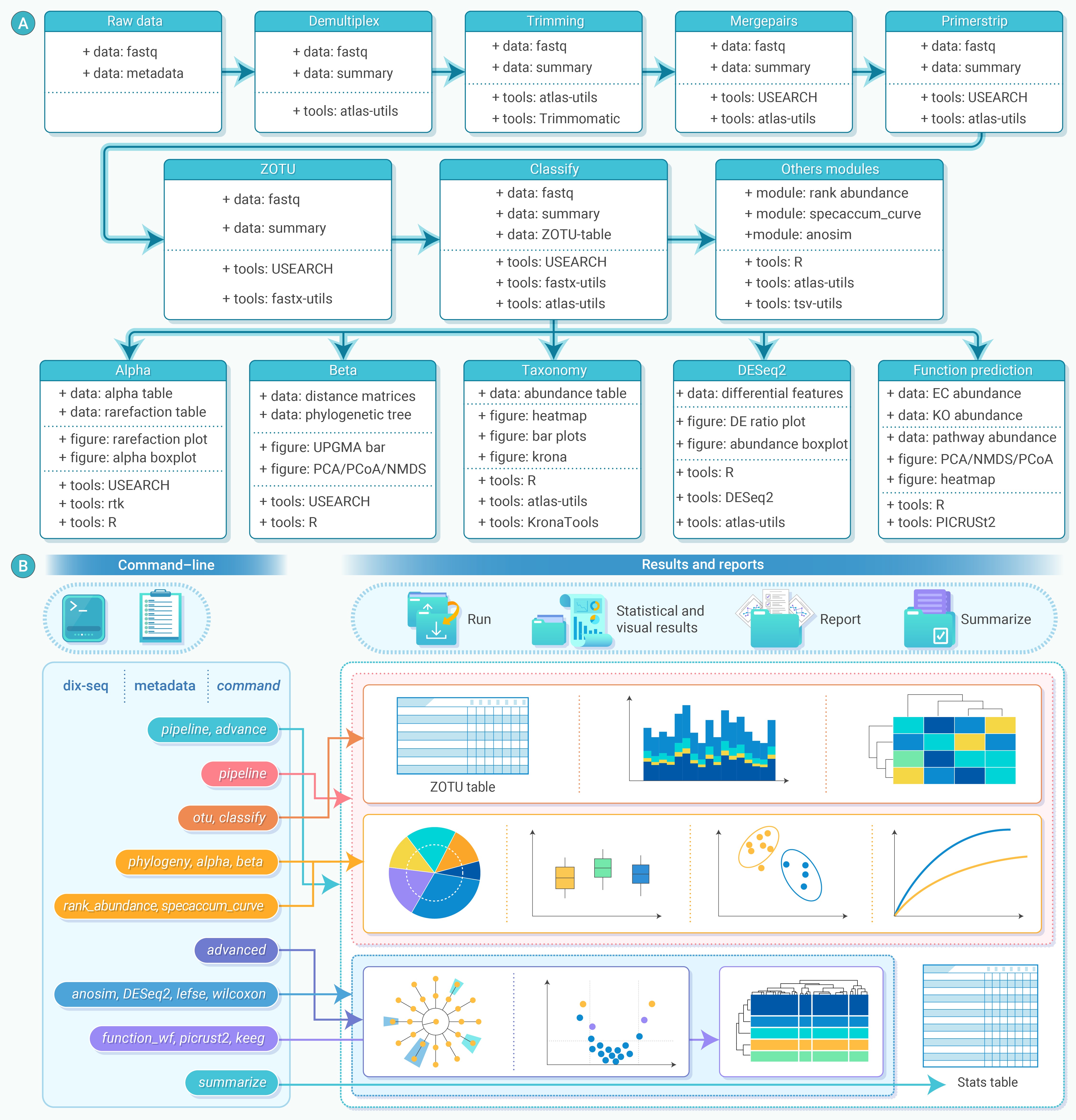
Figure 1.
Dix-seq: An integrated pipeline for fast amplicon data analysis
-
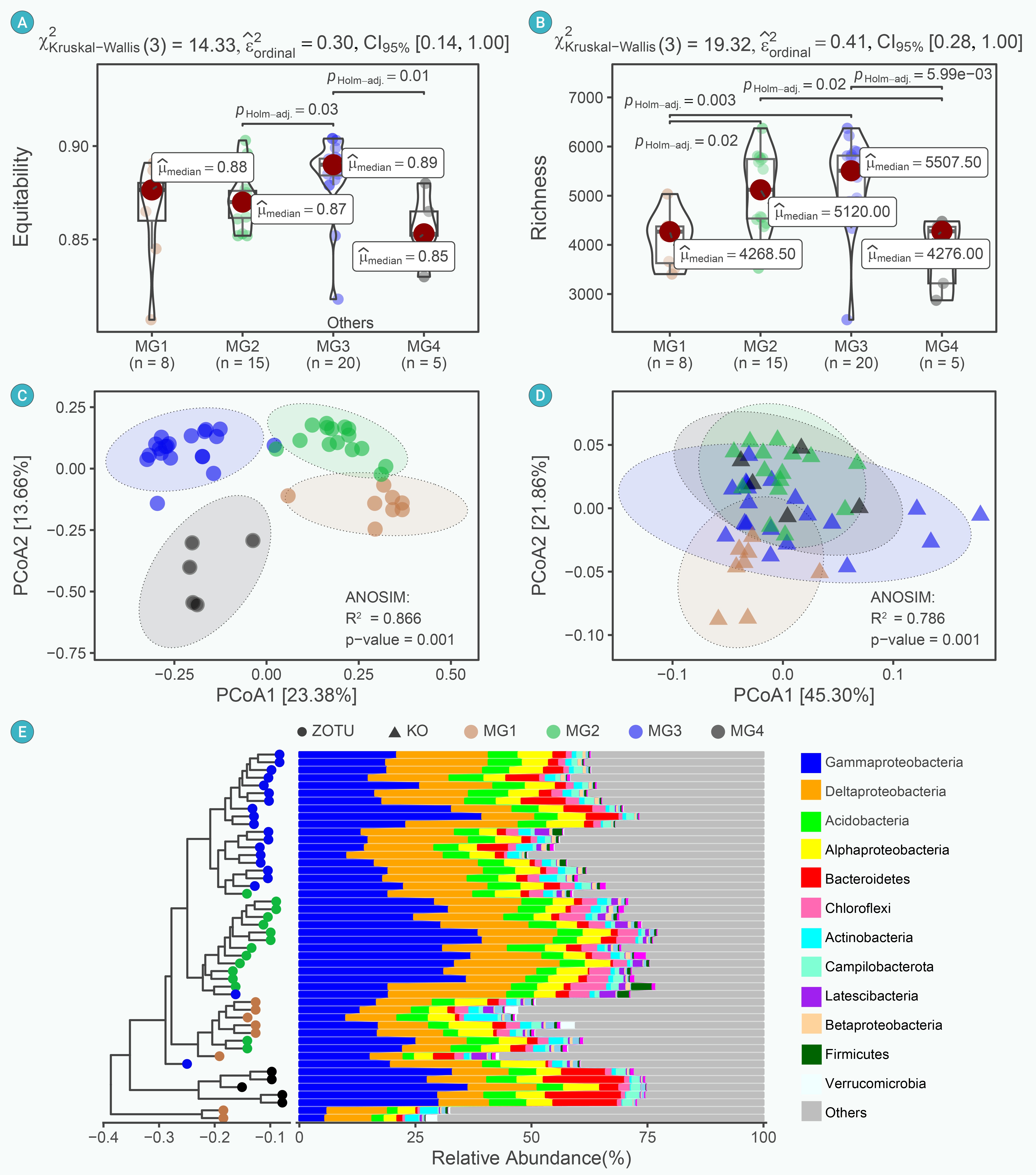
Figure 2.
Analysis and visualization results of Study I (environmental microbiome) reveal differentiation of microbial species (ZOTUs) and function (KOs) across estuary zones by using one-step workflows “pipeline, advanced” in dix-seq
-
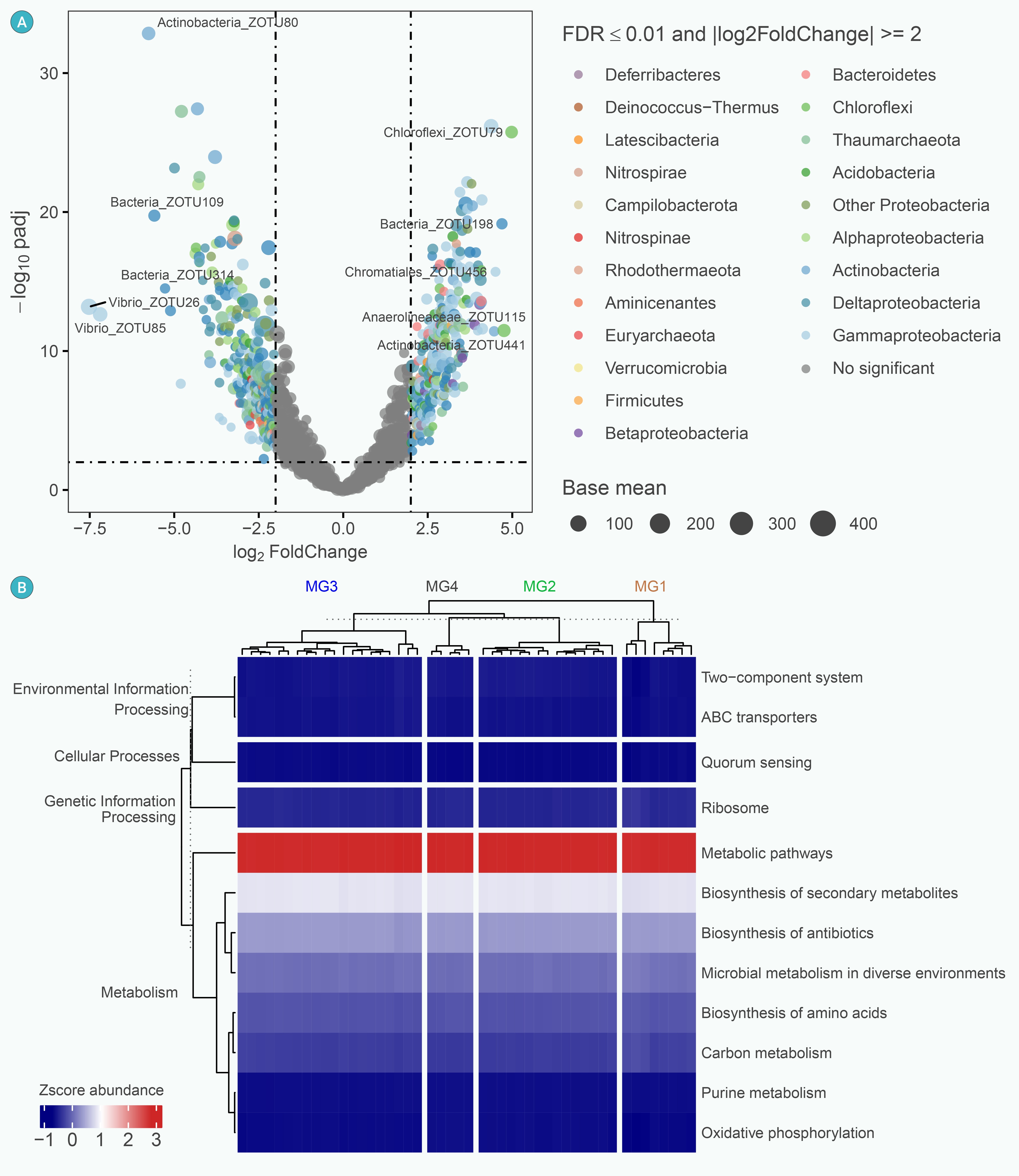
Figure 3.
Examples of publication-quality visualization results of Study I by using step-by-step mode with “DESeq2, picrust2, keeg” subcommand combination in dix-seq
-
Figure 4.
Comparison of runtime, taxonomic annotations, and alpha diversity indexes on the data set of Study II (Wang et al.) using alternative protocols
-
Figure 5.
Procrustes analysis showed the correlation between the composition previously reported in Study II (Wang et al.) and the results of alternative protocols
-
Figure 6.
Comparison of beta diversity analysis results on the data set of Study II using alternative protocols
-
Figure 7.
Impact of sequencing depth on the result of the Dix-seq software
