
-

-
REFERENCES
[1] Swamynathan M. M., Kuang S., Watrud K. E., et al. (2024). Dietary pro-oxidant therapy by a vitamin K precursor targets PI 3-kinase VPS34 function. Science 386:eadk9167. DOI:10.1126/science.adk9167 [2] Hanahan D. and Weinberg R. A. (2011). Hallmarks of cancer: the next generation. Cell 144:646−674. DOI:10.1016/j.cell.2011.02.013 [3] Zhao W., Li S., Chen R., et al. (2023). RXR signaling targeted cancer therapy. The Innovation Life 1:100014. DOI:10.59717/j.xinn-life.2023.100014 [4] Klein E. A., Thompson I. M., Jr., Tangen C. M., et al. (2011). Vitamin E and the risk of prostate cancer: the Selenium and Vitamin E Cancer Prevention Trial (SELECT). Jama 306:1549−1556. DOI:10.1001/jama.2011.1437 [5] Yuan J. and Ofengeim D. (2024). A guide to cell death pathways. Nat. Rev. Mol. Cell Biol. 25:379−395. DOI:10.1038/s41580-023-00689-6 -
ABOUT THIS ARTICLE
Cite this article:
Qiao M., Fang Y. and Huang J. (2025). Triaptosis: Pro-oxidant-induced programmed cell death. The Innovation Life 3:100126. https://doi.org/10.59717/j.xinn-life.2025.100126
Welcome!
To request copyright permission to republish or share portions of our works, please visit Copyright Clearance Center's (CCC) Marketplace website at marketplace.copyright.com.
Export File
Citation
Qiao M., Fang Y. and Huang J. (2025). Triaptosis: Pro-oxidant-induced programmed cell death. The Innovation Life 3:100126. https://doi.org/10.59717/j.xinn-life.2025.100126

Format
Content
 DownLoad:
-
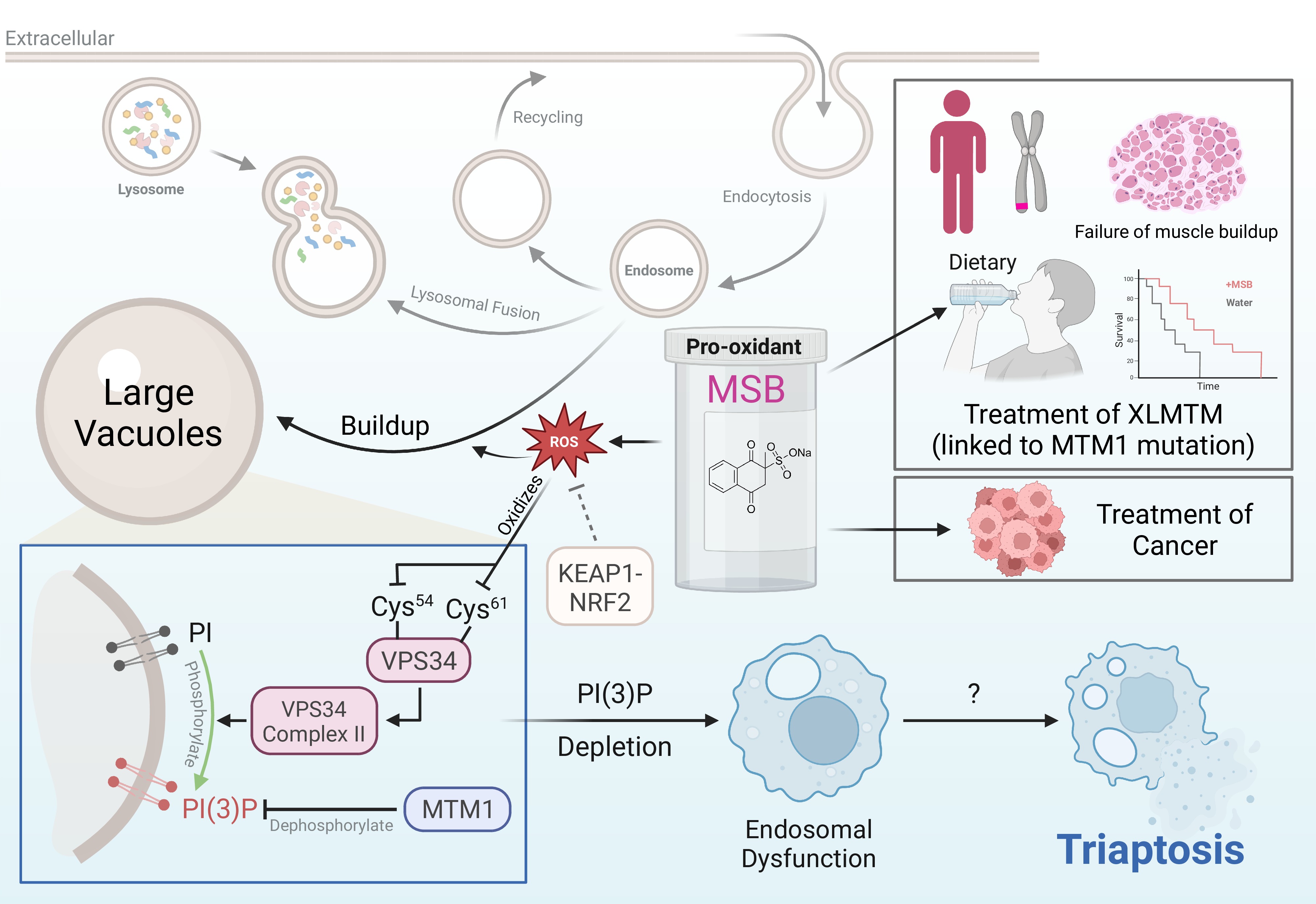
Figure 1.
Pro-oxidant-induced PI(3)P depletion and endosomal dysfunction drive Triaptosis
