
Divergent and convergent evolution underlie the cocoon-spinning diversity
-
GRAPHICAL ABSTRACT

 DownLoad:
Full size image
DownLoad:
Full size image
-
PUBLIC SUMMARY
-
The Saturniid lineage diverged from Sphingids but convergently evolved silk-spinning cocoons with Bombycids.
The two lineages differ in expression and functions of lineage-specific, positively selected, silk gland–specific genes.
Bombycoidea retain diverse silk proteins; cocoon-silk lineages converge in fibroin regulation unlike non-cocoon ones.
-
-
ABSTRACT
Silk production and use are widespread and highly diversified in insects, yet the evolution and molecular bases underlying this diversity remain enigmatic. The Bombycoidea insects consist of sublineages that spin large cocoons (silk lineages) and non-silk cocoons, providing an ideal model system to study how cocoon-spinning behaviors rapidly diversify between species. By analyzing 11 Bombycoidea genomes, this study explored the genomic and transcriptomic divergence underlying the differences in silk traits between sublineages. Specific genes presented in silk lineage Saturniids exhibit biased expression and genes under selection in Saturniids are related to silk production, which contrasts with those in the non-silk-cocoon lineage Sphingids. Moreover, the gene repertoires of silk glands in the silk lineage species were dominated by genes with specialized expression and enriched in amino acid metabolism. We further characterized a highly dynamic catalog of silk protein genes within Bombycoidea, particularly including an extreme diversity of fibroin sequences across species, as well as the convergent regulation of fibroin expression between the Bombycoidea sublineages that spin large cocoons. This study suggests that the silk lineage Saturniid may diverge from its sister non-silk-cocoon lineage Sphingid, but converge with the outgroup Bombycid in spinning silk cocoons and uncovers a comprehensive scenario in which diversifying and convergent selection act on different processes of silk use, jointly shaping the diversity of ecological adaptations in insects. -

-
REFERENCES
[1] Sutherland T.D., Young J.H., Weisman S., et al. (2010). Insect silk: One name, many materials. Annu. Rev. Entomol. 55:171−188. DOI:10.1146/annurev-ento-112408-085401 [2] Mitter C., Davis D.R. and Cummings, M.P. (2017). Phylogeny and evolution of lepidoptera. Annu. Rev. Entomol. 62:265−283. DOI:10.1146/annurev-ento-031616-035125 [3] Yu T.T., Chang Z., Dong Z.W., et al. (2022). A glimpse into the biodiversity of insects in Yunnan: An updated and annotated checklist of butterflies (Lepidoptera, Papilionoidea). Zool. Res. 43:1009−1010. DOI:10.24272/j.issn.2095-8137.2022.313 [4] Xia Q., Li S. and Feng, Q. (2014). Advances in silkworm studies accelerated by the genome sequencing of Bombyx mori. Annu. Rev. Entomol. 59:513−536. DOI:10.1146/annurev-ento-011613-161940 [5] Yi M.Y., Yang X., Wang M., et al. (2025). Consistency, distinction, and potential metabolic crosstalk of nitrogen mobilization-related genes in silk production and silk gland biology. Zool. Res. 46:446−458. DOI:10.24272/j.issn.2095-8137.2024.391 [6] Yukuhiro K., Sezutsu H., Tsubota T., et al. (2016). Insect silks and cocoons: Structural and molecular aspects. E. Cohen and B. Moussian (eds). Extracellular Composite Matrices in Arthropods (Springer International Publishing ), pp. 515-555. DOI:10.1007/978-3-319-40740-1_14. [7] Dong Y., Dai F., Ren Y., et al. (2015). Comparative transcriptome analyses on silk glands of six silkmoths imply the genetic basis of silk structure and coloration. BMC Genomics 16:203. DOI:10.1186/s12864-015-1420-9 [8] Lee J., Nishiyama T., Shigenobu S., et al. (2021). The genome sequence of Samia ricini, a new model species of lepidopteran insect. Mol. Ecol. Resour. 2:327−339. DOI:10.1111/1755-0998.13259 [9] Zhou C.Z., Confalonieri F., Medina N., et al. (2000). Fine organization of Bombyx mori fibroin heavy chain gene. Nucleic Acids Res. 28:2413−2419. DOI:10.1093/nar/28.12.2413 [10] Sezutsu H. and Yukuhiro K. (2015). The complete nucleotide sequence of the Eri-silkworm (samia cynthia ricini) fibroin gene. J. Insect Biotechnol. 83:59−70. DOI:10.11416/jibs.83.3_059 [11] Koren S., Walenz B.P., Berlin K., et al. (2017). Canu: Scalable and accurate long-read assembly via adaptive k-mer weighting and repeat separation. Genome Res. 27:722−736. DOI:10.1101/gr.215087.116 [12] Liu H., Wu S., Li A., et al. (2021). SMARTdenovo:A de novo assembler using long noisy reads. GigaByte 2021:gigabyte15. DOI:10.46471/gigabyte.15 [13] Chin C.S., Alexander D.H., Marks P., et al. (2013). Nonhybrid, finished microbial genome assemblies from long-read SMRT sequencing data. Nat. Methods 10:563−569. DOI:10.1038/nmeth.2474 [14] Walker B.J., Abeel T., Shea T., et al. (2014). Pilon: An integrated tool for comprehensive microbial variant detection and genome assembly improvement. PLoS One 9:e112963. DOI:10.1371/journal.pone.0112963 [15] Roach M.J., Schmidt S.A. and Borneman A.R. (2018). Purge Haplotigs: Allelic contig reassignment for third-gen diploid genome assemblies. BMC Bioinformatics 19:460. DOI:10.1186/s12859-018-2485-7 [16] Vaser R., Sovic I., Nagarajan N., et al. (2017). Fast and accurate de novo genome assembly from long uncorrected reads. Genome Res 27(5):737−746. DOI:10.1101/gr.214270.116 [17] Kajitani R., Toshimoto K., Noguchi H., et al. (2014). Efficient de novo assembly of highly heterozygous genomes from whole-genome shotgun short reads. Genome Res. 24:1384−1395. DOI:10.1101/gr.170720.113 [18] Love R.R., Weisenfeld N.I., Jaffe D.B., et al. (2016). Evaluation of DISCOVAR de novo using a mosquito sample for cost-effective short-read genome assembly. BMC Genomics 17:187. DOI:10.1186/s12864-016-2531-7 [19] Mandric I. and Zelikovsky A. (2015). ScaffMatch: Scaffolding algorithm based on maximum weight matching. Bioinformatics 31:2632−2638. DOI:10.1093/bioinformatics/btv211 [20] Luo R., Liu B., Xie Y., et al. (2012). SOAPdenovo2: An empirically improved memory-efficient short-read de novo assembler. Gigascience 1(1):18. DOI:10.1186/2047-217X-1-18 [21] Durand N.C., Shamim M.S., Machol I., et al. (2016). Juicer provides a one-click system for analyzing loop-resolution Hi-C experiments. Cell Syst. 3:95−98. DOI:10.1016/j.cels.2016.07.002 [22] Dudchenko O., Batra S.S., Omer A.D., et al. (2017). De novo assembly of the Aedes aegypti genome using Hi-C yields chromosome-length scaffolds. Science 356:92−95. DOI:10.1126/science.aal3327 [23] Alonge M., Lebeigle L., Kirsche M., et al. (2022). Automated assembly scaffolding using RagTag elevates a new tomato system for high-throughput genome editing. Genome Biol. 23:258. DOI:10.1186/s13059-022-02823-7 [24] Waterhouse R.M., Seppey M., Simao F.A., et al. (2019). Using BUSCO to assess insect genomic resources. Methods Mol. Biol. 1858:59−74. DOI:10.1007/978-1-4939-8775-7_6 [25] Li H. (2012). seqtk Toolkit for processing sequences in FASTA/Q formats. https://github.com/lh3/seqtk. [26] Wang Y., Tang H., Debarry J.D., et al. (2012). MCScanX: A toolkit for detection and evolutionary analysis of gene synteny and collinearity. Nucleic Acids Res. 40:e49. DOI:10.1093/nar/gkr1293 [27] Tarailo-Graovac M. and Chen N. (2009). Using RepeatMasker to identify repetitive elements in genomic sequences. Curr. Protoc. Bioinform. 25:4.10.11−14.10.14. DOI:10.1002/0471250953.bi0410s25 [28] Hoff K.J. and Stanke M. (2013). WebAUGUSTUS--a web service for training AUGUSTUS and predicting genes in eukaryotes. Nucleic Acids Res. 41:W123-128. DOI:10.1093/nar/gkt418. [29] Dobin A., Davis C.A., Schlesinger F., et al. (2013). STAR: Ultrafast universal RNA-seq aligner. Bioinformatics 29:15−21. DOI:10.1093/bioinformatics/bts635 [30] Pertea M., Pertea G.M., Antonescu C.M., et al. (2015). StringTie enables improved reconstruction of a transcriptome from RNA-seq reads. Nat. Biotechnol. 33:290−295. DOI:10.1038/nbt.3122 [31] Haas B.J., Salzberg S.L., Zhu W., et al. (2008). Automated eukaryotic gene structure annotation using EVidenceModeler and the Program to Assemble Spliced Alignments. Genome Biol 9:R7. DOI:10.1186/gb-2008-9-1-r7 [32] Emms D.M. and Kelly, S. (2019). OrthoFinder: Phylogenetic orthology inference for comparative genomics. Genome Biol. 20:238. DOI:10.1186/s13059-019-1832-y [33] Lu F., Wei Z., Luo Y., et al. (2020). SilkDB 3.0: Visualizing and exploring multiple levels of data for silkworm. Nucleic Acids Res. 48:D749-D755. DOI: 10.1093/nar/gkz919. [34] Duan J., Li Y., Du J., et al. (2020). A chromosome-scale genome assembly of Antheraea pernyi (Saturniidae, Lepidoptera). Mol. Ecol. Resour. 20:1372−1383. DOI:10.1111/1755-0998.13199 [35] Pippel M., Jebb D., Patzold F., et al. (2020). A highly contiguous genome assembly of the bat hawkmoth Hyles vespertilio (Lepidoptera: Sphingidae). Gigascience 9. DOI:10.1093/gigascience/giaa001. [36] Kanost M.R., Arrese E.L., Cao X., et al. (2016). Multifaceted biological insights from a draft genome sequence of the tobacco hornworm moth, Manduca sexta. Insect Biochem. Mol. Biol. 76:118−147. DOI:10.1016/j.ibmb.2016.07.005 [37] Xiang H., Liu X., Li M., et al. (2018). The evolutionary road from wild moth to domestic silkworm. Nat. Ecol. Evol. 2:1268−1279. DOI:10.1038/s41559-018-0593-4 [38] Wu N.N., Zhang S.F., Li X.W., et al. (2019). Fall webworm genomes yield insights into rapid adaptation of invasive species. Nat. Ecol. Evol. 3:105−115. DOI:10.1038/s41559-018-0746-5 [39] Cheng T., Wu J., Wu Y., et al. (2017). Genomic adaptation to polyphagy and insecticides in a major East Asian noctuid pest. Nat. Ecol. Evol. 1:1747−1756. DOI:10.1038/s41559-017-0314-4 [40] Stamatakis A. (2014). RAxML version 8: A tool for phylogenetic analysis and post-analysis of large phylogenies. Bioinformatics 30:1312−1313. DOI:10.1093/bioinformatics/btu033 [41] Sanderson M.J. (2003). R8s: inferring absolute rates of molecular evolution and divergence times in the absence of a molecular clock. Bioinformatics 19:301−302. DOI:10.1093/bioinformatics/19.2.301 [42] Kumar S., Stecher G., Suleski M., et al. (2017). TimeTree: A resource for timelines, timetrees, and divergence times. Mol. Biol. Evol. 34:1812−1819. DOI:10.1093/molbev/msx116 [43] Li H. (2023). Protein-to-genome alignment with miniprot. Bioinformatics 39:btad014. DOI:10.1093/bioinformatics/btad014 [44] De Bie T., Cristianini N., Demuth J.P., et al. (2006). CAFE: A computational tool for the study of gene family evolution. Bioinformatics 22:1269−1271. DOI:10.1093/bioinformatics/btl097 [45] Revell L.J. (2024). Phytools 2.0: An updated R ecosystem for phylogenetic comparative methods (and other things). PeerJ 12:e16505. DOI:10.7717/peerj.16505. [46] Li B. and Dewey, C.N. (2011). RSEM: Accurate transcript quantification from RNA-Seq data with or without a reference genome. BMC Bioinformatics 12:323. DOI:10.1186/1471-2105-12-323 [47] Yanai I., Benjamin H., Shmoish M., et al. (2005). Genome-wide midrange transcription profiles reveal expression level relationships in human tissue specification. Bioinformatics 21:650−659. DOI:10.1093/bioinformatics/bti042 [48] Yang Z. (1997). PAML: A program package for phylogenetic analysis by maximum likelihood. Comput. Appl. Biosci. 13:555−556. DOI:10.1093/bioinformatics/13.5.555 [49] Yang Z. (2007). PAML 4: Phylogenetic analysis by maximum likelihood. Mol. Biol. Evol. 24:1586−1591. DOI:10.1093/molbev/msm088 [50] Yang Z. (1998). Likelihood ratio tests for detecting positive selection and application to primate lysozyme evolution. Mol. Biol. Evol. 15:568−573. DOI:10.1093/oxfordjournals.molbev.a025957 [51] Yang Z. and Nielsen, R. (2002). Codon-substitution models for detecting molecular adaptation at individual sites along specific lineages. Mol. Biol. Evol. 19:908−917. DOI:10.1093/oxfordjournals.molbev.a004148 [52] Yang, Z. Wong W.S. and Nielsen, R. (2005). Bayes empirical bayes inference of amino acid sites under positive selection. Mol. Biol. Evol. 22:1107−1118. DOI:10.1093/molbev/msi097 [53] Zhang J., Nielsen R. and Yang, Z. (2005). Evaluation of an improved branch-site likelihood method for detecting positive selection at the molecular level. Mol. Biol. Evol. 22:2472−2479. DOI:10.1093/molbev/msi237 [54] Sun X., Yang Q. and Xia, X. (2013). An improved implementation of effective number of codons (nc). Mol. Biol. Evol. 30:191−196. DOI:10.1093/molbev/mss201 [55] Chan P.P., Lin B.Y., Mak A.J., et al. (2021). tRNAscan-SE 2.0: improved detection and functional classification of transfer RNA genes. Nucleic Acids Res. 49:9077-9096. DOI:10.1093/nar/gkab688. [56] Kim S.R., Kwak W., Kim H., et al. (2018). Genome sequence of the Japanese oak silk moth, Antheraea yamamai: the first draft genome in the family Saturniidae. Gigascience 7:1−11. DOI:10.1093/gigascience/gix113 [57] Walker J.M., van der Heijden E.S.M., Maulana A., et al. (2024). Common misconceptions of speciation. Evol. J. Linn. Soc. 3:kzae029. DOI:10.1093/evolinnean/kzae029 [58] Zwick A., Regier J.C., Mitter C., et al. (2011). Increased gene sampling yields robust support for higher-level clades within Bombycoidea (Lepidoptera). Syst. Entomol. 36:31−43. DOI:10.1111/j.1365-3113.2010.00543.x [59] Hamilton C.A., St Laurent R.A., Dexter K., et al. (2019). Phylogenomics resolves major relationships and reveals significant diversification rate shifts in the evolution of silk moths and relatives. BMC Evol. Biol. 19:182. DOI:10.1186/s12862-019-1505-1 [60] Yoshioka Y., Suzuki G., Zayasu Y., et al. (2022). Comparative genomics highlight the importance of lineage-specific gene families in evolutionary divergence of the coral genus, Montipora. BMC Ecol. Evol. 22:71. DOI:10.1186/s12862-022-02023-8 [61] Ma L., Xu H., Zhu J., et al. (2011). Ras1(CA) overexpression in the posterior silk gland improves silk yield. Cell Res. 21:934−943. DOI:10.1038/cr.2011.36 [62] Ma L., Ma Q., Li X., et al. (2014). Transcriptomic analysis of differentially expressed genes in the Ras1(CA)-overexpressed and wildtype posterior silk glands. BMC Genomics 15:182. DOI:10.1186/1471-2164-15-182 [63] Craig C.L. (1997). Evolution of arthropod silks. Annu. Rev. Entomol. 42:231−267. DOI:10.1146/annurev.ento.42.1.231 [64] Bricteux-Gregoire S., Dewandre A. and Florkin M. (1960). Contributions to silkworm biochemistry. XVI. Conversion of threonine into the glycine, serine and alanine of silk fibroin. Arch. Int. Physiol. Biochim. 68:281−284. DOI:10.3109/13813456009083549 [65] Sun L., Sun B., Chen L., et al. (2024). Identification of genes associated with the silk gland size using multi-omics in silkworm (Bombyx mori). Insect Mol. Biol. 33:1−16. DOI:10.1111/imb.12870 [66] Hu W., Chen Y., Lin Y., et al. (2019). Developmental and transcriptomic features characterize defects of silk gland growth and silk production in silkworm naked pupa mutant. Insect Biochem. Mol. Biol. 111:103175. DOI:10.1016/j.ibmb.2019.05.010 [67] Cui Y., Zhu Y.A., Lin Y.J., et al. (2018). New insight into the mechanism underlying the silk gland biological process by knocking out fibroin heavy chain in the silkworm. Bmc Genomics 19. DOI:ARTN 21510.1186/s12864-018-4602-4. [68] Hu W., Wang X., Ma S., et al. (2021). CRISPR-mediated endogenous activation of fibroin heavy chain gene triggers cellular stress responses in Bombyx mori embryonic cells. Insects 12:552. DOI:10.3390/insects12060552 [69] Dong Z., Zhao P., Wang C., et al. (2013). Comparative proteomics reveal diverse functions and dynamic changes of Bombyx mori silk proteins spun from different development stages. J. Proteome. Res. 12:5213−5222. DOI:10.1021/pr4005772 [70] Hwang J.S., Lee J.S., Goo T.W., et al. (2001). Cloning of the fibroin gene from the oak silkworm, Antheraea yamamai and its complete sequence. Biotechnol. Lett. 23:1321−1326. DOI:10.1023/A:1010542011150 [71] Sezutsu H. and Yukuhiro K. (2000). Dynamic rearrangement within the Antheraea pernyi silk fibroin gene is associated with four types of repetitive units. J. Mol. Evol. 51:329−338. DOI:10.1007/s002390010095 [72] Zhou S.Y., Dong Q.L., Zhu K.S., et al. (2021). Long-read transcriptomic analysis of orb-weaving spider Araneus ventricosus indicates transcriptional diversity of spidroins. Int. J. Biol. Macromol. 168:395−402. DOI:10.1016/j.ijbiomac.2020.11.182 [73] Garel J. (1976). Quantitative adaptation of isoacceptor tRNAs to mRNA codons of alanine, glycine and serine. Nature 260:805−806. DOI:10.1038/260805a0 [74] Garel J.P., Mandel P., Chavancy G., et al. (1970). Functional adaptation of tRNAs to fibroin biosynthesis in the silkgland of Bombyx mori L. FEBS Lett. 7:327−329. DOI:10.1016/0014-5793(70)80196-x [75] Inoue S., Tanaka K., Arisaka F., et al. (2000). Silk fibroin of Bombyx mori is secreted, assembling a high molecular mass elementary unit consisting of H-chain, L-chain, and P25, with a 6 : 6 : 1 molar ratio. J. Biol. Chem. 275:40517−40528. DOI:10.1074/jbc.M006897200 [76] Shimizu K., Ogawa S., Hino R., et al. (2007). Structure and function of 5'-flanking regions of Bombyx mori fibroin heavy chain gene: identification of a novel transcription enhancing element with a homeodomain protein-binding motif. Insect Biochem. Mol. Biol. 37:713−725. DOI:10.1016/j.ibmb.2007.03.016 [77] Takiya S., Kokubo H. and Suzuki Y. (1997). Transcriptional regulatory elements in the upstream and intron of the fibroin gene bind three specific factors POU-M1, Bm Fkh and FMBP-1. Biochem J 321:645−653. DOI:10.1042/bj3210645 [78] Zhao A., Zhao T., Zhang Y., et al. (2010). New and highly efficient expression systems for expressing selectively foreign protein in the silk glands of transgenic silkworm. Transgenic Res. 19:29−44. DOI:10.1007/s11248-009-9295-7 [79] Castillo-Davis C.I., Mekhedov S.L., Hartl D.L., et al. (2002). Selection for short introns in highly expressed genes. Nat. Genet. 31:415−418. DOI:10.1038/ng940 [80] Pickrell J.K., Pai A.A., Gilad Y., et al. (2010). Noisy splicing drives mRNA isoform diversity in human cells. Plos Genet. 6:e1001236. DOI:10.1371/journal.pgen.1001236 [81] Tanaka K. and Mizuno S. (2001). Homologues of fibroin L-chain and P25 of Bombyx mori are present in Dendrolimus spectabilis and Papilio xuthus but not detectable in Antheraea yamamai. Insect Biochem. Mol. Biol. 31:665−677. DOI:10.1016/s0965-1748(00)00173-9 [82] Hakimi O., Knight D.P., Vollrath F., et al. (2007). Spider and mulberry silkworm silks as compatible biomaterials. Compos. Part B-Eng. 38:324−337. DOI:10.1016/j.compositesb.2006.06.012 [83] Shao Z., and Vollrath F. (2002). Surprising strength of silkworm silk. Nature 418:741. DOI:10.1038/418741a [84] Li X., Zhao L., Jiang H., et al. (2009). Short homologous sequences are strongly associated with the generation of chimeric RNAs in eukaryotes. J. Mol. Evol. 68:56−65. DOI:10.1007/s00239-008-9187-0 [85] Tautz D. and Renz M. (1984). Simple sequences are ubiquitous repetitive components of eukaryotic genomes. Nucleic Acids Res. 12:4127−4138. DOI:10.1093/nar/12.10.4127 [86] Lower S.E., Dion-Cote A.M., Clark A.G., et al. (2019). Special Issue: Repetitive DNA sequences. Genes (Basel) 10:896. DOI:10.3390/genes10110896 [87] Lovett S.T. (2004). Encoded errors: Mutations and rearrangements mediated by misalignment at repetitive DNA sequences. Mol. Microbiol. 52:1243−1253. DOI:10.1111/j.1365-2958.2004.04076.x [88] Osanai M., Okudaira M., Naito J., et al. (2000). Biosynthesis of L-alanine, a major amino acid of fibroin in Samia cynthia ricini. Insect Biochem Mol. Biol. 30:225−232. DOI:10.1016/s0965-1748(99)00120-4 [89] Shinbo H., Konno K. and Hirayama C. (1997). The pathway of ammonia assimilation in the silkworm, Bombyx mori. J. Insect Physiol. 43:959−964. DOI:10.1016/s0022-1910(97)00045-0 [90] Hu D., Wang W., Zhao X., et al. (2023). Expression pattern of glutaminase informs the dynamics of glutamine metabolism. The Innovation Life 3:100128. DOI:10.59717/j.xinn-life.2024.100128 [91] Hunt B.G., Ometto L., Wurm Y., et al. (2011). Relaxed selection is a precursor to the evolution of phenotypic plasticity. Proc. Natl. Acad. Sci. USA 108:15936−15941. DOI:10.1073/pnas.1104825108 [92] Zhu H. and Wang, L. (1996). Lepidoptera: Bombycidae, saturniidae and Thyrididae. Fauna Sinica Insecta, A.S. (Science Press), pp:299. [93] Zhu H. and Wang L. (1997). Lepidoptera Sphingidae. Fauna Sinica Insecta, A.S. (Science Press), pp:436. -
ABOUT THIS ARTICLE
Cite this article:
Cui Y., Fang G.-Q., Zhong J., et al. (2025). Divergent and convergent evolution underlie the cocoon-spinning diversity. The Innovation Life 3:100144. https://doi.org/10.59717/j.xinn-life.2025.100144
Welcome!
To request copyright permission to republish or share portions of our works, please visit Copyright Clearance Center's (CCC) Marketplace website at marketplace.copyright.com.

Supplementary Information
-
download_supplementary
Datasets
Article Metrics
Relative Articles
Cited by
Export File
Citation
Cui Y., Fang G.-Q., Zhong J., et al. (2025). Divergent and convergent evolution underlie the cocoon-spinning diversity. The Innovation Life 3:100144. https://doi.org/10.59717/j.xinn-life.2025.100144

Format
Content


-
Figure 1.
Genome evolution of Bombycoidea species
-
Figure 2.
Gene repertoires of silkg lands between Saturniidae and Sphingidae
-
Figure 3.
Catalog of silk protein genes and homologs
-
Figure 4.
Dynamic evolution of fibroin sequences
-
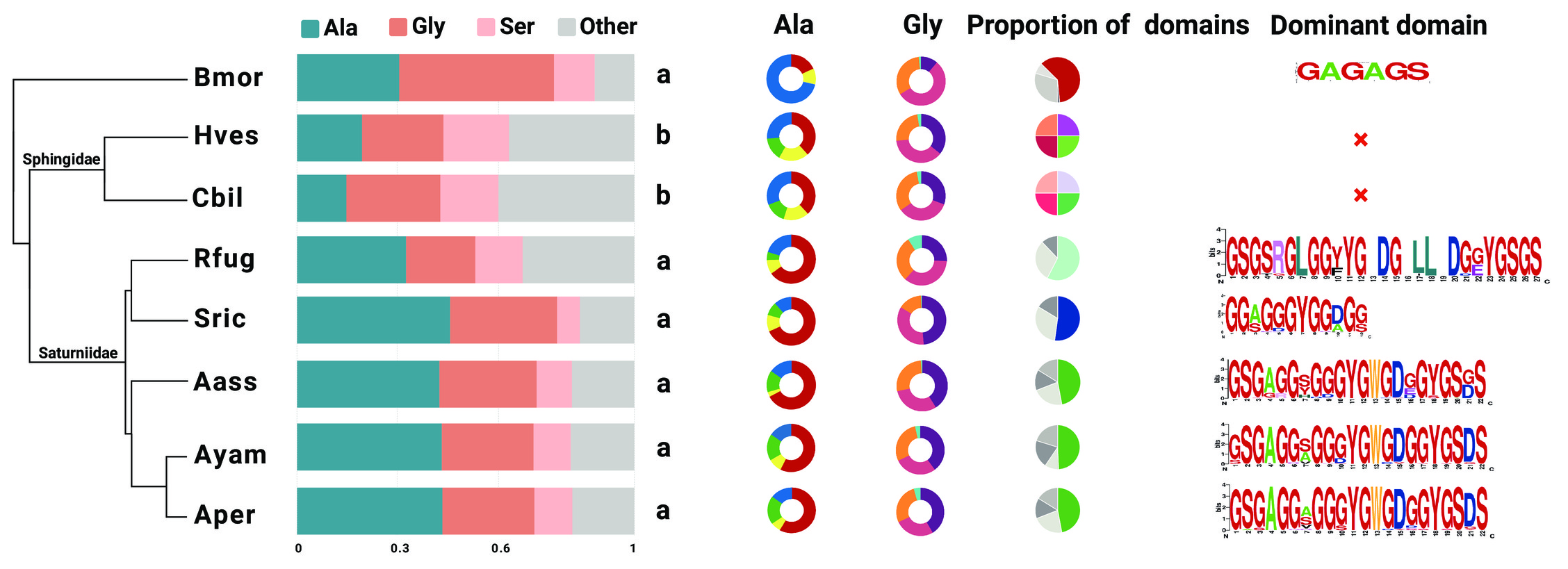
Figure 5.
Analyses of the dominant amino acids of FibH
-
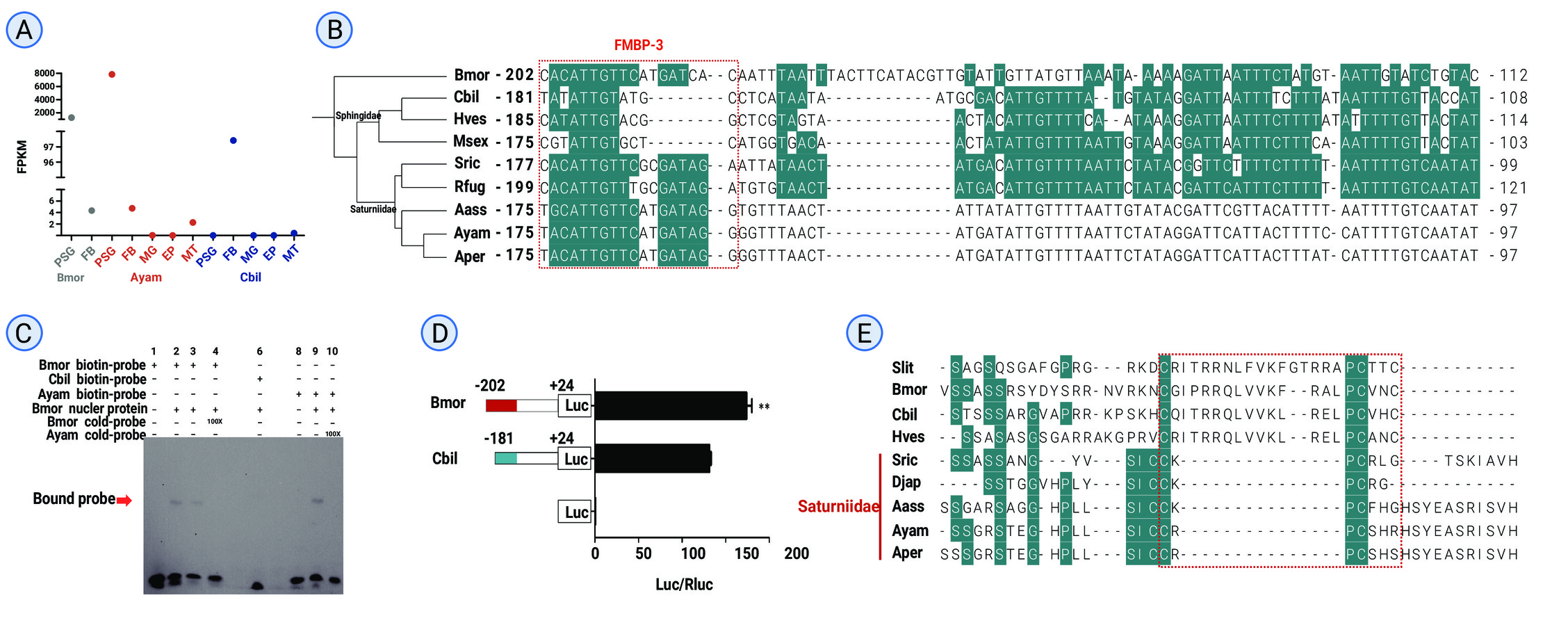
Figure 6.
Convergent evolution of fibroin expression and binding
