
Interactions of the karrikin signaling pathway with phytohormones and environmental signals in plants
-
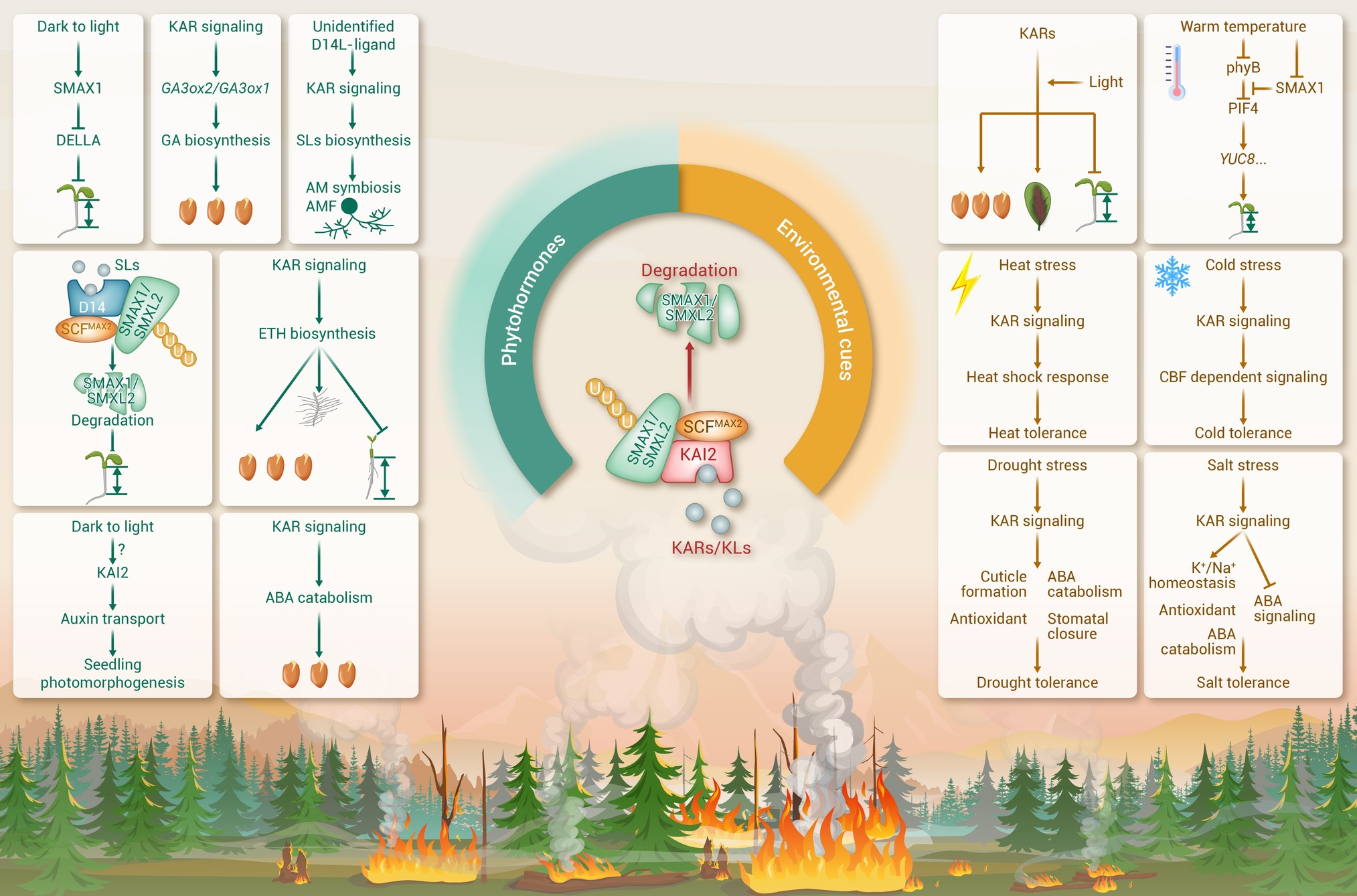
GRAPHICAL ABSTRACT
 DownLoad:
Full size image
DownLoad:
Full size image
-
PUBLIC SUMMARY
-
Karrikins (KARs) are a class of butenolide compounds derived from smoke following vegetation burning.
KARs mimic an unknown phytohormone to regulate many aspects of development and environmental adaptation.
KAR signaling is perceived and transduced to trigger transcriptional reprogramming by one pathway.
KAR signaling interacts with many phytohormones and environmental signals.
-
-
ABSTRACT
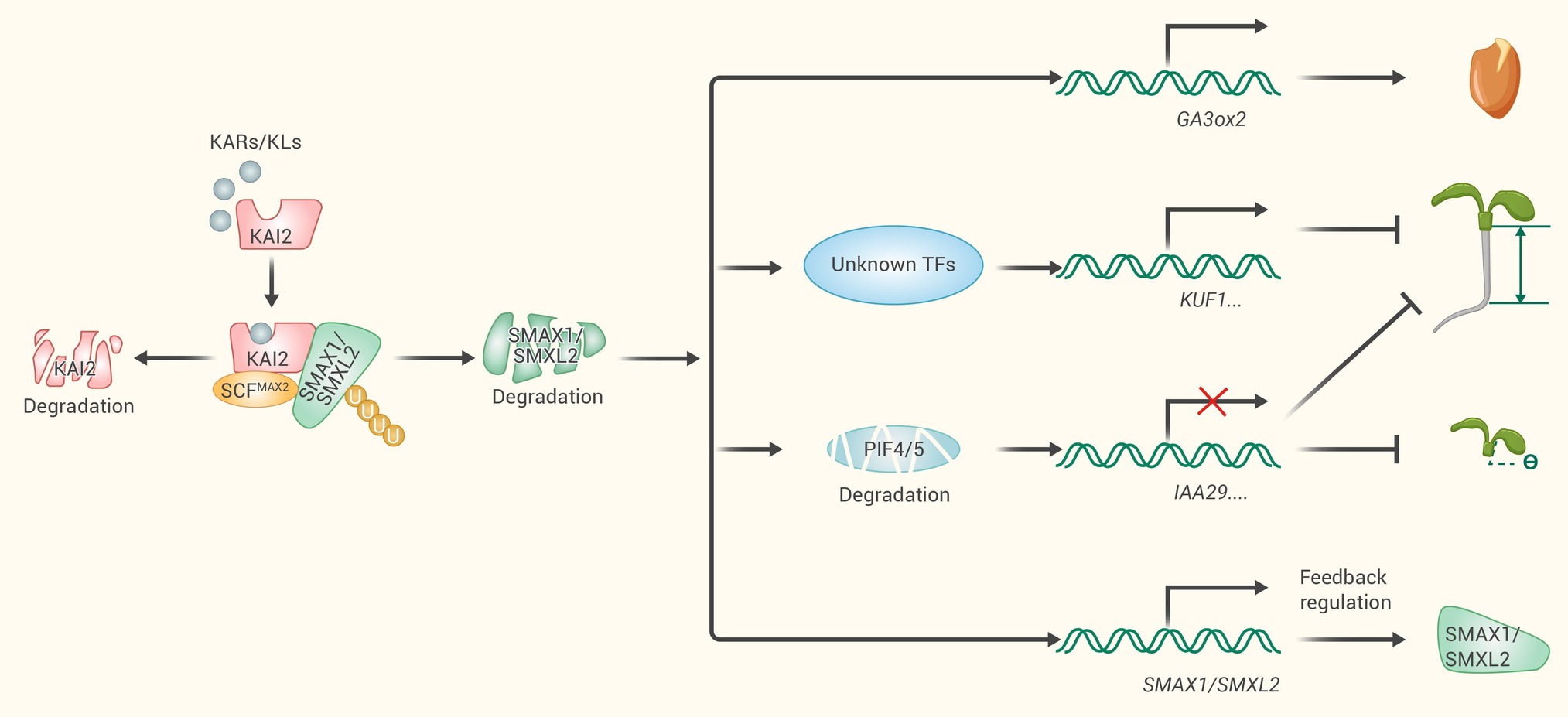
Karrikins (KARs), a class of butenolide compounds discovered in the smoke of burned vegetation, can mimic an unidentified phytohormone to regulate plant development and responses to environmental cues. The KAR signaling pathway is mediated by the 26S proteasome. Upon perception of KARs, the receptor of KARs, KARRIKIN INSENSITIVE 2 (KAI2), recruits the F-box protein, MORE AXILLARY GROWTH 2 (MAX2), and the repressor proteins, SUPPRESSOR OF MAX2 1 (SMAX1) and SMAX1-LIKE 2 (SMXL2), leading to the degradation of SMAX1 and SMXL2, which then reprograms the transcription of the KAR-responsive genes. This review focuses on the latest research progress regarding KAR signaling transduction, the identification of KAI2 ligands, and the crosstalk between KAR signaling, plant hormones, and environmental cues, providing new insights for future studies and applications in agriculture. -

-
REFERENCES
[1] Kamiya Y. (2010). Plant hormones: Versatile regulators of plant growth and development. Annu. Rev. Plant Biol. 61. DOI:10.1146/annurev.arplant.61.031110.100001 [2] Flematti G. R., Dixon K. W. and Smith S. M. (2015). What are karrikins and how were they 'discovered' by plants. BMC Biol. 13:108. DOI:10.1186/s12915-015-0219-0 [3] Nelson D. C., Flematti G. R., Ghisalberti E. L., et al. (2012). Regulation of seed germination and seedling growth by chemical signals from burning vegetation. Annu. Rev. Plant Biol. 63:107−130. DOI:10.1146/annurev-arplant-042811-105545 [4] Chiwocha S. D. S., Dixon K. W., Flematti G. R., et al. (2009). Karrikins: A new family of plant growth regulators in smoke. Plant Sci. 177:252−256. DOI:10.1016/j.plantsci.2009.06.007 [5] Conn C. E. and Nelson D. C. (2015). Evidence that KARRIKIN-INSENSITIVE2 (KAI2) receptors may perceive an unknown signal that is not karrikin or strigolactone. Front. Plant Sci. 6:1219. DOI:10.3389/fpls.2015.01219 [6] Sun Y. K., Flematti G. R., Smith S. M., et al. (2016). Reporter gene-facilitated detection of compounds in Arabidopsis leaf extracts that activate the karrikin signaling pathway. Front. Plant Sci. 7:1799. DOI:10.3389/fpls.2016.01799 [7] Waters M. T. and Nelson D. C. (2023). Karrikin perception and signalling. New Phytol. 237:1525−1541. DOI:10.1111/nph.18598 [8] Varshney K. and Gutjahr C. (2023). KAI2 can do: Karrikin receptor function in plant development and response to abiotic and biotic factors. Plant Cell Physiol. 64:984−995. DOI:10.1093/pcp/pcad077 [9] Baldwin I. T., Staszak-Kozinski L. and Davidson R. (1994). Up in smoke: I. Smoke-derived germination cues for postfire annual, Nicotiana attenuata torr. Ex. Watson. J. Chem. Ecol. 20:2345−2371. DOI:10.1007/BF02033207 [10] Dixon K. W., Roche S. and Pate J. S. (1995). The promotive effect of smoke derived from burnt native vegetation on seed germination of Western Australian plants. Oecologia 101:185−192. DOI:10.1007/BF00317282 [11] Brown N. A. C. and van Staden J. (1997). Smoke as a germination cue: a review. Plant Growth Regul. 22:115−124. DOI:10.1023/A:1005852018644 [12] Keeley J. E. and Fotheringham C. J. (1997). Trace gas emissions and smoke-induced seed germination. Science 276:1248−1250. DOI:10.1126/science.276.5316.1248 [13] Wicklow D. T. (1977). Germination response in Emmenanthe Penduliflora (Hydrophyllaceae). Ecology 58:201−205. DOI:10.2307/1935123 [14] de Lange J. H. and Boucher C. (1990). Autecological studies on Audouinia capitata (Bruniaceae). I. Plant-derived smoke as a seed germination cue. S. Afr. J. Bot. 56:700−703. DOI:10.1016/s0254-6299(16)31009-2 [15] Flematti G. R., Ghisalberti E. L., Dixon K. W., et al. (2004). A compound from smoke that promotes seed germination. Science 305:977. DOI:10.1126/science.1099944 [16] Dixon K. W., Merritt D. J., Flematti G. R., et al. (2009). Karrikinolide—a phytoreactive compound derived from smoke with applications in horticulture, ecological restoration and agriculture. Acta Hortic. 813:155−170. DOI:10.17660/ActaHortic.2009.813.20 [17] Nelson D. C., Riseborough J. A., Flematti G. R., et al. (2009). Karrikins discovered in smoke trigger Arabidopsis seed germination by a mechanism requiring gibberellic acid synthesis and light. Plant Physiol. 149:863−873. DOI:10.1104/pp.108.131516 [18] Flematti G. R., Ghisalberti E. L., Dixon K. W., et al. (2009). Identification of alkyl substituted 2H-furo[2,3-c]pyran-2-ones as germination stimulants present in smoke. J. Agric. Food Chem. 57:9475−9480. DOI:10.1021/jf9028128 [19] Flematti G. R., Goddard-Borger E. D., Merritt D. J., et al. (2007). Preparation of 2H-Furo[2,3-c]pyran-2-one derivatives and evaluation of their germination-promoting activity. J. Agric. Food Chem. 55:2189−2194. DOI:10.1021/jf0633241 [20] Martinez S. E., Conn C. E., Guercio A. M., et al. (2022). A KARRIKIN INSENSITIVE2 paralog in lettuce mediates highly sensitive germination responses to karrikinolide. Plant Physiol. 190:1440−1456. DOI:10.1093/plphys/kiac32 [21] Zheng J., Hong K., Zeng L., et al. (2020). Karrikin signaling acts parallel to and additively with strigolactone signaling to regulate rice mesocotyl elongation in darkness. Plant Cell 32:2780−2805. DOI:10.1105/tpc.20.00123 [22] Bursch K., Niemann E. T., Nelson D. C., et al. (2021). Karrikins control seedling photomorphogenesis and anthocyanin biosynthesis through a HY5-BBX transcriptional module. Plant J. 107:1346−1362. DOI:10.1111/tpj.15383 [23] Carbonnel S., Das D., Varshney K., et al. (2020). The karrikin signaling regulator SMAX1 controls Lotus japonicus root and root hair development by suppressing ethylene biosynthesis. Proc. Natl. Acad. Sci. USA 117:21757−21765. DOI:10.1073/pnas.2006111117 [24] Choi J., Lee T., Cho J., et al. (2020). The negative regulator SMAX1 controls mycorrhizal symbiosis and strigolactone biosynthesis in rice. Nat. Commun. 11:2114. DOI:10.1038/s41467-020-16021-1 [25] Feng Z., Liang X., Tian H., et al. (2022). SUPPRESSOR of MAX2 1 (SMAX1) and SMAX1-LIKE2 (SMXL2) negatively regulate drought resistance in Arabidopsis thaliana. Plant Cell Physiol. 63:1900−1913. DOI:10.1093/pcp/pcac080 [26] Gutjahr C., Gobbato E., Choi J., et al. (2015). Rice perception of symbiotic arbuscular mycorrhizal fungi requires the karrikin receptor complex. Science 350:1521−1524. DOI. DOI:10.1126/science.aac9715 [27] Li W., Nguyen K. H., Chu H. D., et al. (2017). The karrikin receptor KAI2 promotes drought resistance in Arabidopsis thaliana. PLoS Genet. 13:e1007076. DOI:10.1371/journal.pgen.1007076 [28] Li W., Nguyen K. H., Chu H. D., et al. (2020). Comparative functional analyses of DWARF14 and KARRIKIN INSENSITIVE 2 in drought adaptation of Arabidopsis thaliana. Plant J. 103:111−127. DOI:10.1111/tpj.14712 [29] Meng Y., Varshney K., Incze N., et al. (2022). KARRIKIN INSENSITIVE2 regulates leaf development, root system architecture and arbuscular-mycorrhizal symbiosis in Brachypodium distachyon. Plant J. 109:1559−1574. DOI:10.1111/tpj.15651 [30] Nelson D. C., Flematti G. R., Riseborough J. A., et al. (2010). Karrikins enhance light responses during germination and seedling development in Arabidopsis thaliana. Proc. Natl. Acad. Sci. USA 107:7095−7100. DOI:10.1073/pnas.0911635107 [31] Shah F. A., Ni J., Tang C., et al. (2021). Karrikinolide alleviates salt stress in wheat by regulating the redox and K+/Na+ homeostasis. Plant Physiol. Biochem. 167:921−933. DOI:10.1016/j.plaphy.2021.09.023 [32] Shah F. A., Wei X., Wang Q., et al. (2020). Karrikin improves osmotic and salt stress tolerance via the regulation of the redox homeostasis in the Oil Plant Sapium sebiferum. Front. Plant Sci. 11:216. DOI:10.3389/fpls.2020.00216 [33] Stanga J. P., Smith S. M., Briggs W. R., et al. (2013). SUPPRESSOR OF MORE AXILLARY GROWTH2 1 controls seed germination and seedling development in Arabidopsis. Plant Physiol. 163:318−330. DOI:10.1104/pp.113.221259 [34] Swarbreck S. M., Guerringue Y., Matthus E., et al. (2019). Impairment in karrikin but not strigolactone sensing enhances root skewing in Arabidopsis thaliana. Plant J. 98:607−621. DOI:10.1111/tpj.14233 [35] Villaécija-Aguilar J. A., Hamon-Josse M., Carbonnel S., et al. (2019). SMAX1/SMXL2 regulate root and root hair development downstream of KAI2-mediated signalling in Arabidopsis. PLoS Genet. 15:e1008327. DOI:10.1371/journal.pgen.1008327 [36] Villaecija-Aguilar J. A., Korosy C., Maisch L., et al. (2022). KAI2 promotes Arabidopsis root hair elongation at low external phosphate by controlling local accumulation of AUX1 and PIN2. Curr. Biol. 32:228-236 e223. DOI:10.1016/j.cub.2021.10.044. [37] Sun X. D. and Ni M. (2011). HYPOSENSITIVE TO LIGHT, an alpha/beta fold protein, acts downstream of ELONGATED HYPOCOTYL 5 to regulate seedling de-etiolation. Mol. Plant 4:116−126. DOI:10.1093/mp/ssq055 [38] Waters M. T., Nelson D. C., Scaffidi A., et al. (2012). Specialisation within the DWARF14 protein family confers distinct responses to karrikins and strigolactones in Arabidopsis. Development 139:1285−1295. DOI:10.1242/dev.074567 [39] Guo Y., Zheng Z., La Clair J. J., et al. (2013). Smoke-derived karrikin perception by the α/β-hydrolase KAI2 from Arabidopsis. Proc. Natl. Acad. Sci. USA 110:8284−8289. DOI:10.1073/pnas.1306265110 [40] Kagiyama M., Hirano Y., Mori T., et al. (2013). Structures of D14 and D14L in the strigolactone and karrikin signaling pathways. Genes Cells 18:147−160. DOI:10.1111/gtc.12025 [41] Lee I., Kim K., Lee S., et al. (2018). A missense allele of KARRIKIN-INSENSITIVE2 impairs ligand-binding and downstream signaling in Arabidopsis thaliana. J. Exp. Bot. 69:3609−3623. DOI:10.1093/jxb/ery164 [42] Waters M. T., Scaffidi A., Moulin S. L., et al. (2015). A Selaginella moellendorffii Ortholog of KARRIKIN INSENSITIVE2 functions in Arabidopsis development but cannot mediate responses to karrikins or strigolactones. Plant Cell 27:1925−1944. DOI:10.1105/tpc.15.00146 [43] Zhao L. H., Zhou X. E., Wu Z. S., et al. (2013). Crystal structures of two phytohormone signal-transducing α/β hydrolases: karrikin-signaling KAI2 and strigolactone-signaling DWARF14. Cell Res. 23:436−439. DOI:10.1038/cr.2013.19 [44] Yao J., Mashiguchi K., Scaffidi A., et al. (2018). An allelic series at the KARRIKIN INSENSITIVE 2 locus of Arabidopsis thaliana decouples ligand hydrolysis and receptor degradation from downstream signalling. Plant J. 96:75−89. DOI:10.1111/tpj.14017 [45] Waters M. T., Scaffidi A., Flematti G., et al. (2015). Substrate-induced degradation of the α/β-fold hydrolase KARRIKIN INSENSITIVE2 requires a functional catalytic triad but is independent of MAX2. Mol. Plant 8:814−817. DOI:10.1016/j.molp.2014.12.020 [46] Guercio A. M., Gilio A. K., Pawlak J., et al. (2024). Structural insights into rice KAI2 receptor provide functional implications for perception and signal transduction. J. Biol. Chem. 300:107593. DOI:10.1016/j.jbc.2024.107593 [47] Chang W., Qiao Q., Li Q., et al. (2024). Non-transcriptional regulatory activity of SMAX1 and SMXL2 mediates karrikin-regulated seedling response to red light in Arabidopsis. Mol. Plant 17:1054−1072. DOI:10.1016/j.molp.2024.05.007 [48] Scaffidi A., Waters M. T., Sun Y. K., et al. (2014). Strigolactone hormones and their stereoisomers signal through two related receptor proteins to induce different physiological responses in Arabidopsis. Plant Physiol. 165:1221−1232. DOI:10.1104/pp.114.240036 [49] Waters M. T. and Smith S. M. (2013). KAI2- and MAX2-mediated responses to karrikins and strigolactones are largely independent of HY5 in Arabidopsis seedlings. Mol. Plant 6:63−75. DOI:10.1093/mp/sss127 [50] Bürger M., Mashiguchi K., Lee H. J., et al. (2019). Structural basis of karrikin and non-natural strigolactone perception in Physcomitrella patens. Cell Rep. 26:855−865. DOI:10.1016/j.celrep.2019.01.003 [51] Ishikawa S., Maekawa M., Arite T., et al. (2005). Suppression of tiller bud activity in tillering dwarf mutants of rice. Plant Cell Physiol. 46:79−86. DOI:10.1093/pcp/pci022 [52] Nelson D. C., Scaffidi A., Dun E. A., et al. (2011). F-box protein MAX2 has dual roles in karrikin and strigolactone signaling in Arabidopsis thaliana. Proc. Natl. Acad. Sci. USA 108:8897−8902. DOI:10.1073/pnas.1100987108 [53] Stirnberg P., van de Sande K. and Leyser H. M. O. (2002). MAX1 and MAX2 control shoot lateral branching in Arabidopsis. Development 129 1131-1141. DOI:10.1242/dev.129.5.1131 [54] Jiang L., Liu X., Xiong G., et al. (2013). DWARF 53 acts as a repressor of strigolactone signalling in rice. Nature 504:401−405. DOI:10.1038/nature12870 [55] Stirnberg P., Furner I. J. and Ottoline Leyser H. M. (2007). MAX2 participates in an SCF complex which acts locally at the node to suppress shoot branching. Plant J. 50:80−94. DOI:10.1111/j.1365-313X.2007.03032.x [56] Wang L., Wang B., Jiang L., et al. (2015). Strigolactone signaling in Arabidopsis regulates shoot development by targeting D53-Like SMXL repressor proteins for ubiquitination and degradation. Plant Cell 27:3128−3142. DOI:10.1105/tpc.15.00605 [57] Wang L., Xu Q., Yu H., et al. (2020). Strigolactone and karrikin signaling pathways elicit ubiquitination and proteolysis of SMXL2 to regulate hypocotyl elongation in Arabidopsis. Plant Cell 32:2251−2270. DOI:10.1105/tpc.20.00140 [58] Zhou F., Lin Q., Zhu L., et al. (2013). D14-SCFD3-dependent degradation of D53 regulates strigolactone signalling. Nature 504:406−410. DOI:10.1038/nature12878 [59] Shen H., Luong P. and Huq E. (2007). The F-box protein MAX2 functions as a positive regulator of photomorphogenesis in Arabidopsis. Plant Physiol. 145:1471−1483. DOI:10.1104/pp.107.107227 [60] Soundappan I., Bennett T., Morffy N., et al. (2015). SMAX1-LIKE/D53 family members enable distinct MAX2-dependent responses to strigolactones and karrikins in Arabidopsis. Plant Cell 27:3143−3159. DOI:10.1105/tpc.15.00562 [61] Stanga J. P., Morffy N. and Nelson D. C. (2016). Functional redundancy in the control of seedling growth by the karrikin signaling pathway. Planta 243:1397−1406. DOI:10.1007/s00425-015-2458-2 [62] Shabek N., Ticchiarelli F., Mao H., et al. (2018). Structural plasticity of D3-D14 ubiquitin ligase in strigolactone signalling. Nature 563:652−656. DOI:10.1038/s41586-018-0743-5 [63] Tal L., Guercio A. M., Varshney K., et al. (2023). C-terminal conformational changes in SCF-D3/MAX2 ubiquitin ligase are required for KAI2-mediated signaling. New Phytol. 239:2067−2075. DOI:10.1111/nph.19101 [64] Tal L., Palayam M., Ron M., et al. (2022). A conformational switch in the SCF-D3/MAX2 ubiquitin ligase facilitates strigolactone signalling. Nat. Plants 8:561−573. DOI:10.1038/s41477-022-01145-7 [65] Moturu T. R., Thula S., Singh R. K., et al. (2018). Molecular evolution and diversification of the SMXL gene family. J. Exp. Bot. 69:2367−2378. DOI:10.1093/jxb/ery097 [66] Temmerman A., Guillory A., Bonhomme S., et al. (2022). Masks start to drop: Suppressor of MAX2 1-Like proteins reveal their many faces. Front. Plant Sci. 13:887232. DOI:10.3389/fpls.2022.887232 [67] Khosla A., Morffy N., Li Q., et al. (2020). Structure-function analysis of SMAX1 reveals domains that mediate its karrikin-induced proteolysis and interaction with the receptor KAI2. Plant Cell 32:2639−2659. DOI:10.1105/tpc.19.00752 [68] Xu P., Hu J., Chen H., et al. (2023). SMAX1 interacts with DELLA protein to inhibit seed germination under weak light conditions via gibberellin biosynthesis in Arabidopsis. Cell Rep. 42:112740. DOI:10.1016/j.celrep.2023.112740 [69] Kushihara R., Nakamura A., Takegami K., et al. (2025). Structural requirements of KAI2 ligands for activation of signal transduction. Proc. Natl. Acad. Sci. USA 122:e2414779122. DOI:10.1073/pnas.2414779122 [70] Yao J., Scaffidi A., Meng Y., et al. (2021). Desmethyl butenolides are optimal ligands for karrikin receptor proteins. New Phytol. 230:1003−1016. DOI:10.1111/nph.17224 [71] Yao R., Wang F., Ming Z., et al. (2017). ShHTL7 is a non-canonical receptor for strigolactones in root parasitic weeds. Cell Res. 27:838−841. DOI:10.1038/cr.2017.3 [72] Sepulveda C., Guzman M. A., Li Q., et al. (2022). KARRIKIN UP-REGULATED F-BOX 1 (KUF1) imposes negative feedback regulation of karrikin and KAI2 ligand metabolism in Arabidopsis thaliana. Proc. Natl. Acad. Sci. USA 119:e2112820119. DOI:10.1073/pnas.2112820119 [73] Waters M. T., Scaffidi A., Sun Y. K., et al. (2014). The karrikin response system of Arabidopsis. Plant J. 79:623−631. DOI:10.1111/tpj.12430 [74] Seto Y., Yasui R., Kameoka H., et al. (2019). Strigolactone perception and deactivation by a hydrolase receptor DWARF14. Nat. Commun. 10:191. DOI:10.1038/s41467-018-08124-7 [75] Yao R., Ming Z., Yan L., et al. (2016). DWARF14 is a non-canonical hormone receptor for strigolactone. Nature 536:469−473. DOI:10.1038/nature19073 [76] Yao R., Wang L., Li Y., et al. (2018). Rice DWARF14 acts as an unconventional hormone receptor for strigolactone. J. Exp. Bot. 69:2355−2365. DOI:10.1093/jxb/ery014 [77] Stirling S. A., Guercio A. M., Patrick R. M., et al. (2024). Volatile communication in plants relies on a KAI2-mediated signaling pathway. Science 383:1318−1325. DOI. DOI:10.1126/science.adl4685 [78] Rahimi M. and Bouwmeester H. (2021). Are sesquiterpene lactones the elusive KARRIKIN-INSENSITIVE2 ligand. Planta 253:54. DOI:10.1007/s00425-021-03571-x [79] Spring O., Schmauder K., Lackus N. D., et al. (2020). Spatial and developmental synthesis of endogenous sesquiterpene lactones supports function in growth regulation of sunflower. Planta 252:2. DOI:10.1007/s00425-020-03409-y [80] Hamiaux C., Drummond R. S., Janssen B. J., et al. (2012). DAD2 is an α/β hydrolase likely to be involved in the perception of the plant branching hormone, strigolactone. Curr. Biol. 22:2032−2036. DOI:10.1016/j.cub.2012.08.007 [81] de Saint Germain A., Clave G., Badet-Denisot M. A., et al. (2016). An histidine covalent receptor and butenolide complex mediates strigolactone perception. Nat. Chem. Biol. 12:787−794. DOI:10.1038/nchembio.2147 [82] Wang L., Wang B., Yu H., et al. (2020). Transcriptional regulation of strigolactone signalling in Arabidopsis. Nature 583:277−281. DOI:10.1038/s41586-020-2382-x [83] Hu Q., Liu H., He Y., et al. (2024). Regulatory mechanisms of strigolactone perception in rice. Cell 187:1−17. DOI:10.1016/j.cell.2024.10.009 [84] Chevalier F., Nieminen K., Sánchez-Ferrero J. C., et al. (2014). Strigolactone promotes degradation of DWARF14, an α/β hydrolase essential for strigolactone signaling in Arabidopsis. Plant Cell 26:1134−1150. DOI:10.1105/tpc.114.122903 [85] Hu Q., He Y., Wang L., et al. (2017). DWARF14, A receptor covalently linked with the active form of strigolactones, undergoes strigolactone-dependent degradation in rice. Front. Plant Sci. 8:1935. DOI:10.3389/fpls.2017.01935 [86] Li Q., Martin-Fontecha E. S., Khosla A., et al. (2022). The strigolactone receptor D14 targets SMAX1 for degradation in response to GR24 treatment and osmotic stress. Plant Commun. 3:100303. DOI:10.1016/j.xplc.2022.100303 [87] Akiyama K., Matsuzaki K. and Hayashi H. (2005). Plant sesquiterpenes induce hyphal branching in arbuscular mycorrhizal fungi. Nature 435:824−827. DOI:10.1038/nature03608 [88] Mashiguchi K., Morita R., Tanaka K., et al. (2023). Activation of strigolactone biosynthesis by the DWARF14-LIKE/KARRIKIN-INSENSITIVE2 pathway in mycorrhizal angiosperms, but not in Arabidopsis, a non-mycorrhizal plant. Plant Cell Physiol. 64:1066−1078. DOI:10.1093/pcp/pcad079 [89] Yoneyama K., Yoneyama K., Takeuchi Y., et al. (2007). Phosphorus deficiency in red clover promotes exudation of orobanchol, the signal for mycorrhizal symbionts and germination stimulant for root parasites. Planta 225:1031−1038. DOI:10.1007/s00425-006-0410-1 [90] López‐Ráez J. A., Charnikhova T., Gómez‐Roldán V., et al. (2008). Tomato strigolactones are derived from carotenoids and their biosynthesis is promoted by phosphate starvation. New Phytol. 178:863−874. DOI:10.1111/j.1469-8137.2008.02406.x [91] Umehara M., Hanada A., Yoshida S., et al. (2008). Inhibition of shoot branching by new terpenoid plant hormones. Nature 455:195−200. DOI:10.1038/nature07272 [92] Liu W., Kohlen W., Lillo A., et al. (2011). Strigolactone biosynthesis in Medicago truncatula and rice requires the symbiotic GRAS-type transcription factors NSP1 and NSP2. Plant Cell 23:3853−3865. DOI:10.1105/tpc.111.089771 [93] Shen H., Zhu L., Bu Q. Y., et al. (2012). MAX2 affects multiple hormones to promote photomorphogenesis. Mol. Plant 5:750−762. DOI:10.1093/mp/sss029 [94] Murase K., Hirano Y., Sun T.-p., et al. (2008). Gibberellin-induced DELLA recognition by the gibberellin receptor GID1. Nature 456:459−463. DOI:10.1038/nature07519 [95] Kim J. Y., Park Y. J., Lee J. H., et al. (2022). SMAX1 integrates karrikin and light signals into GA-mediated hypocotyl growth during seedling establishment. Plant Cell Physiol. 63:932−943. DOI:10.1093/pcp/pcac055 [96] Kepczynski J., Dziurka M. and Wojcik A. (2024). KAR1-induced dormancy release in Avena fatua caryopses involves reduction of caryopsis sensitivity to ABA and ABA/GAs ratio in coleorhiza and radicle. Planta 259:126. DOI:10.1007/s00425-024-04387-1 [97] Okamoto M., Kuwahara A., Seo M., et al. (2006). CYP707A1 and CYP707A2, which encode abscisic acid 8'-hydroxylases, are indispensable for proper control of seed dormancy and germination in Arabidopsis. Plant Physiol. 141:97−107. DOI:10.1104/pp.106.079475 [98] Brun G., Thoiron S., Braem L., et al. (2019). CYP707As are effectors of karrikin and strigolactone signalling pathways in Arabidopsis thaliana and parasitic plants. Plant Cell Environ. 42:2612−2626. DOI:10.1111/pce.13594 [99] Wang L., Waters M. T. and Smith S. M. (2018). Karrikin-KAI2 signalling provides Arabidopsis seeds with tolerance to abiotic stress and inhibits germination under conditions unfavourable to seedling establishment. New Phytol. 219:605−618. DOI:10.1111/nph.15192 [100] Bentsink L. and Koornneef M. (2008). Seed dormancy and germination. Arabidopsis Book 6:e0119. DOI:10.1199/tab.0119 [101] Yang L., Liu S. and Lin R. (2020). The role of light in regulating seed dormancy and germination. J. Integr. Plant Biol. 62:1310−1326. DOI:10.1111/jipb.13001 [102] Hountalas J. E., Bunsick M., Xu Z., et al. (2024). HTL/KAI2 signaling substitutes for light to control plant germination. PLoS Genet. 20:e1011447. DOI:10.1371/journal.pgen.1011447 [103] Meng Y., Chen F., Shuai H., et al. (2016). Karrikins delay soybean seed germination by mediating abscisic acid and gibberellin biogenesis under shaded conditions. Sci. Rep. 6:22073. DOI:10.1038/srep22073 [104] Park C., Lee H. Y. and Yoon G. M. (2021). The regulation of ACC synthase protein turnover: a rapid route for modulating plant development and stress responses. Curr. Opin. Plant Biol. 63:102046. DOI:10.1016/j.pbi.2021.102046 [105] Rudus I., Cembrowska-Lech D., Jaworska A., et al. (2019). Involvement of ethylene biosynthesis and perception during germination of dormant Avena fatua L. caryopses induced by KAR1 or GA3. Planta 249:719-738. DOI:10.1007/s00425-018-3032-5. [106] Halliday K. J., Martinez-Garcia J. F. and Josse E. M. (2009). Integration of light and auxin signaling. Cold Spring Harb. Perspect. Biol. 1:a001586. DOI:10.1101/cshperspect.a001586 [107] Adamowski M. and Friml J. (2015). PIN-dependent auxin transport: action, regulation, and evolution. Plant Cell 27:20−32. DOI:10.1105/tpc.114.134874 [108] Hamon-Josse M., Villaecija-Aguilar J. A., Ljung K., et al. (2022). KAI2 regulates seedling development by mediating light-induced remodelling of auxin transport. New Phytol. 235:126−140. DOI:10.1111/nph.18110 [109] Xu P., Jinbo H. and Cai W. (2022). Karrikin signaling regulates hypocotyl shade avoidance response by modulating auxin homeostasis in Arabidopsis. New Phytol. 236:1748−1761. DOI:10.1111/nph.18459 [110] Jiao Y., Lau O. S. and Deng X. W. (2007). Light-regulated transcriptional networks in higher plants. Nat. Rev. Genet. 8:217−230. DOI:10.1038/nrg2049 [111] Lee I., Choi S., Lee S., et al. (2019). KAI2-KL signaling intersects with light-signaling for photomorphogenesis. Plant Signal. Behav. 14:e1588660. DOI:10.1080/15592324.2019.1588660 [112] Oh E., Kim J., Park E., et al. (2004). PIL5, a phytochrome-interacting basic helix-loop-helix protein, is a key negative regulator of seed germination in Arabidopsis thaliana. Plant Cell 16:3045−3058. DOI:10.1105/tpc.104.025163 [113] Oh E., Yamaguchi S., Kamiya Y., et al. (2006). Light activates the degradation of PIL5 protein to promote seed germination through gibberellin in Arabidopsis. Plant J. 47:124−139. DOI:10.1111/j.1365-313X.2006.02773.x [114] Oh E., Yamaguchi S., Hu J., et al. (2007). PIL5, a phytochrome-interacting bHLH protein, regulates gibberellin responsiveness by binding directly to the GAI and RGA promoters in Arabidopsis seeds. Plant Cell 19:1192−1208. DOI:10.1105/tpc.107.050153 [115] Kim D. H., Yamaguchi S., Lim S., et al. (2008). SOMNUS, a CCCH-Type zinc finger protein in Arabidopsis, negatively regulates light-dependent seed germination downstream of PIL5. Plant Cell 20:1260−1277. DOI:10.1105/tpc.108.058859 [116] de Wit M., Galvão V. C. and Fankhauser C. (2016). Light-mediated hormonal regulation of plant growth and development. Annu. Rev. Plant Biol. 67:513−537. DOI:10.1146/annurev-arplant-043015-112252 [117] Ang L.-H. and Deng X. W. (1994). Regulatory hierarchy of photomorphogenic loci: allele-specific and light-dependent interaction between the HY5 and COP1 loci. Plant Cell 6:613−628. DOI:10.1105/tpc.6.5.613 [118] Ang L.-H., Chattopadhyay S., Wei N., et al. (1998). Molecular interaction between COP1 and HY5 defines a regulatory switch for light control of Arabidopsis development. Mol. Cell 1:213−222. DOI:10.1016/S1097-2765(00)80022-2 [119] Chattopadhyay S., Ang L. H., Puente P., et al. (1998). Arabidopsis bZIP protein HY5 directly interacts with light-responsive promoters in mediating light control of gene expression. Plant Cell 10:673−683. DOI:10.1105/tpc.10.5.673 [120] Deng X. W., Caspar T. and Quail P. H. (1991). cop1: a regulatory locus involved in light-controlled development and gene expression in Arabidopsis. Genes Dev. 5:1172−1182. DOI:10.1101/gad.5.7.1172 [121] Quint M., Delker C., Franklin K. A., et al. (2016). Molecular and genetic control of plant thermomorphogenesis. Nat. Plants 2:15190. DOI:10.1038/nplants.2015.190 [122] Delker C., Quint M. and Wigge P. A. (2022). Recent advances in understanding thermomorphogenesis signaling. Curr. Opin. Plant Biol. 68:102231. DOI:10.1016/j.pbi.2022.102231 [123] Wei J., Zhang Q., Zhang Y., et al. (2024). Advance in the thermoinhibition of lettuce (Lactuca sativa L. ) seed germination. Plants 13:2051. DOI:10.3390/plants13152051 [124] Jung J. H., Domijan M., Klose C., et al. (2016). Phytochromes function as thermosensors in Arabidopsis. Science 354:886−889. DOI:10.1126/science.aaf6005 [125] Legris M., Klose C., Burgie E. S., et al. (2016). Phytochrome B integrates light and temperature signals in Arabidopsis. Science 354:897−900. DOI:10.1126/science.aaf5656 [126] Park Y. J., Kim J. Y. and Park C. M. (2022). SMAX1 potentiates phytochrome B-mediated hypocotyl thermomorphogenesis. Plant Cell 34:2671−2687. DOI:10.1093/plcell/koac124 [127] Abdelrahman M., Mostofa M. G., Tran C. D., et al. (2023). The karrikin receptor KARRIKIN INSENSITIVE2 positively regulates heat stress tolerance in Arabidopsis thaliana. Plant Cell Physiol. 63:1914−1926. DOI:10.1093/pcp/pcac112 [128] Lantzouni O., Alkofer A., Falter-Braun P., et al. (2020). GROWTH-REGULATING FACTORS interact with DELLAs and regulate growth in cold stress. Plant Cell 32:1018−1034. DOI:10.1105/tpc.19.00784 [129] Shah F. A., Ni J., Yao Y., et al. (2021). Overexpression of karrikins receptor gene Sapium sebiferum KAI2 promotes the cold stress tolerance via regulating the redox homeostasis in Arabidopsis thaliana. Front. Plant Sci. 12:657960. DOI:10.3389/fpls.2021.657960 [130] Shao Z., Yang S., Gu Y., et al. (2023). Ubiquitin negatively regulates ABA responses by inhibiting SnRK2.2 and SnRK2.3 kinase activity in Arabidopsis. J. Exp. Bot. 74:5394-5404. DOI:10.1093/jxb/erad229 [131] Liu M., Shan Q., Ding E., et al. (2023). Karrikin increases tomato cold tolerance via strigolactone and the abscisic acid signaling network. Plant Sci. 332:111720. DOI:10.1016/j.plantsci.2023.111720 [132] Bu Q., Lv T., Shen H., et al. (2014). Regulation of drought tolerance by the F-box protein MAX2 in Arabidopsis. Plant Physiol. 164:424−439. DOI:10.1104/pp.113.226837 [133] Ha C. V., Leyva-Gonzalez M. A., Osakabe Y., et al. (2014). Positive regulatory role of strigolactone in plant responses to drought and salt stress. Proc. Natl. Acad. Sci. USA 111:851−856. DOI:10.1073/pnas.1322135111 [134] Raghavendra A. S., Gonugunta V. K., Christmann A., et al. (2010). ABA perception and signalling. Trends Plant Sci. 15:395−401. DOI:10.1016/j.tplants.2010.04.006 [135] Nakashima K. and Yamaguchi-Shinozaki K. (2013). ABA signaling in stress-response and seed development. Plant Cell Rep. 32:959−970. DOI:10.1007/s00299-013-1418-1 [136] Mukherjee A., Dwivedi S., Bhagavatula L., et al. (2023). Integration of light and ABA signaling pathways to combat drought stress in plants. Plant Cell Rep. 42:829−841. DOI:10.1007/s00299-023-02999-7 [137] Mostofa M. G., Abdelrahman M., Rahman M. M., et al. (2023). Karrikin receptor KAI2 coordinates salt tolerance mechanisms in Arabidopsis thaliana. Plant Cell Physiol. 63:1927−1942. DOI:10.1093/pcp/pcac121 [138] Saez A., Robert N., Maktabi M. H., et al. (2006). Enhancement of abscisic acid sensitivity and reduction of water consumption in Arabidopsis by combined inactivation of the protein phosphatases type 2C ABI1 and HAB1. Plant Physiol. 141:1389−1399. DOI:10.1104/pp.106.081018 [139] Ma Y., Szostkiewicz I., Korte A., et al. (2009). Regulators of PP2C phosphatase activity function as abscisic acid sensors. Science 324:1064−1068. DOI:10.1126/science.1172408 [140] Blazquez M. A., Nelson D. C. and Weijers D. (2020). Evolution of plant hormone response pathways. Annu. Rev. Plant Biol. 71:327−353. DOI:10.1146/annurev-arplant-050718-100309 [141] Zheng X., Yang X., Chen Z., et al. (2021). Arabidopsis SMAX1 overaccumulation suppresses rosette shoot branching and promotes leaf and petiole elongation. Biochem. Biophys. Res. Commun. 553:44−50. DOI:10.1016/j.bbrc.2021.03.006 [142] Chang S. H., George W. J. and Nelson D. C. (2024). An N-terminal domain specifies developmental control by the SMAX1-LIKE family of transcriptional co-repressors in Arabidopsis thaliana. bioRxiv:2024.2005.2012.593779. DOI:10.1101/2024.05.12.593779 [143] Chang S. H., George W. and Nelson D. C. (2025). Transcriptional regulation of development by SMAX1-LIKE proteins, targets of strigolactone and karrikin/KAI2 ligand signaling. J. Exp. Bot. 76:1888−1906. DOI:10.1093/jxb/eraf027 [144] Zou J., Zhang S., Zhang W., et al. (2006). The rice HIGH-TILLERING DWARF1 encoding an ortholog of Arabidopsis MAX3 is required for negative regulation of the outgrowth of axillary buds. Plant J. 48:687−698. DOI:10.1111/j.1365-313X.2006.02916.x [145] Wang Y., Shang L., Yu H., et al. (2020). A strigolactone biosynthesis gene contributed to the green revolution in rice. Mol. Plant 13:923−932. DOI:10.1016/j.molp.2020.03.009 -
ABOUT THIS ARTICLE
Cite this article:
Cao S., Li X. and Wang L. (2025). Interactions of the karrikin signaling pathway with phytohormones and environmental signals in plants. The Innovation Life 3:100148. https://doi.org/10.59717/j.xinn-life.2025.100148
Welcome!
To request copyright permission to republish or share portions of our works, please visit Copyright Clearance Center's (CCC) Marketplace website at marketplace.copyright.com.
Export File
Citation
Cao S., Li X. and Wang L. (2025). Interactions of the karrikin signaling pathway with phytohormones and environmental signals in plants. The Innovation Life 3:100148. https://doi.org/10.59717/j.xinn-life.2025.100148

Format
Content
-
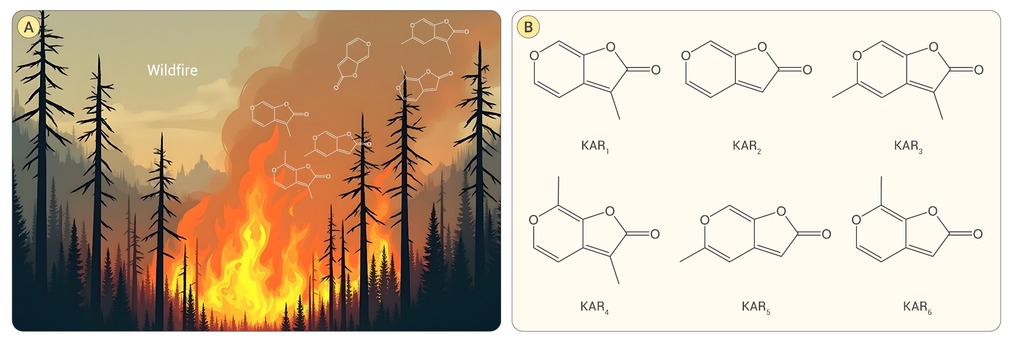
Figure 1.
Structures of KARs
-
Figure 2.
A proposed model of KAR signaling pathway in Arabidopsis
-
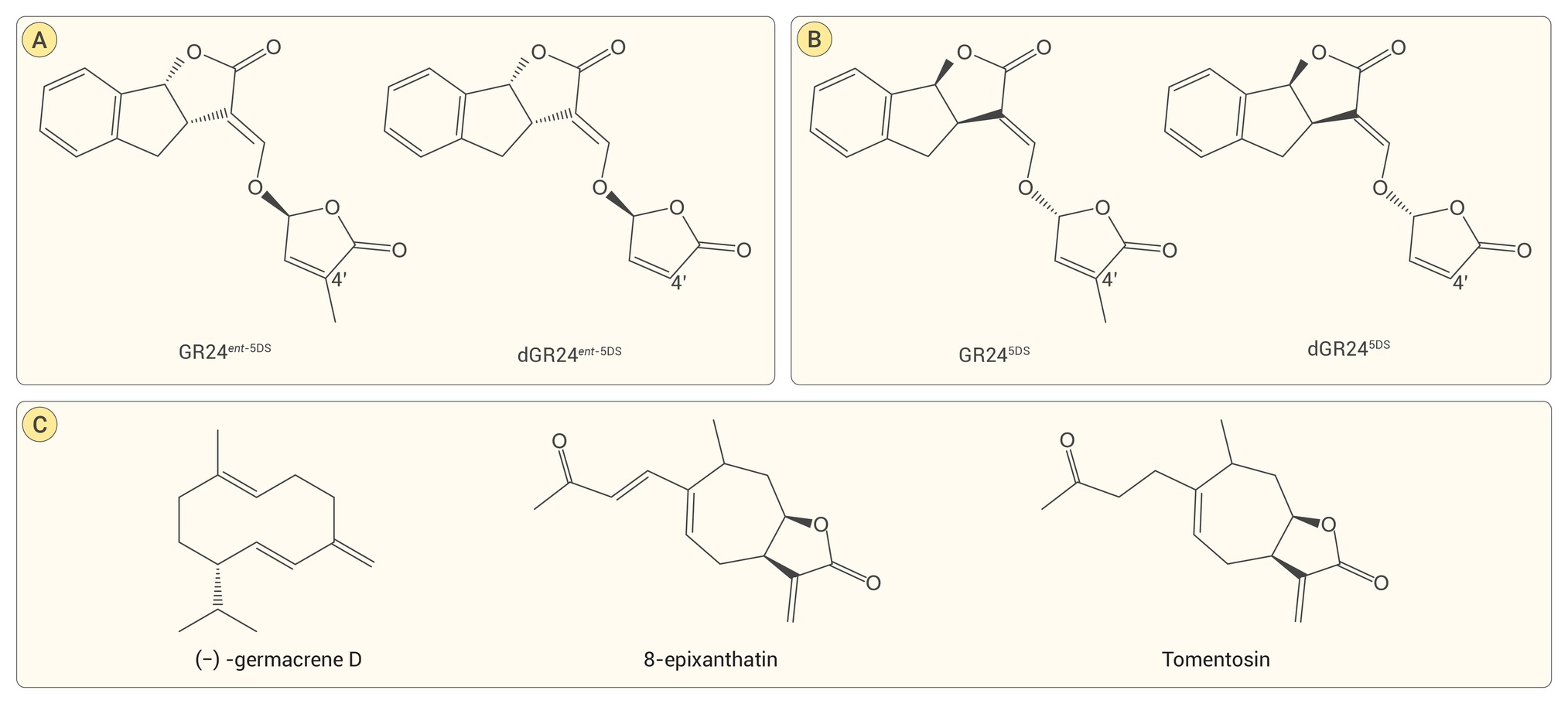
Figure 3.
Structures of GR24 isomers and candidate KLs
-
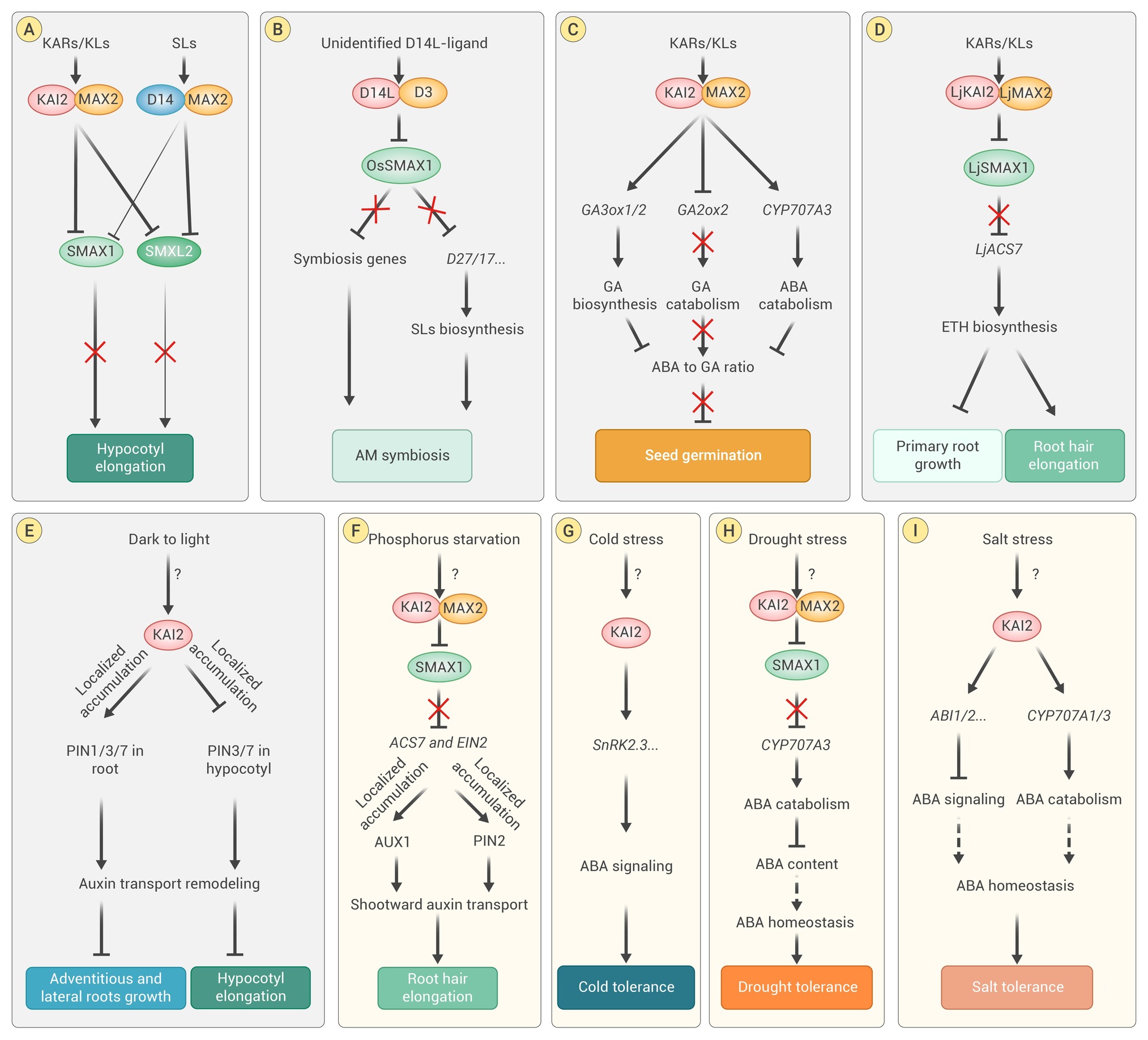
Figure 4.
The interactions of the KAR signaling pathway with phytohormones
-
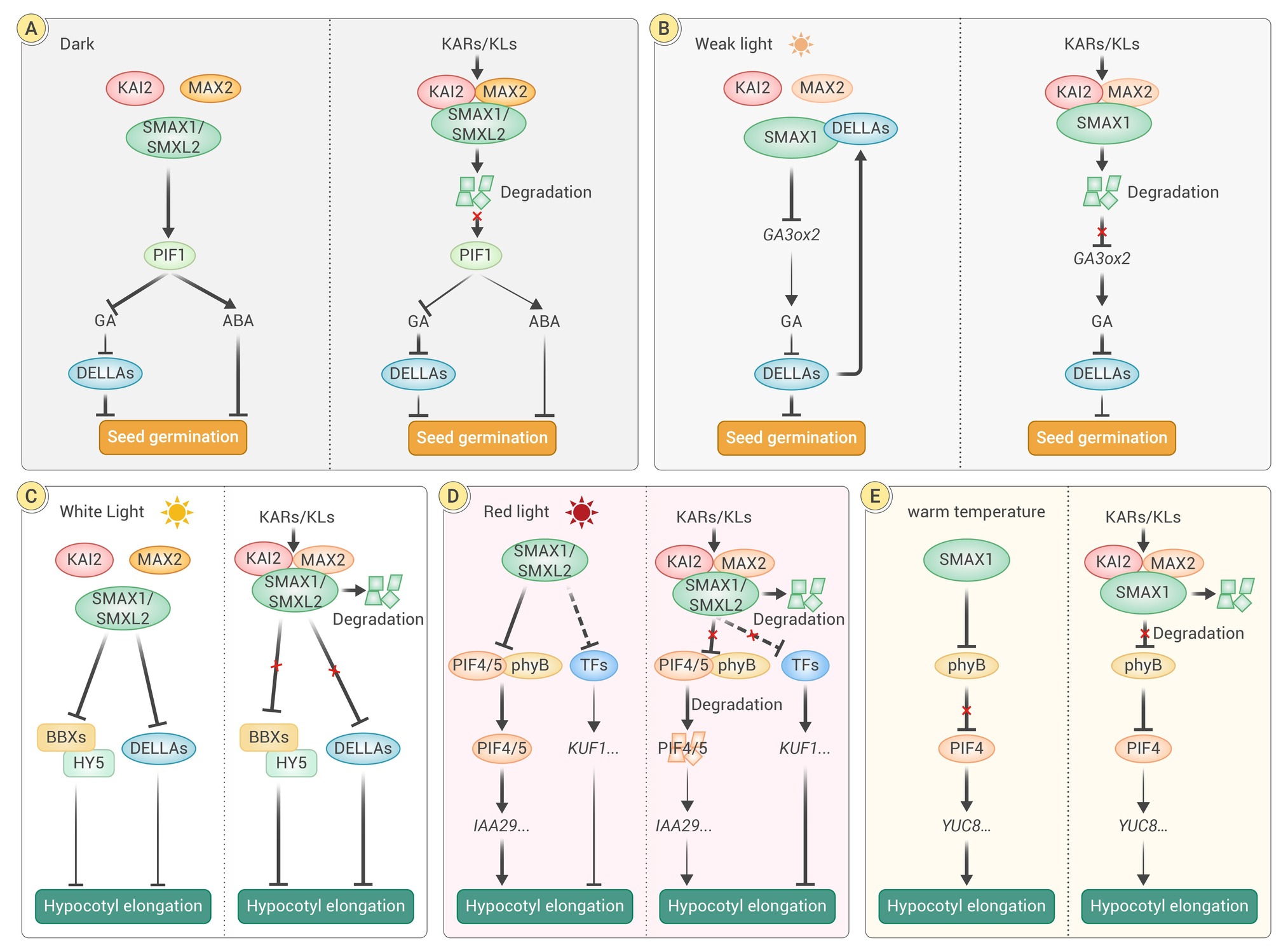
Figure 5.
The interactions of KAR signaling pathway with light and warm temperature
-
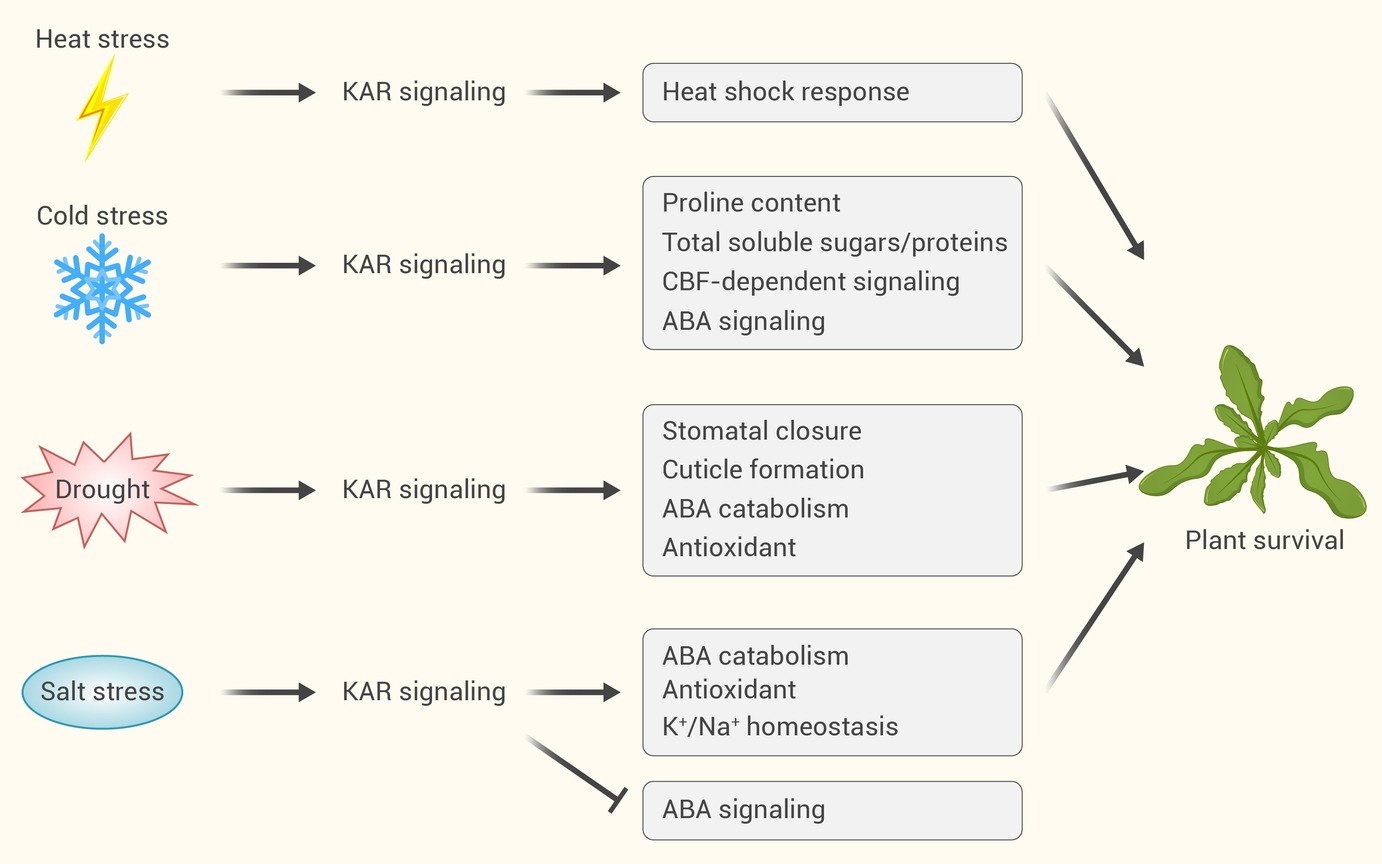
Figure 6.
The interaction of KAR signaling pathway with abiotic stress
