
HBIcloud: A comprehensive, user-centric platform for integrative multi-omics analysis
-
GRAPHICAL ABSTRACT
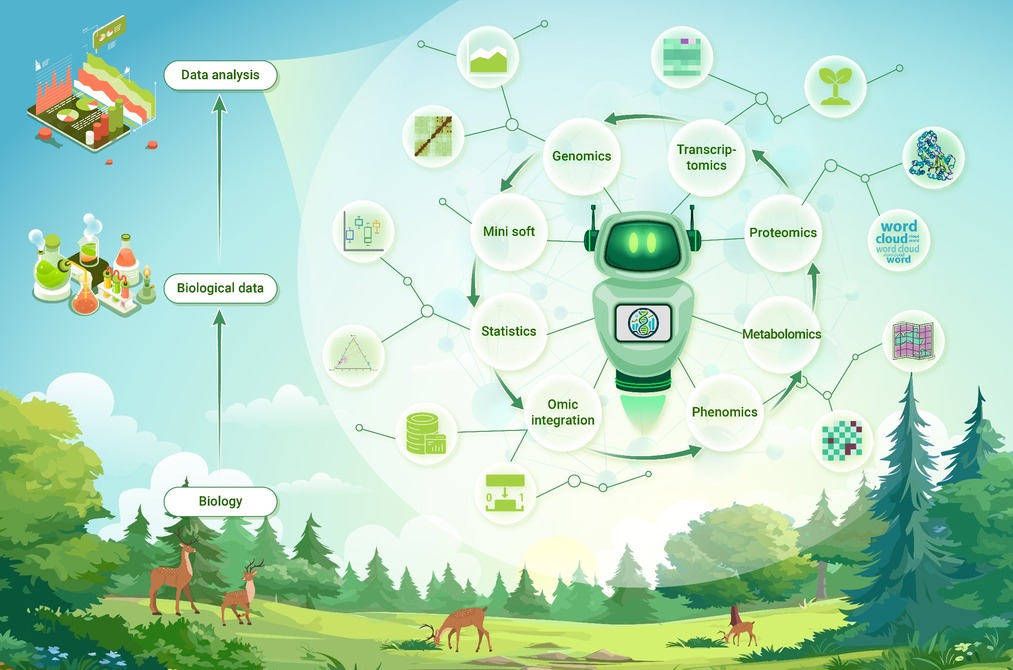
 DownLoad:
Full size image
DownLoad:
Full size image
-
PUBLIC SUMMARY
-
HBIcloud is an online platform that integrates multi-dimensional omics tools.
It enables users to perform analyses without requiring advanced programming skills.
It offers over 100 tools through a simple, one-stop operation, catering to a wide range of needs.
HBIcloud streamlines data preprocessing, normalization, and integration to aid research.
-
-
ABSTRACT
The rapid expansion of multi-omics data has revolutionized biological research but introduced significant challenges in data integration and analysis, particularly for researchers without advanced computational expertise. HBIcloud addresses this gap by offering a centralized, user-friendly online platform integrating 103 tools across genomics, transcriptomics, proteomics, metabolomics, phenomics, and multi-omics integration. Through standardized workflows, extensive parameter customization, and detailed documentation, HBIcloud enables researchers to conduct high-quality, reproducible analyses without programming skills. The platform streamlines data preprocessing, normalization, and integration, empowering users to explore complex biological systems and drive innovation in multi-omics research. Furthermore, we discuss the prospects of HBIcloud, including planned enhancements and its potential for high citation impact within the scientific community. By providing a robust and versatile platform, HBIcloud aims to accelerate discovery and innovation in the field of multi-omics, fostering collaborative research and expanding the boundaries of biological understanding. The official website of HBIcloud is https://bioinformatics.hainanu.edu.cn/hbicloud/. -

-
REFERENCES
[1] Dai X. and Shen L. (2022). Advances and trends in omics technology development. Front. Med. 9:911861. DOI:10.3389/fmed.2022.911861 [2] Bustamante C. D., De La Vega F. M. and Burchard E. G. (2011). Genomics for the world. Nature 475:163−165. DOI:10.1038/475163a [3] Lowe R., Shirley N., Bleackley M., et al. (2017). Transcriptomics technologies. PLoS Comput. Biol. 13:e1005457. DOI:10.1371/journal.pcbi.1005457 [4] Fields S. (2001). Proteomics in genomeland. Science 291:1221−1224. DOI:10.1126/science.291.5507.1221 [5] Idle J. R. and Gonzalez F. J. (2007). Metabolomics. Cell metabolism 6:348−351. DOI:10.1016/j.cmet.2007.10.005 [6] Houle D., Govindaraju D. R. and Omholt S. (2010). Phenomics: The next challenge. Nat. Rev. Genet. 11:855−866. DOI:10.1038/nrg2897 [7] Morley M., Molony C. M., Weber T. M., et al. (2004). Genetic analysis of genome-wide variation in human gene expression. Nature 430:743−747. DOI:10.1038/nature02797 [8] Fiehn O. (2001). Combining genomics, metabolome analysis, and biochemical modelling to understand metabolic networks. Comp. Funct. Genomics 2:155−168. DOI:10.1002/cfg.82 [9] Gomez-Cabrero D., Abugessaisa I., Maier D., et al. (2014). Data integration in the era of omics: current and future challenges. BMC Syst. Biol. 8:1−10. DOI:10.1186/1752-0509-8-S2-I1 [10] Misra B. B., Langefeld C., Olivier M., et al. (2019). Integrated omics: Tools, advances and future approaches. J. Mol. Endocrinol. 62:R21−R45. DOI:10.1530/JME-18-0055 [11] Bersanelli M., Mosca E., Remondini D., et al. (2016). Methods for the integration of multi-omics data: mathematical aspects. BMC Bioinf. 17:167−177. DOI:10.1186/s12859-015-0857-9 [12] Ren Y., Yu G., Shi C., et al. (2022). Majorbio Cloud: A one-stop, comprehensive bioinformatic platform for multiomics analyses. iMeta 1:e12. DOI:10.1002/imt2.12 [13] Li J., Miao B., Wang S., et al. (2022). Hiplot: A comprehensive and easy-to-use web service for boosting publication-ready biomedical data visualization. Briefings Bioinf. 23. DOI:10.1093/bib/bbac261. [14] Wilkinson L. (2011). Elegant graphics for data analysis. Wickham, H. (ed). ggplot2 (Springer Cham), pp:3-10. DOI:10.1007/978-3-319-24277-4 [15] Zhang Y., Yang C., Wang J., et al. (2024). BioLadder: A bioinformatic platform primarily focused on proteomic data analysis. iMeta 3:e215. DOI:10.1002/imt2.215 [16] Li H. and Homer N. (2010). A survey of sequence alignment algorithms for next-generation sequencing. Briefings Bioinf. 11:473−483. DOI:10.1093/bib/bbq015 [17] Danecek P., Auton A., Abecasis G., et al. (2011). The variant call format and VCFtools. Bioinformatics 27:2156−2158. DOI:10.1093/bioinformatics/btr330 [18] Kitts P. (2002). Genome assembly and annotation process. McEntyre J, Ostell J. (ed). The NCBI Handbook (Bethesda: National Center for Biotechnology Information), pp:49-66. DOI: 10.1016/B978-0-323-89775-4.00013-4 [19] Seppey M., Manni M. and Zdobnov E. M. (2019). BUSCO: Assessing genome assembly and annotation completeness. Methods Mol Biol.227-245. DOI:10.1007/978-1-4939-9173-0_14. [20] Guo S., Liu J., Zheng Y., et al. (2011). Characterization of transcriptome dynamics during watermelon fruit development: Sequencing, assembly, annotation and gene expression profiles. BMC Genomics. 12:1−13. DOI:10.1186/1471-2164-12-454 [21] Huerlimann R., Wade N. M., Gordon L., et al. (2018). De novo assembly, characterization, functional annotation and expression patterns of the black tiger shrimp (Penaeus monodon) transcriptome. Sci Rep. 8:13553. DOI:10.1038/s41598-018-31148-4 [22] Song M., Yang H., Siadat S. H., et al. (2013). A comparative study of dimensionality reduction techniques to enhance trace clustering performances. Expert Syst. Appl. 40:3722−3737. DOI:10.1016/j.eswa.2012.12.078 [23] Reddy G. T., Reddy M. P. K., Lakshmanna K., et al. (2020). Analysis of dimensionality reduction techniques on big data. IEEE Access 8: 54776−54788. DOI:10.1109/ACCESS.2020.2980942 [24] Zebari R., Abdulazeez A., Zeebaree D., et al. (2020). A comprehensive review of dimensionality reduction techniques for feature selection and feature extraction. J. Appl. Sci. Technol. Trends 1:56−70. DOI:10.38094/jastt1224 [25] Wani N. and Raza K. (2019). Integrative approaches to reconstruct regulatory networks from multi-omics data: A review of state-of-the-art methods. Comput. Biol. Chem. 83:107120. DOI:10.1016/j.compbiolchem.2019.107120 [26] Wu Y., Zeng J., Zhang F., et al. (2018). Integrative analysis of omics summary data reveals putative mechanisms underlying complex traits. Nat. Commun. 9:918. DOI:10.1038/s41467-018-03371-0 [27] Sun Y. V. and Hu Y.-J. (2016). Integrative analysis of multi-omics data for discovery and functional studies of complex human diseases. Adv Genet. 93:147−190. DOI:10.1016/bs.adgen.2015.11.004 [28] Wang D. and Bodovitz S. (2010). Single cell analysis: the new frontier in ‘omics’. Trends Biotechnol. 28:281−290. DOI:10.1016/j.tibtech.2010.03.002 [29] Bressan D., Battistoni G. and Hannon G. J. (2023). The dawn of spatial omics. Science 381:eabq4964. DOI:10.1126/science.abq4964 [30] Mahesh B. (2020). Machine learning algorithms-A review. Int. J. Sci. Res. (IJSR). 9:381−386. DOI:10.30574/ijsra.2023.9.1.0410 -
ABOUT THIS ARTICLE
Cite this article:
He S., Luo Y., Dong W., et al. (2025). HBIcloud: A comprehensive, user-centric platform for integrative multi-omics analysis. The Innovation Life 3:100157. https://doi.org/10.59717/j.xinn-life.2025.100157
Welcome!
To request copyright permission to republish or share portions of our works, please visit Copyright Clearance Center's (CCC) Marketplace website at marketplace.copyright.com.
Article Metrics
Relative Articles
Cited by
Export File
Citation
He S., Luo Y., Dong W., et al. (2025). HBIcloud: A comprehensive, user-centric platform for integrative multi-omics analysis. The Innovation Life 3:100157. https://doi.org/10.59717/j.xinn-life.2025.100157

Format
Content
-
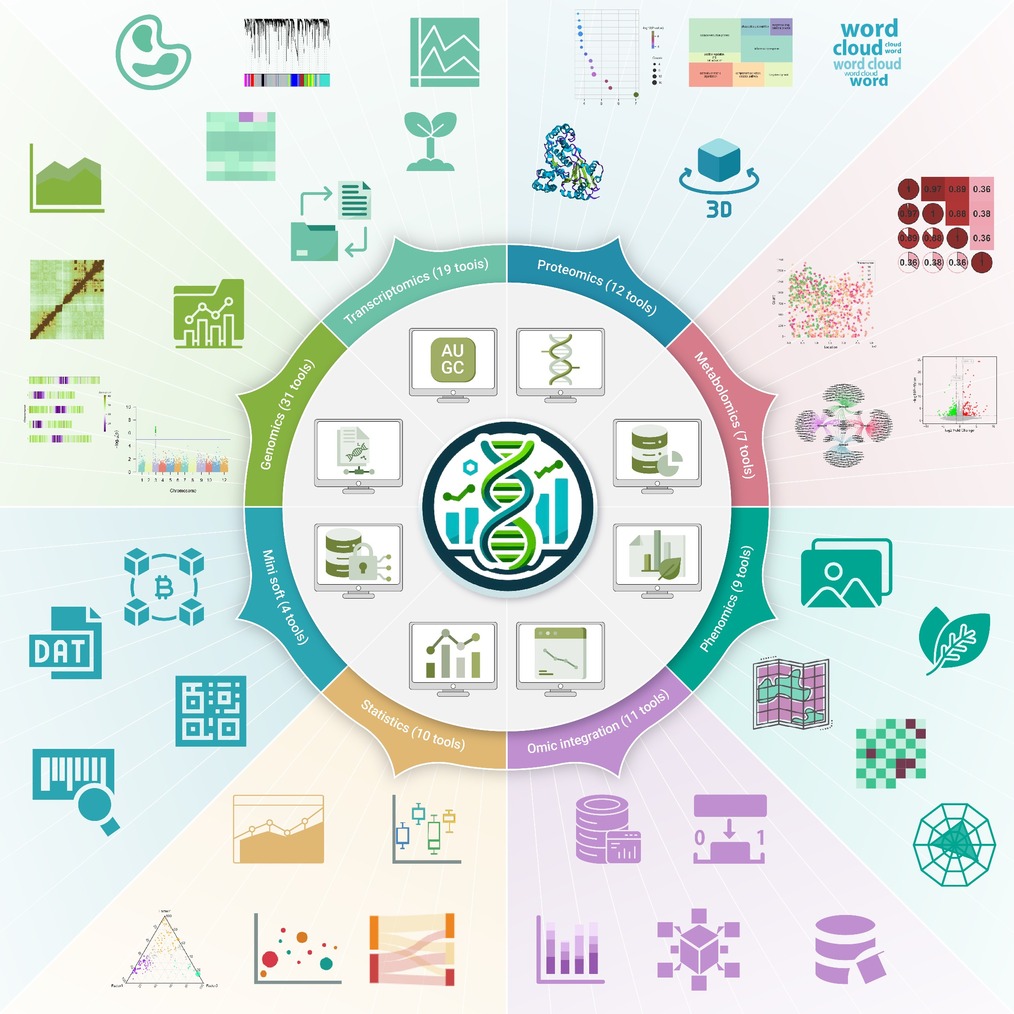
Figure 1.
Overview of the 103 tools integrated in HBIcloud
-
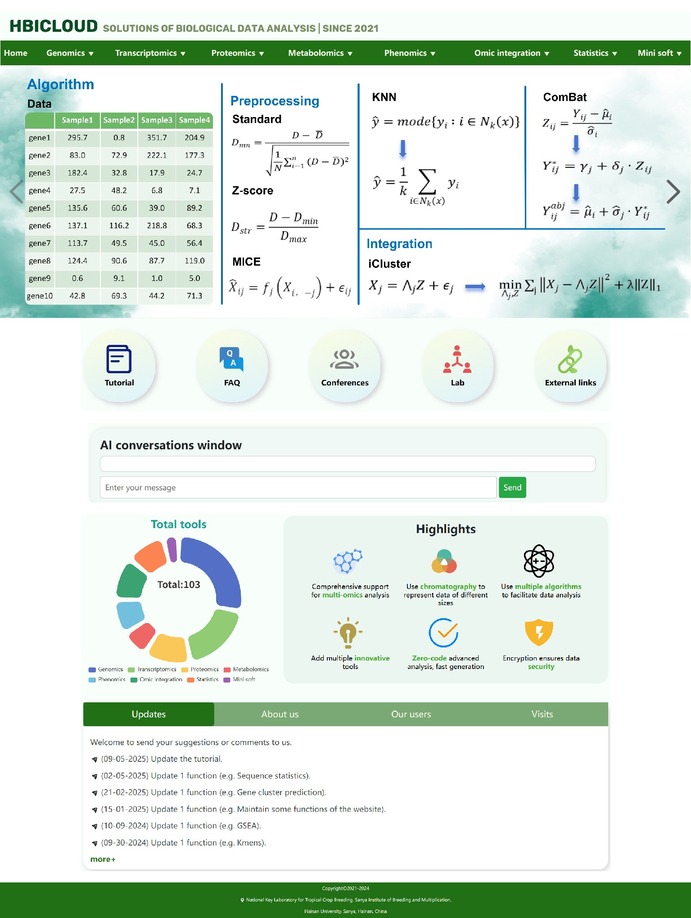
Figure 2.
The online homepage of HBIcloud.
-
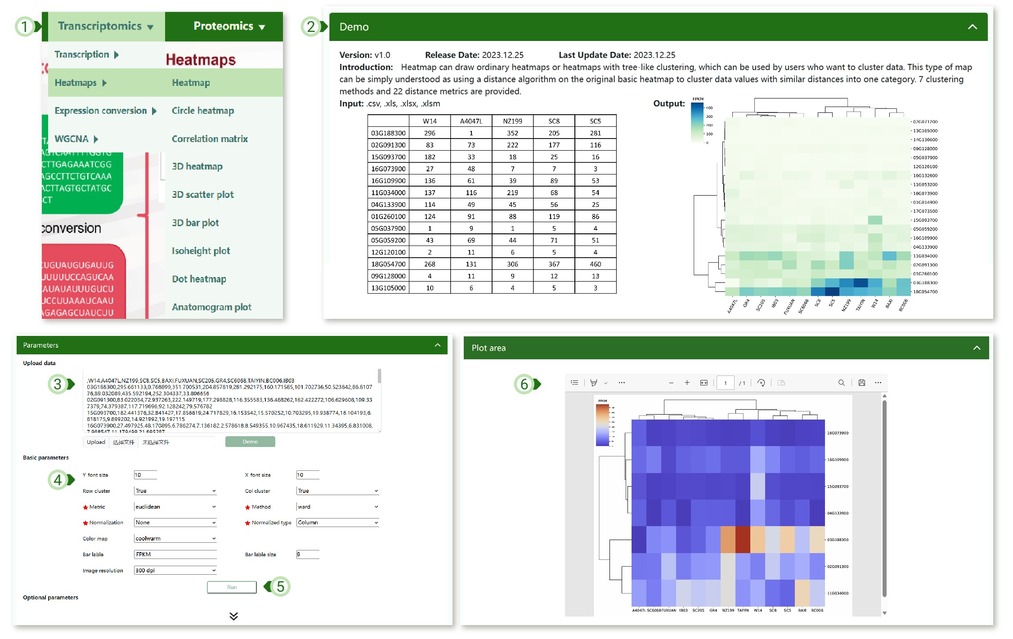
Figure 3.
Schematic representation of HBIcloud tool usage
-
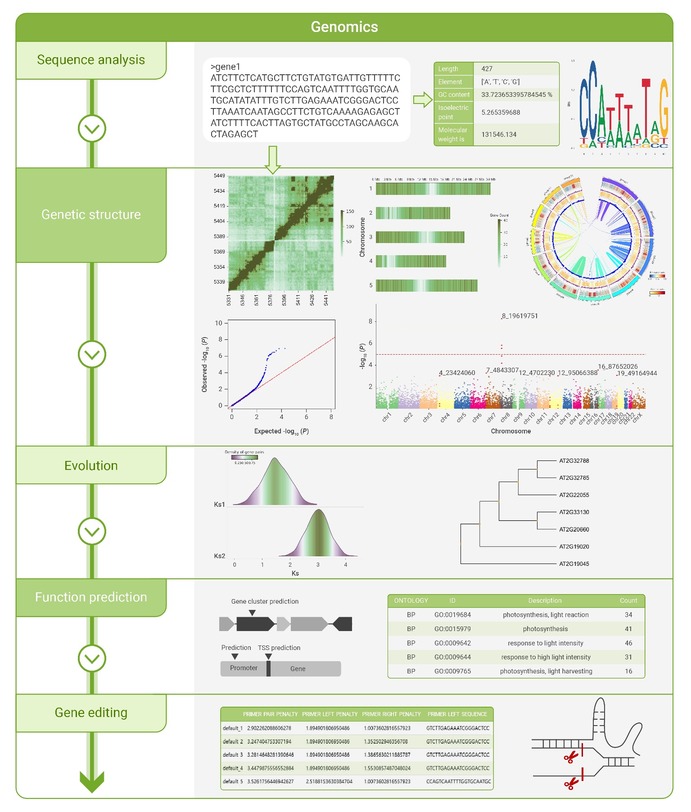
Figure 4.
Representative genomic tools in HBIcloud
-
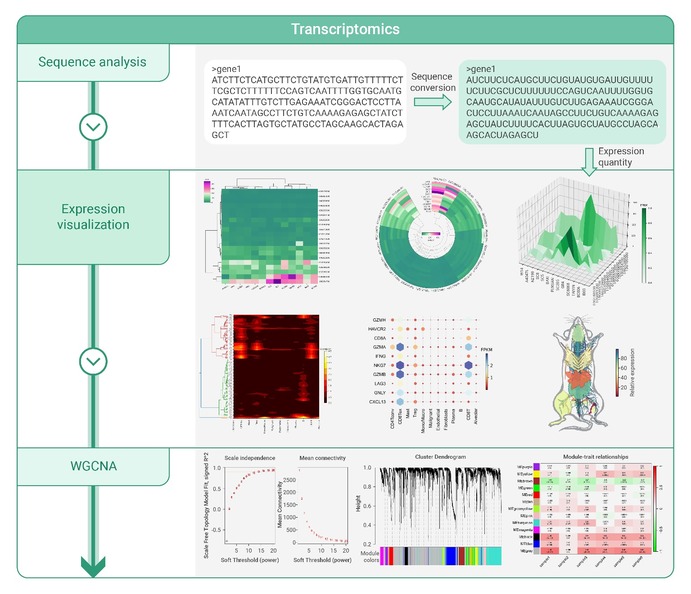
Figure 5.
Representative transcriptomic tools in HBIcloud
-
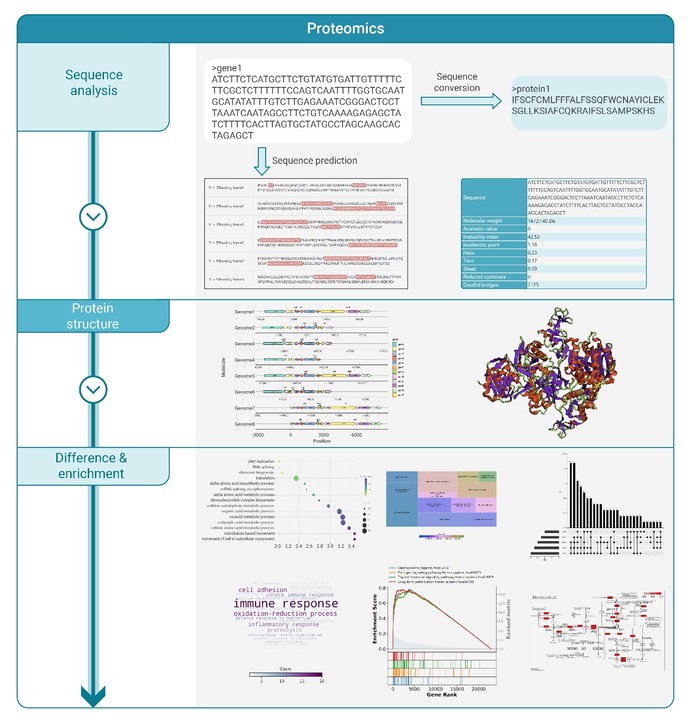
Figure 6.
Representative proteomic tools in HBIcloud
-
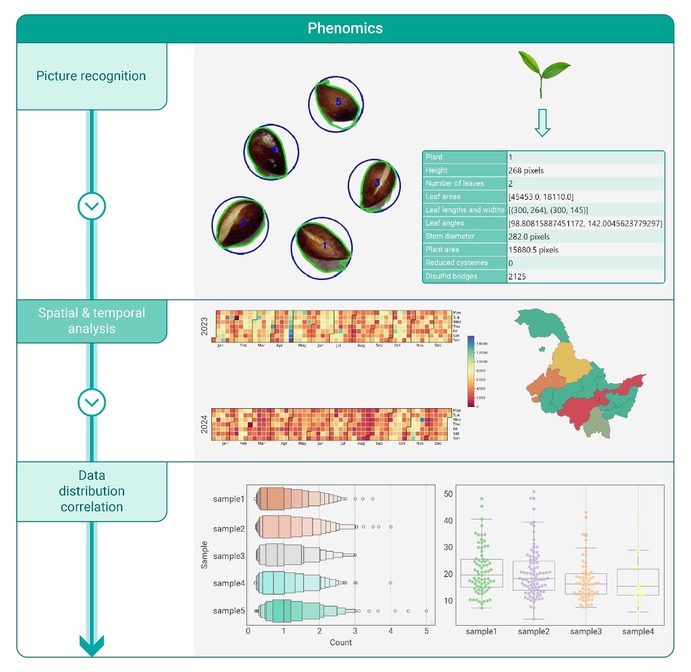
Figure 7.
The HBIcloud platform contains representative phenomics tools
