
Gut-microbiota-testis axis: The mechanism of gut microbiota regulating host male reproduction
-
GRAPHICAL ABSTRACT
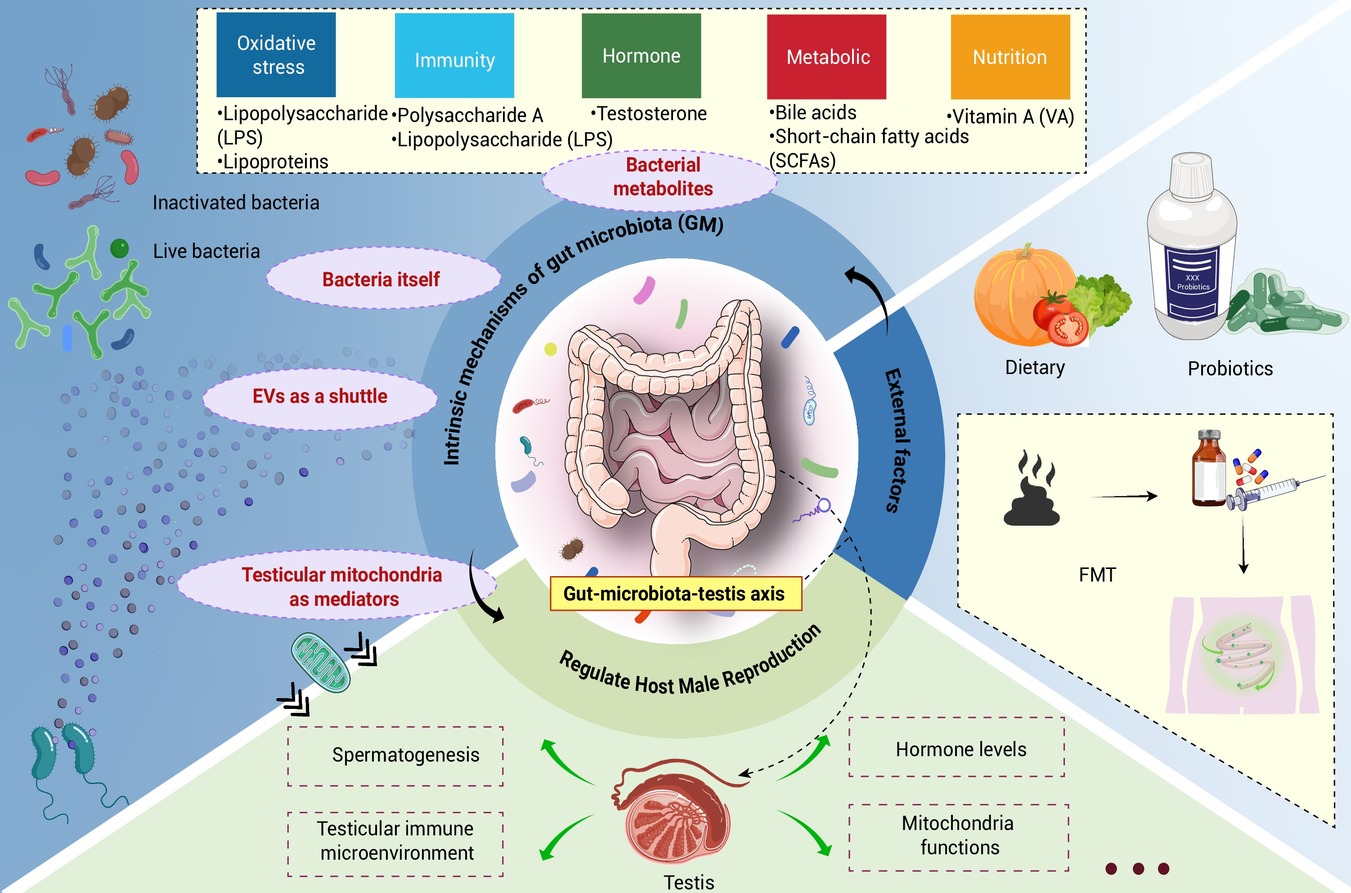
 DownLoad:
Full size image
DownLoad:
Full size image
-
PUBLIC SUMMARY
-
The gut-microbiota (GM)-testis axis lets gut bacteria regulate male reproduction via multiple key pathways.
GM-host interaction includes response to bacterial metabolites and direct interaction with bacteria themselves.
Extracellular vesicles (EVs) shuttle biomolecules to testes; testicular mitochondria mediate microbial effects.
Diet and lifestyle also play a role in this regulation, linking gut health to male reproductive function.
-
-
ABSTRACT
Gut microbiota (GM), a dynamically changing community of bacterial species and other microorganisms, has become a crucial factor in host physiology. Mounting evidence indicates its communication with distal organs like the testis via intricate mechanisms, establishing the gut-microbiota-testis axis. This axis has emerged as a key focus in investigations into the regulation of male reproduction by GM. However, several critical aspects remain unaddressed comprehensively and systematically. There is a dearth of knowledge regarding the detailed characterization of GM components relevant to male reproduction. The mechanisms underlying the translocation of GM components to the testes remain poorly understood. Additionally, how GM impacts testicular function to modulate male reproductive processes has not been thoroughly investigated. Here, we reviewed the gut microbiota and gut-microbiota-testis axis and discussed the main mechanisms of GM regulating host male reproduction. It is noted that GM regulates host male reproduction through bacterial metabolites and/or direct interactions with the bacteria themselves. Moreover, extracellular vesicles (EVs) may serve as shuttle vehicles for transporting bioactive substances such as microbial metabolites, and testicular mitochondria can act as mediators for gut microbiota to regulate host male reproduction. Finally, gut microbiota is a highly dynamic and complex community that is influenced by factors such as diet, living environment, and lifestyle, which is of great significance for clinical interventions. This review will assist with clinical targeted intervention of GM and explore new therapies for male reproductive disorders.-
Keywords:
- gut microbiota /
- testis /
- gut-microbiota-testis axis /
- male reproduction /
- mechanisms
-

-
REFERENCES
[1] Voth E. and Khanna S. (2020). The Integrative human microbiome project: A mile stone in the understanding of the gut microbiome. Expert. Rev. Gastroenterol. Hepatol. 14:639−642. DOI:10.1080/17474124.2020.1780912 [2] Tremaroli V. and Bäckhed F. (2012). Functional interactions between the gut microbiota and host metabolism. Nature 489:242−249. DOI:10.1038/nature11552 [3] Qi X., Yun C., Pang Y., et al. (2021). The impact of the gut microbiota on the reproductive and metabolic endocrine system. Gut Microbes 13:1−21. DOI:10.1080/19490976.2021.1894070 [4] Foster J.A. and McVey Neufeld K.A. (2013). Gut-brain axis: How the microbiome influences anxiety and depression. Trends Neurosci. 36:305−312. DOI:10.1016/j.tins.2013.01.005 [5] Szabo G., Bala S., Petrasek J., et al. (2011). Gut-liver axis and sensing microbes. Dig. Dis. 28:737−744. DOI:10.1159/000324281 [6] Meijers B.K.I. and Evenepoel P. (2011). The gut-kidney axis: indoxyl sulfate, p-cresyl sulfate and CKD progression. Nephrol. Dial. Transplant. 26:759−761. DOI:10.1093/ndt/gfq818 [7] Ticinesi A., Lauretani F., Milani C., et al. (2017). Aging gut microbiota at the cross-road between nutrition, physical frailty, and sarcopenia: Is there a gut-muscle axis. Nutrients 9:1303. DOI:10.3390/nu9121303 [8] Wang Y. and Xie Z. (2022). Exploring the role of gut microbiome in male reproduction. Andrology 11:10. DOI:10.1111/andr.13143 [9] Li X., Cheng W., Shang H., et al. (2022). The interplay between androgen and gut microbiota: Is there a microbiota-gut-testis axis. Reprod. Sci. 29:1674−1684. DOI:10.1007/s43032-021-00624-0 [10] Zhang T., Sun P., Geng Q., et al. (2022). Disrupted spermatogenesis in a metabolic syndrome model: The role of vitamin A metabolism in the gut-testis axis. Gut 71:78−87. DOI:10.1136/gutjnl-2020-323347 [11] Ding N., Zhang X., Zhang X.D., et al. (2020). Impairment of spermatogenesis and sperm motility by the high-fat diet-induced dysbiosis of gut microbes. Gut 69:1608−1619. DOI:10.1136/gutjnl-2019-319127 [12] Liu J.B., Chen K., Li Z.F., et al. (2022). Glyphosate-induced gut microbiota dysbiosis facilitates male reproductive toxicity in rats. Sci. Total. Environ. 805:150368. DOI:10.1016/j.scitotenv.2021.150368 [13] Lozupone C.A., Stombaugh J.I., Gordon J.I., et al. (2012). Diversity, stability and resilience of the human gut microbiota. Nature 489:220−230. DOI:10.1038/nature11550 [14] Tang R., Sansonetti P.J. and Gao Y.Z. (2023). Stem cell retrograde: A new reason why colorectal cancer is more common than small intestinal cancer. The Innovation 4:2. DOI:10.1016/j.xinn.2023.100387 [15] Lloyd-Price J., Abu-Ali G. and Huttenhower C. (2016). The healthy human microbiome. Genome Med. 8. DOI:10.1186/s13073-016-0307-y. [16] Goulet O. (2015). Potential role of the intestinal microbiota in programming health and disease. Nutr. Rev. 73 Suppl 1:32. DOI:10.1093/nutrit/nuv039. [17] De Vos W.M. and de Vos E.A. (2012). Role of the intestinal microbiome in health and disease: From correlation to causation. Nutr. Rev. 70:S45−S56. DOI:10.1111/j.1753-4887.2012.00505.x [18] Qin J., Li R., Raes J., et al. (2010). A human gut microbial gene catalogue established by metagenomic sequencing. Nature 464:59−65. DOI:10.1038/nature08821 [19] Rajilić-Stojanović M. and de Vos W.M. (2014). The first 1000 cultured species of the human gastrointestinal microbiota. FEMS Microbiol. Rev. 38:996−1047. DOI:10.1111/1574-6976.12075 [20] Costea P.I., Hildebrand F., Arumugam M., et al. (2018). Enterotypes in the landscape of gut microbial community composition. Nat. Microbiol. 3:8−16. DOI:10.1038/s41564-017-0072-8 [21] Zhernakova A., Kurilshikov A., Bonder M.J., et al. (2016). Population-based metagenomics analysis reveals markers for gut microbiome composition and diversity. Science 352:565−569. DOI:10.1126/science.aad3369 [22] Ghosh S. and Pramanik S. (2021). Structural diversity, functional aspects and future therapeutic applications of the human gut microbiome. Arch. Microbiol. 203:5281−5308. DOI:10.1007/s00203-021-02516-y [23] Jin W.Y., Guo J.X., Zhang M., et al. (2023). Absolute quantification of the microbiota spatial distribution in the murine large intestine. The Innovation Life 1:100030. DOI:10.59717/j.xinn-life.2023.100030 [24] Relman D.A. (2012). The human microbiome: Ecosystem resilience and health. Nutr. Rev. 70 Suppl 1:S2-9. DOI:10.1111/j.1753-4887.2012.00489.x. [25] Grenham S., Clarke G., Cryan J.F., et al. (2011). Brain-gut-microbe communication in health and disease. Front. Physiol. 2:94. DOI:10.3389/fphys.2011.00094 [26] Valles Y., Gosalbes M.J., de Vries L.E., et al. (2012). Metagenomics and development of the gut microbiota in infants. Clin. Microbiol. Infect. 18:21−26. DOI:10.1111/j.1469-0691.2012.03876.x [27] Vaishampayan P.A., Kuehl J.V., Froula J.L., et al. (2010). Comparative metagenomics and population dynamics of the gut microbiota in mother and infant. Genome Biol. Evol. 6:53. DOI:10.1093/gbe/evp057 [28] Claesson M.J., Jeffery I.B., Conde S., et al. (2012). Gut microbiota composition correlates with diet and health in the elderly. Nature 488:178−184. DOI:10.1038/nature11319 [29] Turnbaugh P.J., Ridaura V.K., Faith J.J., et al. (2009). The effect of diet on the human gut microbiome: A metagenomic analysis in humanized gnotobiotic mice. Sci. Transl. Med. 1:6. DOI:10.1126/scitranslmed.3000322 [30] Davey K.J., O’Mahony S.M., Schellekens H., et al. (2012). Gender-dependent consequences of chronic olanzapine in the rat: Effects on body weight, inflammatory, metabolic and microbiota parameters. Psychopharmacology 221:155−169. DOI:10.1007/s00213-011-2555-2 [31] Burger-Van Paassen N., Vincent A., Puiman P.J., et al. (2009). The regulation of intestinal mucin MUC2 expression by short-chain fatty acids: Implications for epithelial protection. Biochem. J. 420:211−219. DOI:10.1042/BJ20082222 [32] Eckmann L. (2010). Animal models of inflammatory bowel disease: Lessons from enteric infections. Ann. N. Y. Acad. Sci. 1072:28−38. DOI:10.1196/annals.1326.008 [33] Morais L.H., Schreiber H.L. and Mazmanian S.K. (2021). The gut microbiota-brain axis in behaviour and brain disorders. Nat. Rev. Microbiol. 19:241−255. DOI:10.1038/s41579-020-00460-0 [34] Baptissart M., Vega A., Martinot E., et al. (2014). Bile acids alter male fertility through G-protein-coupled bile acid receptor 1 signaling pathways in mice. Hepatology 60:1054−1065. DOI:10.1002/hep.27204 [35] Sonowal R., Swimm A., Sahoo A., et al. (2017). Indoles from commensal bacteria extend healthspan. Proc. Natl. Acad. Sci. USA 114:E7506−E7515. DOI:10.1073/pnas.1706464114 [36] Selvaraj V. (2004). Estrogenicity of the isoflavone metabolite equol on reproductive and non-reproductive organs in mice. Biol. Reprod. 71:966−972. DOI:10.1095/biolreprod.104.029512 [37] Li H., Li N., Lu Q., et al. (2022). Chronic alcohol-induced dysbiosis of the gut microbiota and gut metabolites impairs sperm quality in mice. Front. Microbiol. 13:1042923. DOI:10.3389/fmicb.2022.1042923 [38] Zhao S., Zhu W., Xue S., et al. (2014). Testicular defense systems: Immune privilege and innate immunity. Cell Mol. Immunol. 11:428−437. DOI:10.1038/cmi.2014.38 [39] Sonnex C. (2010). Toll-like receptors and genital tract infection. Int. J. STD AIDS 21:153−157. DOI:10.1258/ijsa.2009.009525 [40] Emmanuelle M., Laura T., Hélène H., et al. (2022). Intestinal microbiota defines the gut-testis axis. Gut 71:844. DOI:10.1136/gutjnl-2021-324690 [41] Dance A., Thundathil J., Wilde R., et al. (2015). Enhanced early-life nutrition promotes hormone production and reproductive development in Holstein bulls. J. Dairy Sci. 98:987−998. DOI:10.3168/jds.2014-8564 [42] Zmora N., Suez J. and Elinav E. (2019). You are what you eat: Diet, health and the gut microbiota. Nat. Rev. Gastroenterol. Hepatol. 16:35−56. DOI:10.1038/s41575-018-0061-2 [43] Chen T., Zhang B., He G., et al. (2024). Gut-derived exosomes mediate the microbiota dysbiosis-induced spermatogenesis impairment by targeting meioc in mice. Adv. Sci. 11. DOI:10.1002/advs.202310110 [44] Zhang T., Sun P., Geng Q., et al. (2021). Disrupted spermatogenesis in a metabolic syndrome model: The role of vitamin A metabolism in the gut-testis axis. Gut 71:78−87. DOI:10.1136/gutjnl-2020-323347 [45] Ma L., Tao S., Song T., et al. (2024). Clostridium butyricum and carbohydrate active enzymes contribute to the reduced fat deposition in pigs. iMeta 3. DOI:10.1002/imt2.160 [46] Qiao X., Biliński J., Wang L., et al. (2023). Safety and efficacy of fecal microbiota transplantation in the treatment of graft-versus-host disease. Bone Marrow Transplant. 58:10−19. DOI:10.1038/s41409-022-01824-1 [47] Li H., Palczewski K., Baehr W., et al. (2011). Vitamin A deficiency results in meiotic failure and accumulation of undifferentiated spermatogonia in the prepubertal mouse testis. Biol. Reprod. 84:336−341. DOI:10.1095/biolreprod.110.086157 [48] Niu C., Guo J., Shen X., et al. (2020). Meiotic gatekeeper STRA8 regulates cell cycle by interacting with SETD8 during spermatogenesis. J. Cell. Mol. Med. 24:4194−4211. DOI:10.1111/jcmm.15080 [49] Li M., Yu M., Liu C., et al. (2013). Expression of miR-34c in response to overexpression of boule and stra8 in dairy goat male germ line stem cells (mGSCs). Cell Biochem. Funct. 31:281−288. DOI:10.1002/cbf.2970 [50] Malivindi R., Rago V., De Rose D., et al. (2018). Influence of all-trans retinoic acid on sperm metabolism and oxidative stress: Its involvement in the physiopathology of varicocele-associated male infertility. J. Cell. Physiol. 233:9526−9537. DOI:10.1002/jcp.26872 [51] Amory J.K., Muller C.H., Shimshoni J.A., et al. (2011). Suppression of spermatogenesis by bisdichloroacetyldiamines is mediated by inhibition of testicular retinoic acid biosynthesis. J. Androl. 32:111−119. DOI:10.2164/jandrol.110.010751 [52] Xiong N. and Hu S. (2015). Regulation of intestinal IgA responses. Cell. Mol. Life Sci. 72:2645−2655. DOI:10.1007/s00018-015-1892-4 [53] Saad M., Santos A. and Prada P. (2016). Linking gut microbiota and inflammation to obesity and insulin resistance. Physiology 31:283−293. DOI:10.1152/physiol.00041.2015 [54] Li M.W.M., Xia W., Mruk D.D., et al. (2006). Tumor necrosis factor α reversibly disrupts the blood-testis barrier and impairs Sertoli–germ cell adhesion in the seminiferous epithelium of adult rat testes. J. Endocrinol. 190:313−329. DOI:10.1677/joe.1.06781 [55] Wu H., Jiang X., Gao Y., et al. (2019). Mumps virus infection disrupts the blood-testis barrier through the induction of TNF-α in Sertoli cells. FASEB J. 33:12528−12540. DOI:10.1096/fj.201901089R [56] Marino. M., Mele E., Viggiano A., et al. (2021). Pleiotropic Outcomes of Glyphosate Exposure: From Organ Damage to Effects on Inflammation. Int. J. Mol. 22:12606. DOI:10.3390/ijms222212606 [57] Wang M., Fijak M., Hossain H., et al. (2017). Characterization of the micro-environment of the testis that shapes the phenotype and function of testicular macrophages. J. Immunol. 198:1700162. DOI:10.4049/jimmunol.1700162 [58] Shafiey S.I., Ahmed K.A., and Mohamed A.Y.R. (2024). Galantamine mitigates testicular injury and disturbed spermatogenesis in adjuvant arthritic rats via modulating apoptosis, inflammatory signals, and IL-6/JAK/STAT3/SOCS3 signaling. Inflammopharmacology 32:405−418. DOI:10.1007/s10787-023-01268-z [59] Hamamah S., Barry F., Vannier S., et al. (2024). Infertility, IL-17, IL-33 and microbiome cross-talk: The extended ARIA-MeDALL hypothesis. Int. J. Mol. Sci. 25:11981. DOI:10.3390/ijms252211981 [60] Du Y., Liu L., Ma W., et al. (2023). The role of extratumoral and intratumoral microorganisms in cancer immunotherapy. The Innovation Life 1:100016. DOI:10.59717/j.xinn-life.2023.100016 [61] Colldén H., Landin A., Wallenius V., et al. (2019). The gut microbiota is a major regulator of androgen metabolism in intestinal contents. AJP Endocrinol. Metab. 317. DOI:10.1152/ajpendo.00338.2019 [62] Brinkmann A.O. (2011). Molecular mechanisms of androgen action–a historical perspective. Methods Mol. Biol. 101:3−24. DOI:10.1007/978-1-61779-243-4_1 [63] Santi D., Crépieux P., Reiter E., et al. (2020). Follicle-stimulating hormone (FSH) action on spermatogenesis: A focus on physiological and therapeutic roles. J. Clin. Med. 9:1014. DOI:10.3390/jcm9041014 [64] Tang L., Yang X., Zhou M., et al. (2024). Inhibition of inosine metabolism of the gut microbiota decreases testosterone secretion in the testis. mSystems 9:e00138−00124. DOI:10.1128/msystems.00138-24 [65] Patil R., Telang G., Aswar U., et al. (2024). Comparative analyses of anti-inflammatory effects of resveratrol, pterostilbene and curcumin: In-silico and in-vitro evidences. Silico Pharmacol. 12. DOI:10.1007/s40203-024-00211-6 [66] Jenkins K.A. and Mansell A. (2010). TIR-containing adaptors in toll-like receptor signalling. Cytokine 49:237−244. DOI:10.1016/j.cyto.2009.01.009 [67] Agarwal A., Roychoudhury S., Sharma R., et al. (2017). Diagnostic application of oxidation-reduction potential assay for measurement of oxidative stress: Clinical utility in male factor infertility. Reprod. Biomed. Online 34:48−57. DOI:10.1016/j.rbmo.2016.10.008 [68] Wiest R. and Garcia-Tsao G. (2005). Bacterial translocation (BT) in cirrhosis. Hepatology 41. DOI:10.1002/hep.20632. [69] Metukuri M.R., Reddy C.M.T., Reddy P.R.K., et al. (2010). Bacterial LPS mediated acute inflammation-induced spermatogenic failure in rats: Role of stress response proteins and mitochondrial dysfunction. Inflammation 33:235−243. DOI:10.1007/s10753-009-9177-4 [70] Vallim T.Q.d.A., Tarling E.J. and Edwards P.A. (2013). Pleiotropic roles of bile acids in metabolism. Cell Metab. 17:657−669. DOI:10.1016/j.cmet.2013.03.013 [71] Russell D.W. (2003). The enzymes, regulation, and genetics of bile acid synthesis. Annu. Rev. Biochem. 72:137−174. DOI:10.1146/annurev.biochem.72.121801.161712 [72] Thomas C., Pellicciari R., Pruzanski M., et al. (2008). Targeting bile-acid signalling for metabolic diseases. Nat. Rev. Drug Discov. 7:678. DOI:10.1038/nrd2619 [73] Sayin S.I., Wahlström A., Felin J., et al. (2013). Gut microbiota regulates bile acid metabolism by reducing the levels of tauro-beta-muricholic acid, a naturally occurring FXR antagonist. Cell Metab. 17:225−235. DOI:10.1016/j.cmet.2013.01.003 [74] Izaskun G.M., Marta S.R., Cristina A., et al. (2018). Shifts on gut microbiota associated to mediterranean diet adherence and specific dietary intakes on general adult population. Front. Microbiol. 9:890. DOI:10.3389/fmicb.2018.00890 [75] Leisegang K., Sengupta P., Agarwal A., et al. (2021). Obesity and male infertility: Mechanisms and management. Andrologia 53:e13617. DOI:10.1111/and.13617 [76] Yan X., Feng Y., Hao Y., et al. (2022). Gut-testis axis: Microbiota prime metabolome to increase sperm quality in young type 2 diabetes. Microbiol. Spectr. 10:e01423−01422. DOI:10.1128/spectrum.01423-22 [77] Tian X., Yu Z., Feng P., et al. (2019). Lactobacillus plantarum TW1-1 alleviates diethylhexylphthalate-induced testicular damage in mice by modulating gut microbiota and decreasing inflammation. Front. Cell. Infect. Microbiol. 9:221. DOI:10.3389/fcimb.2019.00221 [78] Gómez-Elías M.D., Rainero Cáceres T.S., Giaccagli M.M. et al. (2019). Association between high-fat diet feeding and male fertility in high reproductive performance mice. Sci Rep 9:18546. DOI:org/10.1038/s41598-019-54799-3 [79] Hu L., Zhao Y., Liu S., et al. (2023). High-fat diet in mice led to increased severity of spermatogenesis impairment by lead exposure: Perspective from gut microbiota and the efficacy of probiotics. J. Sci. Food Agric. 103:2653−2663. DOI:10.1002/jsfa.12309 [80] Shen Y., Torchia M.L.G., Lawson G.W., et al. (2012). Outer membrane vesicles of a human commensal mediate immune regulation and disease protection. Cell Host Microbe 12:509−520. DOI:10.1016/j.chom.2012.08.004 [81] Amoriello R., Nenciarini S., Cavalieri D., et al. (2025). In vitro interaction between yeast extracellular vesicles and human monocyte-derived dendritic cells. Clifton N.J. (ed). In immunosenescence: Methods and protocols (Springer US), pp. 137-146. DOI:10.1007/978-1-0716-4128-6_13 [82] Abubaker S., Miri S., Mottawea W., et al. (2024). Microbial extracellular vesicles in host-microbiota interactions. Kloc M., Kubiak J.Z. and Halasa M. (ed). Intercellular and interorganellar transfer and communication in biology and medicine (Springer Int. Publ.), pp. 475-520. DOI:10.1007/978-3-031-62036-2_19 [83] Filannino F.M., Panaro M.A., Benameur T., et al. (2024). Extracellular vesicles in the central nervous system: A novel mechanism of neuronal cell communication. Int. J. Mol. Sci. 25. DOI:10.3390/ijms25031629 [84] Schwechheimer C. and Kuehn M.J. (2015). Outer-membrane vesicles from gram-negative bacteria: Biogenesis and functions. Nat. Rev. Microbiol. 13:605−619. DOI:10.1038/nrmicro3525 [85] Macia L., Nanan R., Hosseini-Beheshti E., et al. (2020). Host- and microbiota-derived extracellular vesicles, immune function, and disease development. Int. J. Mol. Sci. 21:107. DOI:10.3390/ijms21010107 [86] Carla P.-C., Lidia D., Carmen L.-I., et al. (2015). Outer-inner membrane vesicles naturally secreted by gram-negative pathogenic bacteria. PLoS ONE 10:e0116896. DOI:10.1371/journal.pone.0116896 [87] Vallejo M.C., Nakayasu E.S., Longo L.V.G., et al. (2012). Lipidomic analysis of extracellular vesicles from the pathogenic phase of Paracoccidioides brasiliensis. PLoS ONE 7:e39463. DOI:10.1371/journal.pone.0039463 [88] Pathan M., Fonseka P., Chitti S.V., et al. (2019). Vesiclepedia 2019: Acompendium of RNA, proteins, lipids and metabolites in extracellular vesicles. Nucleic Acids Res. 47:D516−D519. DOI:10.1093/nar/gky1029 [89] Graner M.W., Alzate O., Dechkovskaia A.M., et al. (2009). Proteomic and immunologic analyses of brain tumor exosomes. FASEB J. 23:1541. DOI:10.1096/fj.08-122184 [90] Macia L., Nanan R., Hosseini-Beheshti E., et al. (2020). Host- and microbiota-derived extracellular vesicles, immune function, and disease development. Int. J. Mol. Sci. 21. DOI:10.3390/ijms21010107. [91] Kim J.-H., Jeun E.-J., Hong C.-P., et al. (2016). Extracellular vesicle-derived protein from Bifidobacterium longum alleviates food allergy through mast cell suppression. J. Allergy Clin. Immunol. 137:507−516.e508. DOI:10.1016/j.jaci.2015.08.016 [92] Lopez P., Gonzalez-Rodriguez I., Sanchez B., et al. (2012). Interaction of Bifidobacterium bifidum LMG13195 with HT29 cells influences regulatory-T-cell-associated chemokine receptor expression. Appl. Environ. Microbiol. 78:2850−2857. DOI:10.1128/AEM.07581-11 [93] Da Silveira J.C., de Ávila A.C.F.C.M., Garrett H.L., et al. (2018). Cell-secreted vesicles containing microRNAs as regulators of gamete maturation. J. Endocrinol. 236:R15−R27. DOI:10.1530/JOE-17-0200 [94] Picard M., Wallace D.C. and Burelle Y. (2016). The rise of mitochondria in medicine. Mitochondrion 30:105−116. DOI:10.1016/j.mito.2016.07.003 [95] Auger C., Vinaik R., Appanna V.D., et al. (2021). Beyond mitochondria: Alternative energy-producing pathways from all strata of life. Metabolism 118:154733. DOI:10.1016/j.metabol.2021.154733 [96] Amaral A. (2022). Energy metabolism in mammalian sperm motility. WIREs Mech. Dis. 14:e1569. DOI:10.1002/wsbm.1569 [97] Das J. (2006). The role of mitochondrial respiration in physiological and evolutionary adaptation. Bioessays 28:890−901. DOI:10.1002/bies.20463 [98] Barbagallo F., La Vignera S., Cannarella R., et al. (2020). Evaluation of sperm mitochondrial function: A key organelle for sperm motility. J. Clin. Med. 9:363. DOI:10.3390/jcm9020363 [99] Asadi A., Ghahremani R., Abdolmaleki A., et al. (2021). Role of sperm apoptosis and oxidative stress in male infertility: A narrative review. Int. J. Reprod. Biomed. 19:493. DOI:10.18502/ijrm.v19i6.9371 [100] Costello S., Michelangeli F., Nash K., et al. (2009). Ca2+-stores in sperm: Their identities and functions. Reproduction 138:425. DOI:10.1530/REP-09-0134 [101] Breitbart H. and Grinshtein E. (2023). Mechanisms that protect mammalian sperm from the spontaneous acrosome reaction. Int. J. Mol. Sci. 24:17005. DOI:10.3390/ijms242317005 [102] Ramalho-Santos J. and Amaral S. (2013). Mitochondria and mammalian reproduction. Mol. Cell. Endocrinol. 379:74−84. DOI:10.1016/j.mce.2013.06.005 [103] Zirkin B.R. and Papadopoulos V. (2018). Leydig cells: Formation, function, and regulation. Biol. Reprod. 99:101−111. DOI:10.1093/biolre/ioy059 [104] Gray M.W. (2012). Mitochondrial evolution. Cold Spring Harb. Perspect. Biol. 4:a011403. DOI:10.1101/cshperspect.a011403 [105] Liu R., Cai D., Li X., et al. (2022). Effects of bisphenol A on reproductive toxicity and gut microbiota dysbiosis in male rats. Ecotoxicol. Environ. Saf. 239:113623. DOI:10.1016/j.ecoenv.2022.113623 [106] Lee Y.-T., Savini M., Chen T., et al. (2023). Mitochondrial GTP metabolism controls reproductive aging in C. elegans. Dev. Cell 58:2718−2731.e2717. DOI:10.1016/j.devcel.2023.08.019 [107] Gnainsky Y., Zfanya N., Elgart M., et al. (2021). Systemic regulation of host energy and oogenesis by microbiome-derived mitochondrial coenzymes. Cell Rep. 34:108583. DOI:10.1016/j.celrep.2020.108583 [108] Schulz M., Sánchez R., Soto L., et al. (2010). Effect of Escherichia coli and its soluble factors on mitochondrial membrane potential, phosphatidylserine translocation, viability, and motility of human spermatozoa. Fertil. Steril. 94:619−623. DOI:10.1016/j.fertnstert.2009.01.140 [109] Kaur K. and Prabha V. (2013). Sperm impairment by sperm agglutinating factor isolated from Escherichia coli: Receptor-specific interactions. BioMed Res. Int. 2013:548497. DOI:10.1155/2013/548497 [110] Guthrie H. and Welch G. (2012). Effects of reactive oxygen species on sperm function. Theriogenology 78:1700−1708. DOI:10.1016/j.theriogenology.2012.05.002 [111] Li Y., Ma H. and Wang J. (2024). Effects of polycyclic aromatic hydrocarbons on the gut-testis axis. Ecotoxicol. Environ. Saf. 280:116539. DOI:10.1016/j.ecoenv.2024.116539 [112] Kono M., Nagafuchi Y., Shoda H., et al. (2021). The impact of obesity and a high-fat diet on clinical and immunological features in systemic lupus erythematosus. Nutrients 13:504. DOI:10.3390/nu13020504 [113] Petre G.C., Francini-Pesenti F., Di Nisio A., et al. (2023). Observational cross-sectional study on mediterranean diet and sperm parameters. Nutrients 15:4989. DOI:10.3390/nu15234989 [114] De Filippis F., Pellegrini N., Vannini L., et al. (2016). High-level adherence to a mediterranean diet beneficially impacts the gut microbiota and associated metabolome. Gut 65:1812. DOI:10.1136/gutjnl-2015-309957 [115] Zhang J., Liu H., Yang Q., et al. (2020). Genomic sequencing reveals the diversity of seminal bacteria and relationships to reproductive potential in boar sperm. Front. Microbiol. 11:1873. DOI:10.3389/fmicb.2020.01873 [116] Akram M., Ali S.A., Behare P., et al. (2022). Dietary intake of probiotic fermented milk benefits the gut and reproductive health in mice fed with an obesogenic diet. Food Funct. 13. DOI:10.1039/d1fo02501e. [117] Maha A.A., Jan-Bernd S., Ahmed R., et al. (2014). The gut microbiota and developmental programming of the testis in mice. PLoS ONE 9:e103809. DOI:10.1371/journal.pone.0103809 [118] Antushevich H. (2020). Fecal microbiota transplantation in disease therapy. Clin. Chim. Acta 503:90−98. DOI:10.1016/j.cca.2020.01.017 [119] Zhao Q., Huang J.-F., Cheng Y., et al. (2021). Polyamine metabolism links gut microbiota and testicular dysfunction. Microbiome 9:224. DOI:10.1186/s40168-021-01157-z [120] Zhang P., Liu J., Xiong B., et al. (2020). Microbiota from alginate oligosaccharide-dosed mice successfully mitigated small intestinal mucositis. Microbiome 8:112. DOI:10.1186/s40168-020-00886-x [121] Tofani G.S.S., Leigh S.J., Gheorghe C.E., et al. (2025). Gut microbiota regulates stress responsivity via the circadian system. Cell Metab. 37:138−153.e135. DOI:10.1016/j.cmet.2024.10.003 [122] Bongers K.S., Chanderraj R., Woods R.J., et al. (2023). The gut microbiome modulates body temperature both in sepsis and health. Am. J. Respir. Crit. Care Med. 207:1030−1041. DOI:10.1164/rccm.202201-0161OC [123] Malikowski T., Khanna S. and Pardi D.S. (2017). Fecal microbiota transplantation for gastrointestinal disorders. Curr. Opin. Gastroenterol. 33:8. DOI:10.1097/MOG.0000000000000326 [124] Pozuelo M., Panda S., Santiago A., et al. (2015). Reduction of butyrate- and methane-producing microorganisms in patients with irritable bowel syndrome. Sci. Rep. 5:12693. DOI:10.1038/srep12693 [125] Chong P.P., Chin V.K., Looi C.Y., et al. (2019). The microbiome and irritable bowel syndrome–a review on the pathophysiology, current research and future therapy. Front. Microbiol. 10:1136. DOI:10.3389/fmicb.2019.01136 -
ABOUT THIS ARTICLE
Cite this article:
Ding X., Zhu T., Gu R., et al. (2025). Gut-microbiota-testis axis: The mechanism of gut microbiota regulating host male reproduction. The Innovation Life 3:100158. https://doi.org/10.59717/j.xinn-life.2025.100158
Welcome!
To request copyright permission to republish or share portions of our works, please visit Copyright Clearance Center's (CCC) Marketplace website at marketplace.copyright.com.
Export File
Citation
Ding X., Zhu T., Gu R., et al. (2025). Gut-microbiota-testis axis: The mechanism of gut microbiota regulating host male reproduction. The Innovation Life 3:100158. https://doi.org/10.59717/j.xinn-life.2025.100158

Format
Content

-
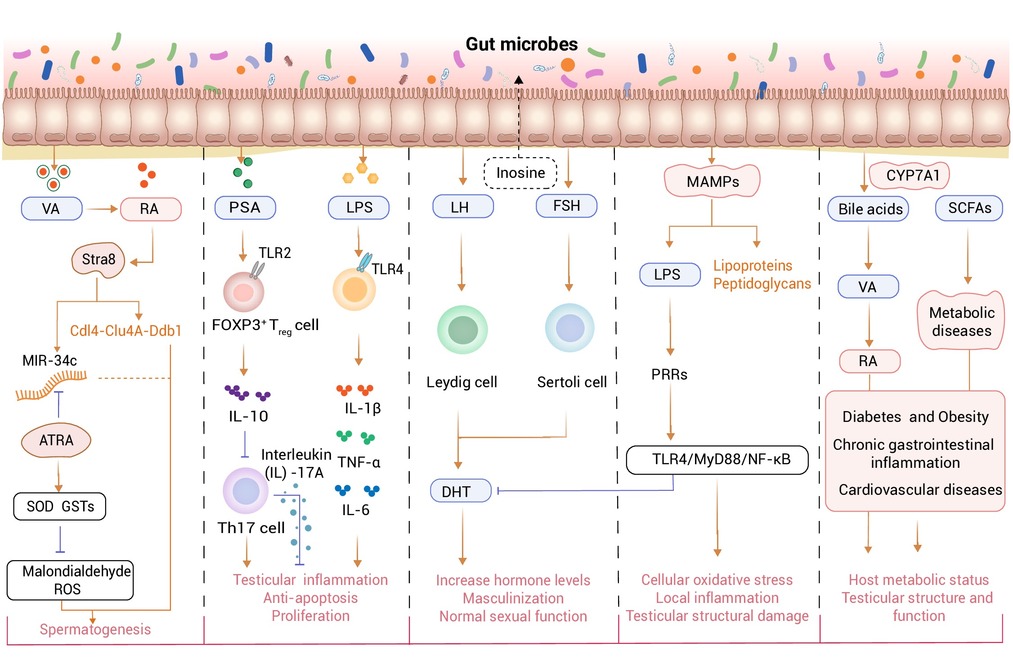
Figure 1.
Modulation of host male reproduction by gut microbiota metabolites through five primary pathways
-
Figure 2.
Mechanism by which bacterial-derived extracellular vesicles (EVs) act as mediators to transfer bioactive molecules (e.g., proteins, RNA, lipids) to host cells such as testicular cells
