
-
GRAPHICAL ABSTRACT
 DownLoad:
Full size image
DownLoad:
Full size image
-
PUBLIC SUMMARY
-
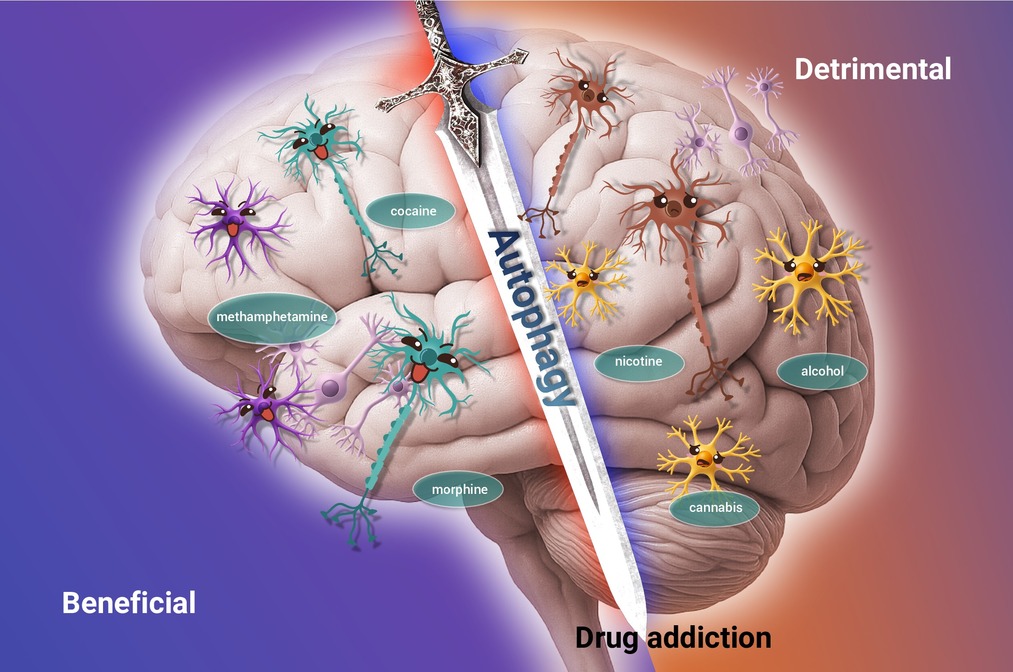
Review recent advances in the role of autophagy in substance use disorders.
Explore the molecular mechanisms linking autophagy to drug addiction.
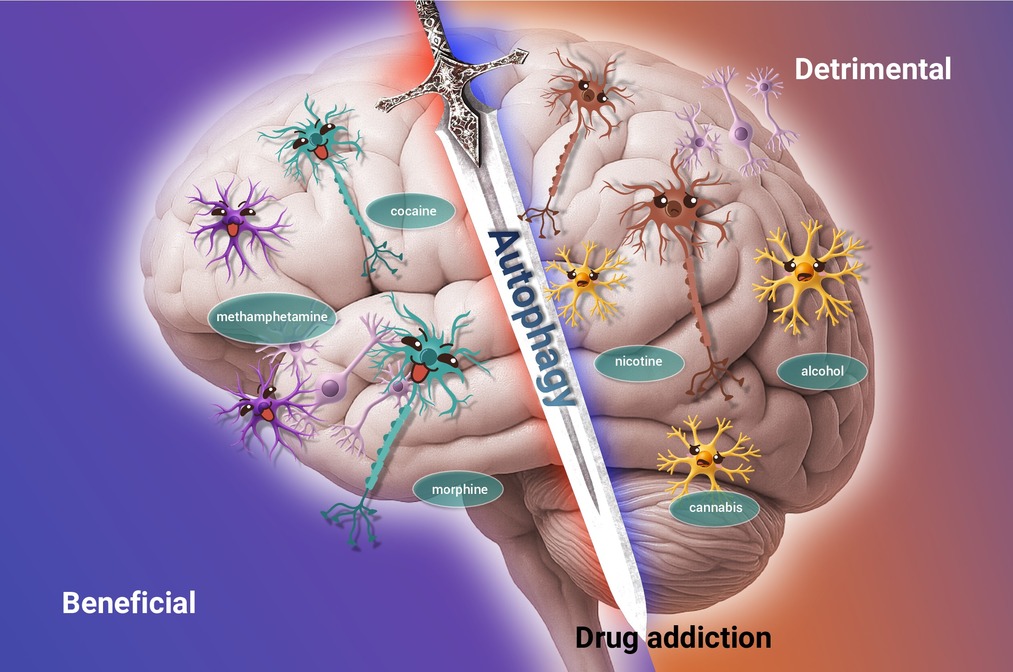
Examine the dual role of autophagy in drug addiction, highlighting both its protective and harmful effects.
Discuss strategies to exploit autophagy’s benefits while limiting harms as therapy for drug addiction.
-
-
ABSTRACT
Autophagy is an evolutionarily conserved catabolic process that plays a crucial role in regulating cellular metabolism and survival. In recent years, studies have highlighted the significant involvement of autophagy-related processes in substance use disorders. Drug addiction has been shown to cause neuropathological dysfunction and damage in the human brain. Therefore, understanding the relationship between autophagy and drug addiction can provide insights into the mechanisms underlying this condition. In this review, we examine the intricate relationship between autophagy and the abuse of commonly used drugs, specifically focusing on cocaine, morphine, and methamphetamine. In addition, we briefly discuss other addictive substances, including alcohol, nicotine, and cannabis, to provide a more comprehensive overview. We delve into the underlying molecular mechanisms, explore the dual nature of autophagy’s role in drug addiction, and highlight potential future research avenues and clinical implications.-
Keywords:
- Autophagy /
- Addiction /
- Cocaine /
- Morphine /
- Methamphetamine
-

-
REFERENCES
[1] Hyman S.E. and Malenka R.C. (2001). Addiction and the brain: The neurobiology of compulsion and its persistence. Nat. Rev. Neurosci. 2:695−703. DOI:10.1038/35094560 [2] Su L. Y., Liu Q., Jiao L., et al. (2021). Molecular mechanism of neuroprotective effect of melatonin on morphine addiction and analgesic tolerance: An update. Mol. Neurobiol. 58:4628−4638. DOI:10.1007/s12035-021-02448-0 [3] Leshner A. I. (1997). Addiction is a brain disease, and it matters. Science 278:45−47. DOI:10.1126/science.278.5335.45 [4] Koob G. F. and Volkow N. D. (2010). Neurocircuitry of addiction. Neuropsychopharmacology 35:217−238. DOI:10.1038/npp.2009.110 [5] Everitt B. J., Dickinson A. and Robbins T. W. (2001). The neuropsychological basis of addictive behaviour. Brain. Res. Brain. Res. Rev. 36:129−138. DOI:10.1016/s0165-0173(01)00088-1 [6] Merikangas K. R. and McClair V. L. (2012). Epidemiology of substance use disorders. Hum. Genet. 131:779−789. DOI:10.1007/s00439-012-1168-0 [7] United nations office on drugs and crime. World Drug Report 2023. https://www.unodc.org/ [8] Zhao L., Zhu Y., Wang D., et al. (2010). Morphine induces Beclin 1-and ATG5-dependent autophagy in human neuroblastoma SH-SY5Y cells and in the rat hippocampus. Autophagy 6:386−394. DOI:10.4161/auto.6.3.11289 [9] Feng Y.-M., Jia Y.-F., Su L.-Y., et al. (2013). Decreased mitochondrial DNA copy number in the hippocampus and peripheral blood during opiate addiction is mediated by autophagy and can be salvaged by melatonin. Autophagy 9:1395−1406. DOI:10.4161/auto.25468 [10] Larsen K. E., Fon E. A., Hastings T. G., et al. (2002). Methamphetamine-induced degeneration of dopaminergic neurons involves autophagy and upregulation of dopamine synthesis. J. Neurosci. 22:8951−8960. DOI:10.1523/JNEUROSCI.22-20-08951.2002 [11] Huang Y., Liu M., Zheng Z., et al. (2024). Inhibition of SIRT1 in the nucleus accumbens attenuates heroin addiction-related behavior by decreasing D1 neuronal autophagy. Neuroreport 35:486−498. DOI:10.1097/wnr.0000000000002033 [12] Teodorof-Diedrich C. and Spector S. A. (2020). Human immunodeficiency virus type 1 and methamphetamine-mediated mitochondrial damage and neuronal degeneration in human neurons. J. Virol. 94. DOI:10.1128/JVI.00924-20 [13] An D., Zhang C., Zhou P., et al. (2025). Cleaving PINK1 or PGAM5. involvement of PARL in methamphetamine-induced excessive mitophagy and neuronal necroptosis. CNS. Neurosci. Ther. 31:e70293. DOI:10.1111/cns.70293 [14] Tian Q., Zhou J., Xu Z., et al. (2024). STIM1 mediates methamphetamine-induced neuronal autophagy and apoptosis. Neurotoxicology 103:134−145. DOI:10.1016/j.neuro.2024.06.006 [15] Zeng X. F., Li Q., Li J., et al. (2018). HIV-1 Tat and methamphetamine co-induced oxidative cellular injury is mitigated by N-acetylcysteine amide (NACA) through rectifying mTOR signaling. Toxicol. Lett. 299:159−171. DOI:10.1016/j.toxlet.2018.09.009 [16] Li J., Wang W., Tong P., et al. (2018). Autophagy induction by HIV-Tat and methamphetamine in primary midbrain neuronal cells of tree shrews via the mTOR signaling and ATG5/ATG7 pathway. Front. Neurosci. 12:921. DOI:10.3389/fnins.2018.00921 [17] Liu J., Wu Y., Meng S., et al. (2024). Selective autophagy in cancer: Mechanisms, therapeutic implications, and future perspectives. Mol. Cancer. 23:22. DOI:10.1186/s12943-024-01934-y [18] Aman Y., Schmauck-Medina T., Hansen M., et al. (2021). Autophagy in healthy aging and disease. Nat. Aging. 1:634−650. DOI:10.1038/s43587-021-00098-4 [19] Van Limbergen J., Stevens C., Nimmo E. R., et al. (2009). Autophagy: From basic science to clinical application. Mucosal. Immunol. 2:315−330. DOI:10.1038/mi.2009.20 [20] Mizushima N. and Komatsu M. (2011). Autophagy: Renovation of cells and tissues. Cell 147:728−741. DOI:10.1016/j.cell.2011.10.026 [21] Gómez-Virgilio L., Silva-Lucero M. D., Flores-Morelos D. S., et al. (2022). Autophagy: A key regulator of homeostasis and disease: An overview of molecular mechanisms and modulators. Cells 11. DOI:10.3390/cells11152262 [22] Klionsky D. J., Abdalla F. C., Abeliovich H., et al. (2012). Guidelines for the use and interpretation of assays for monitoring autophagy. Autophagy 8:445−544. DOI:10.4161/auto.19496 [23] Limanaqi F., Busceti C. L., Celli R., et al. (2021). Autophagy as a gateway for the effects of methamphetamine: From neurotransmitter release and synaptic plasticity to psychiatric and neurodegenerative disorders. Prog. Neurobiol. 204:102112. DOI:10.1016/j.pneurobio.2021.102112 [24] Hui K. K. and Tanaka M. (2019). Autophagy links MTOR and GABA signaling in the brain. Autophagy 15:1848−1849. DOI:10.1080/15548627.2019.1637643 [25] Shehata M., Matsumura H., Okubo-Suzuki R., et al. (2012). Neuronal stimulation induces autophagy in hippocampal neurons that is involved in AMPA receptor degradation after chemical long-term depression. J. Neurosci. 32:10413−10422. DOI:10.1523/jneurosci.4533-11.2012 [26] Hernandez D., Torres C. A., Setlik W., et al. (2012). Regulation of presynaptic neurotransmission by macroautophagy. Neuron 74:277−284. DOI:10.1016/j.neuron.2012.02.020 [27] Mei D., Wang F., Yuan B., et al. (2023). Cognitive enhancer donepezil attenuates heroin-seeking behavior induced by cues in rats. J. Integr. Neurosci. 22:76. DOI:10.31083/j.jin2203076 [28] Guo M. L. and Buch S. (2019). Neuroinflammation & pre-mature aging in the context of chronic HIV infection and drug abuse: Role of dysregulated autophagy. Brain. Res. 1724:146446. DOI:10.1016/j.brainres.2019.146446 [29] Montesinos J., Pascual M., Millán-Esteban D., et al. (2018). Binge-like ethanol treatment in adolescence impairs autophagy and hinders synaptic maturation: Role of TLR4. Neurosci. Lett. 682:85−91. DOI:10.1016/j.neulet.2018.05.049 [30] Cao L., Glazyrin A., Kumar S., et al. (2017). Role of autophagy in HIV pathogenesis and drug abuse. Mol. Neurobiol. 54:5855−5867. DOI:10.1007/s12035-016-0118-6 [31] Foroughi K., Khaksari M., Rahmati M., et al. (2019). Apelin-13 protects PC12 cells against methamphetamine-induced oxidative stress, autophagy and apoptosis. Neurochem. Res. 44:2103−2112. DOI:10.1007/s11064-019-02847-9 [32] Makvand M., Mirtorabi S. D., Campbell A., et al. (2024). Exploring neuroadaptive cellular pathways in chronic morphine exposure: An in-vitro analysis of cabergoline and Mdivi-1 co-treatment effects on the autophagy-apoptosis axis. J. Cell. Biochem. 125:e30558. DOI:10.1002/jcb.30558 [33] Dong W., Wan J., Yu H., et al. (2023). Nrf2 protects against methamphetamine-induced nephrotoxicity by mitigating oxidative stress and autophagy in mice. Toxicol. Lett. 384:136−148. DOI:10.1016/j.toxlet.2023.08.002 [34] Liu S., Yao S., Yang H., et al. (2023). Autophagy: Regulator of cell death. Cell. Death. Dis. 14:648. DOI:10.1038/s41419-023-06154-8 [35] Klionsky D. J., Abdel-Aziz A. K., Abdelfatah S., et al. (2021). Guidelines for the use and interpretation of assays for monitoring autophagy (4th edition)1. Autophagy 17:1−382. DOI:10.1080/15548627.2020.1797280 [36] Liu L., Dai W. Z., Zhu X. C., et al. (2022). A review of autophagy mechanism of statins in the potential therapy of alzheimer's disease. J. Integr. Neurosci. 21:46. DOI:10.31083/j.jin2102046 [37] Sultan R., Zou Q., Cao Y., et al. (2024). Mechanisms and implications of mitochondrial autophagy in stroke. NPT. 1:49−64. DOI:10.15212/npt-2024-0005 [38] Ke P. Y. (2024). Molecular mechanism of autophagosome-lysosome fusion in mammalian cells. Cells 13:500. DOI:10.3390/cells13060500 [39] Yim W. W. and Mizushima N. (2020). Lysosome biology in autophagy. Cell. Discov. 6:6. DOI:10.1038/s41421-020-0141-7 [40] Parzych K. R. and Klionsky D. J. (2014). An overview of autophagy: Morphology, mechanism, and regulation. Antioxid. Redox. Signal. 20:460−473. DOI:10.1089/ars.2013.5371 [41] Fleming A., Bourdenx M., Fujimaki M., et al. (2022). The different autophagy degradation pathways and neurodegeneration. Neuron 110:935−966. DOI:10.1016/j.neuron.2022.01.017 [42] Zheng J., Zou W. and Yu X. (2023). Autophagy in Intracerebral Hemorrhage: From Mechanism to Regulation. J. Integr. Neurosci. 22:134. DOI:10.31083/j.jin2205134 [43] Cao L., Walker M. P., Vaidya N. K., et al. (2016). Cocaine-mediated autophagy in astrocytes involves sigma 1 receptor, PI3K, mTOR, Atg5/7, Beclin-1 and induces type II programed cell death. Mol. Neurobiol. 53:4417−4430. DOI:10.1007/s12035-015-9377-x [44] Guha P., Harraz M. M. and Snyder S. H. (2016). Cocaine elicits autophagic cytotoxicity via a nitric oxide-GAPDH signaling cascade. Proc. Natl. Acad. Sci. USA 113:1417−1422. DOI:10.1073/pnas.1524860113 [45] Harraz M. M., Guha P., Kang I. G., et al. (2021). Cocaine-induced locomotor stimulation involves autophagic degradation of the dopamine transporter. Mol. Psychiatry. 26:370−382. DOI:10.1038/s41380-020-00978-y [46] Sil S., Niu F., Tom E., et al. (2019). Cocaine mediated neuroinflammation: Role of dysregulated autophagy in pericytes. Mol. Neurobiol. 56:3576−3590. DOI:10.1007/s12035-018-1325-0 [47] Kim Y. J., Kong Q., Yamamoto S., et al. (2021). An autophagy-related protein Becn2 regulates cocaine reward behaviors in the dopaminergic system. Sci. Adv. 7:eabc8310. DOI:10.1126/sciadv.abc8310 [48] Guo M.-L., Liao K., Periyasamy P., et al. (2015). Cocaine-mediated microglial activation involves the ER stress-autophagy axis. Autophagy 11:995−1009. DOI:10.1080/15548627.2015.1052205 [49] Thangaraj A., Periyasamy P., Guo M. L., et al. (2020). Mitigation of cocaine-mediated mitochondrial damage, defective mitophagy and microglial activation by superoxide dismutase mimetics. Autophagy 16:289−312. DOI:10.1080/15548627.2019.1607686 [50] Lu H. F., Xiao W., Deng S. L., et al. (2020). Activation of AMPK-dependent autophagy in the nucleus accumbens opposes cocaine-induced behaviors of mice. Addict. Biol. 25:e12736. DOI:10.1111/adb.12736 [51] Su L. Y., Luo R., Liu Q., et al. (2017). Atg5- and Atg7-dependent autophagy in dopaminergic neurons regulates cellular and behavioral responses to morphine. Autophagy 13:1496−1511. DOI:10.1080/15548627.2017.1332549 [52] Liu L.T., Song Y.Q., Chen X. S., et al. (2020). Morphine-induced RACK1-dependent autophagy in immortalized neuronal cell lines. Br. J. Pharmacol. 177:1609−1621. DOI:10.1111/bph.14922 [53] Hayashi Y., Koga Y., Zhang X., et al. (2014). Autophagy in superficial spinal dorsal horn accelerates the cathepsin B-dependent morphine antinociceptive tolerance. Neuroscience 275:384−394. DOI:10.1016/j.neuroscience.2014.06.037 [54] Jia X., Zhang A., Li Z., et al. (2021). Activation of spinal PDGFRβ in microglia promotes neuronal autophagy via p38 MAPK pathway in morphine-tolerant rats. J. Neurochem. 158:373−390. DOI:10.1111/jnc.15383 [55] Wan L., Jia R. M., Ji L. L., et al. (2022). AMPK-autophagy-mediated inhibition of microRNA-30a-5p alleviates morphine tolerance via SOCS3-dependent neuroinflammation suppression. J. Neuroinflammation. 19:25. DOI:10.1186/s12974-022-02384-3 [56] Kong H., Jiang C. Y., Hu L., et al. (2019). Morphine induces dysfunction of PINK1/Parkin-mediated mitophagy in spinal cord neurons implying involvement in antinociceptive tolerance. J. Mol. Cell. Biol. 11:1056−1068. DOI:10.1093/jmcb/mjz002 [57] Pan J., He L., Li X., et al. (2017). Activating autophagy in hippocampal cells alleviates the morphine-induced memory impairment. Mol. Neurobiol. 54:1710−1724. DOI:10.1007/s12035-016-9735-3 [58] Sil S., Periyasamy P., Guo M. L., et al. (2018). Morphine-mediated brain region-specific astrocytosis involves the ER stress-autophagy axis. Mol. Neurobiol. 55:6713−6733. DOI:10.1007/s12035-018-0878-2 [59] Pitaksalee R., Sanvarinda Y., Sinchai T., et al. (2015). Autophagy inhibition by caffeine increases toxicity of methamphetamine in SH-SY5Y neuroblastoma cell line. Neurotox. Res. 27:421−429. DOI:10.1007/s12640-014-9513-9 [60] Lin M., Chandramani-Shivalingappa P., Jin H., et al. (2012). Methamphetamine-induced neurotoxicity linked to ubiquitin-proteasome system dysfunction and autophagy-related changes that can be modulated by protein kinase C delta in dopaminergic neuronal cells. Neuroscience 210:308−332. DOI:10.1016/j.neuroscience.2012.03.004 [61] Castino R., Lazzeri G., Lenzi P., et al. (2008). Suppression of autophagy precipitates neuronal cell death following low doses of methamphetamine. J. Neurochem. 106:1426−1439. DOI:10.1111/j.1471-4159.2008.05488.x [62] Ryskalin L., Puglisi-Allegra S., Lazzeri G., et al. (2021). Neuroprotective effects of curcumin in methamphetamine-induced toxicity. Molecules 26:2493. DOI:10.3390/molecules26092493 [63] Ryskalin L., Biagioni F., Busceti C. L., et al. (2021). Lactoferrin protects against methamphetamine toxicity by modulating autophagy and mitochondrial status. Nutrients 13:3356. DOI:10.3390/nu13103356 [64] Ferrucci M., Biagioni F., Busceti C. L., et al. (2021). Inhibition of autophagy in vivo extends methamphetamine toxicity to mesencephalic cell bodies. Pharmaceuticals (Basel, Switzerland) 14:1003. DOI:10.3390/ph14101003 [65] Ma J., Wan J., Meng J., et al. (2014). Methamphetamine induces autophagy as a pro-survival response against apoptotic endothelial cell death through the Kappa opioid receptor. Cell. Death. Dis. 5:e1099. DOI:10.1038/cddis.2014.64 [66] Li B., Chen R., Chen L., et al. (2017). Effects of DDIT4 in methamphetamine-induced autophagy and apoptosis in dopaminergic neurons. Mol. Neurobiol. 54:1642−1660. DOI:10.1007/s12035-015-9637-9 [67] Kongsuphol P., Mukda S., Nopparat C., et al. (2009). Melatonin attenuates methamphetamine‐induced deactivation of the mammalian target of rapamycin signaling to induce autophagy in SK‐N‐SH cells. J. Pineal. Res. 46:199−206. DOI:10.1111/j.1600-079X.2008.00648.x [68] Lee H. S., Kim E. N. and Jeong G. S. (2021). Aromadendrin protects neuronal cells from methamphetamine-induced neurotoxicity by regulating endoplasmic reticulum stress and PI3K/Akt/mTOR signaling pathway. Int. J. Mol. Sci. 22:2274. DOI:10.3390/ijms22052274 [69] Foroughi K., Jahanbani S., Khaksari M., et al. (2020). Obestatin attenuated methamphetamine-induced PC12 cells neurotoxicity via inhibiting autophagy and apoptosis. Hum. Exp. Toxicol. 39:301−310. DOI:10.1177/0960327119886036 [70] Subu R., Jayanthi S. and Cadet J. L. (2020). Compulsive methamphetamine taking induces autophagic and apoptotic markers in the rat dorsal striatum. Arch. Toxicol. 94:3515−3526. DOI:10.1007/s00204-020-02844-w [71] Khoshsirat S., Khoramgah M. S., Mahmoudiasl G. R., et al. (2020). LC3 and ATG5 overexpression and neuronal cell death in the prefrontal cortex of postmortem chronic methamphetamine users. J. Chem. Neuroanat. 107:101802. DOI:10.1016/j.jchemneu.2020.101802 [72] U.S. Drug Enforcement Administration. (1991). Coca cultivation and cocaine Processing: An overview. DEA Intelligence Reports (U.S. Dept. of Justice, Office of Intelligence, Latin America Unit (Washington, DC)), pp: 1-22. https://www.ojp.gov/ncjrs/virtual-library/abstracts/coca-cultivation-and-cocaine-processing-overview [73] Pomara C., Cassano T., D'Errico S., et al. (2012). Data available on the extent of cocaine use and dependence: Biochemistry, pharmacologic effects and global burden of disease of cocaine abusers. Curr. Med. Chem. 19:5647−5657. DOI:10.2174/092986712803988811 [74] Treadwell S. D. and Robinson T. G. (2007). Cocaine use and stroke. Postgrad. Med. J. 83:389−394. DOI:10.1136/pgmj.2006.055970 [75] Spear L. P., Kirstein C. L. and Frambes N. A. (1989). Cocaine effects on the developing central nervous system: Behavioral, psychopharmacological, and neurochemical studies. Ann. N. Y. Acad. Sci. 562:290−307. DOI:10.1111/j.1749-6632.1989.tb21027.x [76] Restrepo C. S., Carrillo J. A., Martínez S., et al. (2007). Pulmonary complications from cocaine and cocaine-based substances: Imaging manifestations. Radiographics 27:941−956. DOI:10.1148/rg.274065144 [77] Wetli C. V. and Fishbain D. A. (1985). Cocaine-induced psychosis and sudden death in recreational cocaine users. J. Forensic. Sci. 30:873−880. DOI:10.1520/JFS11020J [78] Costa B. M., Yao H., Yang L., et al. (2013). Role of endoplasmic reticulum (ER) stress in cocaine-induced microglial cell death. J. Neuroimmune. Pharmacol. 8:705−714. DOI:10.1007/s11481-013-9438-8 [79] Shin E., Bian S., Shim Y.-B., et al. (2007). Cocaine increases endoplasmic reticulum stress protein expression in striatal neurons. Neuroscience 145:621−630. DOI:10.1016/j.neuroscience.2006.12.013 [80] Xiao Y., He J., Gilbert R. D., et al. (2000). Cocaine induces apoptosis in fetal myocardial cells through a mitochondria-dependent pathway. J. Pharmacol. Exp. Ther. 292:8−14. DOI:10.1016/S0022-3565(24)35255-3 [81] Nassogne M. C., Louahed J., Evrard P., et al. (1997). Cocaine induces apoptosis in cortical neurons of fetal mice. J. Neurochem. 68:2442−2450. DOI:10.1046/j.1471-4159.1997.68062442.x [82] Aksenov M. Y., Aksenova M. V., Nath A., et al. (2006). Cocaine-mediated enhancement of Tat toxicity in rat hippocampal cell cultures: The role of oxidative stress and D1 dopamine receptor. Neurotoxicology 27:217−228. DOI:10.1016/j.neuro.2005.10.003 [83] Poon H. F., Abdullah L., Mullan M. A., et al. (2007). Cocaine-induced oxidative stress precedes cell death in human neuronal progenitor cells. Neurochem. Int. 50:69−73. DOI:10.1016/j.neuint.2006.06.012 [84] Drayer D. E. (1986). Pharmacodynamic and pharmacokinetic differences between drug enantiomers in humans: An overview. Clin. Pharmacol. Ther. 40:125−133. DOI:10.1038/clpt.1986.150 [85] Trujillo K. A. and Akil H. (1991). Inhibition of morphine tolerance and dependence by the NMDA receptor antagonist MK-801. Science 251:85−87. DOI:10.1126/science.1824728 [86] Hanks G., De Conno F., Cherny N., et al. (2001). Morphine and alternative opioids in cancer pain: The EAPC recommendations. Br. J. Cancer. 84:587−593. DOI:10.1054/bjoc.2001.1680 [87] Sia A. T., Lim Y., Lim E. C., et al. (2013). Influence of mu-opioid receptor variant on morphine use and self-rated pain following abdominal hysterectomy. J. Pain. 14:1045−1052. DOI:10.1016/j.jpain.2013.03.008 [88] Neuroscience S. f. (2002). Brain facts: A primer on the brain and nervous system (society for neuroscience). [89] Thrash B., Thiruchelvan K., Ahuja M., et al. (2009). Methamphetamine-induced neurotoxicity: The road to parkinson’s disease. Pharmacol. Rep. 61:966−977. DOI:10.1016/s1734-1140(09)70158-6 [90] European Monitoring Centre for Drugs and Drug Addiction. (2009). Annual report 2008: The state of the drugs problem in Europe. Annual Report. Off. Publ. of the European Communities (Luxembourg), pp: 1-98. DOI: 10.2810/23060 [91] Sonsalla P. K., Jochnowitz N. D., Zeevalk G. D., et al. (1996). Treatment of mice with methamphetamine produces cell loss in the substantia nigra. Brain. Res. 738:172−175. DOI:10.1016/0006-8993(96)00995-x [92] Callaghan R. C., Cunningham J. K., Sykes J., et al. (2012). Increased risk of parkinson's disease in individuals hospitalized with conditions related to the use of methamphetamine or other amphetamine-type drugs. Drug. Alcohol. Depend. 120:35−40. DOI:10.1016/j.drugalcdep.2011.06.013 [93] Luo J. (2014). Autophagy and ethanol neurotoxicity. Autophagy 10:2099−2108. DOI:10.4161/15548627.2014.981916 [94] Zhou R. P., Leng T. D., Yang T., et al. (2019). Acute ethanol exposure promotes autophagy-lysosome pathway-dependent ASIC1a protein degradation and protects against acidosis-induced neurotoxicity. Mol. Neurobiol. 56:3326−3340. DOI:10.1007/s12035-018-1289-0 [95] Fujii C., Zorumski C. F. and Izumi Y. (2021). Ethanol, neurosteroids and cellular stress responses: Impact on central nervous system toxicity, inflammation and autophagy. Neurosci. Biobehav. Rev. 124:168−178. DOI:10.1016/j.neubiorev.2021.01.026 [96] Chen G., Ke Z., Xu M., et al. (2012). Autophagy is a protective response to ethanol neurotoxicity. Autophagy 8:1577−1589. DOI:10.4161/auto.21376 [97] Ullah I., Uddin S., Zhao L., et al. (2024). Autophagy and UPS pathway contribute to nicotine-induced protection effect in parkinson's disease. Exp. Brain. Res. 242:971−986. DOI:10.1007/s00221-023-06765-9 [98] Feng Y., Xu F., Wang S. M., et al. (2020). Melatonin attenuates nicotine-induced autophagy and neurological changes by decreasing the production of reactive oxygen species. Int. J. Neurosci. 130:391−397. DOI:10.1080/00207454.2019.1692833 [99] Wang Z., Zheng P., Chen X., et al. (2022). Cannabidiol induces autophagy and improves neuronal health associated with SIRT1 mediated longevity. GeroScience 44:1505−1524. DOI:10.1007/s11357-022-00559-7 [100] Costa L., Amaral C., Teixeira N., et al. (2016). Cannabinoid-induced autophagy: Protective or death role. Prostaglandins. Other. Lipid. Mediat. 122:54−63. DOI:10.1016/j.prostaglandins.2015.12.006 [101] Visontay R., Rao R. T. and Mewton L. (2021). Alcohol use and dementia: New research directions. Curr. Opin. Psychiatry. 34:165−170. DOI:10.1097/yco.0000000000000679 [102] Nunes P. T., Kipp B. T., Reitz N. L., et al. (2019). Aging with alcohol-related brain damage: Critical brain circuits associated with cognitive dysfunction. Int. Rev. Neurobiol. 148:101−168. DOI:10.1016/bs.irn.2019.09.002 [103] Thomson A. D., Pratt O. E., Jeyasingham M., et al. (1988). Alcohol and brain damage. Hum. Toxicol. 7:455−463. DOI:10.1177/096032718800700513 [104] Harper C. and Kril J. (1994). An introduction to alcohol-induced brain damage and its causes. Alcohol. Alcohol. Suppl. 2:237-243. https://europepmc.org/article/med/8974342 [105] Mackowiak B., Fu Y., Maccioni L., et al. (2024). Alcohol-associated liver disease. J. Clin. Invest. 134:e176345. DOI:10.1172/jci176345 [106] Dukić M., Radonjić T., Jovanović I., et al. (2023). Alcohol, inflammation, and microbiota in alcoholic liver disease. Int. J. Mol. Sci. 24:3735. DOI:10.3390/ijms24043735 [107] Wu X., Fan X., Miyata T., et al. (2023). Recent advances in understanding of pathogenesis of alcohol-associated liver disease. Annu. Rev. Pathol. 18:411−438. DOI:10.1146/annurev-pathmechdis-031521-030435 [108] Effenberger M., Widjaja A. A., Grabherr F., et al. (2023). Interleukin-11 drives human and mouse alcohol-related liver disease. Gut 72:168−179. DOI:10.1136/gutjnl-2021-326076 [109] Kramer J., Dick D. M., King A., et al. (2020). Mechanisms of alcohol addiction: Bridging human and animal studies. Alcohol. Alcohol. 55:603−607. DOI:10.1093/alcalc/agaa068 [110] Koob G. F. (2024). Alcohol use disorder treatment: Problems and solutions. Annu. Rev. Pharmacol. Toxicol. 64:255−275. DOI:10.1146/annurev-pharmtox-031323-115847 [111] Wang L., Song L., Ma J., et al. (2023). Alcohol induces apoptosis and autophagy in microglia BV-2 cells. Food. Chem. Toxicol. 177:113849. DOI:10.1016/j.fct.2023.113849 [112] Brocardo P. S., Gil-Mohapel J., Wortman R., et al. (2017). The effects of ethanol exposure during distinct periods of brain development on oxidative stress in the adult rat brain. Alcohol. Clin. Exp. Res. 41:26−37. DOI:10.1111/acer.13266 [113] Lowe P. P., Morel C., Ambade A., et al. (2020). Chronic alcohol-induced neuroinflammation involves CCR2/5-dependent peripheral macrophage infiltration and microglia alterations. J. Neuroinflammation. 17:296. DOI:10.1186/s12974-020-01972-5 [114] Liu Y., Zhang Y., Peng J., et al. (2019). Autophagy alleviates ethanol-induced memory impairment in association with anti-apoptotic and anti-inflammatory pathways. Brain. Behav. Immun. 82:63−75. DOI:10.1016/j.bbi.2019.07.033 [115] Liu L., Sun T., Xin F., et al. (2017). Nerve growth factor protects against alcohol-induced neurotoxicity in PC12 cells via PI3K/Akt/mTOR pathway. Alcohol. Alcohol. 52:12−18. DOI:10.1093/alcalc/agw077 [116] Wang H., Bower K. A., Frank J. A., et al. (2013). Hypoxic preconditioning alleviates ethanol neurotoxicity: The involvement of autophagy. Neurotox. Res. 24:472−477. DOI:10.1007/s12640-013-9390-7 [117] Harackiewicz O. and Grembecka B. (2024). The role of microglia and astrocytes in the pathomechanism of neuroinflammation in parkinson's disease-focus on alpha-synuclein. J. Integr. Neurosci. 23:203. DOI:10.31083/j.jin2311203 [118] Prinz M., Jung S. and Priller J. (2019). Microglia biology: One century of evolving concepts. Cell 179:292−311. DOI:10.1016/j.cell.2019.08.053 [119] Li H., Watkins L. R. and Wang X. (2024). Microglia in neuroimmunopharmacology and drug addiction. Mol. Psychiatry. 29:1912−1924. DOI:10.1038/s41380-024-02443-6 [120] Colonna M. and Butovsky O. (2017). Microglia function in the central nervous system during health and neurodegeneration. Annu. Rev. Immunol. 35:441−468. DOI:10.1146/annurev-immunol-051116-052358 [121] Le Foll B., Piper M. E., Fowler C. D., et al. (2022). Tobacco and nicotine use. Nat. Rev. Dis. Primers. 8:19. DOI:10.1038/s41572-022-00346-w [122] Wang H., Chen H., Han S., et al. (2021). Decreased mitochondrial DNA copy number in nerve cells and the hippocampus during nicotine exposure is mediated by autophagy. Ecotoxicol. Environ. Saf. 226:112831. DOI:10.1016/j.ecoenv.2021.112831 [123] Xiao X., Shang X., Zhai B., et al. (2018). Nicotine alleviates chronic stress-induced anxiety and depressive-like behavior and hippocampal neuropathology via regulating autophagy signaling. Neurochem. Int. 114:58−70. DOI:10.1016/j.neuint.2018.01.004 [124] Urits I., Charipova K., Gress K., et al. (2021). Adverse effects of recreational and medical cannabis. Psychopharmacol. Bull. 51:94−109 [125] Volkow N. D., Swanson J. M., Evins A. E., et al. (2016). Effects of cannabis use on human behavior, including cognition, motivation, and psychosis: A review. JAMA. Psychiatry. 73:292−297. DOI:10.1001/jamapsychiatry.2015.3278 [126] Potenza M. N., Bunt G. and Khalsa J. H. (2023). Addiction medicine physicians and medicinal cannabinoids. JAMA. Psychiatry. 80:659−660. DOI:10.1001/jamapsychiatry.2023.0731 [127] Finn D. P., Haroutounian S., Hohmann A. G., et al. (2021). Cannabinoids, the endocannabinoid system, and pain: A review of preclinical studies. Pain 162:S5−s25. DOI:10.1097/j.pain.0000000000002268 [128] Colangeli R., Teskey G. C. and Di Giovanni G. (2021). Endocannabinoid-serotonin systems interaction in health and disease. Prog. Brain. Res. 259:83−134. DOI:10.1016/bs.pbr.2021.01.003 [129] Wolf J., Urits I., Orhurhu V., et al. (2020). The role of the cannabinoid system in pain control: Basic and clinical implications. Curr. Pain. Headache. Rep. 24:35. DOI:10.1007/s11916-020-00873-9 [130] Henson J. D., Vitetta L. and Hall S. (2022). Tetrahydrocannabinol and cannabidiol medicines for chronic pain and mental health conditions. Inflammopharmacology 30:1167−1178. DOI:10.1007/s10787-022-01020-z [131] Yarar E. (2020). Role and function of endocannabinoid system in major depressive disease. Med. Cannabis. Cannabinoids. 4:1−12. DOI:10.1159/000511979 [132] Cristino L., Bisogno T. and Di Marzo V. (2020). Cannabinoids and the expanded endocannabinoid system in neurological disorders. Nat. Rev. Neurol. 16:9−29. DOI:10.1038/s41582-019-0284-z [133] Asth L., Santos A. C. and Moreira F. A. (2022). The endocannabinoid system and drug-associated contextual memories. Behav. Pharmacol. 33:90−104. DOI:10.1097/fbp.0000000000000621 [134] Schouten M., Dalle S., Mantini D., et al. (2024). Cannabidiol and brain function: Current knowledge and future perspectives. Front. Pharmacol. 14:1328885. DOI:10.3389/fphar.2023.1328885 [135] Legare C. A., Raup-Konsavage W. M. and Vrana K. E. (2022). Therapeutic potential of cannabis, cannabidiol, and cannabinoid-based pharmaceuticals. Pharmacology 107:131−149. DOI:10.1159/000521683 [136] Chesney E., Oliver D., Green A., et al. (2020). Adverse effects of cannabidiol: A systematic review and meta-analysis of randomized clinical trials. Neuropsychopharmacology 45:1799−1806. DOI:10.1038/s41386-020-0667-2 [137] Song Z., Huang S., Yang C., et al. (2024). Deep brain stimulation for substance use disorder: Current status. NPT. 1:18−30. DOI:10.15212/npt-2024-0003 [138] Blázquez C., Ruiz-Calvo A., Bajo-Grañeras R., et al. (2020). Inhibition of striatonigral autophagy as a link between cannabinoid intoxication and impairment of motor coordination. eLife 9. DOI:10.7554/eLife.56811 [139] Blázquez C., Ruiz-Calvo A., Bajo-Grañeras R., et al. (2020). Cannabinoid-induced motor dysfunction via autophagy inhibition. Autophagy 16:2289−2291. DOI:10.1080/15548627.2020.1827560 [140] Vrechi T. A. M., Leão A., Morais I. B. M., et al. (2021). Cannabidiol induces autophagy via ERK1/2 activation in neural cells. Sci. Rep. 11:5434. DOI:10.1038/s41598-021-84879-2 [141] Malik J. A., Nanda S., Zafar M. A., et al. (2023). Influence of chronic administration of morphine and its withdrawal on the behaviour of zebrafish. J. Biosci. 48:33. DOI:10.1007/s12038-023-00358-y [142] Blommaart E. F., Luiken J. J., Blommaart P. J., et al. (1995). Phosphorylation of ribosomal protein S6 is inhibitory for autophagy in isolated rat hepatocytes. J. Biol. Chem. 270:2320−2326. DOI:10.1074/jbc.270.5.2320 [143] Kim Y. C. and Guan K. L. (2015). mTOR: A pharmacologic target for autophagy regulation. J. Clin. Invest. 125:25−32. DOI:10.1172/jci73939 [144] Chang Y. Y., Juhász G., Goraksha-Hicks P., et al. (2009). Nutrient-dependent regulation of autophagy through the target of rapamycin pathway. Biochem. Soc. Trans. 37:232−236. DOI:10.1042/bst0370232 [145] Codogno P. and Meijer A. J. (2005). Autophagy and signaling: Their role in cell survival and cell death. Cell. Death. Differ. 12 Suppl 2:1509-1518. DOI:10.1038/sj.cdd.4401751 [146] Pasquier B. (2016). Autophagy inhibitors. Cell. Mol. Life. Sci. 73:985−1001. DOI:10.1007/s00018-015-2104-y [147] Carew J. S., Nawrocki S. T. and Cleveland J. L. (2007). Modulating autophagy for therapeutic benefit. Autophagy 3:464−467. DOI:10.4161/auto.4311 [148] James M. H., Quinn R. K., Ong L. K., et al. (2016). Rapamycin reduces motivated responding for cocaine and alters GluA1 expression in the ventral but not dorsal striatum. Eur. J. Pharmacol. 784:147−154. DOI:10.1016/j.ejphar.2016.05.013 [149] Wang X., Luo Y. X., He Y. Y., et al. (2010). Nucleus accumbens core mammalian target of rapamycin signaling pathway is critical for cue-induced reinstatement of cocaine seeking in rats. J. Neurosci. 30:12632−12641. DOI:10.1523/jneurosci.1264-10.2010 [150] Bailey J., Ma D. and Szumlinski K. K. (2012). Rapamycin attenuates the expression of cocaine-induced place preference and behavioral sensitization. Addict. Biol. 17:248−258. DOI:10.1111/j.1369-1600.2010.00311.x [151] James M. H., Quinn R. K., Ong L. K., et al. (2014). mTORC1 inhibition in the nucleus accumbens 'protects' against the expression of drug seeking and 'relapse' and is associated with reductions in GluA1 AMPAR and CAMKIIα levels. Neuropsychopharmacology 39:1694−1702. DOI:10.1038/npp.2014.16 [152] Zhang F., Huang S., Bu H., et al. (2021). Disrupting reconsolidation by systemic inhibition of mTOR kinase via rapamycin reduces cocaine-seeking behavior. Front. Pharmacol. 12:652865. DOI:10.3389/fphar.2021.652865 [153] Prus A. J., James J. R. and Rosecrans J. A. (2009). Conditioned place preference. Buccafusco J.J. (ed). Methods of Behavior Analysis in Neuroscience (CRC Press/Taylor & Francis), Chapter 4. https://www.ncbi.nlm.nih.gov/books/NBK5229/ [154] Hughes B. W., Huebschman J. L., Tsvetkov E., et al. (2024). NPAS4 supports cocaine-conditioned cues in rodents by controlling the cell type-specific activation balance in the nucleus accumbens. Nat. Commun. 15:5971. DOI:10.1038/s41467-024-50099-1 [155] Napier T. C., Herrold A. A. and de Wit H. (2013). Using conditioned place preference to identify relapse prevention medications. Neurosci. Biobehav. Rev. 37:2081−2086. DOI:10.1016/j.neubiorev.2013.05.002 [156] McKendrick G. and Graziane N. M. (2020). Drug-induced conditioned place preference and its practical use in substance use disorder research. Front. Behav. Neurosci. 14:582147. DOI:10.3389/fnbeh.2020.582147 [157] Gordon-Fennell A. and Stuber G. D. (2021). Illuminating subcortical GABAergic and glutamatergic circuits for reward and aversion. Neuropharmacology 198:108725. DOI:10.1016/j.neuropharm.2021.108725 [158] Stamatakis A. M. and Stuber G. D. (2012). Optogenetic strategies to dissect the neural circuits that underlie reward and addiction. Cold. Spring. Harb. Perspect. Med. 2:a011924. DOI:10.1101/cshperspect.a011924 [159] Chen W., Guo H., Zhou N., et al. (2024). Distinct eLPB(ChAT) projections for methamphetamine withdrawal anxiety and primed reinstatement of conditioned place preference. Theranostics 14:2881−2896. DOI:10.7150/thno.95383 [160] Hernandez-Ortiz E., Luis-Islas J., Tecuapetla F., et al. (2023). Top-down circuitry from the anterior insular cortex to VTA dopamine neurons modulates reward-related memory. Cell. Rep. 42:113365. DOI:10.1016/j.celrep.2023.113365 [161] Vickstrom C. R., Snarrenberg S. T., Friedman V., et al. (2022). Application of optogenetics and in vivo imaging approaches for elucidating the neurobiology of addiction. Mol. Psychiatry. 27:640−651. DOI:10.1038/s41380-021-01181-3 [162] Juarez B., Liu Y., Zhang L., et al. (2019). Optogenetic investigation of neural mechanisms for alcohol-use disorder. Alcohol 74:29−38. DOI:10.1016/j.alcohol.2018.05.005 [163] Chaudun F., Python L., Liu Y., et al. (2024). Distinct micro-opioid ensembles trigger positive and negative fentanyl reinforcement. Nature 630:141−148. DOI:10.1038/s41586-024-07440-x [164] Dang J., Tiwari S. K., Agrawal K., et al. (2021). Glial cell diversity and methamphetamine-induced neuroinflammation in human cerebral organoids. Mol. Psychiatry. 26:1194−1207. DOI:10.1038/s41380-020-0676-x [165] Liu L., Wang J., Zhang J., et al. (2023). The cytotoxicity of zinc oxide nanoparticles to 3D brain organoids results from excessive intracellular zinc ions and defective autophagy. Cell. Biol. Toxicol. 39:259−275. DOI:10.1007/s10565-021-09678-x [166] Lee S. E., Shin N., Kook M. G., et al. (2020). Human iNSC-derived brain organoid model of lysosomal storage disorder in Niemann-Pick disease type C. Cell. Death. Dis. 11:1059. DOI:10.1038/s41419-020-03262-7 [167] Ho M. F., Zhang C., Moon I., et al. (2024). Single cell transcriptomics reveals distinct transcriptional responses to oxycodone and buprenorphine by iPSC-derived brain organoids from patients with opioid use disorder. Mol. Psychiatry. 29:1636−1646. DOI:10.1038/s41380-022-01837-8 [168] Rudibaugh T. T., Stuppy S. R. and Keung A. J. (2023). Reactive oxygen species mediate transcriptional responses to dopamine and cocaine in human cerebral organoids. Int. J. Mol. Sci. 24. DOI:10.3390/ijms242216474. [169] Lee C. T., Chen J., Kindberg A. A., et al. (2017). CYP3A5 mediates effects of cocaine on human neocorticogenesis: Studies using an in vitro 3D self-organized hPSC model with a single cortex-like unit. Neuropsychopharmacology 42:774−784. DOI:10.1038/npp.2016.156 [170] Adams J. W., Negraes P. D., Truong J., et al. (2023). Impact of alcohol exposure on neural development and network formation in human cortical organoids. Mol. Psychiatry. 28:1571−1584. DOI:10.1038/s41380-022-01862-7 [171] Zhao Y. G., Sun L., Miao G., et al. (2015). The autophagy gene Wdr45/Wipi4 regulates learning and memory function and axonal homeostasis. Autophagy 11:881−890. DOI:10.1080/15548627.2015.1047127 [172] Xiao X., Bu H., Li Z., et al. (2021). NADPH-oxidase 2 promotes autophagy in spinal neurons during the development of morphine tolerance. Neurochem. Res. 46:2089−2096. DOI:10.1007/s11064-021-03347-5 [173] Gipson C. D., Rawls S., Scofield M. D., et al. (2021). Interactions of neuroimmune signaling and glutamate plasticity in addiction. J. Neuroinflammation. 18:56. DOI:10.1186/s12974-021-02072-8 [174] Jacobsen J. H., Hutchinson M. R. and Mustafa S. (2016). Drug addiction: Targeting dynamic neuroimmune receptor interactions as a potential therapeutic strategy. Curr. Opin. Pharmacol. 26:131−137. DOI:10.1016/j.coph.2015.10.010 [175] Kolliker-Frers R., Udovin L., Otero-Losada M., et al. (2021). Neuroinflammation: An integrating overview of reactive-neuroimmune cell interactions in health and disease. Mediators. Inflamm. 2021:9999146. DOI:10.1155/2021/9999146 [176] Pan J., He L., Li X., et al. (2017). Activating autophagy in hippocampal cells alleviates the morphine-induced memory impairment. Mol. Neurobiol. 54:1710−1724. DOI:10.1007/s12035-016-9735-3 [177] Sears S. M., Feng J. L., Orwick A., et al. (2022). Pharmacological inhibitors of autophagy have opposite effects in acute and chronic cisplatin-induced kidney injury. Am. J. Physiol. Renal. Physiol. 323:F288−f298. DOI:10.1152/ajprenal.00097.2022 [178] Lee J., Giordano S. and Zhang J. (2012). Autophagy, mitochondria and oxidative stress: Cross-talk and redox signalling. Biochem. J. 441:523−540. DOI:10.1042/bj20111451 -
ABOUT THIS ARTICLE
Cite this article:
Sun C., Yin X., Zheng Y., et al. (2025). Autophagy: A double-edged sword in drug addiction. The Innovation Life 3:100163. https://doi.org/10.59717/j.xinn-life.2025.100163
Welcome!
To request copyright permission to republish or share portions of our works, please visit Copyright Clearance Center's (CCC) Marketplace website at marketplace.copyright.com.

Export File
Citation
Sun C., Yin X., Zheng Y., et al. (2025). Autophagy: A double-edged sword in drug addiction. The Innovation Life 3:100163. https://doi.org/10.59717/j.xinn-life.2025.100163

Format
Content


-
Figure 1.
Types of autophagy
-
Figure 2.
Autophagic response in neurons during cocaine exposure
-
Figure 3.
Cocaine-induced autophagy in glial cells
-
Figure 4.
Dual role of autophagy in morphine addiction: protective vs. detrimental effects
-
Figure 5.
Autophagy’s protective and detrimental effects in METH-induced neurotoxicity
-
Figure 6.
Autophagic response in neurons or microglia during alcohol, nicotine, and cannabis exposure
-
Figure 7.
Autophagy acts as a dual modulator in the pathophysiology of drug addiction.
