
A comprehensive overview of molecular biology advancements in lily over the past decade
-
GRAPHICAL ABSTRACT
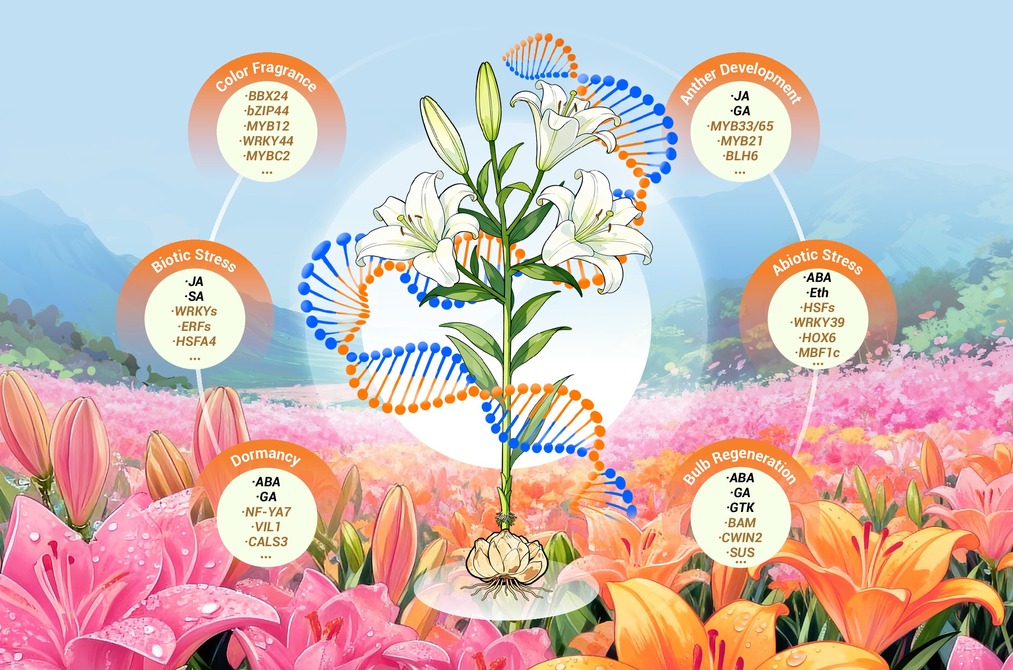
 DownLoad:
Full size image
DownLoad:
Full size image
-
PUBLIC SUMMARY
-
This review emphasizes key findings in lily regarding bulb dormancy, anther development, and flower traits.
The critical findings of environmental stress responses in lily are summarized in this review.
It also discusses advancements in genetic transformation technologies for enhancing lily traits.
The insights aim to guide future lily breeding and identify research gaps for further exploration.
-
-
ABSTRACT
Lily (Lilium spp.) is a globally significant ornamental crop, highly valued in both domestic and international markets. In recent years, the lily industry has undergone rapid expansion; however, it continues to face numerous challenges. Prominent limitations in lily production include prolonged bulb dormancy, severe pollen contamination, limited diversity of flower coloration, inadequate or excessively strong fragrance, and insufficient resistance to both biotic and abiotic stresses. To address these limitations, considerable efforts over the past decade have been directed toward molecular biology research, particularly the identification of key functional genes and the application of molecular breeding approaches to accelerate the development of improved germplasm. This review synthesizes the key findings from recent research in lily molecular biology, highlighting mechanisms associated with bulb dormancy, anther development, flower color and fragrance formation, as well as responses to biotic and abiotic stresses. Additionally, the review discusses advancements in genetic transformation technologies. The insights presented here aim to guide future breeding programs and enhance our understanding of the molecular basis of key traits in lilies. Furthermore, we identify current gaps in knowledge and propose future research directions to address existing limitations and further advance the field. -

-
REFERENCES
[1] Dhiman M.R., Sharma P. and Bhargava B. (2022). Lilium: conservation, characterization, and evaluation. Datta S.K. and Gupta Y.C. (eds). Floriculture and Ornamental Plants (Springer), pp:81-116. DOI:10.1007/978-981-15-1554-5_6-1 [2] Bakhshaie M., Khosravi S., Azadi P., et al. (2016). Biotechnological advances in Lilium. Plant Cell Rep. 35:1799−1826. DOI:10.1007/s00299-016-2017-8 [3] Hu Y., Ren J., Liu Y. et al. (2020). Evaluating the genetic relationship of Lilium species/cultivars based on target region amplification polymorphism (TRAP). Genet. Resour. Crop Evol. 67:503−513. DOI:10.1007/s10722-019-00880-9 [4] Inada Y., Oyama-Okubo N. and Yamagishi M. (2023). Introduction of floral scent traits into asiatic hybrid lilies (unscented) by crossbreeding with Lilium cernuum (scented). The Horticult. J. 92:485−492. DOI:10.2503/hortj.QH-066 [5] Marasek-Ciolakowska A., Sochacki D. and Marciniak P. (2021). Breeding aspects of selected ornamental bulbous crops. Agronomy 11:1709. DOI:10.3390/agronomy11091709 [6] Basit A. and Lim K.-B. (2024). Recent approaches towards characterization, genetic, and genomic perspectives of genus Lilium. Genet. Resour. Crop Evol. 72:1−28. DOI:10.1007/s10722-024-01969-6 [7] Xu L. (2018). De novo root regeneration from leaf explants: Wounding, auxin, and cell fate transition. Curr. Opin. Plant Biol. 41:39−45. DOI:10.1016/j.pbi.2017.08.004 [8] Askari N. and Visser R. G. F. (2022). The role of scale explants in the growth of regenerating lily bulblets in vitro. Plant Cell Tissue Organ Cult. 149:589−598. DOI:10.1007/s11240-022-02328-y [9] Huang Z., Gao C., Xu Y., et al. (2024). Identification and expression analysis of putative sugar transporter gene family during bulb formation in lilies. Int. J. Mol. Sci. 25:3483. DOI:10.3390/ijms25063483 [10] Moreno-Pachón N. M. (2017). Mechanisms of vegetative propagation in bulbs: A molecular approach. Diss. Wageningen University and Research, 2017. https://www.proquest.com/dissertations-theses/mechanisms-vegetative-propagation-bulbs-molecular/docview/2560609523/se-2?accountid=43630 [11] Chen L., Tong J., Xiao L., et al. (2016). YUCCA-mediated auxin biogenesis is required for cell fate transition occurring during de novo root organogenesis in Arabidopsis. J J. Exp. Bot. 67:4273−4284. DOI:10.1093/jxb/erw213 [12] Liu J., Sheng L., Xu Y., et al. (2014). WOX11 and 12 are involved in the first-step cell fate transition during de novo root organogenesis in Arabidopsis. Plant Cell 26:1081−1093. DOI:10.1105/tpc.114.122887 [13] Hu X. and Xu L. (2016). Transcription factors WOX11/12 directly activate WOX5/7 to promote root primordia initiation and organogenesis. Plant Physiol. 172:2363−2373. DOI:10.1104/pp.16.01067 [14] He G., Cao Y., Wang J., et al. (2022). WUSCHEL-related homeobox genes cooperate with cytokinin to promote bulbil formation in Lilium lancifolium. Plant Physiol. 190:387−402. DOI:10.1093/plphys/kiac259 [15] Xin Y., Chen X., Liang J., et al. (2024). Auxin regulates bulbil initiation by mediating sucrose metabolism in Lilium lancifolium. Hortic. Res. 11:uhae054. DOI:10.1093/hr/uhae054 [16] Wu Y., Ren Z., Gao C., et al. (2021). Change in sucrose cleavage pattern and rapid starch accumulation govern lily shoot-to-bulblet transition in vitro. Front. Plant Sci. 11:564713. DOI:10.3389/fpls.2020.564713 [17] Li J., Sun M., Li H., et al. (2022). Full-length transcriptome-referenced analysis reveals crucial roles of hormone and wounding during induction of aerial bulbils in lily. BMC Plant Biol. 22:415. DOI:10.1186/s12870-022-03801-8 [18] Hao C., Yang P., Qu Y., et al. (2024). Sucrose function on the bulbil formation of Lilium lancifolium. Sci. Hortic. 323:112538. DOI:10.1016/j.scienta.2023.112538 [19] Gao C., Zhang L., Xu Y., et al. (2023). Full-length transcriptome analysis revealed that 2,4-dichlorophenoxyacetic acid promoted in vitro bulblet initiation in lily by affecting carbohydrate metabolism and auxin signaling. Front. Plant Sci. 14:1236315. DOI:10.3389/fpls.2023.1236315 [20] Li Y., Xin Q., Zhang Y., et al. (2022). Comparative metabolome analysis unravels a close association between dormancy release and metabolic alteration induced by low temperature in lily bulbs. Plant Cell Rep. 41:1561−1572. DOI:10.1007/s00299-022-02874-x [21] Fan X., Zou X., Fu L., et al. (2023). The RING-H2 gene LdXERICO plays a negative role in dormancy release regulated by low temperature in Lilium davidii var. unicolor. Hortic. Res. 10:uhad030. DOI:10.1093/hr/uhad030 [22] Fan X., Yang Y., Li M., et al. (2021). Transcriptomics and targeted metabolomics reveal the regulatory network of Lilium davidii var. unicolor during bulb dormancy release. Planta 254:59. DOI:10.1007/s00425-021-03672-7 [23] Zhao Y., Pan W., Xin Y., et al. (2023). Regulating bulb dormancy release and flowering in lily through chemical modulation of intercellular communication. Plant Methods 19:136. DOI:10.1186/s13007-023-01113-y [24] Pan W., Li J., Du Y., et al. (2023). Epigenetic silencing of callose synthase by VIL1 promotes bud-growth transition in lily bulbs. Nat. Plants 9:1451−1467. DOI:10.1038/s41477-023-01492-z [25] Liang Y., Gao Q., Li F., et al. (2025). The giant genome of lily provides insights into the hybridization of cultivated lilies. Nat. Commun. 16:45. DOI:10.1038/s41467-024-55545-8 [26] Wang W., Su X., Tian Z., et al. (2018). Transcriptome profiling provides insights into dormancy release during cold storage of Lilium pumilum. BMC Genomics 19:196. DOI:10.1186/s12864-018-4536-x [27] Lazare S., Bechar D., Fernie A. R., et al. (2018). The proof is in the bulb: Glycerol influences key stages of lily development. Plant J. 97:321−340. DOI:10.1111/tpj.14122 [28] Yang C., Xu X., Ali M. M., et al. (2024). Nitric oxide pre-treatment advances bulblet dormancy release by mediating metabolic changes in Lilium. Int. J. Mol. Sci. 26:156. DOI:10.3390/ijms26010156 [29] Xu X., Yang C., Zheng Y., et al. (2024). Transcriptome-wide identification of miRNAs and their targets during riboflavin-promoted dormancy release in Lilium ‘Siberia’. Horticulturae 11:17. DOI:10.3390/horticulturae11010017 [30] Xu S., Chen R., Zhang X., et al. (2024). The evolutionary tale of lilies: Giant genomes derived from transposon insertions and polyploidization. The Innovation 5:100726. DOI:10.1016/j.xinn.2024.100726 [31] Wang X., Wu Z., Wang L., et al. (2019). Cytological and molecular characteristics of pollen abortion in lily with dysplastic tapetum. Hortic. Plant J. 5:281−294. DOI:10.1016/j.hpj.2019.11.002 [32] Åstrand J., Knight C., Robson J., et al. (2021). Evolution and diversity of the angiosperm anther: Trends in function and development. Plant Reprod. 34:307−319. DOI:10.1007/s00497-021-00416-1 [33] Jia W., Li X., Wang R., et al. (2023). Disruption of the contents of endogenous hormones cause pollen development obstruction and abortion in male-sterile hybrid lily populations. Plants 12:3804. DOI:10.3390/plants12223804 [34] He L., Liu X., Wu Z., et al. (2021). Transcriptome and metabolome analyses provide insights into the stomium degeneration mechanism in lily. Int. J. Mol. Sci. 22:12124. DOI:10.3390/ijms222212124 [35] Sui J., Cao X., Yi M., et al. (2020). Isolation and characterization of LoAMS gene in anther development of lily (Lilium oriental hybrids). N. Z. J. Crop Hortic. Sci. 48:257−269. DOI:10.1080/01140671.2020.1806083 [36] Yuan G., Wu Z., Liu X., et al. (2021). Characterization and functional analysis of LoUDT1, a bHLH transcription factor related to anther development in the lily oriental hybrid Siberia (Lilium spp. ). Plant Physiol. Biochem. 166:1087−1095. DOI:10.1016/j.plaphy.2021.07.018 [37] Sui J., He J., Wu J., et al. (2015). Characterization and functional analysis of transcription factor LoMYB80 related to anther development in Lily (Lilium oriental hybrids). J. Plant Growth Regul. 34:545−557. DOI:10.1007/s00344-015-9489-6 [38] Sui J., Jia W., Xin Y., et al. (2022). Transcriptomics-based identification of genes related to tapetum degradation and microspore development in lily. Genes 13:366. DOI:10.3390/genes13020366 [39] Marchant D. B. and Walbot V. (2022). Anther development—The long road to making pollen. Plant Cell 34:4677−4695. DOI:10.1093/plcell/koac287 [40] Feng J., Wu Z., Wang X., et al. (2019). Analysis of pollen allergens in lily by transcriptome and proteome data. Int. J. Mol. Sci. 20:5892. DOI:10.3390/ijms20235892 [41] Yao X., Hu W. and Yang Z.-N. (2022). The contributions of sporophytic tapetum to pollen formation. Seed Biol. 1:1−13. DOI:10.48130/SeedBio-2022-0005 [42] Hsu S.-W., Liu M.-C., Zen K.-C., et al. (2014). Identification of the tapetum/microspore-specific promoter of the pathogenesis-related 10 gene and its regulation in the anther of Lilium longiflorum. Plant Sci. 215-216:124-133. DOI:10.1016/j.plantsci.2013.11.006 [43] Wang B.-J., Hsu Y.-F., Chen Y.-C., et al. (2014). Characterization of a lily anther-specific gene encoding cytoskeleton-binding glycoproteins and overexpression of the gene causes severe inhibition of pollen tube growth. Planta 240:525−537. DOI:10.1007/s00425-014-2099-x [44] Yu J., Wu Z., Liu X., et al. (2024). LoBLH6 interacts with LoMYB65 to regulate anther development through feedback regulation of gibberellin synthesis in lily. Hortic. Res. 12:uhae339. DOI:10.1093/hr/uhae339 [45] Qiao Y., Hou B. and Qi X. (2023). Biosynthesis and transport of pollen coat precursors in angiosperms. Nat. Plants 9:864−876. DOI:10.1038/s41477-023-01413-0 [46] Liu X., Wu Z., Feng J., et al. (2021). A novel R2R3-MYB gene LoMYB33 from lily is specifically expressed in anthers and plays a role in pollen development. Front. Plant Sci. 12:730007. DOI:10.3389/fpls.2021.730007 [47] Liu X., He L., Wu Z., et al. (2024). GAMYB transcription factor LoMYB65 from lily plays a vital role in pollen development. Hortic. Plant J. 10:223−238. DOI:10.1016/j.hpj.2023.01.008 [48] Xue L., Dai J., Fu R., et al. (2025). Functional studies on the LiAG1 gene of Lilium ‘Ice Pink Queen’ in flower development. Plants 14:323. DOI:10.3390/plants14030323 [49] Wilson Z. A., Song J., Taylor B., et al. (2011). The final split: The regulation of anther dehiscence. J. Exp. Bot. 62:1633−1649. DOI:10.1093/jxb/err014 [50] He L., Wu Z., Liu X., et al. (2023). The R2R3 MYB transcription factor LoMYB21 regulates anther dehiscence by jasmonate biosynthesis pathway in Lilium oriental hybrid ‘Siberia’. Sci. Hortic. 313:111887. DOI:10.1016/j.scienta.2023.111887 [51] Fang Q., Pan X., Wu Z., et al. (2026). The LoMYB26/LoJAZ4-LoCOMT module regulates anther dehiscence via Jasmonic acid-mediated endothecium lignification in lily. J. Adv. Res. 76:89−104. DOI:10.1016/j.jare.2025.04.005 [52] Dong T., Wang L., Wang R., et al. (2023). Transcriptomic analysis reveals candidate genes associated with anther development in Lilium oriental hybrid ‘Siberia’. Front. Plant Sci. 14:1128911. DOI:10.3389/fpls.2023.1128911 [53] Yamagishi M., Toda S. and Tasaki K. (2013). The novel allele of the LhMYB12 gene is involved in splatter‐type spot formation on the flower tepals of asiatic hybrid lilies (Lilium spp. ). New Phytol. 201:1009−1020. DOI:10.1111/nph.12572 [54] Yang J., Meng J., Liu X., et al. (2021). Integrated mRNA and small RNA sequencing reveals a regulatory network associated with flower color in oriental hybrid lily. Plant Physiol. Biochem. 166:103−114. DOI:10.1016/j.plaphy.2021.05.035 [55] Yu P., Piao M., Kong X., et al. (2024). The coordinated interaction or regulation between anthocyanin and carotenoid pathways in OT hybrid lilies based on metabolome and time-course transcriptomics analysis. Ind. Crop. Prod. 222:119795. DOI:10.1016/j.indcrop.2024.119795 [56] Yin X., Zhang Y., Zhang L., et al. (2021). Regulation of MYB transcription factors of anthocyanin synthesis in lily flowers. Front. Plant Sci. 12:761668. DOI:10.3389/fpls.2021.761668 [57] Dou X., Bai J., Wang H., et al. (2020). Cloning and characterization of a tryptophan–aspartic acid repeat gene associated with the regulation of anthocyanin biosynthesis in oriental hybrid lily. J. Am. Soc. Hortic. Sci. 145:131−140. DOI:10.21273/jashs04791-19 [58] Bi M., Liang R., Wang J., et al. (2023). Multifaceted roles of LhWRKY44 in promoting anthocyanin accumulation in asiatic hybrid lilies (Lilium spp.). Hortic. Res. 10:uhad167. DOI:10.1093/hr/uhad167 [59] Yamagishi M. and Sakai M. (2020). The microRNA828/MYB12 module mediates bicolor pattern development in asiatic hybrid lily (Lilium spp. ) Flowers. Front. Plant Sci. 11:590791. DOI:10.3389/fpls.2020.590791 [60] Yamagishi M. (2022). High temperature enhances anthocyanin coloration in asiatic hybrid lily flowers via upregulation of the MYB12 positive regulator. Hortic. Plant J. 8:769−776. DOI:10.1016/j.hpj.2022.05.003 [61] Yang J., Guo C., Chen F., et al. (2024). Heat-induced modulation of flavonoid biosynthesis via a LhMYBC2-mediated regulatory network in oriental hybrid lily. Plant Physiol. Biochem. 214:108966. DOI:10.1016/j.plaphy.2024.108966 [62] Gao Z., Sun Y., Zhu Z., et al. (2024). Transcription factors LvBBX24 and LvbZIP44 coordinated anthocyanin accumulation in response to light in lily petals. Hortic. Res. 11:uhae211. DOI:10.1093/hr/uhae211 [63] Yamagishi M. (2015). A novel R2R3-MYB transcription factor regulates light-mediated floral and vegetative anthocyanin pigmentation patterns in Lilium regale. Mol. Breed. 36:3. DOI:10.1007/s11032-015-0426-y [64] Xu L., Yang P., Feng Y., et al. (2017). Spatiotemporal transcriptome analysis provides insights into bicolor tepal development in Lilium “Tiny Padhye”. Front. Plant Sci. 8:398. DOI:10.3389/fpls.2017.00398 [65] Du F., Wang T., Fan J.-m., et al. (2019). Volatile composition and classification of Lilium flower aroma types and identification, polymorphisms, and alternative splicing of their monoterpene synthase genes. Hortic. Res. 6:110. DOI:10.1038/s41438-019-0192-9 [66] Abbas F., Ke Y., Zhou Y., et al. (2020). Molecular cloning, characterization and expression analysis of LoTPS2 and LoTPS4 involved in floral scent formation in oriental hybrid Lilium variety ‘Siberia’. Phytochemistry 173:112294. DOI:10.1016/j.phytochem.2020.112294 [67] Zhou Y., Wang F., Wang Q., et al. (2024). Diversity of chemical compounds in lily fragrance and identification of key sensory markers. Ind. Crop. Prod. 222:120034. DOI:10.1016/j.indcrop.2024.120034 [68] Shi S., Duan G., Li D., et al. (2018). Two-dimensional analysis provides molecular insight into flower scent of Lilium ‘Siberia’. Sci. Rep. 8:5352. DOI:10.1038/s41598-018-23588-9 [69] Hu Z., Tang B., Wu Q., et al. (2017). Transcriptome sequencing analysis reveals a difference in monoterpene biosynthesis between scented Lilium ‘Siberia’ and unscented Lilium ‘Novano’. Front. Plant Sci. 8:1351. DOI:10.3389/fpls.2017.01351 [70] Guo Y., Guo Z., Zhong J., et al. (2023). Positive regulatory role of R2R3 MYBs in terpene biosynthesis in Lilium ‘Siberia’. Hortic. Plant J. 9:1024−1038. DOI:10.1016/j.hpj.2023.05.004 [71] Yang Y.-Y., Ma B., Li Y.-Y., et al. (2022). Transcriptome analysis identifies key gene LiMYB305 involved in monoterpene biosynthesis in Lilium ‘Siberia’. Front. Plant Sci. 13:1021576. DOI:10.3389/fpls.2022.1021576 [72] Yang Y., Liu X., Hu Z., et al. (2024). Negative regulatory role of LiSRM1 in monoterpene biosynthesis in Lilium ‘Siberia’. Plant Physiol. Biochem. 216:109167. DOI:10.1016/j.plaphy.2024.109167 [73] Liu X., Yan W., Liu S., et al. (2024). LiNAC100 contributes to linalool biosynthesis by directly regulating LiLiS in Lilium ‘Siberia’. Planta 259:73. DOI:10.1007/s00425-024-04340-2 [74] Sun D., Zhang X., Zhang Q., et al. (2019). Comparative transcriptome profiling uncovers a Lilium regale NAC transcription factor, LrNAC35, contributing to defence response against cucumber mosaic virus and tobacco mosaic virus. Mol. Plant Pathol. 20:1662−1681. DOI:10.1111/mpp.12868 [75] Gao X., Cui Q., Cao Q.-Z., et al. (2017). Transcriptome-wide analysis of Botrytis elliptica responsive microRNAs and their targets in Lilium regale Wilson by high-throughput sequencing and degradome analysis. Front. Plant Sci. 8:753. DOI:10.3389/fpls.2017.00753 [76] Cui Q., Liu Q., Gao X., et al. (2018). Transcriptome-based identification of genes related to resistance against Botrytis elliptica in Lilium regale. Can. J. Plant Sci. 98:1058−1071. DOI:10.1139/cjps-2017-0254 [77] Fu Y., Zhu Y., Yang W., et al. (2020). Isolation and functional identification of a Botrytis cinerea-responsive caffeoyl-CoA O-methyltransferase gene from Lilium regale wilson. Plant Physiol. Biochem. 157:379−389. DOI:10.1016/j.plaphy.2020.10.030 [78] Fu Y., Li J., Wu H., et al. (2022). Analyses of Botrytis cinerea-responsive LrWRKY genes from Lilium regale reveal distinct roles of two LrWRKY transcription factors in mediating responses to B. cinerea. Plant Cell Rep. 41:995−1012. DOI:10.1007/s00299-022-02833-6 [79] Chai N., Xu J., Zuo R., et al. (2021). Metabolic and transcriptomic profiling of Lilium leaves infected with Botrytis elliptica reveals different stages of plant defense mechanisms. Front. Plant Sci. 12:730620. DOI:10.3389/fpls.2021.730620 [80] Cui Q., Li X., Hu S., et al. (2024). The critical role of phenylpropanoid biosynthesis pathway in lily resistance against gray mold. Int. J. Mol. Sci. 25:11068. DOI:10.3390/ijms252011068 [81] Du W., Chai N., Sun Z., et al. (2022). Full-length transcriptome characterization and functional analysis of pathogenesis-related proteins in Lilium oriental hybrid ‘Sorbonne’ infected with Botrytis elliptica. Int. J. Mol. Sci. 24:425. DOI:10.3390/ijms24010425 [82] Rao J., Liu D., Zhang N., et al. (2014). Differential gene expression in incompatible interaction between Lilium regale Wilson and Fusarium oxysporum f. sp. lilii revealed by combined SSH and microarray analysis. Mol. Biol. 48:802−812. DOI:10.1134/s0026893314060144 [83] Deng J., Che X., Gu Y., et al. (2024). Integrated multi-omics investigation revealed the importance of phenylpropanoid metabolism in the defense response of Lilium regale Wilson to fusarium wilt. Hortic. Res. 11:uhae140. DOI:10.1093/hr/uhae140 [84] Zhou L., Shi H., Yang Y., et al. (2021). Identification of resistance to Aphis gossypii glover and genetic diversity analysis of lily resources. J. Northeast Agric. Univ. 52:24−33. DOI:10.19720/j.cnki.issn.1005-9369.2021.06.003 [85] Shi H., Zhong J., Liang Y., et al. (2023). Aphid resistance evaluation and constitutive resistance analysis of eighteen lilies. Insects 14:936. DOI:10.3390/insects14120936 [86] Zhou L., Wang E., Yang Y., et al. (2024). Antioxidant enzyme, transcriptomic, and metabolomic changes in lily (Lilium spp. ) leaves induced by Aphis gossypii glover. Genes 15:1124. DOI:10.3390/genes15091124 [87] Sun D., Zhang X., Li S., et al. (2016). LrABCF1, a GCN-type ATP-binding cassette transporter from Lilium regale, is involved in defense responses against viral and fungal pathogens. Planta 244:1185−1199. DOI:10.1007/s00425-016-2576-5 [88] Cui Q., Yan X., Gao X., et al. (2018). Analysis of WRKY transcription factors and characterization of two Botrytis cinerea-responsive LrWRKY genes from Lilium regale. Plant Physiol. Biochem. 127:525−536. DOI:10.1016/j.plaphy.2018.04.027 [89] Xiang J., Lei X., Wu Z., et al. (2022). An efficient and novel method to screen Botrytis cinerea resistance genes based on TRV-induced gene silencing with lily petal discs. Physiol. Mol. Plant Pathol. 122:101923. DOI:10.1016/j.pmpp.2022.101923 [90] Ding L., Wu Z., Xiang J., et al. (2024). A LlWRKY33-LlHSFA4-LlCAT2 module confers resistance to Botrytis cinerea in lily. Hortic. Res. 11:uhad254. DOI:10.1093/hr/uhad254 [91] Gao X., Zhang Q., Zhao Y. Q., et al. (2020). The lre‐miR159a‐LrGAMYB pathway mediates resistance to grey mould infection in Lilium regale. Mol. Plant Pathol. 21:749−760. DOI:10.1111/mpp.12923 [92] Li S., Liu G., Pu L., et al. (2021). WRKY transcription factors actively respond to Fusarium oxysporum in Lilium regale. Phytopathology 111:1625−1637. DOI:10.1094/phyto-10-20-0480-r [93] Li S., Hai J., Wang Z., et al. (2021). Lilium regale Wilson WRKY2 regulates chitinase gene expression during the response to the root rot pathogen Fusarium oxysporum. Front. Plant Sci. 12:741463. DOI:10.3389/fpls.2021.741463 [94] Wang Z., Deng J., Liang T., et al. (2022). Lilium regale Wilson WRKY3 modulates an antimicrobial peptide gene, LrDef1, during response to Fusarium oxysporum. BMC Plant Biol. 22:257. DOI:10.1186/s12870-022-03649-y [95] Zhang N., Liu D., Zheng W., et al. (2014). A bZIP transcription factor, LrbZIP1, is involved in Lilium regale Wilson defense responses against Fusarium oxysporum f. sp. lilii. Genes Genom. 36:789−798. DOI:10.1007/s13258-014-0214-9 [96] Han Q., Chen R., Yang Y., et al. (2016). A glutathione S -transferase gene from Lilium regale Wilson confers transgenic tobacco resistance to Fusarium oxysporum. Sci. Hortic. 198:370−378. DOI:10.1016/j.scienta.2015.11.047 [97] Deng J., Wang Z., Li W., et al. (2024). WRKY11 up-regulated dirigent expression to enhance lignin/lignans accumulation in Lilium regale Wilson during response to Fusarium wilt. J. Integr. Agric. 23:2703−2722. DOI:10.1016/j.jia.2023.07.032 [98] Azadi P., Otang N. V., Supaporn H., et al. (2011). Increased resistance to cucumber mosaic virus (CMV) in Lilium transformed with a defective CMV replicase gene. Biotechnol. Lett. 33:1249−1255. DOI:10.1007/s10529-011-0550-7 [99] Núñez de Cáceres González F. F., Davey M. R., Cancho Sanchez E., et al. (2015). Conferred resistance to Botrytis cinerea in Lilium by overexpression of the RCH10 chitinase gene. Plant Cell Rep. 34:1201−1209. DOI:10.1007/s00299-015-1778-9 [100] Wang L., Yan X., Hu H., et al. (2022). Degradation of oxalic acid produced by Botrytis elliptica infection in two ploidy levels of Lilium rosthornii Diels. Plant Biol. 24:502−509. DOI:10.1111/plb.13405 [101] Yamagishi M., Jitsuyama Y. and Hoshino Y. (2023). Agronomic performance in tetraploid Lilium leichtlinii: Larger flowers and earlier flowering. Euphytica 219:126. DOI:10.1007/s10681-023-03250-w [102] Fu Y., Lu S., Liu C., et al. (2024). Obtaining and characterization of an interspecific hybrid between Lilium callosum and ‘Snow Queen’ and evaluation of the Botrytis stress response. Plants 13:1376. DOI:10.3390/plants13101376 [103] Chen R., He H., Yang Y., et al. (2017). Functional characterization of a pathogenesis-related protein family 10 gene, LrPR10-5, from Lilium regale Wilson. Austral. Plant Pathol. 46:251−259. DOI:10.1007/s13313-017-0485-0 [104] Lin C. H., Pan Y. C., Ye N. H., et al. (2020). LsGRP1, a class II glycine‐rich protein of Lilium, confers plant resistance via mediating innate immune activation and inducing fungal programmed cell death. Mol. Plant Pathol. 21:1149−1166. DOI:10.1111/mpp.12968 [105] Gong B., Yi J., Wu J., et al. (2014). LlHSFA1, a novel heat stress transcription factor in lily (Lilium longiflorum), can interact with LlHSFA2 and enhance the thermotolerance of transgenic Arabidopsis thaliana. Plant Cell Rep. 33:1519−1533. DOI:10.1007/s00299-014-1635-2 [106] Li T., Wu Z., Zhang Y., et al. (2024). An AP2/ERF member LlERF012 confers thermotolerance via activation of HSF pathway in lily. Plant Cell Environ. 47:4702−4719. DOI:10.1111/pce.15058 [107] Xin H., Zhang H., Zhong X., et al. (2017). Over-expression of LlHsfA2b, a lily heat shock transcription factor lacking trans-activation activity in yeast, can enhance tolerance to heat and oxidative stress in transgenic Arabidopsis seedlings. Plant Cell Tissue Organ Cult. 130:617−629. DOI:10.1007/s11240-017-1251-2 [108] Wu Z., Liang J., Wang C., et al. (2018). Overexpression of lily HsfA3s in Arabidopsis confers increased thermotolerance and salt sensitivity via alterations in proline catabolism. J. Exp. Bot. 69:2005−2021. DOI:10.1093/jxb/ery035 [109] Wu Z., Liang J., Wang C., et al. (2019). Alternative splicing provides a mechanism to regulate LlHSFA3 function in response to heat stress in lily. Plant Physiol. 181:1651−1667. DOI:10.1104/pp.19.00839 [110] Wang C., Zhou Y., Yang X., et al. (2022). The heat stress transcription factor LlHsfA4 enhanced basic thermotolerance through regulating ROS metabolism in lilies (Lilium longiflorum). Int. J. Mol. Sci. 23:572. DOI:10.3390/ijms23010572 [111] Shao Y., Wang R., Zhou Y., et al. (2025). LlHsfA5‐LIHsfA4 antagonism balances thermotolerance via LlAPX2‐mediated reactive oxygen homeostasis in Lilium longiflorum. Plant J. 122:e70249. DOI:10.1111/tpj.70249 [112] Wu Z., Li T., Ding L., et al. (2024). Lily LlHSFC2 coordinates with HSFAs to balance heat stress response and improve thermotolerance. New Phytol. 241:2124−2142. DOI:10.1111/nph.19507 [113] Xiang J., Wu Z., Ding L., et al. (2024). A lily heat-inducible multi-protein bridging factor, LlMBF1c, plays a crucial role in plant thermotolerance. Hortic. Adv. 2:24. DOI:10.1007/s44281-024-00042-7 [114] Xiang J., Gong X., Fang Q., et al. (2025). An ethylene‐response factor LlERF092 coordinates with LlETO1 to improve thermotolerance by activating LlMBF1c in lily. Plant Biotechnol. J. 23:4813−4828. DOI:10.1111/pbi.70269 [115] Wu Z., Li T., Zhang D., et al. (2022). Lily HD-Zip I transcription factor LlHB16 promotes thermotolerance by activating LlHSFA2 and LlMBF1c. Plant Cell Physiol. 63:1729−1744. DOI:10.1093/pcp/pcac131 [116] Wu Z., Li T., Zhang Y., et al. (2024). HD–Zip I protein LlHOX6 antagonizes homeobox protein LlHB16 to attenuate basal thermotolerance in lily. Plant Physiol. 194:1870−1888. DOI:10.1093/plphys/kiad582 [117] Wu Z., Gong X., Zhang Y., et al. (2024). LlbHLH87 interacts with LlSPT to modulate thermotolerance via activation of LlHSFA2 and LlEIN3 in lily. Plant J. 120:1457−1473. DOI:10.1111/tpj.17060 [118] Gong X., Li T., Xiang J., et al. (2025). Lily LlPIF4 confers thermotolerance by activating LlWRKY33 and interacting with LlbHLH87. Plant Cell Environ. 48:6924−6926. DOI:10.1111/pce.15673 [119] Ding L., Wu Z., Teng R., et al. (2021). LlWRKY39 is involved in thermotolerance by activating LlMBF1c and interacting with LlCaM3 in lily (Lilium longiflorum). Hortic. Res. 8:36. DOI:10.1038/s41438-021-00473-7 [120] Wu Z., Li T., Cao X., et al. (2022). Lily WRKY factor LlWRKY22 promotes thermotolerance through autoactivation and activation of LlDREB2B. Hortic. Res. 9:uhac186. DOI:10.1093/hr/uhac186 [121] Li T., Wu Z., Xiang J., et al. (2022). Overexpression of a novel heat-inducible ethylene-responsive factor gene LlERF110 from Lilium longiflorum decreases thermotolerance. Plant Sci. 319:111246. DOI:10.1016/j.plantsci.2022.111246 [122] Wu Z., Li T., Liu X., et al. (2021). A novel R2R3-MYB transcription factor LlMYB305 from Lilium longiflorum plays a positive role in thermotolerance via activating heat-protective genes. Environ. Exp. Bot. 184:104399. DOI:10.1016/j.envexpbot.2021.104399 [123] Wu Z., Li T., Xiang J., et al. (2023). A lily membrane-associated NAC transcription factor, LlNAC014, is involved in thermotolerance via activation of the DREB2-HSFA3 module. J. Exp. Bot. 74:945−963. DOI:10.1093/jxb/erac436 [124] Liu B., Zhou Y., Lan W., et al. (2019). LlDREB1G, a novel DREB subfamily gene from Lilium longiflorum, can enhance transgenic Arabidopsis tolerance to multiple abiotic stresses. Plant Cell Tissue Organ Cult. 138:489−506. DOI:10.1007/s11240-019-01644-0 [125] Fu L., Zhang J., Li M., et al. (2023). ldi‐miR396‐LdPMaT1 enhances reactive oxygen species scavenging capacity and promotes drought tolerance in Lilium distichum Nakai autotetraploids. Plant Cell Environ. 47:2733−2748. DOI:10.1111/pce.14783 [126] Fan X., Chen Y., Li M., et al. (2024). Functional analysis of LdPMAT1, a positive regulator that promotes drought tolerance in Lilium distic hum nakai. Plant Physiol. Biochem. 217:109162. DOI:10.1016/j.plaphy.2024.109162 [127] Liu T., Wang Y., Li X., et al. (2024). LpNAC5 positively regulates drought, salt and alkalinity tolerance of Lilium pumilum. Gene 924:148550. DOI:10.1016/j.gene.2024.148550 [128] Yan H., Liu B., Cui Y., et al. (2022). LpNAC6 reversely regulates the alkali tolerance and drought tolerance of Lilium pumilum. J. Plant Physiol. 270:153635. DOI:10.1016/j.jplph.2022.153635 [129] Wang Y., Cao S., Guan C., et al. (2020). Overexpressing the NAC transcription factor LpNAC13 from Lilium pumilum in tobacco negatively regulates the drought response and positively regulates the salt response. Plant Physiol. Biochem. 149:96−110. DOI:10.1016/j.plaphy.2020.01.036 [130] Wang Y., Cui Y., Liu B., et al. (2022). Lilium pumilum stress-responsive NAC transcription factor LpNAC17 enhances salt stress tolerance in tobacco. Front. Plant Sci. 13:993841. DOI:10.3389/fpls.2022.993841 [131] Yong Y., Zhang Y. and Lyu Y. (2019). A stress-responsive NAC transcription factor from tiger lily (LlNAC2) interacts with LlDREB1 and LlZHFD4 and enhances various abiotic stress tolerance in Arabidopsis. Int. J. Mol. Sci. 20:3225. DOI:10.3390/ijms20133225 [132] Liu L., Xie T., Zhao Z., et al. (2023). Involvement of a novel NAP member LbNAP in flower senescence and dehydration stress in cut lily. Sci. Hortic. 308:111482. DOI:10.1016/j.scienta.2022.111482 [133] Yong Y., Zhang Y. and Lyu Y. (2019). A MYB-related transcription factor from Lilium lancifolium L. (LlMYB3) is involved in anthocyanin biosynthesis pathway and enhances multiple abiotic stress tolerance in Arabidopsis thaliana. Int. J. Mol. Sci.20:3195. DOI:10.3390/ijms20133195. [134] Zhang F., Zhang X., Wan W., et al. (2024). MYB4 in Lilium pumilum affects plant saline-alkaline tolerance. Plant Signal. Behav. 19:2370724. DOI:10.1080/15592324.2024.2370724 [135] Dong Y., Zhang L., Chang X., et al. (2022). Overexpression of LpCPC from Lilium pumilum confers saline-alkali stress (NaHCO3) resistance. Plant Signal. Behav. 17:2057723. DOI:10.1080/15592324.2022.2057723 [136] Jin S., Wang X., Dong Y., et al. (2022). The gene LpBCP increased NaHCO3 resistance by enhancing lignin or ROS scavenging in the Nicotiana benthamiana. Plant Biol. 24:1057−1065. DOI:10.1111/plb.13462 [137] Yang Y., Xu L., Li W., et al. (2023). A Na+/H+ antiporter-encoding salt overly sensitive 1 gene, LpSOS1, involved in positively regulating the salt tolerance in Lilium pumilum. Gene 874:147485. DOI:10.1016/j.gene.2023.147485 [138] Fan X. and Sun H. (2024). Exploring Agrobacterium-mediated genetic transformation methods and its applications in Lilium. Plant Methods 20:120. DOI:10.1186/s13007-024-01246-8 [139] Ramkumar T., Lenka S., Arya S., et al. (2020). A short history and perspectives on plant genetic transformation. Rustgi S. and Luo H. (eds). Biolistic DNA Delivery in Plants: Methods in Molecular Biology (Humana), pp:39-68. DOI:10.1007/978-1-0716-0356-7_3 [140] Zhang M., Ma X., Jin G., et al. (2023). A modified method for transient transformation via pollen magnetofection in Lilium germplasm. Int. J. Mol. Sci. 24:15304. DOI:10.3390/ijms242015304 [141] Chen Y., Hou X., Zheng Y., et al. (2023). The establishment of a genetic transformation system and the acquisition of transgenic plants of oriental hybrid lily (Lilium L. ). Int. J. Mol. Sci. 24:782. DOI:10.3390/ijms24010782 [142] Yan R., Wang Z., Ren Y., et al. (2019). Establishment of efficient genetic transformation systems and application of CRISPR/Cas9 genome editing technology in Lilium pumilum DC. Fisch. and Lilium longiflorum White Heaven. Int. J. Mol. Sci. 20:2920. DOI:10.3390/ijms20122920 [143] Deng J., Li W., Li X., et al. (2024). A fast, efficient, and tissue-culture-independent genetic transformation method for Panax notoginseng and Lilium regale. Plants 13:2509. DOI:10.3390/plants13172509 [144] Choudhury A. and Rajam M. V. (2021). Genetic transformation of legumes: An update. Plant Cell Rep. 40:1813−1830. DOI:10.1007/s00299-021-02749-7 [145] Lowe K., Wu E., Wang N., et al. (2016). Morphogenic regulators baby boom and wuschel improve monocot transformation. Plant Cell 28:1998−2015. DOI:10.1105/tpc.16.00124 [146] Debernardi J. M., Tricoli D. M., Ercoli M. F., et al. (2020). A GRF–GIF chimeric protein improves the regeneration efficiency of transgenic plants. Nat. Biotechnol. 38:1274−1279. DOI:10.1038/s41587-020-0703-0 [147] Cao X., Xie H., Song M., et al. (2023). Cut–dip–budding delivery system enables genetic modifications in plants without tissue culture. The Innovation 4:100345. DOI:10.1016/j.xinn.2022.100345 [148] Sun J., Wang X., Wang K., et al. (2025). Genomic and epigenomic insight into giga-chromosome architecture and adaptive evolution of royal lily (Lilium regale). Nat. Commun. 16:5617. DOI:10.1038/s41467-025-61289-w -
ABOUT THIS ARTICLE
Cite this article:
Wu Z., Fu Y., He H., et al. (2026). A comprehensive overview of molecular biology advancements in lily over the past decade. The Innovation Life 4:100182. https://doi.org/10.59717/j.xinn-life.2026.100182
Welcome!
To request copyright permission to republish or share portions of our works, please visit Copyright Clearance Center's (CCC) Marketplace website at marketplace.copyright.com.
Export File
Citation
Wu Z., Fu Y., He H., et al. (2026). A comprehensive overview of molecular biology advancements in lily over the past decade. The Innovation Life 4:100182. https://doi.org/10.59717/j.xinn-life.2026.100182

Format
Content
-
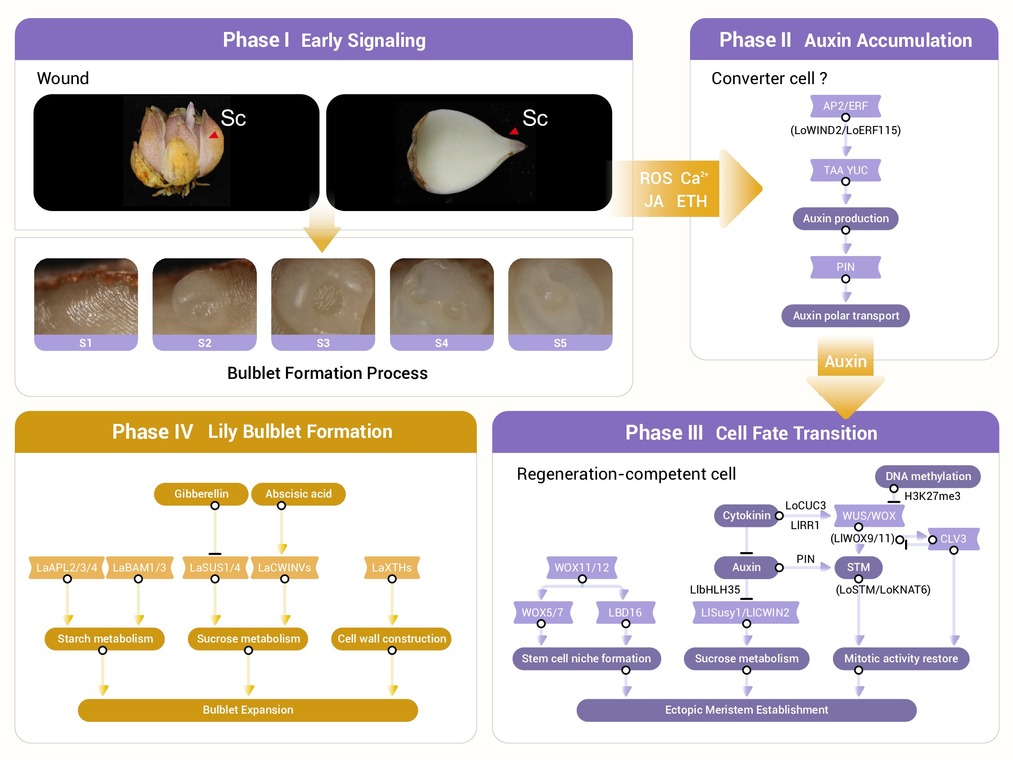
Figure 1.
De novo bulblet formation
-
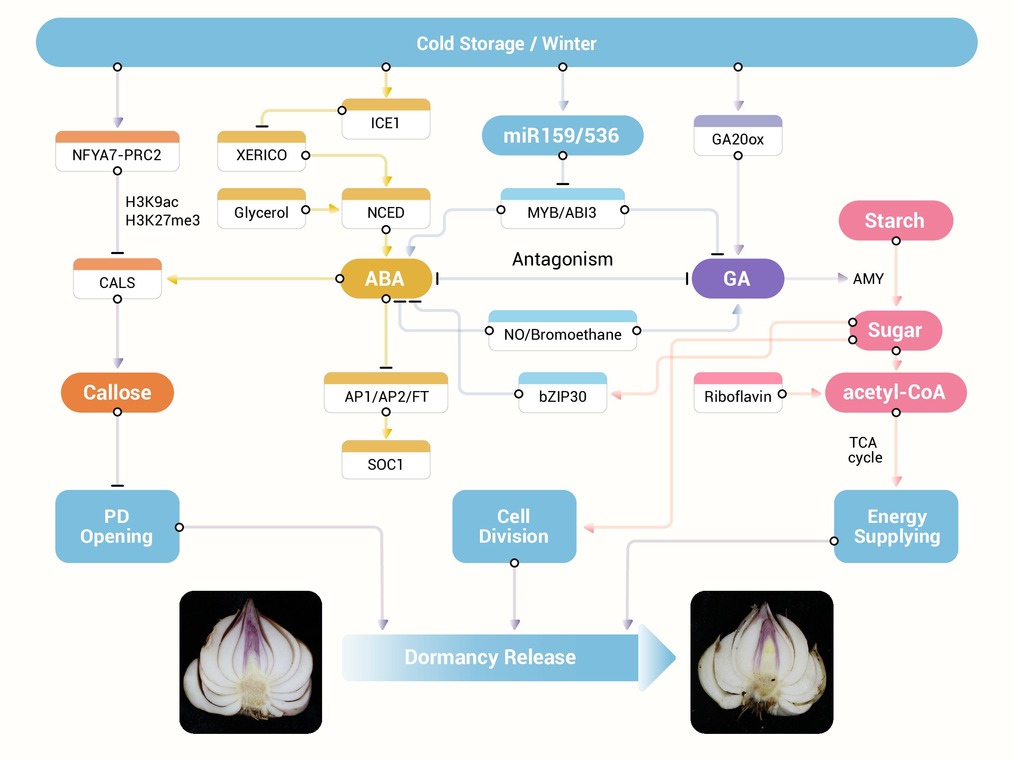
Figure 2.
The regulatory network of bulb dormancy release
-
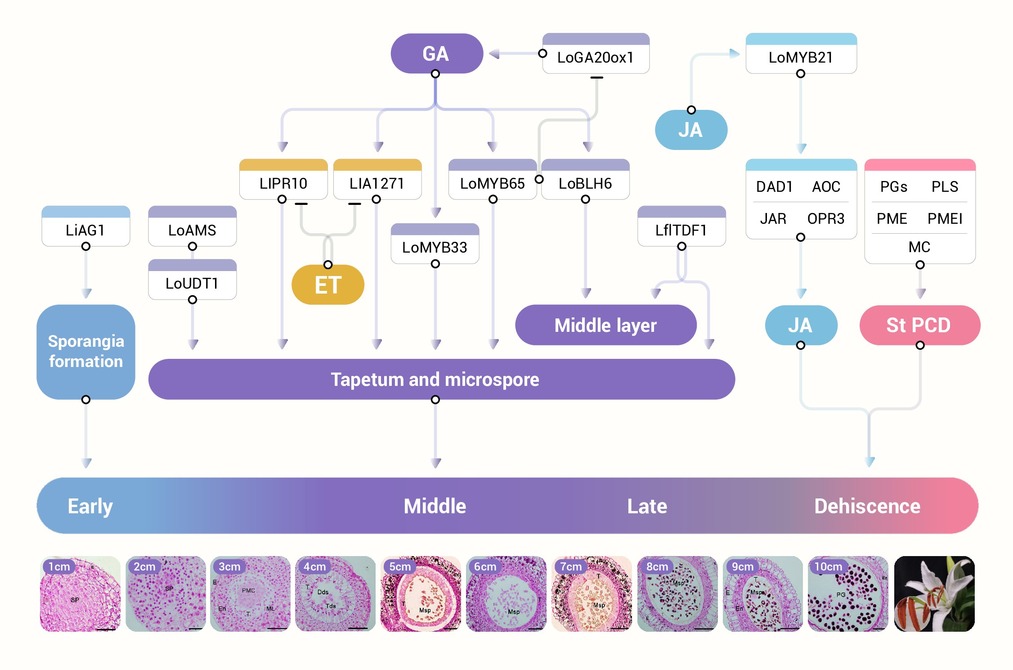
Figure 3.
The regulatory network of the development process of lily anther
-
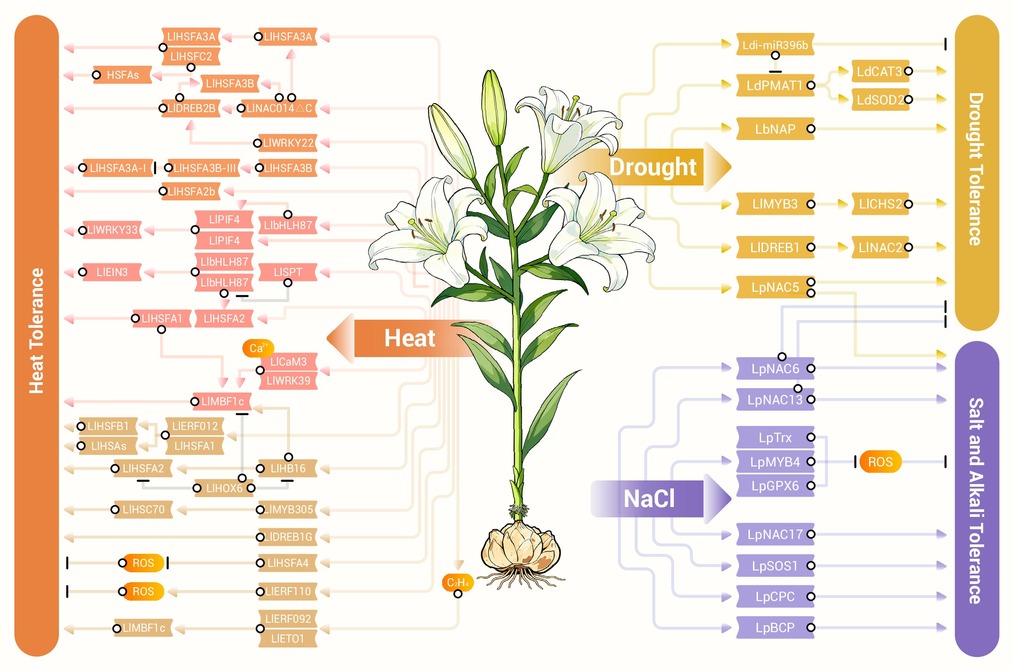
Figure 4.
Molecular responses of lily to abiotic stress
-
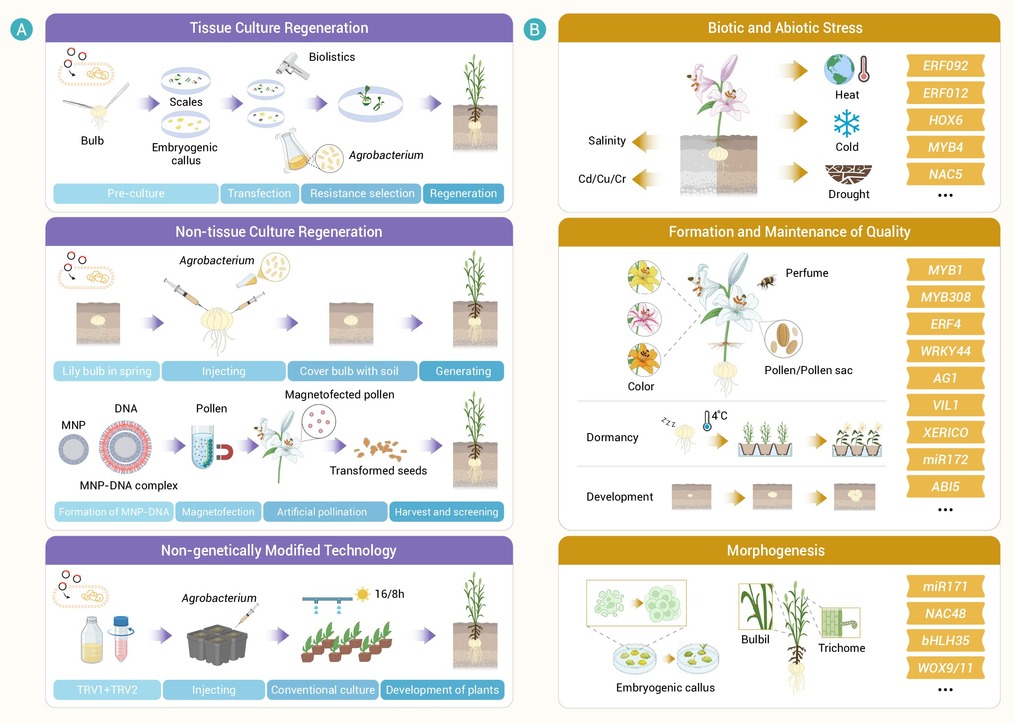
Figure 5.
Main approaches and research areas for functional characterization of genes in Lilium species
