
Industrial production of natural low-calorie sweetener neohesperidin dihydrochalcone
-
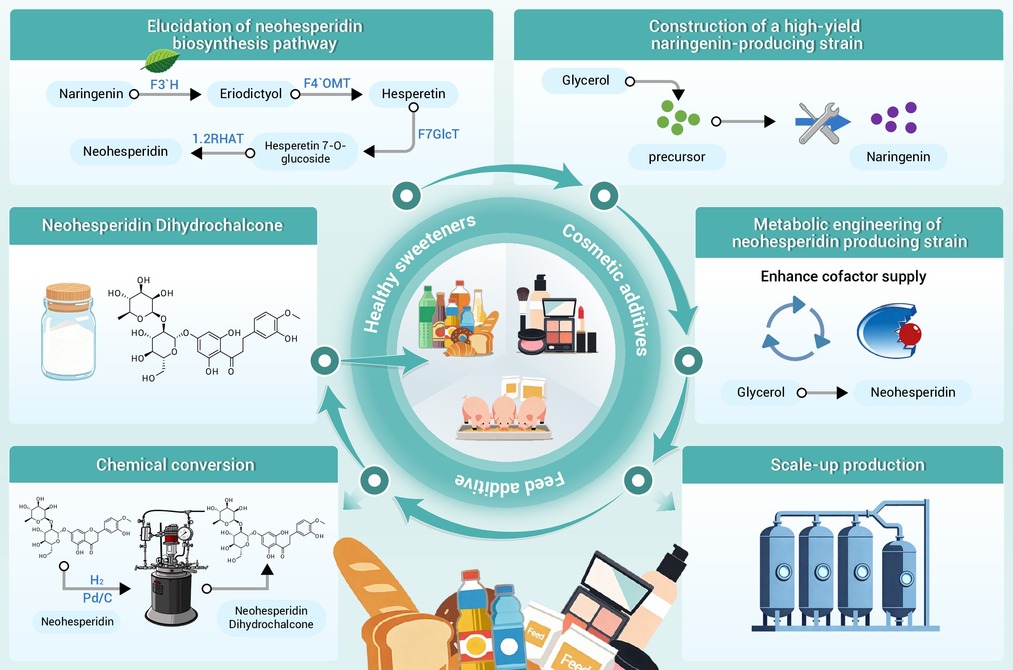
GRAPHICAL ABSTRACT
 DownLoad:
Full size image
DownLoad:
Full size image
-
PUBLIC SUMMARY
-
Elucidation and construction of neohesperidin biosynthesis pathway in Yarrowia lipolytica.
A biochemical process for producing neohesperidin dihydrochalcone (NHDC) was developed.
This process enables sustainable, high-yield industrial production of the natural low-calorie sweetener NHDC.
-
-
ABSTRACT
Neohesperidin dihydrochalcone (NHDC), a natural, low-calorie, high-intensity sweetener derived from plants, faces sustainable supply challenges due to its limited natural abundance. Here we developed a biochemical synthetic process for NHDC production at5000 -L bioreactor system. First, a heterologous synthetic pathway for neohesperidin, which is the precursor of NHDC, was constructed in Yarrowia lipolytica through the screening and assembly of candidate genes sourced from 25 species. Through key gene mining, metabolic flux regulation and fermentation optimization, we constructed 106 engineering strains and improved the titers of neohesperidin by 6,481-fold reaching 28.52 g/L. Finally, the precursor neohesperidin was integrated with a chemical conversion system leading to the establishment of an efficient biochemical process for high-yield NHDC production at an industrial scale. Our findings provide a roadmap for sustainable production of high-value flavonoids and their derivatives.-
Keywords:
- Neohesperidin /
- Neohesperidin dihydrochalcone /
- Flavonoids /
- Yarrowia lipolytica /
- Glycorel
-

-
REFERENCES
[1] Suez J., Korem T., Zeevi D., et al. (2014). Artificial sweeteners induce glucose intolerance by altering the gut microbiota. Nature 514:181−186. DOI:10.1038/nature13793 [2] Zani F., Blagih J., Gruber T., et al. (2023). The dietary sweetener sucralose is a negative modulator of T cell-mediated responses. Nature 615:705−711. DOI:10.1038/s41586-023-05801-6 [3] Schiffman S. S., Scholl E. H., Furey T. S., et al. (2023). Toxicological and pharmacokinetic properties of sucralose-6-acetate and its parent sucralose: in vitro screening assays. J. Toxicol. Env. Heal. B. 26:307−341. DOI:10.1080/10937404.2023.2213903 [4] Shi Z., Lei H., Chen G., et al. (2021). Impaired intestinal Akkermansia muciniphilaand aryl hydrocarbon receptor ligands contribute to nonalcoholic fatty liver disease in mice. Msystems 6:1-17. e00985-20,DOI:10.1128/mSystems.00985-20 [5] Xue Q., Su X., Yu W., et al. (2024). Efficient production of neohesperidin enabled by protein engineering of rhamnosyltransferase Cm1,2RhaT. ACS Sustainable Chem. Eng. 12:1960−1972. DOI:10.1021/acssuschemeng.3c06262 [6] Horowitz R. M. and Gentili B. (1969). Taste and structure in phenolic glycosides. J. Agric. Food Chem. 17:696−700. DOI:10.1021/jf60164a049 [7] Shi Q., Song X., Fu J. L., et al. (2015). Artificial sweetener neohesperidin dihydrochalcone showed antioxidative, anti-inflammatory and anti-apoptosis effects against paraquat-induced liver injury in mice. Int. Immunopharmacol. 29:722−729. DOI:10.1016/j.intimp.2015.09.003 [8] Baêr A., Borrego F., Benavente O., et al. (1990). Neohesperidin dihydrochalcone: Properties and applications. Astron. Astrophys. 23:371−376. DOI:10.1086/116898 [9] Huang J., Lu Y.-J., Guo C., et al. (2021). The study of citrus-derived flavonoids as effective bitter taste inhibitors. J. Sci. Food Agric. 101:5163−5171. DOI:10.1002/jsfa.11162 [10] Lindley M. G., Beyts P. K., Canales I., et al. (1993). Flavor modifying characteristics of the intense sweetener neohesperidin dihydrochalcone. J. Food Sci. 58:592−594. DOI:10.1111/j.1365-2621.1993.tb04331.x [11] Xiao Y., Fu F., Wei Y., et al. (2022). Online extraction-DPPH-HPLC-DAD-QTOF-MS system for efficient screening and identification of antioxidants from Citrus aurantium L. var. amara (Rutaceae): Integrating sample preparation and antioxidants profiling. Antioxidants 11:1−12. DOI:10.3390/antiox11051014 [12] Sun Y., Tao W., Huang H., et al. (2019). Flavonoids, phenolic acids, carotenoids and antioxidant activity of fresh eating citrus fruits, using the coupled in vitro digestion and human intestinal HepG2 cells model. Food. Chem. 279:321−327. DOI:10.1016/j.foodchem.2018.12.019 [13] Winkel-Shirley B. (2001). Flavonoid biosynthesis. A colorful model for genetics, biochemistry, cell biology, and biotechnology. Plant Physiol. 126:485−493. DOI:10.1104/pp.126.2.485 [14] Zhu S., Wu J., Du G., et al. (2014). Efficient synthesis of eriodictyol from L-tyrosine in Escherichia coli. Appl. Environ. Microb. 80:3072−3080. DOI:10.1128/aem.03986-13 [15] Frydman A., Liberman R., Huhman D. V., et al. (2013). The molecular and enzymatic basis of bitter/non-bitter flavor of citrus fruit: Evolution of branch-forming rhamnosyl-transferases under domestication. Plant J. 73:166−178. DOI:10.1111/tpj.12030 [16] Ru Z., Liu M., Chen Q., et al. (2025). High-level de novo production of (2S)-naringenin in Yarrowia lipolytica using metabolic and enzyme engineering. ACS Agric. Sci. Technol. 5:784−793. DOI:10.1021/acsagscitech.4c00729 [17] Wang Y. Y., Huang R. Q., Gao S., et al. (2025). Identification of two new flavone 4`-O-methyltransferases and their application in de novo biosynthesis of (2S)-hesperetin in Yarrowia lipolytica. Synth. Syst. Biotechnol. 10:728−736. DOI:10.1016/j.synbio.2025.03.003 [18] Liu J., Xiao Z., Zhang S., et al. (2023). Restricting promiscuity of plant flavonoid 3`-hydroxylase and 4`-O-methyltransferase improves the biosynthesis of (2S)-hesperetin in E. coli. J. Agric. Food Chem. 71:9826−9835. DOI:10.1021/acs.jafc.3c02071 [19] Groenewald M., Boekhout T., Neuveglise C., et al. (2014). Yarrowia lipolytica: Safety assessment of an oleaginous yeast with a great industrial potential. Crit. Rev. Microbiol. 40:187−206. DOI:10.3109/1040841x.2013.770386 [20] Yue M., Liu M., Gao S., et al. (2024). High-level de novo production of (2S)-eriodictyol in Yarrowia Lipolytica by metabolic pathway and NADPH regeneration engineering. J. Agric. Food Chem. 72:4292−4300. DOI:10.1021/acs.jafc.3c08861 [21] Chen B., Liu X., Wang Y., et al. (2023). Production of the antidepressant orcinol glucoside in Yarrowia lipolytica with yields over 6,400-fold higher than plant extraction. PLoS Biol. 21:1−15. DOI:10.1371/journal.pbio.3002131 [22] Wang Y. A., Liu X. A., Chen B. H., et al. (2022). Metabolic engineering of Yarrowia lipolytica for scutellarin production. Synth. Syst. Biotechnol. 7:958−964. DOI:10.1016/j.synbio.2022.05.009 [23] Jensen N. B., Strucko T., Kildegaard K. R., et al. (2014). EasyClone: Method for iterative chromosomal integration of multiple genes in Saccharomyces cerevisiae. FEMS Yeast Res. 14:238−248. DOI:10.1111/1567-1364.12118 [24] Liu X., Cheng J., Zhang G., et al. (2018). Engineering yeast for the production of breviscapine by genomic analysis and synthetic biology approaches. Nat. Commun. 9:1−10. DOI:10.1038/s41467-018-02883-z [25] Schlangen K., Miosic S., Thill J., et al. (2010). Cloning, functional expression, and characterization of a chalcone 3-hydroxylase from Cosmos sulphureus. J. Exp. Bot. 61:3451−3459. DOI:10.1093/jxb/erq169 [26] Liu X., Gong Q., Zhao C., et al. (2023). Genome-wide analysis of cytochrome P450 genes in Citrus clementina and characterization of a CYP gene encoding flavonoid 3`-hydroxylase. Hortic. Res. 10:1−14. DOI:10.1093/hr/uhac283 [27] Seitz C., Eder C., Deiml B., et al. (2006). Cloning, functional identification and sequence analysis of flavonoid 3`-hydroxylase and flavonoid 3`,5`-hydroxylase cDNAs reveals independent evolution of flavonoid 3`,5`-hydroxylase in the Asteraceae family. Plant Mol. Biol. 61:365−381. DOI:10.1007/s11103-006-0012-0 [28] Gao S., Xu X., Zeng W., et al. (2020). Efficient biosynthesis of (2S)-eriodictyol from (2S)-naringenin in Saccharomyces cerevisiae through a combination of promoter adjustment and directed evolution. ACS. Synth. Biol. 9:3288−3297. DOI:10.1021/acssynbio.0c00346 [29] Zhou J.-M., Gold N. D., Martin V. J. J., et al. (2006). Sequential O-methylation of tricetin by a single gene product in wheat. Biochim. Biophys. Acta. Gen. Subj. 1760:1115−1124. DOI:10.1016/j.bbagen.2006.02.008 [30] Wils C. R., Brandt W., Manke K., et al. (2013). A single amino acid determines position specificity of an Arabidopsis thaliana CCoAOMT-like O-methyltransferase. FEBS Lett. 587:683−689. DOI:10.1016/j.febslet.2013.01.040 [31] Schröder G., Wehinger E., Lukacin R., et al. (2004). Flavonoid methylation: A novel 4`-O-methyltransferase from Catharanthus roseus, and evidence that partially methylated flavanones are substrates of four different flavonoid dioxygenases. Phytochemistry 65:1085−1094. DOI:10.1016/j.phytochem.2004.02.010 [32] Berim A., Hyatt D. C. and Gang D. R. (2012). A set of regioselective O-methyltransferases gives rise to the complex pattern of methoxylated flavones in sweet basil. Plant Physiol. 160:1052−1069. DOI:10.1104/pp.112.204164 [33] Noguchi A., Horikawa M., Fukui Y., et al. (2009). Local differentiation of sugar donor specificity of flavonoid glycosyltransferase in Lamiales. Plant Cell 21:1556−1572. DOI:10.1105/tpc.108.063826 [34] Cao M., Gao M., Suastegui M., et al. (2020). Building microbial factories for the production of aromatic amino acid pathway derivatives: From commodity chemicals to plant-sourced natural products. Metab. Eng. 58:94−132. DOI:10.1016/j.ymben.2019.08.008 [35] Yahyaa M., Davidovich-Rikanati R., Eyal Y., et al. (2016). Identification and characterization of UDP-glucose: Phloretin 4`-O-glycosyltransferase from Malus x domestica Borkh. Phytochemistry 130:47−55. DOI:10.1016/j.phytochem.2016.06.004 [36] Liu T., Liu Y., Li L., et al. (2021). De novo biosynthesis of polydatin in Saccharomyces cerevisiae. J. Agric. Food Chem. 69:5917−5925. DOI:10.1021/acs.jafc.1c01557 [37] Martinez-Munoz G. A. and Kane P. (2008). Vacuolar and plasma membrane proton pumps collaborate to achieve cytosolic pH homeostasis in yeast. J. Biol. Chem. 283:20309−20319. DOI:10.1074/jbc.M710470200 [38] Pandey R. P., Parajuli P., Koffas M. A. G., et al. (2016). Microbial production of natural and non-natural flavonoids: Pathway engineering, directed evolution and systems/synthetic biology. Biotechnol. Adv. 34:634−662. DOI:10.1016/j.biotechadv.2016.02.012 [39] Lv Y., Marsafari M., Koffas M., et al. (2019). Optimizing oleaginous yeast cell factories for flavonoids and hydroxylated flavonoids biosynthesis. ACS Synth. Biol. 8:2514−2523. DOI:10.1021/acssynbio.9b00193 [40] Saez-Saez J., Wang G., Marella E. R., et al. (2020). Engineering the oleaginous yeast Yarrowia lipolytica for high-level resveratrol production. Metab. Eng. 62:51−61. DOI:10.1016/j.ymben.2020.08.009 [41] Koopman F., Beekwilder J., Crimi B., et al. (2012). De novo production of the flavonoid naringenin in engineered Saccharomyces cerevisiae. Microb. Cell Fact. 11:1-15. 155,DOI:10.1186/1475-2859-11-155 [42] Shen Y., Li X., Chai T., et al. (2016). Outer-sphere residues influence the catalytic activity of a chalcone synthase from Polygonum cuspidatum. FEBS Open Bio. 6:610−618. DOI:10.1002/2211-5463.12072 [43] Liu B. Y., Falkenstein-Paul H., Schmidt W., et al. (2003). Benzophenone synthase and chalcone synthase from Hypericum androsaemum cell cultures: cDNA cloning, functional expression, and site-directed mutagenesis of two polyketide synthases. Plant J. 34:847−855. DOI:10.1046/j.1365-313X.2003.01771.x [44] Waki T., Mameda R., Nakano T., et al. (2020). A conserved strategy of chalcone isomerase-like protein to rectify promiscuous chalcone synthase specificity. Nat. Commun. 11:1−14. DOI:10.1038/s41467-020-14558-9 [45] Pandith S. A., Ramazan S., Khan M. I., et al. (2020). Chalcone synthases (CHSs): The symbolic type III polyketide synthases. Planta 251:1−29. DOI:10.1007/s00425-019-03307-y [46] Jez J. M., Bowman M. E. and Noel J. P. (2002). Expanding the biosynthetic repertoire of plant type III polyketide synthases by altering starter molecule specificity. Proc. Natl. Acad. Sci. USA 99:5319−5324. DOI:10.1073/pnas.082590499 [47] Hwang H. G., Milito A., Yang J.-S., et al. (2023). Riboswitch-guided chalcone synthase engineering and metabolic flux optimization for enhanced production of flavonoids. Metab. Eng. 75:143−152. DOI:10.1016/j.ymben.2022.12.006 [48] Konzock O., Tous-Mohedano M., Cibin I., et al. (2023). Cinnamic acid and p-coumaric acid are metabolized to 4-hydroxybenzoic acid by Yarrowia lipolytica. AMB Express 13:1−10. DOI:10.1186/s13568-023-01590-3 [49] Li H., Ma W., Lyv Y., et al. (2022). Glycosylation modification enhances (2S)-naringenin production in Saccharomyces cerevisiae. ACS Synth. Biol. 11:2339−2347. DOI:10.1021/acssynbio.2c00065 [50] Wei Y. F., Ang E. L. and Zhao H. M. (2018). Recent developments in the application of P450 based biocatalysts. Curr. Opin. Chem. Biol. 43:1−7. DOI:10.1016/j.cbpa.2017.08.006 [51] Ye C. and Tu B. P. (2018). Sink into the epigenome: Histones as repositories that influence cellular metabolism. Trends Endocrinol. Metab. 29:626−637. DOI:10.1016/j.tem.2018.06.002 [52] Zhou Z., Zhang X., Wu J., et al. (2022). Targeting cofactors regeneration in methylation and hydroxylation for high level production of Ferulic acid. Metab. Eng. 73:247−255. DOI:10.1016/j.ymben.2022.08.007 [53] Hoffman D. R., Haning J. A. and Cornatzer W. E. (1981). Microsomal phosphatidylethanolamine methyltransferase: Inhibition by S-adenosylhomocysteine. Lipids 16:561−567. DOI:10.1007/bf02534900 [54] Chen R. B., Gao J. Q., Yu W., et al. (2022). Engineering cofactor supply and recycling to drive phenolic acid biosynthesis in yeast. Nat. Chem. Biol. 18:520−529. DOI:10.1038/s41589-022-01014-6 [55] Yu F., Zhao X., Zhou J., et al. (2023). Biosynthesis of high-active hemoproteins by the efficient heme-supply Pichia Pastoris chassis. Adv. Sci. 10:1−14. DOI:10.1002/advs.202302826 [56] Li J., Mu X., Dong W., et al. (2024). A non-carboxylative route for the efficient synthesis of central metabolite malonyl-CoA and its derived products. Nat. Catal. 7:361−374. DOI:10.1038/s41929-023-01103-2 [57] Zou Y., Li X., Xin X., et al. (2024). Microbial-driven synthesis and hydrolysis of neohesperidin dihydrochalcone: Biotransformation process and feasibility investigation. J. Agric. Food Chem. 72:4246−4256. DOI:10.1021/acs.jafc.3c08339 [58] Ruiz-Ojeda F. J., Plaza-Díaz J., Sáez-Lara M. J., et al. (2019). Effects of sweeteners on the gut microbiota: A review of experimental studies and clinical trials. Adv. Nutr. 10:31−48. DOI:10.1093/advances/nmy037 [59] Younes M., Aquilina G., Castle L., et al. (2022). Re-evaluation of neohesperidine dihydrochalcone (E 959) as a food additive. EFSA J. 20:1−81. DOI:10.2903/j.efsa.2022.7595 [60] Zhu X., Liu X., Liu T., et al. (2021). Synthetic biology of plant natural products: From pathway elucidation to engineered biosynthesis in plant cells. Plant Commun. 2:1-16. 100229,DOI:10.1016/j.xplc.2021.100229 [61] Wang P., Li C., Li X., et al. (2021). Complete biosynthesis of the potential medicine icaritin by engineered Saccharomyces cerevisiae and Escherichia coli. Sci. Bull. 66:1906−1916. DOI:10.1016/j.scib.2021.03.002 [62] Thomas D. and SurdinKerjan Y. (1997). Metabolism of sulfur amino acids in Saccharomyces cerevisiae. Microbiol. Mol. Biol. R. 61:503−532. DOI:10.1128/.61.4.503-532.1997 -
ABOUT THIS ARTICLE
Cite this article:
Zhu X., Liu W., Liu Y., et al. (2026). Industrial production of natural low-calorie sweetener neohesperidin dihydrochalcone. The Innovation Life 4:100190. https://doi.org/10.59717/j.xinn-life.2026.100190
Welcome!
To request copyright permission to republish or share portions of our works, please visit Copyright Clearance Center's (CCC) Marketplace website at marketplace.copyright.com.
Article Metrics
Relative Articles
Cited by
Export File
Citation
Zhu X., Liu W., Liu Y., et al. (2026). Industrial production of natural low-calorie sweetener neohesperidin dihydrochalcone. The Innovation Life 4:100190. https://doi.org/10.59717/j.xinn-life.2026.100190

Format
Content
-
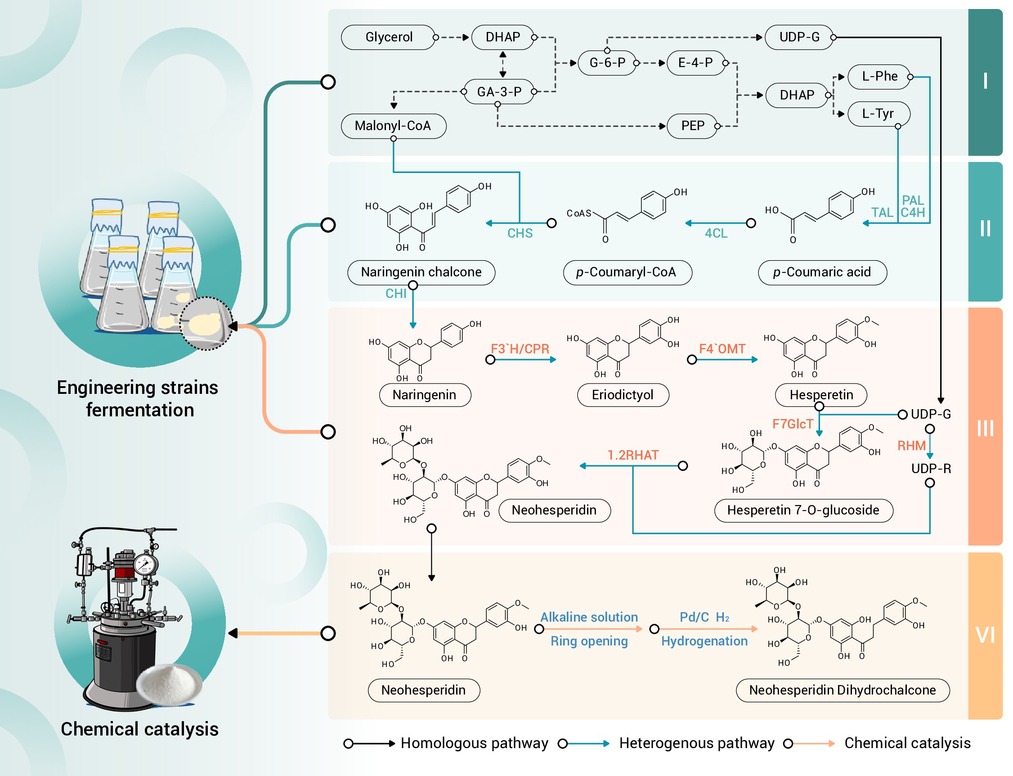
Figure 1.
Biochemical coupling synthesis of NHDC
-
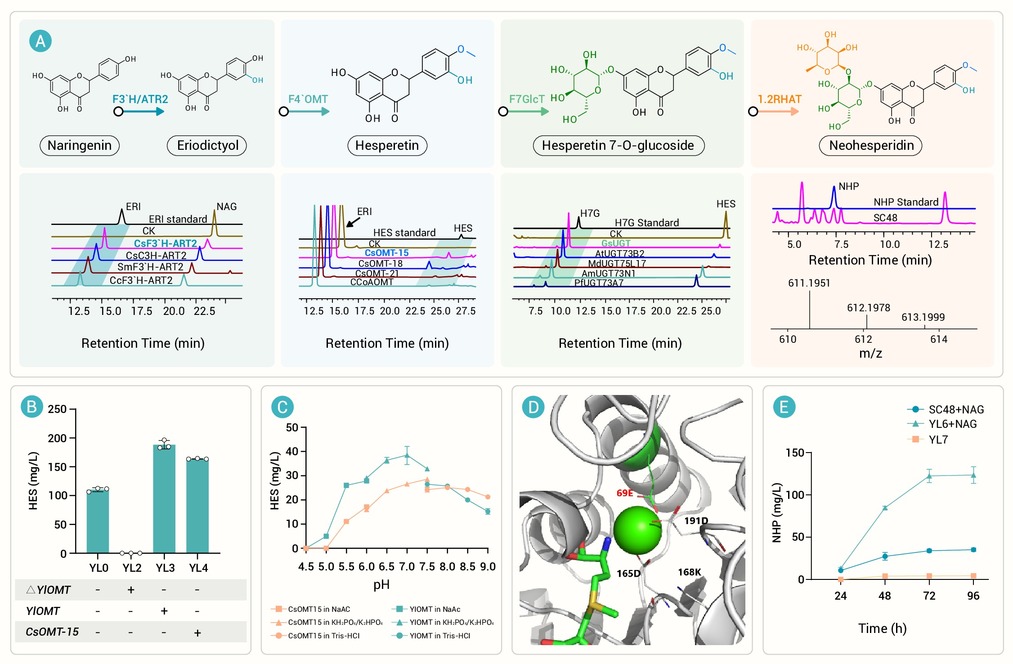
Figure 2.
Elucidation and heterologous reconstruction of the neohesperidin synthesis pathway in yeast
-
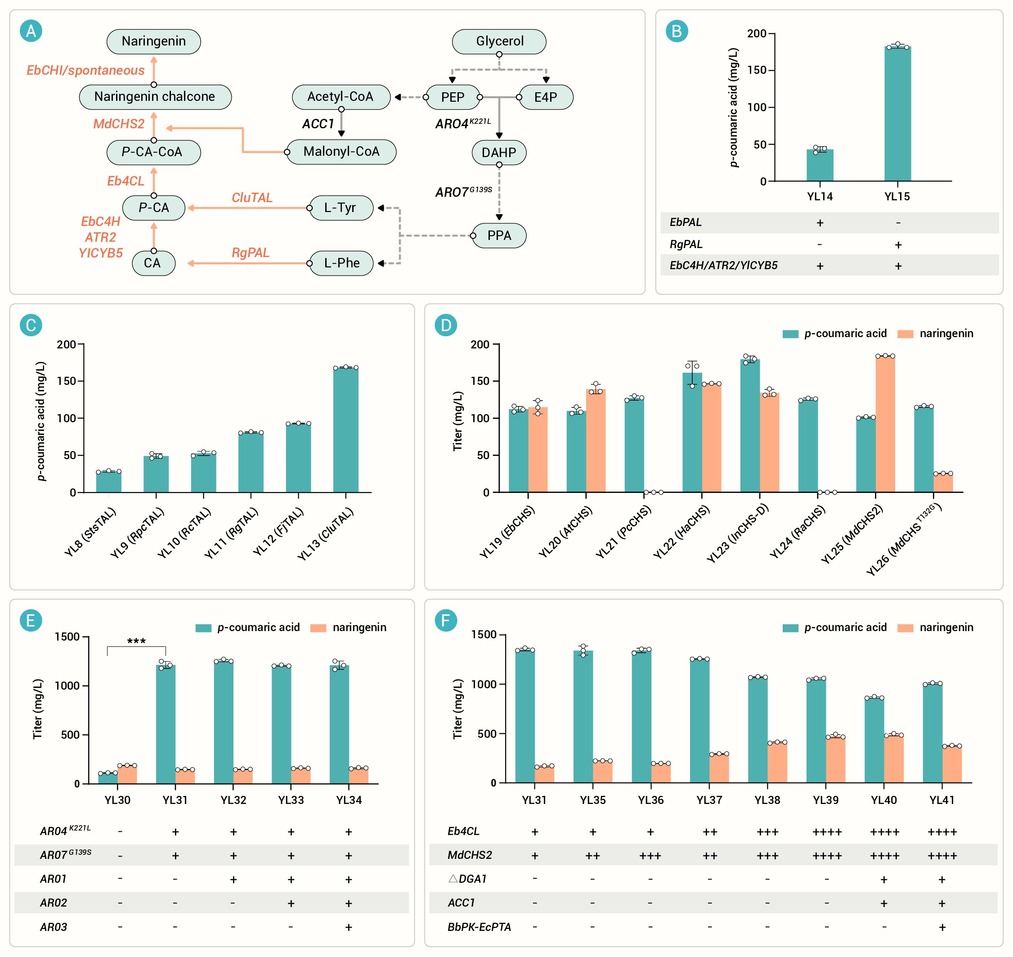
Figure 3.
Engineered metabolic pathway for the de novo biosynthesis of naringenin in Y. lipolytica
-
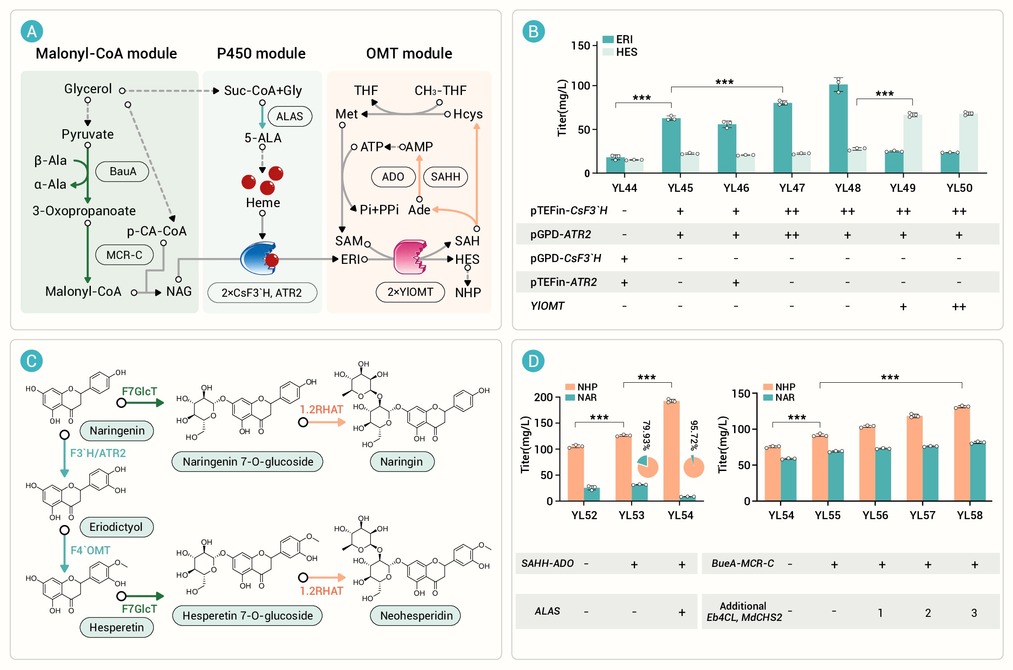
Figure 4.
Engineering for efficient production of neohesperidin in Y. lipolytica
-
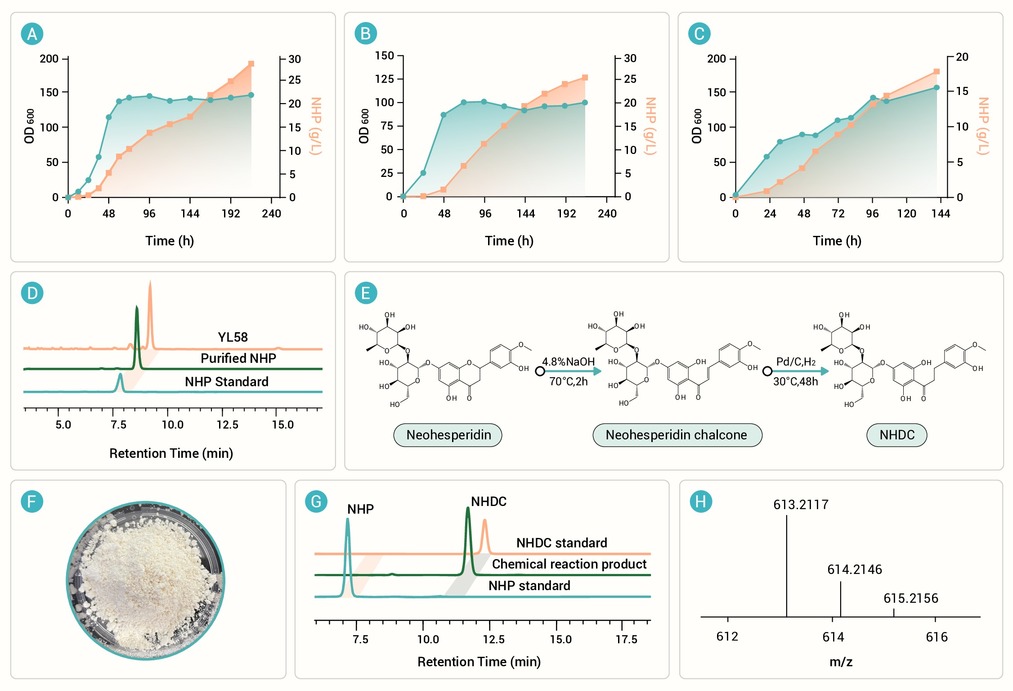
Figure 5.
Fed-batch fermentation in 5-L, 200-L and
5000 -L bioreactor and chemical synthesis of NHDC
