
Advancing brain-computer interfaces with generative AI: A review of state-of-the-art and future outlook
-
GRAPHICAL ABSTRACT

 DownLoad:
Full size image
DownLoad:
Full size image
-
PUBLIC SUMMARY
-
Generative artificial intelligence (GAI) holds significant potential in the field of brain-computer interface (BCI).
GAI addresses key BCI challenges through improved signal processing and synthetic data generation.
Based on 170 studies, this work outlines GAI's impact on BCI and proposes an adaptive adaptive framework.
Future BCI advances will rely on multimodal fusion, adaptive learning, efficient deployment, and ethical alignment.
-
-
ABSTRACT
Brain-Computer Interface (BCI) technology is rapidly emerging as a promising tool to empower individuals with severe disabilities and enhance their independence by translating brain neural signals into actionable commands. However, its development and application face challenges such as low signal-to-noise ratios, overfitting from limited training data, and the non-stationarity of brain signals, which can compromise system stability. The integration of Generative Artificial Intelligence (Generative AI, GAI) offers potential solutions by improving signal processing, generating high-fidelity synthetic data, and developing adaptive algorithms that maintain accuracy over time. Despite these advancements, existing literature lacks systematic discussion on the comprehensive integration of GAI in BCI development. To address this gap, this study examines over 170 articles published from 2020 to 2025 that leverage GAI techniques in BCI research. The analysis highlights the latest developments in techniques such as Generative Adversarial Networks (GANs), Variational Autoencoders (VAEs), Transformers, Diffusion Models (DMs) and their hybrid models. It systematically examines the applications of artificial intelligence across various stages of BCI development, proposes an AI-driven future application framework tailored to BCI needs, and highlights the significant potential of GAI on the field. This review provides insights and a systematic overview to guide future research and applications in this interdisciplinary domain. -

-
REFERENCES
[1] Feldman E., Goutman S., Petri S., et al. (2022). Amyotrophic lateral sclerosis. The Lancet 400:1363−1380. DOI:10.1016/S0140-6736(22)01272-7 [2] Kalampokini S., Poyiadjis S., Vavougios G., et al. (2022). Restless legs syndrome due to brainstem stroke: A systematic review. Acta Neurol. Scand. 146:440−447. DOI:10.1111/ane.13702 [3] Maiseli B., Abdalla A., Massawe L., et al. (2023). Brain–computer interface: Trend, challenges, and threats. Brain Inform. 10:20. DOI:10.1186/s40708-023-00199-3 [4] Cao Z. (2020). A review of artificial intelligence for eeg‐based brain−computer interfaces and applications. Brain Sci. Adv. 6:162−170. DOI:10.26599/BSA.2020.9050017 [5] Zhao Z., Nie C., Jiang C., et al. (2023). Modulating brain activity with invasive brain–computer interface: A narrative review. Brain Sci. 13:134. DOI:10.3390/brainsci13010134 [6] Edelman B., Zhang S., Schalk G., et al. (2024). Non-invasive brain-computer interfaces: State of the art and trends. IEEE Rev. Biomed. Eng. 18:1−25. DOI:10.1109/RBME.2024.3449790 [7] Raoof I. and Gupta M. (2024). Domain-independent short-term calibration based hybrid approach for motor imagery electroencephalograph classification: A comprehensive review. Multimed. Tools Appl. 83:9181−9226. DOI:10.1007/s11042-023-15900-1 [8] Khani P., Solouk V., Kalbkhani H., et al. (2023). Fusion of deep features from 2d-dost of fnirs signals for subject-independent classification of motor execution tasks. Int. J. Intell. Syst. 2023:1−17. DOI:10.1155/2023/3178284 [9] Jiang F., Jin H., Gao Y., et al. (2022). Time-varying dynamic network model for dynamic resting state functional connectivity in fmri and meg imaging. NeuroImage. 254:119131. DOI:10.1016/j.neuroimage.2022.119131 [10] Qiu L., Feng W., Zhong L., et al. (2025). Mutual information learning-based end-to-end fusion network for hybrid eeg-fnirs brain–computer interface. IEEE Trans. Instrum. Meas. 74:1−13. DOI:10.1109/TIM.2025.3604929 [11] Nguyen M., Do T., Tran X., et al. (2025). Edge ai-brain–computer interfaces system: A survey. IEEE Trans. Neural Syst. Rehabil. Eng. 33:4051−4066. DOI:10.1109/TNSRE.2025.3618688 [12] Zhang X., Ma Z., Zheng H., et al. (2020). The combination of brain-computer interfaces and artificial intelligence: Applications and challenges. Ann. Transl. Med. 8:712−712. DOI:10.21037/atm.2019.11.109 [13] Zhang R. (2020). Virtual reality games based on brain computer interface. 2020 International Conference on Intelligent Computing and Human-Computer Interaction (ICHCI). IEEE. pp:227–230. DOI:10.1109/ICHCI51889.2020.00056. [14] An Y., Wong J. and Ling S. (2024). Development of real-time brain-computer interface control system for robot. Appl. Soft Comput. 159:111648. DOI:10.1016/j.asoc.2024.111648 [15] Jayasuriya S., Dharani Barathi C., Balaji S., et al. (2024). Smart wheelchair navigation: Gesture control and obstacle avoidance. 2024 International Conference on IoT Based Control Networks and Intelligent Systems (ICICNIS). IEEE. pp:1652–1658. DOI:10.1109/ICICNIS64247.2024.10823349 [16] Nie W., Mai S., Yuan Z., et al. (2024). Design of a fatigue driving warning system utilizing brain-computer interface (BCI) technology. 2024 3rd International Symposium on Sensor Technology and Control (ISSTC). IEEE. pp:190–193. DOI:10.1109/ISSTC63573.2024.10824207 [17] Vidal J. (1973). Toward direct brain-computer communication. Annu. Rev. Biophys. Bioeng. 2:157−180. DOI:10.1146/annurev.bb.02.060173.001105 [18] Eldawlatly S. (2024). On the role of generative artificial intelligence in the development of brain-computer interfaces. BMC Biomed. Eng. 6:4. DOI:10.1186/s42490-024-00080-2 [19] Sharma N., Sharma M., Singhal A., et al. (2023). Recent trends in eeg-based motor imagery signal analysis and recognition: A comprehensive review. IEEE Access. 11:80518−80542. DOI:10.1109/ACCESS.2023.3299497 [20] Luo Y., Zhu L., Wan Z., et al. (2020). Data augmentation for enhancing eeg-based emotion recognition with deep generative models. J. Neural Eng. 17:056021. DOI:10.1088/1741-2552/abb580 [21] Deshmukh A., Karki M., SR B., et al. (2022). Deep neural network model for automated detection of alzheimer’s disease using eeg signals. Int. J. Online Biomed. Eng. 18:115−126. DOI:10.3991/ijoe.v18i08.29867 [22] Wang J., Mu W., Wang A., et al. (2023). Generative adversarial networks for electroencephalogram signal analysis: A mini review. 2023 11th International Winter Conference on Brain-Computer Interface (BCI). IEEE. pp:1–6. DOI:10.1109/BCI57258.2023.10078666 [23] Barrejon D. and Olmos P. Artes-Rodriguez, A. (2022). Medical data wrangling with sequential variational autoencoders. IEEE J. Biomed. Health Inform. 26:2737−2745. DOI:10.1109/JBHI.2021.3123839 [24] Abibullaev B., Keutayeva A. and Zollanvari A. (2023). Deep learning in eeg-based bcis: A comprehensive review of transformer models, advantages, challenges, and applications. IEEE Access 11:127271−127301. DOI:10.1109/ACCESS.2023.3329678 [25] Lin G., Zhang J., Liu Y., et al. (2022). Ballistocardiogram artifact removal in simultaneous eeg-fmri using generative adversarial network. J. Neurosci. Methods. 371:109498. DOI:10.1016/j.jneumeth.2022.109498 [26] Amrani G., Adadi A., Berrada M., et al. (2021). EEG signal analysis using deep learning: A systematic literature review. 2021 Fifth International Conference On Intelligent Computing in Data Sciences (ICDS). IEEE. pp:1–8. DOI:10.1109/ICDS53782.2021.9626707 [27] Habashi A., Azab A., Eldawlatly S., et al. (2023). Generative adversarial networks in eeg analysis: An overview. J. NeuroEngineering Rehabil. 20:40. DOI:10.1186/s12984-023-01169-w [28] Zhang D., Ma M. and Xia L. (2022). A comprehensive review on gans for time-series signals. Neural Comput. Appl. 34:3551−3571. DOI:10.1007/s00521-022-06888-0 [29] Du C., Li J., Huang L., et al. (2019). Brain encoding and decoding in fmri with bidirectional deep generative models. Engineering. 5:948−953. DOI:10.1016/j.eng.2019.03.010 [30] Siddhad G., Gupta A., Dogra D., et al. (2024). Efficacy of transformer networks for classification of eeg data. Biomed. Signal Process. Control. 87:105488. DOI:10.1016/j.bspc.2023.105488 [31] Goodfellow I., Pouget-Abadie J., Mirza M., et al. Warde-Farley, D., Ozair, S., Courville, A., Bengio, Y. (2020). Generative adversarial networks. Commun. ACM. 63:139−144. DOI:10.1145/3422622 [32] Singh A. and Ogunfunmi T. (2021). An overview of variational autoencoders for source separation, finance, and bio-signal applications. Entropy. 24:55. DOI:10.3390/e24010055 [33] Aman ai. (2025). https://aman.ai/primers/ai/diffusion-models/ [34] Moher D., Liberati A., Tetzlaff J., et al. (2009). Preferred reporting items for systematic reviews and meta-analyses: The prisma statement. J. Clin. Epidemiol. 62:1006−1012. DOI:10.1016/j.jclinepi.2009.06.005 [35] Moher D., Liberati A., Tetzlaff J., et al. (2010). Preferred reporting items for systematic reviews and meta-analyses: The prisma statement. Int. J. Surg. 8:336−341. DOI:10.1016/j.ijsu.2010.02.007 [36] Selcuk A. (2019). A guide for systematic reviews: Prisma. Turk. Arch. Otorhinolaryngol. 57:57−58. DOI:10.5152/tao.2019.4058 [37] Smith S. and Duncan A. (2022). Systematic and scoping reviews: A comparison and overview. Semin. Vasc. Surg. 35:464-469. DOI10.1053/j.semvascsurg.2022.09.001. [38] Borgman C. and Furner J. (2002). Scholarly communication and bibliometrics. Annu. Rev. Inf. Sci. Technol. 36:2−72. DOI:10.1002/aris.1440360102 [39] Zhao L., Tang Z., Zou X. (2019). Mapping the knowledge domain of smart-city research: A bibliometric and scientometric analysis. Sustainability. 11:6648. DOI:10.3390/su11236648 [40] Mustak M., Salminen J., Plé L., (2021). Artificial intelligence in marketing: Topic modeling, scientometric analysis, and research agenda. J. Bus. Res. 124:389–404. DOI:10.1016/j.jbusres.2020.10.044 [41] Yigitcanlar T., Kamruzzaman Md., Buys L., et al. (2018). Understanding ‘smart cities’: Intertwining development drivers with desired outcomes in a multidimensional framework. Cities. 81:145−160. DOI:10.1016/j.cities.2018.04.003 [42] Lee C., Liu C., Trappey A., et al. (2021). Understanding digital transformation in advanced manufacturing and engineering: A bibliometric analysis, topic modeling and research trend discovery. Adv. Eng. Inform. 50:101428. DOI:10.1016/j.aei.2021.101428 [43] Wang Y., Qiu S., Li D., et al. (2022). Multi-modal domain adaptation variational autoencoder for eeg-based emotion recognition. IEEE/CAA J. Autom. Sin. 9:1612−1626. DOI:10.1109/JAS.2022.105515 [44] Zhou Z., Wang Y., Guo Y., et al. (2020). Image quality improvement of hand-held ultrasound devices with a two-stage generative adversarial network. IEEE Trans. Biomed. Eng. 67:298−311. DOI:10.1109/TBME.2019.2912986 [45] Jiang Y., Xu J., Yang B., et al. (2020). Image inpainting based on generative adversarial networks. IEEE Access. 8:22884−22892. DOI:10.1109/ACCESS.2020.2970169 [46] Brophy E., Redmond P., Fleury A., et al. (2022). Denoising eeg signals for real-world bci applications using gans. Front. Neuroergon. 2:805573. DOI:10.3389/fnrgo.2021.805573 [47] Siddhad G., Iwamura M. and Roy P.P. (2024). Enhancing eeg signal-based emotion recognition with synthetic data: Diffusion model approach. DOI:10.48550/ARXIV.2401.16878 [48] Hwaidi J. and Chen, T. (2022). Classification of motor imagery eeg signals based on deep autoencoder and convolutional neural network approach. IEEE Access. 10:48071−48081. DOI:10.1109/ACCESS.2022.3171906 [49] Duan Y., Zhou, J., Wang Z., et al. (2023). Domain-specific denoising diffusion probabilistic models for brain dynamics. DOI: 10.48550/ARXiv.2305.04200 [50] Yi Y., Xu Y., Yang B., et al. (2024). A weighted co-training framework for emotion recognition based on EEG data generation using frequency-spatial diffusion transformer. IEEE Trans. Affect. Comput. 15:2055−2069. DOI:10.1109/TAFFC.2024.3395359 [51] Yıldız İ., Garner R., Lai M., et al. (2022). Unsupervised seizure identification on eeg. Comput. Methods Programs Biomed. 215:106604. DOI:10.1016/j.cmpb.2021.106604 [52] An Y., Lam H. and Ling S. (2022). Auto-denoising for eeg signals using generative adversarial network. Sensors 22:1750. DOI:10.3390/s22051750 [53] Dong Y., Tang X., Li Q., et al. (2023). An approach for eeg denoising based on wasserstein generative adversarial network. IEEE Trans. Neural Syst. Rehabil. Eng. 31:3524−3534. DOI:10.1109/TNSRE.2023.3309815 [54] Cai Y., Meng Z. and Huang D. (2025). DHCT-gan: Improving eeg signal quality with a dual-branch hybrid cnn–transformer network. Sensors 25:231. DOI:10.3390/s25010231 [55] Zeng P., Fan L., Luo Y., et al. (2024). Task-oriented eeg denoising generative adversarial network for enhancing ssvep-bci performance. J. Neural Eng. 21:066003. DOI:10.1088/1741-2552/ad8963 [56] Chen J., Pi D., Jiang X., et al. (2024). Denosieformer: A transformer-based approach for single-channel eeg artifact removal. IEEE Trans. Instrum. Meas. 73:1−16. DOI:10.1109/TIM.2023.3341114 [57] Mahmud S., Chowdhury M., Kiranyaz S., et al. (2024). Restoration of motion-corrupted eeg signals using attention-guided operational cyclegan. Eng. Appl. Artif. Intell. 128:107514. DOI:10.1016/j.engappai.2023.107514 [58] Wang J., Sun M. and Huang W. (2024). Unsupervised eeg-based seizure anomaly detection with denoising diffusion probabilistic models. Int. J. Neural Syst. 34:2450047. DOI:10.1142/S0129065724500473 [59] Wu X., Zhang D., Li G., et al. (2024). Data augmentation for invasive brain–computer interfaces based on stereo-electroencephalography (seeg). J. Neural Eng. 21:016026. DOI:10.1088/1741-2552/ad200e [60] Jing C., Shen Y., Zhao S., et al. (2024). Estimating addiction-related brain connectivity by prior-embedding graph generative adversarial networks. IEEE Trans. Cybern. 54:5026−5039. DOI:10.1109/TCYB.2024.3353549 [61] Hu M., Chen J., Jiang S., et al. (2022). E2SGAN: EEG-to-seeg translation with generative adversarial networks. Front. Neurosci. 16:971829. DOI:10.3389/fnins.2022.971829 [62] Gao B., Zhou J., Yang Y., et al. (2022). Generative adversarial network and convolutional neural network-based eeg imbalanced classification model for seizure detection. Biocybern. Biomed. Eng. 42:1−15. DOI:10.1016/j.bbe.2021.11.002 [63] Wang L., Go J. and Chen X. (2024). AN eeg-based emotion recognition model using an interaction design framework and deep learning. J. Mech. Med. Biol. 24:2440022. DOI:10.1142/S0219519424400220 [64] Carrle F., Hollenbenders Y. and Reichenbach, A. (2023). Generation of synthetic eeg data for training algorithms supporting the diagnosis of major depressive disorder. Front. Neurosci. 17:1219133. DOI:10.3389/fnins.2023.1219133 [65] Baradaran F., Farzan A., Danishvar S., et al. (2023). Automatic emotion recognition from eeg signals using a combination of type-2 fuzzy and deep convolutional networks. Electronics 12:2216. DOI:10.3390/electronics12102216 [66] Penava P. and Buettner R. (2023). A novel small-data based approach for decoding yes/no-decisions of locked-in patients using generative adversarial networks. IEEE Access 11:118849−118864. DOI:10.1109/ACCESS.2023.3326720 [67] Gilakjani S. and Osman H. (2024). A graph neural network for eeg-based emotion recognition with contrastive learning and generative adversarial neural network data augmentation. IEEE Access 12:113−130. DOI:10.1109/ACCESS.2023.3344476 [68] Yang J., Yu H., Shen T., et al. (2021). 4-class mi-eeg signal generation and recognition with cvae-gan. Appl. Sci. 11:1798. DOI:10.3390/app11041798 [69] Xiao X. and Fang Y. (2021) Motor Imagery EEG Signal Recognition Using Deep Convolution Neural Network. Frontiers 15: 655599. DOI:10.3389/fnins.2021.655599 [70] Lashgari E., Ott J., Connelly A., et al. (2021). An end-to-end cnn with attentional mechanism applied to raw eeg in a bci classification task. J. Neural Eng. 18:0460e3. DOI:10.1088/1741-2552/ac1ade [71] Mao Z., Wu H., Tan Y., et al. (2024). EEG based generative depression discriminator. DOI:10.48550/ARXIV.2402.09421 [72] Mahey P., Toussi N., Purnomu G., et al. (2023). Generative adversarial network for simulating electroencephalography. Brain Topogr. 36:661−670. DOI:10.1007/s10548-023-00986-5 [73] Sekhar J., Rajyalakshmi C., Nagaraj S., et al. (2023). Deep generative adversarial networks with marine predators algorithm for classification of alzheimer’s disease using electroencephalogram. J. King Saud Univ. Comput. Inf. Sci. 35:101848. DOI:10.1016/j.jksuci.2023.101848 [74] She Q., Chen T., Fang F., et al. (2023). Improved domain adaptation network based on wasserstein distance for motor imagery eeg classification. IEEE Trans. Neural Syst. Rehabil. Eng. 31:1137−1148. DOI:10.1109/TNSRE.2023.3241846 [75] Park J., Mahey P. and Adeniyi O. (2024). Improving eeg signal classification accuracy using wasserstein generative adversarial networks. DOI:10.48550/ARXIV.2402.09453 [76] Liang S., Kuang S., Wang D., et al. (2023). An auxiliary synthesis framework for enhancing eeg-based classification with limited data. IEEE Trans. Neural Syst. Rehabil. Eng. 31:2120−2131. DOI:10.1109/TNSRE.2023.3268979 [77] Komolovaitė D., Maskeliūnas R. and Damaševičius R. (2022). Deep convolutional neural network-based visual stimuli classification using electroencephalography signals of healthy and alzheimer’s disease subjects. Life 12:374. DOI:10.3390/life12030374 [78] Zhang X., Lu Z., Zhang T., et al. (2021). Realizing the application of eeg modeling in bci classification: Based on a conditional gan converter. Front. Neurosci. 15:727394. DOI:10.3389/fnins.2021.727394 [79] Zhang Y., Liu D., Li T., et al. (2023). CGAN-rirn: a data-augmented deep learning approach to accurate classification of mental tasks for a fnirs-based brain-computer interface. Biomed. Opt. Express. 14:2934. DOI:10.1364/BOE.489179 [80] Wickramaratne S. and Mahmud Md.S. (2021). Conditional-gan based data augmentation for deep learning task classifier improvement using fnirs data. Front. Big Data. 4:659146. DOI:10.3389/fdata.2021.659146 [81] Salazar A., Vergara L. and Safont G. (2021). Generative adversarial networks and markov random fields for oversampling very small training sets. Expert Syst. Appl. 163:113819. DOI:10.1016/j.eswa.2020.113819 [82] Li Z. and Yu Y. (2020). Improving EEG-based motor imagery classification with conditional wasserstein GAN. Su, R. eds. 2020 International Conference on Image, Video Processing and Artificial Intelligence. SPIE. pp:86. DOI:10.1117/12.2581328 [83] Oh J., Lee D., Ji C., et al. (2024). Graph-based conditional generative adversarial networks for major depressive disorder diagnosis with synthetic functional brain network generation. IEEE J. Biomed. Health Inform. 28:1504−1515. DOI:10.1109/JBHI.2023.3340325 [84] Luo T. and Cai Z. (2025). Diffusion models-based motor imagery eeg sample augmentation via mixup strategy. Expert Syst. Appl. 262:125585. DOI:10.1016/j.eswa.2024.125585 [85] Chen L., Yin Z., Gu X., et al. (2025). Neurophysiological data augmentation for eeg-fnirs multimodal features based on a denoising diffusion probabilistic model. Comput. Methods Programs Biomed. 261:108594. DOI:10.1016/j.cmpb.2025.108594 [86] Ding W., Liu A., Guan L., et al. (2024). A novel data augmentation approach using mask encoding for deep learning-based asynchronous ssvep-bci. IEEE Trans. Neural Syst. Rehabil. Eng. 32:875−886. DOI:10.1109/TNSRE.2024.3366930 [87] Zhang Y., Qiu S., Wei W., et al. (2023). Dynamic weighted filter bank domain adaptation for motor imagery brain–computer interfaces. IEEE Trans. Cogn. Dev. Syst. 15:1348−1359. DOI:10.1109/TCDS.2022.3209801 [88] Luo Y., Zhang S., Zheng W., et al. (2018). WGAN domain adaptation for EEG-based emotion recognition. Cheng, L., Leung, A.C.S., Ozawa, S. eds. Neural Inf. Process. Springer International Publishing. pp:275–286. DOI:10.1007/978-3-030-04221-9_25 [89] Yin K., Lim E.Y. and Lee S.-W. (2024). GITGAN: Generative inter-subject transfer for eeg motor imagery analysis. Pattern Recognit. 146:110015. DOI:10.1016/j.patcog.2023.110015 [90] Rasheed K., Qadir J., O’Brien,T.J., et al. (2021). A generative model to synthesize eeg data for epileptic seizure prediction. IEEE Trans. Neural Syst. Rehabil. Eng. 29:2322−2332. DOI:10.1109/TNSRE.2021.3125023 [91] Song Y., Zheng Q., Wang Q., et al. (2023). Global adaptive transformer for cross-subject enhanced eeg classification. IEEE Trans. Neural Syst. Rehabil. Eng. 31:2767−2777. DOI:10.1109/TNSRE.2023.3285309 [92] Singh A.K. and Krishnan S. (2023). Trends in eeg signal feature extraction applications. Front. Artif. Intell. 5:1072801. DOI:10.3389/frai.2022.1072801 [93] Pooja P. and Veer K. (2022). Recent approaches on classification and feature extraction of eeg signal: A review. Robotica. 40:77−101. DOI:10.1017/S0263574721000382 [94] Shaw R., Patra B.Kr., Pradhan A., et al. (2023). Attention classification and lecture video recommendation based on captured eeg signal in flipped learning pedagogy. Int. J. Hum.–Comput. Interact. 39:3057−3070. DOI:10.1080/10447318.2022.2091561 [95] Zeghlache R., Labiod M.A. and Mellouk A. (2022). Driver vigilance estimation with bayesian lstm auto-encoder and xgboost using eeg/eog data. IFAC-PapersOnLine. 55:89−94. DOI:10.1016/j.ifacol.2022.08.015 [96] Li X., Zhao Z., Song D., et al. (2020). Latent factor decoding of multi-channel eeg for emotion recognition through autoencoder-like neural networks. Front. Neurosci. 14:87. DOI:10.3389/fnins.2020.00087 [97] Beetz M., Banerjee A. and Grau V. (2022). Multi-domain variational autoencoders for combined modeling of MRI-based biventricular anatomy and ecg-based cardiac electrophysiology. Front. Physiol. 13:886723. DOI:10.3389/fphys.2022.886723 [98] Liu W., Qiu J., Zheng W., Lu, et al. (2022). Comparing recognition performance and robustness of multimodal deep learning models for multimodal emotion recognition. IEEE Trans. Cogn. Dev. Syst. 14:715−729. DOI:10.1109/TCDS.2021.3071170 [99] Lin W., Lin W., Chen G., et al. (2021). Bidirectional mapping of brain mri and pet with 3d reversible gan for the diagnosis of alzheimer’s disease. Front. Neurosci. 15:646013. DOI:10.3389/fnins.2021.646013 [100] Zhang H. (2020). Expression-eeg based collaborative multimodal emotion recognition using deep autoencoder. IEEE Access 8:164130−164143. DOI:10.1109/ACCESS.2020.3021994 [101] Vo K., Sun Q., Nunez M.D., et al. (2024). Deep latent variable joint cognitive modeling of neural signals and human behavior. NeuroImage. 291:120559. DOI:10.1016/j.neuroimage.2024.120559 [102] Zuo Q., Wu H., Chen C., et al. (2024). Prior-guided adversarial learning with hypergraph for predicting abnormal connections in alzheimer’s disease. IEEE Trans. Cybern. 54:3652−3665. DOI:10.1109/TCYB.2023.3344641 [103] Peivandi M., Ardabili S., Sheykhivand S., et al. (2023). Deep learning for detecting multi-level driver fatigue using physiological signals: a comprehensive approach. Sensors 23:8171. DOI:10.3390/s23198171 [104] Fei C., Li R., Zhao L., et al. (2023). EEG-eye movements cross-modal decision confidence measurement with generative adversarial networks. 2023 11th International IEEE/EMBS Conference on Neural Engineering (NER). IEEE. pp:1–4. DOI:10.1109/NER52421.2023.10123730 [105] Guo Y., Liu T., Zhang X., et al. (2023). End-to-end translation of human neural activity to speech with a dual–dual generative adversarial network. Knowl.-Based Syst. 277:110837. DOI:10.1016/j.knosys.2023.110837 [106] Shen L., Li X., Pan Z., et al. (2023). Image2Brain: A cross-modality model for blind stereoscopic image quality ranking. J. Neural Eng. 20:046041. DOI:10.1088/1741-2552/acf2c9 [107] Salsabilian, S. and Najafizadeh, L. (2022). Subject-invariant feature learning for mtbi identification using lstm-based variational autoencoder with adversarial regularization. Front. Signal Process. 2:1019253. DOI:10.3389/frsip.2022.1019253 [108] Wang R., Wang L., He P., et al. (2022). Epileptic seizures prediction based on unsupervised learning for feature extraction. ICC 2022 - IEEE International Conference on Communications. IEEE. pp:4643–4648. DOI:10.1109/ICC45855.2022.9838303 [109] Sun R., Zhang W., Bagić A., et al. (2023). Deep learning based source imaging provides strong sublobar localization of epileptogenic zone from meg interictal spikes. NeuroImage. 281:120366. DOI:10.1016/j.neuroimage.2023.120366 [110] Ng H. and Guan C. (2023). Deep unsupervised representation learning for feature-informed eeg domain extraction. IEEE Trans. Neural Syst. Rehabil. Eng. 31:4882−4894. DOI:10.1109/TNSRE.2023.3339179 [111] Li W., Zhong L., Xiang W., et al. (2022). A novel unsupervised autoencoder-based HFOs detector in intracranial EEG signals. ICASSP 2022 - 2022 IEEE International Conference on Acoustics, Speech and Signal Processing (ICASSP). IEEE. pp:1426–1430. DOI:10.1109/ICASSP43922.2022.9746014. [112] Chen J., Pi D., Jiang X., et al. (2024). EEGCiD: EEG condensation into diffusion model. IEEE Trans. Autom. Sci. Eng. 22:1−17. DOI:10.1109/TASE.2024.3486203 [113] Luo J., Cui W., Liu J., et al. (2023). Visual image decoding of brain activities using a dual attention hierarchical latent generative network with multiscale feature fusion. IEEE Trans. Cogn. Dev. Syst. 15:761−773. DOI:10.1109/TCDS.2022.3181469 [114] Sivasaravanababu S., Prabhu V., Parthasarathy V., et al. (2022). An efficient epileptic seizure detection based on tunable q-wavelet transform and dcvae-stacked bi-lstm model using electroencephalogram. The European Physical Journal Special Topics. 231:2425−2437. DOI:10.1140/epjs/s11734-021-00380-x [115] Postolache E., Polouliakh N., Kitano H., et al. (2025). Naturalistic music decoding from eeg data via latent diffusion models. DOI:10.48550/arXiv.2405.09062 [116] Torma S. and Szegletes L. (2025). Generative modeling and augmentation of eeg signals using improved diffusion probabilistic models. J. Neural Eng. 22:016001. DOI:10.1088/1741-2552/ada0e4 [117] Zeng H., Xia N., Qian D., et al. (2023). DM-re2i: A framework based on diffusion model for the reconstruction from eeg to image. Biomed. Signal Process. Control. 86:105125. DOI:10.1016/j.bspc.2023.105125 [118] Yang G. and Liu J. (2024). A new framework combining diffusion models and the convolution classifier for generating images from eeg signals. Brain Sci. 14:478. DOI:10.3390/brainsci14050478 [119] Chen C. (2024). NECOMIMI: neural-cognitive multimodal eeg-informed image generation with diffusion models. DOI:10.48550/ARXIV.2410.00712 [120] Ahmed T. and Longo L. (2022). Examining the size of the latent space of convolutional variational autoencoders trained with spectral topographic maps of eeg frequency bands. IEEE Access 10:107575−107586. DOI:10.1109/ACCESS.2022.3212777 [121] Ahmed T. and Longo L. (2023). Interpreting disentangled representations of person-specific convolutional variational autoencoders of spatially preserving eeg topographic maps via clustering and visual plausibility. Information 14:489. DOI:10.3390/info14090489 [122] Khoyani A., Kaur H., Amini M., et al. (2022). Motor imagery brain activity recognition through data augmentation using DC-GANs and mu-sigma. 2022 IEEE Sensors. IEEE. pp:1–4. DOI:10.1109/SENSORS52175.2022.9967231 [123] Kalashami M., Pedram M. and Sadr H. (2022). EEG feature extraction and data augmentation in emotion recognition. Comput. Intell. Neurosci. 2022:1−16. DOI:10.1155/2022/7028517 [124] Naseer N., Hong M. and Hong S. (2014). Online binary decision decoding using functional near-infrared spectroscopy for the development of brain–computer interface. Exp. Brain Res. 232:555−564. DOI:10.1007/s00221-013-3764-1 [125] Ye Z., Yu Y., Zhang Y., et al. (2024). Parallel collaboration and closed-loop control of a cursor using multimodal physiological signals. Biocybern. Biomed. Eng. 44:470−480. DOI:10.1016/j.bbe.2024.07.004 [126] Akuthota S., Janapati R., Kumar K., et al. (2024). Enhancing real-time cursor control with motor imagery and deep neural networks for brain–computer interfaces. Information 15:702. DOI:10.3390/info15110702 [127] Guo R., Lin Y., Luo X., et al. (2023). A robotic arm control system with simultaneous and sequential modes combining eye-tracking with steady-state visual evoked potential in virtual reality environment. Front. Neurorobot. 17:1146415. DOI:10.3389/fnbot.2023.1146415 [128] Siribunyaphat N. and Punsawad Y. (2023). Brain–computer interface based on steady-state visual evoked potential using quick-response code pattern for wheelchair control. Sensors 23:2069. DOI:10.3390/s23042069 [129] Debie E., Moustafa N. and Whitty M. (2020). A privacy-preserving generative adversarial network method for securing EEG brain signals. 2020 International Joint Conference on Neural Networks (IJCNN). IEEE. pp:1–8. DOI:10.1109/IJCNN48605.2020.9206683 [130] Nagasawa T., Sato T., Nambu I., et al. (2020). FNIRS-gans: Data augmentation using generative adversarial networks for classifying motor tasks from functional near-infrared spectroscopy. J. Neural Eng. 17:016068. DOI:10.1088/1741-2552/ab6cb9 [131] Roy S., Dora S., McCreadie K., et al. (2020). MIEEG-GAN: Generating artificial motor imagery electroencephalography signals. 2020 International Joint Conference on Neural Networks (IJCNN). IEEE. pp:1–8. DOI:10.1109/IJCNN48605.2020.9206942 [132] Yang L., Song Y., Ma K., et al. (2021). A novel motor imagery eeg decoding method based on feature separation. J. Neural Eng. 18:036022. DOI:10.1088/1741-2552/abe39b [133] Ko W., Jeon E., Yoon J., et al. (2022). Semi-supervised generative and discriminative adversarial learning for motor imagery-based brain–computer interface. Sci. Rep. 12:4587. DOI:10.1038/s41598-022-08490-9 [134] Yu Z., Chen W. and Zhang T. (2022). Motor imagery eeg classification algorithm based on improved lightweight feature fusion network. Biomed. Signal Process. Control. 75:103618. DOI:10.1016/j.bspc.2022.103618 [135] Song Y., Yang L., Jia X., et al. (2021). Common spatial generative adversarial networks based eeg data augmentation for cross-subject brain-computer interface. DOI:10.48550/arXiv.2102.04456 [136] Habashi A., Azab A., Eldawlatly S., et al. (2023). Motor imagery classification enhancement using generative adversarial networks for EEG spectrum image generation. 2023 IEEE 36th International Symposium on Computer-Based Medical Systems (CBMS). IEEE. pp:354–359. DOI:10.1109/CBMS58004.2023.00243 [137] Luo T., Fan Y., Chen L., et al. (2020). EEG signal reconstruction using a generative adversarial network with wasserstein distance and temporal-spatial-frequency loss. Front. Neuroinform. 14:15. DOI:10.3389/fninf.2020.00015 [138] Stephe S. and Vinoth Kumar K. (2022). Motor imagery eeg recognition using deep generative adversarial network with emd for bci applications. Tehnicki vjesnik - Technical Gazette. 29. DOI:10.17559/TV-20210121112228 [139] Fahimi F., Dosen S., Ang K., et al. (2021). Generative adversarial networks-based data augmentation for brain–computer interface. IEEE Trans. Neural Netw. Learn. Syst. 32:4039−4051. DOI:10.1109/TNNLS.2020.3016666 [140] Tao T., Han Z., Xu G., et al. (2021). A convolution neural network with mixed-size kernels for time-frequency characteristics of motor imagery. 2021 7th International Conference on Computing and Artificial Intelligence. ACM. pp:69–75. DOI:10.1145/3467707.3467717 [141] Xu F., Dong G., Li J., et al. (2022). Deep convolution generative adversarial network-based electroencephalogram data augmentation for post-stroke rehabilitation with motor imagery. Int. J. Neural Syst. 32:2250039. DOI:10.1142/S0129065722500393 [142] Raoof I. and Gupta M. (2023). A conditional input-based gan for generating spatio-temporal motor imagery electroencephalograph data. Neural Comput. Appl. 35:21841−21861. DOI:10.1007/s00521-023-08927-w [143] Zhang H., Ji H., Yu J., et al. (2023). Subject-independent eeg classification based on a hybrid neural network. Front. Neurosci. 17:1124089. DOI:10.3389/fnins.2023.1124089 [144] Habashi A., Azab A., Eldawlatly S., et al. (2024). Toward calibration-free motor imagery brain–computer interfaces: a vgg-based convolutional neural network and wgan approach. J. Neural Eng. 21:046032. DOI:10.1088/1741-2552/ad6598 [145] Du X., Ding X., Xi M., et al. (2024). A data augmentation method for motor imagery eeg signals based on dcgan-gp network. Brain Sci. 14:375. DOI:10.3390/brainsci14040375 [146] Xiong H., Li J., Liu J., et al. (2024). Wasserstein generative adversarial network with gradient penalty and convolutional neural network based motor imagery eeg classification. J. Neural Eng. 21:046053. DOI:10.1088/1741-2552/ad6cf5 [147] Choo S., Park H., Jung J., et al. (2024). Improving classification performance of motor imagery bci through eeg data augmentation with conditional generative adversarial networks. Neural Netw. 180:106665. DOI:10.1016/j.neunet.2024.106665 [148] George O., Smith R., Madiraju P., et al. (2022). Data augmentation strategies for eeg-based motor imagery decoding. Heliyon. 8:e10240. DOI:10.1016/j.heliyon.2022.e10240 [149] Jia X., Song Y. and Xie L. (2023). Excellent fine-tuning: From specific-subject classification to cross-task classification for motor imagery. Biomed. Signal Process. Control. 79:104051. DOI:10.1016/j.bspc.2022.104051 [150] Ali O., Saif-ur-Rehman M., Dyck S., et al. (2022). Enhancing the decoding accuracy of eeg signals by the introduction of anchored-stft and adversarial data augmentation method. Sci. Rep. 12:4245. DOI:10.1038/s41598-022-07992-w [151] Yin K., Lee B., Kwon B., et al. (2022). Target-centered subject transfer framework for eeg data augmentation. DOI:10.48550/ARXIV.2212.00723 [152] Zhang K., Xu G., Han Z., et al. (2020). Data augmentation for motor imagery signal classification based on a hybrid neural network. Sensors 20:4485. DOI:10.3390/s20164485 [153] Fan C., Yang B., Li X., et al. (2024). EEG-based feature classification combining 3d-convolutional neural networks with generative adversarial networks for motor imagery. J. Integr. Neurosci. 23:153. DOI:10.31083/j.jin2308153 [154] Xie J., Siyu C., Zhang Y., et al. (2021). Combining generative adversarial network and multi-output cnn for motor imagery classification. J. Neural Eng. 18:046026. DOI:10.1088/1741-2552/abecc5 [155] Stieger J., Engel S. and He B. (2021). Continuous sensorimotor rhythm based brain computer interface learning in a large population. Sci. Data. 8:98. DOI:10.1038/s41597-021-00883-1 [156] Li M., Deng H., Ge J., et al. (2025). A skip connection generative adversarial network with eeg background noise for motor imagery decoding. IEEE Trans. Instrum. Meas. 74:1−13. DOI:10.1109/TIM.2024.3522618 [157] Xu F., Rong F., Leng J., et al. (2021). Classification of left-versus right-hand motor imagery in stroke patients using supplementary data generated by cyclegan. IEEE Trans. Neural Syst. Rehabil. Eng. 29:2417−2424. DOI:10.1109/TNSRE.2021.3123969 [158] Cho H., Ahn M., Ahn S., et al. (2017). EEG datasets for motor imagery brain–computer interface. GigaScience. 6:gix034. DOI:10.1093/gigascience/gix034 [159] Kaya M., Binli M., Ozbay E., et al. (2018). A large electroencephalographic motor imagery dataset for electroencephalographic brain computer interfaces. Sci. Data. 5:180211. DOI:10.1038/sdata.2018.211 [160] Kilteni K., Andersson B., Houborg C., et al. (2018). Motor imagery involves predicting the sensory consequences of the imagined movement. Nat. Commun. 9:1617. DOI:10.1038/s41467-018-03989-0 [161] Zakia U., Barua A., Jiang X., et al. (2022). Unsupervised, semi-supervised interactive force estimations during phri via generated synthetic force myography signals. IEEE Access 10:69910−69921. DOI:10.1109/ACCESS.2022.3187115 [162] Filippini M., Morris A., Breveglieri R., et al. (2020). Decoding of standard and non-standard visuomotor associations from parietal cortex. J. Neural Eng. 17:046027. DOI:10.1088/1741-2552/aba87e [163] Ezzameli K. and Mahersia H. (2023). Emotion recognition from unimodal to multimodal analysis: A review. Inf. Fusion. 99:101847. DOI:10.1016/j.inffus.2023.101847 [164] Jabbar A., Li X. and Omar B. (2022). A survey on generative adversarial networks: Variants, applications, and training. ACM Comput. Surv. 54:1−49. DOI:10.1145/3463475 [165] Fu B., Li F., Niu Y., et al. (2021). Conditional generative adversarial network for eeg-based emotion fine-grained estimation and visualization. J. Vis. Commun. Image Represent. 74:102982. DOI:10.1016/j.jvcir.2020.102982 [166] Pan B. and Zheng W. (2021). Emotion recognition based on eeg using generative adversarial nets and convolutional neural network. Comput. Math. Methods Med. 2021:1−11. DOI:10.1155/2021/2520394 [167] Gu Y., Zhong X., Qu C., et al. (2023). A domain generative graph network for eeg-based emotion recognition. IEEE J. Biomed. Health Inform. 27:2377−2386. DOI:10.1109/JBHI.2023.3242090 [168] Zhang Z., Zhong S. and Liu Y. (2024). Beyond mimicking under-represented emotions: Deep data augmentation with emotional subspace constraints for eeg-based emotion recognition. Proceedings of the AAAI Conference on Artificial Intelligence. 38:10252−10260. DOI:10.1609/aaai.v38i9.28891 [169] Qiao W., Sun L., Wu J., et al. (2024). EEG emotion recognition model based on attention and gan. IEEE Access 12:32308−32319. DOI:10.1109/ACCESS.2024.3370041 [170] Xu J., Xu L., Liu K., et al. (2024). SSDNet: A semisupervised deep generative adversarial network for electroencephalogram-based emotion recognition. J. Mech. Med. Biol. 24:2440011. DOI:10.1142/S0219519424400116 [171] Zhang A., Su L., Zhang Y., et al. (2022). EEG data augmentation for emotion recognition with a multiple generator conditional wasserstein gan. Complex Intell. Syst. 8:3059−3071. DOI:10.1007/s40747-021-00336-7 [172] Yan X., Zhao L. and Lu B. (2021). Simplifying multimodal emotion recognition with single eye movement modality. Proceedings of the 29th ACM International Conference on Multimedia. ACM. pp:1057–1063. DOI:10.1145/3474085.3475701 [173] Bhat S. and Hortal E. (2021). GAN-based data augmentation for improving the classification of EEG signals. Proceedings of the 14th PErvasive Technologies Related to Assistive Environments Conference. ACM. pp:453–458. DOI:10.1145/3453892.3461338 [174] Zhang Z., Liu,Y. and Zhong S. (2023). GANSER: A self-supervised data augmentation framework for eeg-based emotion recognition. IEEE Trans. Affect. Comput. 14:2048−2063. DOI:10.1109/TAFFC.2022.3170369 [175] Liu Q., Hao J. and Guo Y. (2023). EEG data augmentation for emotion recognition with a task-driven gan. Algorithms. 16:118. DOI:10.3390/a16020118 [176] Hagad J., Kimura T., Fukui K., et al. (2021). Learning subject-generalized topographical eeg embeddings using deep variational autoencoders and domain-adversarial regularization. Sensors 21:1792. DOI:10.3390/s21051792 [177] Bethge D., Hallgarten P., Grosse-Puppendahl T., et al. (2022). EEG2Vec: Learning affective EEG representations via variational autoencoders. 2022 IEEE International Conference on Systems, Man, and Cybernetics (SMC). IEEE. pp:3150–3157. DOI:10.1109/SMC53654.2022.9945517 [178] Zhang G. and Etemad A. (2021). Deep recurrent semi-supervised EEG representation learning for emotion recognition. 2021 9th International Conference on Affective Computing and Intelligent Interaction (ACII). IEEE. pp:1–8. DOI:10.1109/ACII52823.2021.9597449 [179] Ari B., Siddique K., Alcin O., et al. (2022). Wavelet elm-ae based data augmentation and deep learning for efficient emotion recognition using eeg recordings. IEEE Access 10:72171−72181. DOI:10.1109/ACCESS.2022.3181887 [180] Arjun R. and Panicker M. (2022). Subject independent emotion recognition using eeg signals employing attention driven neural networks. Biomed. Signal Process. Control. 75:103547. DOI:10.1016/j.bspc.2022.103547 [181] Huang D., Zhou S. and Jiang D. (2022). Generator-based domain adaptation method with knowledge free for cross-subject eeg emotion recognition. Cogn. Comput. 14:1316−1327. DOI:10.1007/s12559-022-10016-4 [182] Kathole A., Lonare S., Dharmale G., et al. (2024). Sentiment analysis-based automatic stress and emotion recognition using weighted fused fusion-based cascaded dtcn with attention mechanism from eeg signal. J. Inf. Knowl. Manag. 23:2450061. DOI:10.1142/S0219649224500618 [183] Tosato G., Dalbagno C. and Fumagalli F. (2023). EEG synthetic data generation using probabilistic diffusion models. DOI:10.48550/arXiv.2303.06068. [184] Tian C., Ma Y., Cammon J., et al. (2023). Dual-encoder vae-gan with spatiotemporal features for emotional eeg data augmentation. IEEE Trans. Neural Syst. Rehabil. Eng. 31:2018−2027. DOI:10.1109/TNSRE.2023.3266810 [185] Liang Z., Zhou R., Zhang L., et al. (2021). EEGFuseNet: Hybrid unsupervised deep feature characterization and fusion for high-dimensional eeg with an application to emotion recognition. IEEE Trans. Neural Syst. Rehabil. Eng. 29:1913−1925. DOI:10.1109/TNSRE.2021.3111689 [186] Dong Y. and Ren F. (2020). Multi-reservoirs eeg signal feature sensing and recognition method based on generative adversarial networks. Comput. Commun. 164:177−184. DOI:10.1016/j.comcom.2020.10.004 [187] Bao G., Yan B., Ton, L., et al. (2021). Data augmentation for eeg-based emotion recognition using generative adversarial networks. Front. Comput. Neurosci. 15:723843. DOI:10.3389/fncom.2021.723843 [188] Angrick M., Herff C., Mugler E., et al. (2019). Speech synthesis from ecog using densely connected 3d convolutional neural networks. J. Neural Eng. 16:036019. DOI:10.1088/1741-2552/ab0c59 [189] Zhu X., Ding M. and Zhang X. (2023). Free form deformation and symmetry constraint‐based multi‐modal brain image registration using generative adversarial nets. CAAI Trans. Intell. Technol. 8:1492−1506. DOI:10.1049/cit2.12159 [190] Zhou Q., Du C., Li D., et al. (2023). Neural encoding and decoding with a flow-based invertible generative model. IEEE Trans. Cogn. Dev. Syst. 15:724−736. DOI:10.1109/TCDS.2022.3176977 [191] Karuppasamy R., Velusamy G. and Raj R. (2023). A novel approach of dynamic vision reconstruction from fmri profiles using siamese conditional generative adversarial network. Braz. Arch. Biol. Technol. 66:e23220330. DOI:10.1590/1678-4324-2023220330 [192] Huang S., Sun L., Yousefnezhad M., et al. (2022). Temporal information-guided generative adversarial networks for stimuli image reconstruction from human brain activities. IEEE Trans. Cogn. Dev. Syst. 14:1104−1118. DOI:10.1109/TCDS.2021.3098743 [193] Shimizu H. and Srinivasan R. (2022). Improving classification and reconstruction of imagined images from eeg signals. PLOS ONE. 17:e0274847. DOI:10.1371/journal.pone.0274847 [194] Ancau D., Ancau M. and Ancau M. (2022). Deep-learning online eeg decoding brain-computer interface using error-related potentials recorded with a consumer-grade headset. Biomed. Phys. Eng. Express. 8:025006. DOI:10.1088/2057-1976/ac4c28 [195] Mishra R. and Bhavsar A. (2024). Generating visual stimuli from eeg recordings using transformer-encoder based eeg encoder and gan. DOI:10.48550/ARXIV.2402.10115 [196] Spapé M., Davis K., Kangassalo L., et al. (2023). Brain-computer interface for generating personally attractive images. IEEE Trans. Affect. Comput. 14:637−649. DOI:10.1109/TAFFC.2021.3059043 [197] Qian D., Zeng H., Cheng W., et al. (2024). NeuroDM: Decoding and visualizing human brain activity with eeg-guided diffusion model. Comput. Methods Programs Biomed. 251:108213. DOI:10.1016/j.cmpb.2024.108213 [198] Khare S., Choubey R.N., Amar L., et al. (2022). NeuroVision: Perceived image regeneration using cprogan. Neural Comput. Appl. 34:5979−5991. DOI:10.1007/s00521-021-06774-1 [199] Wang Z., Healy G., Smeaton A.F., et al. (2020). Use of neural signals to evaluate the quality of generative adversarial network performance in facial image generation. Cogn. Comput. 12:13−24. DOI:10.1007/s12559-019-09670-y [200] Sadegh Z., Fakhri E., Bahrami M., et al. (2023). An approach toward artificial intelligence alzheimer’s disease diagnosis using brain signals. Diagnostics. 13:477. DOI:10.3390/diagnostics13030477 [201] Zuo Q., Shen Y., Zhong N., et al. (2023). Alzheimer’s disease prediction via brain structural-functional deep fusing network. IEEE Trans. Neural Syst. Rehabil. Eng. 31:4601−4612. DOI:10.1109/TNSRE.2023.3333952 [202] Gao T., Li J., Watanabe Y., et al. (2021). GI-sleepnet: A highly versatile image-based sleep classification using a deep learning algorithm. Clocks & Sleep. 3:581−597. DOI:10.3390/clockssleep3040041 [203] Usman S., Khalid S. and Bashir Z. (2021). Epileptic seizure prediction using scalp electroencephalogram signals. Biocybern. Biomed. Eng. 41:211−220. DOI:10.1016/j.bbe.2021.01.001 [204] You S., Cho B., Yook S., et al. (2020). Unsupervised automatic seizure detection for focal-onset seizures recorded with behind-the-ear eeg using an anomaly-detecting generative adversarial network. Comput. Methods Programs Biomed. 193:105472. DOI:10.1016/j.cmpb.2020.105472 [205] Chen H., Zeng W., Chen C., et al. (2025). EEG emotion copilot: Optimizing lightweight llms for emotional eeg interpretation with assisted medical record generation. Neural Netw. 192:107848. DOI:10.1016/j.neunet.2025.107848 [206] Sorino P., Biancofiore G., Lofù D., et al. (2024). ARIEL: Brain-computer interfaces meet large language models for emotional support conversation. Adjunct Proceedings of the 32nd ACM Conference on User Modeling, Adaptation and Personalization. ACM. pp:601–609. DOI:10.1145/3631700.3665193 [207] Jiang T., Wu J. and Leung S. (2025). The cognitive impacts of large language model interactions on problem solving and decision making using eeg analysis. Front. Comput. Neurosci. 19:1556483. DOI:10.3389/fncom.2025.1556483 [208] Gherman D. and Zander T. (2025). Towards neuroadaptive chatbots: A feasibility study. Front. Neuroergon. 6:1589734. DOI:10.3389/fnrgo.2025.1589734 [209] Lo J., Huang H, Chen Y., et al. (2025). Memory robot design: A new perspective from human brain model and large language model. IEEE Access. 13:28539−28549. DOI:10.1109/ACCESS.2025.3538889 [210] Kausar T., Lu Y., Asghar M., et al. (2024). Auditory-gan: Deep learning framework for improved auditory spatial attention detection. PeerJ Comput. Sci. 10:e2394. DOI:10.7717/peerj-cs.2394 -
ABOUT THIS ARTICLE
Cite this article:
Han S., Feng S. and Li F. (2026). Advancing brain-computer interfaces with generative AI: A review of state-of-the-art and future outlook. The Innovation Life 4:100198. https://doi.org/10.59717/j.xinn-life.2026.100198
Welcome!
To request copyright permission to republish or share portions of our works, please visit Copyright Clearance Center's (CCC) Marketplace website at marketplace.copyright.com.
Article Metrics
Relative Articles
Cited by
Export File
Citation
Han S., Feng S. and Li F. (2026). Advancing brain-computer interfaces with generative AI: A review of state-of-the-art and future outlook. The Innovation Life 4:100198. https://doi.org/10.59717/j.xinn-life.2026.100198

Format
Content
-
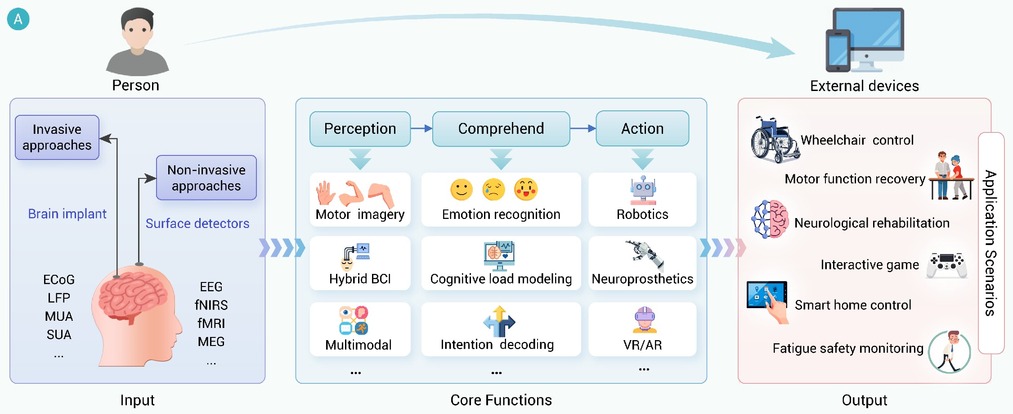
Figure 1.
Conceptual framework of BCI systems: From input to output.
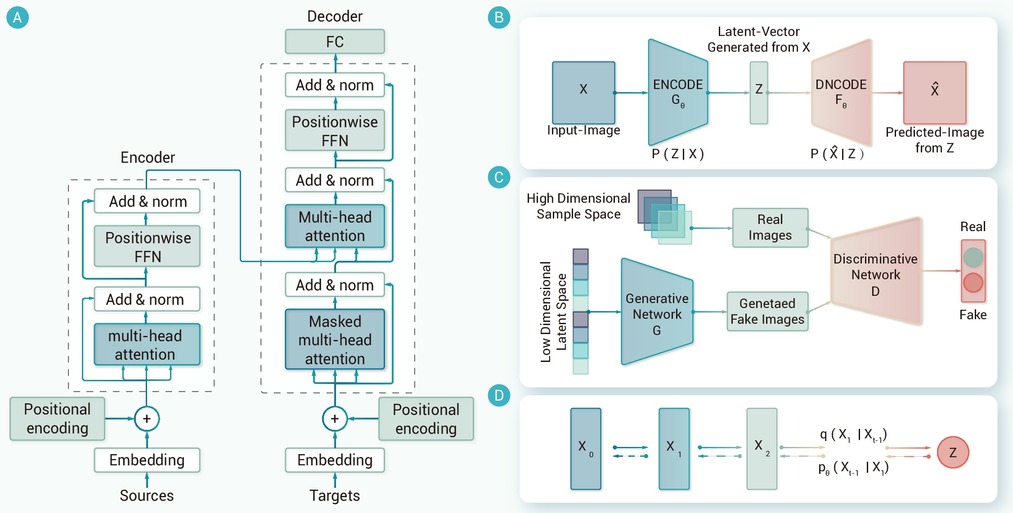
- Figure 2.
-
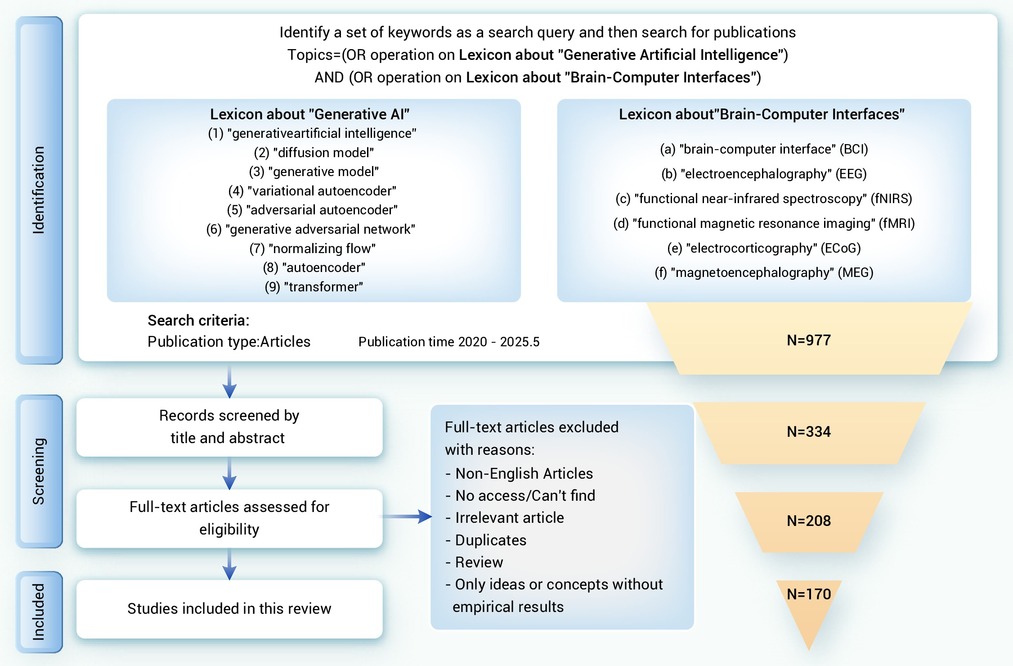
Figure 3.
The systematic literature review process.
-
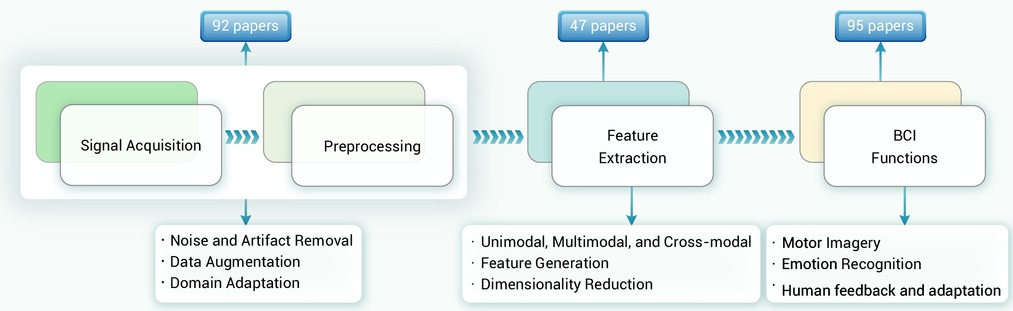
Figure 4.
Distribution of research articles across BCI development stages.
-
Figure 5.
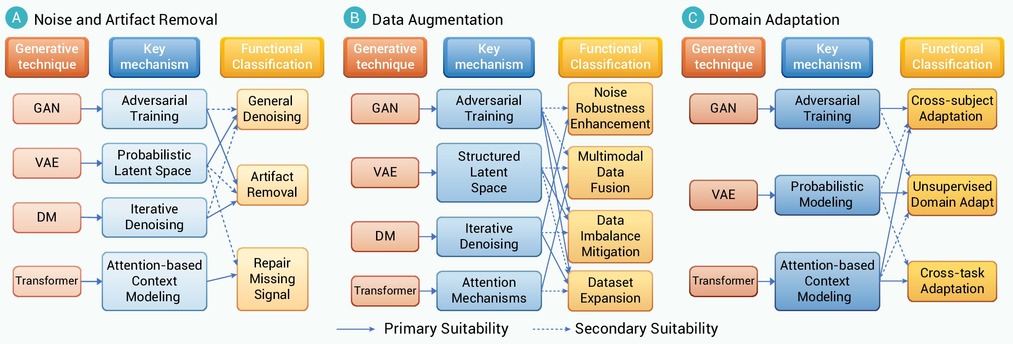
A Technical-functional mapping framework for GAI-enhanced signal acquisition and preprocessing
-
Figure 6.
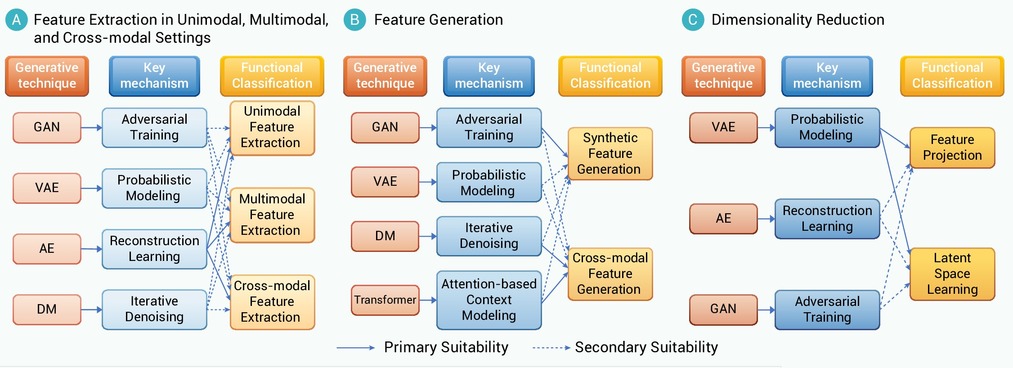
A Technical-functional mapping framework for GAI in BCI feature engineering
-
Figure 7.
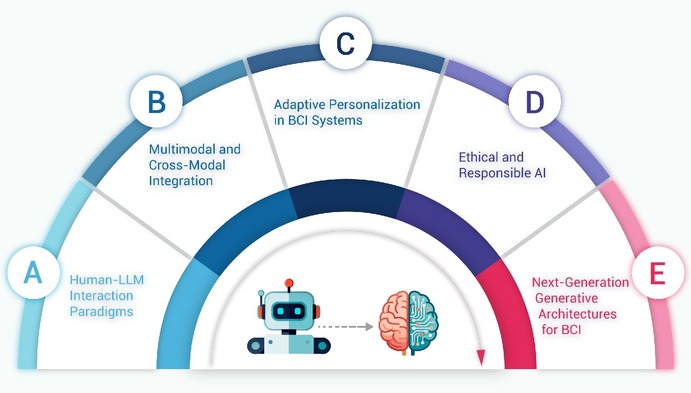
Future application of GAI in BCI
