
Regulation of Scn1b and Scn2a by BCL9 in cortical neurodevelopment and neuronal excitability
-
GRAPHICAL ABSTRACT
 DownLoad:
Full size image
DownLoad:
Full size image
-
PUBLIC SUMMARY
-
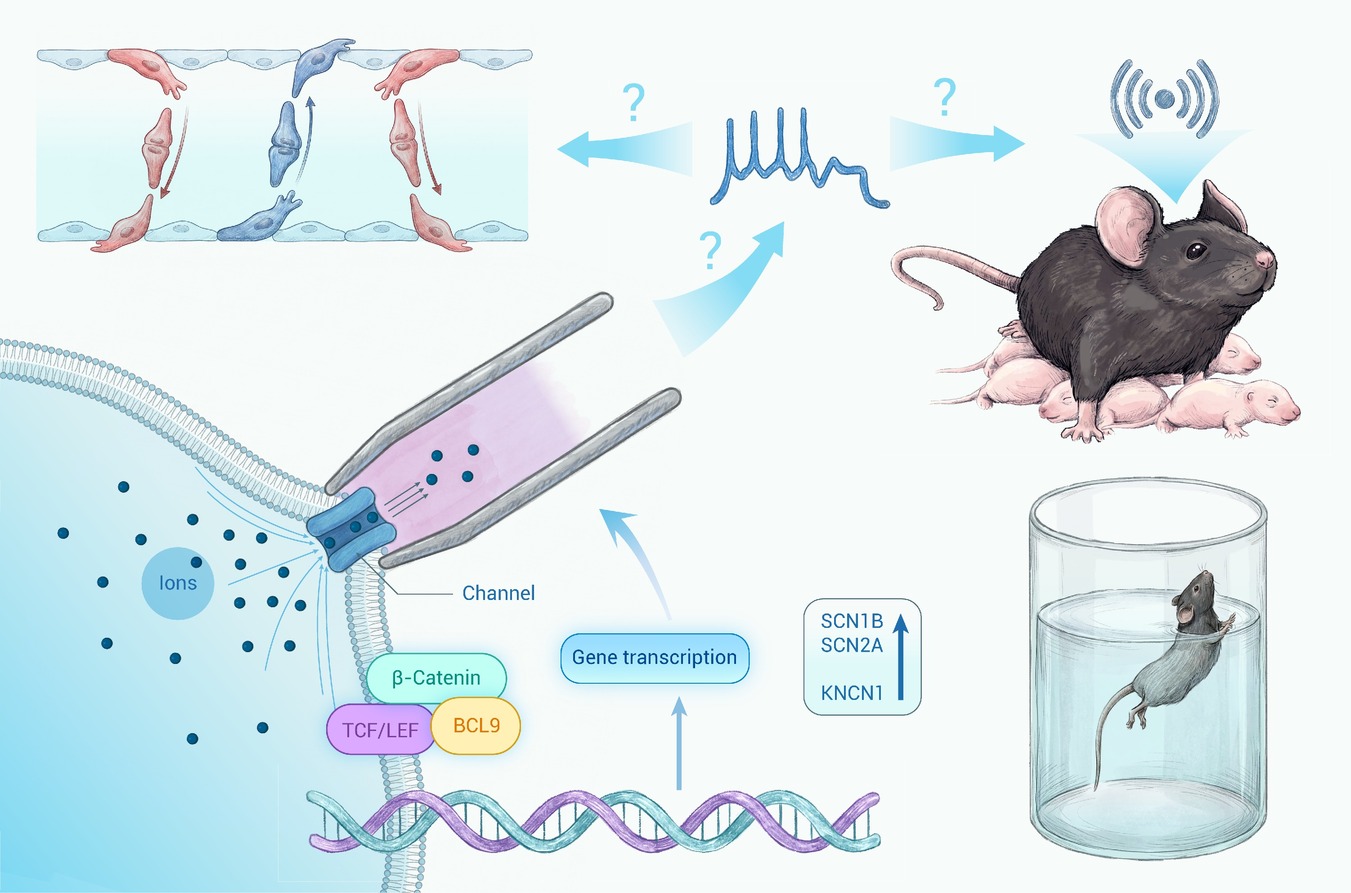
BCL9 regulates cortical neurodevelopment and modulates sodium channel-dependent neuronal excitability.
BCL9 controls Scn1b/Scn2a via transcription repression and post-translational coordination.
BCL9 provides a prospective avenue for therapeutic intervention in neurodevelopmental disorders.
-
-
ABSTRACT
The convergence of oncology and neurodevelopmental research has uncovered compelling links between genetic factors and mental health. Among these, B-cell chronic lymphocytic leukemia/lymphoma 9 (BCL9), located on human chromosome 1q21.1, has been identified as a key oncogene in precursor B-cell acute lymphoblastic leukemia (B-ALL). Subsequent studies have established that Bcl9 promotes tumorigenesis through activation of the Wnt/β-catenin signaling pathway. Emerging evidence from human genetic studies further implicates common variants of Bcl9 in increased susceptibility to neurodevelopmental disorders, including schizophrenia and bipolar disorder. Despite growing interest in its role beyond cancer, the neurobiological functions of Bcl9 remain poorly defined. In this study, we systematically investigated the role of Bcl9 in neurodevelopment using mouse models. By employing in utero electroporation-mediated gene knockdown techniques and conditional knockout (cKO) mice, we demonstrate that Bcl9 deficiency disrupts Wnt-dependent signal transduction and leads to upregulation of voltage-gated sodium channel (Nav) expression, thereby results in increased sodium current density but paradoxically reduced action potential firing. Based on our experimental findings, Bcl9 and/or the Bcl9 complexes may regulate the promoter region of the Scn1b gene and the area near the exons of Scn2a. Collectively, our findings establish Bcl9 as a critical regulator of neuronal excitability and migration, providing a mechanistic framework that links ion channel dysregulation to the pathophysiology of neurodevelopmental disorders. -

-
REFERENCES
[1] Willis T. G., Zalcberg I. R., Coignet L. J., et al. (1998). Molecular cloning of translocation t(1;14)(q21;q32) defines a novel gene (BCL9) at chromosome 1q21. Blood 91:1873–1881. https://www.sciencedirect.com/science/article/pii/S0006497120547848?via%3Dihub [2] Kramps T., Peter O., Brunner E., et al. (2002). Wnt/wingless signaling requires BCL9/legless-mediated recruitment of pygopus to the nuclear beta-catenin-TCF complex. Cell 109:47−60. DOI:10.1016/s0092-8674(02)00679-7 [3] Zhang Y., Zhang Q., Chen H., et al. (2018). BCL9 promotes epithelial mesenchymal transition and invasion in cisplatin resistant NSCLC cells via beta-catenin pathway. Life Sci. 208:284−294. DOI:10.1016/j.lfs.2018.07.023 [4] Gay D. M., Ridgway R. A., Muller M., et al. (2019). Loss of BCL9/9l suppresses Wnt driven tumourigenesis in models that recapitulate human cancer. Nat. Commun. 10:723. DOI:10.1038/s41467-019-08586-3 [5] Jiang M., Kang Y., Sewastianik T., et al. (2020). BCL9 provides multi-cellular communication properties in colorectal cancer by interacting with paraspeckle proteins. Nat. Commun. 11:19. DOI:10.1038/s41467-019-13842-7 [6] Feng M., Wu Z., Zhou Y., et al. (2021). BCL9 regulates CD226 and CD96 checkpoints in CD8(+) T cells to improve PD-1 response in cancer. Signal Transduct. Target. Ther. 6:313. DOI:10.1038/s41392-021-00730-0 [7] Wang X., Feng M., Xiao T., et al. (2021). BCL9/BCL9L promotes tumorigenicity through immune-dependent and independent mechanisms in triple negative breast cancer. Oncogene 40:2982−2997. DOI:10.1038/s41388-021-01756-y [8] Li J., Zhou G., Ji W., et al. (2011). Common variants in the BCL9 gene conferring risk of schizophrenia. Arch. Gen. Psychiatry 68:232−240. DOI:10.1001/archgenpsychiatry.2011.1 [9] Kimura H., Tanaka S., Kushima I., et al. (2015). Association study of BCL9 gene polymorphism rs583583 with schizophrenia and negative symptoms in Japanese population. Sci. Rep. 5:15705. DOI:10.1038/srep15705 [10] Xu C., Aragam N., Li X., et al. (2013). BCL9 and C9orf5 are associated with negative symptoms in schizophrenia: Meta-analysis of two genome-wide association studies. PLoS One 8:e51674. DOI:10.1371/journal.pone.0051674 [11] Cantu C., Pagella P., Shajiei T. D., et al. (2017). A cytoplasmic role of Wnt/beta-catenin transcriptional cofactors Bcl9, Bcl9l, and Pygopus in tooth enamel formation. Sci. Signal. 10:eaah4598. DOI:10.1126/scisignal.aah4598 [12] Sanders S. J., Campbell A. J., Cottrell J. R., et al. (2018). Progress in understanding and treating SCN2A-mediated disorders. Trends Neurosci. 41:442−456. DOI:10.1016/j.tins.2018.03.011 [13] Aeby A., Sculier C., Bouza A. A., et al. (2019). SCN1B-linked early infantile developmental and epileptic encephalopathy. Ann. Clin. Transl. Neurol. 6:2354−2367. DOI:10.1002/acn3.50921 [14] Zhu Z., Bolt E., Newmaster K., et al. (2022). SCN1B genetic variants: A review of the spectrum of clinical phenotypes and a report of early myoclonic encephalopathy. Children (Basel) 9:1507. DOI:10.3390/children9101507 [15] Fang H., Hu W., Kang Q., et al. (2023). Clinical characteristics and genetic analysis of pediatric patients with sodium channel gene mutation-related childhood epilepsy: A review of 94 patients. Front Neurol. 14:1310419. DOI:10.3389/fneur.2023.1310419 [16] Hofer M. A., Shair H. N. and Brunelli S. A. (2002). Ultrasonic vocalizations in rat and mouse pups. Curr. Protoc. Neurosci. 8:8.14. DOI:10.1002/0471142301.ns0814s17 [17] Scattoni M. L., Crawley J. and Ricceri L. (2009). Ultrasonic vocalizations: A tool for behavioural phenotyping of mouse models of neurodevelopmental disorders. Neurosci. Biobehav. Rev. 33:508−515. DOI:10.1016/j.neubiorev.2008.08.003 [18] Abramson J., Adler J., Dunger J., et al. (2024). Addendum: Accurate structure prediction of biomolecular interactions with AlphaFold 3. Nature 636:E4. DOI:10.1038/s41586-024-08416-7 [19] Jakubec D., Skoda P., Krivak R., et al. (2022). PrankWeb 3: Accelerated ligand-binding site predictions for experimental and modelled protein structures. Nucleic Acids Res 50:W593−W597. DOI:10.1093/nar/gkac389 [20] de Vries S. J., van Dijk M. and Bonvin A. M. (2010). The HADDOCK web server for data-driven biomolecular docking. Nat. Protoc. 5:883−897. DOI:10.1038/nprot.2010.32 [21] Vangone A. and Bonvin A. M. (2015). Contacts-based prediction of binding affinity in protein-protein complexes. Elife 4:e07454. DOI:10.7554/eLife.07454 [22] Xue L. C., Rodrigues J. P., Kastritis P. L., et al. (2016). PRODIGY: A web server for predicting the binding affinity of protein-protein complexes. Bioinformatics 32:3676−3678. DOI:10.1093/bioinformatics/btw514 [23] Yan Y., Tao H., He J., et al. (2020). The HDOCK server for integrated protein-protein docking. Nat. Protoc. 15:1829−1852. DOI:10.1038/s41596-020-0312-x [24] Premoli M., Memo M. and Bonini S. A. (2021). Ultrasonic vocalizations in mice: Relevance for ethologic and neurodevelopmental disorders studies. Neural Regen. Res. 16:1158−1167. DOI:10.4103/1673-5374.300340 [25] Cantu C., Felker A., Zimmerli D., et al. (2018). Mutations in Bcl9 and Pygo genes cause congenital heart defects by tissue-specific perturbation of Wnt/beta-catenin signaling. Genes Dev. 32:1443−1458. DOI:10.1101/gad.315531.118 [26] Sloan K. E., Stewart J. K., Treloar A. F., et al. (2005). CD155/PVR enhances glioma cell dispersal by regulating adhesion signaling and focal adhesion dynamics. Cancer Res. 65:10930−10937. DOI:10.1158/0008-5472.CAN-05-1890 [27] Yuan J., Hu J., Li Z., et al. (2017). A replication study of schizophrenia-related rare copy number variations in a Han Southern Chinese population. Hereditas 154:2. DOI:10.1186/s41065-016-0025-x [28] Penagarikano O., Abrahams B. S., Herman E. I., et al. (2011). Absence of CNTNAP2 leads to epilepsy, neuronal migration abnormalities, and core autism-related deficits. Cell 147:235−246. DOI:10.1016/j.cell.2011.08.040 [29] Prem S., Dev B., Peng C., et al. (2024). Dysregulation of mTOR signaling mediates common neurite and migration defects in both idiopathic and 16p11.2 deletion autism neural precursor cells. Elife 13:e82809. DOI:10.7554/eLife.82809 [30] Moy S. S. and Nadler J. J. (2008). Advances in behavioral genetics: Mouse models of autism. Mol. Psychiatry 13:4−26. DOI:10.1038/sj.mp.4002082 [31] Simola N. and Granon S. (2019). Ultrasonic vocalizations as a tool in studying emotional states in rodent models of social behavior and brain disease. Neuropharmacology 159:107420. DOI:10.1016/j.neuropharm.2018.11.008 [32] Scattoni M. L., Martire A., Cartocci G., et al. (2013). Reduced social interaction, behavioural flexibility and BDNF signalling in the BTBR T+ tf/J strain, a mouse model of autism. Behav. Brain Res. 251:35−40. DOI:10.1016/j.bbr.2012.12.028 [33] Scattoni M. L., Ricceri L. and Crawley J. N. (2011). Unusual repertoire of vocalizations in adult BTBR T+tf/J mice during three types of social encounters. Genes Brain Behav. 10:44−56. DOI:10.1111/j.1601-183X.2010.00623.x -
ABOUT THIS ARTICLE
Cite this article:
Kuang Y., Zhou Y., Yang B., et al. (2026). Regulation of Scn1b and Scn2a by BCL9 in cortical neurodevelopment and neuronal excitability. The Innovation Life 4:100213. https://doi.org/10.59717/j.xinn-life.2026.100213
Welcome!
To request copyright permission to republish or share portions of our works, please visit Copyright Clearance Center's (CCC) Marketplace website at marketplace.copyright.com.
Export File
Citation
Kuang Y., Zhou Y., Yang B., et al. (2026). Regulation of Scn1b and Scn2a by BCL9 in cortical neurodevelopment and neuronal excitability. The Innovation Life 4:100213. https://doi.org/10.59717/j.xinn-life.2026.100213

Format
Content
-
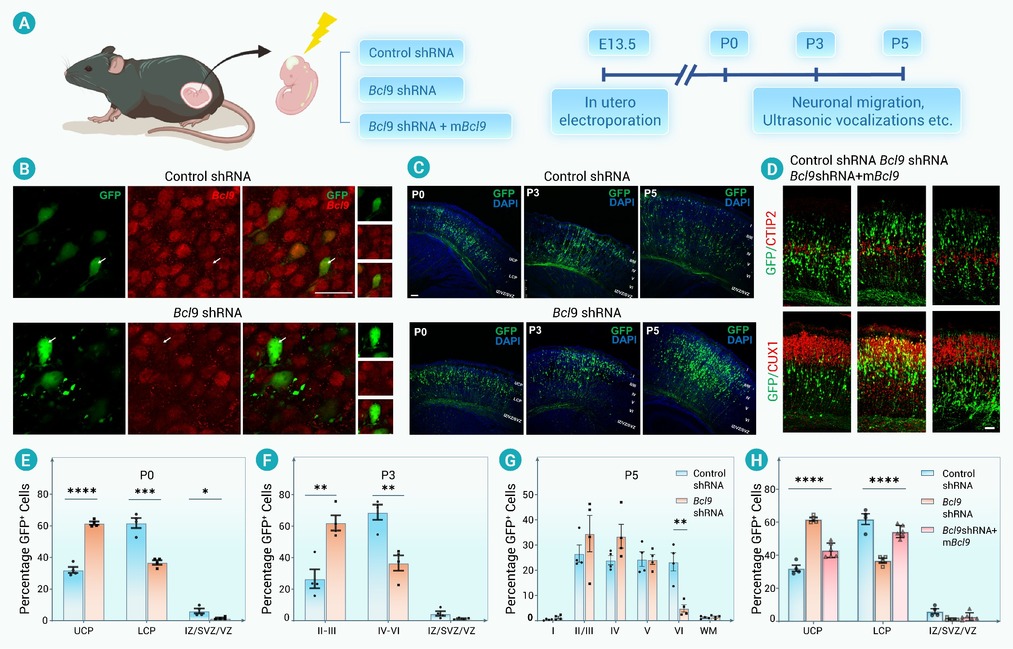
Figure 1.
Knockdown of Bcl9 in the developing cortex
-
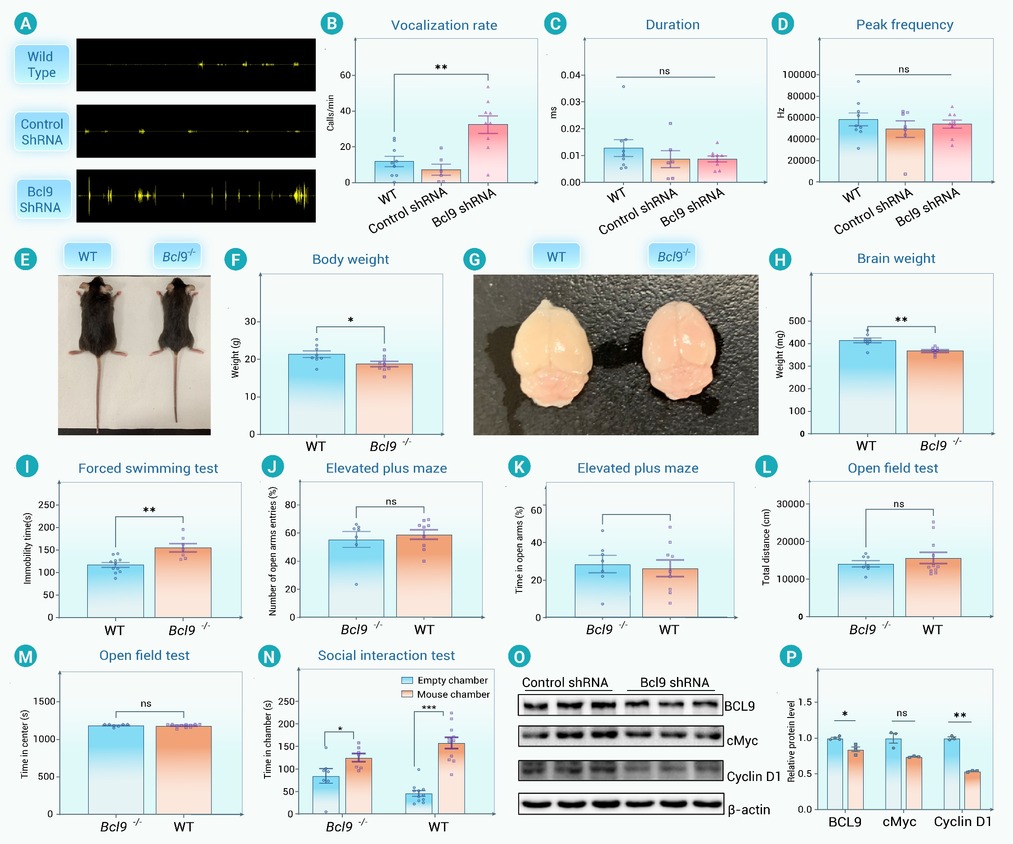
Figure 2.
Developmental and behavioral phenotypes in Bcl9 knockdown and knockout mice
-
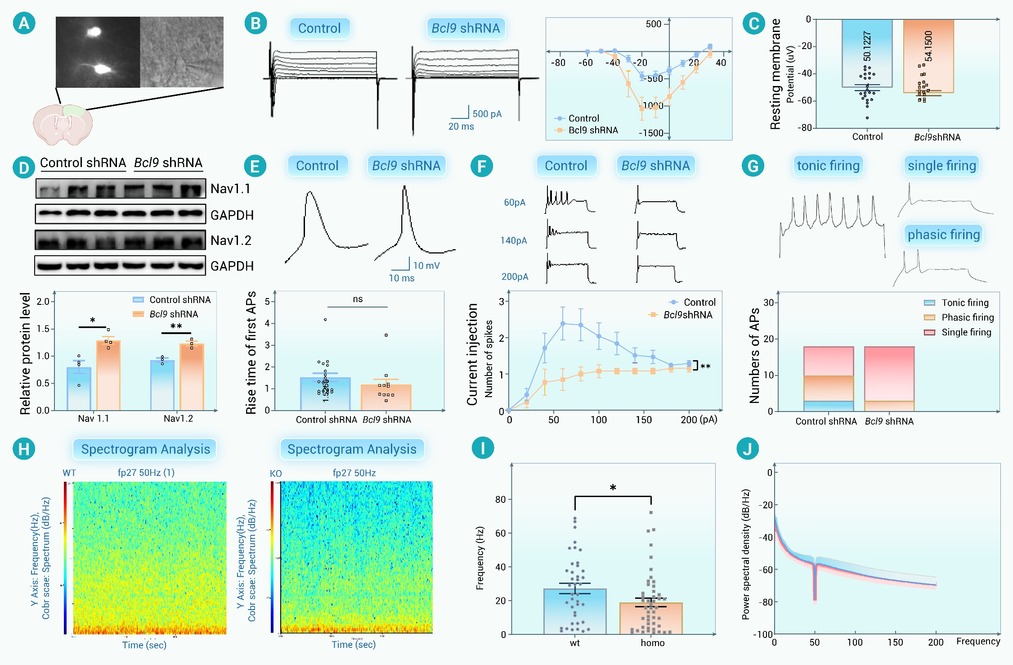
Figure 3.
Electrophysiological properties of neurons in control and Bcl9-deficient mice
-
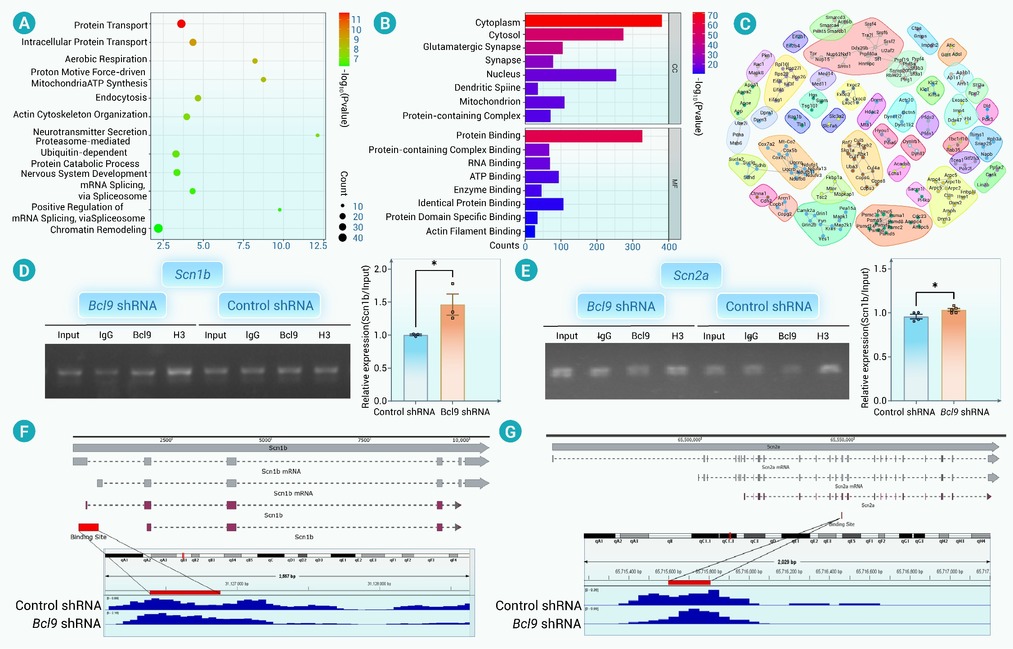
Figure 4.
BCL9 protein complexes associate with Scn1b and Scn2a
-
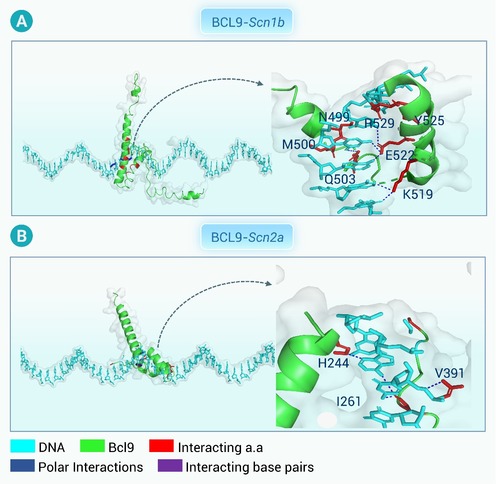
Figure 5.
Molecular docking of BCL9 protein with Scn1b and Scn2a DNA
