
Horizontal gene transfer in insects: Insights into origins, detection, and functional roles
-
GRAPHICAL ABSTRACT
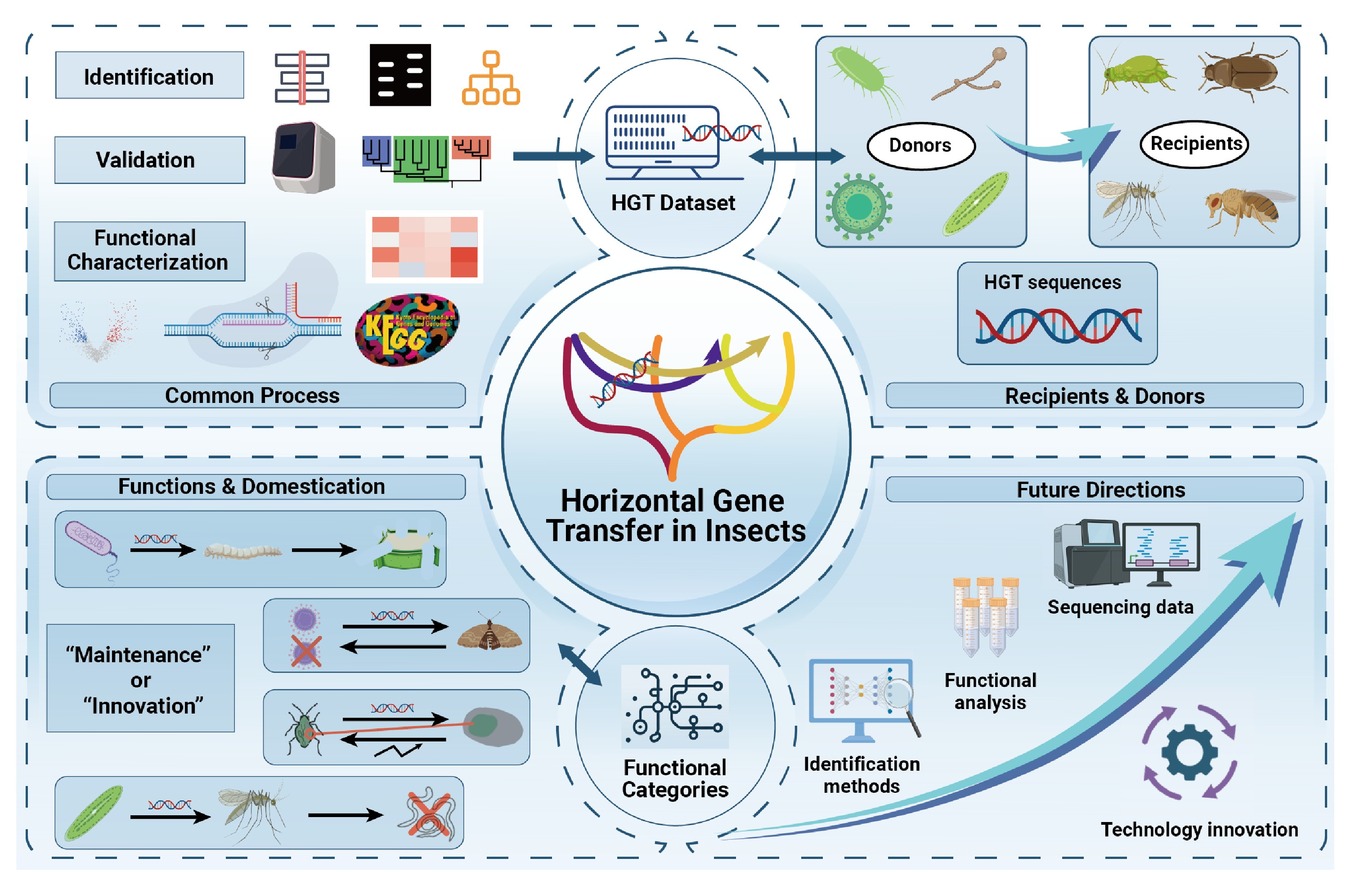
 DownLoad:
Full size image
DownLoad:
Full size image
-
PUBLIC SUMMARY
-
Horizontal gene transfer (HGT) can drive evolutionary innovation via cross-species transfer of genes.
Insect HGT are commonly analyzed through identification, validation, and functional exploration.
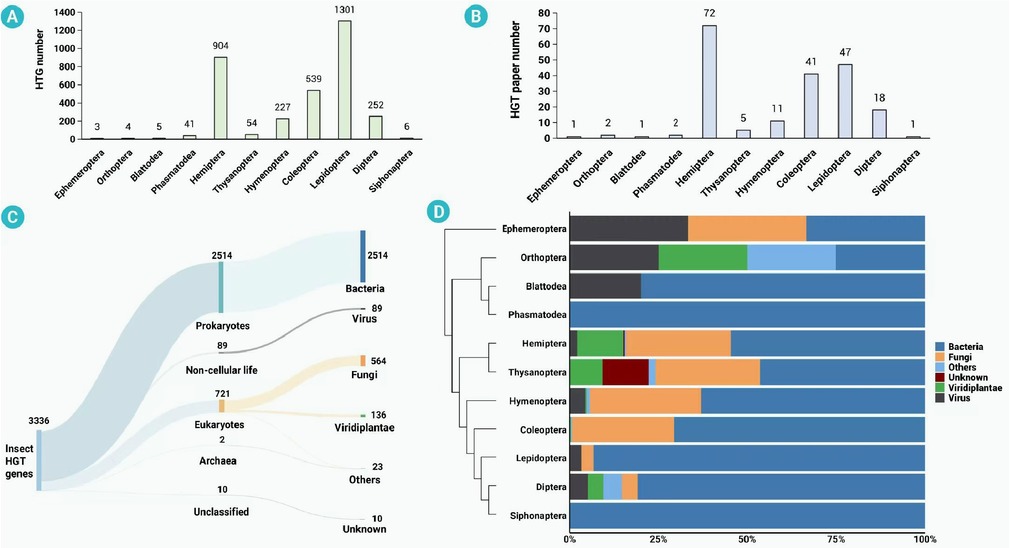
We compiled 3336 insect HGT-origin peptides, identifying bacteria and fungi as the primary donor sources.
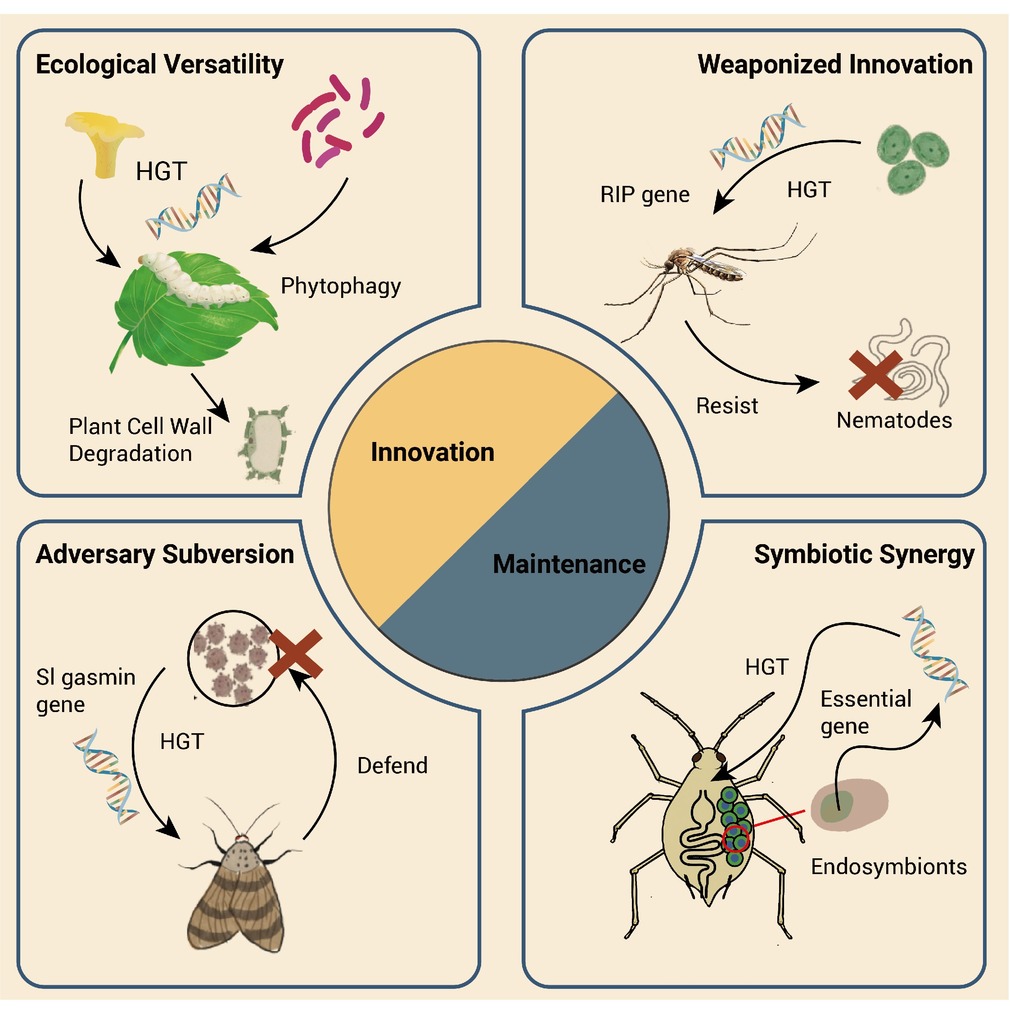
HGT facilitate symbiosis and biosynthesis, undergoing domestication via maintenance or innovation.
-
-
ABSTRACT
Unlike vertical gene transfer, horizontal gene transfer (HGT) allows organisms to acquire genetic material from distantly related lineages, serving as a vital source of evolutionary innovation beyond conventional inheritance. Advances in meta-omics technologies have enabled the identification of thousands of horizontally transferred genes (HTGs) across diverse insect taxa, with mounting evidence supporting their recurrent integration and functional importance. This review synthesizes current understanding of insect HGT, focusing on four major themes: (1) Methodologies for detecting HGT have evolved from PCR-based assays to include parametric and phylogenetic approaches, often complemented by transcriptomic validation; (2) Donor sources span bacteria, fungi, viruses, plants, and metazoans, with bacterial endosymbionts being the predominant contributors, and Lepidoptera, Hemiptera, and Coleoptera emerging as the most frequent recipients; (3) Functional analyses indicate lineage-specific biases, with the majority of well-characterized HTGs involved in glycoside hydrolysis or symbiosis-related processes; (4) HTGs undergo domestication via either "maintenance”—preserving ancestral functions—or "innovation"—enabling novel traits. These dynamics are reflected in four recurrent adaptive patterns: ecological versatility, symbiotic synergy, adversary subversion, and weaponized innovation. Despite significant progress, challenges persist in refining detection pipelines, expanding taxonomic coverage, and strengthening functional validation. Collectively, these findings provide a conceptual framework for deciphering cross-kingdom genetic exchanges and their contributions to insect adaptation and diversification.-
Keywords:
- Horizontal gene transfer /
- Insect /
- Gene function /
- Gene family /
- Adaptation /
- Evolution
-

-
REFERENCES
[1] Tatum E. and Lederberg J. (1947). Gene recombination in the bacterium Escherichia coli. J. Bacteriol. 53:673−684. DOI:10.1128/jb.53.6.673-684.1947 [2] Chung S., Jing X., Luo Y., et al. (2018). Targeting symbiosis-related insect genes by RNAi in the pea aphid-Buchnera symbiosis. Insect Biochem. Mol. Biol. 95:55−63. DOI:10.1016/j.ibmb.2018.02.004 [3] Flot J., Hespeels B., Li X., et al. (2013). Genomic evidence for ameiotic evolution in the bdelloid rotifer Adineta vaga. Nature 500:453−457. DOI:10.1038/nature12326 [4] Kwit C., Moon H., Warwick S., et al. (2011). Transgene introgression in crop relatives: Molecular evidence and mitigation strategies. Trends Biotechnol. 29:284−293. DOI:10.1016/j.tibtech.2011.02.003 [5] Li Y., Liu Z., Liu C., et al. (2022). HGT is widespread in insects and contributes to male courtship in lepidopterans. Cell 185:2975−2987.e10. DOI:10.1016/j.cell.2022.06.014 [6] Soucy S., Huang J., Gogarten J. (2015). Horizontal gene transfer: Building the web of life. Nat. Rev. Genet. 16:472−482. DOI:10.1038/nrg3962 [7] Xing B., Yang L., Gulinuer A., et al. (2023). Research progress on horizontal gene transfer and its functions in insects. Trop. Plants 2:1−12. DOI:10.48130/TP-2023-0003 [8] Kyndt T., Quispe D., Zhai H., et al. (2015). The genome of cultivated sweet potato contains Agrobacterium T-DNAs with expressed genes: An example of a naturally transgenic food crop. Proc. Natl. Acad. Sci. USA 112:5844−5849. DOI:10.1073/pnas.1419685112 [9] Verster K., Tarnopol R., Akalu S., et al. (2021). Horizontal transfer of microbial toxin genes to gall midge genomes. Genome Biol. Evol. 13:evab202. DOI:10.1093/gbe/evab202 [10] Van Etten J. and Bhattacharya D. (2020). Horizontal gene transfer in Eukaryotes: Not if, but how much. Trends Genet. 36:915−925. DOI:10.1016/j.tig.2020.08.006 [11] Ford Doolittle W. (1998). You are what you eat: A gene transfer ratchet could account for bacterial genes in eukaryotic nuclear genomes. Trends Genet. 14:307−311. DOI:10.1016/S0168-9525(98)01494-2 [12] Ochman H., Lawrence J., Groisman E. (2000). Lateral gene transfer and the nature of bacterial innovation. Nature 405:299−304. DOI:10.1038/35012500 [13] Huang J. (2013). Horizontal gene transfer in eukaryotes: The weak‐link model. BioEssays 35:868−875. DOI:10.1002/bies.201300007 [14] Smith C., Toth A., Suarez A., et al. (2008). Genetic and genomic analyses of the division of labour in insect societies. Nat. Rev. Genet. 9:735−748. DOI:10.1038/nrg2429 [15] Stork N. (2018). How many species of insects and other terrestrial arthropods are there on earth? Annu. Rev. Entomol. 63:31−45. DOI:10.1146/annurev-ento-020117-043348 [16] Nováková E. and Moran N. (2012). Diversification of genes for carotenoid biosynthesis in aphids following an ancient transfer from a fungus. Mol. Biol. Evol. 29:313−323. DOI:10.1093/molbev/msr206 [17] Parker B. and Brisson J. (2019). A laterally transferred viral gene modifies aphid wing plasticity. Curr. Biol. 29:2098−2103.e5. DOI:10.1016/j.cub.2019.05.041 [18] Gasmi L., Sieminska E., Okuno S., et al. (2021). Horizontally transmitted parasitoid killing factor shapes insect defense to parasitoids. Science 373:535−541. DOI:10.1126/science.abb6396 [19] Xia J., Guo Z., Yang Z., et al. (2021). Whitefly hijacks a plant detoxification gene that neutralizes plant toxins. Cell 184:1693−1705.e17. DOI:10.1016/j.cell.2021.02.014 [20] Gong C., Guo Z., Hu Y., et al. (2024). A horizontally transferred plant fatty acid desaturase gene steers whitefly reproduction. Adv. Sci. 11:2306653. DOI:10.1002/advs.202306653 [21] Chen W., Hasegawa D., Kaur N., et al. (2016). The draft genome of whitefly Bemisia tabaci MEAM1, a global crop pest, provides novel insights into virus transmission, host adaptation, and insecticide resistance. BMC Biol. 14:110. DOI:10.1186/s12915-016-0321-y [22] Colinet D. (2025). Functional carbohydrate-active enzymes acquired by horizontal gene transfer from plants in the whitefly Bemisia tabaci. Genome Biol. Evol. 17:evaf012. DOI: 10.1093/gbe/evaf012 [23] Eyun S., Wang H., Pauchet Y., et al. (2014). Molecular evolution of glycoside hydrolase genes in the western corn rootworm (Diabrotica virgifera virgifera). PLoS ONE 9:e94052. DOI:10.1371/journal.pone.0094052 [24] Roncolini A., Cardinali F., Aquilanti L., et al. (2019). Investigating antibiotic resistance genes in marketed ready‐to‐eat small crickets (Acheta domesticus). J. Food Sci. 84:3222−3232. DOI:10.1111/1750-3841.14818 [25] Li J., Cao J., Zhu Y., et al. (2018). Global survey of antibiotic resistance genes in air. Environ. Sci. Technol. 52:10975−10984. DOI:10.1021/acs.est.8b02204 [26] Han B., Feng C., Jiang Y., et al. (2025). Mobile genetic elements encoding antibiotic resistance genes and virulence genes in Klebsiella pneumoniae: Important pathways for the acquisition of virulence and resistance. Front. Microbiol. 16:1529157. DOI:10.3389/fmicb.2025.1529157 [27] Tokuda M., Shintani M. (2024). Microbial evolution through horizontal gene transfer by mobile genetic elements. Microb. Biotechnol. 17:e14408. DOI:10.1111/1751-7915.14408 [28] Carpanzano S., Santorsola M., nf-core community, et al. (2022). Hgtseq: A standard pipeline to study horizontal gene transfer. IJMS 23:14512. DOI:10.3390/ijms232314512 [29] Dutton R. and Reiter T. (2024). PreHGT: A scalable workflow that screens for horizontal gene transfer within and between kingdoms. Arcadia Science 8. DOI: 10.57844/ARCADIA-JFBP-7P11 [30] Ravenhall M., Škunca N., Lassalle F., et al. (2015). Inferring horizontal gene transfer. PLoS Comput. Biol. 11:e1004095. DOI:10.1371/journal.pcbi.1004095 [31] Sánchez-Soto D., Agüero-Chapin G., Armijos-Jaramillo V., et al. (2020). ShadowCaster: Compositional methods under the shadow of phylogenetic models to detect horizontal gene transfers in prokaryotes. Genes 11:756. DOI:10.3390/genes11070756 [32] Wang S., Jiang Y., Che L., et al. (2024). Enhancing insights into diseases through horizontal gene transfer event detection from gut microbiome. Nucleic Acids Res. 52:e61−e61. DOI:10.1093/nar/gkae515 [33] Wijaya A. J., Anžel A., Richard H., et al. (2025). Current state and future prospects of horizontal gene transfer detection. NAR Genom. Bioinform. 7:lqaf005. DOI:10.1093/nargab/lqaf005 [34] Li C., Chen J., Li S. (2020). Deep learning for HGT insertion sites recognition. BMC Genomics 21:893. DOI:10.1186/s12864-020-07296-1 [35] Xiong D., Xiao F., Liu L., et al. (2012). Towards a better detection of horizontally transferred genes by combining unusual properties effectively. PLoS ONE 7:e43126. DOI:10.1371/journal.pone.0043126 [36] Li M., Zhao J., Tang N., et al. (2018). Horizontal gene transfer from bacteria and plants to the Arbuscular mycorrhizal fungus Rhizophagus irregularis. Front. Plant Sci. 9:701. DOI:10.3389/fpls.2018.00701 [37] Shimodaira H. and Hasegawa M. (1999). Multiple comparisons of log-likelihoods with applications to phylogenetic inference. Mol. Biol. Evol. 16:1114−1116. DOI:10.1093/oxfordjournals.molbev.a026201 [38] Song W., Wemheuer B., Zhang S., et al. (2019). MetaCHIP: Community-level horizontal gene transfer identification through the combination of best-match and phylogenetic approaches. Microbiome 7:36. DOI:10.1186/s40168-019-0649-y [39] Choi Y., Ahn S., Park M., et al. (2023). HGTree v2.0: A comprehensive database update for horizontal gene transfer (HGT) events detected by the tree-reconciliation method. Nucleic Acids Res. 51:D1010–D1018. DOI: 10.1093/nar/gkac929 [40] Dessimoz C., Margadant D., Gonnet G. (2008). DLIGHT – lateral gene transfer detection using pairwise evolutionary distances in a statistical framework. Vingron, M. & Wong, L. (eds). Research in computational molecular biology (Springer Berlin Heidelberg), pp: 315–330. DOI: 10.1007/978-3-540-78839-3_27 [41] Li X., Tong W., Wang L., et al. (2018). A novel strategy for detecting recent horizontal gene transfer and its application to Rhizobium strains. Front. Microbiol. 9:973. DOI:10.3389/fmicb.2018.00973 [42] Nguyen M., Ekstrom A., Li X., et al. (2015). HGT-Finder: A new tool for horizontal gene transfer finding and application to Aspergillus genomes. Toxins 7:4035−4053. DOI:10.3390/toxins7104035 [43] Zaneveld J., Nemergut D., Knight R. (2008). Are all horizontal gene transfers created equal. Prospects for mechanism-based studies of HGT patterns. Microbiol. 154:1−15. DOI:10.1099/mic.0.2007/011833-0 [44] Zhu B., Lou M., Xie G., et al. (2011). Horizontal gene transfer in silkworm, Bombyx mori. BMC Genomics 12. DOI:10.1186/1471-2164-12-248 [45] Doudoumis V., Tsiamis G., Wamwiri F., et al. (2012). Detection and characterization of Wolbachia infections in laboratory and natural populations of different species of tsetse flies (genus Glossina). BMC Microbiol 12:S3. DOI:10.1186/1471-2180-12-S1-S3 [46] Doudoumis V., Alam U., Aksoy E., et al. (2013). Tsetse-Wolbachia symbiosis: Comes of age and has great potential for pest and disease control. J. Invertebr. Pathol. 112:S94−S103. DOI:10.1016/j.jip.2012.05.010 [47] Brelsfoard C., Tsiamis G., Falchetto M., et al. (2014). Presence of extensive Wolbachia symbiont insertions discovered in the genome of its host Glossina morsitans morsitans. PLoS Negl. Trop. Dis. 8:e2728. DOI:10.1371/journal.pntd.0002728 [48] Jaron K. S., Moravec J. C., Martínková N. (2014). SigHunt: Horizontal gene transfer finder optimized for eukaryotic genomes. Bioinformatics 30:1081−1086. DOI:10.1093/bioinformatics/btt727 [49] Nakao R., Abe T., Funayama S., et al. (2016). Horizontally transferred genetic elements in the tsetse fly genome: An alignment-free clustering approach using batch learning self-organising map (BLSOM). BioMed Res. Int. 2016:1−8. DOI:10.1155/2016/3164624 [50] Nakhleh L., Ruths D., Wang L.-S. (2005). RIATA-HGT: A fast and accurate heuristic for reconstructing horizontal gene transfer. Wang, L. (ed). Computing and Combinatorics (Springer Berlin Heidelberg), pp: 84–93. DOI: 10.1007/11533719_11 [51] Boc A., Diallo A., Makarenkov V. (2012). T-REX: A web server for inferring, validating and visualizing phylogenetic trees and networks. Nucleic Acids Res. 40:W573−W579. DOI:10.1093/nar/gks485 [52] David L. and Alm E. (2011). Rapid evolutionary innovation during an Archaean genetic expansion. Nature 469:93−96. DOI:10.1038/nature09649 [53] Bansal M., Kellis M., Kordi M., et al. (2018). RANGER-DTL 2.0: Rigorous reconstruction of gene-family evolution by duplication, transfer and loss. Bioinformatics 34:3214–3216. DOI: 10.1093/bioinformatics/bty314 [54] Koutsovoulos G., Granjeon-Noriot S., Bailly-Bechet M., et al. (2022). AvP: A software package for automatic phylogenetic detection of candidate horizontal gene transfers. PLoS Comput. Biol. 18:e1010686. DOI:10.1371/journal.pcbi.1010686 [55] Podell S. and Gaasterland T. (2007). DarkHorse: A method for genome-wide prediction of horizontal gene transfer. Genome Biol. 8:R16. DOI:10.1186/gb-2007-8-2-r16 [56] Wheeler D., Redding A., Werren J. (2013). Characterization of an ancient lepidopteran lateral gene transfer. PLoS ONE 8:e59262. DOI:10.1371/journal.pone.0059262 [57] Shen X., Opulente D., Kominek J., et al. (2018). Tempo and mode of genome evolution in the budding yeast subphylum. Cell 175:1533−1545.e20. DOI:10.1016/j.cell.2018.10.023 [58] Rancurel C., Legrand L., Danchin E. (2017). Alienness: Rapid detection of candidate horizontal gene transfers across the tree of life. Genes 8:248. DOI:10.3390/genes8100248 [59] Yuan L., Lu H., Li F., et al. (2023). HGTphyloDetect: Facilitating the identification and phylogenetic analysis of horizontal gene transfer. Brief. Bioinform. 24:bbad035. DOI:10.1093/bib/bbad035 [60] Gilbert C. and Maumus F. (2022). Multiple horizontal acquisitions of plant genes in the whitefly Bemisia tabaci. Genome Biol. Evol. 14:evac141. DOI:10.1093/gbe/evac141 [61] Zhu Q., Kosoy M., Dittmar K. (2014). HGTector: An automated method facilitating genome-wide discovery of putative horizontal gene transfers. BMC Genomics 15:717. DOI:10.1186/1471-2164-15-717 [62] Feng H., Chen W., Hussain S., et al. (2023). Horizontally transferred genes as RNA interference targets for aphid and whitefly control. Plant Biotechnol. J. 21:754−768. DOI:10.1111/pbi.13992 [63] Kwak Y., Argandona J. A., Degnan P. H., et al. (2023). Chromosomal‐level assembly of Bactericera cockerelli reveals rampant gene family expansions impacting genome structure, function and insect‐microbe‐plant‐interactions. Mol. Ecol. Resour. 23:233−252. DOI:10.1111/1755-0998.13693 [64] Kwak Y. and Hansen A. (2023). Unveiling metabolic integration in psyllids and their nutritional endosymbionts through comparative transcriptomics analysis. iScience 26:107930. DOI:10.1016/j.isci.2023.107930 [65] Sloan D., Nakabachi A., Richards S., et al. (2014). Parallel histories of horizontal gene transfer facilitated extreme reduction of endosymbiont genomes in sap-feeding insects. Mol. Biol. Evol. 31:857−871. DOI:10.1093/molbev/msu004 [66] Katoh K. and Standley D. (2013). MAFFT multiple sequence alignment software version 7: Improvements in performance and usability. Mol. Biol. Evol. 30:772−780. DOI:10.1093/molbev/mst010 [67] Stamatakis A. (2014). RAxML version 8: A tool for phylogenetic analysis and post-analysis of large phylogenies. Bioinformatics 30:1312−1313. DOI:10.1093/bioinformatics/btu033 [68] Price M., Dehal P., Arkin A. (2010). FastTree 2 – approximately maximum-likelihood trees for large alignments. PLoS ONE 5:e9490. DOI:10.1371/journal.pone.0009490 [69] Minh B., Schmidt H., Chernomor O., et al. (2020). IQ-TREE 2: New models and efficient methods for phylogenetic inference in the genomic era. Mol. Biol. Evol. 37:1530−1534. DOI:10.1093/molbev/msaa015 [70] Letunic I. and Bork P. (2021). Interactive tree of life (iTOL) v5: An online tool for phylogenetic tree display and annotation. Nucleic Acids Res. 49:W293−W296. DOI:10.1093/nar/gkab301 [71] Husnik F., Nikoh N., Koga R., et al. (2013). Horizontal gene transfer from diverse bacteria to an insect genome enables a tripartite nested mealybug symbiosis. Cell 153:1567−1578. DOI:10.1016/j.cell.2013.05.040 [72] Teufel F., Almagro Armenteros J., Johansen A., et al. (2022). SignalP 6.0 predicts all five types of signal peptides using protein language models. Nat. Biotechnol. 40:1023–1025. DOI: 10.1038/s41587-021-01156-3. [73] Wu J., Deng Q., Qiu Y., et al. (2024). Post‐transfer adaptation of HGT‐acquired genes and contribution to guanine metabolic diversification in land plants. New Phytol. 244:694−707. DOI:10.1111/nph.20040 [74] Hu Y., Gong C., Yang Z., et al. (2025). Functional divergence of plant‐derived thaumatin‐like protein genes in two closely related whitefly species. Adv. Sci. 12:2502193. DOI:10.1002/advs.202502193 [75] Yang Z., Guo Z., Gong C., et al. (2024). Two horizontally acquired bacterial genes steer the exceptionally efficient and flexible nitrogenous waste cycling in whiteflies. Sci. Adv. 10:eadi3105. DOI:10.1126/sciadv.adi3105 [76] Zheng Y. and Zhang L. (2014). Effect of incomplete lineage sorting on tree-reconciliation-based inference of gene duplication. IEEE/ACM Trans. Comput. Biol. and Bioinf. 11:477−485. DOI:10.1109/TCBB.2013.2297913 [77] Zhao T., Zhu P., Liu Q. (2025). Mitonuclear discordance of beetles shaped by incomplete lineage sorting and introgression under loose interaction mechanism. Mol. Biol. Evol. 42:1−17. DOI:10.1093/molbev/msaf291 [78] Knowles L., Huang H., Sukumaran J., et al. (2018). A matter of phylogenetic scale: Distinguishing incomplete lineage sorting from lateral gene transfer as the cause of gene tree discord in recent versus deep diversification histories. Am. J. Bot. 105:376−384. DOI:10.1002/ajb2.1064 [79] Davidson R., Vachaspati P., Mirarab S., et al. (2015). Phylogenomic species tree estimation in the presence of incomplete lineage sorting and horizontal gene transfer. BMC Genomics. 16:S1. DOI:10.1186/1471-2164-16-S10-S1 [80] Huisman J., Vaughan T., Egli A., et al. (2022). The effect of sequencing and assembly on the inference of horizontal gene transfer on chromosomal and plasmid phylogenies. Philos. Trans. R. Soc. Lond. B Biol. Sci. 377:1861. DOI:10.1098/rstb.2021.0245 [81] Nikoh N., McCutcheon J., Kudo T., et al. (2010). Bacterial genes in the aphid genome: Absence of functional gene transfer from Buchnera to its host. PLoS Genet. 6:e1000827. DOI:10.1371/journal.pgen.1000827 [82] Li Z., Shen Y., Xiang Z., et al. (2011). Pathogen-origin horizontally transferred genes contribute to the evolution of Lepidopteran insects. BMC Evol. Biol. 11:356. DOI:10.1186/1471-2148-11-356 [83] Keeling C., Yuen M., Liao N., et al. (2013). Draft genome of the mountain pine beetle, Dendroctonus ponderosae Hopkins, a major forest pest. Genome Biol. 14:R27. DOI:10.1186/gb-2013-14-3-r27 [84] Pauchet Y. and Heckel D. (2013). The genome of the mustard leaf beetle encodes two active xylanases originally acquired from bacteria through horizontal gene transfer. Proc. R. Soc. Bio. Sci. 280:20131021. DOI:10.1098/rspb.2013.1021 [85] Sun B., Xiao J., He S., et al. (2013). Multiple ancient horizontal gene transfers and duplications in lepidopteran species. Insect Mol. Biol. 22:72−87. DOI:10.1111/imb.12004 [86] Gao F., Chen C., Arab D., et al. (2019). EasyCodeML: A visual tool for analysis of selection using CodeML. Ecol. Evol. 9:3891−3898. DOI:10.1002/ece3.5015 [87] Johnson L., Eddy S., Portugaly E. (2010). Hidden Markov model speed heuristic and iterative HMM search procedure. BMC Bioinform. 11:431. DOI:10.1186/1471-2105-11-431 [88] Lapadula W., Marcet P., Taracena M., et al. (2020). Characterization of horizontally acquired ribotoxin encoding genes and their transcripts in Aedes aegypti. Gene 754:144857. DOI:10.1016/j.gene.2020.144857 [89] Li H., Tang X., Huang Y., et al. (2021). Horizontally acquired antibacterial genes associated with adaptive radiation of ladybird beetles. BMC Biol. 19:7. DOI:10.1186/s12915-020-00945-7 [90] Wang J., Wu Y., Zhu L., et al. (2024). Genomic evolution and patterns of horizontal gene transfer in Papilio. Genomics 116:110956. DOI:10.1016/j.ygeno.2024.110956 [91] Zeng Z., Fu Y., Guo D., et al. (2018). Bacterial endosymbiont Cardinium cSfur genome sequence provides insights for understanding the symbiotic relationship in Sogatella furcifera host. BMC Genomics 19:688. DOI:10.1186/s12864-018-5078-y [92] Xie W., Yang X., Chen C., et al. (2018). The invasive MED/Q Bemisia tabaci genome: A tale of gene loss and gene gain. BMC Genomics 19:68. DOI:10.1186/s12864-018-4448-9 [93] Zhang Y., Tu C., Bai J., et al. (2025). Metabolic enhancement contributed by horizontal gene transfer is essential for dietary specialization in leaf beetles. Proc. Natl. Acad. Sci. USA 122:e2415717122. DOI:10.1073/pnas.2415717122 [94] Zhang S., Li X., Li Z., et al. (2025). Horizontal gene transfer-mediated enhancement of gut antifungal defense facilitates host plant adaptation in an invasive pest. Cell Rep. 44:115970. DOI:10.1016/j.celrep.2025.115970 [95] Huang F., Zhu X., Tang Z., et al. (2025). Gut microbe‐driven resistance mechanisms in Propylea japonica: Insights from horizontal gene transfer and oxidative phosphorylation. Adv. Sci.13:e20326. DOI: 10.1002/advs.202520326 [96] Walker A., Robinson S., Merritt D., et al. (2023). Horizontal gene transfer underlies the painful stings of asp caterpillars (Lepidoptera: Megalopygidae). Proc. Natl. Acad. Sci. USA 120:e2305871120. DOI:10.1073/pnas.2305871120 [97] Daimon T., Hamada K., Mita K., et al. (2003). A Bombyx mori gene, BmChi-h, encodes a protein homologous to bacterial and baculovirus chitinases. Insect Biochem. Mol. Biol. 33:749−759. DOI:10.1016/S0965-1748(03)00084-5 [98] Daimon T., Katsuma S., Iwanaga M., et al. (2005). The BmChi-h gene, a bacterial-type chitinase gene of Bombyx mori, encodes a functional exochitinase that plays a role in the chitin degradation during the molting process. Insect Biochem. Mol. Biol. 35:1112−1123. DOI:10.1016/j.ibmb.2005.05.005 [99] Meng Y., Katsuma S., Mita K., et al. (2009). Abnormal red body coloration of the silkworm, Bombyx mori, is caused by a mutation in a novel kynureninase. Genes Cells 14:129−140. DOI:10.1111/j.1365-2443.2008.01257.x [100] Wybouw N., Dermauw W., Tirry L., et al. (2014). A gene horizontally transferred from bacteria protects arthropods from host plant cyanide poisoning. eLife 3:e02365. DOI:10.7554/eLife.02365 [101] Ohlen M., Herfurth A., Kerbstadt H., et al. (2016). Cyanide detoxification in an insect herbivore: Molecular identification of β-cyanoalanine synthases from Pieris rapae. Insect Biochem. Mol. Biol. 70:99−110. DOI:10.1016/j.ibmb.2015.12.004 [102] Li Y., Zhou Y., Jing W., et al. (2021). Horizontally acquired cysteine synthase genes undergo functional divergence in lepidopteran herbivores. Heredity 127:21−34. DOI:10.1038/s41437-021-00430-z [103] Cheng X., Garcés‐Carrera S., Whitworth R., et al. (2020). A horizontal gene transfer led to the acquisition of a Fructan metabolic pathway in a gall midge. Adv. Biosyst. 4:1900275. DOI:10.1002/adbi.201900275 [104] Huang H., Li L., Ye Z., et al. (2024). Salivary proteins potentially derived from horizontal gene transfer are critical for salivary sheath formation and other feeding processes. Commun. Biol. 7:257. DOI:10.1038/s42003-024-05961-9 [105] Zhao C., Miao S., Yin Y., et al. (2021). Tripartite parasitic and symbiotic interactions as a possible mechanism of horizontal gene transfer. Ecol. Evol. 11:7018−7028. DOI:10.1002/ece3.7550 [106] Ferguson K., Visser S., Dalíková M., et al. (2021). Jekyll or Hyde. The genome (and more) of Nesidiocoris tenuis, a zoophytophagous predatory bug that is both a biological control agent and a pest. Insect Mol. Biol. 30:188−209. DOI:10.1111/imb.12688 [107] Yang K., Sun Y., Liang Y., et al. (2025). Horizontally transferred NADAR genes contribute to immune defense of ladybird beetles against bacterial infection. Insect Biochem. Mol. Biol. 184:104397. DOI:10.1016/j.ibmb.2025.104397 [108] Hamilton P., Peng F., Boulanger M., et al. (2016). A ribosome-inactivating protein in a Drosophila defensive symbiont. Proc. Natl. Acad. Sci. USA 113:350−355. DOI:10.1073/pnas.1518648113 [109] Huang J., Chen J., Fang G., et al. (2021). Two novel venom proteins underlie divergent parasitic strategies between a generalist and a specialist parasite. Nat. Commun. 12:234. DOI:10.1038/s41467-020-20332-8 [110] Moran N. and Jarvik T. (2010). Lateral transfer of genes from fungi underlies carotenoid production in aphids. Science 328:624−627. DOI:10.1126/science.1187113 [111] Trissi N., Troczka B., Ozsanlav-Harris L., et al. (2023). Differential regulation of the Tor gene homolog drives the red/green pigmentation phenotype in the aphid Myzus persicae. Insect Biochem. Mol. Biol. 153:103896. DOI:10.1016/j.ibmb.2022.103896 [112] Cobbs C., Heath J., Stireman J. O., et al. (2013). Carotenoids in unexpected places: Gall midges, lateral gene transfer, and carotenoid biosynthesis in animals. Mol. Phylogenet. Evol. 68:221−228. DOI:10.1016/j.ympev.2013.03.012 [113] Wang Y., Ye Y., Lu J., et al. (2023). Horizontally transferred salivary protein promotes insect feeding by suppressing ferredoxin-mediated plant defenses. Mol. Biol. Evol. 40:msad221. DOI:10.1093/molbev/msad221 [114] Wang C., Sun W., Zhang Z. (2019). Functional characterization of the horizontally transferred 4,5‐DOPA extradiol dioxygenase gene in the domestic silkworm, Bombyx mori. Insect Mol. Biol. 28:409−419. DOI:10.1111/imb.12558 [115] Shippy T., Miller S., Tamayo B., et al. (2022). Manual curation and phylogenetic analysis of chitinase family genes in the Asian citrus psyllid, Diaphorina citri. Gigabyte 2022:1−17. DOI:10.46471/gigabyte.46 [116] Lapadula W., Sánchez Puerta M., Juri Ayub M. (2013). Revising the taxonomic distribution, origin and evolution of ribosome inactivating protein genes. PLoS ONE 8:e72825. DOI:10.1371/journal.pone.0072825 [117] Lapadula W., Marcet P., Mascotti M., et al. (2017). Metazoan ribosome inactivating protein encoding genes acquired by horizontal gene transfer. Sci. Rep. 7:1863. DOI:10.1038/s41598-017-01859-1 [118] Lapadula W. and Juri Ayub M. (2023). Ribosome inactivating proteins in insects: HGT, gene expression, and functional implications. Gene 877:147547. DOI:10.1016/j.gene.2023.147547 [119] Lapadula W., Mascotti M., Juri Ayub M. (2020). Whitefly genomes contain ribotoxin coding genes acquired from plants. Sci. Rep. 10:15503. DOI:10.1038/s41598-020-72267-1 [120] Rotenberg D., Baumann A., Ben-Mahmoud S., et al. (2020). Genome-enabled insights into the biology of thrips as crop pests. BMC Biol 18:142. DOI:10.1186/s12915-020-00862-9 [121] Gasmi L., Boulain H., Gauthier J., et al. (2015). Recurrent domestication by lepidoptera of genes from their parasites mediated by Bracoviruses. PLoS Genet 11:e1005470. DOI:10.1371/journal.pgen.1005470 [122] Gasmi L., Jakubowska A., Herrero S. (2016). Gasmin (BV2-5), a polydnaviral-acquired gene in Spodoptera exigua. Trade-off in the defense against bacterial and viral infections. Dev. Comp. Immunol. 56:37−45. DOI:10.1016/j.dci.2015.11.014 [123] Gasmi L., Jakubowska A., Ferré J., et al. (2018). Characterization of two groups of Spodoptera exigua Hübner (Lepidoptera: Noctuidae) C‐type lectins and insights into their role in defense against the densovirus JcDV. Arch. Insect Biochem. Physiol. 97:e21432. DOI:10.1002/arch.21432 [124] Di Lelio I., Illiano A., Astarita F., et al. (2019). Evolution of an insect immune barrier through horizontal gene transfer mediated by a parasitic wasp. PLoS Genet. 15:e1007998. DOI:10.1371/journal.pgen.1007998 [125] Cheng R., Xi Y., Lou Y., et al. (2014). Brown planthopper nudivirus DNA integrated in its host genome. J. Virol. 88:5310−5318. DOI:10.1128/JVI.03166-13 [126] Verster K., Wisecaver J., Karageorgi M., et al. (2019). Horizontal transfer of bacterial cytolethal distending toxin B genes to insects. Mol. Biol. Evol. 36:2105−2110. DOI:10.1093/molbev/msz146 [127] Verster K., Cinege G., Lipinszki Z., et al. (2023). Evolution of insect innate immunity through domestication of bacterial toxins. Proc. Natl. Acad. Sci. USA 120:e2218334120. DOI:10.1073/pnas.2218334120 [128] Tarnopol R., Tamsil J., Cinege G., et al. (2025). Experimental horizontal transfer of phage-derived genes to Drosophila confers innate immunity to parasitoids. Curr. Biol. 35:514−529.e7. DOI:10.1016/j.cub.2024.11.071 [129] Hoile A., Holland P., Mulhair P. (2025). Gene novelty and gene family expansion in the early evolution of Lepidoptera. BMC Genomics 26:161. DOI:10.1186/s12864-025-11338-x [130] Thorpe P., Escudero-Martinez C., Cock P., et al. (2018). Shared transcriptional control and disparate gain and loss of aphid parasitism genes. Genome Biol. Evol. 10:2716−2733. DOI:10.1093/gbe/evy183 [131] Villarroel C., González-González A., Alvarez-Baca J., et al. (2022). Genome sequencing of a predominant clonal lineage of the grain aphid Sitobion avenae. Insect Biochem. Mol. Bio. 143:103742. DOI:10.1016/j.ibmb.2022.103742 [132] Hao K., Ullah H., Jarwar A., et al. (2019). Molecular identification and diapause-related functional characterization of a novel dual-specificity kinase gene, MPKL, in Locusta migratoria. FEBS Lett. 593:3064−3074. DOI:10.1002/1873-3468.13544 [133] Blondel L., Jones T., Extavour C. (2020). Bacterial contribution to genesis of the novel germ line determinant oskar. eLife 9:e45539. DOI:10.7554/eLife.45539 [134] Kondo N., Nikoh N., Ijichi N., et al. (2002). Genome fragment of Wolbachia endosymbiont transferred to X chromosome of host insect. Proc. Natl. Acad. Sci. USA 99:14280−14285. DOI:10.1073/pnas.222228199 [135] Hotopp J., Clark M., Oliveira D., et al. (2007). Widespread lateral gene transfer from intracellular bacteria to multicellular eukaryotes. Science 317:1753−1756. DOI:10.1126/science.1142490 [136] Keeling P. and Palmer J. (2008). Horizontal gene transfer in eukaryotic evolution. Nat. Rev. Genet. 9:605−618. DOI:10.1038/nrg2386 [137] Klasson L., Kambris Z., Cook P., et al. (2009). Horizontal gene transfer between Wolbachia and the mosquito Aedes aegypti. BMC Genomics 10:33. DOI:10.1186/1471-2164-10-33 [138] Woolfit M., Iturbe-Ormaetxe I., McGraw E. A., et al. (2009). An ancient horizontal gene transfer between mosquito and the endosymbiotic bacterium Wolbachia pipientis. Mol. Biol. Evol. 26:367−374. DOI:10.1093/molbev/msn253 [139] Tvedte E., Gasser M., Zhao X., et al. (2022). Accumulation of endosymbiont genomes in an insect autosome followed by endosymbiont replacement. Curr. Biol. 32:2786−2795.e5. DOI:10.1016/j.cub.2022.05.024 [140] Aikawa T., Anbutsu H., Nikoh N., et al. (2009). Longicorn beetle that vectors pinewood nematode carries many Wolbachia genes on an autosome. Proc. R. Soc. B 276:3791−3798. DOI:10.1098/rspb.2009.1022 [141] Dhaygude K., Nair A., Johansson H., et al. (2019). The first draft genomes of the ant Formica exsecta, and its Wolbachia endosymbiont reveal extensive gene transfer from endosymbiont to host. BMC Genomics 20:301. DOI:10.1186/s12864-019-5665-6 [142] Funkhouser-Jones L., Sehnert S., Martínez-Rodríguez P., et al. (2015). Wolbachia co-infection in a hybrid zone: Discovery of horizontal gene transfers from two Wolbachia supergroups into an animal genome. PeerJ 3:e1479. DOI:10.7717/peerj.1479 [143] Benoit J., Adelman Z., Reinhardt K., et al. (2016). Unique features of a global human ectoparasite identified through sequencing of the bed bug genome. Nat. Commun. 7:10165. DOI:10.1038/ncomms10165 [144] Panfilio K., Vargas Jentzsch I., Benoit J., et al. (2019). Molecular evolutionary trends and feeding ecology diversification in the Hemiptera, anchored by the milkweed bug genome. Genome Biol. 20:64. DOI:10.1186/s13059-019-1660-0 [145] Sparks M., Bansal R., Benoit J., et al. (2020). Brown marmorated stink bug, Halyomorpha halys (Stål), genome: Putative underpinnings of polyphagy, insecticide resistance potential and biology of a top worldwide pest. BMC Genomics 21:227. DOI:10.1186/s12864-020-6510-7 [146] Aikawa T., Nikoh N., Anbutsu H., et al. (2014). Prevalence of laterally transferred Wolbachia genes in Japanese pine sawyer, Monochamus alternatus (Coleoptera: Cerambycidae). Appl. Entomol. Zool. 49:337−346. DOI:10.1007/s13355-014-0256-0 [147] Nikoh N., Tanaka K., Shibata F., et al. (2008). Wolbachia genome integrated in an insect chromosome: Evolution and fate of laterally transferred endosymbiont genes. Genome Res. 18:272−280. DOI:10.1101/gr.7144908 [148] Smith T., Li Y., Perreau J., et al. (2022). Elucidation of host and symbiont contributions to peptidoglycan metabolism based on comparative genomics of eight aphid subfamilies and their Buchnera. PLoS Genet. 18:e1010195. DOI:10.1371/journal.pgen.1010195 [149] Smith T., Lee M., Person M., et al. (2021). Horizontal-acquisition of a promiscuous peptidoglycan-recycling enzyme enables aphids to influence symbiont cell wall metabolism. mBio 12:e02636−21. DOI:10.1128/mBio.02636-21 [150] Nikoh N. and Nakabachi A. (2009). Aphids acquired symbiotic genes via lateral gene transfer. BMC Biol. 7:12. DOI:10.1186/1741-7007-7-12 [151] Pers D. and Lynch J. (2018). Ankyrin domain encoding genes from an ancient horizontal transfer are functionally integrated into Nasonia developmental gene regulatory networks. Genome Biol. 19:148. DOI:10.1186/s13059-018-1526-x [152] Queffelec J., Postma A., Allison J., et al. (2022). Remnants of horizontal transfers of Wolbachia genes in a Wolbachia-free woodwasp. BMC Ecol. Evol. 22:36. DOI:10.1186/s12862-022-01995-x [153] Luan J., Chen W., Hasegawa D., et al. (2015). Metabolic coevolution in the bacterial symbiosis of whiteflies and related plant sap-feeding insects. Genome Biol. Evol. 7:2635−2647. DOI:10.1093/gbe/evv170 [154] Ren F., Sun X., Wang T., et al. (2020). Biotin provisioning by horizontally transferred genes from bacteria confers animal fitness benefits. ISME J. 14:2542−2553. DOI:10.1038/s41396-020-0704-5 [155] Tang X., Huang Y., Sun Y., et al. (2023). The transcriptome of Icerya aegyptiaca (Hemiptera: Monophlebidae) and comparison with neococcoids reveal genetic clues of evolution in the scale insects. BMC Genomics 24:231. DOI:10.1186/s12864-023-09327-z [156] Bao X., Yan J., Yao Y., et al. (2021). Lysine provisioning by horizontally acquired genes promotes mutual dependence between whitefly and two intracellular symbionts. PLoS Pathog. 17:e1010120. DOI:10.1371/journal.ppat.1010120 [157] Bublitz D., Chadwick G., Magyar J., et al. (2019). Peptidoglycan production by an insect-bacterial mosaic. Cell 179:703−712.e7. DOI:10.1016/j.cell.2019.08.054 [158] Kohli S., Gulati P., Narang A., et al. (2021). Genome and transcriptome analysis of the mealybug Maconellicoccus hirsutus: Correlation with its unique phenotypes. Genomics 113:2483−2494. DOI:10.1016/j.ygeno.2021.05.014 [159] Colgan T., Arce A., Gill R., et al. (2022). Genomic signatures of recent adaptation in a wild bumblebee. Mol. Biol. Evol. 39:msab366. DOI:10.1093/molbev/msab366 [160] Nakabachi A., Ueoka R., Oshima K., et al. (2013). Defensive bacteriome symbiont with a drastically reduced genome. Curr. Biol. 23:1478−1484. DOI:10.1016/j.cub.2013.06.027 [161] Ren F., Sun X., Wang T., et al. (2021). Pantothenate mediates the coordination of whitefly and symbiont fitness. ISME J. 15:1655−1667. DOI:10.1038/s41396-020-00877-8 [162] Sun X., Liu B., Li C., et al. (2022). A novel microRNA regulates cooperation between symbiont and a laterally acquired gene in the regulation of pantothenate biosynthesis within Bemisia tabaci whiteflies. Mol. Ecol. 31:2611−2624. DOI:10.1111/mec.16416 [163] Mao M., Yang X., Bennett G. (2018). Evolution of host support for two ancient bacterial symbionts with differentially degraded genomes in a leafhopper host. Proc. Natl. Acad. Sci. USA 115. DOI: 10.1073/pnas.1811932115. [164] Mao M. and Bennett G. (2020). Symbiont replacements reset the co-evolutionary relationship between insects and their heritable bacteria. ISME J. 14:1384−1395. DOI:10.1038/s41396-020-0616-4 [165] Li Z., Li Y., Xue A., et al. (2022). The genomic basis of evolutionary novelties in a leafhopper. Mol. Biol. Evol. 39:msac184. DOI: https://doi.org/10.1093/molbev/msac184 [166] Cantarel B., Coutinho P., Rancurel C., et al. (2009). The carbohydrate-active enzymes database (CAZy): An expert resource for Glycogenomics. Nucleic Acids Res. 37:D233−D238. DOI:10.1093/nar/gkn663 [167] Walt H., Ahn S., Hoffmann F. (2024). Horizontally transferred glycoside hydrolase 26 may aid hemipteran insects in plant tissue digestion. Mol. Phylogenet. Evol. 198:108134. DOI:10.1016/j.ympev.2024.108134 [168] Kirsch R., Okamura Y., García-Lozano M., et al. (2025). Symbiosis and horizontal gene transfer promote herbivory in the megadiverse leaf beetles. Curr. Biol. 35:p640-654.e7. DOI: 10.1016/j.cub.2024.12.028 [169] Shin N., Okamura Y., Kirsch R., et al. (2023). Genome sequencing provides insights into the evolution of gene families encoding plant cell wall‐degrading enzymes in longhorned beetles. Insect Mol. Biol. 32:469−483. DOI:10.1111/imb.12844 [170] Liu F., Xiao J., Wang X., et al. (2025). Role of carbohydrate-active enzymes in brown planthopper virulence and adaptability. Front. Plant Sci. 16:1554498. DOI:10.3389/fpls.2025.1554498 [171] Whiteman N. (2025). Insect herbivory: An inordinate fondness for plant cell wall degrading enzymes. Curr. Biol. 35:R107−R109. DOI:10.1016/j.cub.2024.12.045 [172] Kirsch R., Wielsch N., Vogel H., et al. (2012). Combining proteomics and transcriptome sequencing to identify active plant-cell-wall-degrading enzymes in a leaf beetle. BMC Genomics 13:587. DOI:10.1186/1471-2164-13-587 [173] McKenna D., Shin S., Ahrens D., et al. (2019). The evolution and genomic basis of beetle diversity. Proc. Natl. Acad. Sci. USA 116:24729−24737. DOI:10.1073/pnas.1909655116 [174] Kirsch R., Okamura Y., Haeger W., et al. (2022). Metabolic novelty originating from horizontal gene transfer is essential for leaf beetle survival. Proc. Natl. Acad. Sci. USA 119:e2205857119. DOI:10.1073/pnas.2205857119 [175] Shen Z., Denton M., Mutti N., et al. (2003). Polygalacturonase from Sitophilus oryzae: Possible horizontal transfer of a pectinase gene from fungi to weevils. J. Insect Sci. 3:24. DOI:10.1093/jis/3.1.24 [176] Xu P., Lu B., Liu J., et al. (2019). Duplication and expression of horizontally transferred polygalacturonase genes is associated with host range expansion of mirid bugs. BMC Evol. Biol. 19:12. DOI:10.1186/s12862-019-1351-1 [177] Kirsch R., Gramzow L., Theißen G., et al. (2014). Horizontal gene transfer and functional diversification of plant cell wall degrading polygalacturonases: Key events in the evolution of herbivory in beetles. Insect Biochem. Mol. Bio. 52:33−50. DOI:10.1016/j.ibmb.2014.06.008 [178] Shelomi M., Jasper W., Atallah J., et al. (2014). Differential expression of endogenous plant cell wall degrading enzyme genes in the stick insect (Phasmatodea) midgut. BMC Genomics 15:917. DOI:10.1186/1471-2164-15-917 [179] Shelomi M., Danchin E., Heckel D., et al. (2016). Horizontal gene transfer of pectinases from bacteria preceded the diversification of stick and leaf insects. Sci. Rep. 6:26388. DOI:10.1038/srep26388 [180] Brand P., Lin W., Johnson B. (2018). The draft genome of the invasive walking stick, Medauroidea extradendata, reveals extensive lineage-specific gene family expansions of cell wall degrading enzymes in Phasmatodea. G3 (Bethesda) 8:1403–1408. DOI: 10.1534/g3.118.200204 [181] McKenna D., Scully E., Pauchet Y., et al. (2016). Genome of the asian longhorned beetle (Anoplophora glabripennis), a globally significant invasive species, reveals key functional and evolutionary innovations at the beetle-plant interface. Genome Biol. 17:227. DOI:10.1186/s13059-016-1088-8 [182] Acuña R., Padilla B., Flórez-Ramos C., et al. (2012). Adaptive horizontal transfer of a bacterial gene to an invasive insect pest of coffee. Proc. Natl. Acad. Sci. USA 109:4197−4202. DOI:10.1073/pnas.1121190109 [183] Ioannidis P., Lu Y., Kumar N., et al. (2014). Rapid transcriptome sequencing of an invasive pest, the brown marmorated stink bug Halyomorpha halys. BMC Genomics 15:738. DOI:10.1186/1471-2164-15-738 [184] Busch A., Kunert G., Heckel D., et al. (2017). Evolution and functional characterization of CAZymes belonging to subfamily 10 of glycoside hydrolase family 5 (GH5_10) in two species of phytophagous beetles. PLoS ONE 12:e0184305. DOI:10.1371/journal.pone.0184305 [185] Shin N., Doucet D., Pauchet Y. (2022). Duplication of horizontally acquired GH5_2 enzymes played a central role in the evolution of longhorned beetles. Mol. Biol. Evol. 39:msac128. DOI:10.1093/molbev/msac128 [186] Daimon T., Taguchi T., Meng Y., et al. (2008). β-fructofuranosidase genes of the silkworm, Bombyx mori. J. Biol. Chem. 283:15271−15279. DOI:10.1074/jbc.M709350200 [187] Miyazaki T., Oba N., Park E. (2020). Structural insight into the substrate specificity of Bombyx mori β-fructofuranosidase belonging to the glycoside hydrolase family 32. Insect Biochem. Mol. Bio. 127:103494. DOI:10.1016/j.ibmb.2020.103494 [188] Dai X., Kiuchi T., Zhou Y., et al. (2021). Horizontal gene transfer and gene duplication of β-fructofuranosidase confer lepidopteran insects metabolic benefits. Mol. Biol. Evol. 38:2897−2914. DOI:10.1093/molbev/msab080 [189] Pedezzi R., Fonseca F., Santos Júnior C., et al. (2014). A novel β-fructofuranosidase in Coleoptera: Characterization of a β-fructofuranosidase from the sugarcane weevil, Sphenophorus levis. Insect Biochem. Mol. Bio. 55:31−38. DOI:10.1016/j.ibmb.2014.10.005 [190] Zhao C., Doucet D., Mittapalli O. (2014). Characterization of horizontally transferred β‐fructofuranosidase (ScrB) genes in Agrilus planipennis. Insect Mol. Biol. 23:821−832. DOI:10.1111/imb.12127 [191] Subramanyam S., Nemacheck J., Bernal-Crespo V., et al. (2021). Insect derived extra oral GH32 plays a role in susceptibility of wheat to Hessian fly. Sci. Rep. 11:2081. DOI:10.1038/s41598-021-81481-4 [192] Pauchet Y., Kirsch R., Giraud S., et al. (2014). Identification and characterization of plant cell wall degrading enzymes from three glycoside hydrolase families in the cerambycid beetle Apriona japonica. Insect Biochem. Mol. Biol. 49:1−13. DOI:10.1016/j.ibmb.2014.03.004 [193] Busch A., Danchin E., Pauchet Y. (2019). Functional diversification of horizontally acquired glycoside hydrolase family 45 (GH45) proteins in Phytophaga beetles. BMC Evol. Biol. 19:100. DOI:10.1186/s12862-019-1429-9 [194] Ikegaya M., Miyazaki T., Park E. (2021). Biochemical characterization of Bombyx mori α‐N‐acetylgalactosaminidase belonging to the glycoside hydrolase family 31. Insect Mol. Biol. 30:367−378. DOI:10.1111/imb.12701 [195] Gilkes N., Henrissat B., Kilburn D., et al. (1991). Domains in microbial 3-1,4-glycanases: Sequence conservation, function, and enzyme families. Microbiol. Rev. 55:303−305. DOI:10.1128/mr.55.2.303-315.1991 [196] Kirsch R., Heckel D., Pauchet Y. (2016). How the rice weevil breaks down the pectin network: Enzymatic synergism and sub-functionalization. Insect Biochem. Mol. Biol. 71:72−82. DOI:10.1016/j.ibmb.2016.02.007 [197] Hazzouri K. M., Sudalaimuthuasari N., Kundu B., et al. (2020). The genome of pest Rhynchophorus ferrugineus reveals gene families important at the plant-beetle interface. Commun. Biol. 3:323. DOI:10.1038/s42003-020-1060-8 [198] Shin N. R., Shin S., Okamura Y., et al. (2021). Larvae of longhorned beetles (Coleoptera: Cerambycidae) have evolved a diverse and phylogenetically conserved array of plant cell wall degrading enzymes. Syst. Entomol. 46:784−797. DOI:10.1111/syen.12488 [199] Shin N. and Pauchet Y. (2023). First evidence of a horizontally‐acquired GH‐7 cellobiohydrolase from a longhorned beetle genome. Arch. Insect Biochem. Physiol. 114:1−14. DOI:10.1002/arch.22039 [200] Metcalf J., Funkhouser-Jones L., Brileya K., et al. (2014). Antibacterial gene transfer across the tree of life. eLife 3:e04266. DOI:10.7554/eLife.04266 [201] Martinson E., Martinson V., Edwards R., et al. (2016). Laterally transferred gene recruited as a venom in parasitoid wasps. Mol. Biol. Evol. 33:1042−1052. DOI:10.1093/molbev/msv348 [202] Keeling P. J. (2024). Horizontal gene transfer in eukaryotes: Aligning theory with data. Nat. Rev. Genet. 25:416−430. DOI:10.1038/s41576-023-00688-5 [203] Husnik F. and McCutcheon J. (2018). Functional horizontal gene transfer from bacteria to eukaryotes. Nat. Rev. Microbiol. 16:67−79. DOI:10.1038/nrmicro.2017.137 [204] Kirsch R., Kunert G., Vogel H., et al. (2019). Pectin digestion in herbivorous beetles: Impact of pseudoenzymes exceeds that of their active counterparts. Front. Physiol. 10:685. DOI:10.3389/fphys.2019.00685 [205] Boothby T., Tenlen J., Smith F., et al. (2015). Evidence for extensive horizontal gene transfer from the draft genome of a tardigrade. Proc. Natl. Acad. Sci. USA 112:15976−15981. DOI:10.1073/pnas.1510461112 [206] Bemm F., Weiß C., Schultz J., et al. (2016). Genome of a tardigrade: Horizontal gene transfer or bacterial contamination? Proc. Natl. Acad. Sci. USA 113. DOI: 10.1073/pnas.1525116113 [207] Yoshida Y., Koutsovoulos G., Laetsch D., et al. (2017). Comparative genomics of the tardigrades Hypsibius dujardini and Ramazzottius varieornatus. PLoS Biol 15:e2002266. DOI:10.1371/journal.pbio.2002266 [208] Aguirre-Carvajal K., Munteanu C., Armijos-Jaramillo V. (2024). Database bias in the detection of interdomain horizontal gene transfer events in Pezizomycotina. Biology 13:469. DOI:10.3390/biology13070469 [209] Gonzalez-Duran E., Kroop X., Schadach A., et al. (2025). Suppression of plastid-to-nucleus gene transfer by DNA double-strand break repair. Nat. Plants 11:1154−1164. DOI:10.1038/s41477-025-02005-w [210] Losey J., Harmon J., Ballantyne F., et al. (1997). A polymorphism maintained by opposite patterns of parasitism and predation. Nature 388:269−272. DOI:10.1038/40849 [211] Lowe H. and Taylor L. (1964). Population parameters, wing production and behaviour in red and green acyrthosiphon pisum (HARRIS) (Homoptera: Aphididae). Entomol. Exp. Appl. 7:287−295. DOI:10.1111/j.1570-7458.1964.tb00730.x [212] Weisser W. and Braendle C. (2001). Body colour and genetic variation in winged morph production in the pea aphid. Entomol. Exp. Appl. 99:217−223. DOI:10.1046/j.1570-7458.2001.00820.x [213] Gregory L., Driscoll R., Parker B., et al. (2025). Impacts of body colour, symbionts and genomic regions on the pea aphid wing plasticity variation. Mol. Ecol. 34:e17660. DOI:10.1111/mec.17660 -
ABOUT THIS ARTICLE
Cite this article:
Zhan D., Wang Z., Xia J., et al. (2026). Horizontal gene transfer in insects: Insights into origins, detection, and functional roles. The Innovation Life 4:100223. https://doi.org/10.59717/j.xinn-life.2026.100223
Welcome!
To request copyright permission to republish or share portions of our works, please visit Copyright Clearance Center's (CCC) Marketplace website at marketplace.copyright.com.
Export File
Citation
Zhan D., Wang Z., Xia J., et al. (2026). Horizontal gene transfer in insects: Insights into origins, detection, and functional roles. The Innovation Life 4:100223. https://doi.org/10.59717/j.xinn-life.2026.100223

Format
Content
-
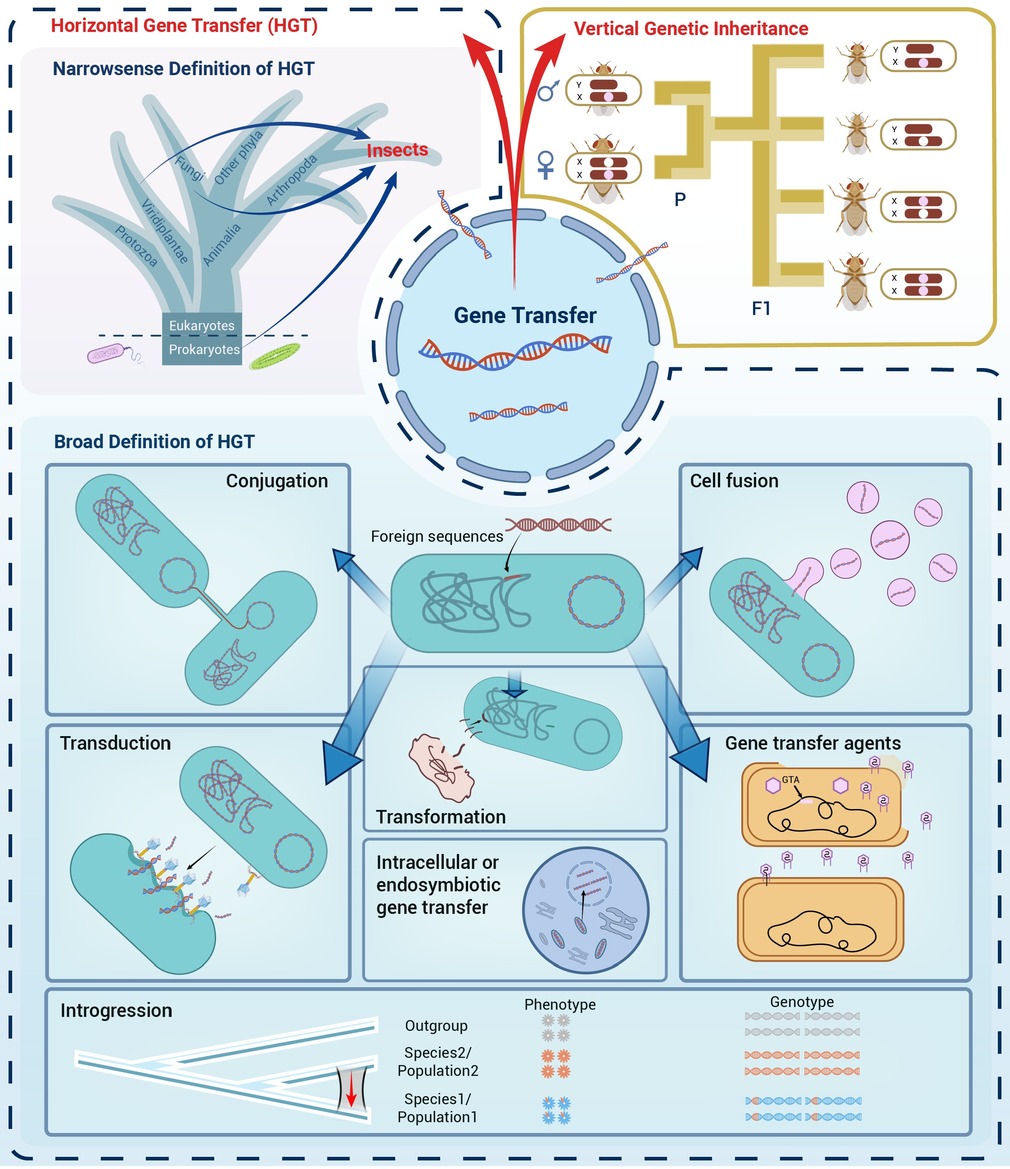
Figure 1.
Illustration of gene transfer
-
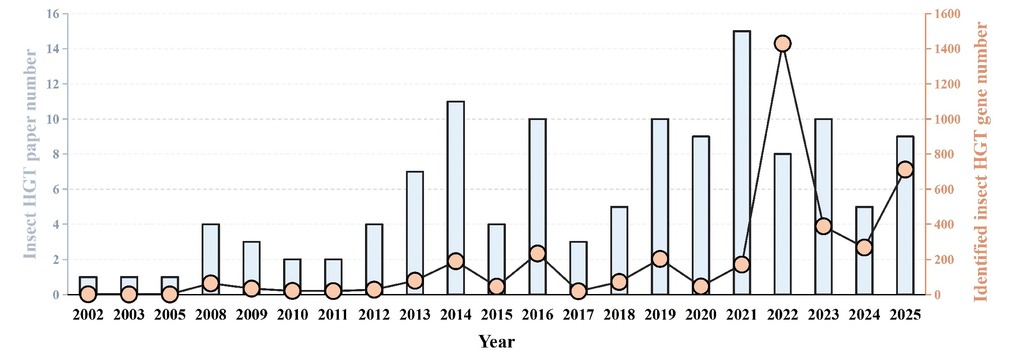
Figure 2.
The number of published papers on insect HGT and their recorded HTGs since 2002
-
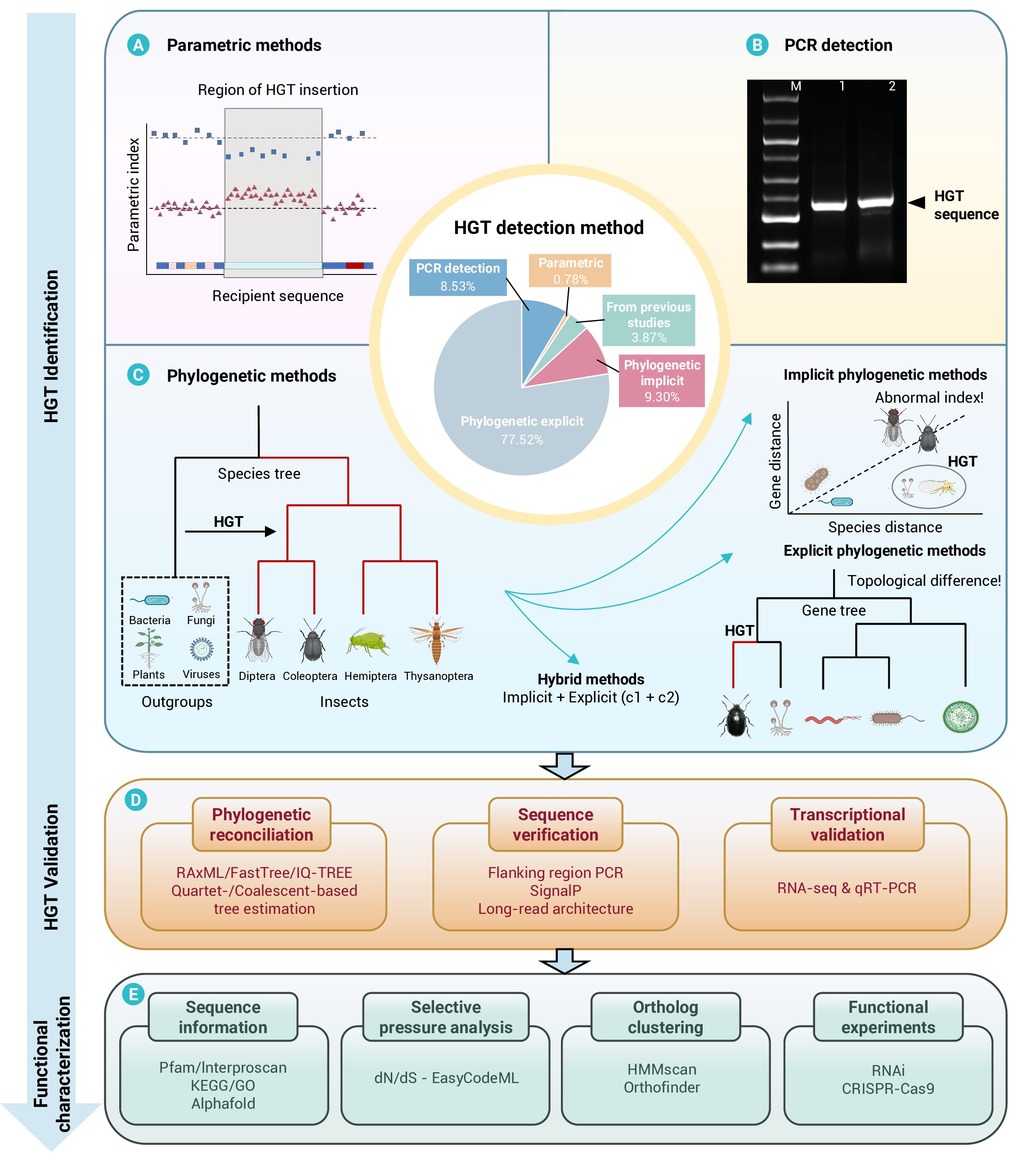
Figure 3.
Methodological framework of insect HGT analyses
-
Figure 4.
Donors, gene counts, and published paper counts in insect functional HGT analyses
-
Figure 5.
Roles and functional patterns of insect HGT
